
Airless Pump Bottles vs Dropper Bottles: Which Is Right for Your Serum?
Compare airless pump and dropper bottles across formula compatibility, cost, MOQ, and user experience to choose the right serum packaging for your launch stage.
A beauty founder sits at a formulation desk, looking at two production-ready samples of a new brightening serum. On the left is a classic frosted glass dropper bottle, heavy in the hand and evoking an organic, apothecary-style luxury. On the right is a sleek, opaque white airless pump bottle, standing with clinical precision and promising absolute formula protection. The choice between these two formats represents the ultimate founder dilemma, balancing premium shelf appeal, active ingredient preservation, and launch-stage cost structures.
What You're Actually Choosing Between
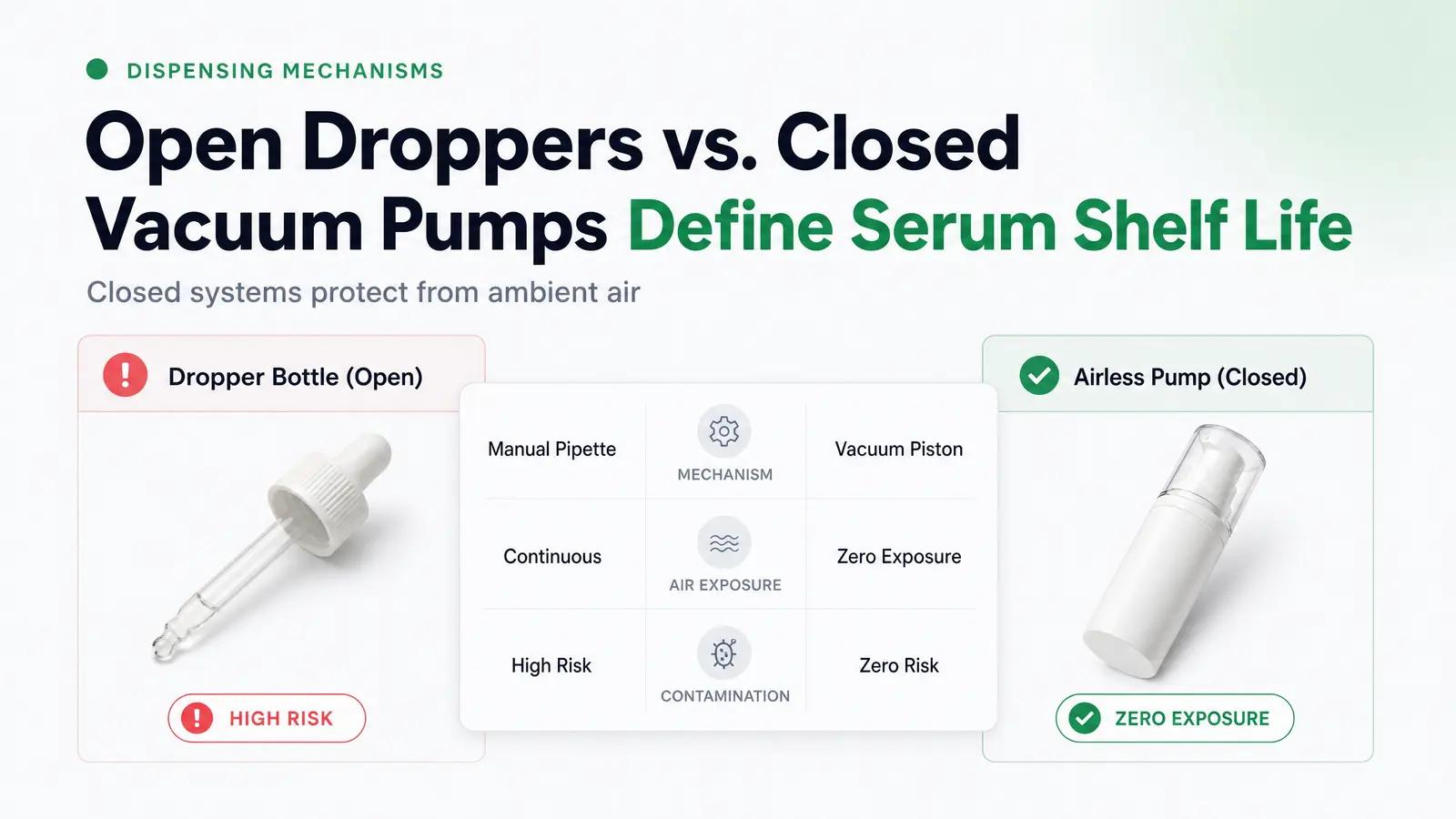
Selecting a serum bottle is more than a simple aesthetic choice: it is a decision that dictates the chemical stability, shelf life, and operational viability of your product. The traditional glass dropper bottle is an open-system dispenser that relies on a manual pipette. When a consumer unscrews the cap, the entire volume of the serum is exposed to ambient air, light, and potential physical contact.
The airless pump bottle is a closed-system, vacuum-driven dispensing mechanism. It operates without a dip tube, utilizing an internal piston or collapsible bag that rises as the product is dispensed. This movement creates a physical vacuum, sealing the formula from the external environment throughout its entire lifecycle. Understanding how these mechanical differences interact with your formula, your target audience, and your production budget is critical to a successful launch.
Formula Compatibility: The First Filter
The chemical composition of your serum is the most critical filter in your packaging decision. Active ingredients behave differently when exposed to oxygen, light, and various container materials.
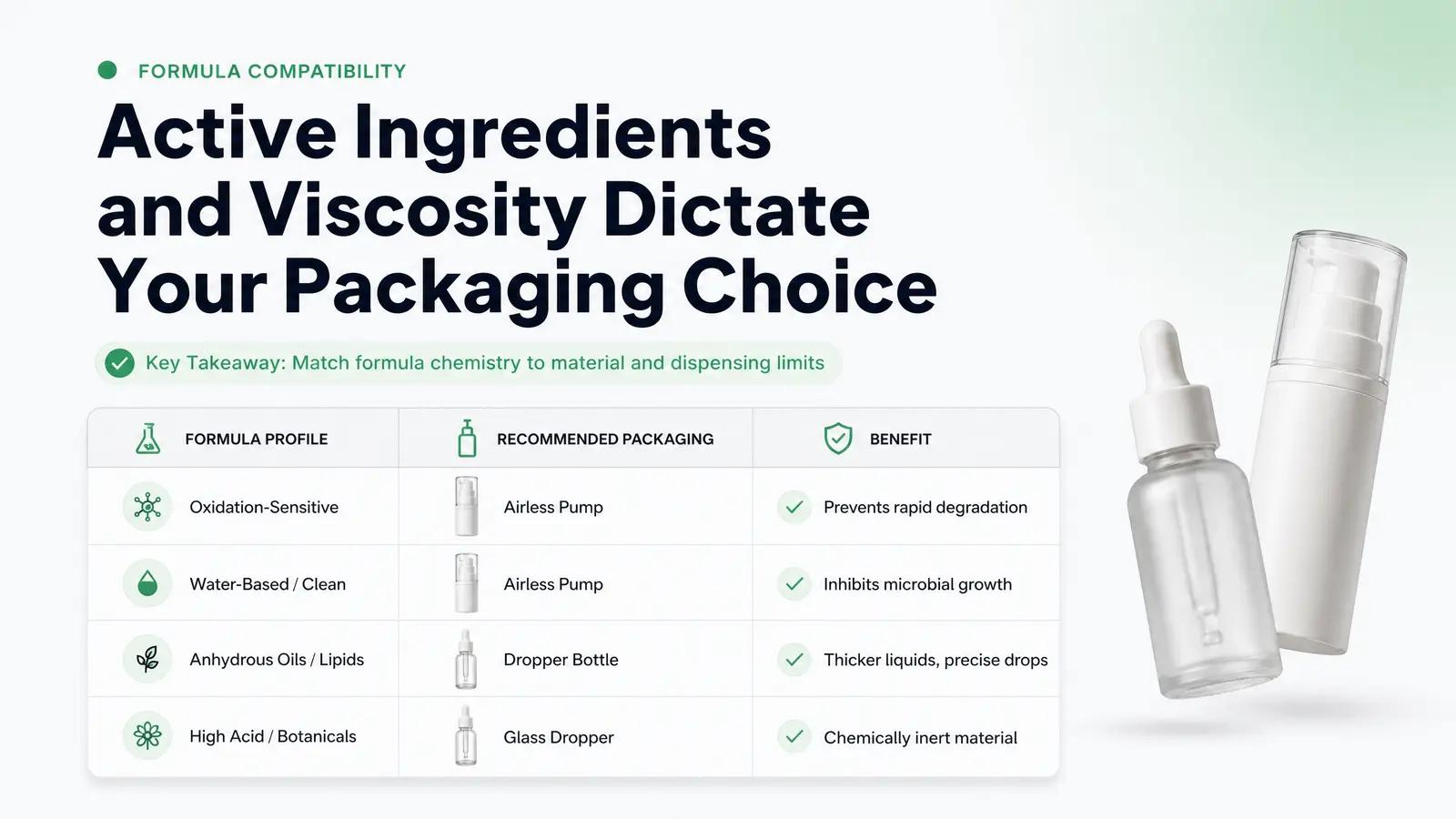
Certain ingredient classes and formulation characteristics strongly favor airless pump systems. Highly oxidation-sensitive actives, such as L-ascorbic acid (pure vitamin C), retinol, and specific peptide complexes, degrade rapidly upon contact with air [3]. When L-ascorbic acid oxidizes, it turns a telltale amber-brown, loses its antioxidant potency, and can cause skin irritation [3] [7]. Water-based serums with minimal preservative systems or clean-beauty profiles also require airless systems to prevent microbial growth [5]. Because airless bottles prevent ambient air and moisture from entering the container, they maintain formula stability and extend the product's shelf life significantly [5].
Conversely, other formulations are highly compatible with, or even require, dropper bottles. Pure facial oils, anhydrous (waterless) serums, and heavy oleic-rich lipid formulas are chemically stable and do not oxidize easily. These thicker, free-flowing liquids are ideal for pipette dispensing, especially when consumers need precise control over the dosage, such as applying exactly three drops to the face.
Material compatibility is another critical technical consideration. Airless systems rely on complex internal mechanisms, including plastic pistons (typically made of polypropylene or polyethylene), silicone valves, and metal springs. These synthetic materials can interact with specific ingredients, such as high concentrations of essential oils, organic acids, or alcohol-based solvents, leading to material degradation or chemical leaching [1] [2]. Glass dropper bottles, being chemically inert, do not react with cosmetic formulas, making them highly compatible with acidic or highly concentrated botanical extracts [2].
According to the Food and Drug Administration (FDA) guidance on container closure systems, packaging must be thoroughly tested to ensure there is no chemical migration from the packaging components into the product, and that the container protects the formula from environmental degradation [1]. This is reinforced by the ISO 22715:2006 standard, which mandates that cosmetic packaging must preserve product safety and integrity from production through consumer use [2].
User Experience and Perceived Premium
The dispensing format dictates how a consumer interacts with your product daily, shaping their perception of your brand's efficacy and value.
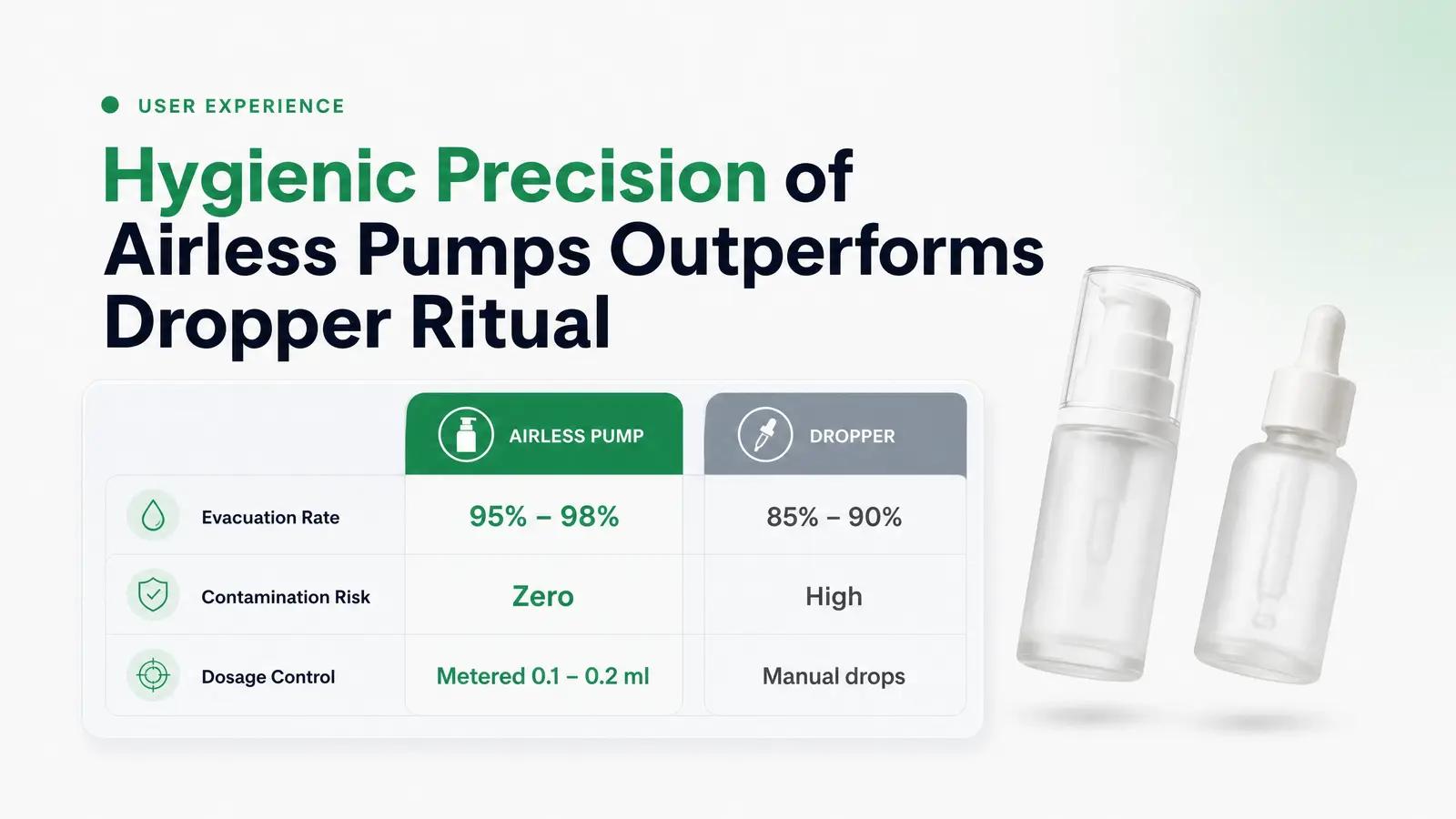
Airless pump bottles excel in clinical utility and hygienic precision. Each press of the actuator dispenses a metered, consistent dose, usually between 0.1 ml and 0.2 ml. This consistency prevents over-application and ensures the consumer uses the product as intended. Furthermore, the rising piston mechanism acts as a squeegee against the inner walls of the container, achieving an evacuation rate of 95% to 98% [5]. This means consumers can access nearly every drop of the serum, eliminating the frustration of unreachable product.
Dropper bottles offer a highly tactile, experiential ritual. Squeezing the rubber bulb, watching the serum fill the glass pipette, and releasing it drop-by-drop onto the skin is a sensory experience associated with high-end, holistic skincare. However, this format suffers from lower dispensing precision and a high evacuation residue. Standard dropper bottles typically leave 10% to 15% of the product trapped at the bottom and along the inner shoulders of the glass, representing a significant amount of wasted product [5].
A critical, non-obvious insight for founders is the hidden risk of microbial contamination in dropper systems. While consumers associate droppers with premium beauty, scientific research shows that the dropper pipette is a major vector for bacterial introduction. During application, consumers frequently touch the glass pipette directly to their skin, fingers, or bathroom surfaces before returning it to the bottle.
A comprehensive review of in-use dropper contamination reveals that microbial contamination of the dropper tip and cap can range from 7.7% to 100% of tested samples, frequently introducing pathogens like Staphylococcus spp. into the formula [4] [6]. This constant exposure stresses the formula's preservative system, which can lead to premature product spoilage, loss of active ingredient efficacy, or skin breakouts [5] [7]. Airless pump bottles completely eliminate this risk by keeping the formula sealed in a zero-contact chamber [5].
MOQ, Cost Structure, and Launch-Stage Fit
For emerging beauty brands, the choice between airless pumps and dropper bottles is often decided by financial constraints, minimum order quantities (MOQs), and production timelines.
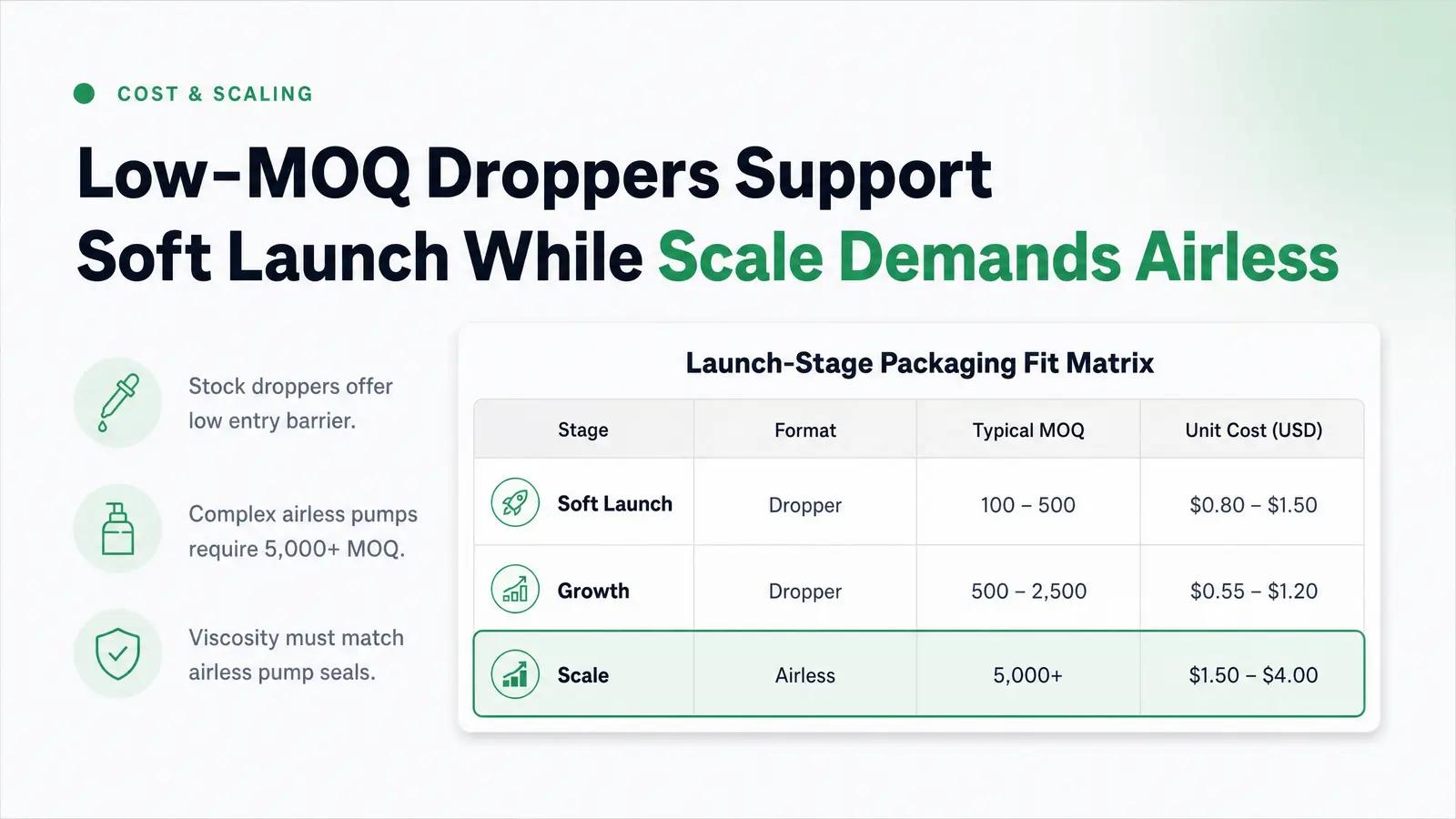
Airless pump bottles carry a higher per-unit cost and require a larger upfront investment. Because they consist of multiple precision-engineered components (base, piston, spring, actuator, and cap), they are complex to manufacture. Standard wholesale pricing for custom airless bottles ranges from $1.50 to $4.00 per unit, and suppliers often enforce MOQs of 5,000 to 10,000 units to cover mold setup and assembly costs. Custom colors or specialized metallic finishes can push these minimums even higher.
Glass dropper bottles offer a much lower barrier to entry. Because glass bottles are manufactured in massive, standardized runs, stock components are widely available off-the-shelf. A high-quality 1 oz (30 ml) glass dropper bottle can cost as little as $0.40 to $1.00 per unit at low volumes. Many packaging distributors offer stock glass bottles with MOQs as low as 100 to 500 units, making them highly accessible for small-batch launches, formulation testing, and initial market validation.
To help founders map these trade-offs to their specific business requirements, we recommend utilizing a structured decision framework.
The Launch-Stage Packaging Fit Matrix
This matrix outlines typical industry ranges and trade-offs for each development phase, helping you select the format that aligns with your capital and volume requirements.
| Launch Stage | Recommended Format | Typical MOQ Range | Per-Unit Cost Estimate (USD) | Key Trade-off at This Stage |
|---|---|---|---|---|
| Formulation Testing | Dropper | 1 – 100 units | $1.20 – $2.50 | Low upfront cost but zero customization and manual filling. |
| Soft Launch (≤500 units) | Dropper | 100 – 500 units | $0.80 – $1.50 | Accessible budget but high evaporation risk for active formulas. |
| Growth (500 – 5,000 units) | Either (Dropper preferred) | 500 – 2,500 units | $0.55 – $1.20 | Standard shapes only: limited custom molding options available. |
| Scale (5,000+ units) | Airless | 5,000+ units | $1.50 – $4.00 | Superior formula protection but high capital commitment. |
Beyond component costs, founders must consider the fill costs associated with each format. Airless systems require specialized filling equipment that can handle vacuum sealing and precise piston insertion. If your contract manufacturer or filling partner lacks automated airless filling lines, manual assembly will increase your labor costs. Additionally, airless systems require a minimum formula viscosity: if your serum is too watery, it may leak through the piston seals, while formulas that are too thick can clog the pump actuator.
Decoration Options and Brand Expression
Your packaging is your brand's silent salesman on retail shelves and social media feeds. The physical material and geometry of your bottle dictate the decoration methods available to you.
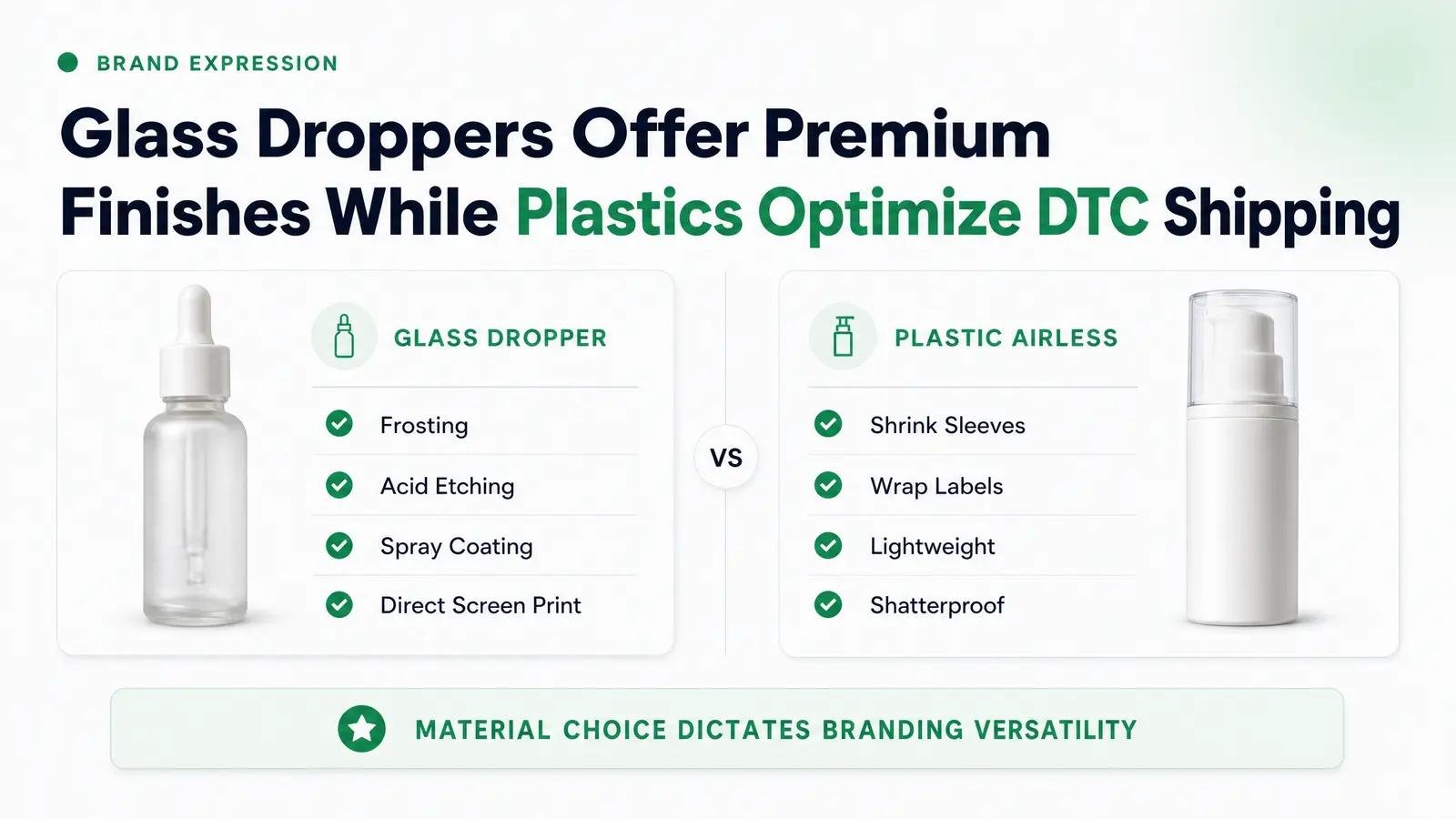
Glass dropper bottles offer exceptional decorative versatility. The heavy, rigid surface of glass supports high-end techniques such as frosting (giving the glass a soft, matte texture), acid etching, spray coating (for solid, translucent, or gradient colors), direct silk-screen printing, and hot foil stamping. The cylindrical geometry of a standard Boston round glass bottle provides a smooth, continuous surface for pressure-sensitive labels, allowing for clean, minimalist designs.
Airless pump bottles, typically constructed from plastics like PP, PETG, or acrylic, support different branding styles. While they can be direct-printed using silk-screen or hot-stamping methods, they are also highly compatible with full-body shrink sleeves and wrap-around labels. Because plastic is lightweight and shatterproof, it is highly favored for direct-to-consumer (DTC) shipping, reducing transit damage and lowering freight costs.
Navigating these decoration choices can be overwhelming for emerging brands. To simplify this process, Packfolio provides a curated catalog of cosmetic primary packaging SKUs on our platform, https://packfolio.com/. Every bottle, dropper, and airless pump in our catalog is pre-modeled in 3D with predefined printable regions. Instead of guessing how your artwork will look on a physical bottle, you can upload your designs directly into our browser-based 3D design tool. This workflow allows you to visualize your decorated bottle in photorealistic 3D, ensuring that what you see on your screen matches the final manufactured product before you commit to production.
How to Make the Decision: A Worked Example
To illustrate how these filters apply in a real-world business scenario, let us walk through a decision process for an independent beauty founder.
The Scenario
A founder is launching a 1 oz (30 ml) vitamin C + niacinamide brightening serum. She is targeting a premium DTC price point of $48 to $58, and planning an initial production run of 300 units to validate the formula and gather customer reviews before scaling. Her formulator has flagged that the active vitamin C derivative is highly oxidation-sensitive. She has a strict target cost-of-goods (COGS) of $6 to $8 for the packaging component.
Step 1: The Formula Compatibility Filter
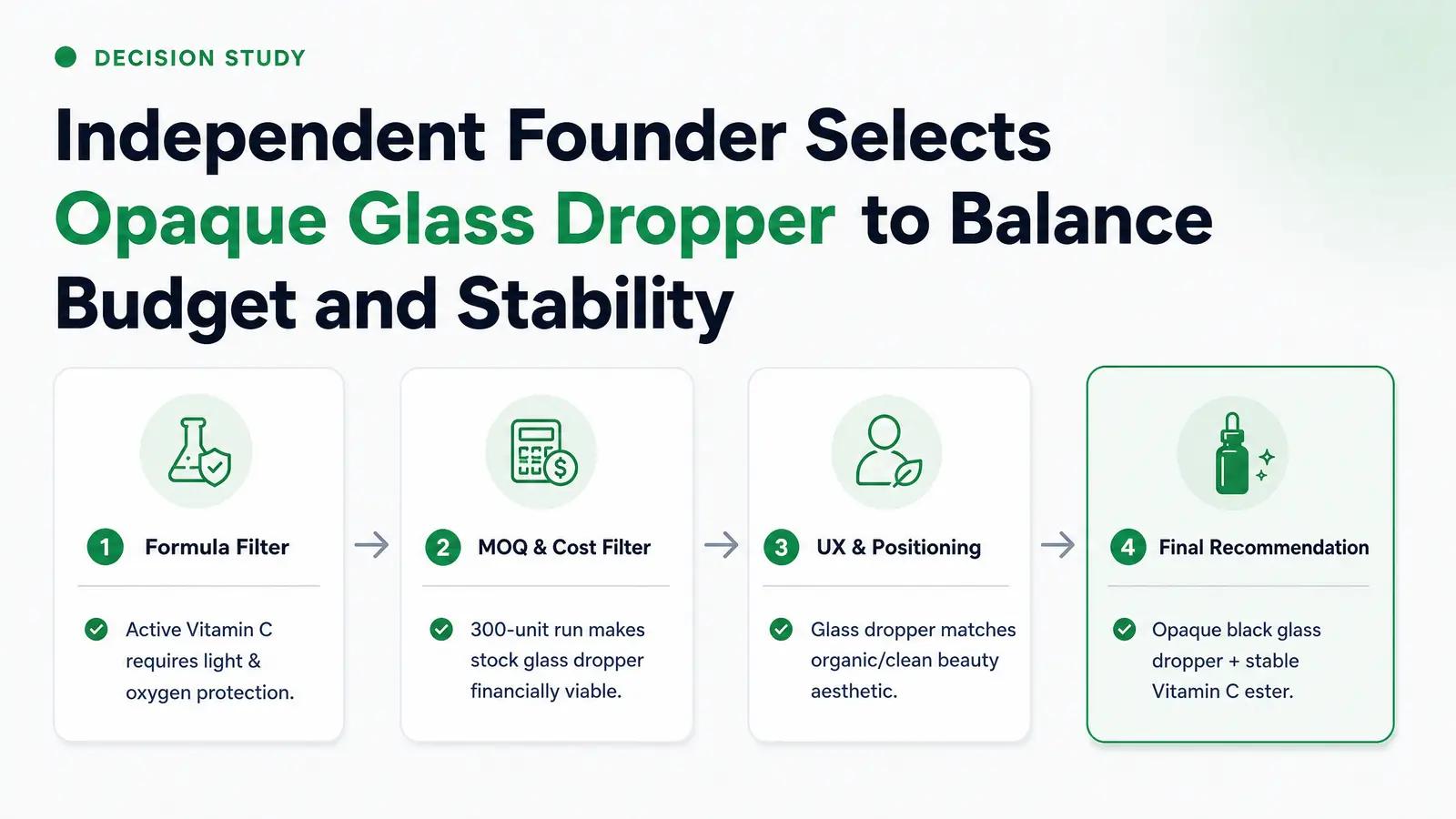
The active vitamin C derivative is highly sensitive to oxygen and light. If packaged in a standard clear glass dropper bottle, the formula will begin to oxidize within weeks of opening, turning brown and losing its efficacy.
- The Verdict: Airless packaging holds a clear technical advantage here. If a dropper bottle must be used due to budget constraints, the founder must select an opaque or dark amber glass bottle, and include a robust antioxidant stabilizer in the formula to delay oxidation.
Step 2: The MOQ and Cost Filter
The founder's initial run is only 300 units. Standard custom airless pump bottles require a minimum order of 5,000 units, which would require purchasing 4,700 excess bottles and exceeding her initial budget. While some stock airless bottles can be found at lower volumes, their per-unit cost at 300 units would range from $4.00 to $6.00, consuming almost her entire packaging COGS budget.
- The Verdict: A stock glass dropper bottle is the most financially viable option for a 300-unit run. Opaque black or amber glass dropper bottles are readily available at this volume for approximately $1.00 per unit, leaving ample budget for secondary cartons and labeling.
Step 3: The UX and Positioning Filter
At a premium DTC price point of $48 to $58, consumers expect a luxurious experience and visible results. An airless pump bottle signals clinical authority, high efficacy, and hygienic safety, which justifies the premium price. A glass dropper bottle signals a classic, organic luxury.
- The Verdict: Both formats can support the price point, but they send different brand signals. The airless pump aligns with a science-backed, clinical positioning, while the glass dropper aligns with an organic, clean-beauty aesthetic.
Step 4: The Decoration Filter
At 300 units, direct screen printing or hot stamping on the bottle is cost-prohibitive due to high printer setup fees. The founder must rely on high-quality pressure-sensitive labels.
- The Verdict: Cylindrical glass dropper bottles are highly compatible with premium, textured paper labels. The smooth surface of a stock glass bottle ensures easy, bubble-free label application at low volumes.
The Final Recommendation
For this specific launch stage, the founder should launch her first 300 units in an opaque black glass dropper bottle with a premium textured label.
While airless packaging is technically superior for protecting vitamin C, the financial risk of committing to a 5,000-unit airless run before validating market demand is too high. By selecting an opaque black glass bottle, she protects the light-sensitive formula, meets her 300-unit MOQ, stays well within her $6 to $8 COGS budget, and maintains a premium, luxury aesthetic. To counter the oxygen exposure of the dropper format, her formulator must use a highly stable vitamin C ester (such as tetrahexyldecyl ascorbate) paired with vitamin E and ferulic acid to extend the formula's open-shelf life. Once she validates the product and scales her order volume to 5,000 units, she can transition the SKU to a custom airless pump bottle to elevate her brand's clinical positioning.
What to Verify Before You Order
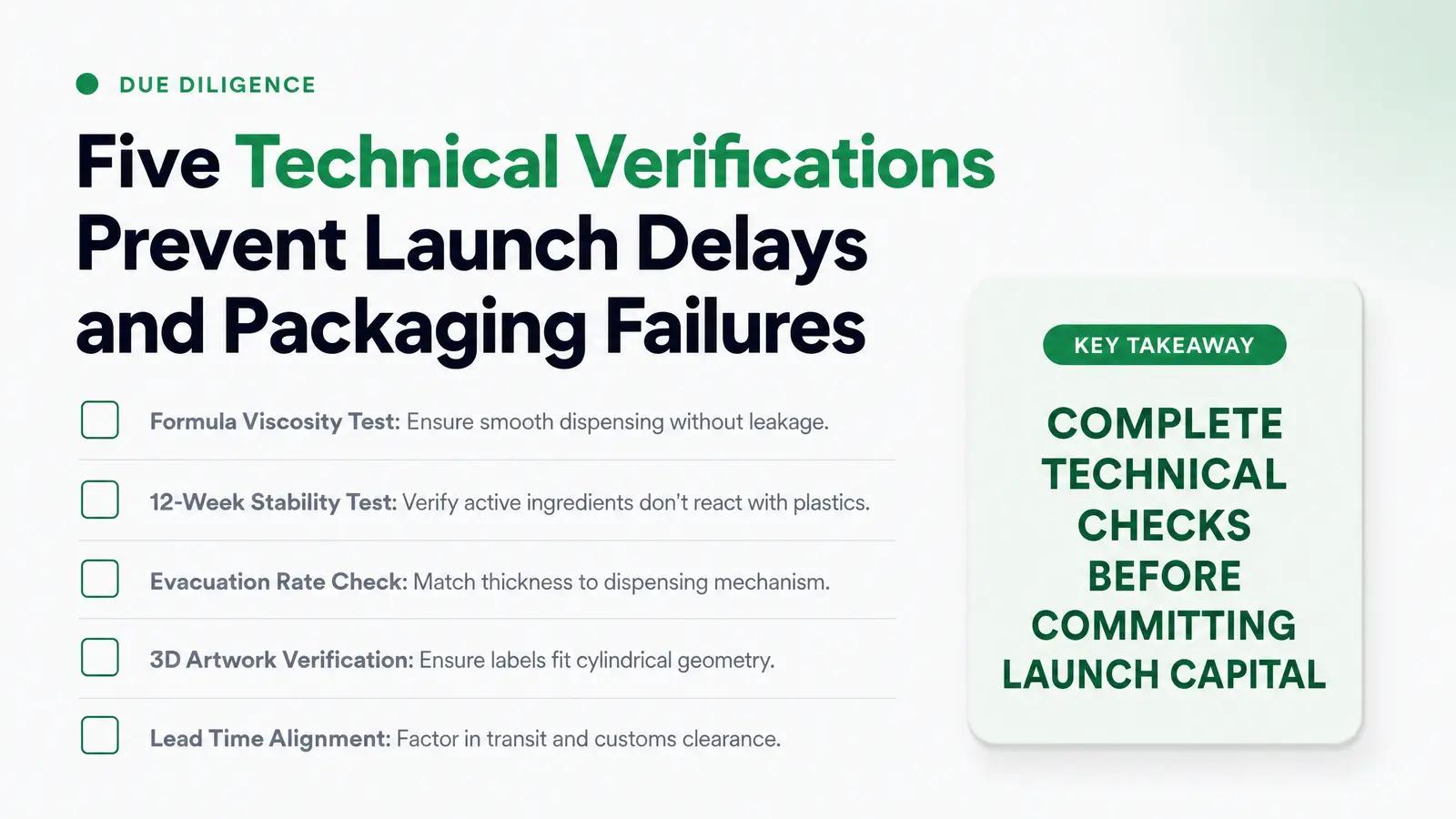
Before finalizing your packaging order and committing your capital, ensure you run through this essential due-diligence checklist:
- Confirm Formula Viscosity: Provide your packaging supplier with a sample of your bulk serum to test pump compatibility and ensure the formula dispenses smoothly without leaking or clogging.
- Verify Material Compatibility: Run a 12-week accelerated stability test to confirm that your active ingredients, essential oils, or preservative systems do not react with the inner piston, gasket, or pipette materials [1] [2].
- Check Evacuation Rate: Confirm that your formula's thickness matches the dispensing mechanism, verifying that the bottle achieves a high evacuation rate with minimal residue.
- Review Artwork and Printable Regions: Ensure your label or direct-print design fits perfectly within the bottle's cylindrical geometry, keeping text legible and avoiding seams.
- Align Lead Times with Launch Schedules: Verify the production and shipping timelines for your components, factoring in transit times and customs clearance to avoid delaying your launch.
By conducting these technical verifications early, you protect your capital, secure your formula's integrity, and ensure a seamless product experience for your customers.
Browse Packfolio's curated airless pump and dropper bottle catalog, preview your label in 3D before ordering, and place your order without touching a supplier. Explore the catalog →
Frequently Asked Questions
Can I use an airless pump bottle for an oil-based serum?
Yes, airless pump bottles are highly compatible with oil-based serums. However, because oils have a lower viscosity than water-based emulsions, you must select a pump with a precise, low-output nozzle to prevent dripping, and conduct leak testing to ensure the oil does not seep past the internal piston seals.
What is the typical MOQ for custom airless pump bottles?
The typical minimum order quantity for custom-colored or custom-printed airless pump bottles ranges from 5,000 to 10,000 units. This high minimum is driven by the complexity of assembling multiple precision-molded plastic and metal components, which requires significant machinery setup time.
Are glass dropper bottles safe for vitamin C serums?
Glass dropper bottles are safe for vitamin C serums only if the glass is completely opaque or dark-colored, such as amber or cobalt blue, to shield the light-sensitive active from UV degradation. Additionally, because droppers introduce oxygen with each use, the formula must utilize a highly stable vitamin C derivative and a robust antioxidant stabilizer to prevent rapid oxidation.
How do I know if my serum formula is compatible with an airless pump?
To confirm compatibility, you must conduct a professional stability and compatibility study, storing your serum in the airless container at elevated temperatures for 12 weeks. This test verifies that the active ingredients do not corrode the plastic piston, that the preservative system remains effective, and that the formula's viscosity allows for smooth dispensing.
What's the difference between a dropper bottle and an airless pump in terms of shelf life?
Airless pump bottles typically extend the open-shelf life of sensitive serums by two to three times compared to dropper bottles. Because the airless system maintains a vacuum-sealed, zero-oxygen chamber, it prevents the continuous oxidation and microbial contamination that occurs every time a dropper bottle is opened.
References
[1] Guidance for Industry: Container Closure Systems for Packaging Human Drugs and Biologics. U.S. Food and Drug Administration. 1999. https://www.fda.gov/media/70788/download
[2] ISO 22715:2006 Cosmetics — Packaging and labelling. International Organization for Standardization. 2006. https://www.iso.org/standard/36436.html
[3] Yin, X., Chen, K., Cheng, H., Chen, X., Feng, S., Song, Y., & Liang, L. Chemical Stability of Ascorbic Acid Integrated into Commercial Products: A Review on Bioactivity and Delivery Technology. Antioxidants. 2022. https://pmc.ncbi.nlm.nih.gov/articles/PMC8773188/
[4] Iskandar, K., Marchin, L., Kodjikian, L., Rocher, M., & Roques, C. Highlighting the Microbial Contamination of the Dropper Tip and Cap of In-Use Eye Drops, the Associated Contributory Factors, and the Risk of Infection: A Past-30-Years Literature Review. Pharmaceutics. 2022. https://pmc.ncbi.nlm.nih.gov/articles/PMC9611205/
[5] Skin Care Packaging Matters: Why You Should Avoid Jars & Tubs. Paula's Choice Expert Advice. 2025. https://www.paulaschoice.com/expert-advice/skincare-advice/skin-care-how-tos/skin-care-packaging-matters-why-you-should-ditch-jars.html
[6] Halla, N., Fernandes, I. P., Heleno, S. A., Costa, P., Boucherit-Otmani, Z., Boucherit, K., Rodrigues, A. E., Ferreira, I. C. F. R., & Barreiro, M. F. Cosmetics Preservation: A Review on Present Strategies. Molecules. 2018. https://pmc.ncbi.nlm.nih.gov/articles/PMC6099538/
[7] FDA Authority Over Cosmetics: Role of FDA in regulating cosmetics. U.S. Food and Drug Administration. 2025. https://www.fda.gov/cosmetics/cosmetics-guidance-regulation/cosmetics-laws-regulations


