
Fine Mist Sprayer Testing for Facial Mists and Toners
A structured testing protocol helps founders evaluate fine mist sprayers for facial mists and toners across spray quality, formula compatibility, mechanical reliability, and leak integrity before production.
The way a facial mist lands on skin tells the customer everything about the brand before they have read a single ingredient. The weight of the droplets, the breadth of the plume, the way the mist settles rather than runs: these are sensory cues that signal quality, care, and precision. For a founder or formulator at the sample-review stage, evaluating a candidate sprayer component is as critical as finalizing the formula itself. A fine mist that fans unevenly, delivers droplets too large, or requires excessive actuation force degrades the ritual experience regardless of how good the formula is.
This guide provides a structured, technically grounded testing protocol to evaluate fine mist sprayers for facial mists and toners. It covers spray quality, formula compatibility, mechanical reliability, and leak integrity, giving you the specific parameters, test methods, and pass/fail criteria needed to make a confident go/no-go decision before committing to a production run.
Why Spray Quality Is a Product Feature, Not a Packaging Afterthought
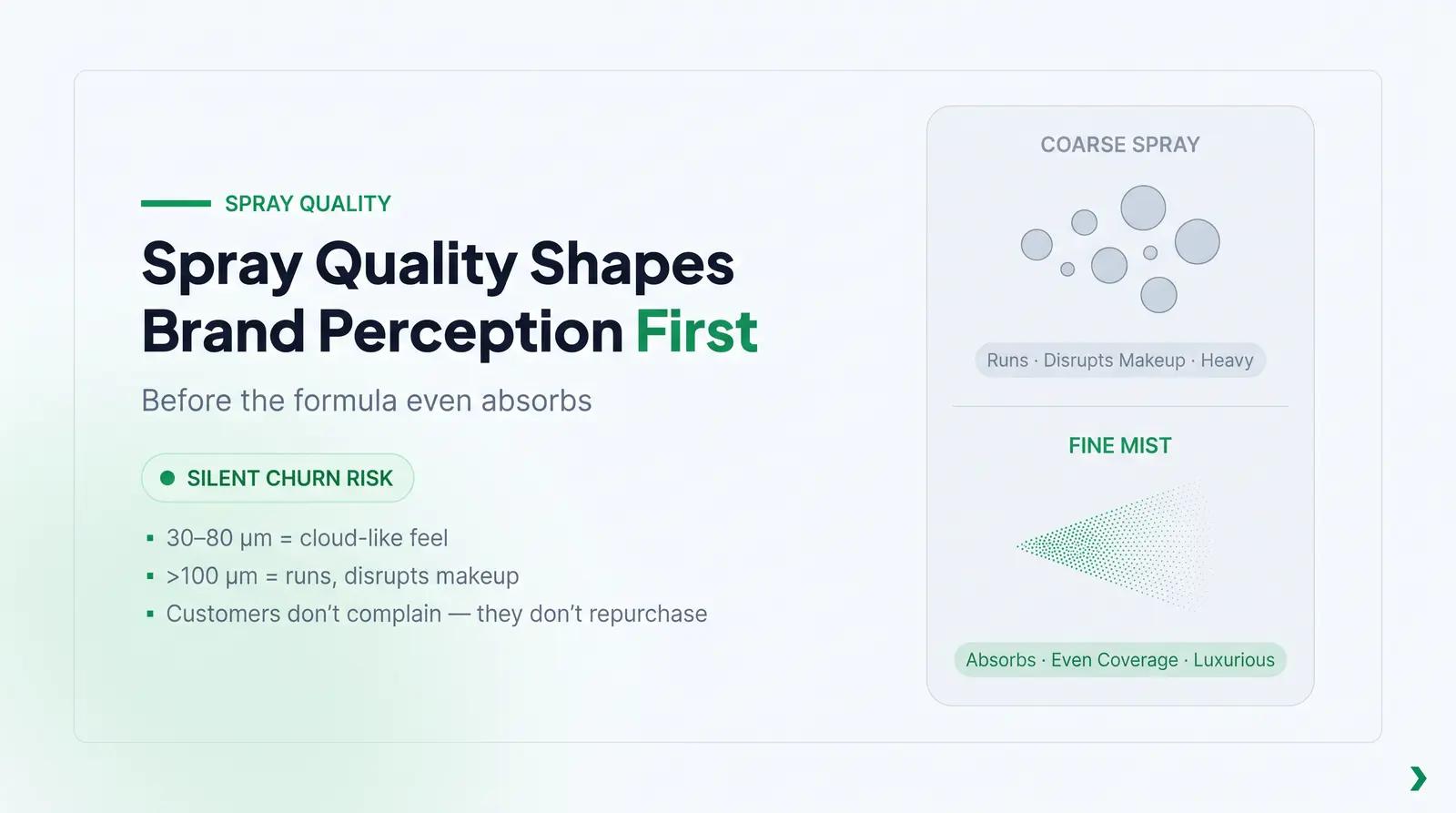
The sensory and commercial stakes of spray quality are higher than most founders realize at the packaging sourcing stage. A mist is often the first physical experience a customer has with a product. It shapes their perception of the brand's quality before the formula has even had time to absorb. A poorly engineered sprayer can result in heavy wet spots, dripping, or an uneven application that ruins makeup or leaves the skin feeling saturated rather than refreshed [1]. Conversely, a well-designed fine mist sprayer atomizes the liquid into micro-droplets that spread evenly, allowing products to absorb faster and more uniformly, creating a luxurious, cloud-like experience [2].
In the beauty industry, where product experience is paramount, the precision of the dispensing mechanism is integral to the product's performance. For products like toners and setting sprays, coverage control is essential for a natural finish. A coarse spray pattern on a premium niacinamide toner, for example, does not just feel wrong. It communicates that the brand did not pay attention to detail. Customers rarely articulate this as a packaging complaint; they simply do not repurchase.
The commercial implication is clear. Spray quality is not a component specification to be delegated to the lowest-cost supplier. It is a brand decision that deserves the same rigor as formula development. Treating it as such, and building a structured testing protocol around it, is how founders protect the sensory promise their product makes.
How Fine Mist Sprayers Work: The Mechanics Founders Need to Know
A fine mist sprayer is a precision-engineered system designed to transform liquid into a soft, even mist. Understanding its internal mechanics is essential for evaluating its performance with your specific formula and for diagnosing failure modes when samples underperform.
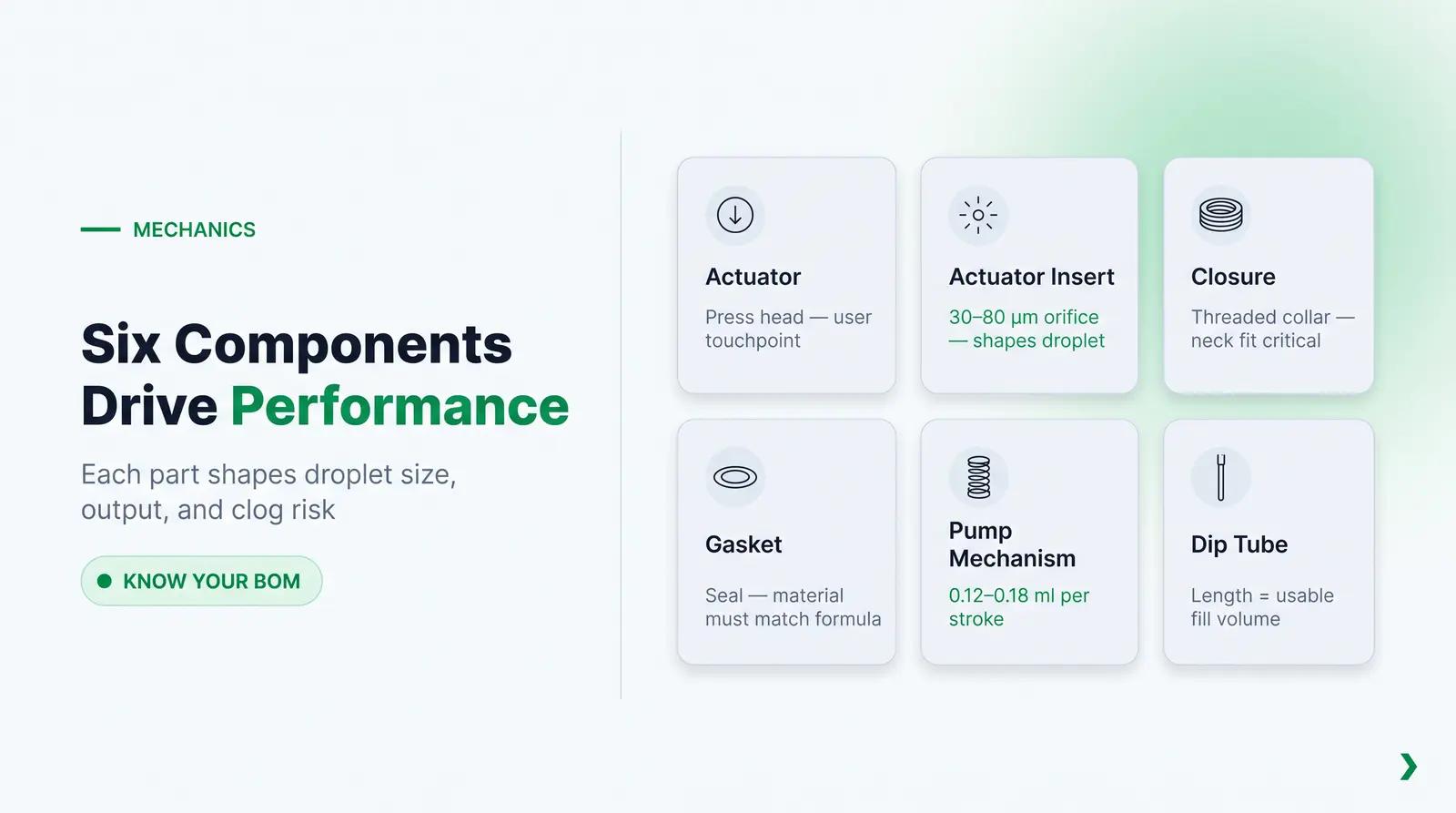
The core components are: the actuator (the spray head the user presses), the actuator insert (the micro-orifice that shapes the spray), the closure (the threaded collar that connects the mechanism to the bottle), the gasket (the compressible seal that prevents leaks at the neck), the pump mechanism (piston, spring, housing, and ball valve), and the dip tube (the thin plastic tube that draws liquid from the bottle) [4].
Actuator Orifice Size and Spray Angle
The actuator insert is the smallest and most consequential component in the system. It contains micro-engineered channels and an exit orifice that dictates both the droplet size and the cone angle of the plume. Smaller orifice openings break the liquid into finer micro-droplets, while the internal channel geometry controls the spray angle and the evenness of distribution across the plume [1].
For facial mists, an actuator designed to produce droplets in the 30–80 micron range is typically preferred to achieve that soft, elegant feel [2]. Perfumes and premium facial mists often target the lower end of this range (30–50 microns) for maximum elegance and faster skin absorption. A coarser spray (above 100 microns) will feel noticeably heavier and is more likely to run, particularly on oily or already-moisturized skin.
The spray angle also matters for user experience. A wider cone angle (typically 30–60 degrees) distributes the mist across a broader area of the face in a single actuation, which is desirable for toners and setting sprays. A narrower cone concentrates the spray and is more appropriate for targeted applications.
Dip Tube Fit and Length
The dip tube carries liquid from the bottom of the bottle to the pump chamber. Its length, diameter, and cut are all critical to performance. A dip tube that is too short will leave product stranded at the bottom of the bottle, reducing the effective fill volume and frustrating customers who feel the product ran out early. A tube that is too long may curl or kink inside the bottle, restricting flow or causing inconsistent output [3].
For fine mist sprayers, the dip tube is often slightly bent and cut at an angle or in a "V" shape to prevent it from sealing flush against the bottom of the container, which would block flow [4]. The inner diameter of the dip tube must also be matched to the formula's viscosity. For water-thin formulas, a standard fine dip tube works well. For formulas with suspended particles or higher viscosity, a slightly wider bore may be needed to prevent clogging at the intake.
Pump Chamber Volume and Actuation Stroke
The pump engine consists of a chamber, piston, spring, and ball valve. When the actuator is pressed, the spring compresses and the piston forces liquid out through the actuator insert. When released, the spring expands, creating a vacuum that draws new liquid up the dip tube and into the chamber for the next actuation [2].
The volume of the pump chamber determines the output per stroke, typically between 0.12 ml and 0.18 ml for fine mist sprayers, with some models as low as 0.08 ml [2]. For a 3.4 fl oz (100 ml) bottle, this means approximately 550–1,250 actuations per fill, depending on the output. The spring tension affects the actuation force required; it must be calibrated to provide a smooth, effortless press without being so weak that it fails to return the actuator to its starting position or so stiff that it fatigues the user's hand.
The Five Parameters to Measure During Sprayer Sample Review
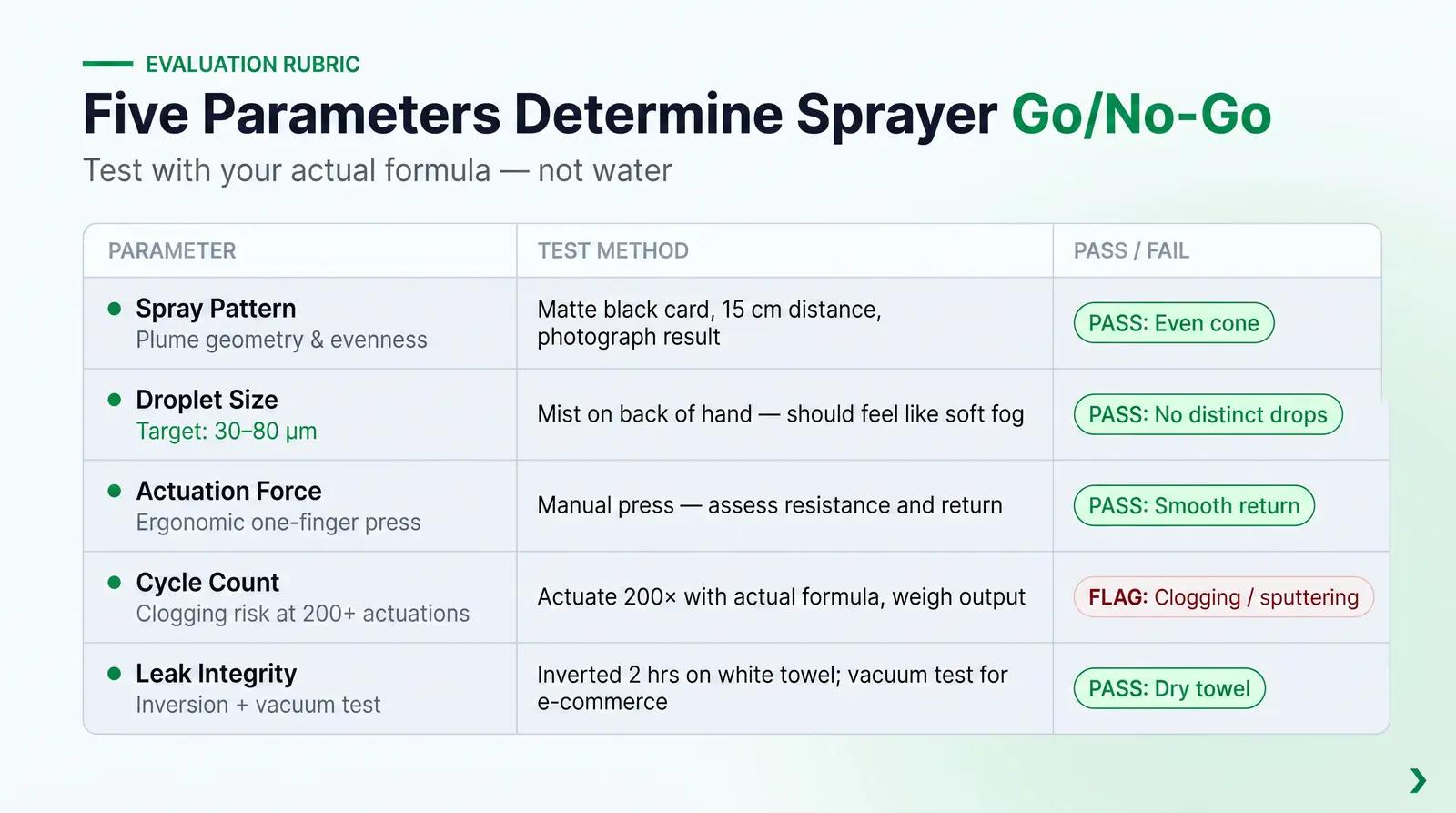
To ensure a sprayer meets the demands of a premium facial product, Packfolio recommends The Fine Mist Sprayer Evaluation Rubric. This practical framework guides founders through the five essential parameters to measure during sample review, providing a consistent, repeatable basis for comparing candidate components.
| Parameter | What to Measure | Test Method | Pass Threshold / Red Flag |
|---|---|---|---|
| Spray pattern and plume geometry | Width, evenness, and cone angle of the mist plume. | Spray onto a matte black card or glass from 6 in (15 cm). Photograph the result. | Pass: Even, circular distribution without heavy center concentration or distinct wet spots. Red Flag: Sputtering, asymmetrical pattern, or visible dripping at the nozzle. |
| Droplet size | Fineness of the mist; target 30–80 microns for facial use [2]. | Visual and tactile assessment on skin or paper. Should feel like a soft fog, not distinct drops. | Pass: Lightweight, even coverage that absorbs quickly without running. Red Flag: Coarse droplets that run down the face or disrupt makeup. |
| Actuation force | The pressure required to depress the pump fully. | Manual actuation; assess ergonomic comfort and ease of use. Note any sticking or resistance. | Pass: Smooth, consistent resistance that is easy to press with one finger. Red Flag: Stiff, sticking, or requires excessive force, hindering accessibility. |
| Cycle count and clogging risk | Number of actuations before performance degrades; relevant for formulas with plant extracts, particulates, or glycerin. | Repeated mechanical actuation with the actual formula. Record output and pattern at intervals (50, 100, 200+ actuations). | Pass: Consistent spray pattern and output volume through the expected life of the bottle. Red Flag: Clogging, loss of prime, or sputtering after initial use. |
| Leak and seal integrity | Secure seal between closure and bottle under inversion and pressure. | Inversion test (upside down for 2 hours on absorbent paper); vacuum leak test for e-commerce or air freight [5]. | Pass: No liquid escapes from the collar, gasket, or nozzle under pressure or inversion. Red Flag: Visible moisture or dripping around the neck finish or actuator. |
Spray Pattern and Plume Geometry
Testing spray pattern is simple and requires no lab equipment. Tape a sheet of matte black card or place a dark glass panel vertically. Hold the filled bottle at a consistent distance (6 in / 15 cm is a practical standard) and actuate once. Photograph the result immediately. A well-performing fine mist sprayer will produce a roughly circular or oval pattern with even density from center to edge. Reject any sample that shows a "donut" pattern (heavy ring with light center), a directional bias, or visible drips at the nozzle tip.
Droplet Size
Without lab equipment such as a laser diffraction analyzer (the Malvern Spraytec is the industry standard for particle size characterization [9]), founders can assess droplet size through tactile and visual evaluation. Mist the formula onto the back of the hand from 6 in (15 cm). A true fine mist should feel like a cool, soft cloud. No distinct droplets should be perceptible on the skin. If you can feel individual drops landing, the droplet size is likely above 100 microns and the sprayer is not suitable for premium facial applications.
A 2023 study published in Regulatory Toxicology and Pharmacology characterized the droplet/particle size distribution of 78 cosmetic sprays by laser diffraction, confirming that pump spray systems produce a significantly finer distribution than propellant-based systems [9]. This validates the use of pump sprayers for facial applications where fine, controlled coverage is the goal.
Actuation Force
Actuation force is a user experience and accessibility consideration. A pump that requires excessive force fatigues the hand during regular use and may be difficult for users with limited grip strength or arthritis. Research from Packaging Digest (2025) highlights that dispensers requiring repeated or continuous actuation are among the key pain points for consumers with physical limitations [10]. While there is no universal standard for cosmetic sprayer actuation force, a smooth, one-finger press that returns cleanly is the practical benchmark for a premium facial product.
Cycle Count and Clogging Risk
Clogging is the most common failure mode for fine mist sprayers, particularly with formulas containing glycerin, plant extracts, particulates, or any ingredient that can dry or crystallize at the nozzle. Test cycle count by actuating the pump repeatedly, at minimum 200 times, with your actual formula. Record the output weight at intervals using a precision scale to detect any degradation in output volume. Inspect the nozzle visually for buildup after each test session. Labs run mechanical cycle tests with machines that press the actuator thousands of times to stress the spring, housing, ball, outer gasket, and dip tube [11].
Leak and Seal Integrity
Leak testing is non-negotiable before approving any sprayer for production. The inverted leak test is the most accessible method: fill the bottle with your formula, secure the sprayer to the correct torque, and place it upside down on a white paper towel for at least 2 hours. Any seepage will be visible on the towel. For products intended for e-commerce or air freight, a vacuum leak test simulates the pressure changes of an airplane cargo hold, which can cause sealed packages to expand and leak [5]. Vacuum leak testing involves placing the filled, sealed bottle in a sealed chamber and drawing a vacuum to detect any seal failures.
Formula-Sprayer Compatibility: The Variables Most Founders Miss
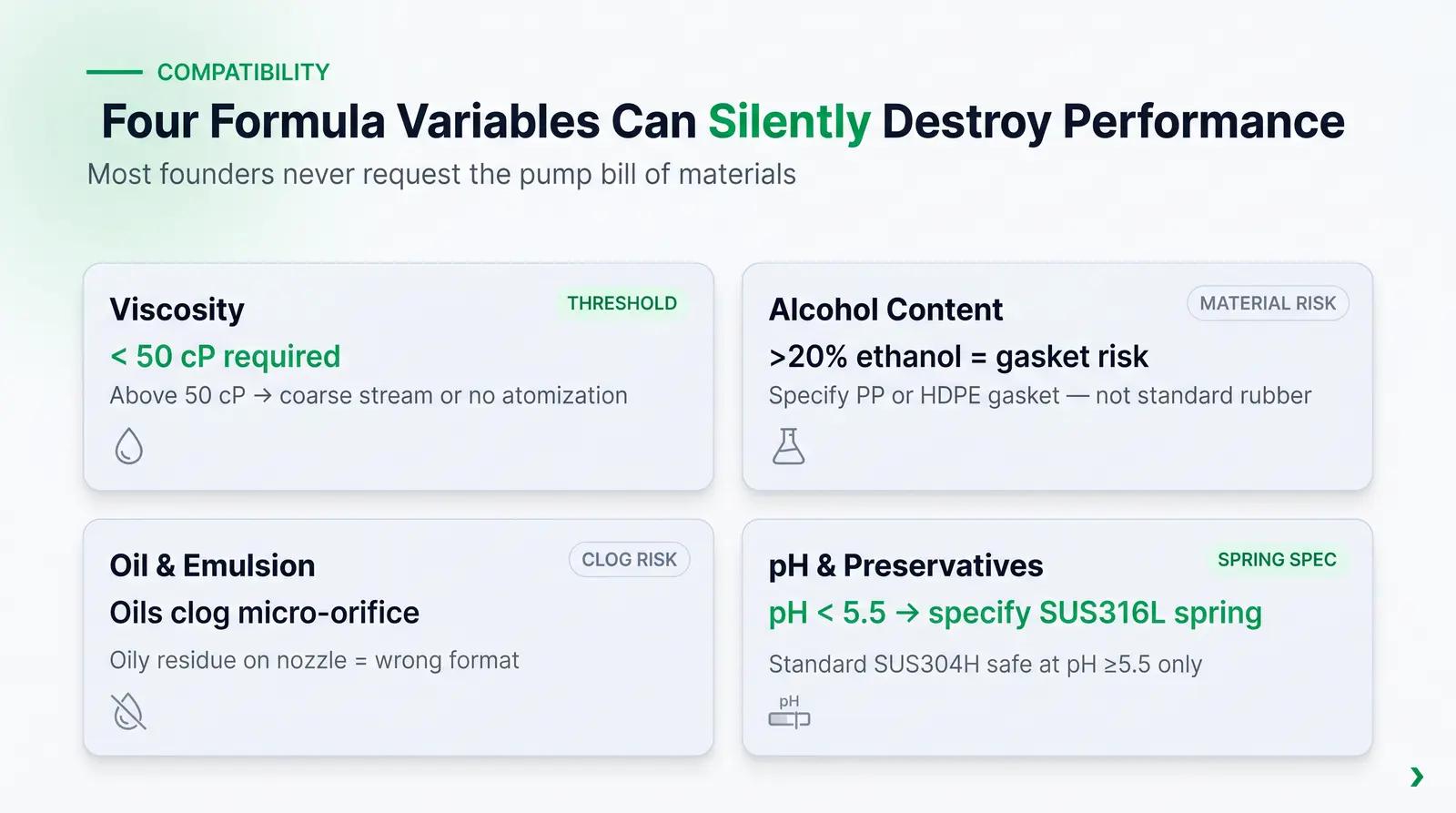
The common assumption is that any pump sprayer labeled "fine mist" will work for any facial formula. The non-obvious truth, supported by material science and cosmetic packaging literature, is that the sprayer's internal materials (the spring metal, gasket polymer, and ball seat) are as important to long-term performance as the orifice size, and most founders never request a bill of materials for the pump mechanism [7]. Requesting this documentation from your supplier, and cross-referencing it against your formula's chemical profile, is a critical step that most brands skip entirely.
Viscosity
Fine mist sprayers are optimized for low-viscosity, water-based formulas, typically under 50 cP [6]. This is approximately the consistency of water or a very light serum. When a formula is too thick, the pump cannot generate sufficient pressure to atomize the liquid through the micro-orifice, resulting in a coarse stream, incomplete actuation, or a streaky pattern. Formulas with viscosity between 50 and 500 cP may require a treatment pump, which handles thicker fluids but produces larger droplets in the 80–150 micron range [6]. If your formula reads above 50 cP on a rotational viscometer (the accepted measurement method per ASTM D2196), a standard fine mist sprayer is likely not the right dispensing format.
Alcohol Content
High-alcohol toners (e.g., those containing >20% ethanol) can aggressively interact with internal seal materials. Alcohol is a potent solvent that can cause certain elastomers to swell, crack, or degrade over time, leading to leaks or pump failure. It is crucial to verify that the gasket and O-ring materials are rated for your specific alcohol concentration. PP (polypropylene) and HDPE (high-density polyethylene) components generally offer better alcohol resistance than standard rubber gaskets. When in doubt, request the specific gasket material from your supplier and cross-reference it against a chemical compatibility chart [7].
Oil and Emulsion Formulas
Oil-phase or emulsified formulas pose a significant clogging risk for the micro-orifices of fine mist sprayers. As the lighter aqueous carriers evaporate at the nozzle between uses, the heavier oils or emulsifiers can build up and block the exit channel. While some sprayers with specialized nozzle technology can handle very light emulsions (oil-in-water formulas with low lipid content), formulas with higher oil content typically perform better with a treatment pump or a standard lotion pump. The general rule is: if your formula leaves a visible oily residue on the nozzle after a single use, the sprayer is not the right format for that product [7].
Preservative and pH Considerations
The pH of your formula and the specific preservative system used can affect the metal components inside the pump. Standard pump springs are typically made from SUS304H stainless steel, which performs reliably at pH 5.5 and above. For formulas with a lower pH or those containing ingredients that can create a more acidic microenvironment at the spring, a SUS316L spring (which offers superior acid and alkali resistance) should be specified [8]. Certain preservative systems, particularly those with high concentrations of organic acids, can accelerate metal corrosion over time. A spring that begins to rust will contaminate the formula: a failure mode that is both a quality and a safety issue. The solution is to specify the spring material upfront and, for sensitive formulas, to request a metal-free fluid pathway design where the spring is isolated from the product stream.
For founders using Packfolio's platform to source packaging, the catalog presents vetted SKUs with defined material specifications, reducing the risk of unknowingly pairing an incompatible sprayer with a sensitive formula.
Worked Example: Evaluating a Sprayer for a Niacinamide Toner
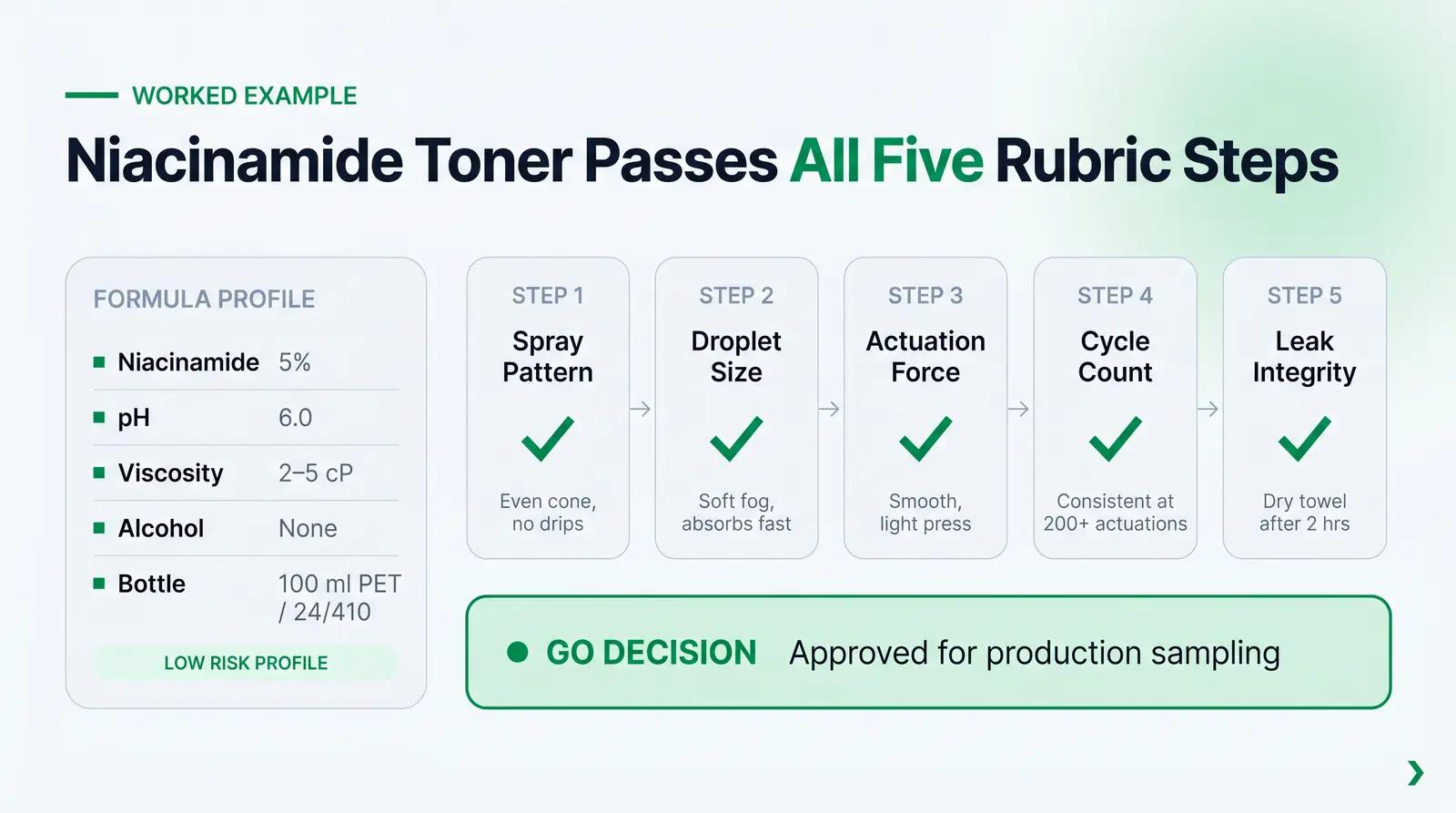
Let's walk through a realistic scenario using The Fine Mist Sprayer Evaluation Rubric. The formula is a water-based niacinamide toner: 5% niacinamide, pH ~6.0, viscosity ~2–5 cP (approximately water-thin), no alcohol, light glycerin content. The bottle is a 3.4 fl oz (100 ml) PET bottle with a standard 24/410 neck finish. The candidate sprayer is a standard fine mist pump with a stated output of 0.12–0.15 ml per actuation and a PP closure with a standard gasket.
Step 1: Spray Pattern. You tape a matte black card to a vertical surface and spray the toner from 6 inches (15 cm) away. The pattern is a wide, even cone approximately 3 inches (7.5 cm) in diameter with no heavy center concentration and no visible dripping at the nozzle. Record: Pass.
Step 2: Droplet Size. You mist the toner onto the back of your hand. It feels like a soft, cool cloud and absorbs within seconds without leaving distinct wet spots or running toward the wrist. Record: Pass.
Step 3: Actuation Force. The pump depresses smoothly with light pressure from the index finger and returns to the starting position quickly without sticking. Record: Pass.
Step 4: Cycle Count. You actuate the pump 200 times over two test sessions, using the actual niacinamide toner formula. The mist remains consistent throughout, and the nozzle shows no signs of glycerin buildup or clogging. Output weight per actuation, measured at intervals with a precision scale, remains within the stated 0.12–0.15 ml range. Record: Pass.
Step 5: Leak Integrity. You fill the bottle to 90% capacity, secure the sprayer to the recommended torque, and leave it inverted on a white paper towel for 2 hours. The paper towel remains completely dry, and the collar shows no seepage. Record: Pass.
Go/No-Go Decision: Go. The sprayer performs flawlessly with this specific low-viscosity, water-based formula. The pH of 6.0 is well within the safe range for the standard SUS304H spring, and the absence of alcohol or oils eliminates the primary compatibility risks. This configuration is approved for production sampling.
What to Record During Sample Review (and Why Documentation Matters)
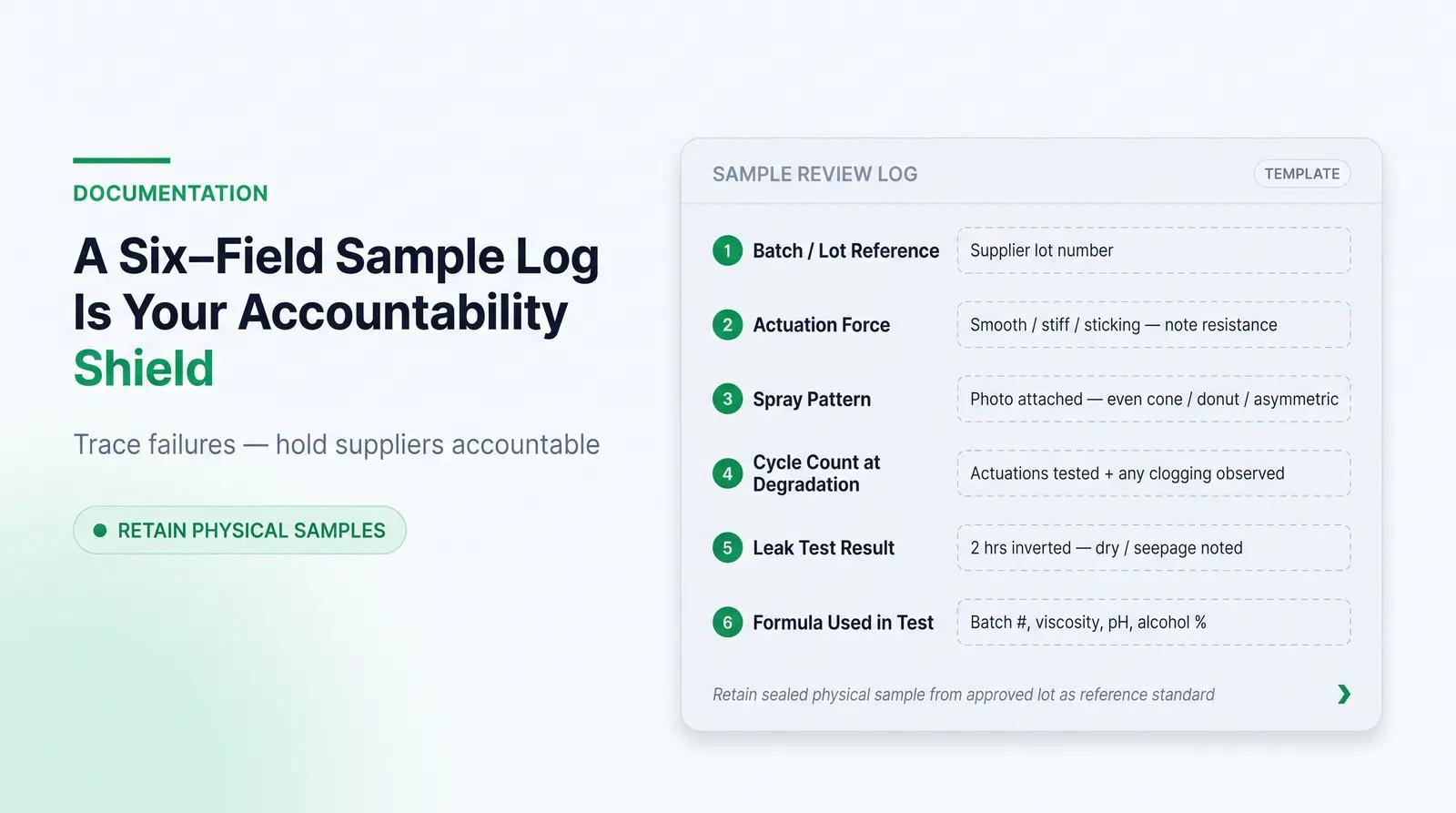
Rigorous documentation during sample review is not bureaucratic overhead. It is the founder's primary protection if a production batch ever performs differently from the approved samples. Building a sample-review log creates a defensible record that allows you to hold suppliers accountable and trace the root cause of any post-production quality issues.
Your sample-review log should include the following fields for each candidate component:
- Batch/Lot Reference: The specific supplier lot number of the sprayer samples received.
- Actuation Force: Qualitative notes on the ergonomic feel (e.g., "smooth, light resistance; returns cleanly") or a measured value if a force gauge is available.
- Spray Pattern: Photographs of the spray pattern on a test card, taken from a defined distance, with the date and formula batch noted.
- Cycle Count at Degradation: The number of actuations tested and any signs of degradation (clogging, output reduction, pattern change).
- Leak Test Result: Duration of the inversion test, conditions (temperature, formula fill level), and the outcome.
- Formula Used in Test: The exact formula batch number and key parameters (viscosity, pH, alcohol content) used during testing.
Retain physical samples from the approved lot as reference standards. Store them in a sealed bag with the lot reference and approval date. If a future production shipment exhibits sputtering, leaking, or clogging, you have documented proof and physical benchmarks to compare against. This documentation also supports any warranty or replacement claim with the supplier.
Packfolio's catalog includes vetted fine mist sprayer SKUs with defined neck finishes and 3D-previewed bottle pairings, allowing founders to evaluate packaging configurations before ordering samples. This reduces the number of iteration cycles and ensures compatibility from the start. Browse the full range at packfolio.com/catalog. For a deeper look at how neck finish standards affect component interchangeability, see the related guide on cosmetic bottle neck finishes.
Comparison: Fine Mist Pump vs. Continuous Spray vs. Trigger Sprayer
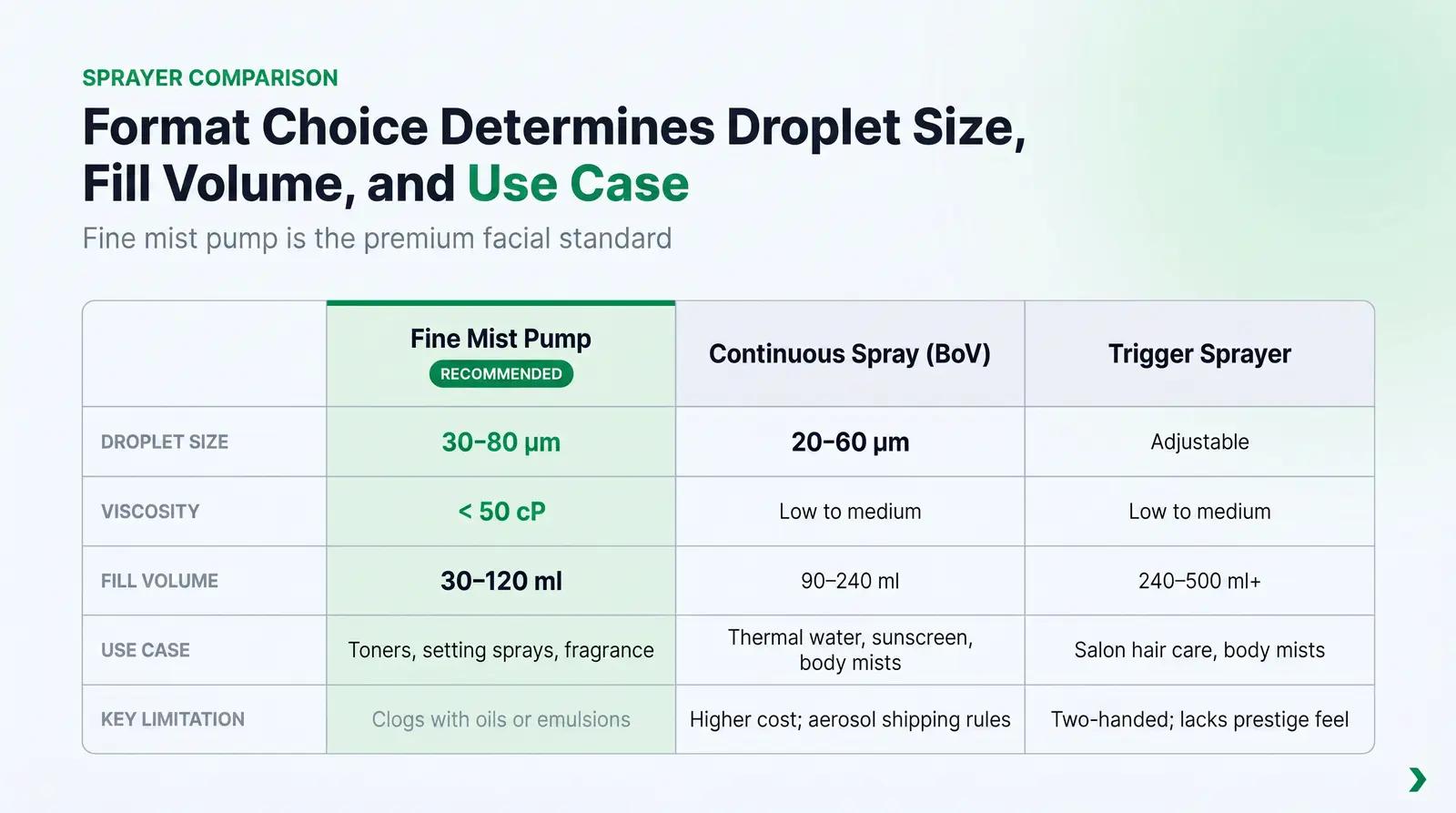
| Sprayer Type | Typical Droplet Size | Best Formula Viscosity | Ideal Fill Volume | Common Use Case | Key Limitation |
|---|---|---|---|---|---|
| Fine Mist Pump | 30–80 microns [2] | Under 50 cP (water-thin) [6] | 1 fl oz – 4 fl oz (30–120 ml) | Facial toners, setting sprays, fragrance | Prone to clogging with oils or emulsions; requires low-viscosity formula. |
| Continuous Spray (Bag-on-Valve) | 20–60 microns | Low to medium | 3 fl oz – 8 fl oz (90–240 ml) | Thermal water mists, sunscreen sprays, body mists | Higher manufacturing cost; regulatory shipping constraints for aerosol formats. |
| Trigger Sprayer | Adjustable (mist to stream) | Low to medium | 8 fl oz – 16 fl oz+ (240–500 ml+) | Salon hair care, body mists, professional cleaning | Two-handed operation; lacks the premium, one-hand convenience expected in prestige cosmetics [6]. |
Spray quality is a brand-defining sensory feature, and rigorous sample testing is how founders protect it. By understanding the mechanics, evaluating compatibility, and documenting performance, you ensure that your customer's first impression is exactly as you intended. The investment in a thorough sample-review process, using a structured rubric, testing with the actual formula, and keeping detailed records, is the most reliable way to prevent costly production surprises and protect the sensory promise your product makes.
Browse Packfolio's curated fine mist sprayer and facial mist bottle catalog. Preview your label in 3D before ordering → packfolio.com/catalog
Frequently Asked Questions
What droplet size is considered a fine mist for facial use? For facial applications, a droplet size between 30 and 80 microns is generally considered a fine mist, with premium facial mists and fragrances targeting the lower end of this range (30–50 microns) for maximum elegance and faster skin absorption [2]. This range ensures the liquid feels like a soft cloud, providing even coverage that absorbs quickly without disrupting makeup or leaving heavy wet spots. Droplets above 100 microns will feel noticeably coarser and are more likely to run on the skin.
How do I know if my formula is compatible with a fine mist sprayer? Compatibility depends on viscosity, chemical composition, and pH. Water-thin formulas under 50 cP perform best with standard fine mist sprayers [6]. High alcohol content or essential oils require specific gasket materials to prevent swelling or degradation, and formulas with a pH below 5.5 may require a SUS316L spring instead of the standard SUS304H [8]. Always test your actual formula in the sprayer samples before bulk ordering, and request the pump's bill of materials to verify internal component compatibility.
What is the standard neck finish for facial mist spray bottles? The most common neck finishes for cosmetic facial mist bottles are 24/410 and 20/410. The first number refers to the neck diameter in millimeters, and the second refers to the thread finish style. Ensuring the sprayer closure matches the bottle's neck finish exactly is critical to prevent leaks and ensure proper torque application during filling. A 24/410 sprayer will not seat correctly on a 20/410 bottle neck, even though the diameter difference is small.
How do I test a spray bottle for leaks before a production run? The most accessible method is the inversion test: fill the bottle with your formula, secure the sprayer, and leave it upside down on a white absorbent surface for at least 2 hours. Any seepage will be visible. For products intended for e-commerce or air freight, a vacuum leak test simulates the pressure changes of an airplane cargo hold and is a more rigorous standard [5]. Both tests should be performed with the actual formula, as liquid viscosity and surface tension affect how quickly leaks manifest.
Can fine mist sprayers work with oil-based or emulsified facial formulas? Generally, standard fine mist sprayers struggle with oil-based or emulsified formulas because the heavier lipids can build up and clog the micro-orifices as the lighter carriers evaporate between uses [7]. For light oil-in-water emulsions with low lipid content, some specialized sprayers may perform adequately, but this requires testing with the actual formula. For formulas with significant oil content, a treatment pump or a specialized high-viscosity sprayer is usually a better choice, accepting the trade-off of larger droplet size.
References
[1] The Science Behind a Perfect Fine Mist: A Complete Guide for Smarter Cosmetic Packaging Choices. North Penn Now. November 2025. https://northpennnow.com/news/2025/nov/20/the-science-behind-a-perfect-fine-mist-a-complete-guide-for-smarter-cosmetic-packaging-choices/
[2] What is a Fine Mist Sprayer: The Ultimate Guide. UKPACK. September 2025. https://www.ukpackchina.com/what-is-a-fine-mist-sprayer/
[3] Pump and Sprayer Compatibility Explained. Bottle Source Corp. May 2026. https://bottlesourcecorp.com/blogs/news/pump-and-sprayer-compatibility
[4] What's inside a fine mist sprayer and how does it work? O.Berk Packaging Crash Course. https://www.oberk.com/packaging-crash-course/whats-inside-a-fine-mist-sprayer
[5] Leakage Testing in Cosmetic Packaging: Why It Matters for Manufacturing and Brands. Dalica Packaging. https://www.dalicapkg.com/leakage-testing-in-cosmetic-packaging/
[6] 6 Cosmetic Spray Pump Types: Manufacturer's Selection Guide. Oulete. February 2026. https://www.oulete.cn/blog/cosmetic-spray-pump-types/
[7] How to Choose a Cosmetic Dispensing Pump: Sizes, Types and Output. HCC Packaging. May 2026. https://hccpackaging.com/how-to-choose-the-perfect-dispensing-pump-for-your-bottle/
[8] How to choose a spray pump? Sengcze Industry News. https://www.sengcze.com/news/industry-news/how-to-choose-a-spray-pump.html
[9] Berrada-Gomez MP, Bui B, Bondarenko H, Ferret PJ. Particle size distribution in the evaluation of the inhalation toxicity of cosmetic spray products. Regulatory Toxicology and Pharmacology. 2023 Mar;139:105359. https://pubmed.ncbi.nlm.nih.gov/36805297/
[10] Consumer Testing Guides Ergonomic, Senior-Friendly Packaging Design. Packaging Digest. March 2025. https://www.packagingdigest.com/packaging-design/consumer-testing-guides-ergonomic-senior-friendly-packaging-design
[11] How do you test lotion pump durability? APG Packaging. https://apackaginggroup.com/blogs/news/how-do-you-test-lotion-pump-durability


