
How to Avoid Broken Glass Bottles When Ordering Cosmetic Packaging
Founders can prevent glass cosmetic packaging breakage by specifying double-wall cartons, molded pulp inserts, AQL inspections, damage allowance clauses, and verified palletization standards in every purchase order.
A founder waits eight weeks for a sea freight shipment of 2,000 amber glass dropper bottles, only to open the export cartons and find cracked necks, scratched shoulders, and a film of glass dust coating the bottles at the bottom of each inner box. The launch is delayed, the deposit is lost, and the only immediate solution is an expensive, expedited air freight order to cover the shortfall. This scenario plays out constantly in founder communities, driven by a misunderstanding of how glass behaves in transit and what exactly needs to be specified in a purchase order to protect it.
Glass packaging is the gold standard for premium beauty brands. It is chemically inert, signals quality through its weight, and protects sensitive formulations like vitamin C and retinol from UV degradation when amber or coated glass is used [1]. However, glass has almost no flexibility. The long journey from an overseas manufacturing facility to a domestic warehouse exposes it to a gauntlet of vibration, shock, and pressure. Understanding the root causes of transit damage and implementing strict packaging and inspection standards can mean the difference between a successful launch and a supply chain disaster.
Why Glass Cosmetic Packaging Breaks in Transit
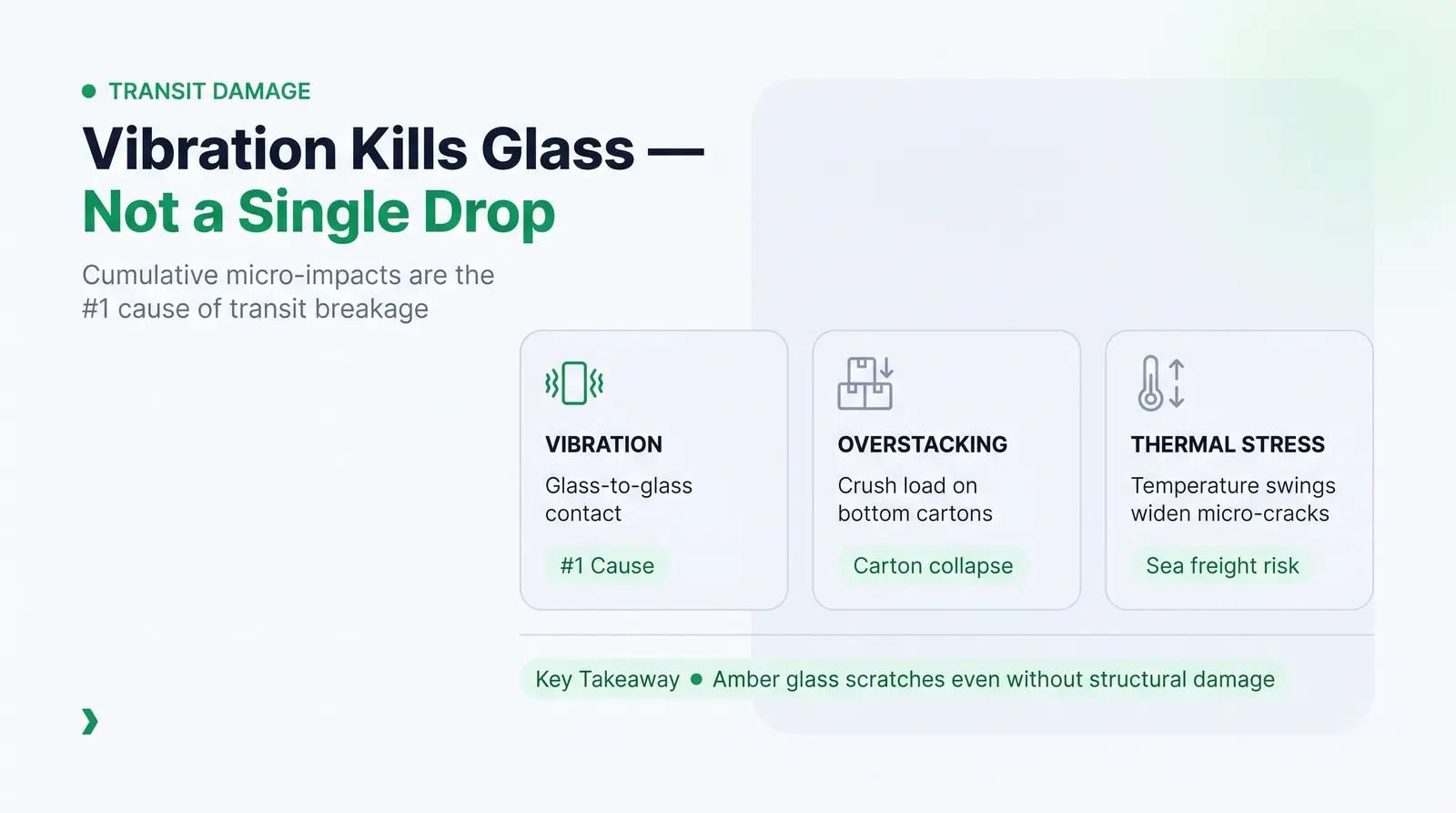
The primary cause of glass breakage in transit is not a single catastrophic drop, but the cumulative effect of vibration and micro-impacts [2]. During long-haul sea freight or truck transport, constant vibration causes glass-to-glass contact if the bottles are not properly isolated. Even minor shocks can concentrate stress at a corner or edge, causing a hairline fracture that blooms under further vibration [3].
Overstacking is another major culprit. If export cartons are not strong enough to bear the weight of the boxes stacked above them, the bottom layers crush, transferring the load directly onto the fragile glass components inside [2]. Rapid temperature changes during transit can also induce thermal stress, widening microscopic flaws into visible breaks [3].
For cosmetic packaging, surface abrasion is often as problematic as shattering. Amber glass, frequently chosen for its UV-blocking properties [4], is particularly susceptible to visible scratching. When bottles shift and rub against each other or against rough cardboard inserts, the friction creates scuffs and scratches that render the packaging unsellable for a premium product, even if the structural integrity of the bottle remains intact.
Export Carton and Inner Packaging Specifications
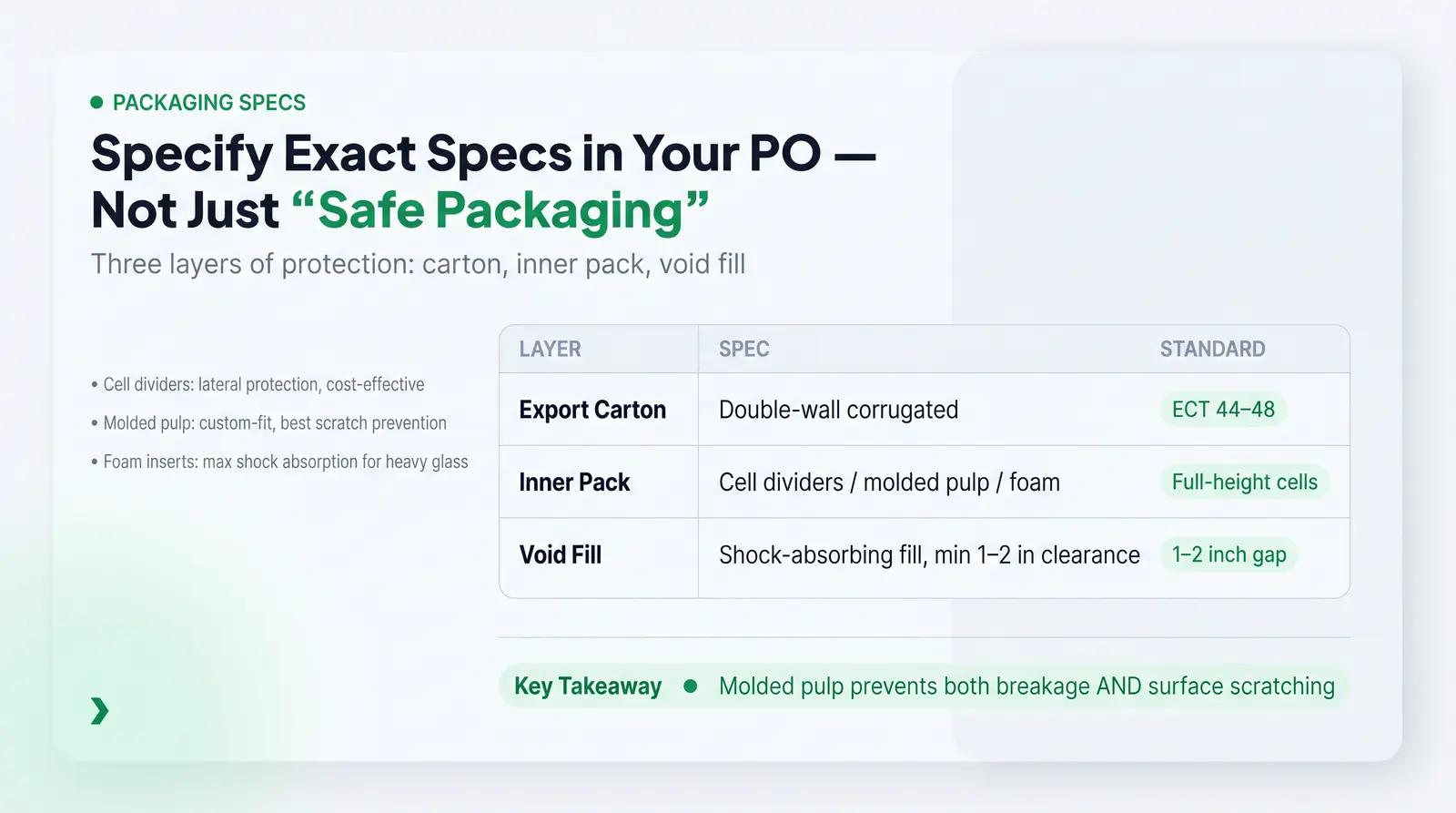
To prevent glass-to-glass contact and crush damage, founders must move beyond vague requests for "safe packaging" and specify exact requirements in their purchase orders.
Export Cartons: Specify double-wall corrugated cardboard for all export cartons. The industry standard for export shipping is a minimum Edge Crush Test (ECT) rating of 44 to 48 for double-wall boxes [5]. This ensures the carton can withstand the stacking pressure in a shipping container without collapsing.
Inner Packaging: The goal of inner packaging is to immobilize each bottle and prevent any contact.
- Cell Dividers: Corrugated or solid fiberboard partitions create individual cells for each bottle. They are cost-effective and provide excellent lateral protection [3]. Ensure the dividers extend the full height of the bottle to prevent tilting.
- Molded Pulp: Made from recycled paper, molded pulp trays are custom-formed to cradle the specific shape of the bottle [6]. They offer superior shock absorption and hold the bottles snugly, preventing both breakage and scratching.
- Foam Inserts: While less eco-friendly, foam inserts (like EPE or EVA) provide the highest level of shock absorption and are often used for very heavy or high-value glass [2].
Clearance and Void Fill: Specify a minimum clearance between the bottles and the outer carton walls (typically 1 to 2 inches) [7]. This space must be filled with shock-absorbing void fill to isolate the inner boxes from external impacts.
Palletization Standards
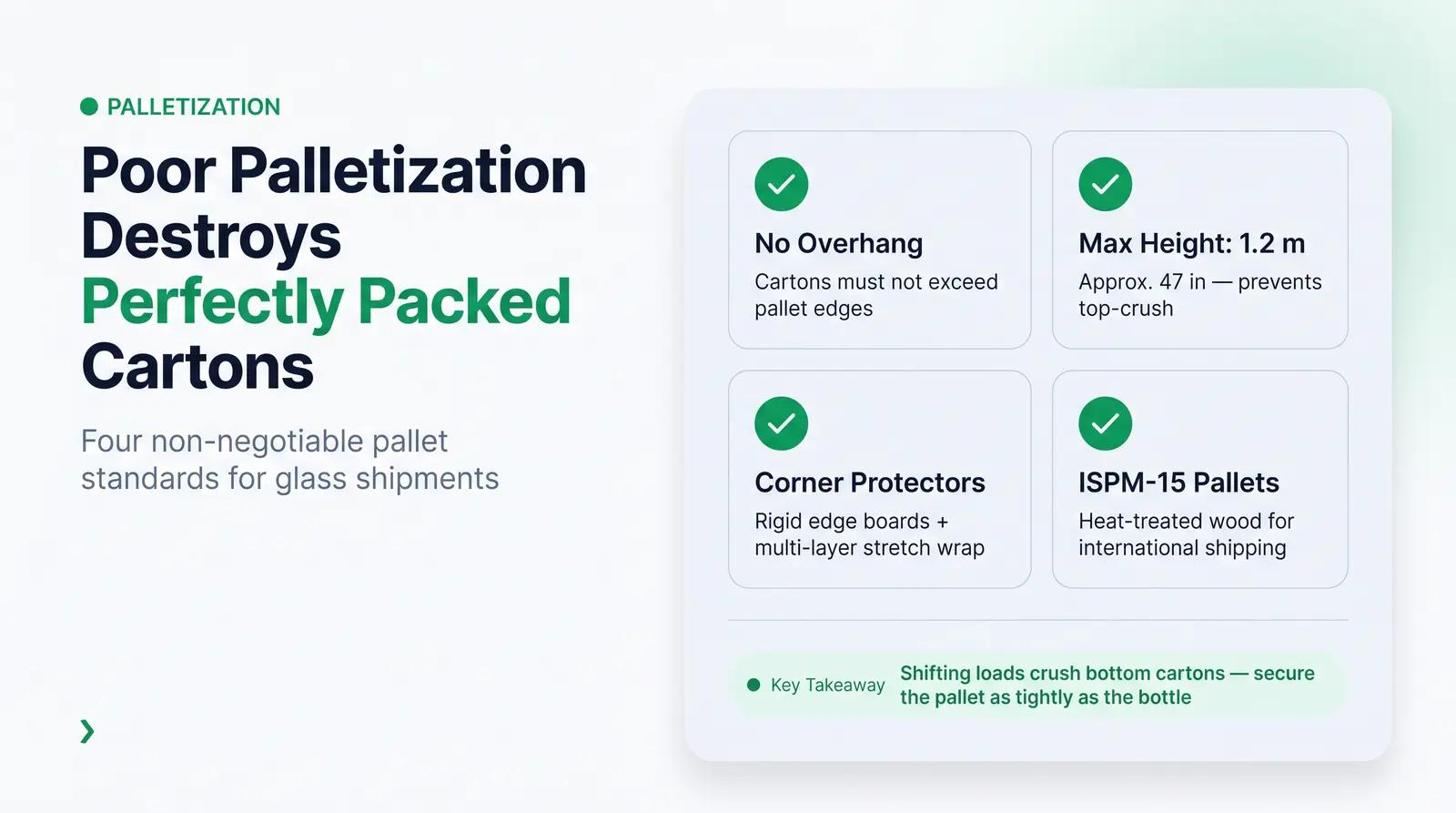
How the export cartons are stacked and secured on a pallet is just as critical as the cartons themselves. Poor palletization leads to shifting loads and crushed boxes.
Require pallets to be built with a flat, non-slip base and ensure that the cartons do not overhang the edges of the pallet [2]. The total height of the loaded pallet should typically not exceed 1.2 meters (approx. 47 inches) to minimize the risk of top-crush damage and instability [2].
Specify the use of rigid corner protectors (edge boards) on all four corners of the palletized load, secured tightly with multiple layers of stretch wrap [2]. For international shipping, ensure the wooden pallets comply with ISPM-15 standards, which require the wood to be heat-treated or fumigated to prevent the spread of pests [8].
Drop Testing and Vibration Testing
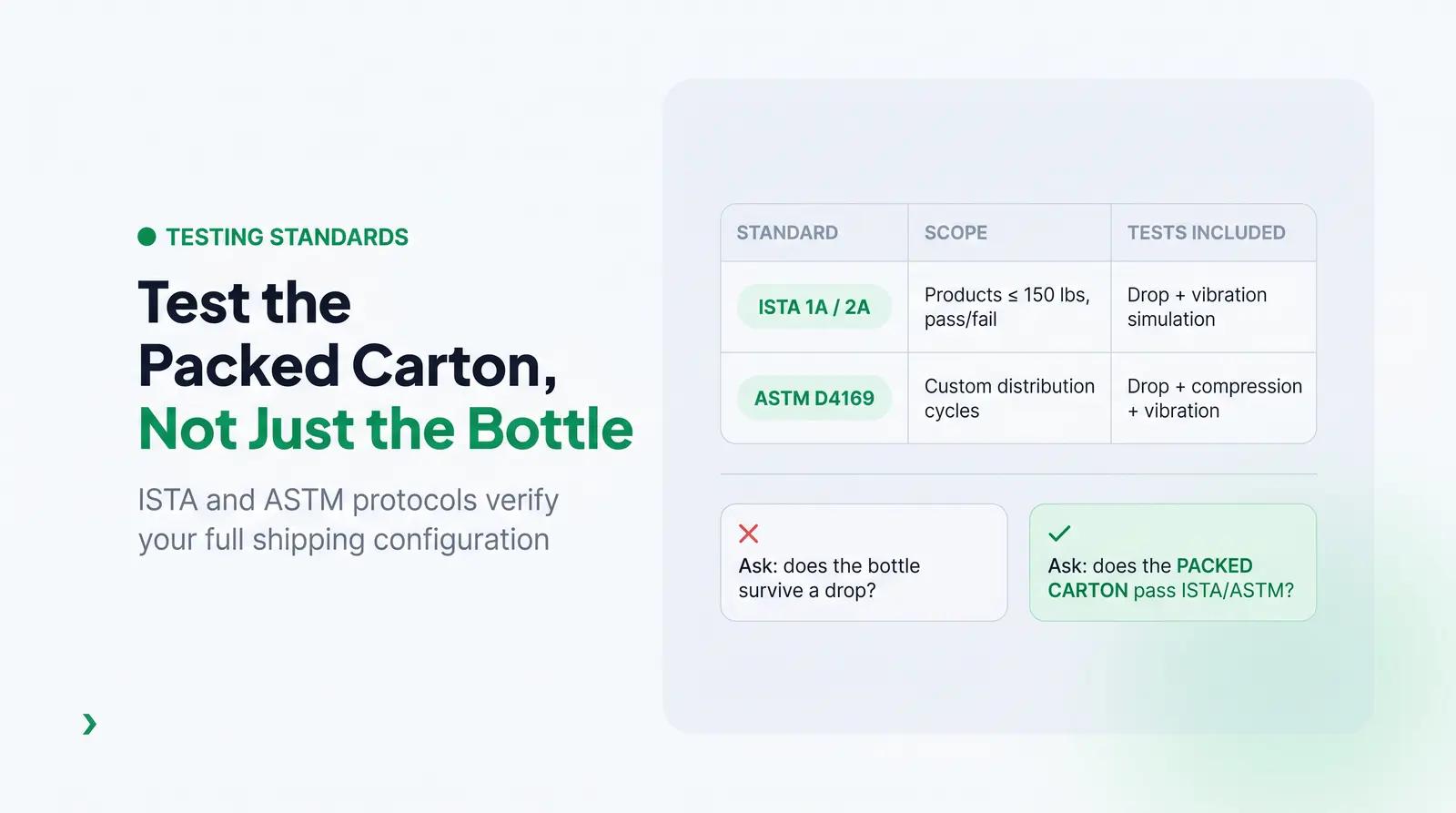
To verify that the packaging configuration can survive the journey, founders should require testing based on recognized international standards. The two most relevant bodies are the International Safe Transit Association (ISTA) and ASTM International.
- ISTA Series 1A and 2A: These protocols are designed for individually packaged products weighing 150 lbs or less [9]. They involve a series of drop tests from specific heights and vibration tests to simulate the distribution environment.
- ASTM D4169: This standard outlines a comprehensive practice for performance testing of shipping containers and systems, simulating various distribution cycles (e.g., air, rail, truck) and evaluating performance against drops, compression, and vibration [10].
It is crucial to distinguish between the strength of the glass bottle itself and the performance of the shipping configuration. A bottle might survive a drop test on its own, but the real question is whether the fully packed export carton can survive the ISTA or ASTM protocols. Ask the supplier if their proposed export packaging has been tested to these standards and request the test report.
Damage Allowances: The Clause Most Founders Forget
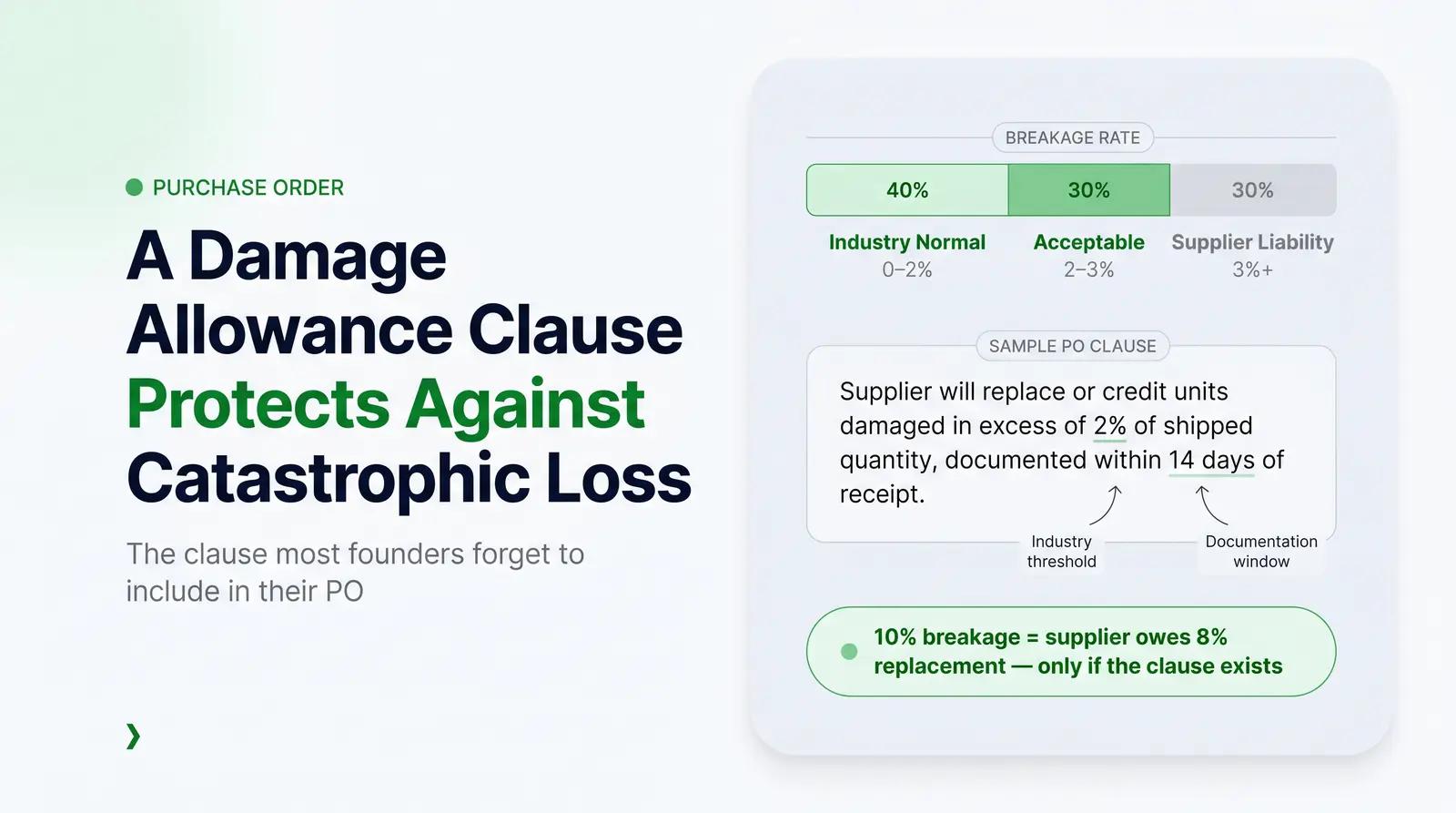
In international freight, a 0% breakage rate for glass is unrealistic without spending an exorbitant amount on specialized packaging [11]. The industry-standard acceptable breakage rate for sea shipments of glass is typically between 2% and 3% [11].
A standard purchase order should include a specific damage allowance clause. For example: "Supplier will replace or credit units damaged in excess of 2% of the shipped quantity, provided damage is documented within 14 days of receipt." This protects the buyer from catastrophic losses while acknowledging the realities of long-distance transport. If a shipment arrives with 10% breakage, the supplier is contractually obligated to cover the excess 8% [11].
Pre-Shipment Inspection and Inspection Photos
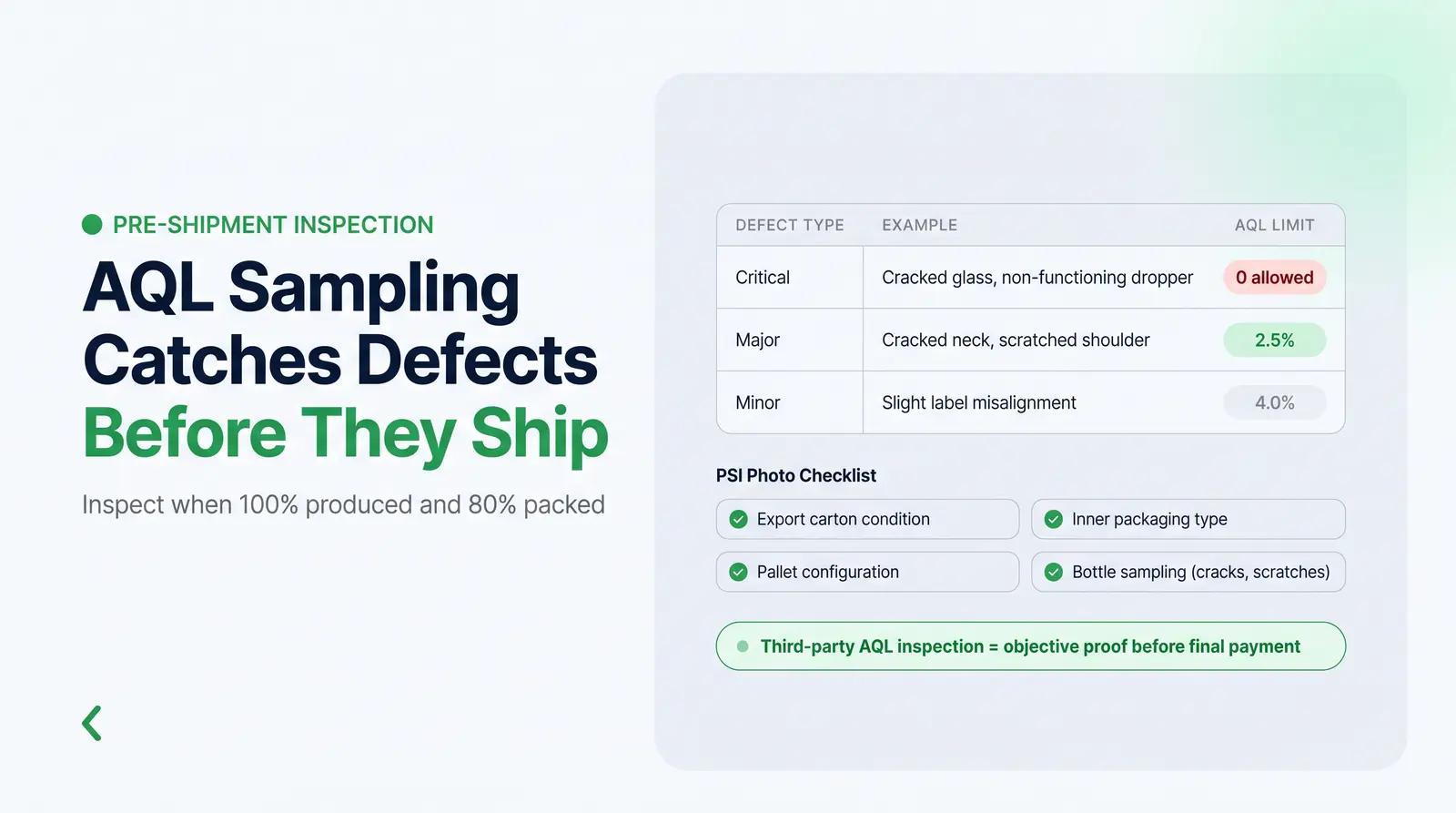
Never pay the final balance on an order without verifying the quality and the packaging. A Pre-Shipment Inspection (PSI) is conducted when production is 100% complete and at least 80% of the goods are packed [12].
For cosmetic packaging, the PSI should follow a statistical sampling method, most commonly the Acceptable Quality Limit (AQL) standard (e.g., ANSI/ASQ Z1.4 or ISO 2859-1) [12]. A standard AQL might allow 0 critical defects, 2.5% major defects (e.g., cracked glass, non-functioning droppers), and 4.0% minor defects (e.g., slight label misalignment) [12].
The inspection report must include clear photographic evidence of:
- The condition of the export cartons (checking for correct ECT ratings and double-wall construction).
- The inner packaging (verifying the use of specified dividers or molded pulp).
- The pallet configuration (checking corner protectors and stretch wrap).
- Random sampling of the bottles for scratches, cracks, and functional defects.
For larger orders, hiring an independent third-party inspection agency in the origin country is a necessary investment to ensure objectivity [12].
Freight Method Selection: Sea vs. Air vs. Domestic Stock
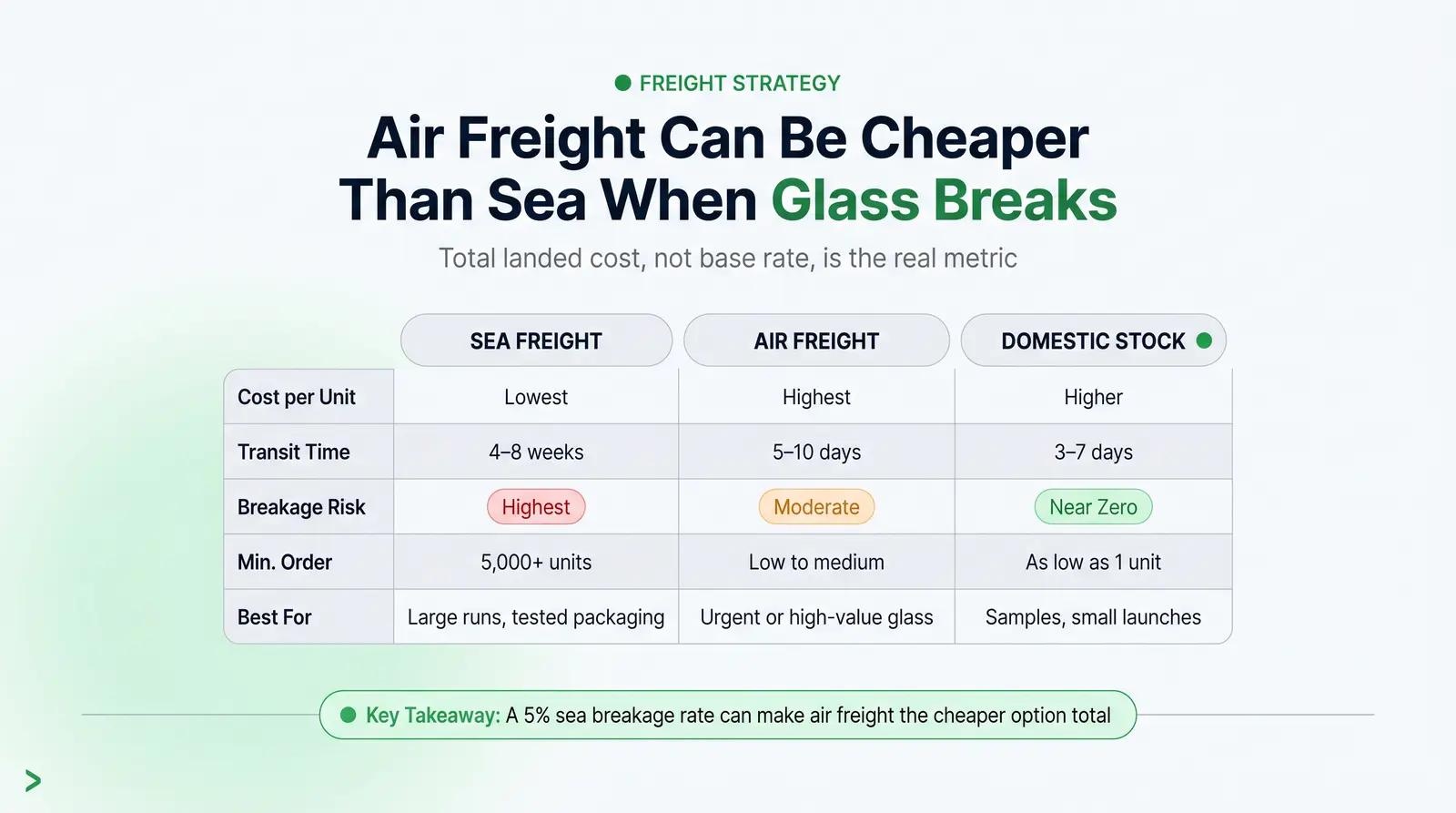
The choice of freight method significantly impacts the total landed cost and the risk profile of the shipment.
| Freight Method | Cost per Unit | Transit Time | Breakage Risk | Minimum Order Quantity (MOQ) | Best Use Case |
|---|---|---|---|---|---|
| Sea Freight | Lowest | 4–8 weeks | Highest (due to prolonged vibration and handling) | High (typically 5,000+ units) | Large production runs with rigorous, tested packaging specifications. |
| Air Freight | Highest | 5–10 days | Moderate (less vibration, but still subject to handling shocks) | Low to Medium | Smaller urgent orders, high-value fragile specialty glass, or covering unexpected shortfalls. |
| Domestic / On-Demand Stock | Higher | 3–7 days | Lowest (near-zero transit breakage risk) | Very Low (often starting at 1 unit) | Sample-stage founders, small-batch launches, or brands needing predictable supply without freight overhead. |
The Contrarian Insight: While air freight has a significantly higher base cost per unit than sea freight [13], it can sometimes result in a lower total landed cost for small brands when all variables are considered. If a sea freight shipment suffers a 5% breakage rate on a critical component, the costs compound quickly: the lost product value, the cost of manufacturing replacement units, the premium air freight required to rush the replacements, and the unquantifiable cost of a delayed launch or out-of-stock retail shelves. For high-value, fragile glass where the launch timeline is inflexible, the upfront premium of air freight acts as an insurance policy against these cascading failures.
The Glass Packaging Damage-Risk Assessment Checklist
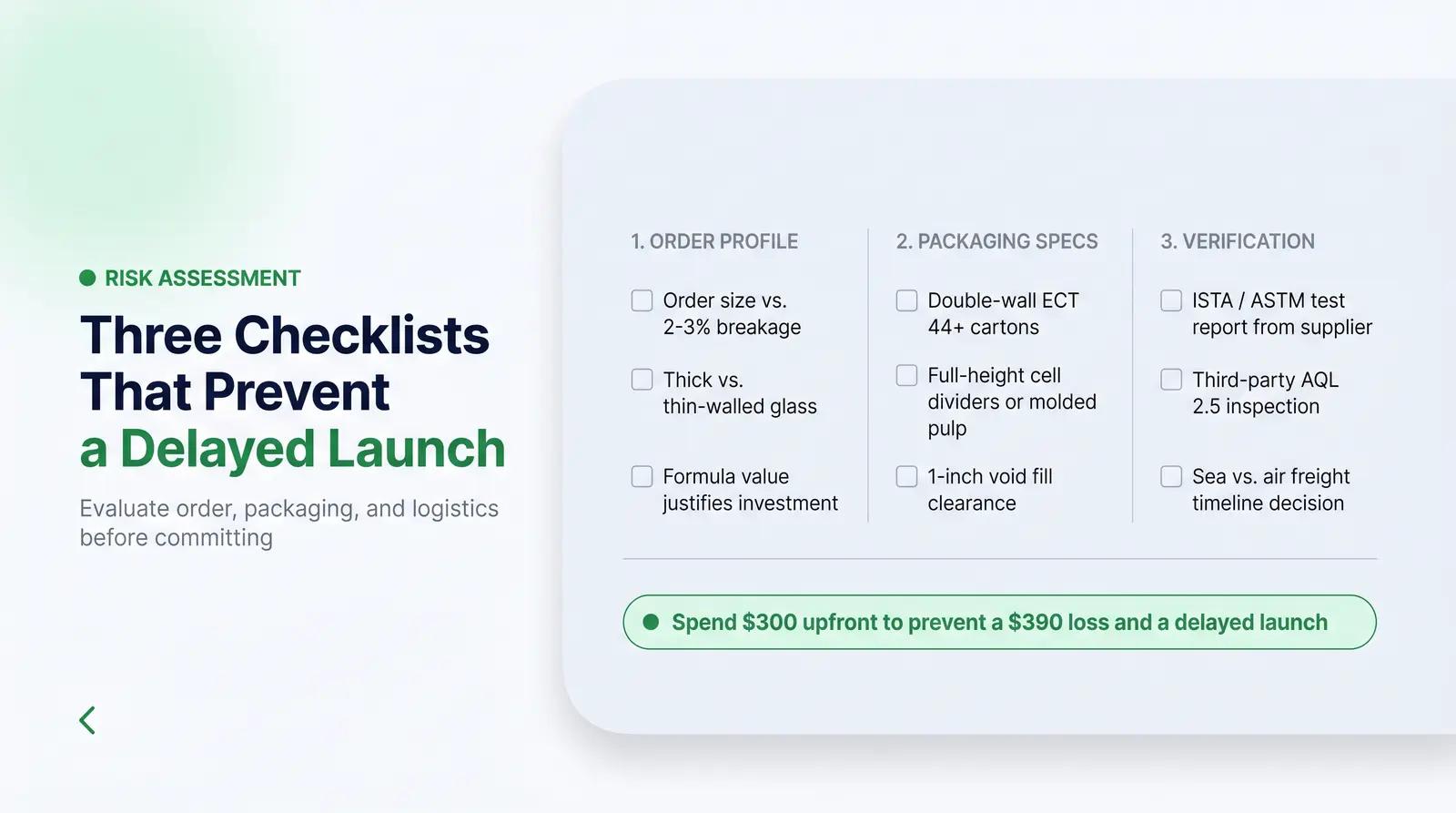
Use this framework to evaluate your specific situation and decide where to invest in additional protection.
1. Order and Product Profile
- Order Size: Is the order large enough to absorb a 2-3% breakage allowance, or will a few broken units jeopardize the launch?
- Glass Type: Is the glass thick-walled (luxury fragrance) or thin-walled (standard serums)? Is it amber or coated glass, which shows scratches more easily?
- Value: What is the cost of the formula going into the bottle? (High-value formulas justify higher packaging investment).
2. Packaging Specifications
- Export Cartons: Are double-wall corrugated boxes (ECT 44+) specified in the PO?
- Inner Protection: Are full-height cell dividers, molded pulp, or foam inserts specified?
- Clearance: Is there at least 1 inch of void fill clearance between the inner boxes and the outer carton?
3. Verification and Logistics
- Testing: Has the supplier provided ISTA or ASTM drop/vibration test reports for the packed carton?
- Inspection: Is a third-party AQL 2.5 pre-shipment inspection scheduled?
- Freight: Does the timeline allow for sea freight, or does the risk of delay necessitate air freight or domestic sourcing?
Supplier Vetting Questions
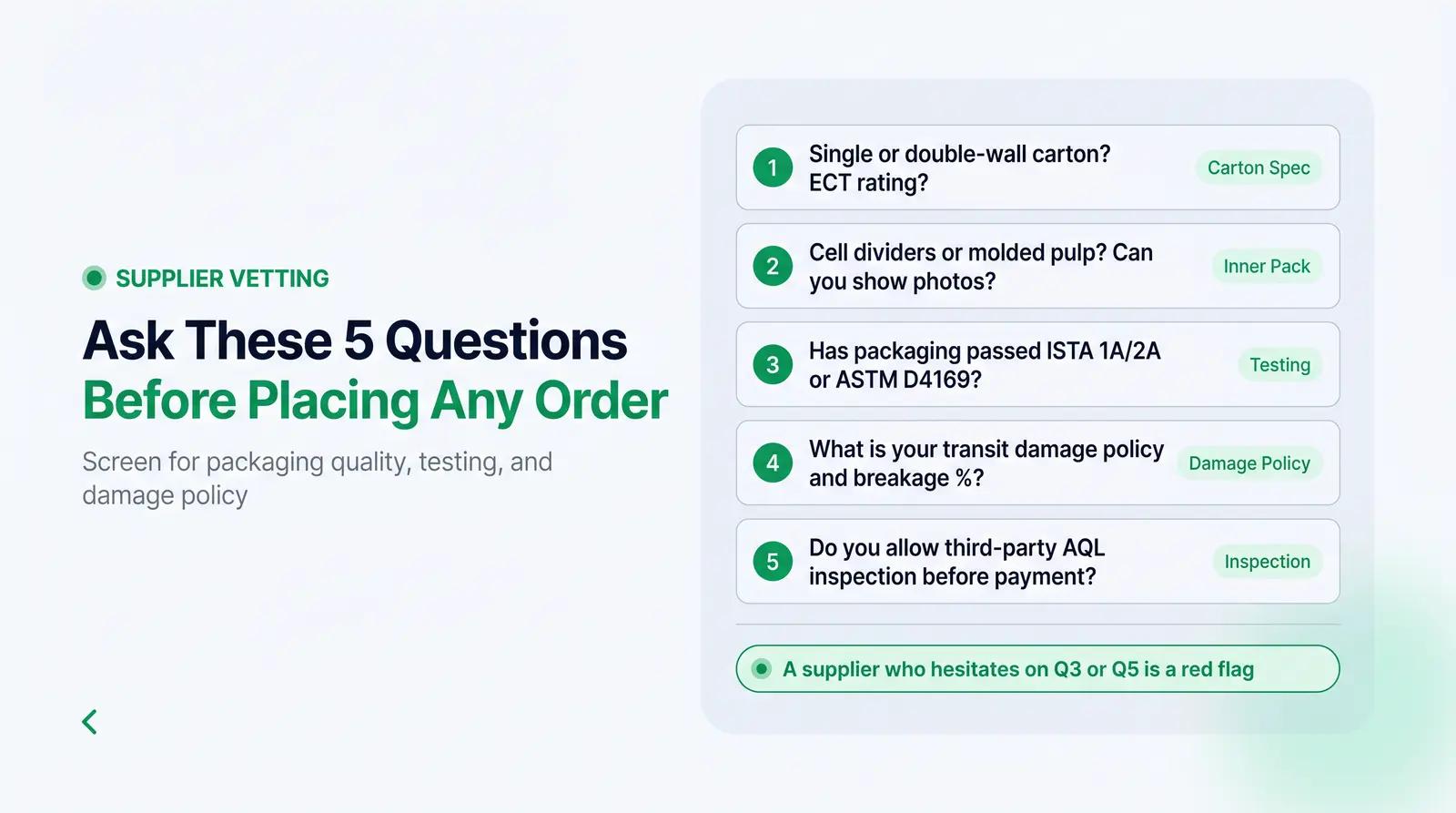
Before placing an order, ask potential suppliers these specific questions:
- What is your standard export carton specification (single vs. double wall, ECT rating)?
- Do you use cell dividers or molded pulp for inner packaging, and can you provide photos of a fully packed box?
- Has your standard shipping configuration passed ISTA 1A/2A or ASTM D4169 testing?
- What is your policy for transit damage, and what breakage percentage is covered in your standard damage allowance clause?
- Do you allow third-party AQL inspections prior to final payment?
A Worked Example: The True Cost of Breakage
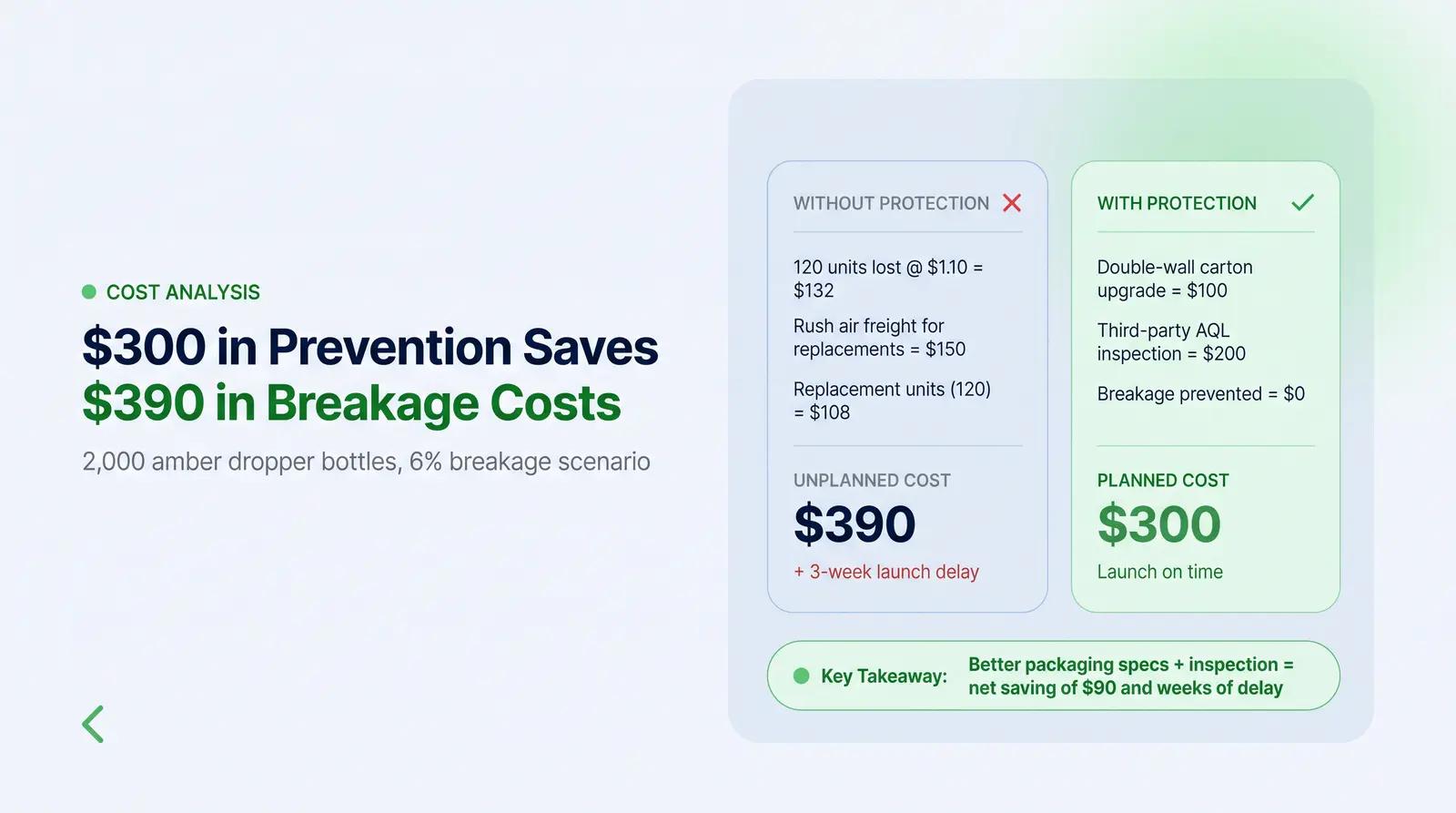
Consider a founder who orders 2,000 units of 30 ml (1 oz) amber glass dropper bottles at $0.90/unit from an overseas supplier. Sea freight adds approximately $0.20/unit.
The supplier uses single-wall cartons with insufficient inner dividers. The purchase order does not include a damage allowance clause.
Upon arrival, the founder discovers a 6% breakage rate (120 units lost).
- Direct Loss: 120 units x $1.10 (landed cost) = $132.
- The Shortfall: The launch requires exactly 2,000 units. The founder is short 120 units.
- The Fix: The founder must place a rush order for 120 replacement units. Because the MOQ is small and time is critical, they must use air freight.
- Replacement Cost: 120 units x $0.90 = $108. Air freight for the small parcel is $150. Total replacement cost = $258.
The total unplanned cost of the breakage is $390, plus a three-week delay while waiting for the replacements.
If the founder had spent an extra $0.05 per unit ($100 total) upfront to specify double-wall corrugated cartons and molded pulp inserts, and hired a third-party inspector ($200), they would have spent $300 to prevent a $390 loss and a delayed launch.
For founders who want to bypass this complex supply chain management entirely, on-demand platforms offer a streamlined alternative. Packfolio coordinates production, QC, and freight delivery so the customer never contacts a supplier directly, and the 3D preview guarantees the product they approved is what arrives. Browse Packfolio's curated glass packaging catalog and preview your label artwork on a photorealistic 3D model before committing to a production order. Explore the catalog →
Frequently Asked Questions
What is the difference between ISTA and ASTM testing? ISTA (International Safe Transit Association) focuses specifically on performance testing for packaged products in the transit environment, offering straightforward pass/fail protocols like Series 1A and 2A. ASTM D4169 is a broader, highly customizable standard that allows engineers to simulate specific distribution cycles (e.g., air, rail, truck) and is often required for highly regulated industries like medical devices, though it is also used for premium cosmetics.
Why does amber glass seem to scratch more easily than clear glass? Amber glass itself is not necessarily softer than clear (flint) glass; however, the dark background makes surface abrasions, scuffs, and glass dust highly visible. When amber bottles rub against rough corrugated dividers during transit, the resulting micro-scratches catch the light, making the bottle appear damaged even if its structural integrity is fine.
What is an AQL 2.5 inspection? AQL stands for Acceptable Quality Limit. It is a statistical sampling method used during pre-shipment inspections to determine how many defective units are allowed in a batch before the entire order is rejected. An AQL of 2.5 typically means that major defects (like a non-functioning pump or a cracked bottle) cannot exceed 2.5% of the sampled quantity.
Can I ask my supplier to use molded pulp instead of cardboard dividers? Yes. Molded pulp trays provide superior shock absorption and prevent the surface scratching often caused by rough cardboard dividers. While they may add a slight premium to the unit cost, they are highly recommended for heavy glass jars or premium amber bottles that require pristine surface finishes.
Who pays for the third-party pre-shipment inspection? The buyer typically pays for the independent third-party inspection agency to ensure neutrality. However, if the inspection fails and a re-inspection is required after the factory reworks the goods, the purchase order should stipulate that the supplier covers the cost of the second inspection.
References
- Amber Glass Bottles vs Clear Glass: Which Is Better? The Bottle Depot. 2025.
- How to Ship Glass Items Without Breaking HUIHE PACK. 2026.
- How to Reduce Glass Breakage During Shipping Without Extra Bulk Premier Packaging Products.
- The Complete Guide to Glass Packaging for Cosmetics & Fragrances Impacked Packaging. 2026.
- Understanding Shipping Box Strength EcoEnclose. 2024.
- How to Reduce the Chance of Glass Breaking During Transit Great Northern Fiber Interior Packaging.
- Best Practices for Packaging and Shipping Fragile Glass Products Gorilla Shipper. 2024.
- What is ISPM 15? A comprehensive guide for packaging requirements GWP Group. 2026.
- A Deep Dive into Package Testing Industry Best Practices Purple Diamond. 2023.
- ASTM D4169 Westpak.
- After-sales commitment: What forms of warranty service should you require from your glass supplier? PYGLASS. 2026.
- Pre-Shipment Inspection (PSI): Sampling Depth and What the Report Must Show Amarrie Cosmetics. 2026.
- Air Freight vs Sea Freight: Cost, Shipping, Carbon Footprint & More Freightos. 2026.


