
Boston Round Bottles for Cosmetics: Uses, Sizes, and Buying Tips
This guide helps cosmetic brands evaluate Boston round bottles by covering material selection, closure compatibility, size options, and sample inspection to match specific formulations.
The Boston round bottle is arguably the most recognizable primary packaging format in the world, trusted for over a century by apothecaries, chemists, and beauty brands alike. Its sturdy cylindrical base, curved shoulders, and narrow neck make it feel like an automatic, fail-safe choice for any liquid formula. However, treating the Boston round as a default grab-and-go option is a common misstep in beauty product development. The reality is that this classic shape demands careful matching to your specific formula viscosity, chemical profile, and dispensing requirements. A serum that thrives in a glass Boston round with a dropper might oxidize rapidly or struggle to dispense if the neck finish or closure is mismatched.
This guide breaks down exactly how to evaluate the Boston round format for your cosmetic formulations. We will explore material selection, closure compatibility, label area constraints, and the reality of industry standardization, helping you determine if this iconic bottle is the right vessel for your brand.
Use Cases by Formula Type and Brand Tier
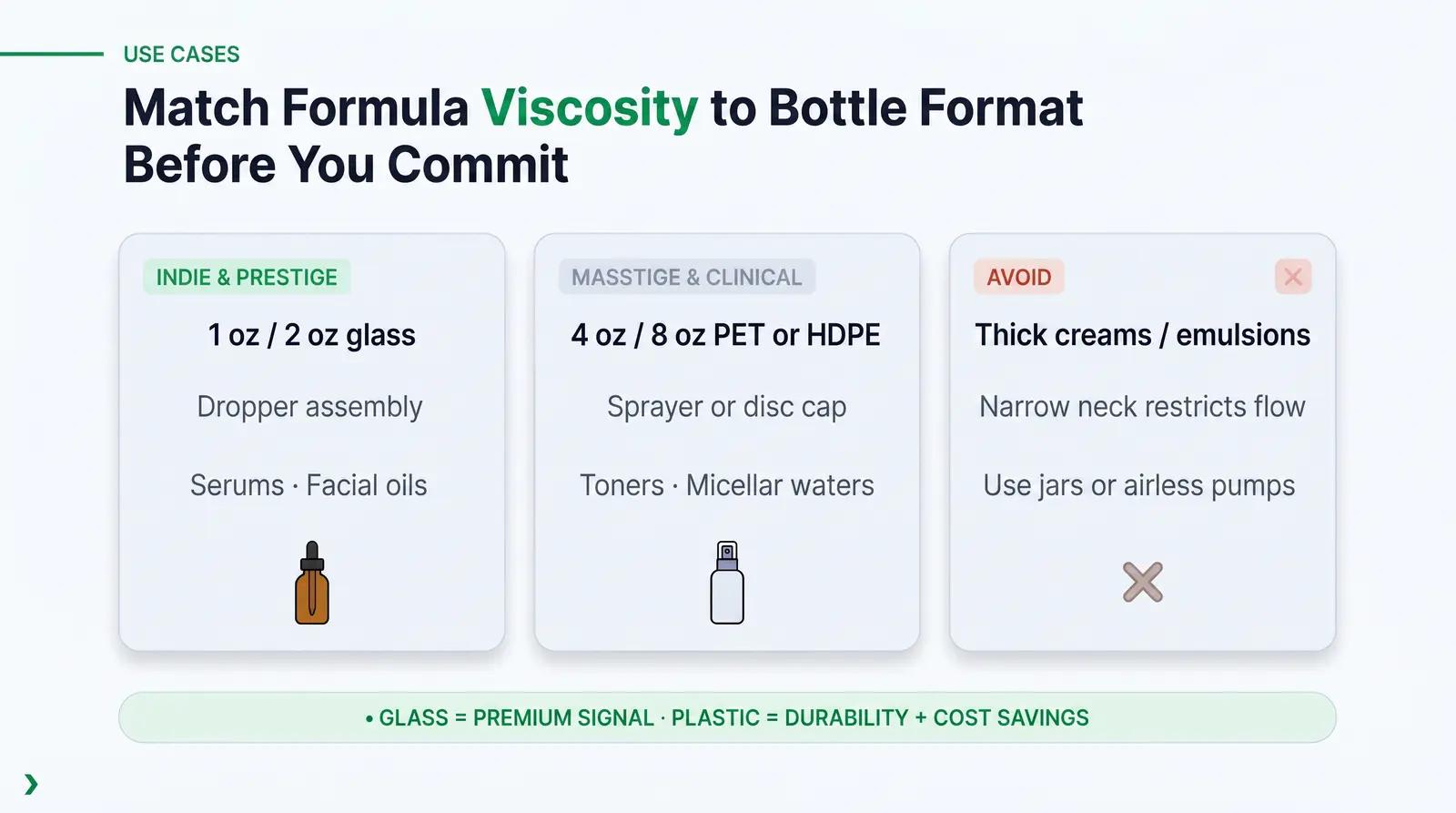
The Boston round's versatility makes it suitable for a wide range of cosmetic products, but its success depends heavily on the formula's characteristics and the brand's market positioning. In the indie and prestige beauty tiers, glass Boston rounds are heavily favored for facial serums, facial oils, and concentrated liquid exfoliants. The weight of the glass imparts a premium, substantial feel in the hand, signaling quality and luxury to the consumer. These high-value formulas typically utilize 1 oz (30 ml) or 2 oz (60 ml) sizes, paired with glass droppers for precise, ritualistic application. The clarity of flint glass showcases the vibrant colors of botanical extracts, while the protective qualities of amber glass preserve the integrity of potent active ingredients.
For masstige and clinical skincare brands, plastic Boston rounds (particularly PET and HDPE) offer a practical, shatterproof alternative without sacrificing the classic silhouette. These materials are frequently used for daily-use products like toners, micellar waters, and lightweight body oils in larger 4 oz (120 ml) or 8 oz (240 ml) sizes. The flexibility of plastic also allows for pairing with fine-mist sprayers or disc caps, which are ideal for formulas meant to be applied directly to a cotton pad or spritzed over the face and body. The lighter weight of plastic significantly reduces shipping costs and environmental impact during transportation, making it an attractive option for high-volume consumer goods.
Thicker emulsions, such as heavy creams or highly viscous lotions, generally do not perform well in Boston rounds. The narrow neck, while excellent for controlled pouring of liquids, restricts the flow of dense formulas, leading to consumer frustration as the product nears the bottom of the bottle. For these textures, wide-mouth jars or airless pumps are significantly more effective. Attempting to force a high-viscosity cream through a standard Boston round neck finish often results in uneven dispensing and product waste, compromising the overall user experience and potentially damaging the brand's reputation for quality.
Material Selection: Glass vs. Plastic
Selecting the right material for your Boston round is a foundational decision that impacts chemical compatibility, product stability, and brand perception. The choice between glass and various plastics requires balancing formulation needs with practical considerations.
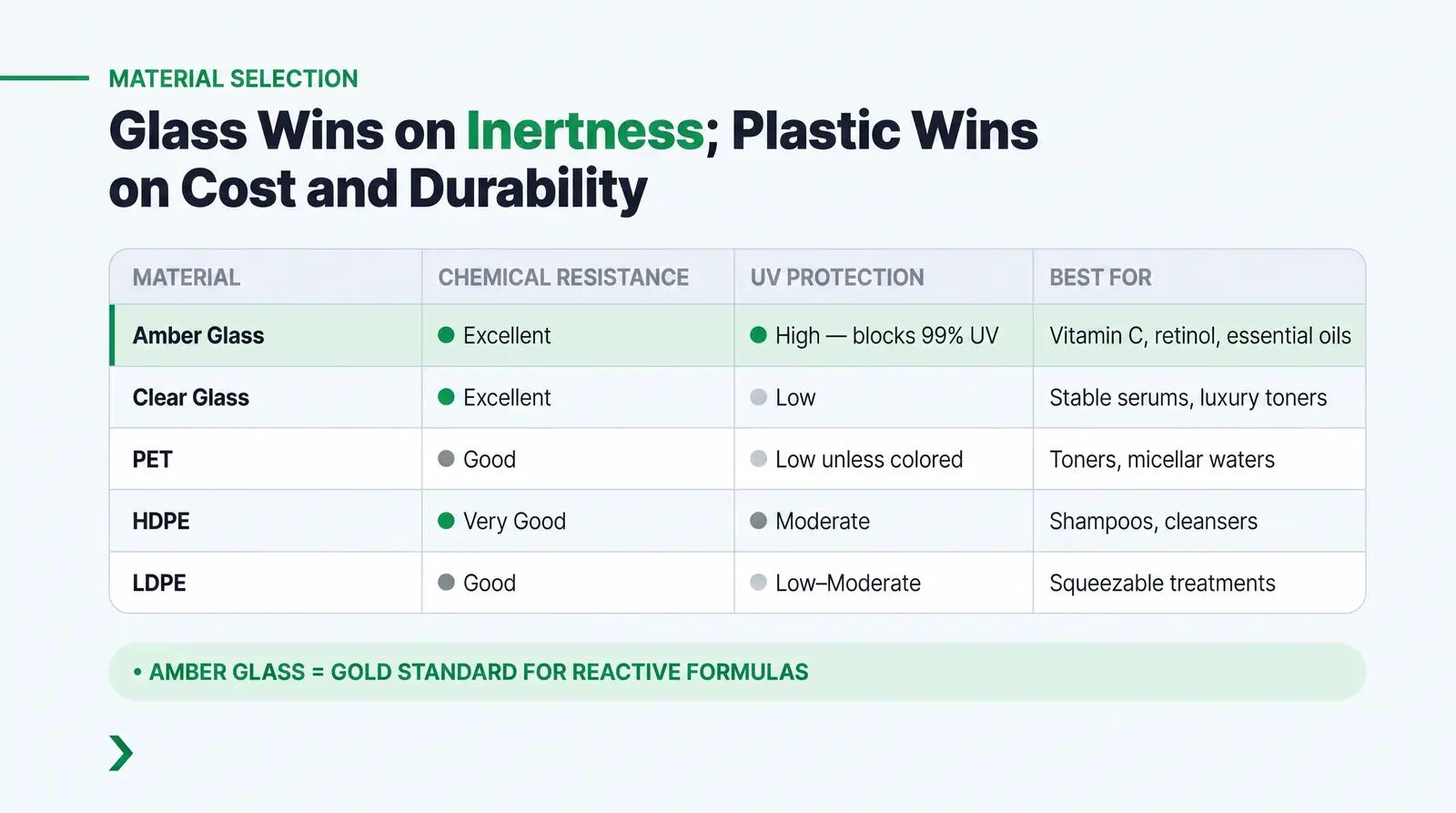
| Material | Chemical Resistance | UV Protection | Recyclability | Typical Cosmetic Uses |
|---|---|---|---|---|
| Amber Glass (Type III) | Excellent; highly inert | High (blocks up to 99% of UV below 450 nm) [1] | High (infinitely recyclable, but color-restricted) | Vitamin C serums, essential oils, light-sensitive formulas |
| Clear Glass (Flint) | Excellent; highly inert | Low (allows significant UV transmission) | High (widely accepted in municipal programs) | Facial oils, stable serums, luxury toners |
| PET (Polyethylene Terephthalate) | Good; resistant to many oils and alcohols | Low (unless colored or treated) | High (widely recycled) [2] | Toners, micellar waters, lightweight body oils |
| HDPE (High-Density Polyethylene) | Very Good; strong barrier to moisture and chemicals [3] | Moderate (opaque nature provides some light blocking) | High (29.3% recycling rate in US) [2] | Shampoos, cleansers, clinical skincare |
| LDPE (Low-Density Polyethylene) | Good; highly squeezable | Low to Moderate | Moderate (less commonly accepted than HDPE) | Squeezable treatments, travel-size liquids |
Glass remains the gold standard for chemical inertness, making it the preferred choice for highly reactive formulas or those containing high concentrations of essential oils, which can degrade certain plastics over time [3]. Amber glass, specifically, is critical for light-sensitive ingredients, as it effectively blocks harmful UV wavelengths that cause photodegradation [1]. Plastic, conversely, offers durability and cost-effectiveness, making it ideal for shower environments or high-volume daily use products.
Size Selection Guide
Boston round bottles are available in a vast array of sizes, but the cosmetic industry typically gravitates toward a specific range tailored to standard usage habits and retail expectations.
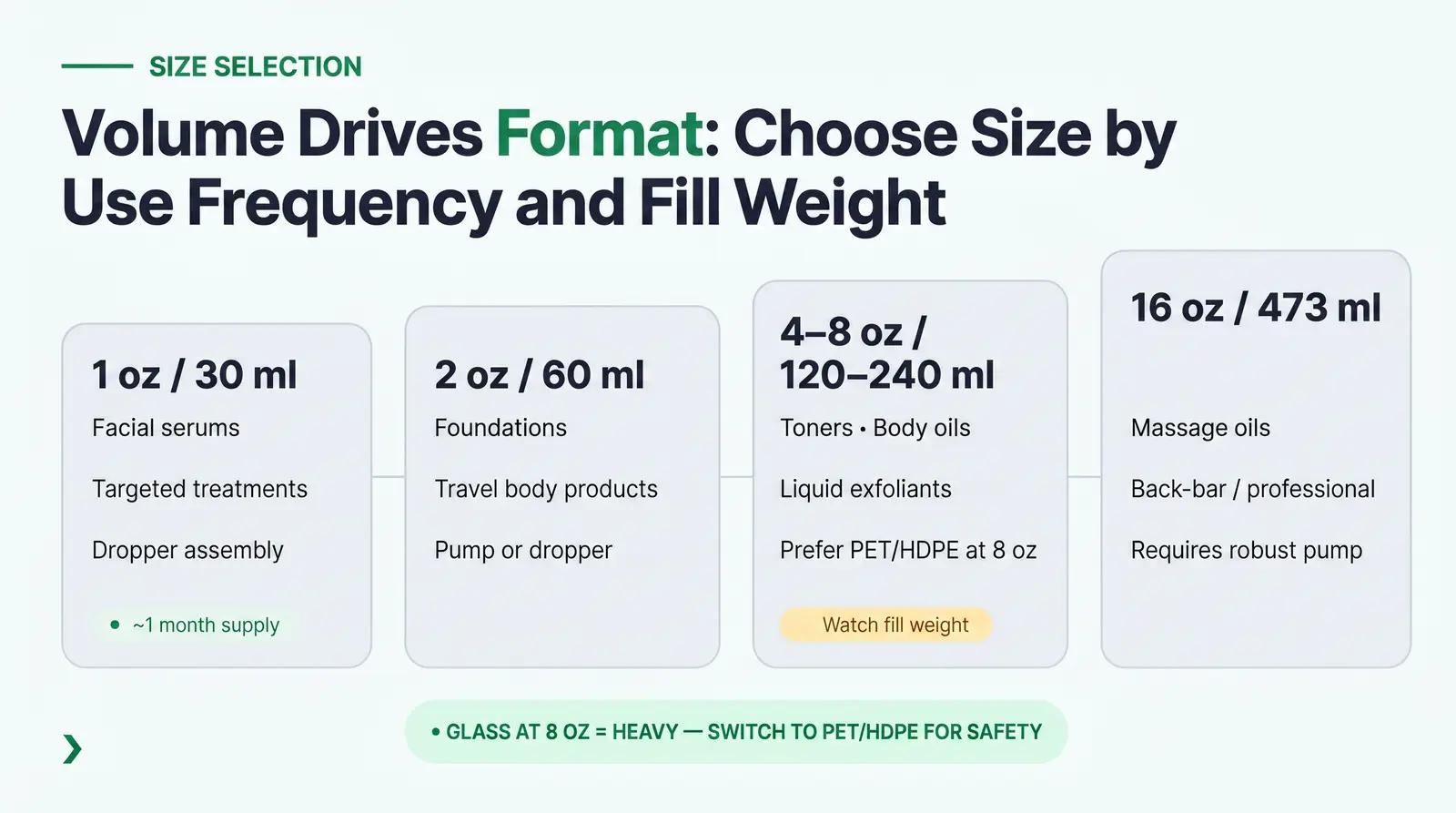
The 1 oz (30 ml) size is the undisputed standard for facial serums, targeted treatments, and concentrated facial oils. This volume provides approximately a one-month supply for daily use, aligning perfectly with the replenishment cycle of high-value skincare. The 2 oz (60 ml) size is frequently utilized for premium foundations, lightweight moisturizers, or travel-sized body products. The compact nature of these sizes ensures that active ingredients are consumed before they begin to degrade significantly after opening.
Moving up in volume, the 4 oz (120 ml) and 8 oz (240 ml) sizes are the workhorses for liquid skincare and personal care. Toners, liquid exfoliants, body oils, and premium hair care products rely on these capacities. When selecting these larger sizes, it is crucial to consider the weight of the filled bottle, especially if opting for glass, as a filled 8 oz glass Boston round can be surprisingly heavy and potentially hazardous in a bathroom setting. For these larger volumes, the transition to PET or HDPE becomes increasingly common to mitigate breakage risks and improve user safety.
For professional or back-bar applications, the 16 oz (473 ml) size offers substantial capacity for high-consumption items like massage oils or bulk cleansers. However, dispensing from such a large, heavy container requires a robust pump mechanism, as pouring directly from the narrow neck becomes unwieldy and imprecise.
Closure Compatibility
The narrow neck of the Boston round is designed to accommodate a variety of closures, but matching the closure to the formula's dispensing requirements is critical for a positive user experience.
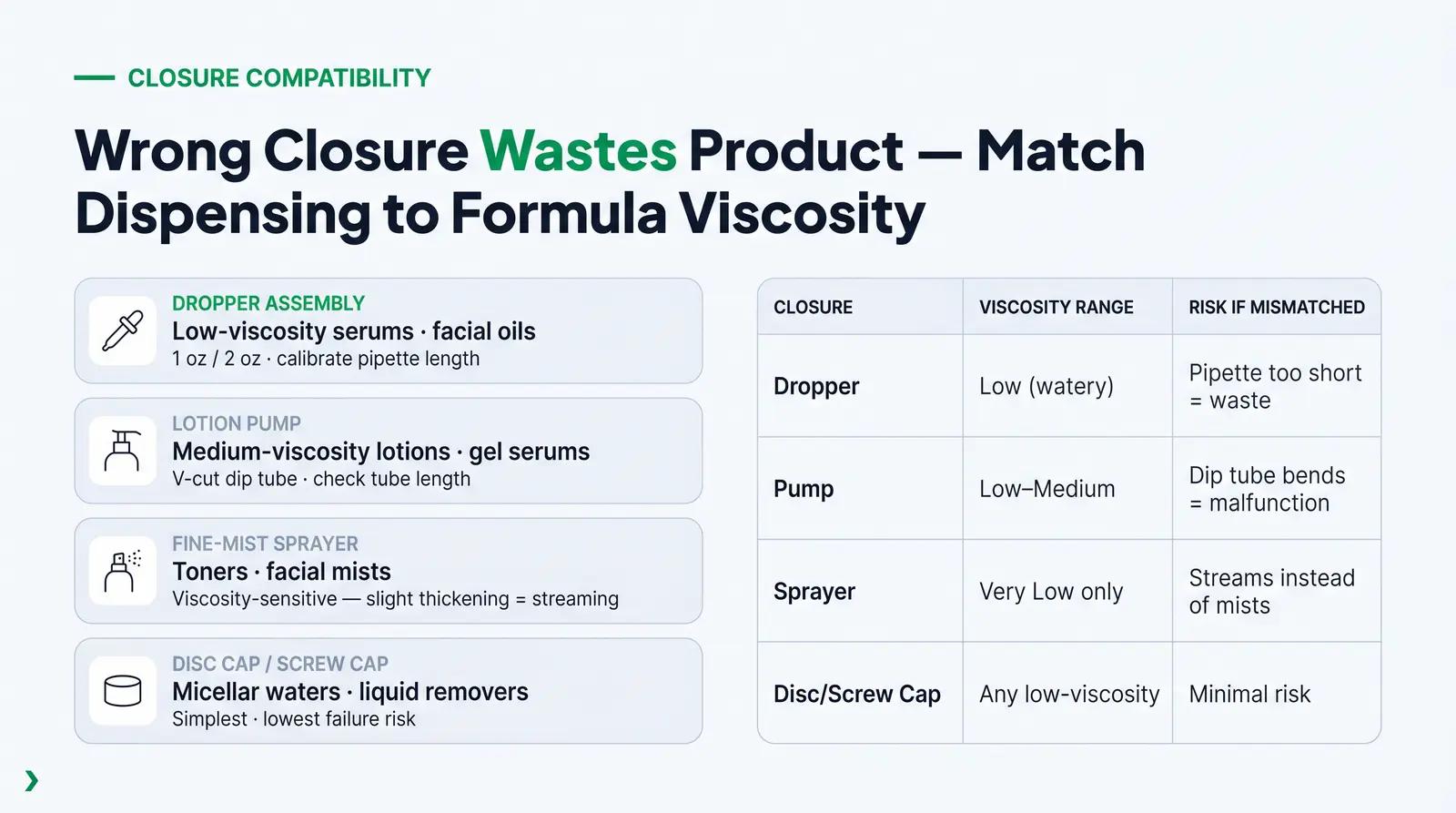
Dropper assemblies are the classic pairing for 1 oz and 2 oz Boston rounds, ideal for low-viscosity serums and facial oils. When sourcing droppers, the pipette length must be precisely calibrated to the bottle's internal height to ensure the consumer can reach the product at the bottom. Furthermore, highly viscous serums may struggle to draw into a standard glass pipette, requiring a larger bore diameter [4]. For more details on selecting the right dropper, see our comprehensive dropper bottle guide.
Lotion pumps and treatment pumps are suited for medium-viscosity liquids like lightweight lotions or gel-based serums. These closures require careful attention to the dip tube length, which should feature a slight V-cut at the bottom and rest gently against the base of the bottle without bending excessively. An improperly sized dip tube can lead to significant product waste or cause the pump to malfunction prematurely.
Fine-mist sprayers are excellent for toners and facial mists, but they are highly sensitive to formula viscosity. Even a slight increase in thickness can cause a sprayer to stream rather than mist. Disc caps and screw caps offer simple, reliable dispensing for low-viscosity liquids meant to be poured, such as micellar waters or liquid makeup removers. The simplicity of these closures also minimizes the risk of mechanical failure over the product's lifespan.
The Boston Round Compatibility Rubric
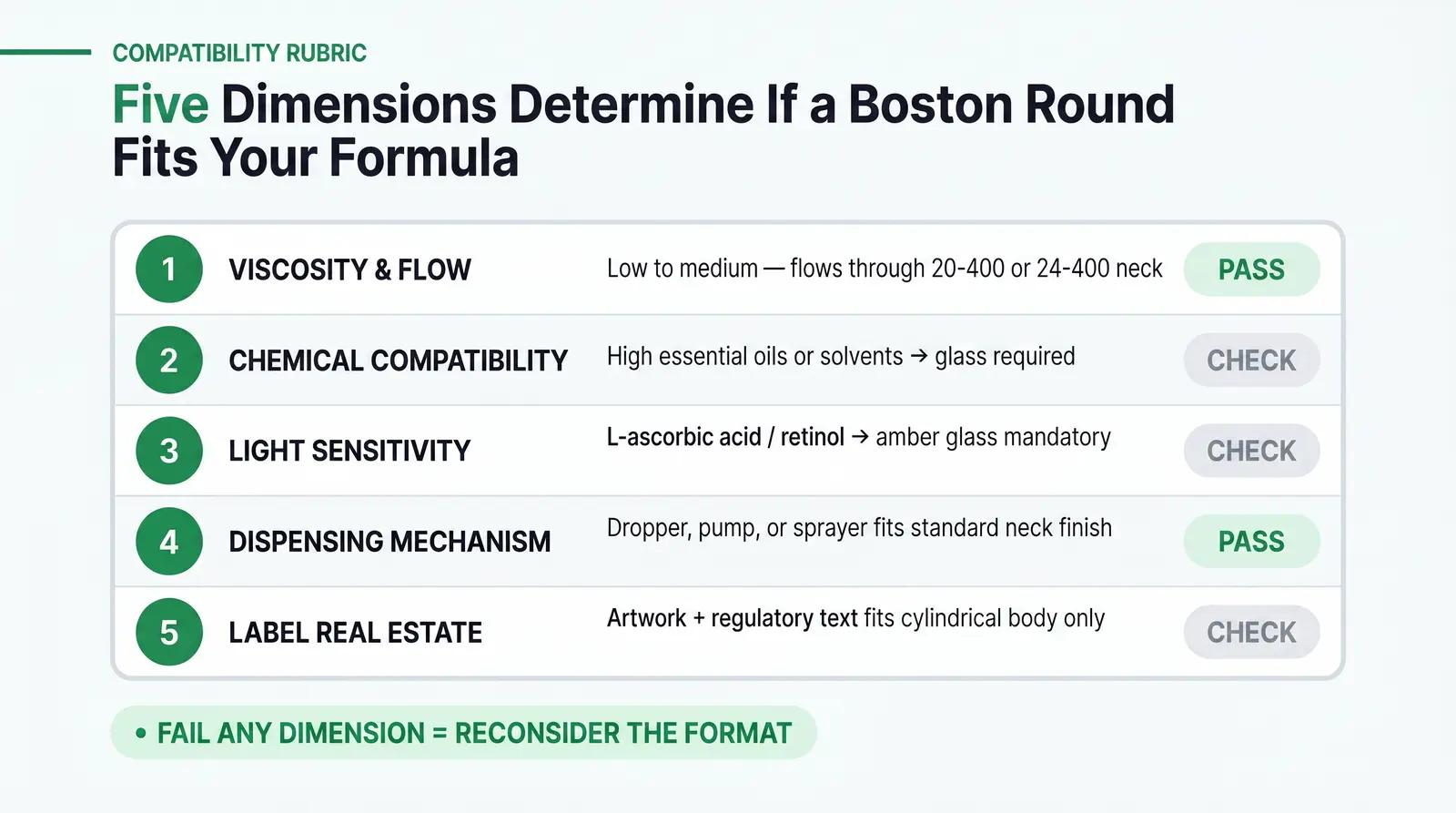
To systematize the decision-making process, the framework we use at Packfolio when evaluating whether a Boston round fits a given formula focuses on five critical dimensions:
- Viscosity and Flow: Does the formula have a low to medium viscosity that will flow smoothly through a narrow neck (e.g., 20-400 or 24-400 finish)? If the formula is a thick cream or heavy emulsion, the Boston round is incompatible.
- Chemical Compatibility: Does the formula contain aggressive solvents or high levels of essential oils that require the inertness of glass, or is it stable enough for PET or HDPE?
- Light Sensitivity: Does the formula contain oxidation-prone ingredients (like L-ascorbic acid or retinol) that necessitate amber glass for UV protection, or can it be housed in clear packaging?
- Dispensing Mechanism: Can the formula be effectively dispensed via a dropper, pump, or sprayer that matches standard Boston round neck finishes?
- Label Real Estate: Does the brand's artwork and required regulatory text fit comfortably within the bottle's printable cylindrical body, avoiding the curved shoulder and base?
A Worked Example: Packaging a Vitamin C Serum
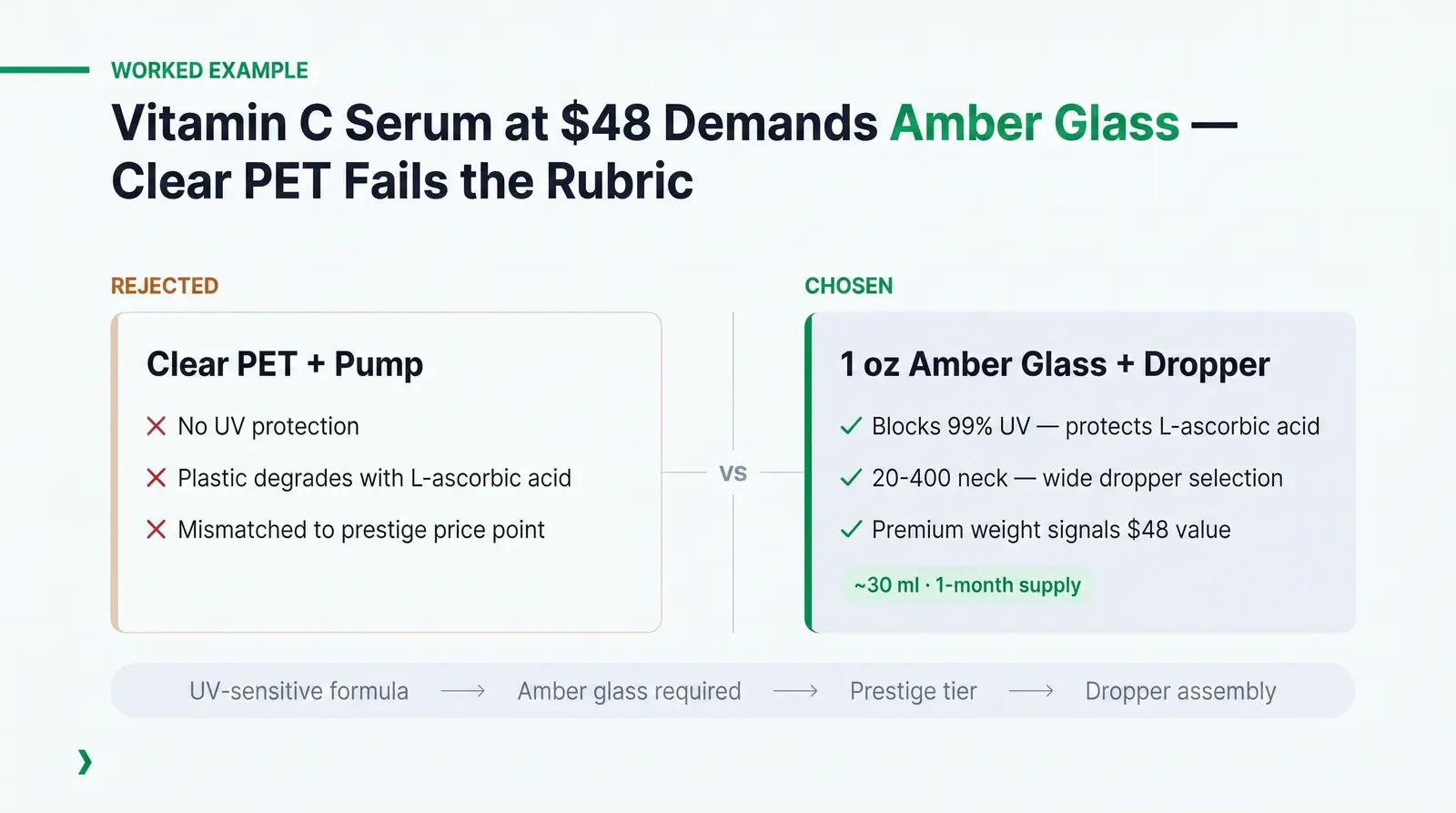
Consider a founder formulating a 1 oz (30 ml) vitamin C brightening serum featuring L-ascorbic acid. The formula is water-based, highly sensitive to oxidation, and positioned at a prestige retail price point of $48.
The choice between a clear PET bottle with a pump and an amber glass bottle with a dropper is straightforward when applying the rubric. The L-ascorbic acid's extreme sensitivity to UV light makes clear PET a poor choice, as it offers minimal light protection. Amber glass is required to block the UV wavelengths that accelerate degradation [1].
Furthermore, the prestige price point demands the substantial, premium feel of glass. The brand selects a 1 oz amber glass Boston round with a standard 20-400 neck finish, paired with a glass dropper assembly. The 20-400 finish is a ubiquitous industry standard, ensuring a wide selection of compatible, high-quality droppers [5]. This combination protects the fragile formula while delivering the ritualistic application experience expected by the target demographic.
The Standardization Illusion
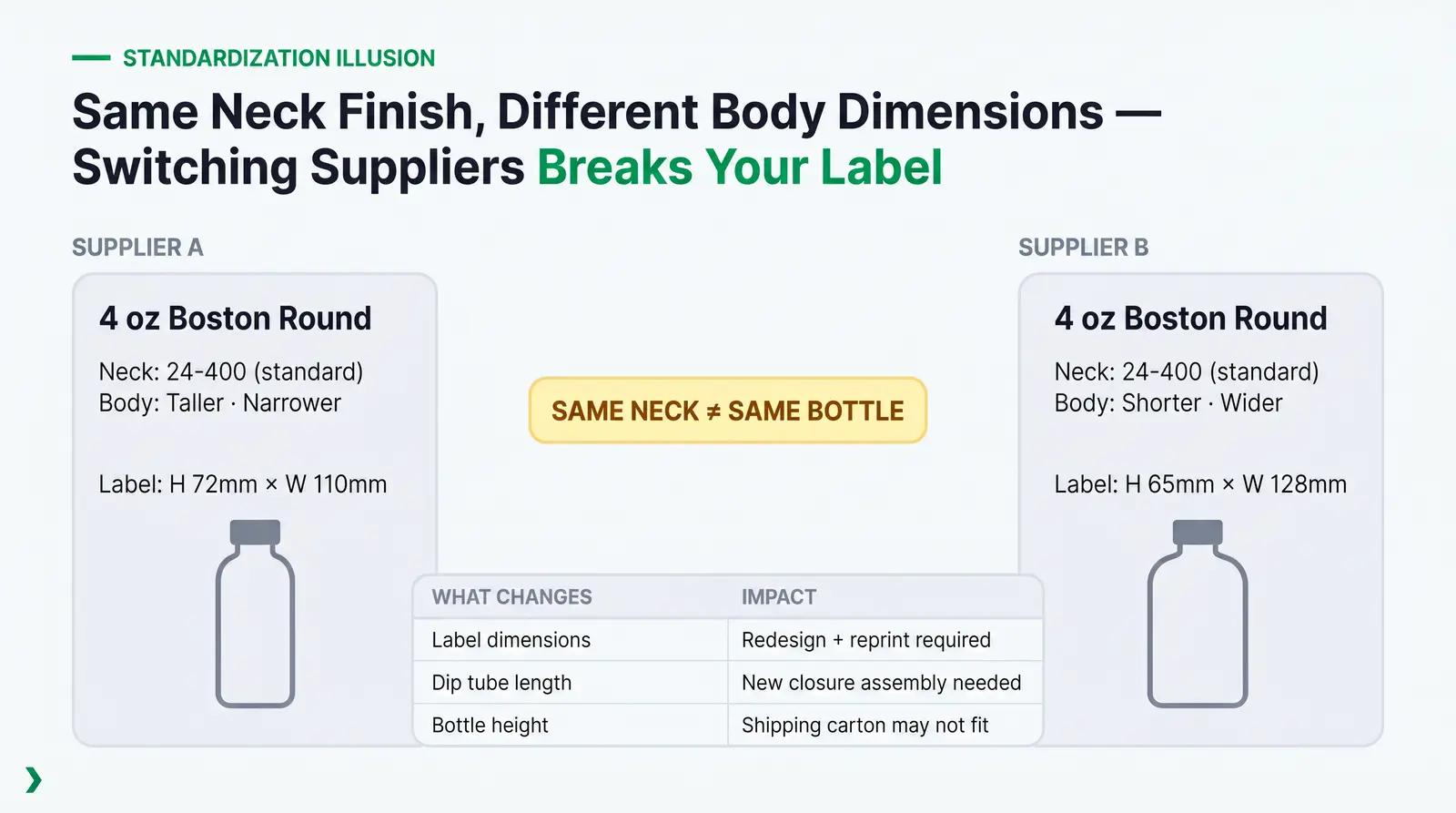
A critical, often overlooked reality in packaging procurement is that "Boston round" is a shape category, not a rigid, universal specification. While neck finishes (like 20-400 or 24-400) are standardized by organizations like the Glass Packaging Institute (GPI) to ensure closure compatibility [6], the actual dimensions of the bottle body can vary significantly between manufacturers.
Two different suppliers may offer a 4 oz Boston round with a 24-400 neck, but Supplier A's bottle might be slightly taller with a narrower diameter, while Supplier B's bottle might be shorter and wider. This variance directly impacts label sizing. If a brand designs a label perfectly fitted to Supplier A's bottle, that same label may overlap, flag, or look disproportionate on Supplier B's bottle. This lack of universal body standardization creates substantial reorder risk; switching suppliers often necessitates redesigning and reprinting labels, adding unexpected costs and delays.
The implications of this variance extend beyond labeling. A taller, narrower bottle may require a longer dip tube for a pump or sprayer, while a shorter, wider bottle might necessitate a completely different closure assembly. This is why it is imperative to secure detailed technical drawings and physical samples from a supplier before committing to a large production run. Assuming that all Boston rounds of a given nominal capacity are identical is a costly mistake that can disrupt the entire supply chain.
When Another Shape Works Better
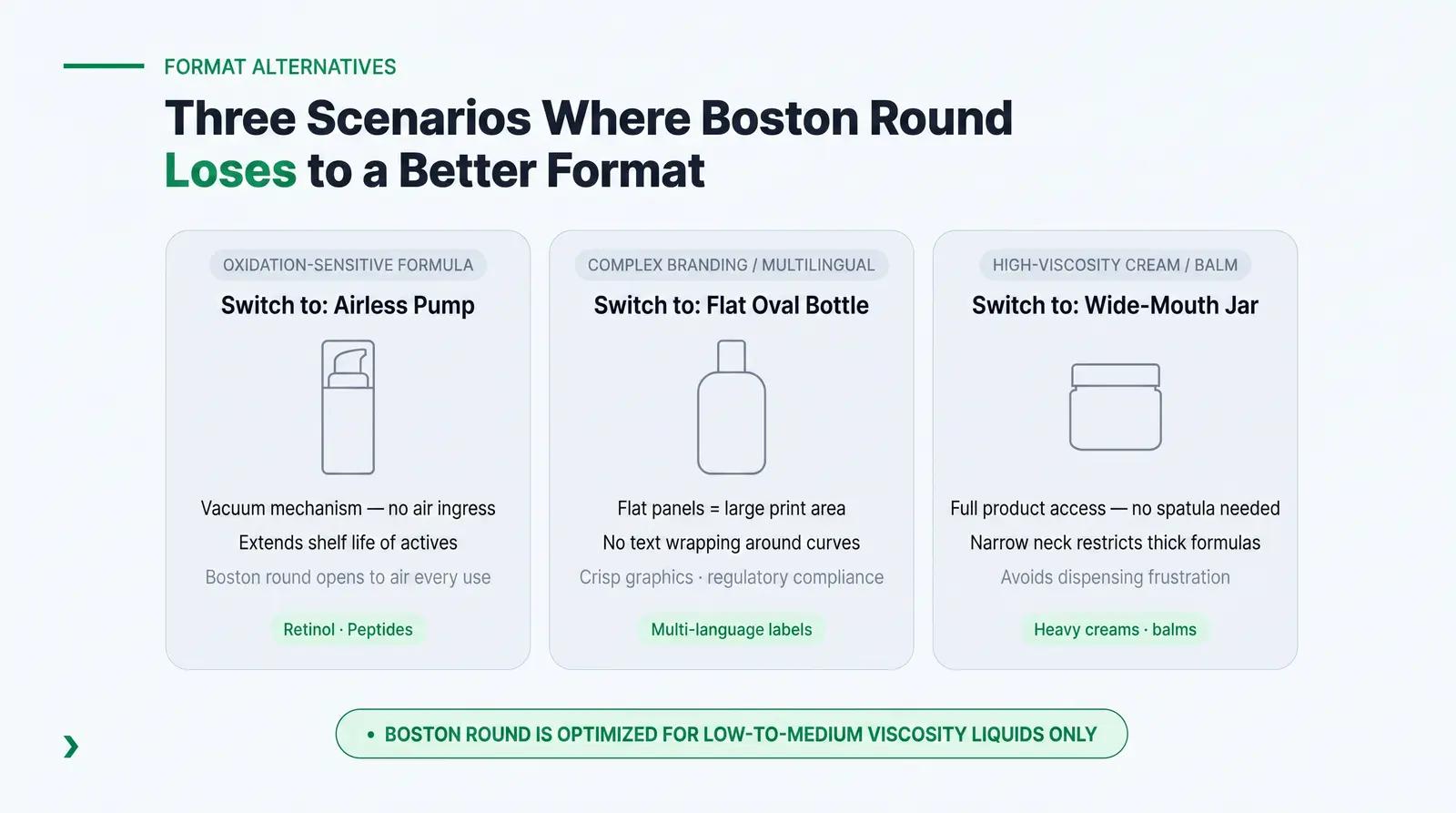
Despite its iconic status, the Boston round is not a universal solution. There are distinct scenarios where alternative packaging formats serve the formula and the consumer far better.
For highly oxidation-sensitive emulsions or formulas where minimizing air exposure is paramount, airless pump bottles are vastly superior. Airless systems utilize a vacuum mechanism that prevents air from entering the chamber as the product is dispensed, significantly extending the shelf life of sensitive active ingredients compared to a Boston round, which introduces air every time it is opened [7].
If a brand requires extensive label real estate for complex branding, multiple languages, or extensive regulatory information, flat oval bottles provide a much larger, uninterrupted printable surface area than the curved cylinder of a Boston round. The flat panels of an oval bottle allow for crisp, legible text and expansive graphics that might otherwise wrap awkwardly around a cylindrical shape. Similarly, for highly viscous creams or balms, wide-mouth jars are necessary to allow the consumer to easily access the entire product without resorting to spatulas or excessive shaking.
Sample Inspection Checklist
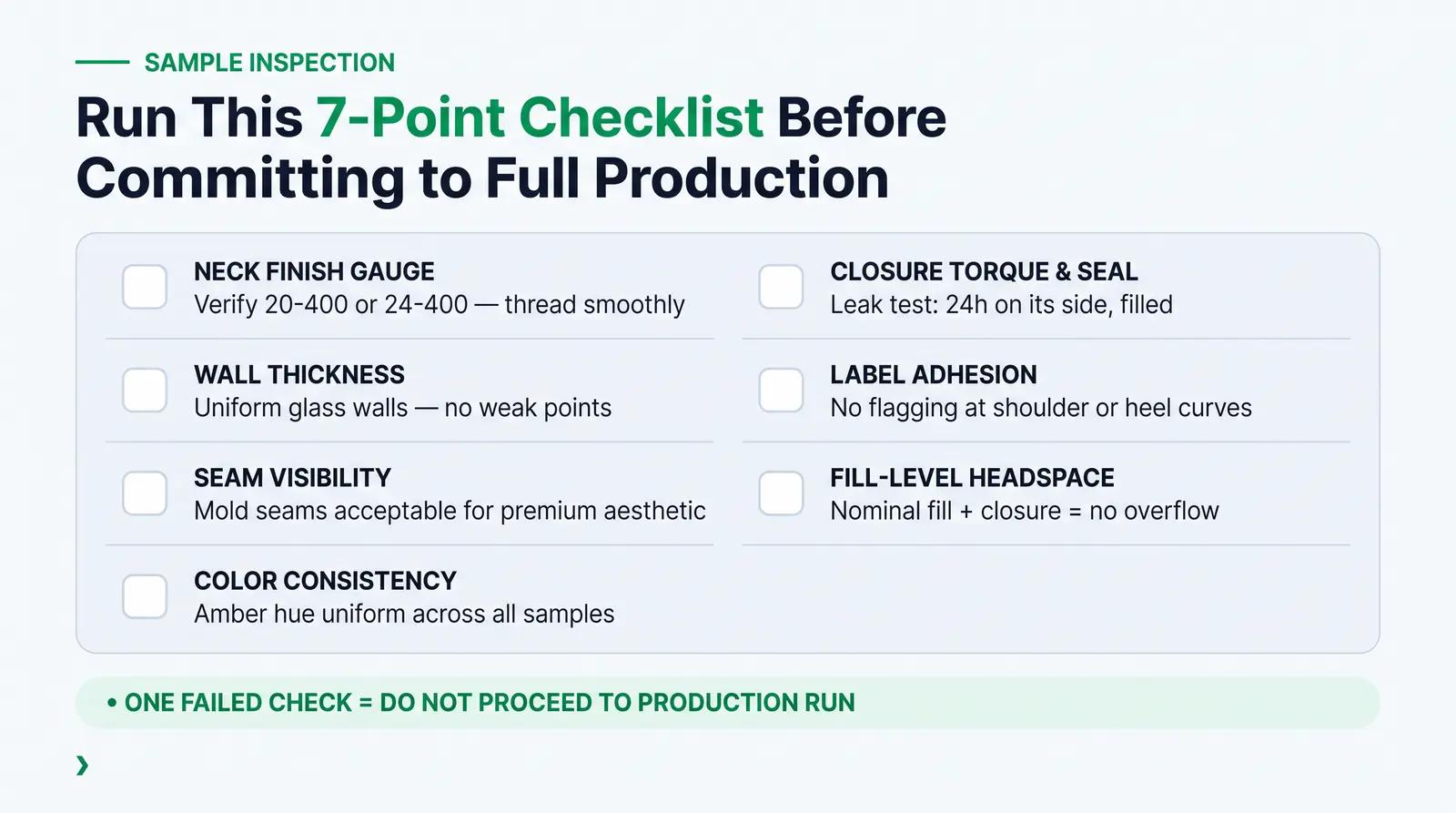
Before committing to a full production run, rigorous inspection of Boston round samples is mandatory to prevent costly manufacturing issues.
- Dimensional Tolerance and Neck Finish Gauge: Verify that the neck finish precisely matches the specified standard (e.g., 20-400) and that chosen closures thread smoothly without binding or cross-threading.
- Wall Thickness Uniformity: Inspect the bottle (especially glass) for uneven wall thickness, which can create weak points susceptible to breakage during transit.
- Seam Visibility (Glass): Check the prominence of the mold seams on glass bottles. While some seaming is inevitable, excessively sharp or visible seams detract from a premium aesthetic.
- Material Clarity and Color Consistency: Ensure clear bottles are free of haziness or inclusions, and colored bottles (like amber or cobalt) maintain a consistent hue across multiple samples.
- Closure Torque and Seal Integrity: Perform a leak test by filling the bottle with water or the actual formula, applying the closure to the specified application torque, and resting the bottle on its side for 24 hours.
- Label Adhesion Test: Apply the intended label material to the bottle and monitor for flagging or peeling, particularly near the curved shoulder and base transitions.
- Fill-Level Headspace Check: Fill the bottle to the stated nominal capacity and verify that adequate headspace remains to accommodate the displacement of the closure (especially important for dropper pipettes) without overflowing.
The inspection process is not merely a formality; it is a critical safeguard against catastrophic packaging failures. A slight deviation in neck finish dimensions can result in widespread leakage, while inconsistent wall thickness can lead to unacceptably high breakage rates during shipping. By systematically evaluating each sample against this checklist, brands can identify and address potential issues before they escalate into full-scale production disasters.
Browse Packfolio's curated Boston round bottle catalog, customize your label artwork inside predefined print zones, and preview it on a photorealistic 3D model before you order — no supplier coordination required. Explore the catalog →
Frequently Asked Questions
What does the 20-400 neck finish mean on a Boston round? The first number (20) refers to the outer diameter of the bottle's neck threads in millimeters. The second number (400) refers to the specific thread style and height, indicating a standard single-turn thread [5].
Can I use a Boston round for thick lotions? It is generally not recommended. The narrow neck of the Boston round restricts the flow of high-viscosity liquids, making it difficult to dispense thick lotions, especially as the bottle empties.
Is amber glass or plastic better for UV protection? Amber glass provides superior UV protection, blocking up to 99% of light wavelengths below 450 nm, which is critical for light-sensitive ingredients [1]. Most clear or natural plastics offer very little UV protection unless specifically treated or colored.
How do I measure the label area for a Boston round? Measure the straight, cylindrical portion of the bottle body, avoiding the curved shoulder at the top and the curved heel at the bottom. Labels applied to these curved areas will flag or wrinkle [8].
Are all 2 oz Boston round bottles the exact same size? No. While the neck finish is usually standardized, the height, diameter, and printable label area of a 2 oz Boston round can vary slightly between different manufacturers, requiring careful label sizing when switching suppliers.
References
- The Science Behind Amber Glass and UV Protection. Container & Packaging. 2025. https://www.containerandpackaging.com/resources/the-science-behind-amber-glass-and-uv-protection/
- Plastics: Material-Specific Data. US EPA. 2026. https://www.epa.gov/facts-and-figures-about-materials-waste-and-recycling/plastics-material-specific-data
- Chemical Compatibility by Container Resin. CP Lab Safety. https://www.calpaclab.com/container-chemical-compatibility/
- Dropper Assembly Selection for Serums: Technical Considerations for Precision Dispensing. O.Berk. https://www.oberk.com/packaging-crash-course/dropper-assembly-selection-for-serums-technical-considerations-for-precision-dispensing
- Guide to Bottle Neck Finishes (and Why They Matter). Liquid Bottles. 2026. https://www.liquidbottles.com/blog/37/Guide-to-Bottle-Neck-Finishes-and-Why-They-Matter
- Glass Neck Finish Dimensions. Evergreen Resources. 2026. https://evergreenresources.com/glass-neck-finish-dimensions/
- Airless Pump vs. Dropper Bottles: Which Is Best for Your Skincare. HCC Packaging. 2025. https://hccpackaging.com/airless-pump-vs-dropper-bottles-which-is-best-for-your-skincare/
- Labeling Different Bottle Shapes: How Glass Bottle Curvature & Taper Affects Labels. CTM Labeling Systems. 2023. https://ctmlabelingsystems.com/labeling-different-bottle-shapes-how-glass-bottle-curvature-taper-affects-labels/


