
China vs USA Cosmetic Packaging Suppliers: How to Decide
Compare five cosmetic packaging sourcing paths across cost, MOQs, tariffs, lead times, and quality verification to choose the right supplier for your brand's growth stage.
You are ten weeks out from your scheduled retailer presentation, and your chemist just finalized the stability testing on your new vitamin C serum. The formulation is perfect, but your packaging budget is capped at $4,000, and you need exactly 500 custom-printed amber glass dropper bottles. If you source from a domestic distributor, you will pay a massive premium that eats your entire launch margin, but the bottles will arrive in five days. If you go direct to an overseas factory in China, the unit cost drops by 65%, but you face a 10,000-unit minimum order quantity, complex customs clearance, and a volatile tariff landscape that could delay your shipment past your launch date. This is the high-stakes reality of cosmetic packaging procurement, where a single miscalculation in lead times, minimum order quantities, or import duties can stall a beauty brand before it even reaches the shelf.
Deciding between domestic and international suppliers is no longer a simple comparison of unit costs and shipping speeds. In today's highly regulated and politically volatile trade environment, beauty brand founders, formulators, and contract manufacturers must navigate a complex web of Section 301 tariffs, supply chain bottlenecks, and strict federal safety regulations under the Modernization of Cosmetics Regulation Act of 2022 (MoCRA) [1]. Choosing the wrong sourcing path does not just impact your margins: it can introduce severe compliance risks that threaten your entire business. To make an informed decision, you must understand the structural differences between the available sourcing paths, how they stack up across key business variables, and how to align your procurement strategy with your brand's specific stage of growth.
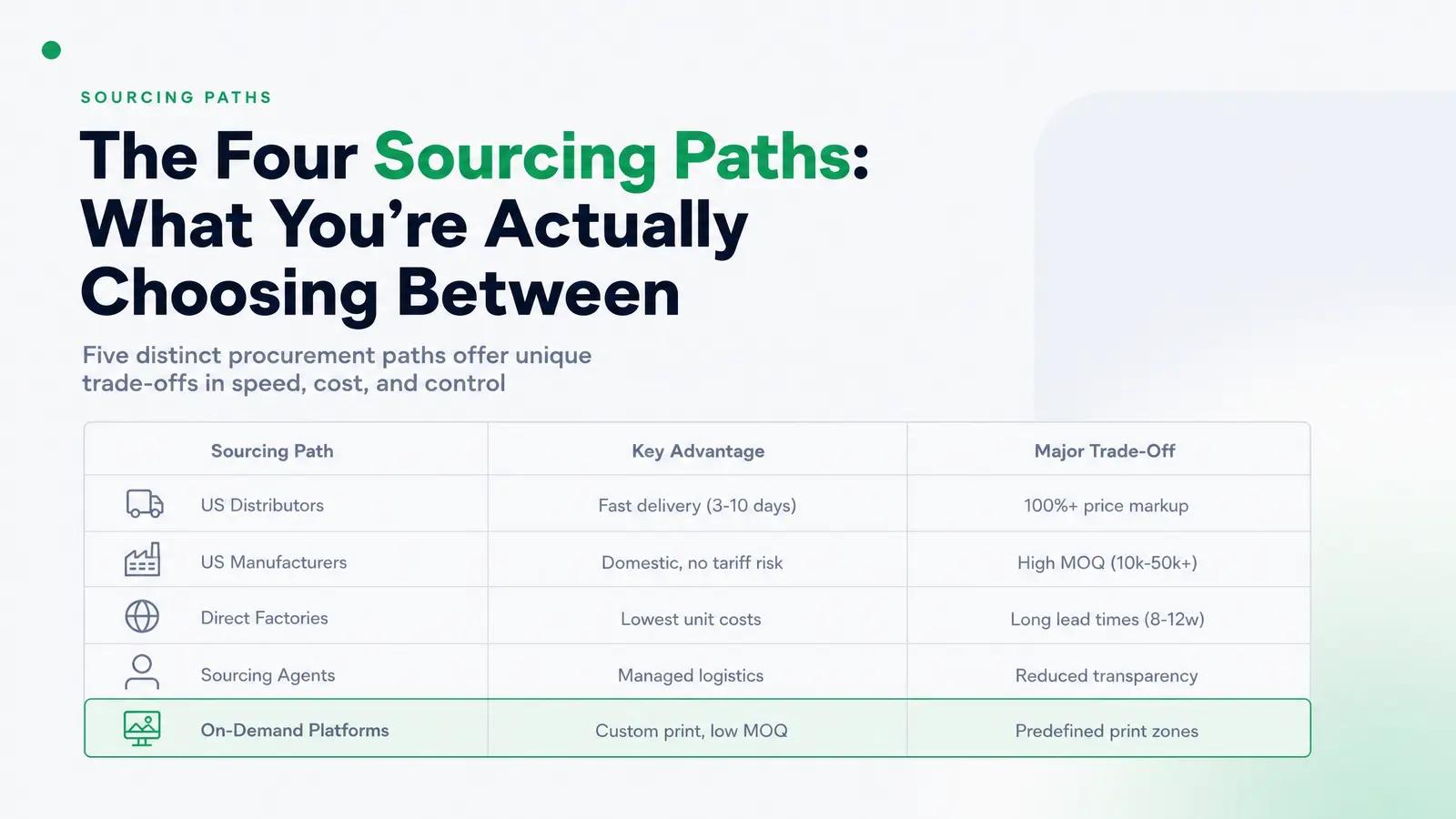
The Four Sourcing Paths: What You're Actually Choosing Between
Before evaluating costs or transit times, it is essential to establish a precise vocabulary. Many industry articles conflate distributors, brokers, and manufacturers, which leads to significant confusion during the sourcing process. In the cosmetic packaging market, you are choosing between four distinct structural paths, each with its own operational model, cost structure, and risk profile.
1. US-Based Distributors
US-based distributors are stock-holding intermediaries that purchase packaging components in massive quantities from overseas manufacturers, store them in domestic warehouses, and resell them to beauty brands. They offer immediate product availability, low minimum order quantities, and fast domestic shipping. However, they charge a double-digit markup (often 100% or more) to cover their warehousing overhead and capital risk. Furthermore, distributors rarely disclose which factories manufactured their stock, leaving brands with zero transparency into the underlying supply chain or quality control standards.
2. US Domestic Manufacturers
US domestic manufacturers directly operate production facilities within the United States, utilizing injection molding, glass blowing, and automated decoration equipment. Sourcing from a domestic manufacturer completely eliminates tariff exposure, minimizes international freight costs, and ensures rapid transit times. However, because of high domestic labor and tooling costs, these factories are structurally designed for high-volume production. They typically enforce minimum order quantities ranging from 10,000 to 50,000 units per design, making them inaccessible for pre-launch or early-stage beauty brands.
3. Overseas Factories (Direct Sourcing)
Direct overseas sourcing involves partnering directly with manufacturers located in global packaging hubs, primarily in China (specifically in industrial clusters like Zhejiang, Guangdong, and Suzhou) [2]. Sourcing direct offers the lowest possible unit costs, direct access to advanced manufacturing technologies (such as multi-pass decoration, soft-touch finishes, and custom mold engineering), and the ability to create highly customized primary packaging. The trade-offs are significant: you must manage long lead times, high communication barriers, international freight logistics, customs clearance, and full exposure to import tariffs.
4. Trading Companies and Sourcing Agents
Trading companies and sourcing agents are intermediaries that act as the commercial and logistical bridge between Western brands and overseas factories. Unlike distributors, they do not typically hold inventory. Instead, they negotiate with multiple factories on your behalf, coordinate production, and consolidate shipments. While they can help brands bypass language barriers and secure lower minimum order quantities through order aggregation, they add a service margin to the unit cost. They also limit direct quality control access and frequently obscure the identity of the actual manufacturing facilities to protect their brokerage business [3].
5. On-Demand Custom Platforms
On-demand custom platforms represent a modern, technology-driven hybrid path. These platforms curate a vetted catalog of primary packaging SKUs (bottles, jars, tubes, and closures) that are pre-modeled in 3D. By utilizing browser-based design tools, brands can customize artwork within predefined printable zones, preview photorealistic 3D models, and order directly. The platform coordinates production with vetted global manufacturers, handles quality assurance, manages customs clearance, and coordinates freight delivery directly to the brand's door. This path combines the low minimum order quantities of a distributor with the custom decoration capabilities and cost advantages of direct factory sourcing.
How the Variables Stack Up: A Direct Comparison
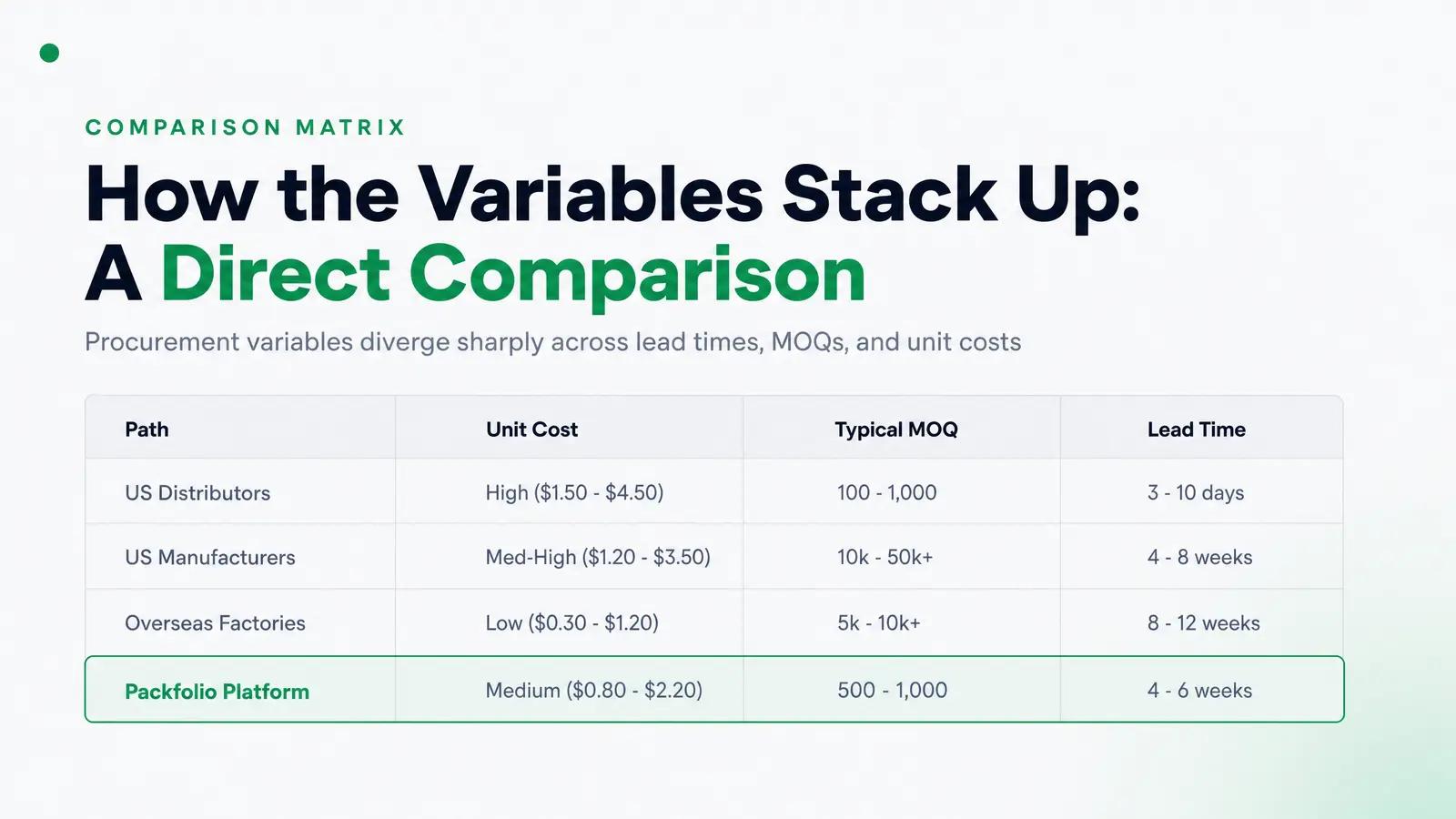
To evaluate these paths objectively, you must analyze how they perform across the critical dimensions of cost, speed, compliance, and risk. The table below compares the five sourcing paths based on realistic market data and regulatory requirements.
| Sourcing Variable | US-Based Distributors | US Domestic Manufacturers | Overseas Factories (Direct) | Trading Companies | On-Demand Platforms (Packfolio) |
|---|---|---|---|---|---|
| Unit Cost Range | High ($1.50 to $4.50) | Medium-High ($1.20 to $3.50) | Low ($0.30 to $1.20) | Medium-Low ($0.50 to $1.80) | Medium ($0.80 to $2.20) |
| Typical MOQ Range | 100 to 1,000 units | 10,000 to 50,000+ units | 5,000 to 10,000+ units | 1,000 to 3,000 units | 500 to 1,000 units |
| Lead Time | 3 to 10 days | 4 to 8 weeks | 8 to 12 weeks | 6 to 10 weeks | 4 to 6 weeks |
| Tariff Exposure | None (Indirectly baked in) | None | High (Directly assessed) | High (Directly assessed) | None (All-inclusive pricing) |
| Customization Depth | Low (Stock components only) | High (At massive volumes) | Maximum (Custom molds/decor) | Medium-High | High (Predefined print zones) |
| Quality Verification | Difficult (Hidden supply chain) | Direct (On-site audits possible) | Complex (Requires 3rd party) | Variable (Agent-dependent) | Direct (Platform-vetted) |
| Commitment Risk | Low (Low capital outlay) | High (Massive cash outlay) | High (Large MOQs and lead times) | Medium | Low (Low MOQ custom orders) |
| Best For (Stage) | Sampling & Pre-launch | Established scale (50k+ units) | Scaling brands (10k+ units) | Mid-stage brands | Launch & Growth (500 to 5k) |
Tariff Exposure and Trade Risk in 2025
The single biggest blind spot for emerging beauty brands is the volatility of international trade policy. Sourcing primary packaging from China carries significant tariff implications that must be factored into your landed cost models. Sourcing decisions cannot be based on factory-floor quotes (FOB or EXW terms) alone: you must calculate the fully landed cost, including duties, clearance fees, and domestic freight.
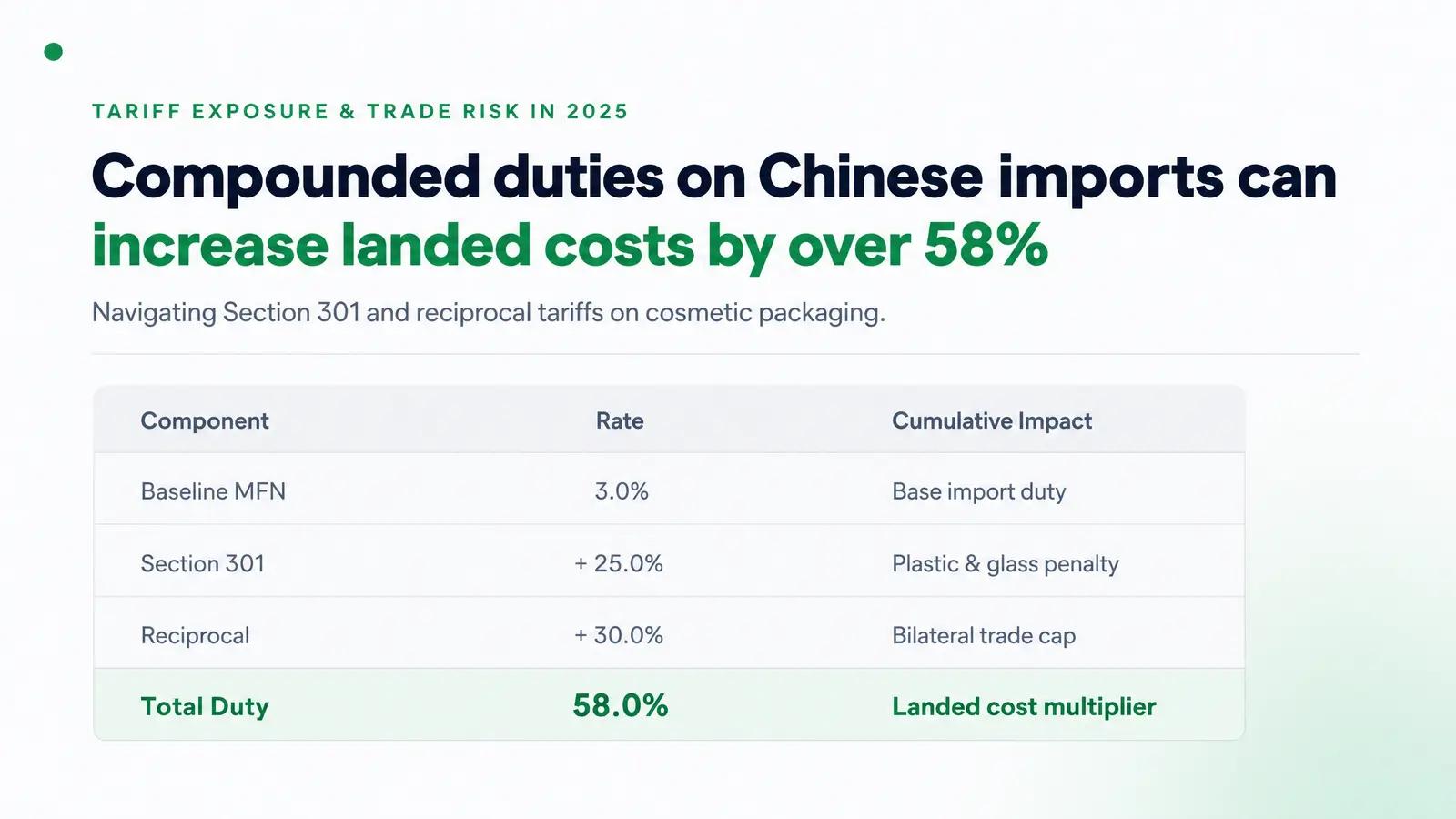
The US-China tariff landscape has undergone dramatic shifts. In early 2025, trade tensions escalated rapidly, with reciprocal tariffs on Chinese imports climbing to peak levels of 145% [4]. However, following intensive bilateral negotiations, the United States and China announced a major trade agreement on May 12, 2025, which established a de-escalation framework [4]. Under the current terms of this agreement, the US reciprocal tariff rate on Chinese goods is capped at 30%, while China's retaliatory rate is set at 10% [4].
This 30% reciprocal tariff is assessed on top of existing Section 301 ad valorem duties, which remain in effect at 25% for a wide range of industrial classifications, including plastics and glass [5]. Furthermore, the Section 232 tariffs on steel and aluminum (which were expanded in March 2025 to eliminate country-specific exemptions) assess a 25% duty on steel and a 25% duty on aluminum [4]. These metal tariffs directly impact the cost of aluminum cosmetic jars, aerosol cans, and the internal metal springs utilized in lotion pumps and fine mist sprayers.
To illustrate how these duties compound, consider the Harmonized Tariff Schedule (HTS) classifications relevant to cosmetic primary packaging:
HTS Code 3923.30.00: Plastic bottles, flasks, and similar containers [6].
- Baseline Most-Favored-Nation (MFN) Duty: 3% [6]
- Section 301 Tariff: 25% [5]
- Reciprocal Tariff: 30% [4]
- Total Cumulative Duty: 58%
Additionally, the de minimis tax exemption (Section 321), which previously allowed shipments valued under $800 to enter the United States duty-free, was completely eliminated for imports from China and Hong Kong in May 2025, and ended globally for all countries in August 2025 [7]. Today, every single packaging shipment, regardless of size or value, must undergo formal customs entry, file a customs bond, and pay the fully compounded tariff rates. Sourcing directly from an overseas factory without an experienced customs broker can lead to unexpected tax bills, customs seizures, and costly port delays.
Stage-Based Sourcing: The Right Path for Where You Are Now
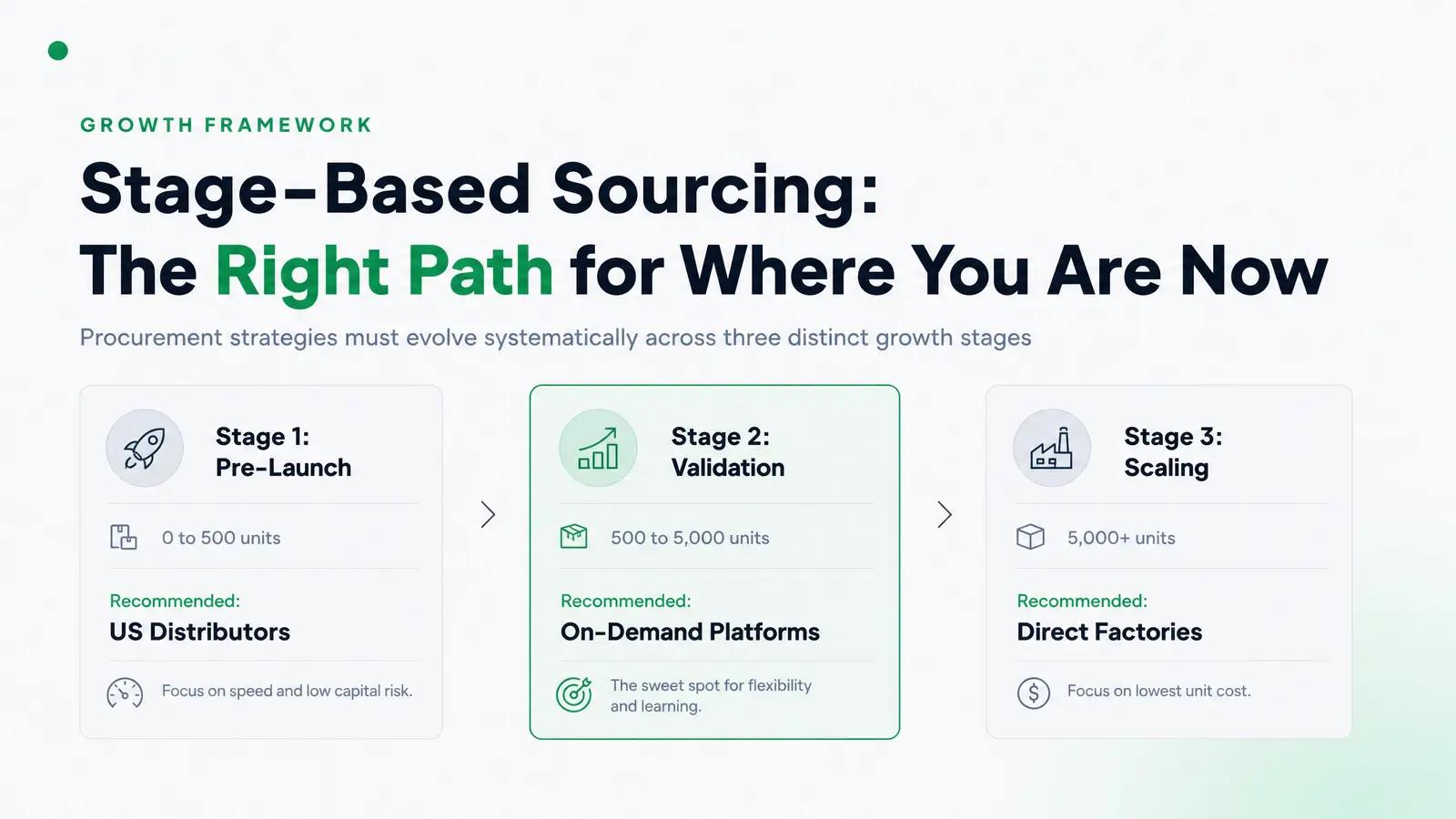
A common mistake is assuming that a packaging strategy that works for a multi-million-dollar beauty brand is appropriate for a startup. Your procurement strategy must align with your current stage of growth, cash flow constraints, and timeline flexibility. To guide this decision, we recommend utilizing The Launch-Stage Sourcing Matrix, a practical framework developed at Packfolio to help founders navigate trade-offs based on order volume.
The Launch-Stage Sourcing Matrix
Stage 1: Pre-Launch and Sampling (0 to 500 units)
- Recommended Sourcing Path: US-Based Distributors or On-Demand Platforms.
- Key Trade-Offs: You will pay a very high unit cost in exchange for speed, low minimum order quantities, and minimal capital risk. Customization will be limited to basic labeling or silk-screening on stock components.
- Single Biggest Risk to Avoid: Do not invest in custom molds or commit to a direct overseas factory order. Committing precious startup capital to a 10,000-unit packaging run before validating your formulation or product-market fit can deplete your cash reserves and leave you with obsolete inventory if your formula requires adjustment.
Stage 2: Early Launch and Validation (500 to 5,000 units)
- Recommended Sourcing Path: On-Demand Platforms (Packfolio) or Hybrid Sourcing.
- Key Trade-Offs: This stage requires custom-branded packaging to stand out in a crowded market, but your volume is still too low to access direct factory pricing or domestic manufacturing. On-demand platforms bridge this gap by offering custom printing on vetted, low-MOQ components.
- Single Biggest Risk to Avoid: Avoid direct overseas sourcing through unvetted trading companies. At this volume, your order is a low priority for a major factory. You are highly vulnerable to production delays, shipping bottlenecks, and quality variations, with very little leverage to demand remakes or refunds if the shipment arrives defective.
Stage 3: Growth and Scaling (5,000+ units)
- Recommended Sourcing Path: Direct Overseas Factories (with third-party QC) or US Domestic Manufacturers.
- Key Trade-Offs: At this volume, the unit-cost savings of direct factory sourcing more than offset the costs of international freight, customs clearance, and third-party quality inspections. You gain the leverage required to negotiate priority production slots and develop custom tooling.
- Single Biggest Risk to Avoid: Do not rely on domestic distributors at this scale. Continuing to pay distributor markups on volumes over 5,000 units will severely erode your gross margins, preventing you from investing in paid acquisition, retailer margin support, or product development.
Worked Example: A Founder Choosing a Packaging Path
To ground these variables in reality, let us walk through a realistic scenario featuring a first-time founder, Sarah, who is launching a three-SKU skincare line consisting of a vitamin C serum, a hydrating toner, and a botanical face oil.
Sourcing Requirements and Constraints
- SKUs: 3 (Serum, Toner, Face Oil)
- Volume Required: 500 units per SKU (1,500 total units)
- Packaging Components:
- Serum: 1 oz (30 ml) amber glass dropper bottle
- Toner: 4 oz (120 ml) clear glass bottle with treatment pump
- Face Oil: 1 oz (30 ml) frosted glass dropper bottle
- Timeline: 10-week window before a critical presentation to a national beauty retailer.
- Packaging Budget: $3,000 to $4,500 maximum.
Let us analyze what Sarah would actually encounter across the three primary sourcing paths.
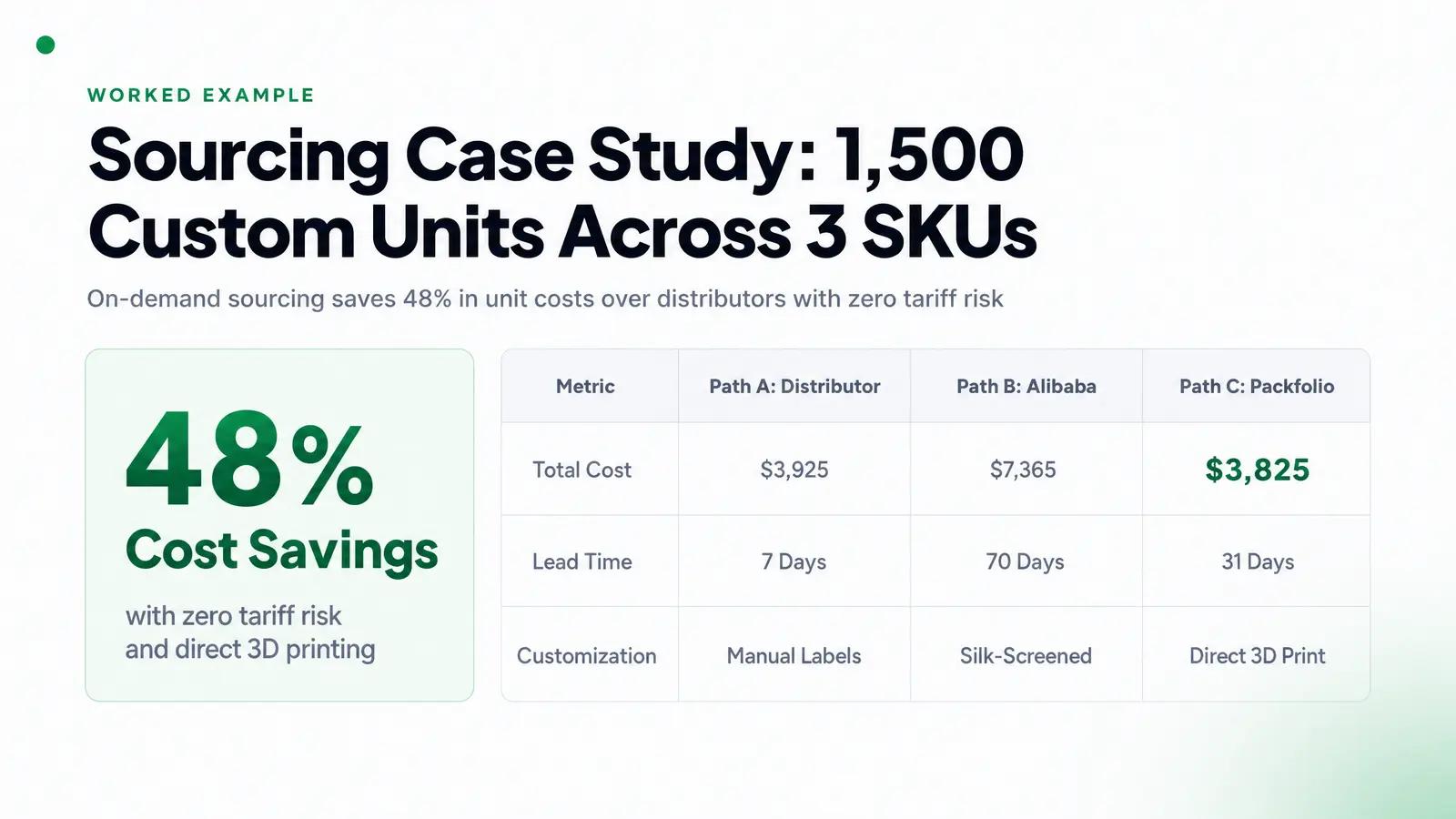
Path A: Sourcing via a US-Based Distributor
Sarah browses a domestic distributor's website. Because she is ordering only 500 units per SKU, she qualifies for their standard wholesale tier.
- Unit Costs:
- 1 oz Amber Dropper: $1.80 per unit
- 4 oz Pump Bottle: $2.40 per unit
- 1 oz Frosted Dropper: $2.10 per unit
- Customization: None. The distributor only sells blank stock. Sarah must purchase blank bottles, source a separate domestic label printer, and apply the labels by hand.
- Labeling Cost: $0.45 per label ($675 total) plus a manual labeling jig ($150).
- Freight Cost: $250 domestic ground shipping.
- Lead Time: 5 days for the bottles, 7 days for the labels.
- Total Landed Cost: $3,925 ($2.61 average per finished unit).
- Operational Outcome: Sarah meets her 10-week deadline easily, but she must spend nights hand-applying 1,500 labels. The finished product looks slightly "indie" because hand-applied labels are prone to micro-bubbles and misalignment. Her margins are tight, but her launch risk is low.
Path B: Sourcing Direct from a Chinese Factory via Alibaba
Sarah finds a highly rated cosmetic glass manufacturer in Xuzhou, China, on a B2B platform. The factory quotes her incredibly attractive unit prices.
- Factory FOB Quote:
- 1 oz Amber Dropper: $0.40 per unit
- 4 oz Pump Bottle: $0.65 per unit
- 1 oz Frosted Dropper: $0.55 per unit
- The Catch: The factory's minimum order quantity is 5,000 units per SKU. Sarah explains she is a startup and negotiates them down to a "sample run" of 2,000 units per SKU (6,000 total units). She must buy 4,500 units of packaging she does not currently need.
- Customization: The factory agrees to silk-screen her artwork directly onto the glass for a $150 setup fee per SKU ($450 total).
- Tariffs and Customs:
- HTS Code 7010.90.50 (Glass containers): 3.3% MFN duty [8] + 25% Section 301 tariff [5] + 30% Reciprocal tariff [4] = 58.3% cumulative duty.
- Duty assessed on the $3,200 commercial invoice: $1,865.60.
- Customs broker fee and bond: $350.
- Freight Cost: Sea freight is $1,200 (due to the weight of 6,000 glass bottles), plus $300 for port-to-warehouse delivery.
- Lead Time: 35 days for production, 35 days for ocean transit and customs clearance (70 days total / 10 weeks).
- Total Landed Cost: $7,365.60 ($1.23 average per unit, but $2,865.60 over her maximum budget).
- Operational Outcome: Sarah cannot afford the upfront cash outlay. Even if she could raise the capital, the 10-week timeline is incredibly tight. A single customs hold or port delay will cause her to miss her retailer presentation entirely, destroying the launch.
Path C: Sourcing via an On-Demand Platform (Packfolio)
Sarah uses Packfolio's curated catalog. She selects three pre-vetted glass SKUs that match her design aesthetic.
- All-Inclusive Unit Costs (Includes custom printing, tariffs, and quality assurance):
- 1 oz Amber Dropper (Custom Printed): $1.95 per unit
- 4 oz Pump Bottle (Custom Printed): $2.55 per unit
- 1 oz Frosted Dropper (Custom Printed): $2.25 per unit
- Customization: Sarah uploads her vector artwork directly into Packfolio's browser-based 3D design tool, aligning her graphics within the predefined printable zones. She previews the finished bottles in photorealistic 3D, ensuring the text is legible and aligned.
- Freight Cost: $450 flat-rate air-freight shipping.
- Lead Time: 21 days for production and QA, 10 days for air shipping and customs clearance (31 days total / 4.5 weeks).
- Total Landed Cost: $3,825 ($2.55 average per finished unit, including custom decoration).
- Operational Outcome: Sarah stays within her $4,000 budget, receives her customized, professionally printed bottles in less than five weeks, and has over a month left to fill, pack, and prepare for her retailer meeting. She has zero tariff surprises, zero manual labeling labor, and a retail-ready product that looks indistinguishable from established luxury brands.
What "Quality Verification Access" Actually Means
When sourcing packaging, there is a massive difference between a supplier claiming their facilities are "vetted" and actually being able to verify and enforce those quality standards. Quality verification is not just about avoiding crooked labels: it is a fundamental regulatory requirement under MoCRA.
The "Domestic = Safer" Myth
A common, non-obvious insight in the beauty supply chain is that the assumption that domestic distributors offer safer or higher-quality packaging is frequently incorrect. The vast majority of US-based packaging distributors do not manufacture their own inventory. Instead, they source their components from the exact same Chinese glass and plastic factories that you see on B2B platforms, add a substantial markup, and ship them to you from a domestic warehouse.
If a domestic distributor is sourcing from unvetted factories that do not maintain strict quality control or regulatory compliance, they are simply passing that risk down to you. Sourcing domestically does not automatically insulate your brand from heavy metal contamination, chemical leaching, or manufacturing defects.
Regulatory Compliance under MoCRA
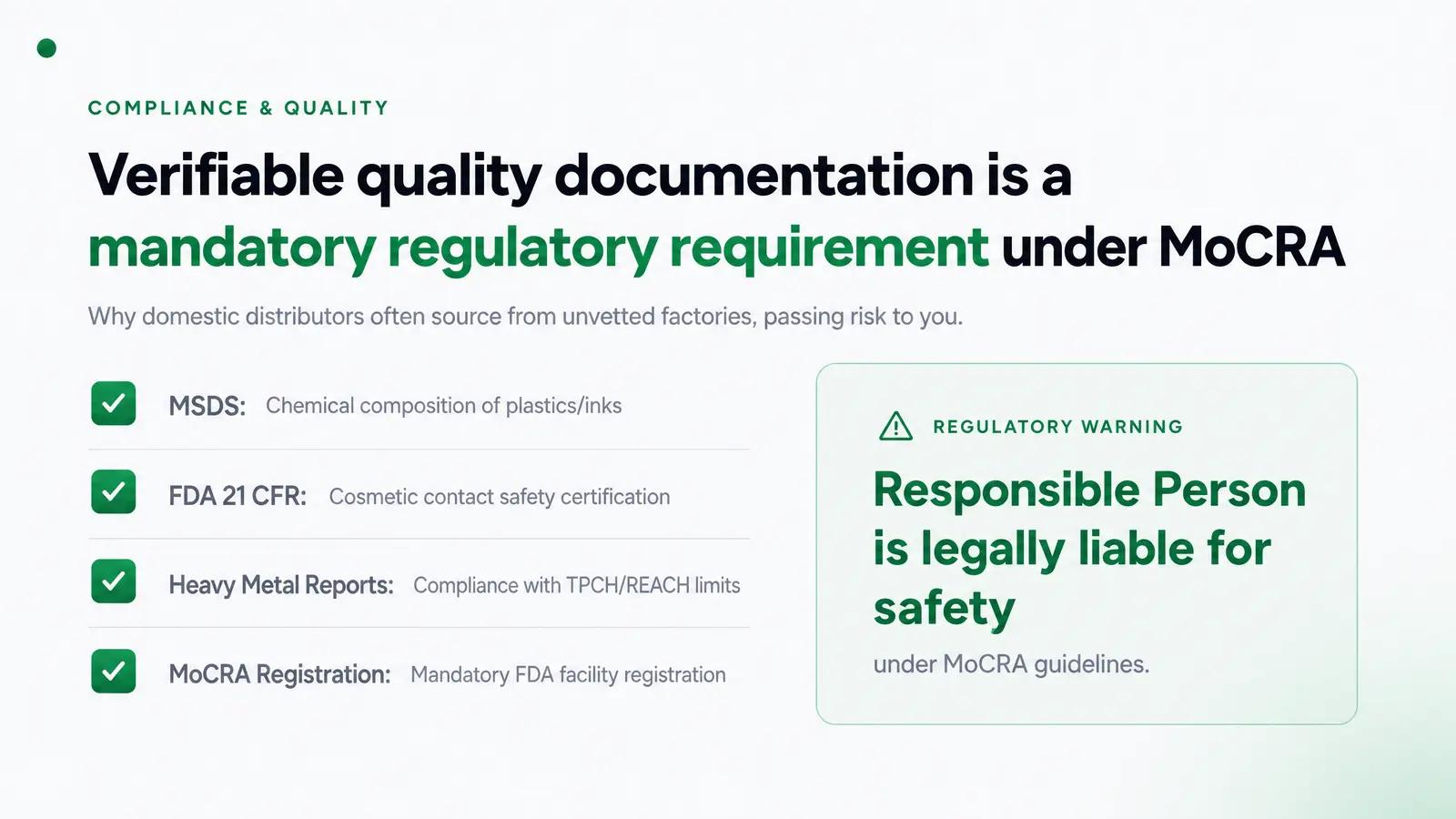
Under MoCRA, the "Responsible Person" (the brand owner whose name appears on the product label) is legally liable for ensuring and maintaining records that support adequate safety substantiation for their products [1]. This includes verifying that the primary packaging does not adulterate the cosmetic formulation [9].
For example, if your packaging contains heavy metals (such as lead, cadmium, or mercury) that exceed the limits established by the Toxics in Packaging Clearinghouse (TPCH) or European REACH regulations, your product can be deemed adulterated by the FDA, leading to mandatory recalls, import alerts, and severe brand damage [10] [11].
To ensure compliance, you must have access to verifiable quality documentation from your packaging supplier:
- Material Safety Data Sheets (MSDS): Verifying the chemical composition of the plastics, colorants, and inks utilized.
- FDA 21 CFR Compliance: Certifying that the materials utilized are safe for cosmetic and topical contact [12].
- Heavy Metal Testing Reports: Confirming compliance with TPCH and REACH heavy metal limits [10] [11].
- MoCRA Facility Registration: Verifying that the manufacturing facility is registered with the FDA, which became a mandatory requirement on July 1, 2024 [13].
If you are sourcing directly from overseas factories, you should partner with reputable third-party inspection services, such as QIMA or Bureau Veritas, to conduct on-site factory audits and pre-shipment inspections [14] [15]. A standard pre-shipment inspection will pull random samples from your production run (utilizing the AQL 2.5 standard) and perform critical functional tests:
- Vacuum Leak Testing: Placing filled containers in a vacuum chamber to verify seal integrity and prevent product leakage during transit or altitude changes.
- Cap Torque Testing: Measuring the force required to open and close closures to ensure they are user-friendly but secure.
- Compatibility and Crazing Checks: Verifying that the cosmetic formulation does not cause the plastic container to crack, cloud, or degrade over time.
Hybrid Strategies: When to Use Both
As indie beauty brands scale, they often outgrow single-source supply chains. Rather than choosing exclusively between the United States and China, established brands frequently utilize a hybrid sourcing strategy to optimize both cost and agility.
Sourcing by Component Complexity
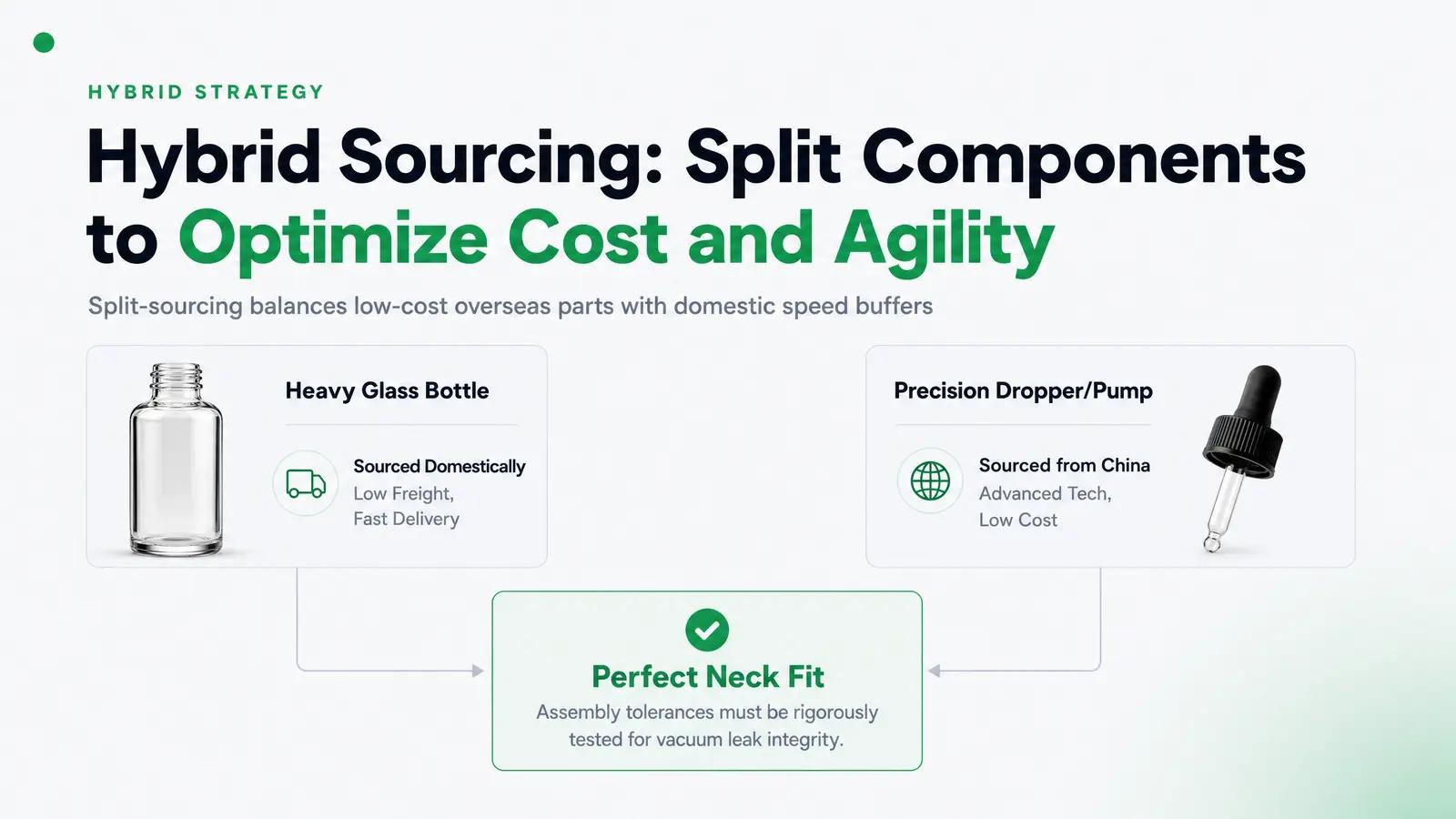
A highly effective hybrid approach involves splitting your packaging components based on manufacturing complexity and decoration requirements. For example, standard glass bottles and jars are heavy, expensive to ship, and relatively simple to manufacture. You can source these heavy glass bodies from a domestic distributor or manufacturer to minimize freight costs and lead times.
Conversely, high-precision dispensing mechanisms (such as airless pumps, fine mist sprayers, and droppers) require complex injection molding, internal metal springs, and strict tolerances. Because China maintains a highly mature, automated manufacturing ecosystem specifically tailored to beauty dispensing technology, sourcing these complex components from specialized Chinese factories offers superior functionality and significant cost savings, even after accounting for tariffs [2].
Managing Lead Time Buffers and Split-Sourcing
To execute a hybrid strategy successfully, you must establish clear lead-time buffers and manage assembly tolerances:
- Keep "Hero" SKUs Agile: Maintain a relationship with a domestic distributor or an on-demand platform for your top-selling, high-velocity SKUs. If you experience a sudden surge in demand driven by social media or a major retailer reorder, you can source packaging domestically in days to avoid stockouts, while your lower-cost bulk shipments are in transit from overseas.
- Verify Assembly Tolerances: If you source glass bottles domestically and plastic droppers or pumps from China, you must verify that the neck thread tolerances (such as a 20/410 or 24/410 finish) match perfectly. A microscopic mismatch in thread pitch or liner thickness can lead to slow, catastrophic product leakage on retail shelves. Always request physical samples of both components and conduct rigorous vacuum leak testing before approving production.
How to Vet Any Supplier Before Committing
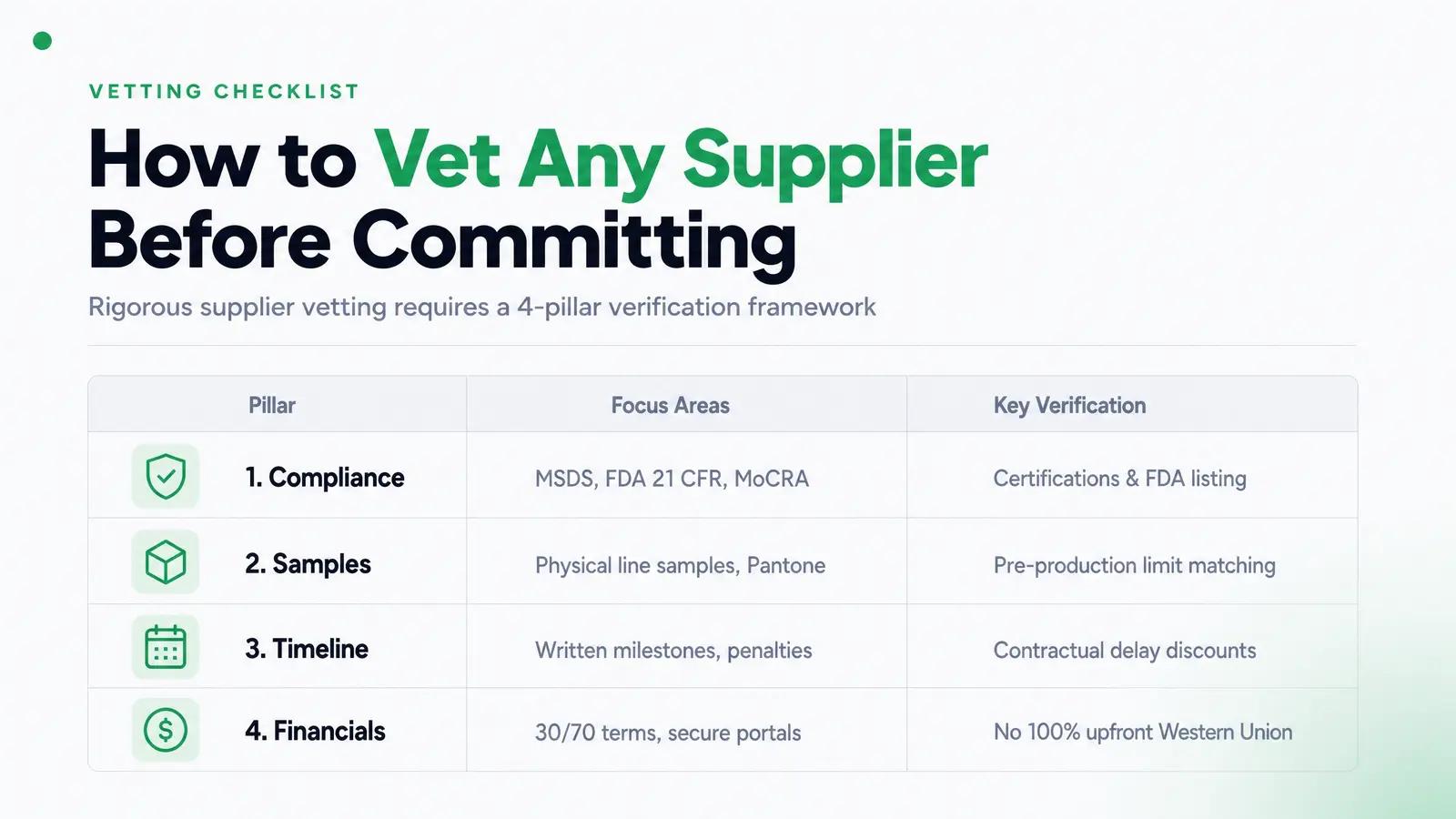
Whether you are negotiating with a factory in Guangdong or a distributor in Texas, you must conduct thorough due diligence before wire-transferring a deposit. Use this comprehensive checklist to vet any potential cosmetic packaging partner:
1. Material and Regulatory Documentation
- Request a complete compliance packet, including MSDS, FDA 21 CFR food-contact certifications, and heavy metal testing reports (TPCH/REACH) [10] [11] [12].
- Verify that the factory's manufacturing facilities hold ISO 9001 (Quality Management) and ISO 22716 (Cosmetic Good Manufacturing Practices) certifications [16].
- For brands importing directly, confirm that the manufacturing facility is registered with the FDA under MoCRA guidelines [13].
2. Clear and Enforceable Sample Policies
- Never approve bulk production based on digital renderings or 3D prints. Always insist on receiving physical, pre-production samples manufactured on the actual production line.
- Verify the supplier's custom color-matching capabilities (utilizing Pantone matching systems) and request physical "limit samples" showing the acceptable range of color variation.
3. Production and Timeline Guarantees
- Require the supplier to provide a detailed, written production schedule outlining milestones: mold preparation, injection/blowing, decoration, quality inspection, and packaging.
- Establish clear contractual penalties or discount structures for unapproved production delays that impact your launch timeline.
4. Financial and Payment Red Flags
- Standard international payment terms are 30% deposit upfront and 70% paid upon completion of production and successful third-party inspection (before the shipment leaves the factory floor).
- Avoid suppliers that demand 100% upfront payment via untraceable methods (such as Western Union or personal bank accounts). Always utilize secure payment portals or formal corporate bank transfers.
Sourcing Simplified: The Packfolio Approach
For emerging and mid-stage beauty brands, managing the operational friction of global packaging procurement can quickly become overwhelming. Navigating tariff classifications, auditing overseas factories, coordinating international freight, and conducting complex quality control testing are specialized supply chain skills that require significant time and resources.
Packfolio was built to eliminate this complexity, allowing beauty founders to focus on formulation, marketing, and sales rather than supply chain logistics. As an on-demand custom packaging platform, Packfolio curates a vetted catalog of premium cosmetic primary packaging SKUs [17]. Every bottle, jar, and dropper in our catalog is pre-modeled in photorealistic 3D with predefined printable regions [17].
Our required browser-based 3D preview workflow ensures that what you design is exactly what you receive, eliminating the classic artwork alignment errors that plague traditional direct-factory sourcing [17]. Packfolio acts as your single contract partner: we handle factory coordination, enforce strict MoCRA and heavy metal compliance, manage customs clearance and tariff calculations, and deliver retail-ready, custom-printed packaging directly to your facility [17]. It is premium beauty packaging, without the supply chain friction.
Browse Packfolio's curated cosmetic packaging catalog, preview your label in 3D before committing to a single unit, and let us handle the rest → packfolio.com/catalog
Frequently Asked Questions
What are the most common cosmetic packaging materials, and how do I choose?
The most common materials are glass (highly recyclable, premium weight, excellent chemical compatibility), PET/PETG plastics (highly durable, glass-like clarity, recyclable), and PP/PCR plastics (flexible, cost-effective, ideal for closures and tubes). You should choose based on your formulation's chemical compatibility, your brand's sustainability positioning, and your target price point.
How does MoCRA affect cosmetic packaging importers?
MoCRA requires cosmetic manufacturing facilities to register with the FDA and enforce strict Good Manufacturing Practices (GMP) [1] [13]. Importers must ensure that their packaging suppliers are compliant, as the brand owner is legally liable for ensuring that the packaging does not leach harmful substances or adulterate the cosmetic product [1] [9].
What is the difference between a cosmetic packaging distributor and a manufacturer?
A manufacturer directly operates the machinery and produces the packaging components, offering low unit costs but high minimum order quantities. A distributor is an intermediary that buys in bulk from manufacturers, stocks the inventory domestically, and resells it in smaller quantities with a significant price markup.
Why are minimum order quantities (MOQs) so high for custom packaging?
Factories enforce high MOQs because setting up manufacturing lines (installing molds, calibrating injection molding machines, preparing custom colorants, and setting up printing plates) requires significant time and labor. High minimum runs are necessary to amortize these fixed setup costs and make production profitable for the factory.
How do I run a compatibility test between my formula and packaging?
To run a compatibility test, fill your chosen packaging samples with your actual cosmetic formulation, seal them securely, and store them in two environments: room temperature and an incubator set to 40°C (104°F) to simulate accelerated aging. Examine the packaging and formula at 30, 60, and 90 days, checking for leakage, plastic cracking (crazing), color fading, or formula separation.
References
[1] U.S. Food and Drug Administration. "Modernization of Cosmetics Regulation Act of 2022 (MoCRA)." Last updated 2026. https://www.fda.gov/cosmetics/cosmetics-laws-regulations/modernization-cosmetics-regulation-act-2022-mocra
[2] APC Packaging. "Why Buying Cosmetic Packaging from China Still Makes Sense, Even with Tariffs." Technical Center. https://techcenter.apcpackaging.com/why-buying-cosmetic-packaging-from-china
[3] Othilapak. "Cosmetic Jar Supplier vs. Manufacturer: The Difference That Could Make or Break Your Beauty Brand." Trends & Insights, 2026. https://othilapak.com/blogs/trends-insights/cosmetic-jar-supplier-vs-manufacturer-the-difference-that-could-make-or-break-your-beauty-brand/
[4] Evergreen Resources. "2025 Tariff Updates: Impact on Packaging Supply Chains." Industry Insights, 2025. https://evergreenresources.com/2025-packaging-industry-tariffs/
[5] China Briefing. "Breaking Down the US-China Trade Tariffs: What's in Effect Now?" Trade Advisory, 2026. https://www.china-briefing.com/news/us-china-tariff-rates-2025/
[6] FreightAmigo. "HS Code for Articles for the Conveyance or Packing of Goods of Plastics: Stoppers, Lids, Caps and Other Closures." Logistics Guide, 2026. https://www.freightamigo.com/en/blog/logistics/hs-code-for-articles-for-the-conveyance-or-packing-of-goods-of-plastics-stoppers-lids-caps-and-other-closures/
[7] BaySource Global. "The Unboxing Economy: Why Custom Packaging From China Still Makes Sense in 2025." Supply Chain Analysis, 2025. https://baysourceglobal.com/custom-packaging-china-tariffs-2025/
[8] U.S. International Trade Commission. "Harmonized Tariff Schedule of the United States: Chapter 70 (Glass and Glassware)." 2026. https://hts.usitc.gov/reststop/file?release=currentRelease&filename=Chapter%2070
[9] U.S. Food and Drug Administration. "Federal Food, Drug, and Cosmetic Act (FD&C Act) Chapter VI: Cosmetics." https://www.fda.gov/cosmetics/cosmetics-laws-regulations/cosmetics-laws-regulations-fdc-act
[10] Toxics in Packaging Clearinghouse (TPCH). "Toxics in Packaging Model Legislation." https://toxicsinpackaging.org/model-legislation/
[11] European Chemicals Agency (ECHA). "Understanding REACH (Registration, Evaluation, Authorisation and Restriction of Chemicals)." https://echa.europa.eu/regulations/reach/understanding-reach
[12] U.S. Food and Drug Administration. "Code of Federal Regulations Title 21 (21 CFR) Part 177: Indirect Food Additives: Polymers." https://www.accessdata.fda.gov/scripts/cdrh/cfdocs/cfcfr/CFRSearch.cfm?CFRPart=177
[13] U.S. Food and Drug Administration. "Registration & Listing of Cosmetic Product Facilities and Products under MoCRA." Last updated 2026. https://www.fda.gov/cosmetics/registration-listing-cosmetic-product-facilities-and-products
[14] QIMA. "Quality Control in China: Inspections, Audits, Lab Testing." https://www.qima.com/consumer-products/quality-control/quality-control-in-china
[15] Bureau Veritas. "Health, Beauty & Household Testing Services." https://www.cps.bureauveritas.com/needs/health-beauty-household-testing-services
[16] International Organization for Standardization. "ISO 22716:2007 Cosmetics — Good Manufacturing Practices (GMP) — Guidelines on Good Manufacturing Practices." https://www.iso.org/standard/36308.html
[17] Packfolio. "Packfolio: Beauty Packaging Without the Supply Chain." Platform Overview. https://packfolio.com/


