
How to Choose Cosmetic Packaging for Your Formula
A science-backed framework helps beauty brands match formula chemistry, viscosity, and active ingredients to the optimal primary packaging for stability and performance.
The beauty industry frequently treats packaging as a visual canvas, focusing heavily on brand aesthetics, shelf appeal, and unboxing experiences. However, for independent beauty brand founders, formulators, and contract manufacturers, packaging is primarily a product-performance and chemical-preservation decision [1]. The most brilliant cosmetic formulation is only as good as the container that protects it. If a package fails to defend a formula against light, oxygen, or microbial contamination, active ingredients degrade, textures separate, and the product ultimately fails to perform [2].
Selecting the correct primary packaging requires navigating a complex intersection of chemistry, physics, logistics, and finance. When a formula interacts negatively with its container, it can lead to active ingredient oxidation, chemical leaching, or physical dispensing failures [3] [4]. This comprehensive guide provides a structured, science-backed framework to help you choose the optimal primary packaging for your cosmetic formula.
The Formula-to-Packaging Match Framework
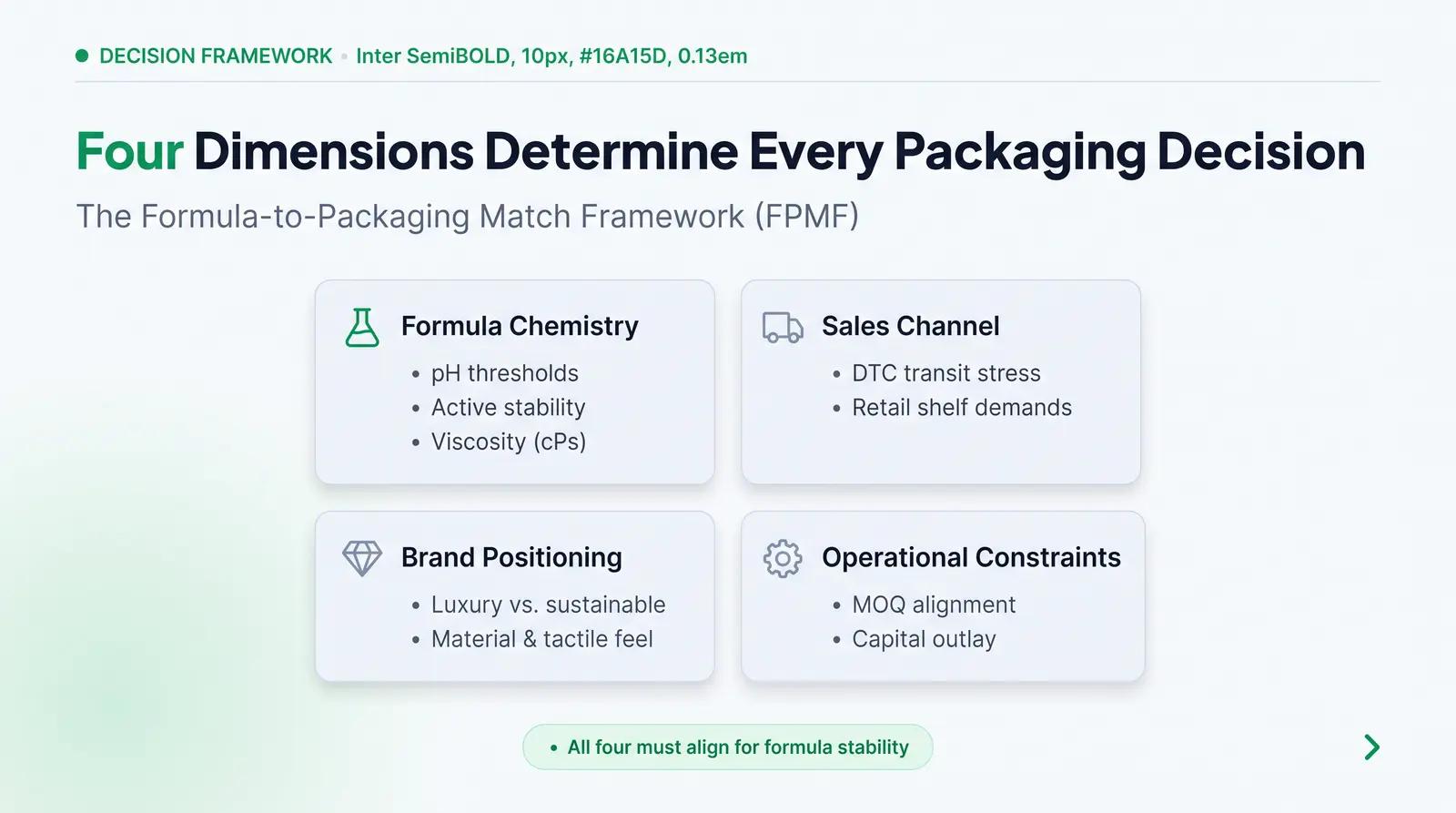
To move beyond trial-and-error, beauty brands must adopt a structured decision-making process. The Formula-to-Packaging Match Framework (FPMF) evaluates packaging compatibility across four critical, interdependent dimensions.
| Dimension | Key Considerations |
|---|---|
| 1. Formula Chemistry & Viscosity | pH thresholds (acidic vs. alkaline compatibility); active stability (oxidation, UV degradation risks); rheology & viscosity (centipoise ranges for dispensing) |
| 2. Sales Channel Dynamics | Direct-to-consumer (transit vibrations, weight, drop tests); physical retail & wholesale (stackability, shelf standout) |
| 3. Brand Positioning | Luxury aesthetics (heavy glass, premium metal, weight); sustainable commitments (PCR, mono-materials, refillables) |
| 4. Operational Constraints | Capital outlay (unit costs, tooling, setup fees); minimum order quantities (batch vs. component MOQ alignment) |
1. Formula Chemistry and Viscosity
The chemical composition and physical behavior of your formula dictate the baseline materials you can safely use.
- pH Thresholds: Extreme pH levels restrict material choices. Highly acidic formulas, such as alpha-hydroxy acid (AHA) peels with a pH below 3.5, can degrade certain plastics or corrode metals [5]. Alkaline formulas, such as some cleansers, require chemically inert containers like Polypropylene (PP) or glass [1].
- Active Stability: Actives like L-ascorbic acid (Vitamin C) and retinol are highly sensitive to oxygen and ultraviolet (UV) light [6]. Exposure to these environmental factors triggers rapid oxidation, rendering the active ingredients useless and turning the formula an unappealing brown or yellow [7]. These formulas require light-blocking, airless, or hermetically sealed containers [8].
- Rheology and Viscosity: Viscosity, measured in centipoise (cPs), determines how a formula must be dispensed. Watery serums (under 3,000 cPs) will leak from standard pumps and require droppers or specialized treatment pumps [9]. High-viscosity creams (over 50,000 cPs) cannot be drawn up a standard dip tube and require wide-mouth jars, squeeze tubes, or airless pump systems [10].
2. Sales Channel Dynamics
Your distribution strategy introduces distinct physical stresses that your packaging must survive.
- Direct-to-Consumer (DTC): E-commerce packaging must withstand the physical rigors of shipping, including drops, compression, and high-frequency transit vibrations [11]. Lightweight, shatter-resistant materials like Polyethylene Terephthalate (PET) or Polypropylene (PP) minimize transit damage and shipping costs [1]. If using glass, it must be paired with robust protective outer cartons and pass standard drop tests [11].
- Physical Retail and Wholesale: On physical retail shelves or wholesale marketplaces like Faire, packaging serves as a silent salesperson [12]. It must stack efficiently, withstand constant handling by shoppers, resist fading under harsh store lighting, and feature secure, tamper-evident seals to prevent in-store contamination [12] [13].
3. Brand Positioning
Your packaging is the tangible manifestation of your brand's values and price point.
- Luxury Aesthetics: High-end brands rely on weight and tactile feel to communicate value. Heavy-walled glass, cold-touch aluminum, and double-walled acrylic jars provide a luxurious sensory experience [1].
- Sustainable Commitments: Modern clean beauty brands prioritize eco-friendly packaging. This includes Post-Consumer Recycled (PCR) plastics, mono-material assemblies that are easily recyclable, and refillable pod systems [14] [15]. However, PCR can introduce slight color variations and requires rigorous compatibility testing to ensure no chemical impurities leach into the formula [4] [14].
4. Operational Constraints
The financial and logistical realities of manufacturing often present the steepest hurdle for emerging brands.
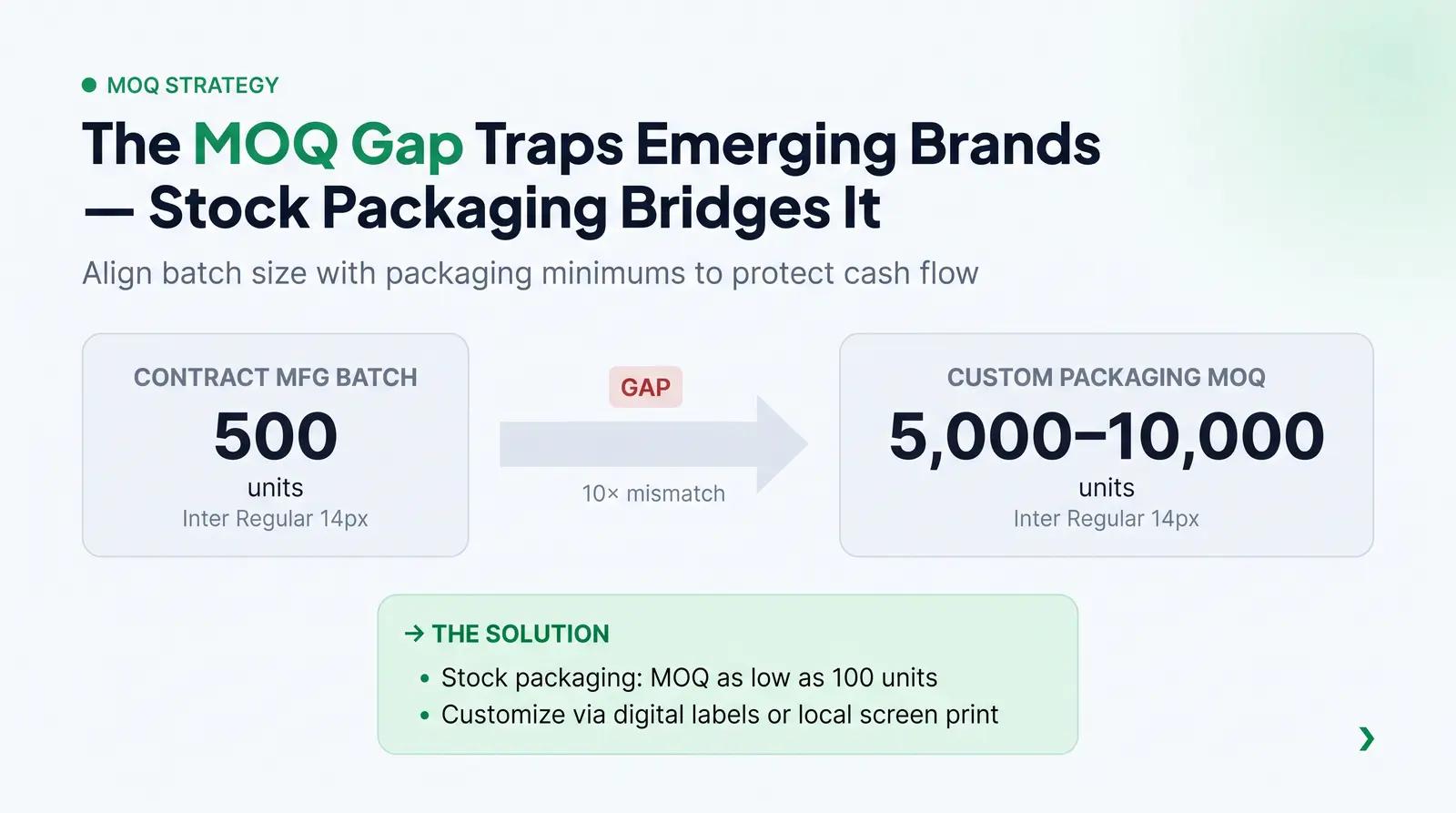
- Minimum Order Quantities (MOQs): There is a frequent disconnect between manufacturing batch MOQs and packaging component MOQs. While a contract manufacturer might agree to a low-MOQ batch of 500 units, standard custom packaging suppliers often require minimums of 5,000 to 10,000 units for custom-colored or printed containers [16]. Emerging brands must align these MOQs by sourcing high-quality stock packaging that is customizable in smaller batches through digital printing or labeling [16].
Formula-Type Deep Dive: Matching Chemistry to Container
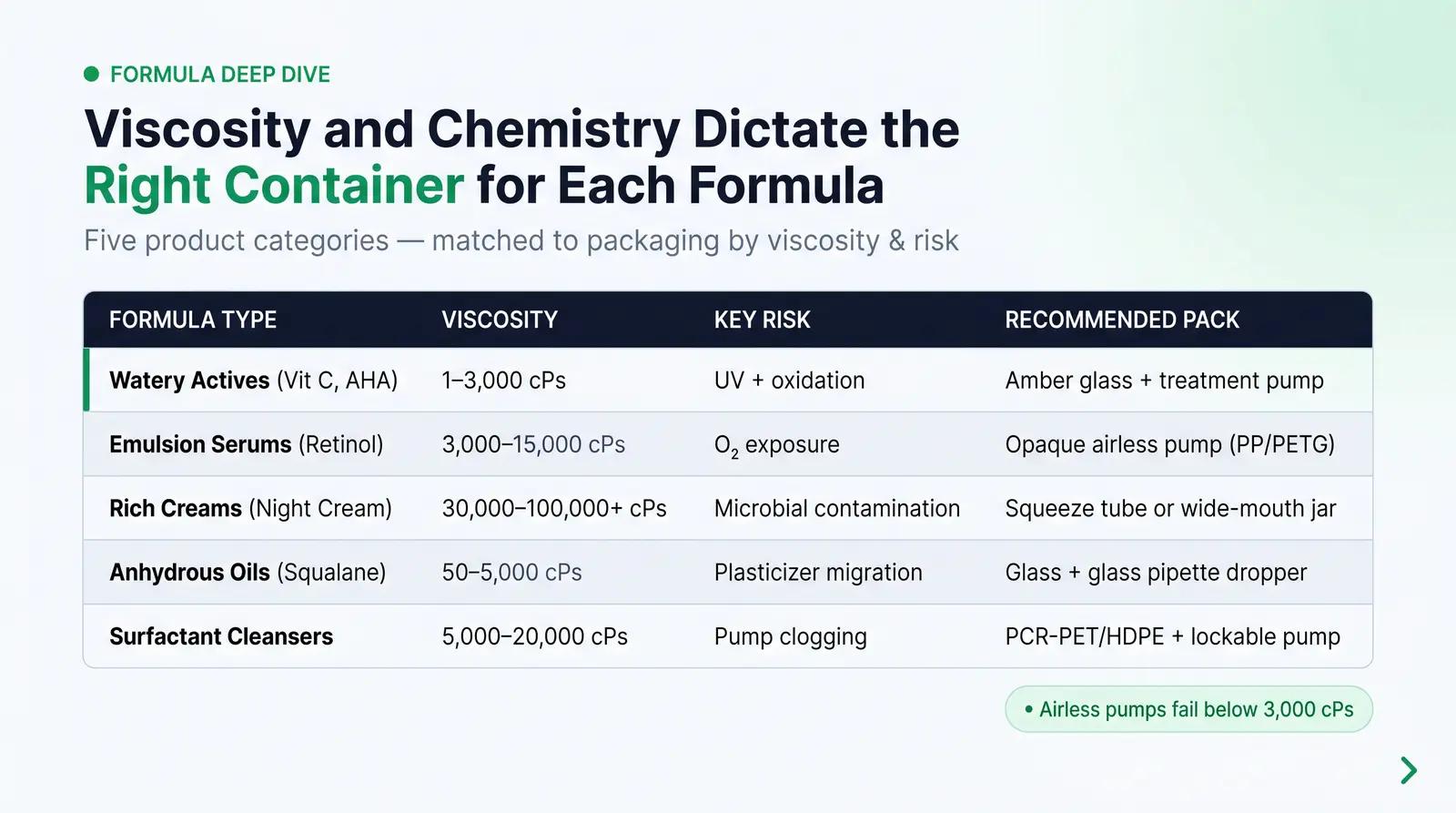
Different product categories present unique chemical and physical challenges. To ensure formula stability and user satisfaction, you must match the specific rheology and active ingredients of your product to the correct packaging architecture.
| Product Category | Typical Viscosity (cPs) | Primary Chemical Risks | Recommended Packaging | Key Technical Trade-Offs |
|---|---|---|---|---|
| Watery Actives (e.g., L-Ascorbic Acid, Acid Peels) | 1 – 3,000 | Extreme oxidation, UV degradation, low pH corrosion | Amber or opaque glass bottle with treatment pump or dropper | Droppers expose formula to air during use; pumps can suffer from "salt plugging" at the nozzle [6] [17]. |
| Emulsion Serums (e.g., Retinol, Niacinamide) | 3,000 – 15,000 | UV degradation, oxygen exposure, active instability | Opaque airless pump bottle (PP or PETG) | Airless pumps require medium viscosity to prime; watery formulas will leak [10]. |
| Rich Creams (e.g., Night Creams, Ceramide Balms) | 30,000 – 100,000+ | Microbial contamination from finger dipping, oil separation | Squeeze tube (aluminum or PCR-PE), or double-walled jar with spatula | Jars offer a luxury feel but present high contamination risks; tubes are hygienic but less premium [1]. |
| Anhydrous Oils (e.g., Facial Oils, Squalane) | 50 – 5,000 | Rancidity/lipid oxidation, plasticizer migration, leaching | Glass bottle with glass pipette dropper | Essential oils can degrade certain plastics and dissolve plasticizers; glass is chemically inert [1] [18]. |
| Surfactant Cleansers (e.g., Gel Cleansers) | 5,000 – 20,000 | Water ingress, pump clogging, bulk volume weight | PCR-PET or HDPE bottle with lockable lotion pump | Large volumes make glass cost-prohibitive for shipping; plastic pumps must be transit-lockable [1]. |
The Airless Pump: Benefits and Misconceptions
Airless pump bottles are widely celebrated as the ultimate packaging solution for modern skincare. By utilizing a vacuum-based piston mechanism instead of a conventional dip tube, they dispense product without exposing the internal formula to outside air [8]. This design dramatically reduces oxidation, extends shelf life by 15% to 30%, and enables an exceptionally high product evacuation rate of up to 98% [8].
However, airless pumps are not a universal cure-all. They suffer from two major technical limitations:
- The "Salt Plug" Problem: High-active formulas containing mineral salts or crystallizing actives (such as high-strength L-ascorbic acid or magnesium ascorbyl phosphate) can dry out in the narrow nozzle tip between uses. As the solvent evaporates, it leaves behind a solid salt deposit. This "salt plug" clogs the orifice, causing the pump to seize or spray the product unpredictably when forced [17].
- Viscosity Constraints: Airless pumps rely on the formula's cohesive force to pull the internal piston upward as product is dispensed. If a formula is too watery (under 3,000 cPs), it will bypass the piston seal, leading to internal leakage and a failure to prime the vacuum [10].
Sales Channel Constraints: DTC vs. Retail and Wholesale
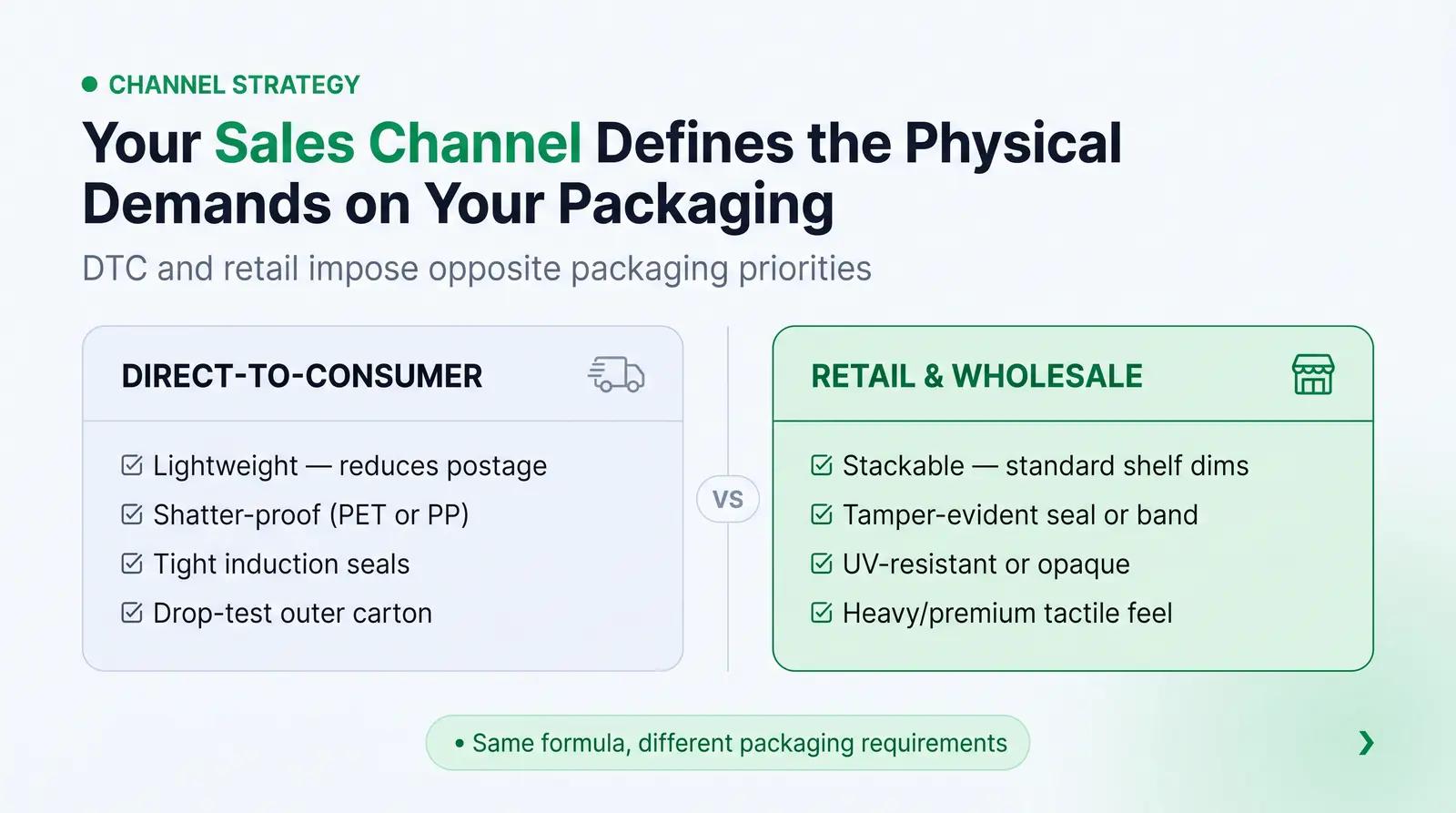
Your chosen sales channels dictate the physical forces and regulatory standards your packaging must endure. A container that performs beautifully in a digital unboxing video may fail catastrophically on a retail shelf or in a wholesale distribution center.
| Direct-to-Consumer (DTC) | Retail & Wholesale (e.g., Faire) |
|---|---|
| Lightweight (reduces postage) | Heavy/premium (tactile value) |
| Shatter-proof (survives transit) | Stackable (standard shelf dimensions) |
| Tight seals (prevents leaks) | Tamper-evident (security) |
| High-performance outer shipper | UV-resistant (shelf lighting) |
Direct-to-Consumer (DTC) Requirements
In a DTC model, your packaging must survive the "last mile" of delivery. The primary hazards are transit vibrations, drop impacts, and pressure changes during air transport.
To prevent leaks, closures must feature high-quality liners or induction seals. If you utilize glass bottles for a premium feel, you must invest in heavy-duty outer cartons and custom molded inserts. Many brands opt for high-quality, thick-walled PET or PP plastics for DTC, as they replicate the clarity and weight of glass while remaining virtually shatter-proof and significantly lighter, reducing postage costs [1].
Retail and Wholesale Requirements
When transitioning to physical retail or wholesale platforms like Faire, the packaging must adapt to a self-service environment.
- Shelf Stackability: Products must stack securely. Jars with highly domed caps or bottles with irregular, top-heavy shapes consume excessive shelf space and are easily knocked over, making them unpopular with retail merchandisers [12].
- Tamper Evidence: Retail packaging requires clear tamper-evident features, such as shrink bands, sticker seals, or outer folding cartons. Without these, curious shoppers will open bottles on the shelf, contaminating the product and creating unsellable inventory [13].
- UV Protection: Retail shelves are subjected to constant, intense fluorescent or LED lighting. If your formula contains light-sensitive actives or natural colorants, transparent packaging will lead to rapid fading or degradation. Opaque containers, amber glass, or UV-inhibiting plastic additives are essential for retail survival [1] [6].
Brand Positioning and Material Selection
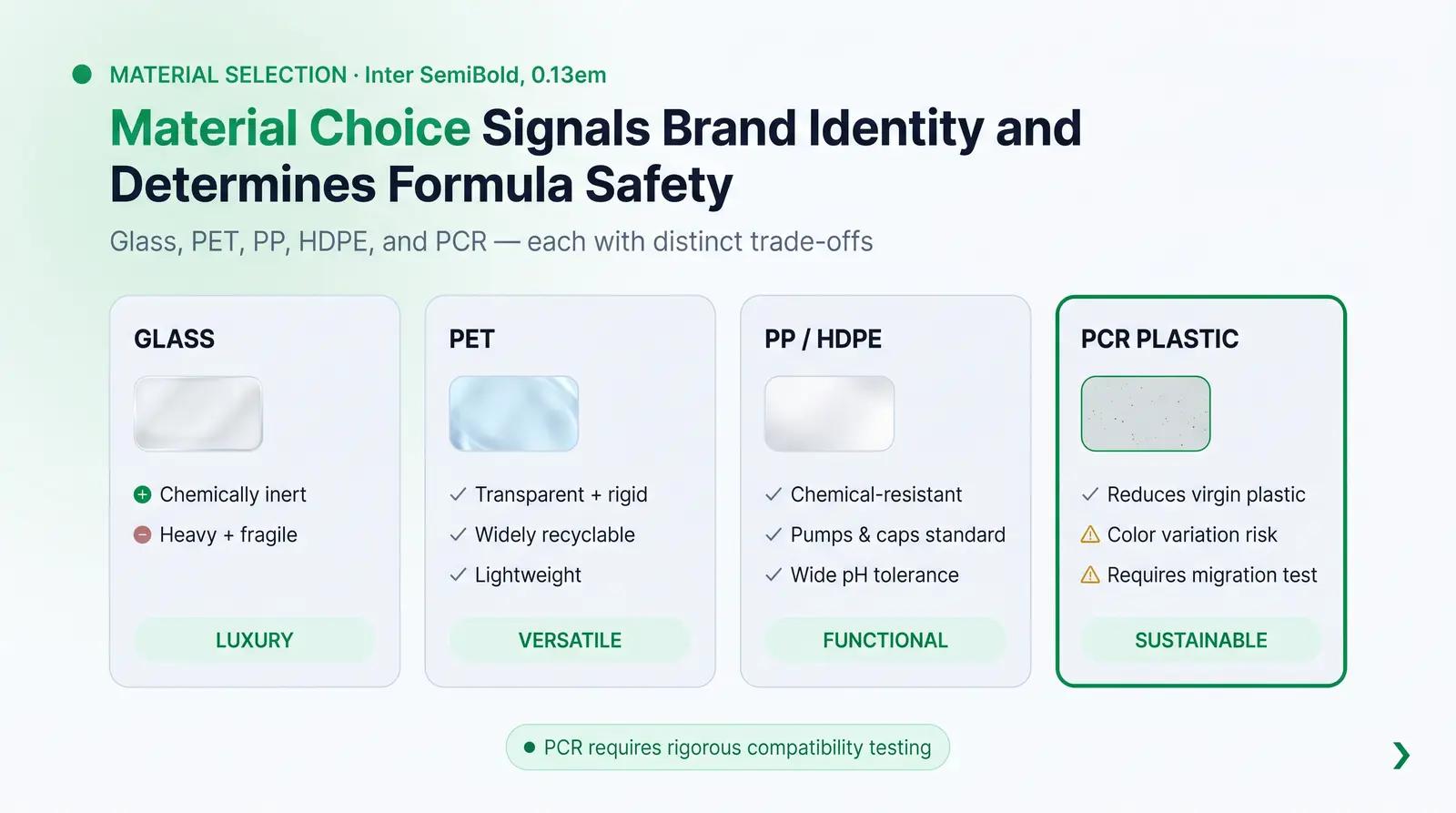
Your choice of packaging material is a direct reflection of your brand's identity and sustainability claims. Each material option carries distinct chemical and aesthetic trade-offs.
Glass: The Inert Luxury Standard
Glass remains the gold standard for premium skincare. It is completely inert, meaning it will not react with active ingredients, absorb essential oils, or leach chemicals into the formula [1]. It is also highly recyclable and offers a heavy, luxurious tactile feel.
However, glass is heavy, fragile, and energy-intensive to manufacture and ship. For light-sensitive formulas, transparent glass must be replaced with amber, cobalt, or completely opaque painted glass [6].
Plastics: PET, PP, and HDPE
Plastics offer unmatched versatility, shatter-resistance, and cost-effectiveness.
- PET (Polyethylene Terephthalate): Highly transparent and rigid, PET is excellent for showcasing the color of stable formulas. It is lightweight and widely recyclable [1].
- PP (Polypropylene): PP is highly chemical-resistant and is the standard material for caps, pumps, and airless assemblies. It can withstand a wide range of pH levels and solvents [1].
- HDPE (High-Density Polyethylene): Translucent and flexible, HDPE is the preferred choice for squeeze bottles and tubes due to its excellent moisture barrier properties [1].
Post-Consumer Recycled (PCR) Plastics
As brands strive to meet sustainability mandates, PCR plastic has become highly popular [14]. While PCR significantly reduces virgin plastic consumption, it introduces technical challenges. PCR can exhibit slight gray or yellow color variations and tiny black specks, which may conflict with a minimalist, clean brand aesthetic [15].
More critically, because PCR is sourced from recycled waste, it requires intensive purification and rigorous compatibility testing. Brands must verify that the PCR material does not contain trace contaminants or heavy metals that could migrate into the cosmetic formula over time [4].
Operational Constraints: Navigating the MOQ Mismatch
One of the most painful lessons for emerging beauty brands is the minimum order quantity (MOQ) mismatch. Understanding this supply chain dynamic is critical to managing your cash flow.
| Source | Typical MOQ |
|---|---|
| Contract manufacturer batch | 500 units |
| Standard custom packaging | 5,000 – 10,000 units |
The Solution: Source high-quality stock packaging (MOQ 100–500) and use high-resolution digital labeling or screen printing to customize.
When launching a small-batch product, a contract manufacturer may agree to a low production run of 500 to 1,000 units [16]. However, if you attempt to purchase custom-molded, custom-colored, or direct-printed bottles, you will quickly discover that packaging manufacturers enforce MOQs of 5,000 to 10,000 units per SKU [16].
To bridge this gap without tying up all your capital in excess packaging inventory, emerging brands must utilize stock packaging. High-quality stock bottles, jars, and tubes can be purchased in quantities as low as 100 units.
To customize these stock components and achieve a premium aesthetic, brands can utilize:
- High-Resolution Digital Labels: Modern digital labels offer exceptional print quality, metallic foils, and matte finishes with very low minimums.
- Local Screen Printing: Many local decorators can screen-print directly onto stock glass or plastic bottles in small batches (typically starting at 500 units), bypassing the high MOQs of overseas packaging manufacturers.
A Worked Example: Packaging a 15% Vitamin C Serum
To illustrate the Formula-to-Packaging Match Framework in action, let us analyze a realistic scenario of an emerging brand launching a high-performance facial serum.
The Formula Profile
- Product: 15% L-Ascorbic Acid (Active Vitamin C) Serum
- Viscosity: 1,500 cPs (Watery, low-viscosity fluid)
- pH: 3.0 (Highly acidic, required for optimal skin penetration)
- Key Vulnerabilities: Rapid oxidation upon exposure to air; rapid degradation under UV light; potential nozzle crystallization [6] [7] [17].
- Target Channels: Direct-to-Consumer (DTC) via Shopify and Wholesale via Faire.
- Initial Launch Volume: 1,000 units.
Evaluating the Packaging Options
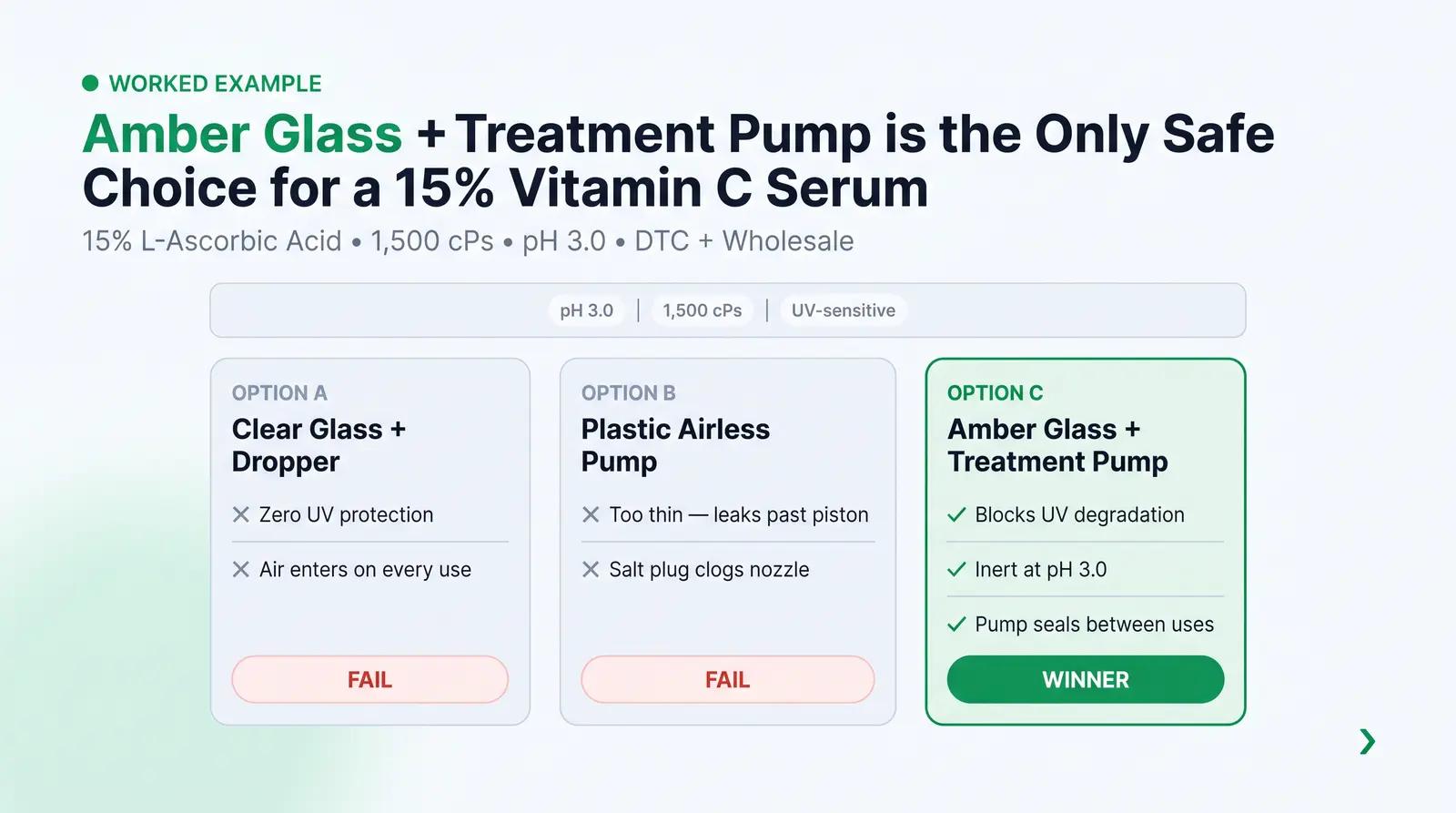
The brand evaluates three primary packaging formats for this watery, acidic, and highly unstable formula.
| Option | Aesthetics | Compatibility |
|---|---|---|
| Option 1: Clear Glass Bottle + Dropper | High (shows product clarity) | FAIL — UV light degrades active; air enters on open |
| Option 2: Standard Plastic Airless Pump Bottle | Moderate | FAIL — viscosity too low; nozzle clogs with salt plug |
| Option 3: Amber Glass Bottle + Treatment Pump | High/clinical | PASS — UV protected; pump minimizes air exposure |
Option 1: Clear Glass Bottle with a Glass Dropper Pipette
- The Appeal: Highly aesthetic, allows consumers to see the clarity of the serum, and carries a classic, clinical skincare feel.
- The Reality: FAIL. The clear glass provides zero protection against UV light, causing the L-ascorbic acid to degrade rapidly under retail or bathroom lighting [6]. Furthermore, every time the consumer unscrews the dropper, a fresh volume of oxygen is introduced into the bottle, accelerating oxidation. Within weeks, the serum will turn dark orange-brown and lose its potency [7].
Option 2: Standard Plastic Airless Pump Bottle (PP)
- The Appeal: Promoted as the ultimate solution for air-sensitive actives.
- The Reality: FAIL. With a watery viscosity of 1,500 cPs, the serum is too thin for standard airless pistons. The low-viscosity liquid will slip past the piston seals, leading to internal leakage and a failure to prime [10]. Additionally, the high concentration of active L-ascorbic acid will dry out in the pump tip, forming a crystallized "salt plug" that clogs the nozzle [17].
Option 3: Amber Glass Bottle with a Fine-Mist Treatment Pump
- The Appeal: Classic apothecary aesthetic, highly functional.
- The Reality: WINNER. Amber glass blocks damaging UV wavelengths, protecting the active ingredient from light-induced degradation [6]. Glass is completely inert and easily withstands the acidic pH of 3.0 [1]. The treatment pump dispenser keeps the bottle sealed, preventing the bulk formula from exposing to fresh air during use. Because treatment pumps utilize a slightly wider orifice and a different internal spring mechanism than airless pumps, they are far less prone to catastrophic salt plugging [17].
For a DTC channel, the brand must ensure the bottle is packaged in a snug, custom-cut cardboard insert to prevent breakage during shipping. For Faire, a tamper-evident shrink band is applied to the neck of the pump to satisfy retail buyers.
Streamlining Sourcing and Quality Assurance with Packfolio
Navigating the complexities of packaging compatibility, material sourcing, and supplier coordination can be overwhelming, particularly for independent brands. This is where Packfolio (packfolio.com) transforms the development workflow.
Packfolio acts as an on-demand, end-to-end custom packaging platform designed specifically for beauty brands. Rather than forcing founders to coordinate with multiple disparate suppliers, chemists, and freight forwarders, Packfolio curates a vetted catalog of cosmetic primary packaging SKUs — including glass bottles, airless pumps, jars, tubes, and closures.
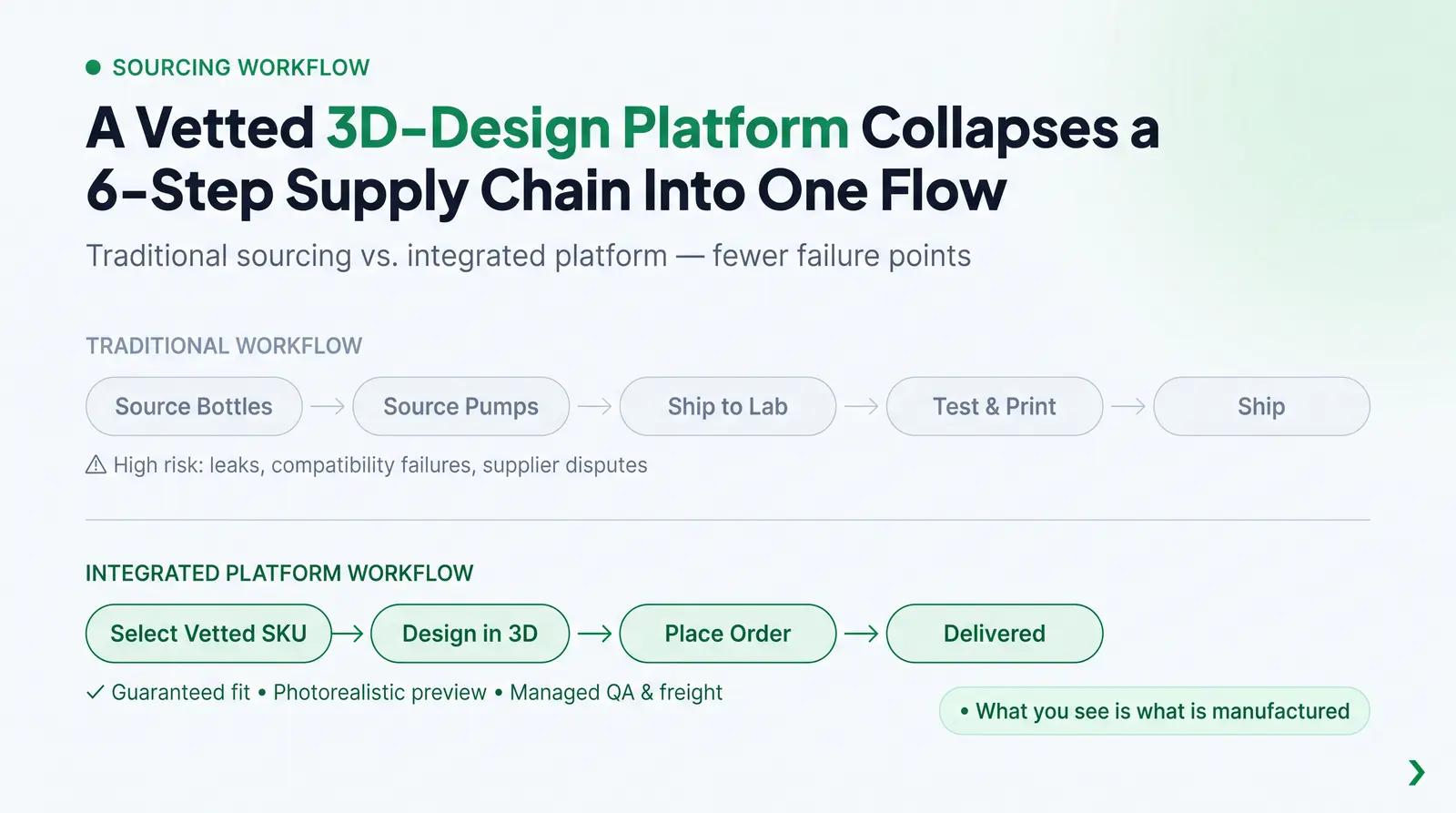
| Traditional Workflow | Packfolio Workflow |
|---|---|
| Source bottles → source pumps → ship to lab → test → print → ship | Select pre-vetted SKU → design in 3D → order → Packfolio delivers |
| High risk of compatibility failure, leaks, and supplier finger-pointing | Guaranteed fit, photorealistic preview, fully managed QA & freight |
Every SKU in the Packfolio catalog is pre-modeled in 3D with predefined printable regions. Through a browser-based 3D design tool, brands can upload their artwork, customize the print zones, and preview their product on a photorealistic 3D model.
Because the 3D preview is a mandatory, integrated step in the order flow, what you see on the screen is exactly what is manufactured. Packfolio manages the entire downstream process, coordinating production, enforcing rigorous quality assurance, and managing freight delivery directly to your door or contract manufacturer. By removing the supply chain friction, Packfolio allows beauty founders to focus on what matters most: perfecting their formulations and growing their brands.
Frequently Asked Questions
1. How do I perform a packaging compatibility test at home or in a small lab?
To conduct a basic compatibility test, fill three of your chosen primary containers with your final formula and seal them tightly. Place one container in a dark cupboard at room temperature (control), one in a refrigerator, and one in an incubator or warm area at 40°C (accelerated aging). Inspect the samples weekly for 12 weeks. Look for physical changes such as formula separation, color shifts, odor changes, container bloating, cracking, or leakage [3]. If the accelerated sample remains stable after 12 weeks, it generally correlates to one year of real-time shelf stability.
2. Can I use PCR plastic for highly acidic or active formulas?
Yes, but with extreme caution. Post-Consumer Recycled (PCR) plastic is chemically identical to virgin plastic if processed correctly, but it can contain trace impurities or volatile organic compounds from its previous life cycle [4]. For highly acidic formulas (pH under 3.5) or formulas with strong solvents and essential oils, you must perform rigorous migration and extraction testing to ensure the formula does not draw these impurities out of the PCR container wall [4] [14].
3. Why is my airless pump bottle not dispensing when I press it?
This is usually caused by an air pocket trapped beneath the pump mechanism, or a formula viscosity that is too low to draw the internal piston upward. To resolve this, try "priming" the pump by turning the bottle upside down and tapping it firmly against a hard surface to force the product toward the nozzle, then pump the actuator 10 to 15 times to clear the air pocket [8]. If the formula is too thin, it may have leaked past the piston, requiring a change to a higher-viscosity formula or a different packaging format [10].
4. What is the difference between mono-material and multi-material packaging?
Mono-material packaging is constructed entirely from a single type of plastic, such as a tube and cap both made from Polypropylene (PP). This makes the container 100% recyclable in standard curbside collection bins. Multi-material packaging combines different materials, such as a plastic bottle with a metal collar and a rubber pump bulb. These require the consumer to disassemble the package before recycling, which rarely happens, leading to the container being discarded in a landfill [15].
5. Do I need to register my packaging with the FDA?
The FDA does not approve cosmetic packaging before it goes on the market. However, under the Federal Food, Drug, and Cosmetic Act (FD&C Act) and the Modernization of Cosmetics Regulation Act (MoCRA), you are legally responsible for ensuring your packaging is safe and does not adulterate your product [13]. The packaging material must not contain harmful substances (such as lead or restricted plasticizers) that could migrate into the cosmetic formula under customary conditions of use [13].
References
[1] Rosette, J. L., Yablonski, J., Mancuso, S., & Rosette, J. (2012). Packaging, Cosmetics and Pharmaceuticals. In Kirk-Othmer Encyclopedia of Chemical Technology. https://www.academia.edu/download/98750755/Chemical_Technology_of_Cosmetic.pdf#page=742
[2] Srivastava, P., & Kumar, S. (2022). Package design as a branding tool in the cosmetic industry. Journal of Business and Retail Management Research, 16(2). https://pmc.ncbi.nlm.nih.gov/articles/PMC9123395/
[3] Juncan, A. M., Rus, L. M., & Vancea, S. (2018). Packaging Evaluation and Safety Assessment of a Cosmetic Product. Materiale Plastice, 55(4), 512-516. https://revmaterialeplastice.ro/pdf/JUNCAN%204%2018.pdf
[4] Gupta, R. K., & Singh, S. (2024). Migration of Chemical Compounds from Packaging Materials. Foods, 13(19), 3125. https://www.mdpi.com/2304-8158/13/19/3125
[5] Cinelli, P., Coltelli, M. B., Signori, F., Morganti, P., & Lazzeri, A. (2019). Cosmetic packaging to save the environment: Future perspectives. Cosmetics, 6(2), 26. https://www.mdpi.com/2079-9284/6/2/26
[6] Yin, X., Chen, K., Cheng, H., Chen, X., Feng, S., Song, Y., & Liang, L. (2022). Chemical Stability of Ascorbic Acid Integrated into Commercial Products: A Review on Bioactivity and Delivery Technology. Antioxidants, 11(1), 153. https://pmc.ncbi.nlm.nih.gov/articles/PMC8773188/
[7] Phyto-C. (2026). Vitamin C Oxidation: Why Your Serum Turns Orange. Phyto-C Skincare Journal. https://www.phyto-c.com/blogs/news/vitamin-c-oxidation-why-serum-turns-orange
[8] Hongsheng Sprayer. (2025). What Is an Airless Bottle for Cosmetic? A Complete Guide to Airless Packaging. Hongsheng Packaging Insights. https://www.hongshengsprayer.com/news/industry-news/what-is-an-airless-bottle-for-cosmetic-a-complete-guide-to-airless-packaging.html
[9] The Tube Packaging. (2025). Cosmetic Tubes: Complete Packaging Guide for Beauty Product Manufacturers. The Tube Packaging Journal. https://thetubepackaging.com/cosmetic-tubes-complete-packaging-guide-for-beauty-product-manufacturers/
[10] Chemists Corner. (2021). Airless Packaging: When is it essential? Cosmetic Science Talk. https://chemistscorner.com/cosmeticsciencetalk/discussion/airless-packaging-when-is-it-essential/
[11] Aly Packaging. (2025). Retail Boxes That Pass Drop Tests: Packaging Engineering vs. Looking Pretty on Shelves. Aly Packaging Blog. https://alypackaging.com/blog/retail-boxes-that-pass-drop-tests-packaging-engineering-vs-looking-pretty-on-shelves/
[12] Slater, J. (2024). Packaging Online and Retail Packaging Aren’t The Same Animal. The Marketing Sage Consultancy. https://www.themarketingsage.com/packaging-online-and-retail-packaging-arent-the-same-animal/
[13] U.S. Food and Drug Administration. (2025). Summary of Cosmetics Labeling Requirements. FDA Cosmetics Guidance. https://www.fda.gov/cosmetics/cosmetics-labeling-regulations/summary-cosmetics-labeling-requirements
[14] APG. (2025). Do PCR cosmetic containers affect product stability or quality? APG Skincare Packaging Insights. https://apackaginggroup.com/blogs/news/do-pcr-cosmetic-containers-affect-product-stability-or-quality
[15] Omira, A., & Al-Othman, A. (2025). The new generation of cosmetics packaging: A paradigm shift. Sustainable Materials and Technologies, 43, e01124. https://www.sciencedirect.com/science/article/pii/S2589791825000167
[16] Genie Team. (2025). Low MOQ Cosmetic Manufacturing: The 2025 Guide for Indie Founders. Genie Manufacturing Blog. https://www.madebygenie.com/blog/low-moq-cosmetic-manufacturing-guide
[17] The Packaging Company. (2026). Troubleshooting Airless Pump Bottles. The Packaging Company Resource Center. https://www.thepkgco.com/troubleshooting-airless-pump-bottles/
[18] Fomalhaut Packing. (2025). How Do I Know Your Packaging Will Work With My Formulation? Fomalhaut Packaging Blog. https://fomalhaut-packing.com/how-do-i-know-your-packaging-will-work-with-my-formulation/


