
Formula-Packaging Compatibility Database
This formula-packaging compatibility database helps cosmetic founders match actives, pH levels, and solvents to safe container materials and formats before committing to production.
Many independent beauty brand founders have experienced the same frustrating scenario: you finalize a brilliant formula, order thousands of units of custom packaging, and weeks later discover the pump is clogged, the serum has turned orange, or the bottle walls are beginning to swell. Suppliers rarely surface these compatibility risks proactively. They ship what you order. The technical knowledge gap between formula chemistry and container behavior is yours to close.
This resource is designed to close that gap. Think of it as the reference layer that suppliers do not hand you: a structured, database-style guide that connects formula behaviors and product types to packaging families, material risk profiles, contamination pathways, and the specific questions to ask before you commit to a production run. For a broader overview of packaging material categories, see the Packfolio cosmetic packaging materials guide.
Why Formula-Packaging Compatibility Matters More Than Most Founders Realize
Compatibility is not simply about whether a container holds a product without leaking. It is about whether the container actively degrades the formula over time, introduces contaminants, or allows the active ingredients to lose potency before the product reaches the consumer.
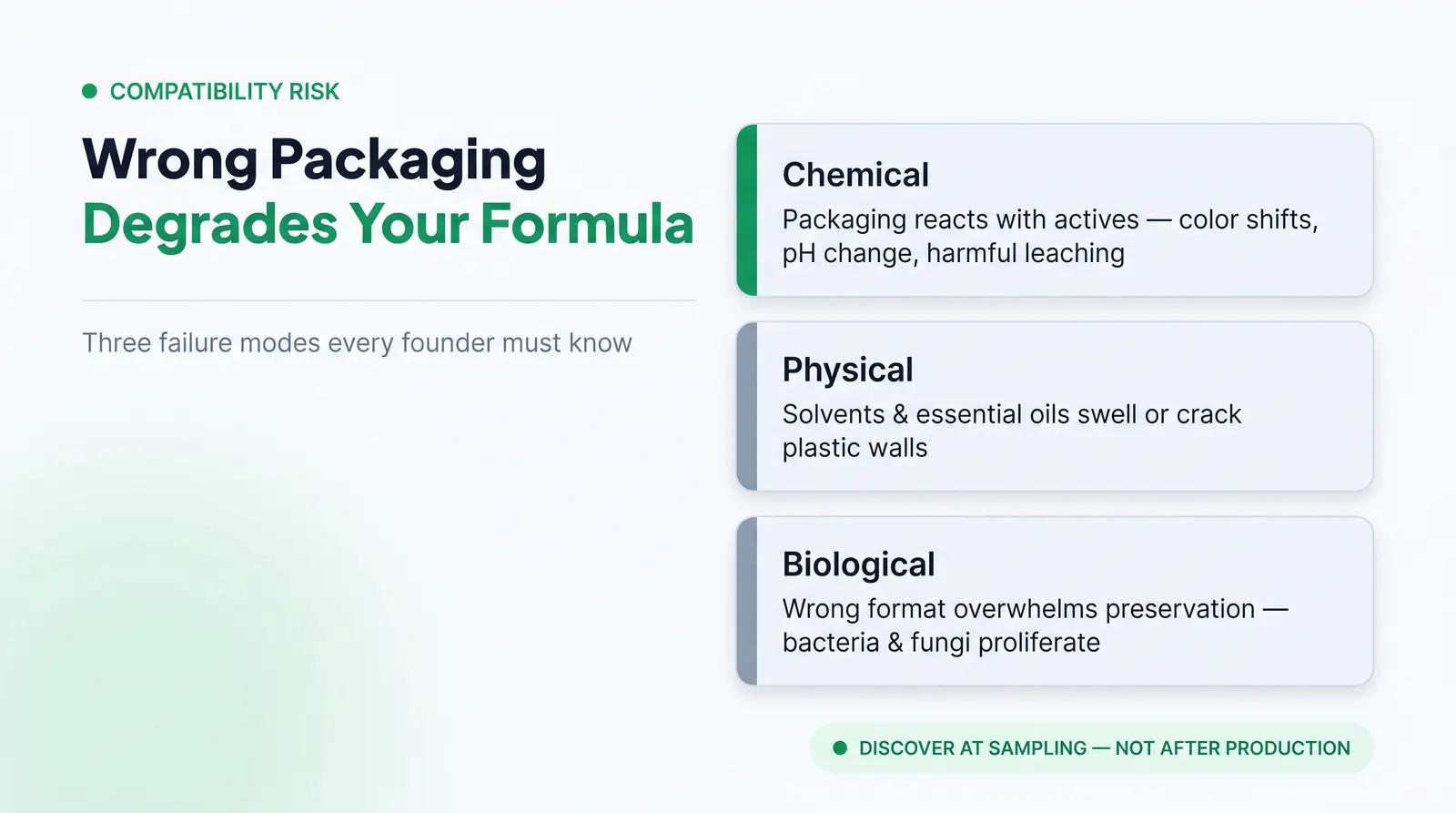
The consequences of incompatibility fall into three categories. Chemical incompatibility occurs when packaging materials react adversely with formula ingredients, causing color changes, pH shifts, or the release of harmful substances into the product [1]. Physical incompatibility manifests as swelling, cracking, or stress fractures in plastic walls, often caused by high-polarity solvents or concentrated essential oils permeating the container material. Biological incompatibility arises when the packaging format creates contamination pathways that overwhelm the formula's preservation system, allowing bacteria or fungi to proliferate [2].
Founders who treat packaging as a purely aesthetic decision often discover these risks at the worst possible time: after a full production run. The goal of this database is to move that discovery to the sampling stage, where changes are inexpensive and fast.
The Formula-Container Compatibility Rubric
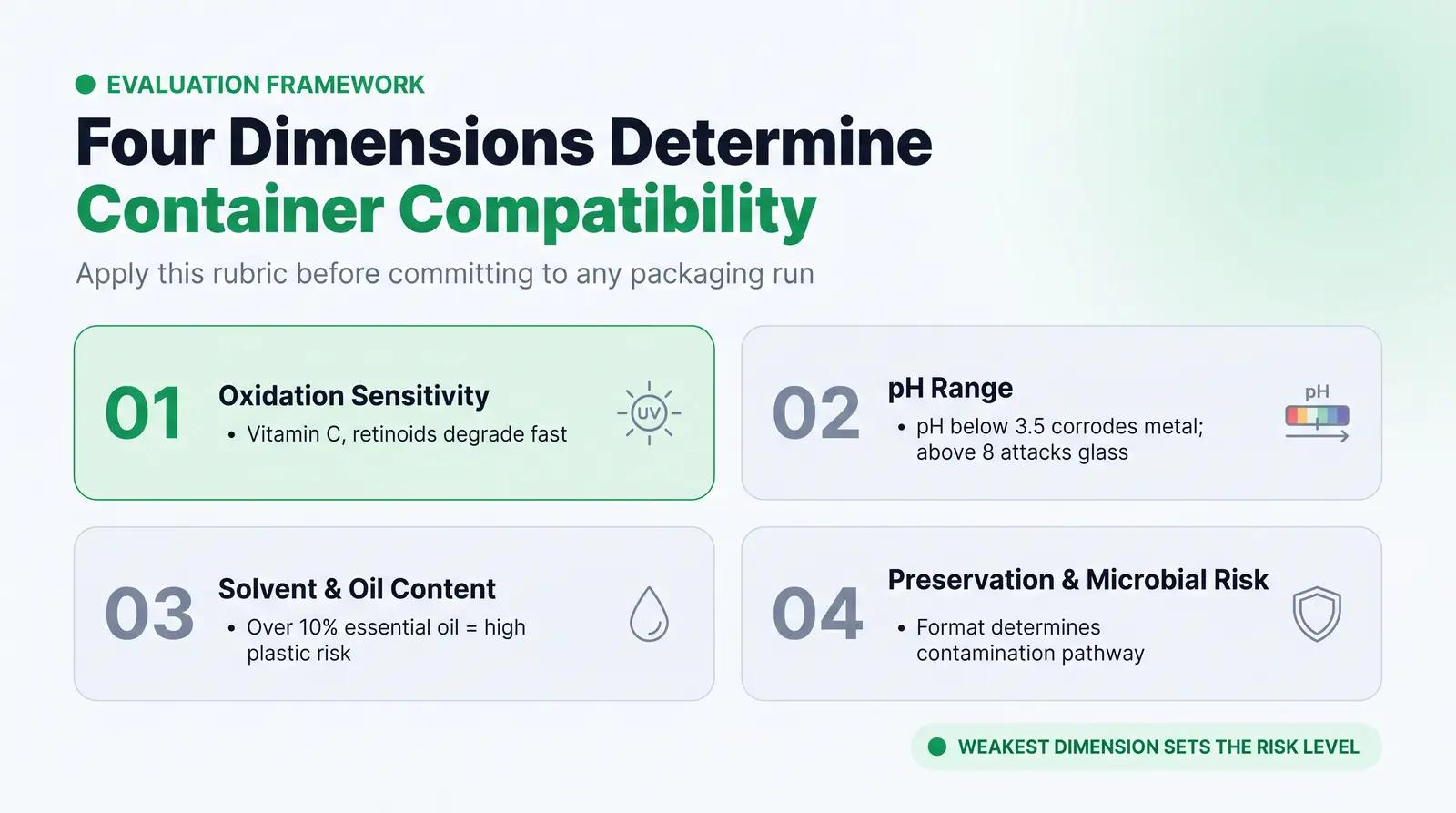
At Packfolio, we use a practical framework called The Formula-Container Compatibility Rubric to evaluate whether a specific container will protect or degrade a formulation. This rubric evaluates compatibility across four critical dimensions [1] [2]:
Dimension 1: Oxidation Sensitivity
Some actives degrade rapidly when exposed to air or UV light. L-ascorbic acid (vitamin C) is the most well-known example: it oxidizes to dehydroascorbic acid and then irreversibly to 2,3-diketogulonic acid, losing all efficacy [3]. Retinoids are similarly vulnerable, with studies showing 40 to 100 percent degradation over six months at elevated temperatures, with light degradation more pronounced than temperature-induced degradation [4]. For any formula containing oxidation-sensitive actives, the packaging must minimize both oxygen ingress and light transmission.
Dimension 2: pH Range
The pH of a formula determines how it interacts with packaging materials. Highly acidic formulas (pH below 3.5) can corrode unlined metal components and accelerate the leaching of certain plastic additives. Alkaline formulas (pH above 8) can attack glass coatings and react with certain pigmented plastics. Neutral formulas (pH 5.5 to 7) are the least reactive and offer the widest range of compatible packaging materials [5].
Dimension 3: Solvent and Oil Content
Essential oils, high-concentration alcohols, and ester-based solvents are among the most aggressive formula components from a packaging perspective. Pure essential oils act as powerful solvents that can permeate, swell, or chemically degrade plastics such as LDPE, polystyrene, and even some grades of PET [6]. Formulas with more than 10 percent essential oil content should be treated as high-risk for plastic packaging and tested rigorously before any production commitment.
Dimension 4: Preservation System and Microbial Risk
The packaging format determines the contamination pathway. An open jar invites finger dipping, which introduces bacteria and fungi directly into the product. A dropper bottle exposes the entire formula to air every time it is opened. An airless pump, by contrast, creates a closed system that prevents air ingress and eliminates direct contact with the formula. The weaker the preservation system, the more critical it becomes to choose a packaging format that minimizes contamination pathways. The FDA identifies "packaging that does not adequately protect the product" as one of the primary routes by which cosmetics become contaminated with harmful microorganisms [7].
Compatibility Reference Databases
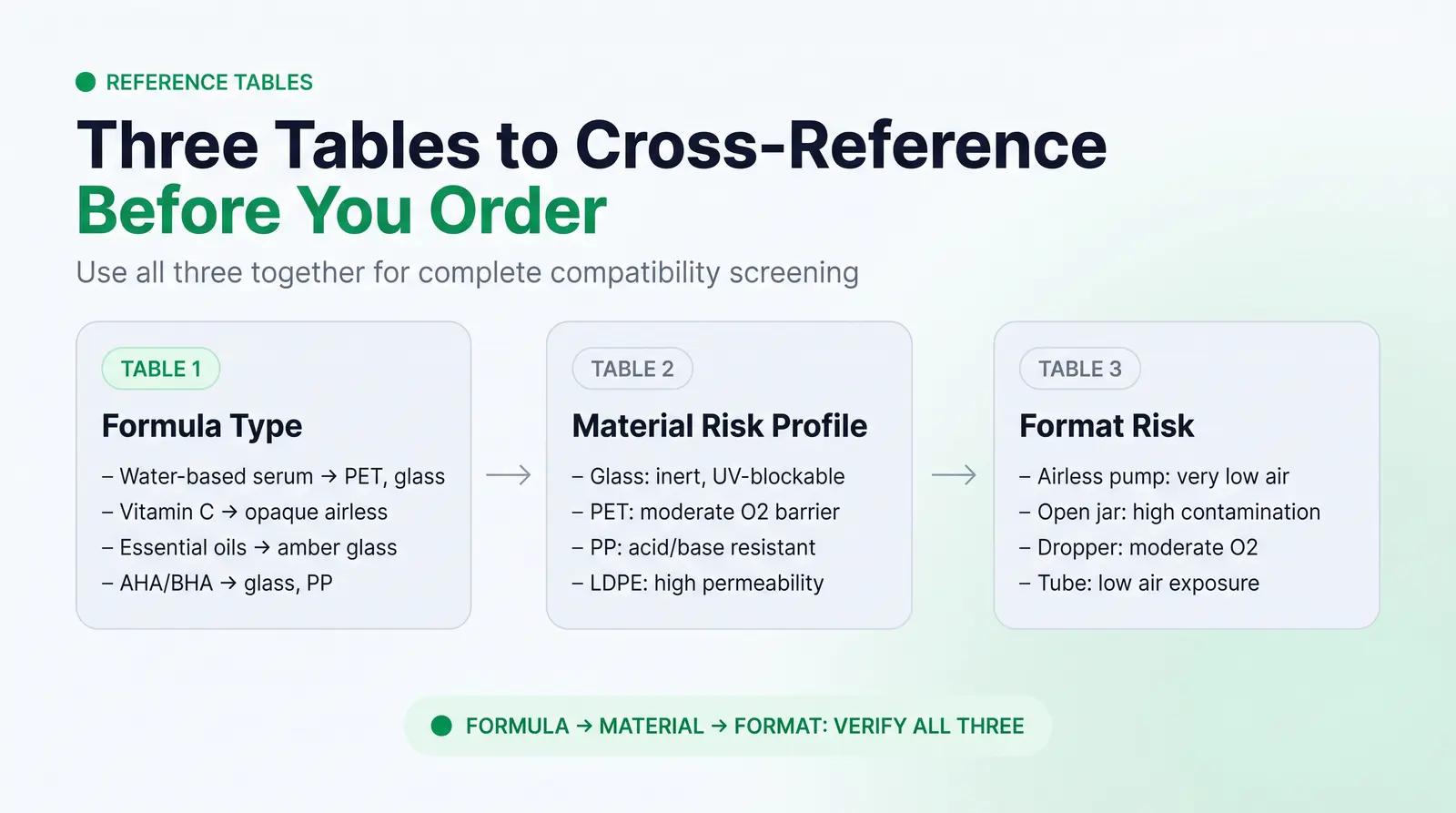
The following tables function as a cross-reference database. Use them together: identify your formula type in Table 1, verify the material risk profile of your preferred container in Table 2, and then check the contamination and oxidation risk of the packaging format in Table 3.
Table 1: Formula Type to Compatible Packaging Families
| Formula / Product Type | Recommended | Conditional | Avoid |
|---|---|---|---|
| Water-based serum (neutral pH) | Glass dropper, PET bottle, PP airless pump | HDPE bottle (lacks clarity) | Open jar (contamination risk) |
| Vitamin C (L-AA) serum, pH 2.5–3.5 | Opaque or amber glass dropper, opaque PP airless pump | Clear glass (requires dark storage only) | Clear PET dropper, open jar (rapid oxidation) |
| Retinol / retinoid formula | Opaque PP airless pump, opaque laminate tube | Amber glass dropper (some air exposure) | Clear glass, open jar (light and air degradation) |
| Essential-oil-rich product (over 10%) | Amber or cobalt glass, lined aluminum | PET (diluted blends only, below 5%) | LDPE, unlined aluminum, polystyrene |
| AHA / BHA exfoliant (pH 3.0–4.5) | Glass, PET, PP | HDPE | Unlined metal (acid reactivity) |
| Emulsion / Cream (standard) | PP airless pump, laminate tube | Glass jar (with robust preservation) | Open jar (if weakly preserved) |
| Anhydrous balm or lip balm | Glass jar, tin, PP stick component | PET jar | Thin-walled plastics (heat warping during hot pour) |
| Clay or powder formula | Glass jar, PP jar, aluminum tin | HDPE jar | Airtight pump (clogging risk) |
| Micellar water / toner | PET bottle, glass bottle, disc-top | PP bottle | Open jar |
Table 2: Packaging Material to Chemical Risk Profile
| Material | Resistant To | Risk Factors | Ideal Formula Types | Avoid With |
|---|---|---|---|---|
| Glass (Amber) | Acids, bases, oils, solvents, UV light | Heavy, fragile, higher freight cost | Essential oils, vitamin C, retinoids, AHAs | No chemical restrictions; format-dependent |
| Glass (Clear) | Acids, bases, oils, solvents | Allows 80–90% UV transmission; photodegradation risk | Stable, light-insensitive formulas | Vitamin C, retinoids, essential oils |
| PET | Weak acids, diluted oils, most water-based formulas | Moderate oxygen barrier; can leach phthalates under heat | Lotions, toners, diluted blends | Pure essential oils, highly reactive actives |
| PP (Polypropylene) | Acids, bases, heat up to 100°C | Can become brittle in extreme cold | Creams, airless pump components, tubes | Highly volatile organic solvents |
| HDPE | Acids, bases, impact | Poor clarity; moderate odor absorption | Cleansers, shampoos, thick lotions | Products requiring high clarity or UV protection |
| LDPE | Impact, flexibility | High permeability to gases and essential oils | Squeezable tubes, wash-off products | Pure essential oils, oxidation-prone actives |
| Aluminum (Lined) | Light, oxygen, moisture | Dents easily; unlined reacts with acids and high-polarity formulas | Ointments, thick creams, retinoid products | Unlined with low pH formulas (below pH 4) |
| PCR Resin | General cosmetic bases | Variable quality; potential trace contaminants from prior use [8] | Wash-off products, stable creams | Highly reactive leave-on actives, vitamin C serums |
Table 3: Packaging Format to Contamination and Oxidation Risk
| Packaging Format | Air Exposure Level | Contamination Risk | Best For | Avoid For |
|---|---|---|---|---|
| Airless Pump | Very Low | Very Low | Retinoids, vitamin C, weakly preserved emulsions | Very thick pastes (viscosity over 100,000 cP) |
| Dropper Bottle (Glass) | High (when open) | Moderate (pipette contact risk) | Stable face oils, water-based serums | Highly oxidation-prone actives (vitamin C, retinol) |
| Open Jar | High | High (finger dipping) | Anhydrous balms, thick butters, clay masks | Weakly preserved emulsions, light-sensitive actives |
| Tube (Laminate or Plastic) | Low | Low | Lotions, creams, gel cleansers, retinoid creams | Very thin, watery liquids |
| Disc-Top / Pump Bottle | Moderate | Low | Cleansers, body lotions, toners | Highly air-sensitive formulations |
| Roll-On | Low | Low (ball applicator) | Deodorants, facial rollers, spot treatments | Thick, high-viscosity formulas |
Worked Example: Packaging a 15% Vitamin C Serum
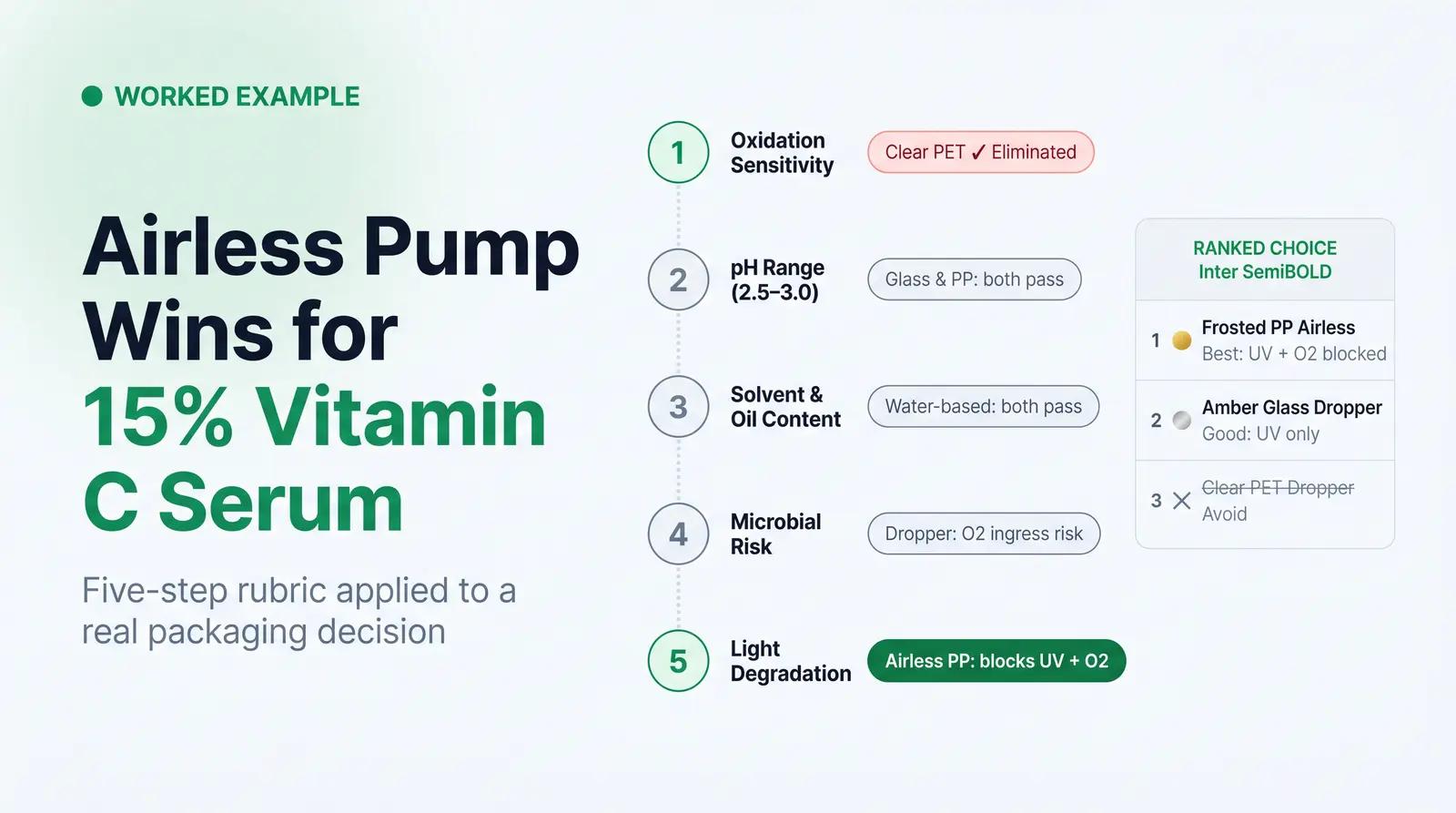
A founder is launching a 15% L-ascorbic acid (vitamin C) serum at pH 2.5–3.0 in a 1 oz (30 ml) size. She has three packaging options in front of her: a clear PET dropper bottle, an amber glass dropper bottle, and a frosted PP airless pump. Here is how to work through the rubric.
Step 1: Oxidation Sensitivity. L-ascorbic acid is one of the most oxidation-sensitive actives in cosmetic formulation. It degrades via a two-step pathway: first to dehydroascorbic acid (reversible), then to 2,3-diketogulonic acid (irreversible and biologically inactive) [3]. This degradation is accelerated by UV light, oxygen, transition metal ions, and alkaline pH. The clear PET bottle fails immediately on both UV and oxygen grounds: clear PET transmits 80 to 90 percent of UV radiation and has a moderate oxygen transmission rate. It is eliminated from consideration.
Step 2: pH Range. At pH 2.5–3.0, the formula is highly acidic. Both glass and PP are chemically inert to acids in this range [5]. The amber glass dropper and frosted PP airless pump both pass this dimension.
Step 3: Solvent and Oil Content. This is a water-based serum with no significant oil or solvent content. Both remaining options are compatible.
Step 4: Preservation System and Microbial Risk. The dropper format introduces air into the container every time the pipette is withdrawn and reinserted. Over the typical 30-day use period, cumulative oxygen exposure will accelerate oxidation of the vitamin C. The airless pump eliminates this pathway entirely, maintaining a closed environment from first use to last.
Step 5: Light Degradation. Amber glass blocks up to 99 percent of UV rays below 450 nm [9], offering excellent photostability. However, the dropper format still allows oxygen ingress. The frosted PP airless pump, if sufficiently opaque, blocks UV light and prevents oxygen ingress simultaneously.
Ranked Recommendation:
- First Choice: Frosted PP Airless Pump. Provides the strongest combined defense against both oxygen and UV degradation. The closed-system dispensing mechanism preserves potency from first use to last.
- Second Choice: Amber Glass Dropper. Excellent UV protection and complete chemical inertness to the acidic formula. The limitation is daily oxygen exposure from dropper use, which will shorten the effective shelf life.
- Third Choice: Clear PET Dropper. Avoid. The combination of UV transmission and oxygen exposure will degrade the vitamin C rapidly, likely within weeks of opening.
The Nuanced Case for Post-Consumer Recycled (PCR) Resins
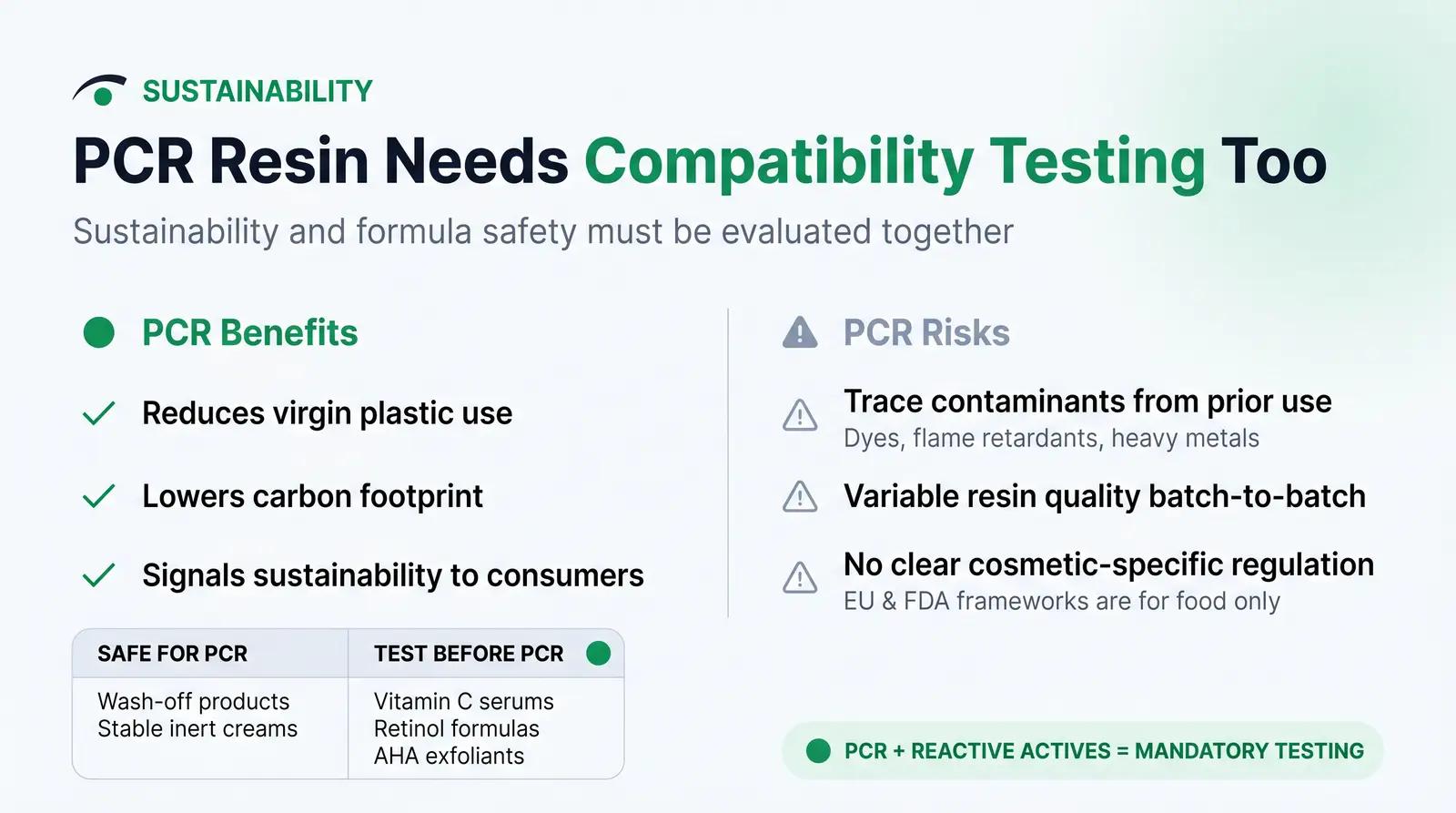
Sustainability mandates and brand commitments are driving rapid adoption of post-consumer recycled (PCR) resins in cosmetic packaging. The appeal is real: PCR reduces reliance on virgin plastic, lowers carbon footprint, and signals environmental responsibility to consumers. However, PCR is not a straightforward upgrade for every formula.
The core issue is contamination variability. Because PCR is sourced from consumer waste streams, the resin can contain trace residues from prior uses: dyes, pigments, food residue, flame retardants, plasticizers, UV stabilizers, and heavy metals [8]. These contaminants survive the mechanical recycling process at low but non-zero concentrations. For wash-off products or stable, inert creams, this is unlikely to pose a meaningful risk. For leave-on actives such as vitamin C serums, retinol formulas, or AHA exfoliants, where the formula is highly reactive and the product sits on skin for extended periods, the interaction between trace PCR contaminants and the active ingredients warrants rigorous compatibility testing before any production commitment.
The regulatory picture is also incomplete. While the EU and FDA have established frameworks for PCR in food contact applications, there are currently no clear regulatory guidelines specifically governing PCR use in cosmetic packaging [8]. This means the burden of safety evaluation falls entirely on the brand. Choosing PCR for cosmetic packaging is a responsible sustainability decision, but it should be paired with documented compatibility testing, not assumed to be equivalent to virgin resin.
Sampling Questions to Ask Before You Commit
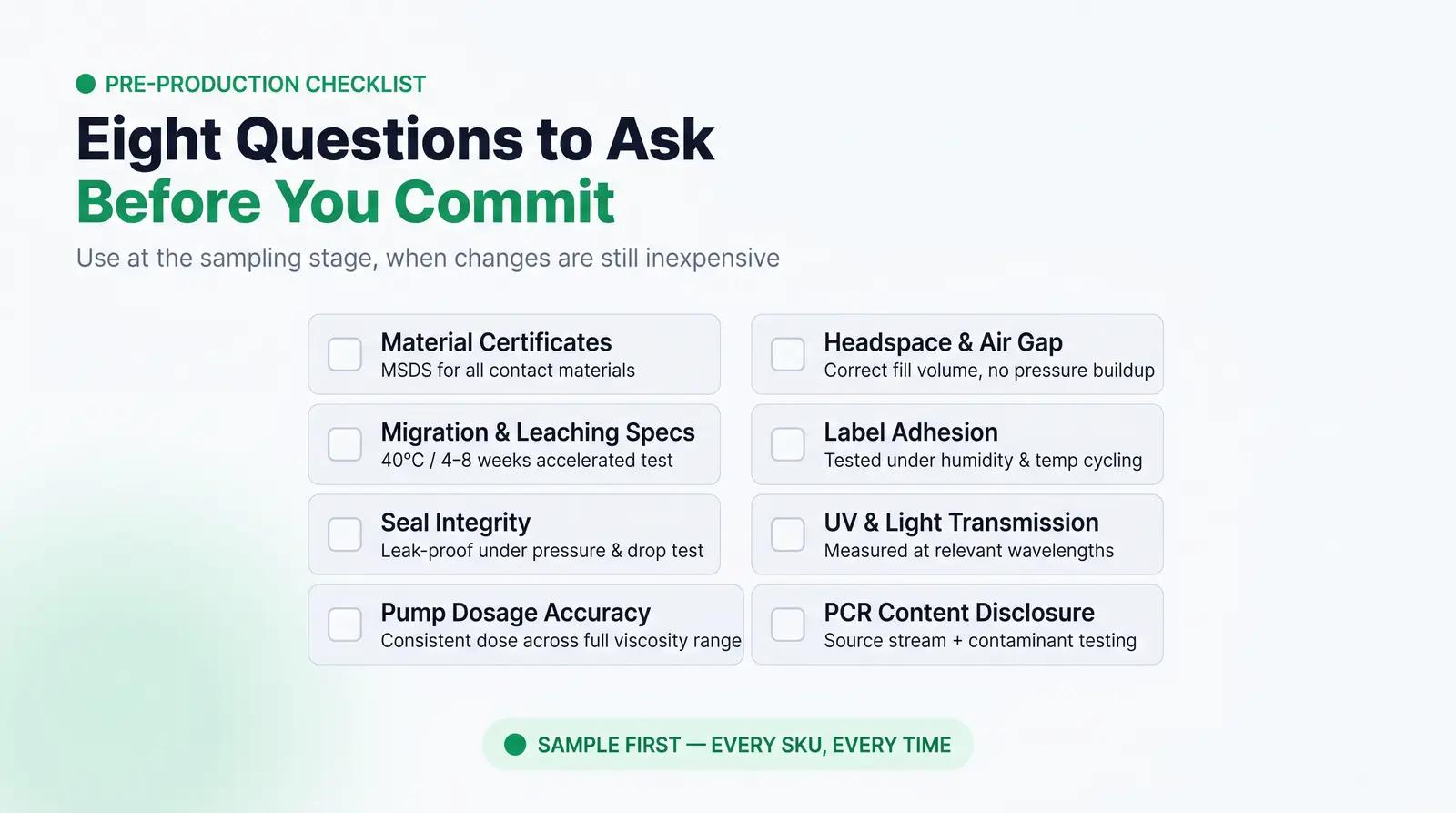
Before approving a packaging run, a formulation chemist would hand you a checklist like this. Use it at the sampling stage, when changes are still inexpensive.
- Material Certificates: Can the supplier provide a material safety data sheet (MSDS) or certificate of analysis for all plastics, linings, and coatings in direct contact with the formula?
- Migration and Leaching Specs: Has the material been tested for chemical migration under accelerated heat conditions (40°C for 4 to 8 weeks) with formulas of similar pH or solvent profiles?
- Seal Integrity: Does the closure maintain a leak-proof seal under pressure and drop testing? Has it been tested for seal integrity after repeated open-close cycles?
- Pump Dosage Accuracy: Does the pump deliver a consistent, measured dose across the full viscosity range of the formula? Does it clog or spit at low fill levels?
- Headspace and Air Gap: Is the fill volume calibrated to leave the correct headspace, preventing pressure buildup in airless systems or excessive air exposure in standard bottles?
- Label Adhesion: Will the labels adhere properly to the specific substrate (frosted glass, soft-touch PP, HDPE) under high humidity and temperature cycling?
- UV and Light Transmission: If using colored glass or opaque plastic for a light-sensitive formula, what is the measured light transmission rate at the relevant wavelengths?
- PCR Content Disclosure: If the packaging contains PCR resin, what is the percentage, what is the source stream, and what contaminant testing has been performed?
Every SKU in Packfolio's catalog comes with material specifications and predefined print zones, so founders can match formula requirements against container specs before ordering — and preview their label on a photorealistic 3D model before a single unit is produced. This means the compatibility conversation happens before the order, not after.
Browse Packfolio's curated packaging catalog and match your formula specs to a vetted container — then preview your label in 3D before ordering. →
Explore the Packfolio catalog
Frequently Asked Questions
What packaging should I use for a vitamin C serum?
The best packaging for a vitamin C serum is an opaque airless pump, preferably in a UV-blocking material such as frosted PP or opaque glass. This format protects the highly unstable L-ascorbic acid from both UV light and oxygen exposure, which are the two primary drivers of oxidation and potency loss [3]. Amber glass dropper bottles are a strong second choice, offering excellent UV protection with the trade-off of daily air exposure.
Is retinol stable in plastic packaging?
Retinol can be stable in specific plastic formats, particularly opaque polypropylene (PP) tubes and airless pumps. A study published by Grupo Boticário researchers at IFSCC 2022 found that plastic pump tube packaging achieved above 80 percent retinol recovery after 90 days across all storage conditions, significantly outperforming glass jar formats [9]. The key variables are opacity (to block light) and format (to minimize oxygen exposure), not the plastic material itself.
Can essential oils be stored in plastic containers?
Pure essential oils should not be stored in most plastics. Essential oils are concentrated, high-polarity solvents that can permeate, swell, or chemically degrade plastics such as LDPE, polystyrene, and some grades of PET [6]. Glass (preferably amber or cobalt for UV protection) or properly lined aluminum are the correct choices for pure essential oils. PET may be acceptable for heavily diluted blends, but compatibility testing is always required.
What is the difference between an airless pump and a dropper bottle for serums?
An airless pump uses a vacuum-driven piston mechanism to dispense product without allowing air into the container. This creates a closed system that protects oxidation-sensitive actives from degradation throughout the product's use period. A dropper bottle exposes the entire formula to air every time the pipette is withdrawn and reinserted, introducing cumulative oxygen exposure that accelerates the degradation of reactive ingredients like vitamin C and retinol.
How do I test cosmetic packaging compatibility before mass production?
Compatibility testing involves filling the finalized formula into the intended packaging and subjecting it to accelerated stability conditions: typically 40°C and 75 percent relative humidity for 4 to 12 weeks, alongside a room-temperature control [2]. At each time point, evaluate the packaging for swelling, cracking, discoloration, or leaching, and test the formula for changes in pH, color, odor, viscosity, and active ingredient concentration. For light-sensitive formulas, include a photostability study under UV exposure. Always test the exact packaging configuration you intend to use in production, including closures, pumps, and liners.
References
[1] Stability and Compatibility Testing of Cosmetic Products. CE.way. https://news.ceway.eu/cosmetic-stability-compatibility-testing/
[2] Cosmetic Packaging Compatibility Testing Guidelines Released. Cisema. 2024. https://cisema.com/news/cosmetic-packaging-compatibility-testing-guidelines
[3] Chemical Stability of Ascorbic Acid Integrated into Commercial Products: A Review on Bioactivity and Delivery Technology. Antioxidants (Basel), NCBI/PMC. 2022. https://pmc.ncbi.nlm.nih.gov/articles/PMC8773188/
[4] Temova Rakuša Z, Škufca P, Kristl A, Roškar R. Retinoid Stability and Degradation Kinetics in Commercial Cosmetic Products. Journal of Cosmetic Dermatology, Wiley. 2020. DOI: https://doi.org/10.1111/jocd.13852
[5] The Importance of Package Compatibility Testing for Cosmetic Packaging. Cosmopacks. 2024. https://www.cosmopacks.com/the-importance-of-package-compatibility-testing-for-cosmetic-packaging/
[6] Should I Put Essential Oils in Glass or Plastic? Container and Packaging. 2019. https://www.containerandpackaging.com/resources/should-i-put-essential-oils-in-glass-or-plastic-it-depends/
[7] Microbiological Safety and Cosmetics. U.S. Food and Drug Administration. 2024. https://www.fda.gov/cosmetics/potential-contaminants-cosmetics/microbiological-safety-and-cosmetics
[8] Regulatory and Safety Requirement for Use of Recycled Polyethylene in Food and Cosmetic Packaging. IntechOpen. 2023. https://www.intechopen.com/chapters/1146205
[9] The Role of Volumetry, Shape and Primary Packaging Material in Retinol Stability. IFSCC 2022 Conference Proceedings. https://coms.events/IFSCC2022/data/full_papers/full_paper_316.pdf
[10] The Science Behind Amber Glass and UV Protection. Container and Packaging. 2025. https://www.containerandpackaging.com/resources/the-science-behind-amber-glass-and-uv-protection/


