
The Packaging Compatibility Guide for Vitamin C, Retinol, Oils, and Hot-Fill Formulas
This guide matches cosmetic packaging materials and formats to formula chemistry for vitamin C, retinol, essential oils, and hot-fill products to prevent degradation and shelf failure.
A beauty brand’s worst nightmare manifests months after a successful product launch, when reports of discoloration, strange odors, warped bottles, or separating emulsions arrive. When a formula fails on the shelf, the culprit is rarely the active ingredients, but rather the container.
Selecting packaging based solely on aesthetics is a high-risk gamble that can lead to active degradation, chemical leaching, and physical failure. With high-potency actives and complex anhydrous bases, packaging is not a passive vessel; it is an active, functional component of the formulation itself.
Why Packaging Is Part of the Formula
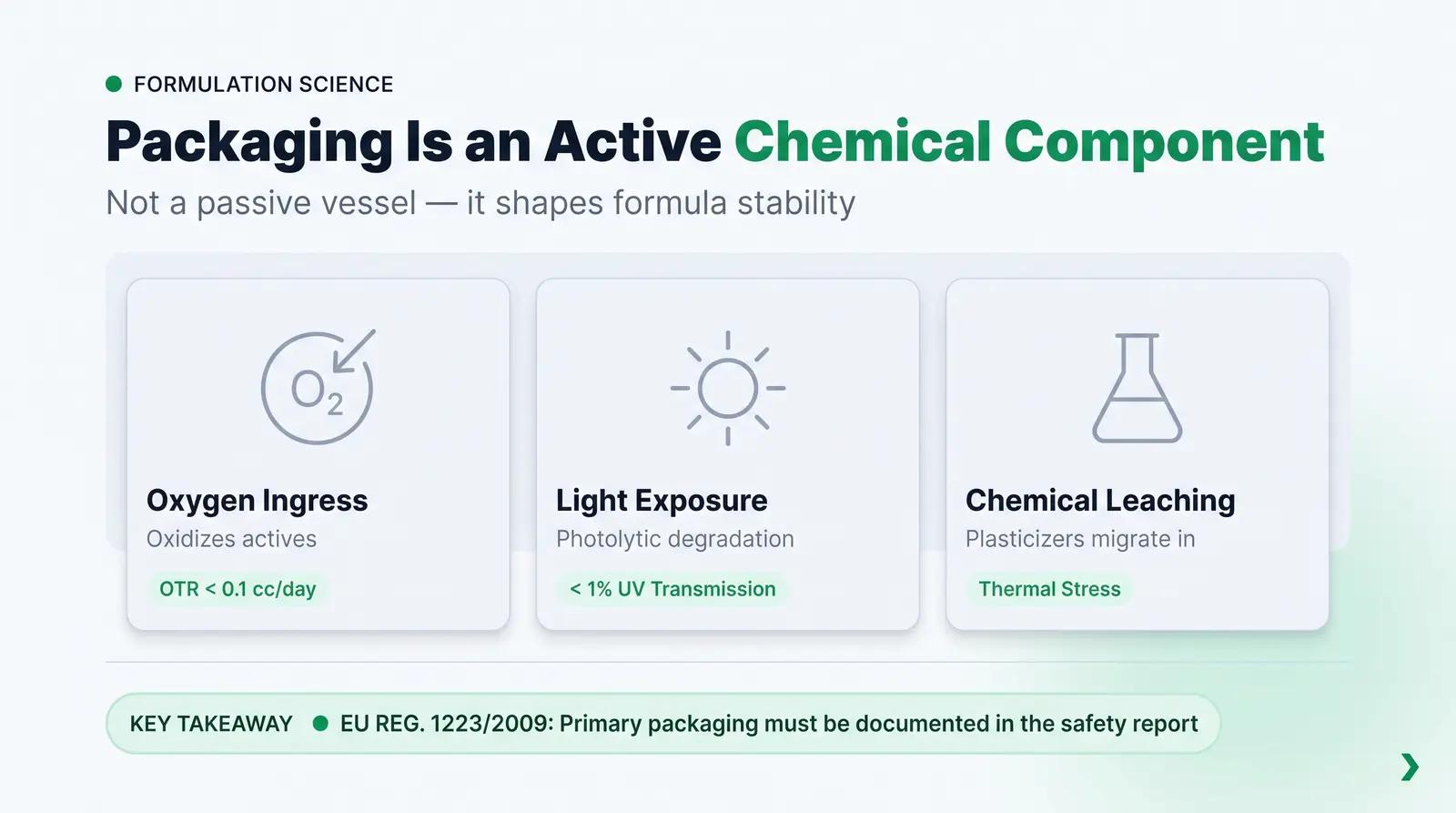
A cosmetic formulation is a dynamic chemical system. Once sealed, the formula and packaging begin an ongoing interaction. Packaging is never cosmetically neutral; it is a semi-permeable barrier regulating exposure to external degradation vectors [1].
According to Annex I of EU Regulation (EC) No 1223/2009, a safety report must document primary packaging characteristics [2]. Packaging-formula interactions compromise safety and efficacy, with material, closure, and headspace directly affecting stability.
Formulators must evaluate packaging against three primary environmental degradation vectors: oxygen ingress, light exposure, and thermal stress. Oxygen, UV radiation, or visible light catalyze the breakdown of photolabile and oxidation-sensitive compounds, rendering serums ineffective. Furthermore, chemical leaching can occur when low-molecular-weight compounds within packaging materials (plasticizers, residual monomers, catalysts, or heavy metals) migrate from the container wall into the formula [3].
The Formula-Container Compatibility Rubric
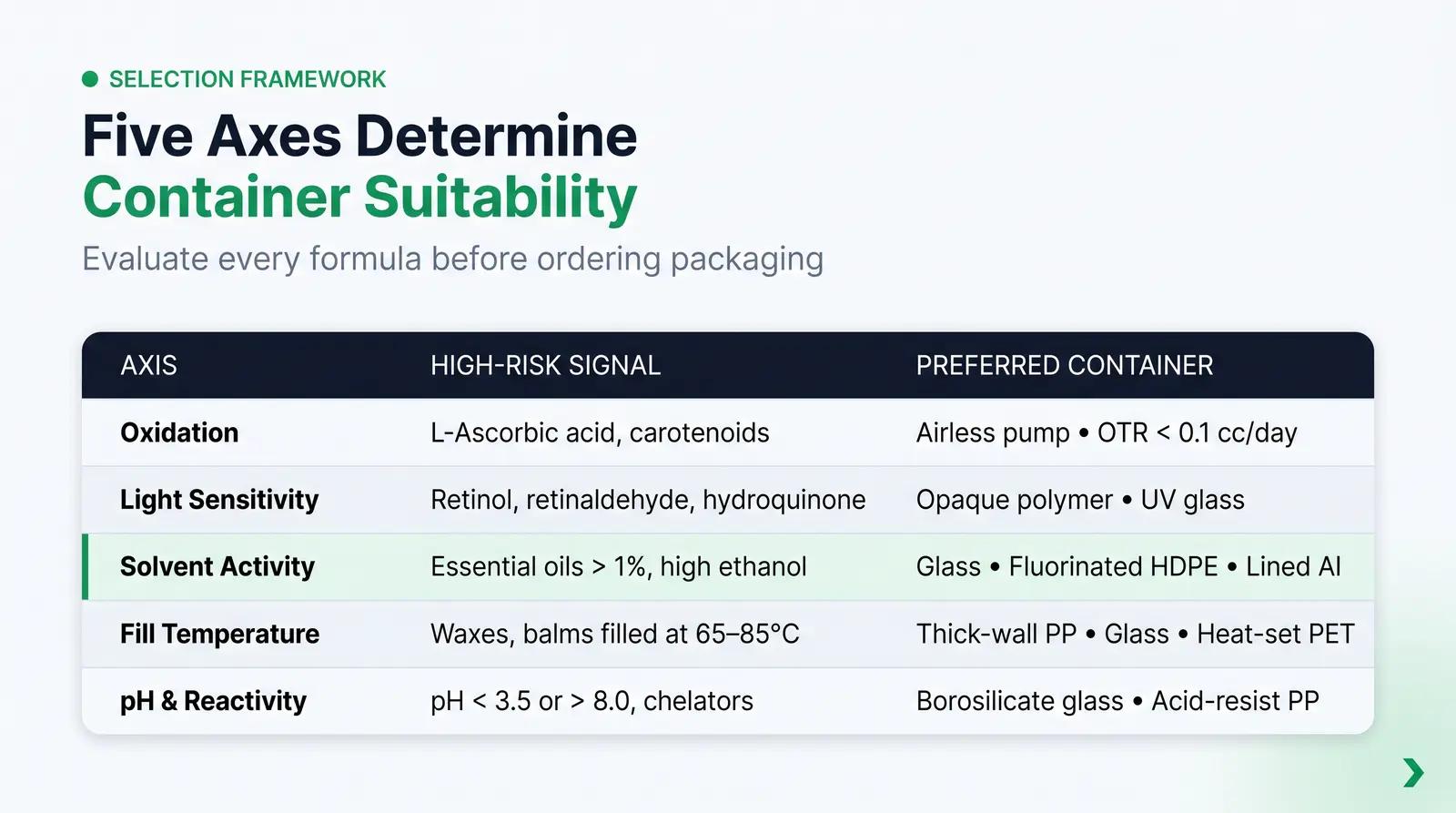
We utilize The Formula-Container Compatibility Rubric to evaluate any cosmetic formula across five physical and chemical axes to establish baseline material, closure, and dispensing requirements before ordering packaging.
| Axis | Key Question to Ask | High-Risk Signals | Preferred Container Attributes |
|---|---|---|---|
| Oxidation Sensitivity | Does the formula contain active ingredients that rapidly degrade or discolor upon contact with atmospheric oxygen? | Presence of L-ascorbic acid, unsaturates, carotenoids, or polyphenols; formula exhibits color shifts when exposed to air. | Airtight airless pump systems, nitrogen-blanketed headspace, high-barrier materials with oxygen transmission rates (OTR) $< 0.1\text{ cc/pkg/day}$ [4]. |
| Light Sensitivity | Does the formula contain photolabile actives that undergo photodegradation under UV or visible light spectrums? | Presence of retinol, retinaldehyde, retinyl esters, hydroquinone, or light-sensitive natural extracts. | Opaque or highly pigmented polymers, UV-coated glass, aluminum laminate tubes; light transmission $< 1%$ across $290\text{--}400\text{ nm}$ wavelengths [4]. |
| Solvent Activity | Does the formula contain high concentrations of organic solvents, essential oils, or free lipids that can interact with polymers? | Essential oil concentrations $> 1%$, high ethanol or glycol content, anhydrous facial or body oils. | Type III soda-lime or borosilicate glass, high-density polyethylene (HDPE), fluorine-treated polymers, or aluminum formats with inert epoxy-phenolic liners. |
| Fill Temperature | Is the formula filled at elevated temperatures to facilitate liquid flow and subsequent solidification? | Waxes, balms, anhydrous pomades, or hot-pour emulsions requiring filling temperatures between $65\text{--}85^\circ\text{C}$ ($149\text{--}185^\circ\text{F}$). | Thick-walled polypropylene (PP), glass, heat-set polyethylene terephthalate (PET), high heat deflection temperature (HDT) polymers. |
| pH & Chemical Reactivity | Does the formula's extreme pH or specific chemical profile create a risk of corrosion, leaching, or polymer stress cracking? | Water-based formulas with $\text{pH} < 3.5$ or $\text{pH} > 8.0$; presence of strong chelators, electrolytes, or ionic surfactants. | Chemically inert borosilicate glass, specialized acid-resistant PP, or non-reactive elastomers; avoidance of uncoated aluminum or low-grade stainless steel springs. |
Vitamin C (L-Ascorbic Acid and Derivatives): Packaging Rules
L-ascorbic acid is the gold standard for skin brightening, but it is highly unstable in water. In aqueous solutions, it undergoes rapid aerobic oxidation, degrading into dehydroascorbic acid (DHA), which irreversibly hydrolyzes into 2,3-diketogulonic acid (DGA) [5]. This degradation pathway is accelerated by elevated pH, dissolved oxygen, trace metal ions, and light [6].
The Pitfalls of Jars and Clear Droppers
Open-top jars are a major stability risk for high-dose vitamin C serums. Every opening exposes the entire product surface to fresh oxygen, while finger-dipping introduces microbial contaminants. Clear glass dropper bottles are similarly flawed. Removing the pipette draws ambient air directly into the headspace, while transparent glass provides zero protection against UV and visible light, which catalyze photolytic oxidation.
The Airless and Opaque Standard
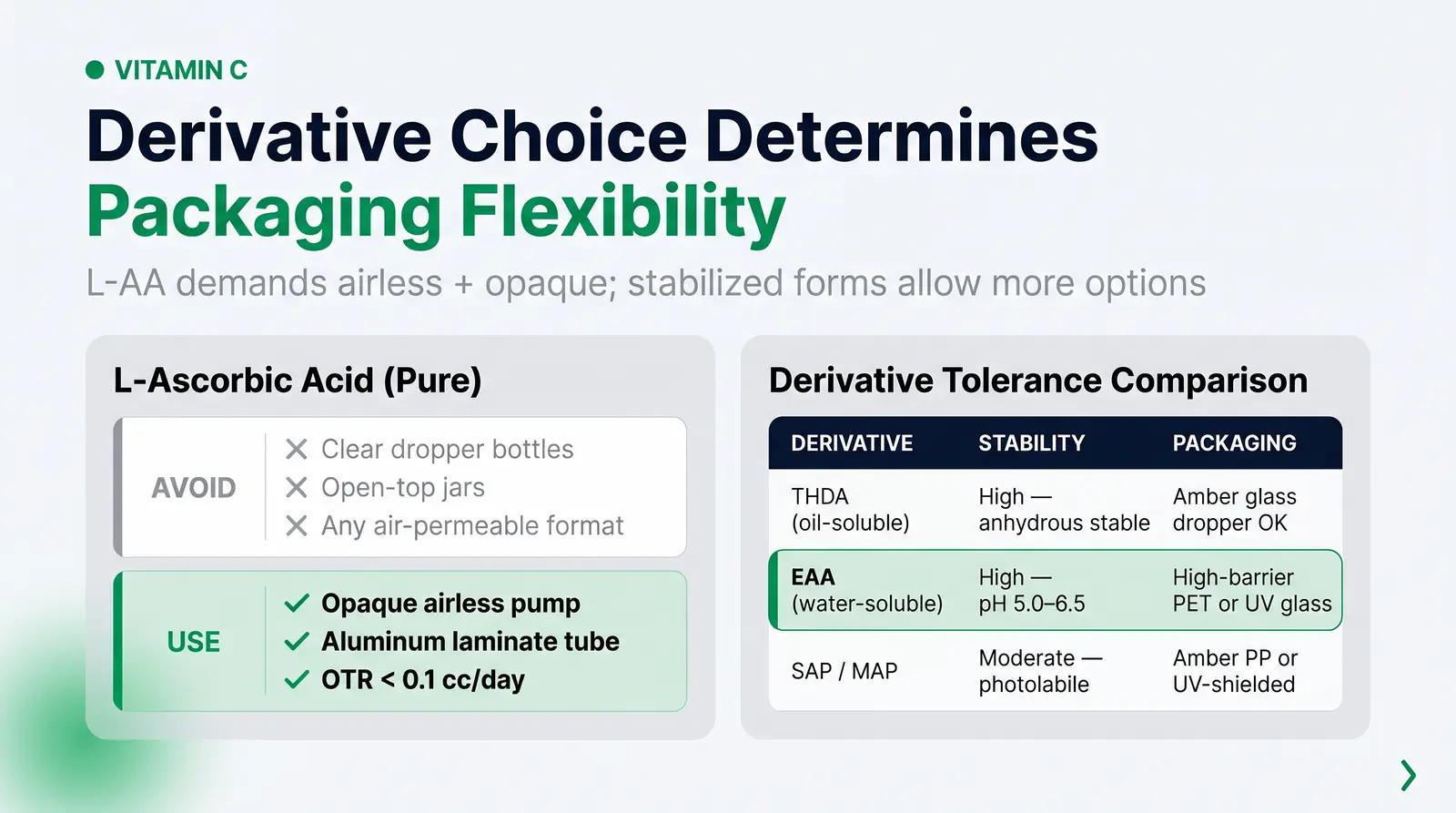
For L-ascorbic acid, the standard is an opaque, airtight airless pump or an aluminum laminate squeeze tube. Airless pumps utilize a mechanical piston that rises as product is dispensed, maintaining a vacuum seal and preventing air ingress [7]. When using plastic airless bottles, polymer selection is critical. Standard single-wall PP has higher oxygen permeability than multi-layer systems. High-potency Vitamin C serums perform best in containers utilizing an EVOH barrier layer or high-density polymers with an OTR of less than $0.1\text{ cc/package/day}$ [4].
Packaging Tolerances of Vitamin C Derivatives
Due to L-ascorbic acid's instability, many brands opt for stabilized derivatives with different tolerances:
- Tetrahexyldecyl Ascorbate (THDA): An oil-soluble derivative stable against oxidation and hydrolysis. THDA-based anhydrous serums do not require airless packaging and can be safely housed in amber glass dropper bottles, provided the formula remains water-free.
- 3-O-Ethyl Ascorbic Acid (EAA): An etherified, water-soluble derivative with high thermal and chemical stability across pH $5.0\text{--}6.5$ [8]. EAA formulas resist oxidation, allowing for greater packaging flexibility, including high-barrier transparent PET or clear glass with UV coatings.
- Sodium/Magnesium Ascorbyl Phosphate (SAP/MAP): Water-soluble derivatives stable at pH $7.0\text{--}8.5$. While less sensitive to oxygen than L-ascorbic acid, they remain photolabile and require amber glass, opaque PP, or UV-shielded containers to prevent light-induced breakdown.
Retinol and Retinoids: Packaging Rules
Retinol and its family of vitamin A derivatives (retinaldehyde, retinyl palmitate, and hydroxypinacolone retinoate) are highly photolabile, hydrophobic compounds. The conjugated double-bond system that gives retinoids their clinical efficacy also makes them highly vulnerable to photodegradation. Upon exposure to ultraviolet radiation, particularly in the UVA range ($315\text{--}400\text{ nm}$), retinoids undergo rapid photoisomerization and photooxidation, generating biologically inactive isomers and phototoxic free-radical byproducts [9].
Headspace Oxygen and Photodegradation
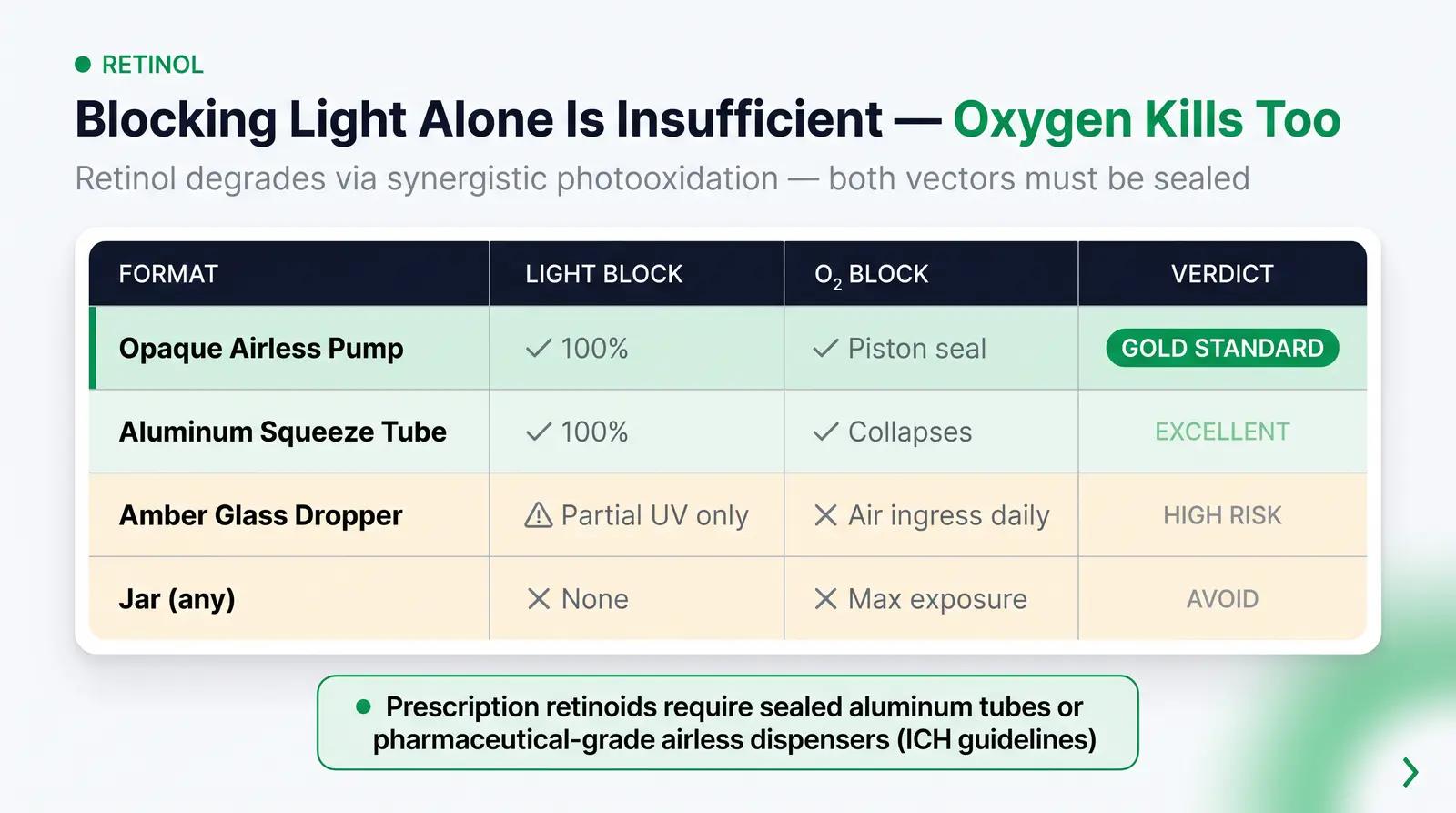
Retinol degradation is a synergistic process: light exposure excites the retinoid molecule, which then reacts with dissolved or headspace oxygen to form peroxides and polymers [10]. Therefore, a container that blocks light but permits oxygen ingress will still experience significant active loss over a 12-week shelf-life.
- Opaque Airless Pumps (PP or PETG with UV Inhibitors): The premier format for retinol emulsions. Opaque walls block $100%$ of UV and visible light, while the mechanical piston eliminates headspace oxygen, ensuring stability.
- Aluminum Squeeze Tubes: Completely impermeable to light, oxygen, and moisture. The tube collapses as product is dispensed, preventing headspace formation. This is an exceptional, sustainable choice for retinol creams when paired with airtight, self-sealing closures.
- Glass Dropper Bottles (Amber or Opaque Coated): Amber glass provides partial UV protection but fails to block longer-wavelength visible light. Constant exposure to oxygen during dropper use makes standard droppers high-risk for retinol serums, unless using encapsulated technologies [10].
- Jars: Jars represent a critical failure point for retinoid stability. Daily exposure to light and ambient air ensures rapid active degradation within weeks of opening.
Amber glass does not block all UV wavelengths harmful to retinol. Furthermore, prescription retinoids (like tretinoin) are regulated as APIs and subject to stability testing under ICH guidelines, requiring sealed, collapsible aluminum tubes or pharmaceutical-grade airless dispensers to guarantee active preservation. Applying these standards is the only way to ensure clinical efficacy for OTC retinol.
Essential Oils and High-Solvent Formulas: Packaging Rules
Essential oils and high-solvent cosmetic formulas (such as anhydrous facial oils, high-alcohol toners, or glycol-rich active boosters) present a unique chemical challenge: the formula can actively attack, dissolve, or extract compounds from the packaging material itself.
The Risk of Plasticizer Leaching and Stress Cracking
Many plastics, particularly LDPE, PS, and low-grade PET, are vulnerable to chemical attack by terpenes, esters, and ketones in essential oils. These volatile compounds act as solvents, penetrating the polymer matrix. This leads to environmental stress cracking (ESC), where oil absorption weakens intermolecular bonds, causing warping and eventual leakage. Additionally, the solvent action can extract residual monomers, catalysts, or plasticizers from the container wall, migrating these chemicals into the product [3].
Preferred Materials for High-Solvent Formulations
For formulas containing pure essential oils, high-concentration facial oils, or organic solvents, primary packaging should be restricted to inert materials:
- Type III Glass: Chemically inert, impermeable, and completely resistant to solvent attack, making it the gold standard for volatile oil formulations.
- Fluorinated HDPE: Exposure to fluorine gas creates a stable fluorocarbon barrier on the inner surface of HDPE bottles, preventing solvent penetration, container paneling, and chemical leaching.
- High-Grade Polypropylene (PP): Thick-walled PP exhibits excellent chemical resistance to most lipids and essential oils, making it a viable plastic alternative for creams and balms with moderate essential oil concentrations.
- Lined Aluminum: Aluminum containers must be paired with an internal, food-grade epoxy-phenolic or organosol liner to prevent direct contact between acidic or volatile formulas and raw metal, which can cause oxidation and corrosion.
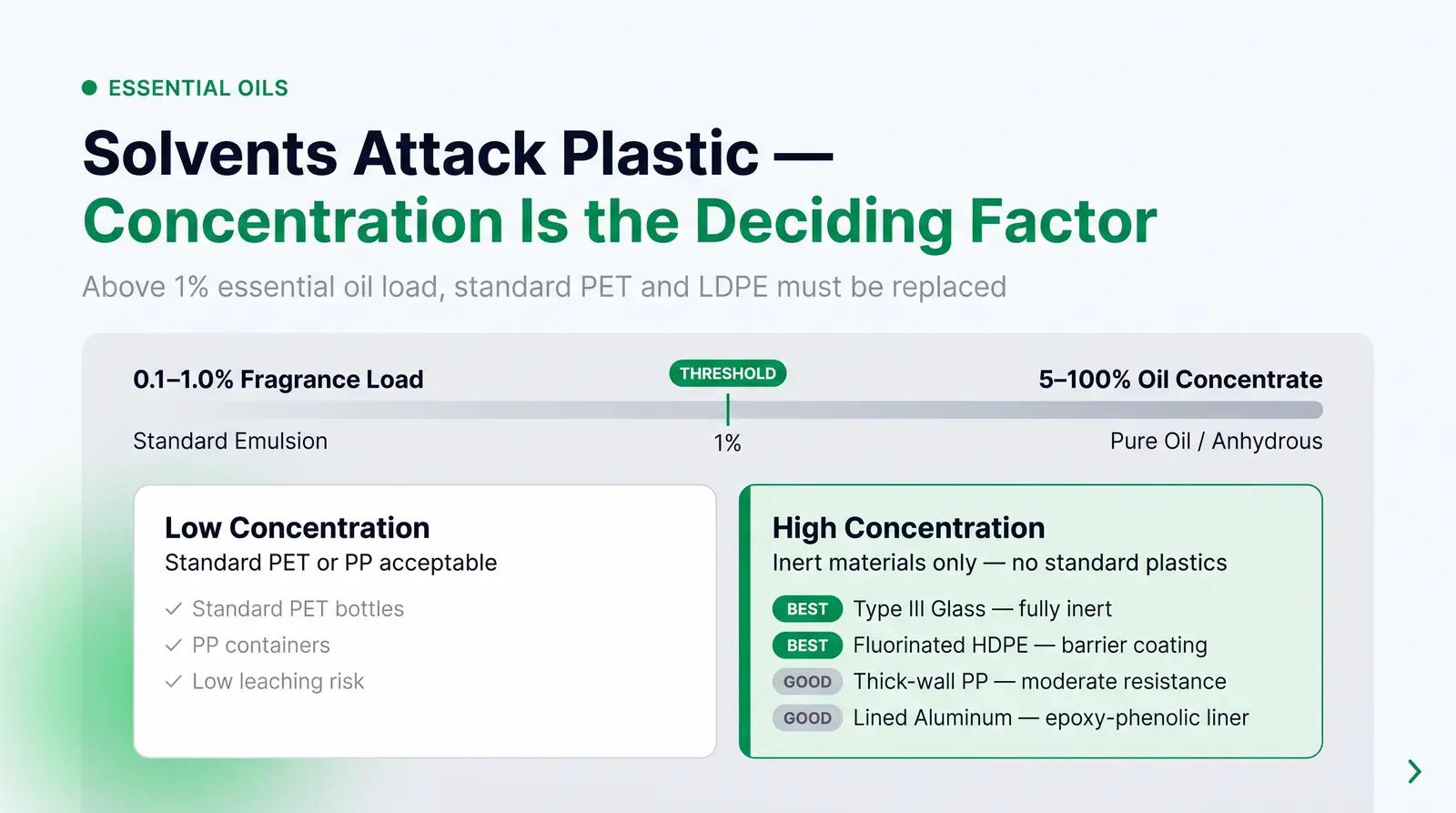
A critical distinction must be made based on concentration. A standard skincare emulsion containing a $0.1\text{--}1.0%$ essential oil fragrance load is generally low-risk and compatible with standard PET or PP packaging. However, when formulating high-concentration facial oils, body oils, or pure essential oil concentrates ($5\text{--}100%$), standard plastics must be avoided entirely in favor of glass, fluorinated HDPE, or lined aluminum to prevent packaging degradation and chemical contamination [11].
Hot-Fill Formulas: Packaging Rules
Many cosmetic products must be heated to a liquid state to facilitate high-speed filling, cooling, and subsequent solidification within the container. Typical hot-fill formulas include anhydrous balms, lipsticks, solid deodorants, wax-based pomades, and heavy water-in-oil emulsions.
The Thermal Mechanics of Hot Filling
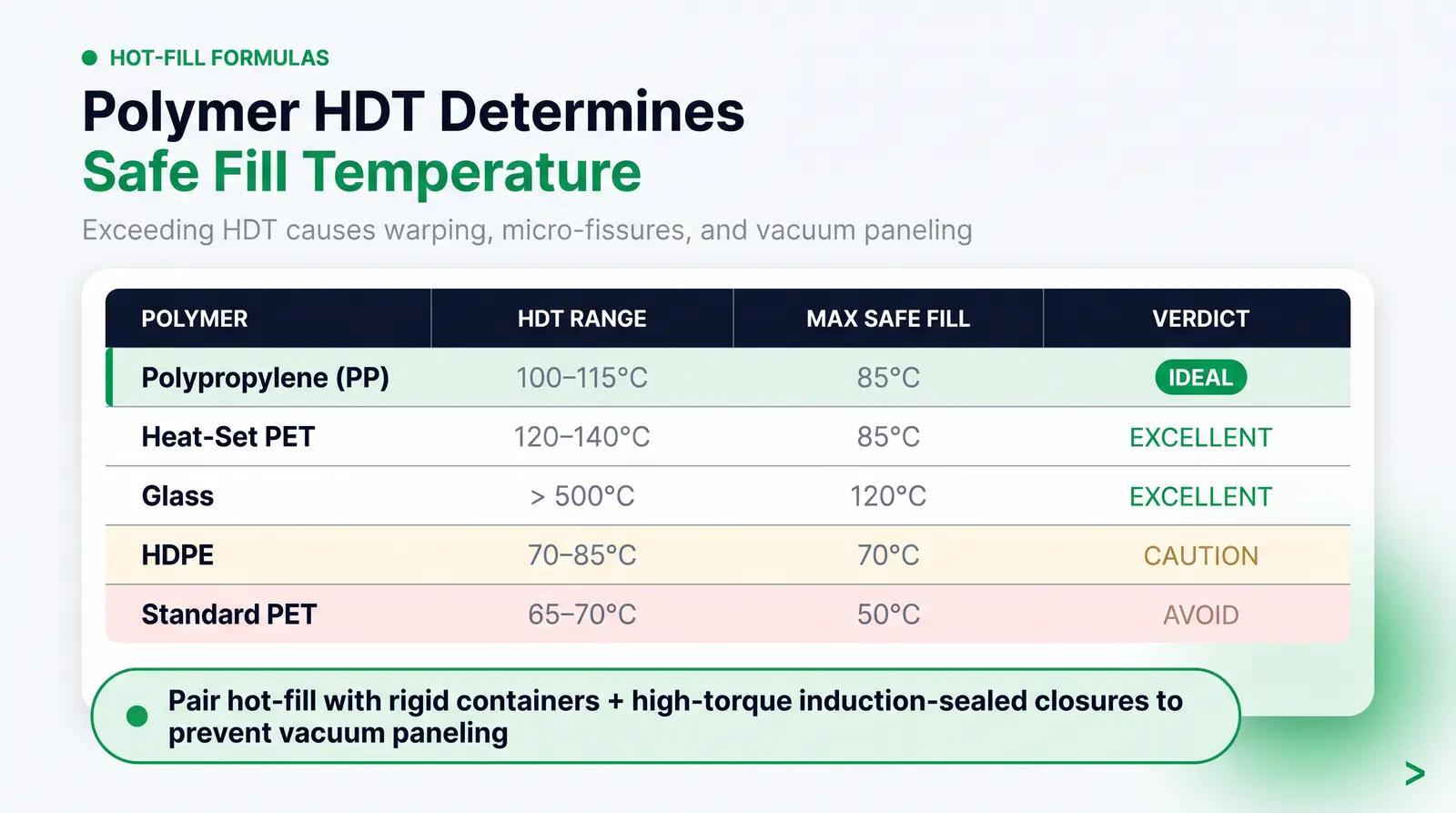
The standard temperature threshold for cosmetic hot-fill operations ranges from $65^\circ\text{C}$ to $85^\circ\text{C}$ ($149^\circ\text{F}$ to $185^\circ\text{F}$), though some wax formulations require temperatures exceeding $90^\circ\text{C}$ ($194^\circ\text{F}$) [12]. At these temperatures, standard packaging polymers can lose structural integrity. When a hot liquid is introduced into a plastic container, the polymer is subjected to thermal stress. If the filling temperature approaches or exceeds the polymer's Heat Deflection Temperature (HDT) or Glass Transition Temperature ($T_g$), the container will deform, warp, collapse, or develop micro-fissures [13].
Formulators must reference the specific thermal thresholds of common packaging plastics:
- Polypropylene (PP): Glass Transition Temp ($T_g$) of $-10^\circ\text{C}$ ($14^\circ\text{F}$), HDT of $100\text{--}115^\circ\text{C}$ ($212\text{--}239^\circ\text{F}$). Maximum safe hot-fill temperature is $85^\circ\text{C}$ ($185^\circ\text{F}$). This polymer has excellent inherent heat resistance, making it ideal for hot-pour balms, deodorants, and heavy creams.
- High-Density Polyethylene (HDPE): $T_g$ of $-120^\circ\text{C}$ ($-184^\circ\text{F}$), HDT of $70\text{--}85^\circ\text{C}$ ($158\text{--}185^\circ\text{F}$). Maximum safe hot-fill temperature is $70^\circ\text{C}$ ($158^\circ\text{F}$). This material requires thick-walled construction and is prone to structural warping if filled above $75^\circ\text{C}$ ($167^\circ\text{F}$).
- Polyethylene Terephthalate (PET): $T_g$ of $70^\circ\text{C}$ ($158^\circ\text{F}$), HDT of $65\text{--}70^\circ\text{C}$ ($149\text{--}158^\circ\text{F}$). Maximum safe hot-fill temperature is $50^\circ\text{C}$ ($122^\circ\text{F}$). Standard PET will shrink and warp violently at hot-fill temperatures, requiring specialized "heat-set" PET.
- Heat-Set PET: $T_g$ of $70^\circ\text{C}$ ($158^\circ\text{F}$), HDT of $120\text{--}140^\circ\text{C}$ ($248\text{--}284^\circ\text{F}$). Maximum safe hot-fill temperature is $85^\circ\text{C}$ ($185^\circ\text{F}$). It is subjected to thermal crystallization during manufacturing to withstand hot-fill processes while retaining clarity.
- Glass (Borosilicate/Soda-Lime): $T_g$ of $550^\circ\text{C}$ ($1022^\circ\text{F}$), HDT of $> 500^\circ\text{C}$ ($> 932^\circ\text{F}$). Maximum safe hot-fill temperature is $120^\circ\text{C}$ ($248^\circ\text{F}$). It is completely unaffected by cosmetic fill temperatures and is highly resistant to thermal shock.
During hot-fill cooling from $80^\circ\text{C}$ ($176^\circ\text{F}$) to room temperature, volume contraction creates an internal vacuum. If container walls are too flexible (such as thin-walled HDPE or standard PET), this vacuum pulls the bottle walls inward, causing permanent warping or "paneling." Conversely, a weak closure allows the vacuum to pull ambient air through the seal, introducing oxygen and moisture. Formulators should pair hot-fill formulas with rigid containers (glass or thick-walled PP) and high-torque, induction-sealed closures to guarantee physical and microbial integrity.
Cross-Cutting Considerations: Closures, Liners, and Elastomers
A packaging system is only as strong as its weakest component. Pairing an inert glass bottle with an incompatible closure, elastomer bulb, or cap liner leads to shelf failure.
Elastomer Bulbs and Dropper Pipettes
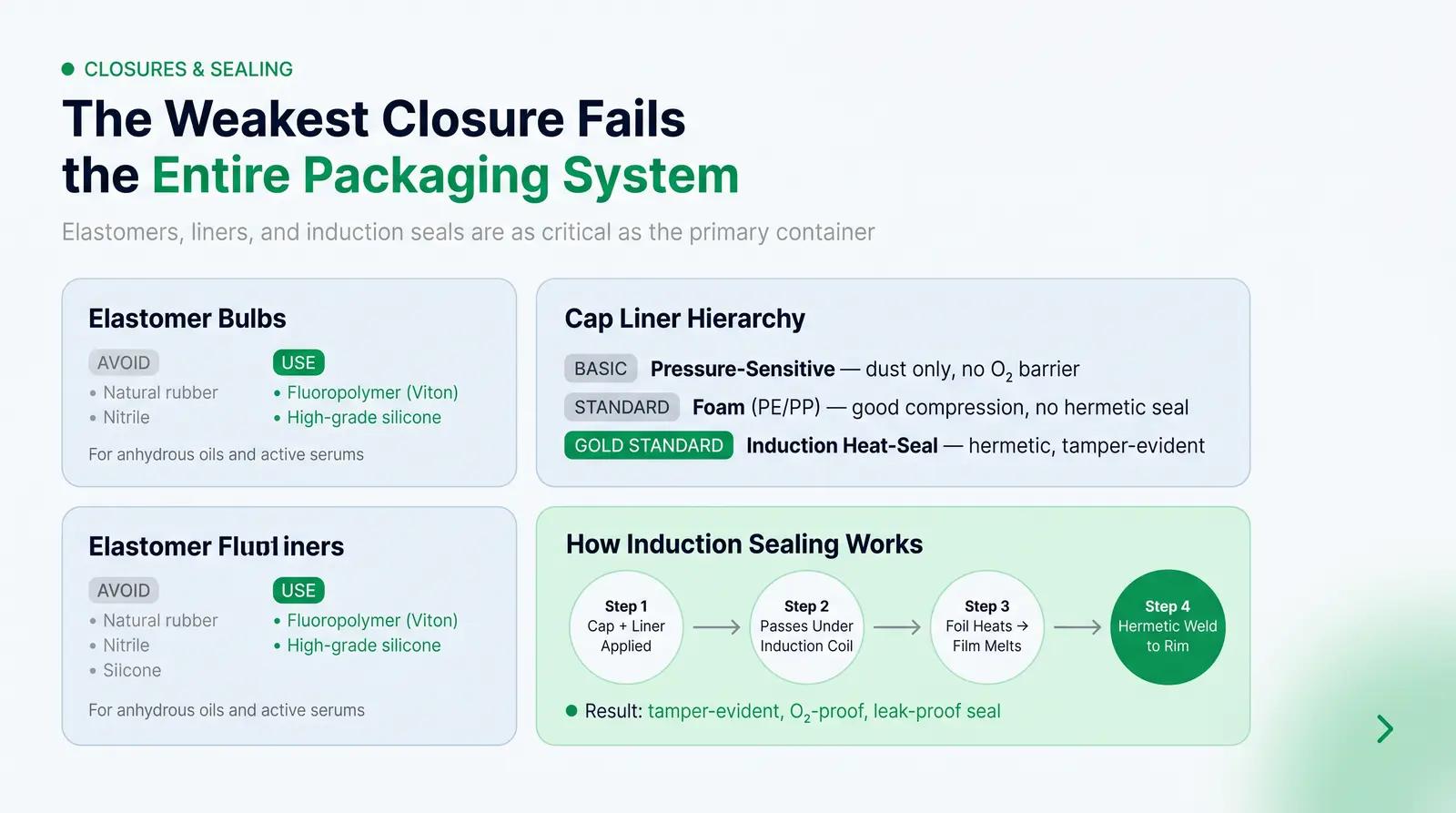
Dropper assemblies utilize flexible elastomer bulbs (natural rubber, nitrile, silicone, or thermoplastic elastomers) to draw and dispense liquid. During storage or shipping, volatile compounds, essential oils, and solvents evaporate into the headspace, coming into direct contact with the bulb. Unsaturated elastomers, like natural rubber, are highly vulnerable to swelling, softening, and physical disintegration when exposed to lipid-rich or essential oil formulas. This interaction can leach vulcanization accelerators, antioxidants, and processing oils from the rubber back into the liquid. For anhydrous oils and active serums, formulators must specify chemically resistant fluoropolymer (such as Viton) or high-grade silicone elastomer bulbs, and conduct extensive compatibility testing on the entire dropper assembly.
Cap Liners and Induction Sealing
The cap liner is the critical interface creating the actual seal between the bottle rim and the closure. There are three primary liner formats:
- Pressure-Sensitive Liners: These liners utilize pressure-activated adhesive to stick to the container rim when capped. They provide basic dust protection but offer poor oxygen barrier properties, are prone to leaking with liquids, and are restricted due to environmental regulations against polystyrene (PS) [14].
- Foam Liners (PE or PP): Standard compressible foam liners provide excellent seal compression and leak resistance for non-aggressive, water-based formulas, but they do not provide a hermetic oxygen barrier.
- Induction Heat-Seal Liners: The gold standard for active and sensitive formulations. These liners consist of a multi-layer laminate: a backing layer (pulp or foam), a wax bonding layer, a conductive aluminum foil layer, and a heat-sealable polymer film layer [15].
During packaging, the capped bottle passes under an induction sealer, which generates an electromagnetic field that heats the foil, melting the polymer film and welding it hermetically to the rim [15]. This process creates a tamper-evident, leak-proof barrier against oxygen and moisture, making it essential for sensitive formulations.
A Worked Example: Selecting Packaging for a 15% L-Ascorbic Acid Serum
We will walk through a step-by-step packaging selection scenario for a high-performance active skincare product to demonstrate the practical application of the Rubric.
The Formulation Profile
- Product Volume: 1 fl oz (30 ml)
- Active Ingredient: $15%$ L-Ascorbic Acid (pure, non-encapsulated)
- Supporting Actives: $1%$ Tocopherol (Vitamin E), $0.5%$ Ferulic Acid
- Base Vehicle: Water-based (aqueous), containing $5%$ Propylene Glycol and $0.1%$ Sodium Hyaluronate
- Physical Profile: Low-viscosity, water-like fluid (ambient fill, $22^\circ\text{C}$ / $72^\circ\text{F}$)
- Chemical Profile: Highly acidic ($\text{pH } 3.0\text{--}3.5$ required for active skin penetration)
Applying the Rubric Axis by Axis
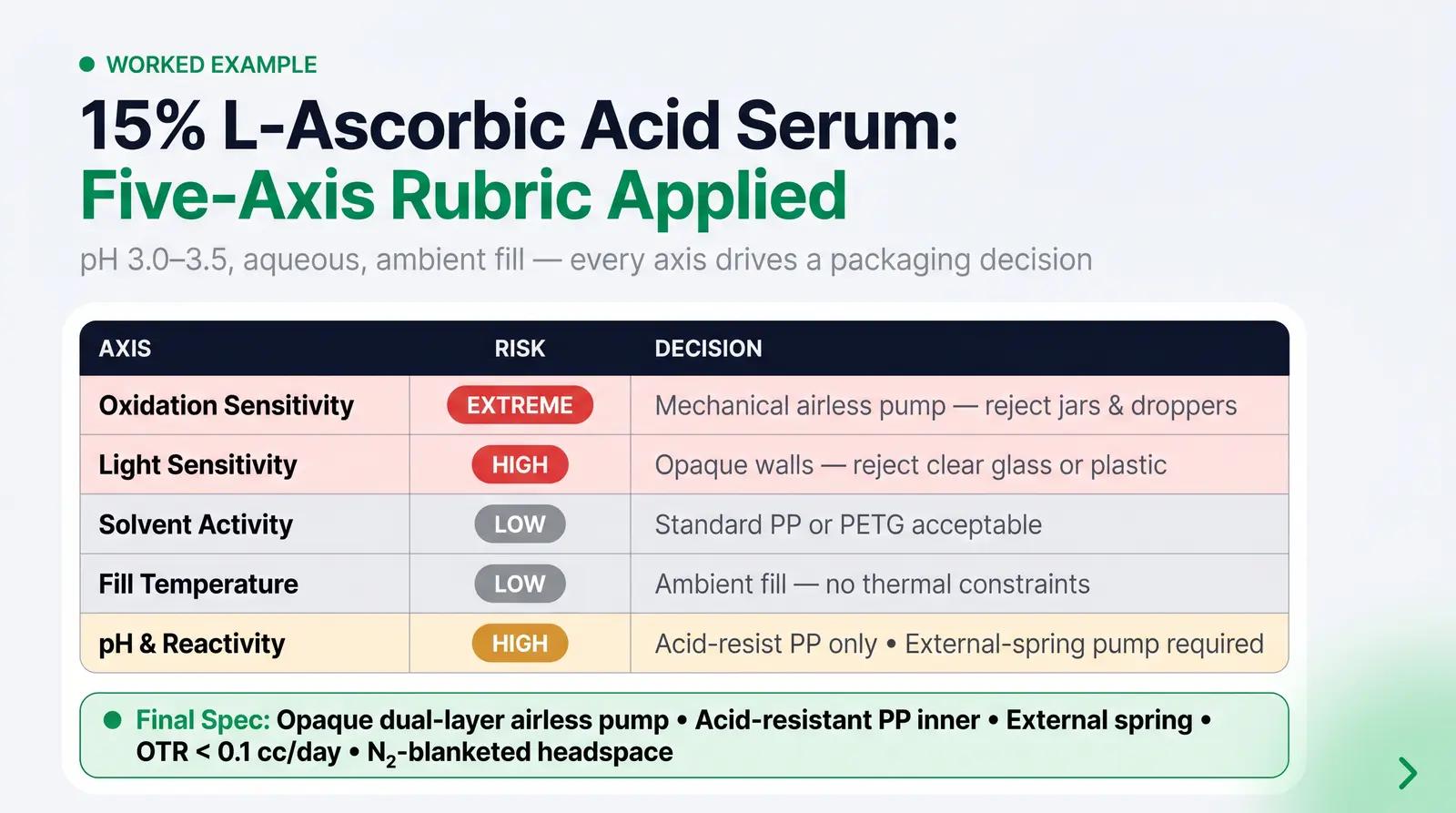
- Oxidation Sensitivity (Critical - Extreme Risk): Pure L-ascorbic acid at $15%$ in an aqueous phase will oxidize rapidly upon contact with dissolved or atmospheric oxygen. Reject all open jars and standard dropper bottles. Select a mechanical airless pump system.
- Light Sensitivity (High Risk): Exposure to UV and visible light causes rapid photolytic degradation and a dark brown color shift. Reject clear glass or plastic; select opaque packaging.
- Solvent Activity (Low Risk): The formula is water-based with a low concentration of glycols and no essential oils. Standard PP, PETG, or glass inner chambers are acceptable.
- Fill Temperature (Low Risk): The serum is filled at ambient room temperature ($20\text{--}25^\circ\text{C}$ / $68\text{--}77^\circ\text{F}$). Standard polymers are fully compatible.
- pH and Chemical Reactivity (High Risk): The formula is highly acidic ($\text{pH } 3.0\text{--}3.5$). This extreme acidity will corrode raw metals and can degrade certain low-grade polymers or adhesives over a 24-month shelf life. All product-contact materials must be highly acid-resistant. Metal components (such as pump springs) must be completely isolated from the fluid path. Specify an "external spring" airless pump design, where the metal spring is housed entirely outside the fluid chamber, ensuring the acidic serum only contacts inert PP and acid-resistant elastomer seals.
Final Packaging Specification Recommendation
The optimal specification for the 15% L-Ascorbic Acid Serum is an opaque, dual-layer airless pump bottle featuring an outer acrylic shell, paired with an inner chamber of high-purity, acid-resistant PP. The dispensing engine must utilize an external-spring airless pump with a certified OTR of $< 0.1\text{ cc/package/day}$, fitted with an inert thermoplastic elastomer (TPE) piston seal. The filling process must incorporate a nitrogen-blanketed headspace to eliminate dissolved oxygen prior to sealing.
Compatibility Testing: What to Verify Before You Order at Scale
Even the most chemically logical packaging selection remains a theoretical hypothesis until it is validated through empirical, physical testing. Compatibility and stability testing are non-negotiable, essential diligence steps that must be completed before committing to a commercial production run.
The Testing Protocol: Accelerated vs. Real-Time
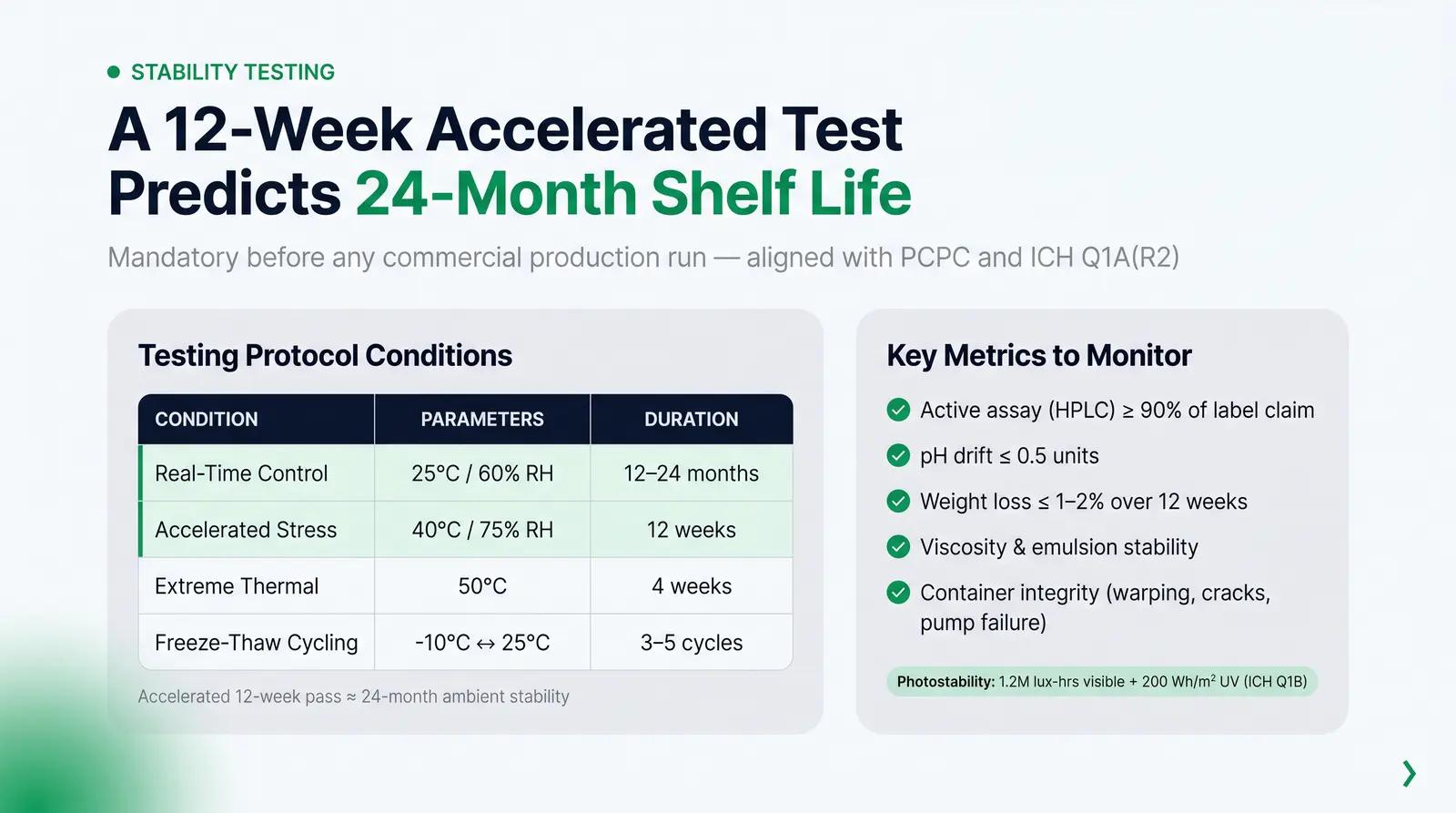
To predict shelf life, brands utilize accelerated stability testing. Storing the product-package system under elevated thermal stress accelerates degradation. The protocol, aligned with PCPC and ICH Q1A (R2), requires storing the formulation within its final packaging under parallel conditions [16] [17]:
- Real-Time Control: $25^\circ\text{C} \pm 2^\circ\text{C}$ ($77^\circ\text{F} \pm 4^\circ\text{F}$) at $60% \pm 5%$ RH for 12 to 24 months.
- Accelerated Stress: $40^\circ\text{C} \pm 2^\circ\text{C}$ ($104^\circ\text{F} \pm 4^\circ ext{F}$) at $75% \pm 5%$ RH for 12 weeks (3 months). Passing this test correlates to roughly 24 months of stability at ambient room temperature.
- Extreme Thermal Stress: $50^\circ\text{C}$ ($122^\circ\text{F}$) for 4 weeks to identify rapid chemical incompatibility or thermal polymer failure.
- Freeze-Thaw Cycling: 3 to 5 continuous cycles (24 hours at $-10^\circ\text{C}$ followed by 24 hours at $25^\circ\text{C}$) to evaluate emulsion stability, polymer stress-crack resistance, and seal integrity under shipping conditions.
- Photostability Testing: Exposure to a minimum of $1.2\text{ million lux-hours}$ of visible light and $200\text{ watt-hours/square meter}$ of near-UV light, in accordance with the ICH Q1B Guideline, to verify light-blocking efficacy [18].
Key Metrics to Monitor During Stability Testing
At designated intervals (typically Weeks 2, 4, 8, and 12), formulators must perform a battery of analytical and physical evaluations. This includes active ingredient assay (HPLC) to verify active concentrations remain $\ge 90%$ of the labeled claim, pH drift monitoring to detect shifts $> 0.5\text{ units}$ (indicating chemical instability or leaching), weight loss to verify water loss due to evaporation does not exceed $1\text{--}2%$ over 12 weeks, viscosity and emulsion stability checks, and visual inspection of the container for warping, cracking, swelling, or pump failure.
Navigating these technical material specifications can be overwhelming for independent beauty brands. Packfolio solves this by curating a vetted, high-performance catalog of primary cosmetic packaging SKUs—including certified acid-resistant PP airless pumps, UV-shielded glass dropper assemblies, and high-barrier collapsible aluminum tubes—each pre-modeled in 3D with predefined printable regions [19]. Through our browser-based 3D design tool, founders and formulators can upload their artwork, customize labels inside predefined print zones, and preview their finished product on a photorealistic 3D model [19]. This mandatory 3D preview workflow ensures absolute visual alignment before ordering. Packfolio handles the complex backend logistics—coordinating production, managing quality assurance (QA), and executing freight delivery directly to your facility [19]—eliminating the need to manage fragmented supplier communications and providing a seamless, risk-free pathway from packaging selection to market-ready product.
Packaging Format vs. Formula Type Compatibility Overview
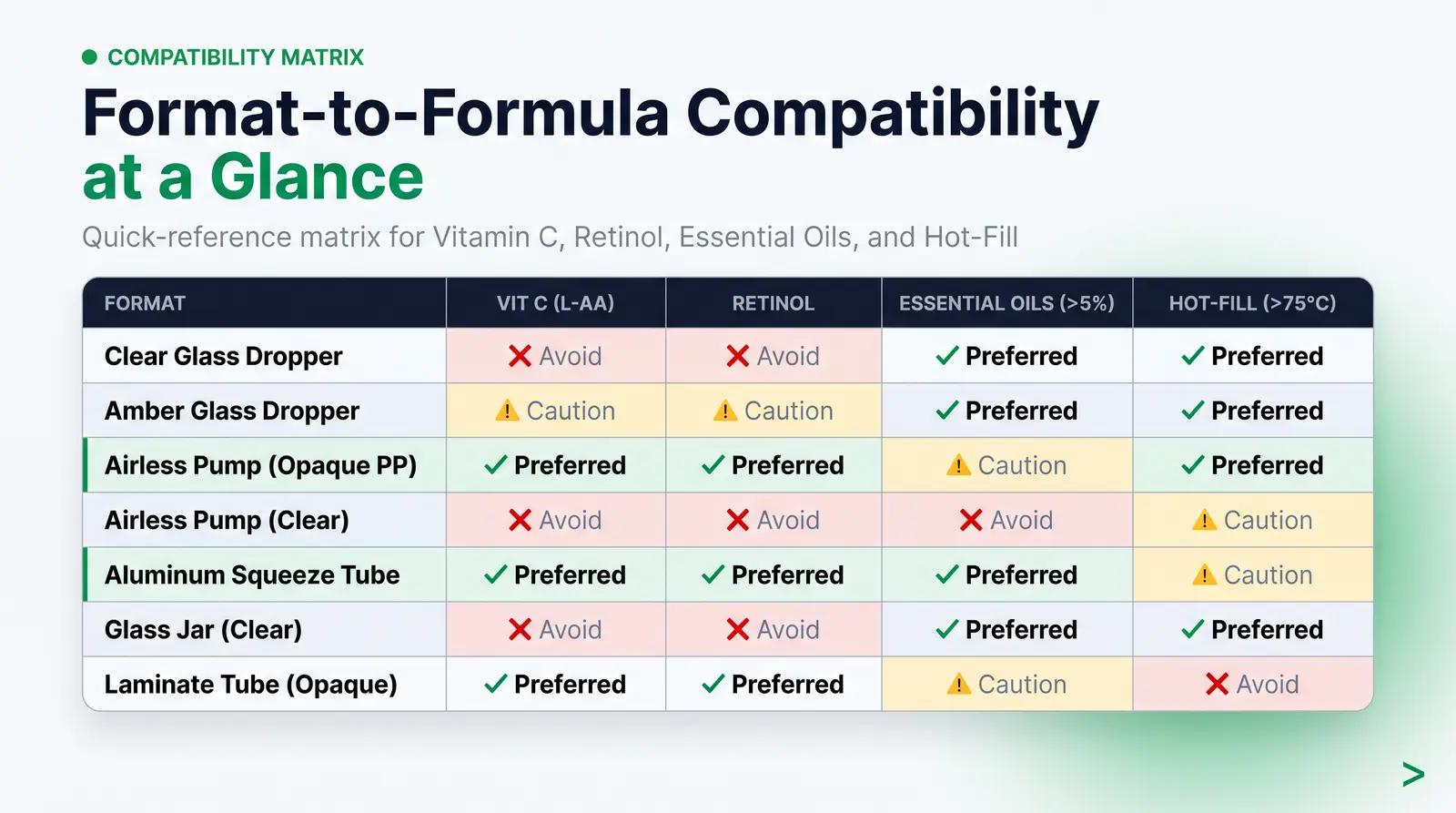
To assist in the rapid screening of primary packaging options, the following matrix outlines the compatibility of common packaging formats across the four challenging formula categories discussed in this guide.
| Packaging Format | Vitamin C Serum (L-AA, aqueous) | Retinol Formula (Emulsion) | Essential Oil Concentrate ($> 5%$) | Hot-Fill Balm/Wax ($> 75^\circ\text{C}$) |
|---|---|---|---|---|
| Glass Dropper Bottle (Clear) | ✗ Avoid. Rapid photolysis and severe oxidation due to daily air ingress and zero UV barrier. | ✗ Avoid. Severe photodegradation; retinol is highly photolabile. | ✓ Preferred. Chemically inert; zero risk of solvent attack or leaching. | ✓ Preferred. Excellent thermal shock resistance; unaffected by hot-pour temperatures. |
| Glass Dropper Bottle (Amber) | ⚠ Caution. Amber glass blocks UV but permits visible light and daily air ingress; suitable only for highly stabilized waterless derivatives. | ⚠ Caution. Provides moderate UV protection, but continuous air exposure during use will degrade retinol over time. | ✓ Preferred. Excellent. Protects volatile oils from UV degradation; completely inert. | ✓ Preferred. Outstanding. Highly resistant to thermal deformation and cracking. |
| Airless Pump (Opaque PP) | ✓ Preferred. Excellent oxygen barrier; mechanical piston eliminates air ingress; opaque walls block all light. | ✓ Preferred. The gold standard. Prevents both photooxidation and photolysis. | ⚠ Caution. Suitable only for formulas with low essential oil loads ($< 1%$); high concentrations can cause polymer stress cracking. | ✓ Preferred. Excellent thermal tolerance up to $85^\circ\text{C}$ ($185^\circ\text{F}$). |
| Airless Pump (Clear PP/PETG) | ✗ Avoid. Zero light barrier; will cause rapid yellowing and degradation of L-ascorbic acid. | ✗ Avoid. Retinol will undergo rapid photodegradation under visible and UV light. | ✗ Avoid. Prone to chemical attack and environmental stress cracking from volatile terpenes. | ⚠ Caution. Standard PETG has low thermal resistance and will warp if filled above $55^\circ\text{C}$ ($131^\circ\text{F}$). |
| Aluminum Squeeze Tube | ✓ Preferred. Outstanding light and oxygen barrier; collapsible body prevents headspace air formation. | ✓ Preferred. Excellent. Completely impermeable to UV/visible light and oxygen; ideal for retinol creams. | ✓ Preferred. Highly compatible, provided the tube features an inert epoxy-phenolic internal liner. | ⚠ Caution. Requires specialized hot-fill equipment; metal conducts heat rapidly, impacting handling during filling. |
| Glass Jar (Clear) | ✗ Avoid. Severe oxidation and photolysis; maximum surface area exposure to air and light. | ✗ Avoid. Rapid active loss due to daily light and atmospheric oxygen exposure. | ✓ Preferred. Chemically compatible, but volatile oils will evaporate rapidly upon opening. | ✓ Preferred. Highly stable; completely unaffected by hot-pour temperatures. |
| Laminate Squeeze Tube (Opaque) | ✓ Preferred. Good oxygen barrier (with EVOH layer); completely blocks light; cost-effective. | ✓ Preferred. Excellent, highly stable option for retinol lotions and creams. | ⚠ Caution. Verify inner plastic layer is compatible with specific volatile oils to prevent delamination. | ✗ Avoid. Thin laminate walls will warp and melt under hot-fill conditions. |
Frequently Asked Questions
What is the best packaging for vitamin C serum?
The best packaging for an aqueous, high-dose L-ascorbic acid Vitamin C serum is an opaque, dual-layer airless pump bottle constructed of acid-resistant Polypropylene (PP) or a collapsible aluminum tube. These formats provide a complete physical barrier against oxygen ingress and ultraviolet/visible light, which catalyze Vitamin C oxidation.
Can I use PET bottles for essential oil formulas?
Standard PET bottles should not be used for formulas containing high concentrations of essential oils (above $1\text{--}2%$). Volatile terpenes and esters within essential oils can penetrate the PET polymer matrix, leading to environmental stress cracking, structural warping, and the leaching of hazardous plasticizers into the product; high-concentration formulas require glass, fluorinated HDPE, or lined aluminum.
Does retinol break down in clear packaging?
Yes, retinol undergoes rapid photodegradation in clear packaging. Ultraviolet radiation (especially UVA) and visible light break down the retinol molecule into inactive isomers within hours, rendering the product ineffective and potentially generating irritating compounds.
What packaging is required for hot-fill cosmetics?
Hot-fill cosmetics (such as balms, waxes, and deodorants filled between $65\text{--}85^\circ\text{C}$ / $149\text{--}185^\circ\text{F}$) require rigid containers constructed of materials with high Heat Deflection Temperatures (HDT), such as thick-walled Polypropylene (PP) or glass. Standard PET and thin-walled HDPE must be avoided, as they will warp, shrink, or develop micro-cracks under thermal stress.
How do I know if my packaging is compatible with my formula?
The only way to guarantee compatibility is to perform a 12-week accelerated stability and compatibility test at $40^\circ\text{C}$ ($104^\circ\text{F}$) and $75%$ Relative Humidity. This protocol simulates a standard 24-month ambient shelf life, allowing formulators to monitor active ingredient retention, pH drift, weight loss, and physical container degradation before launching at scale.
References
[1] Morel, S., Mura, G., Gallarate, M., & Sapino, S. (2024). Cosmetic Packaging: European Regulatory Aspects and Sustainability. Cosmetics, 11(4), 110. https://doi.org/10.3390/cosmetics11040110
[2] European Parliament and Council. (2009). Regulation (EC) No 1223/2009 of the European Parliament and of the Council of 30 November 2009 on cosmetic products. Official Journal of the European Union, L 342, 59-209. https://eur-lex.europa.eu/legal-content/EN/TXT/?uri=CELEX:02009R1223-20190813
[3] Markkinen, N. (2024). Cosmetic packaging testing by EU regulations and industry guidelines. Measurlabs Technical Blog. https://measurlabs.com/blog/cosmetic-packaging-testing/
[4] Arora, N. (2025). How to Ensure Vitamin C Stability in Serum Formulations: The Complete 2025 Guide. Ningen Skincare Formulator Resources. https://ningen.com/blogs/s/vitamin-c-serum-stability-guide
[5] Yin, X., Chen, K., Cheng, H., Chen, X., Feng, S., Song, Y., & Liang, L. (2022). Chemical Stability of Ascorbic Acid Integrated into Commercial Products: A Review on Bioactivity and Delivery Technology. Antioxidants, 11(1), 153. https://doi.org/10.3390/antiox11010153
[6] Ahmad, I., Sheraz, M. A., Ahmed, S., Shaikh, R. H., Vaid, F. H. M., Khattak, S. R., & Ansari, S. A. (2011). Photostability and Interaction of Ascorbic Acid in Cream Formulations. AAPS PharmSciTech, 12(3), 917-925. https://doi.org/10.1208/s12249-011-9659-1
[7] JC Cosmopack. (2026). What are Drawbacks of Airless Cosmetic Bottles? JC Cosmopack Industry Insights. https://jccosmopack.com/what-are-drawbacks-of-airless-cosmetic-bottles/
[8] Grand Ingredients. (2024). Vitamin C in Cosmetics Stability & Clean Innovation. Grand Ingredients Research. https://grandingredients.com/vitamin-c-cosmetics-stability/
[9] Tolleson, W. H., Cherng, S. H., Xia, Q., Boudreau, M., Yin, J. J., Wamer, W. G., Howard, P. C., Yu, H., & Fu, P. P. (2005). Photodecomposition and Phototoxicity of Natural Retinoids. International Journal of Environmental Research and Public Health, 2(1), 147-155. https://doi.org/10.3390/ijerph2005010147
[10] Let's Make Beauty. (2025). Formulating with Retinol: Key Stability Tips for Maximum Efficacy. Presperse Let's Make Beauty Technical Blog. https://www.letsmakebeauty.com/blog/post/formulating-with-retinol-stability-tips
[11] Orchard, D. (2019). Should I put essential oils in glass or plastic? It depends... Container and Packaging Resources. https://www.containerandpackaging.com/resources/should-i-put-essential-oils-in-glass-or-plastic-it-depends/
[12] TricorBraun. (2024). Hot Fill Packaging: A Comprehensive Guide to Process and Choices. TricorBraun Packaging Insights. https://www.tricorbraun.com/blog/hot-fill-packaging-a-comprehensive-guide-to-process-and-choices.html
[13] U.S. Plastic Corp. (2023). What are the hot fill temperatures for the plastic bottles? U.S. Plastic Corp Knowledgebase. https://www.usplastic.com/knowledgebase/article.aspx?contentkey=718
[14] Enercon Industries. (2024). Liner Options for Sealing Capped Containers, Bottles, & Jars. Enercon Technical Library. https://www.enerconind.com/sealing/library-resource/liner-options-for-sealing-containers/
[15] SKS Bottle & Packaging. (2024). Induction Sealing Guide: Choosing the Right Container, Cap & Liner Materials. SKS Packaging Resources. https://www.sks-bottle.com/InductionSealing.html
[16] Personal Care Products Council. (2011). Guideline for Industry: The Stability Testing of Cosmetic Products. PCPC Publications. https://access.personalcarecouncil.org/Shop/Publications/Product-Details?productid=%7B59F5202E-E0BF-EB11-8236-000D3A12D54C%7D
[17] International Conference on Harmonisation. (2003). ICH Harmonised Tripartite Guideline: Stability Testing of New Drug Substances and Products Q1A(R2). ICH Quality Guidelines. https://database.ich.org/sites/default/files/Q1A%28R2%29%20Guideline.pdf
[18] U.S. Food and Drug Administration. (2018). Q1B Photostability Testing of New Drug Substances and Products: Guidance for Industry. FDA Regulatory Information. https://www.fda.gov/regulatory-information/search-fda-guidance-documents/q1b-photostability-testing-new-drug-substances-and-products
[19] Packfolio. (2026). Packfolio: Beauty Packaging Without the Supply Chain. Packfolio Catalog and Platform Overview. https://packfolio.com/


