
Choosing Packaging for Beauty Products With Oils
This guide helps beauty brands choose compatible packaging materials, dispensers, seals, and labels for oil-based cosmetic formulations to prevent leaks, oxidation, and product failure.
The moment of truth for many beauty founders does not happen in the lab. It happens when the first customer opens their carefully formulated facial oil, only to find the label peeling, the pump jammed, or the bottle leaking inside the shipping box. Formulating with oils presents unique challenges that standard packaging simply cannot handle. The viscosity, chemical composition, and light sensitivity of oils demand specialized primary packaging. This guide examines the technical requirements for cosmetic oil packaging, from material compatibility to closure selection, helping brands avoid costly product failures.
The Chemistry of Cosmetic Oils and Packaging Materials
Oils are active, dynamic substances that interact with their environment. The primary threat to oil-based formulations is oxidation, triggered by exposure to oxygen, heat, and ultraviolet (UV) light. When selecting packaging materials, brands must balance barrier properties, chemical resistance, and aesthetic appeal.
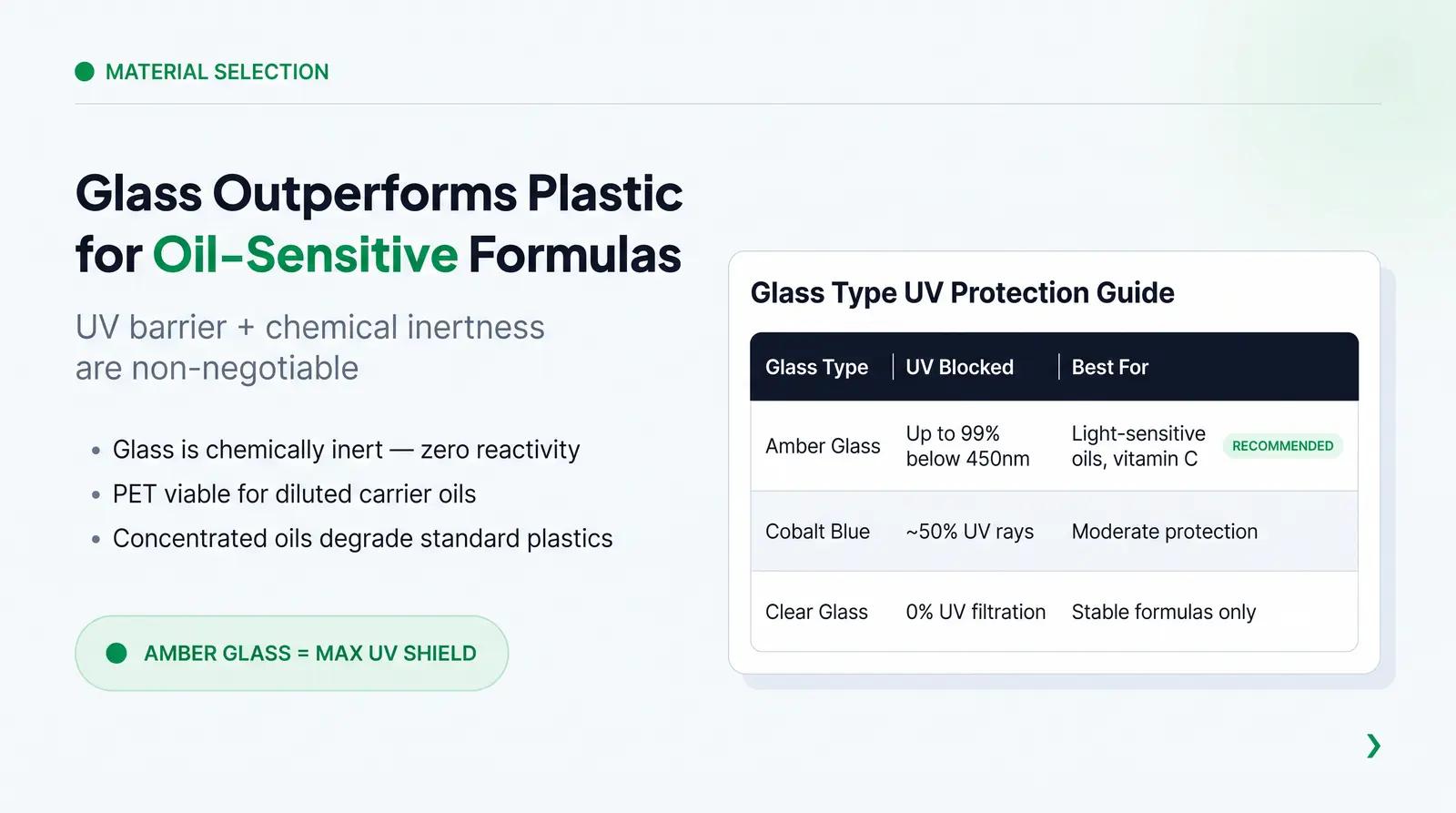
Glass remains the gold standard for pure essential oils and highly concentrated serums [1]. It is chemically inert, meaning it will not react with or degrade the oils inside. Among glass options, amber glass provides the highest level of UV protection, blocking up to 99% of harmful UV rays below 450nm [2]. This makes it essential for light-sensitive ingredients like cold-pressed botanical oils or vitamin C derivatives. Cobalt blue glass offers moderate protection, blocking about 50% of UV rays, while clear glass provides zero UV filtration and should only be used for highly stable formulations or products kept in secondary packaging [2].
For brands prioritizing weight reduction or shatter resistance, certain plastics offer viable alternatives. Polyethylene Terephthalate (PET) provides good clarity and barrier properties against oxygen and moisture, making it suitable for many carrier oils and diluted formulations [3]. High-Density Polyethylene (HDPE) offers excellent chemical resistance but lacks the premium clarity of PET. However, highly concentrated essential oils can degrade standard plastics over time, leading to leaching or container deformation [4]. When using plastic for oil-based products, extensive compatibility testing is mandatory.
Dispensing Mechanisms: Droppers vs. Airless Pumps
The dispensing mechanism defines the user experience and significantly impacts product longevity. The choice between droppers and airless pumps depends largely on the oil's viscosity and the formula's sensitivity to air.
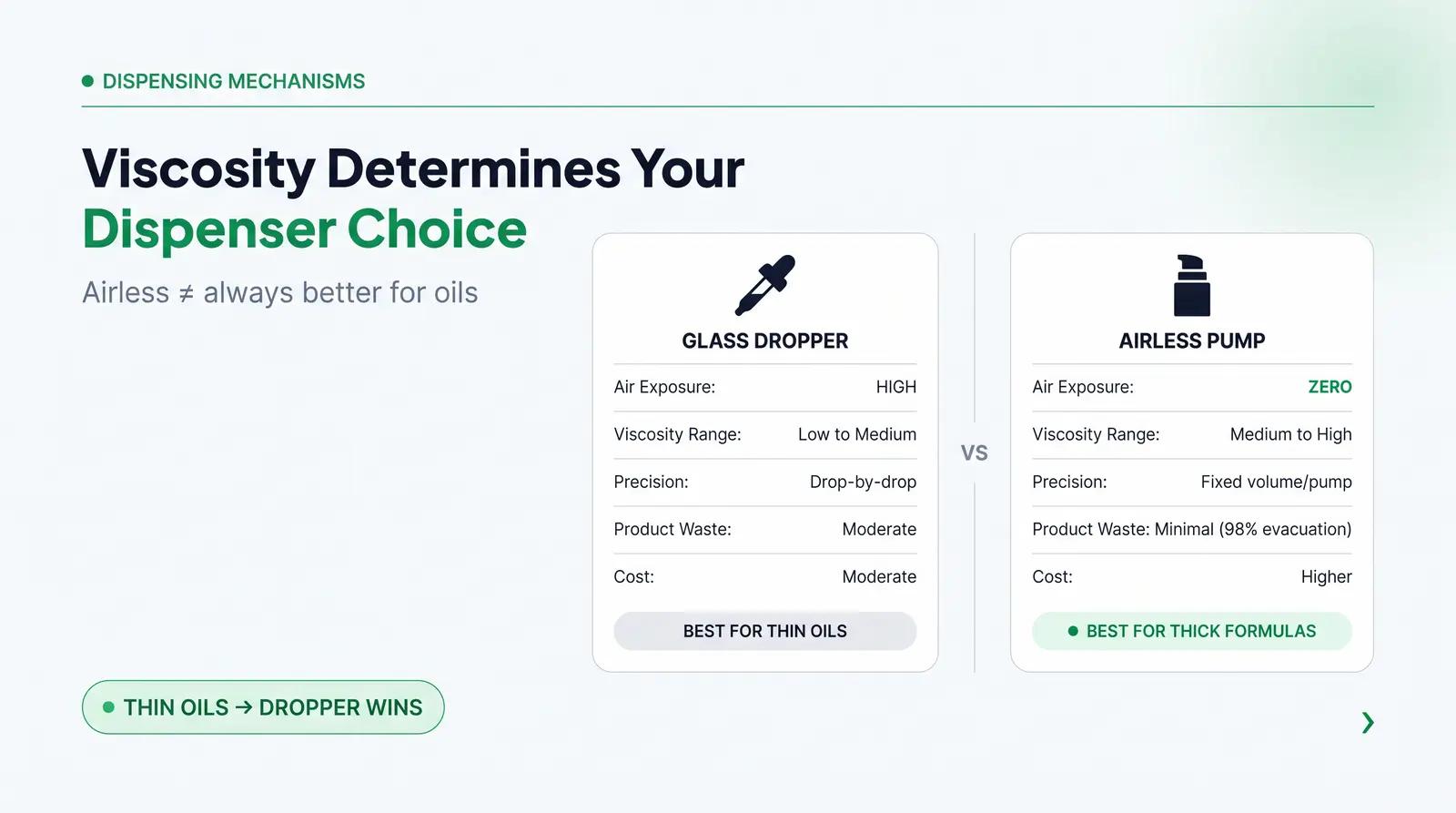
Glass droppers are the traditional choice for facial oils and serums. They offer precise dosing and a premium, apothecary aesthetic [5]. Because glass is inert, the pipette will not react with the oil. However, droppers expose the product to air every time the bottle is opened, accelerating oxidation [6]. Furthermore, thin oils can drip prematurely from the pipette, causing mess and product waste.
Airless pump bottles provide superior protection by utilizing a vacuum system that pushes the product upward without allowing air to enter the container [7]. This prevents oxidation and contamination, extending the shelf life of sensitive active ingredients. Airless systems also ensure almost complete product evacuation, reducing waste [7].
The critical limitation of airless pumps is viscosity compatibility. Very thin, watery oils can leak past the internal piston or fail to create the necessary vacuum seal, rendering the pump useless [8]. Conversely, extremely thick oils may clog the mechanism. Brands must verify that their specific oil viscosity falls within the operational range of the chosen airless pump [8].
Comparison of Dispensing Mechanisms
| Feature | Glass Droppers | Airless Pumps |
|---|---|---|
| Air Exposure | High (opened each use) | Zero (vacuum sealed) |
| Viscosity Range | Low to Medium | Medium to High |
| Precision | High (drop by drop) | Fixed volume per pump |
| Product Waste | Moderate (residue in bottle) | Minimal (up to 98% evacuation) |
| Cost | Moderate | Higher |
Securing the Seal: Gaskets and Liners
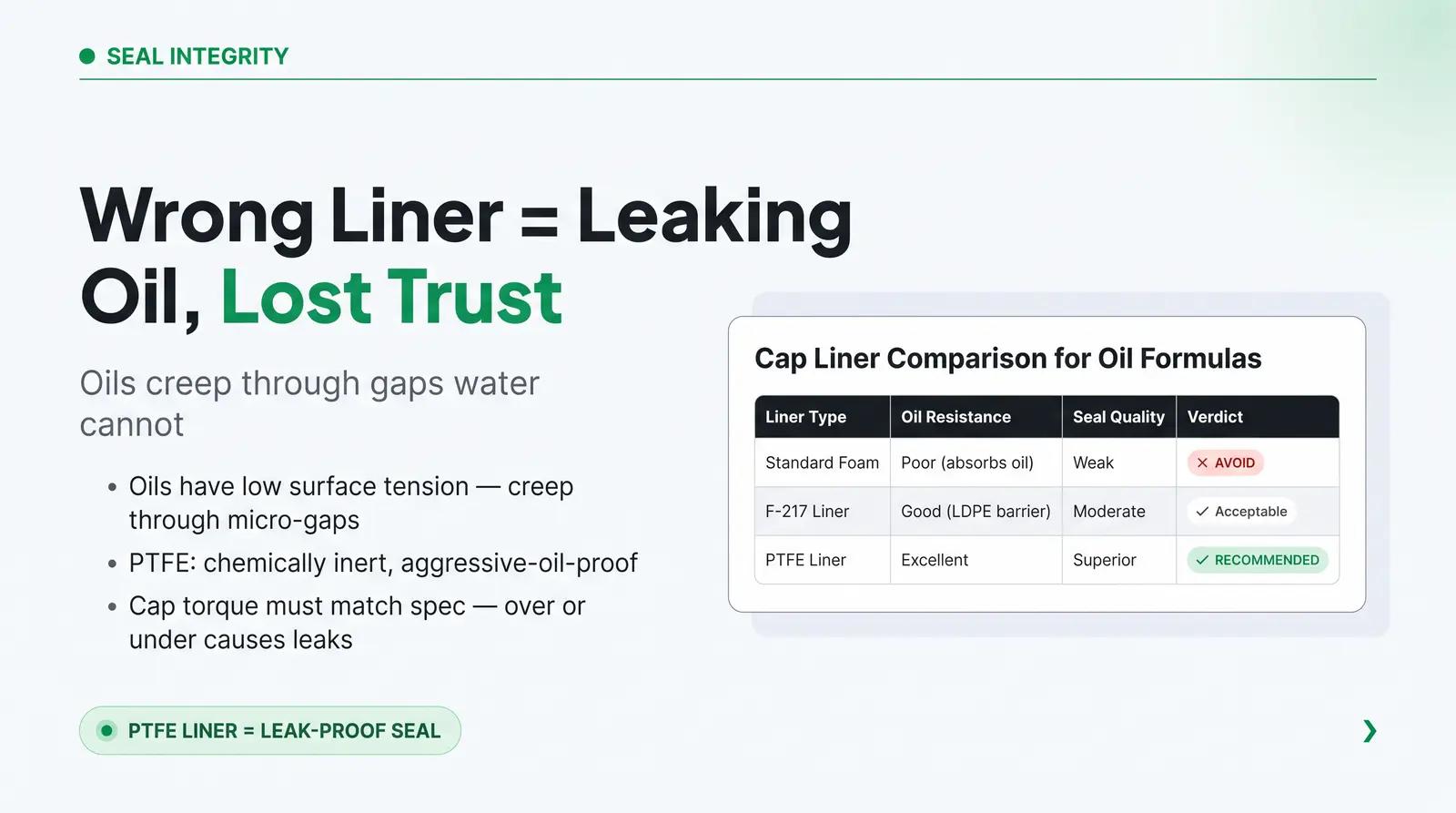
A leaking oil bottle is a packaging failure that immediately damages brand trust. The integrity of the seal relies entirely on the cap liner or gasket. Oils possess low surface tension, allowing them to creep through microscopic gaps that would contain water-based products.
Standard foam liners, while cost-effective, are often insufficient for cosmetic oils. They can absorb the oil or degrade upon contact [9]. For oil-based formulations, Polytetrafluoroethylene (PTFE) liners are highly recommended [10]. PTFE provides an exceptional chemical barrier and maintains its integrity even when exposed to aggressive essential oils [10].
Another robust option is the F-217 liner, which consists of a foam core sandwiched between two layers of low-density polyethylene (LDPE) [11]. This structure offers the compressibility needed for a tight seal while providing a chemical barrier against the oil. Regardless of the liner chosen, matching the cap torque to the manufacturer's specifications is critical. Over-tightening can distort the liner, while under-tightening leaves gaps for the oil to escape [12].
The Label Adhesion Challenge
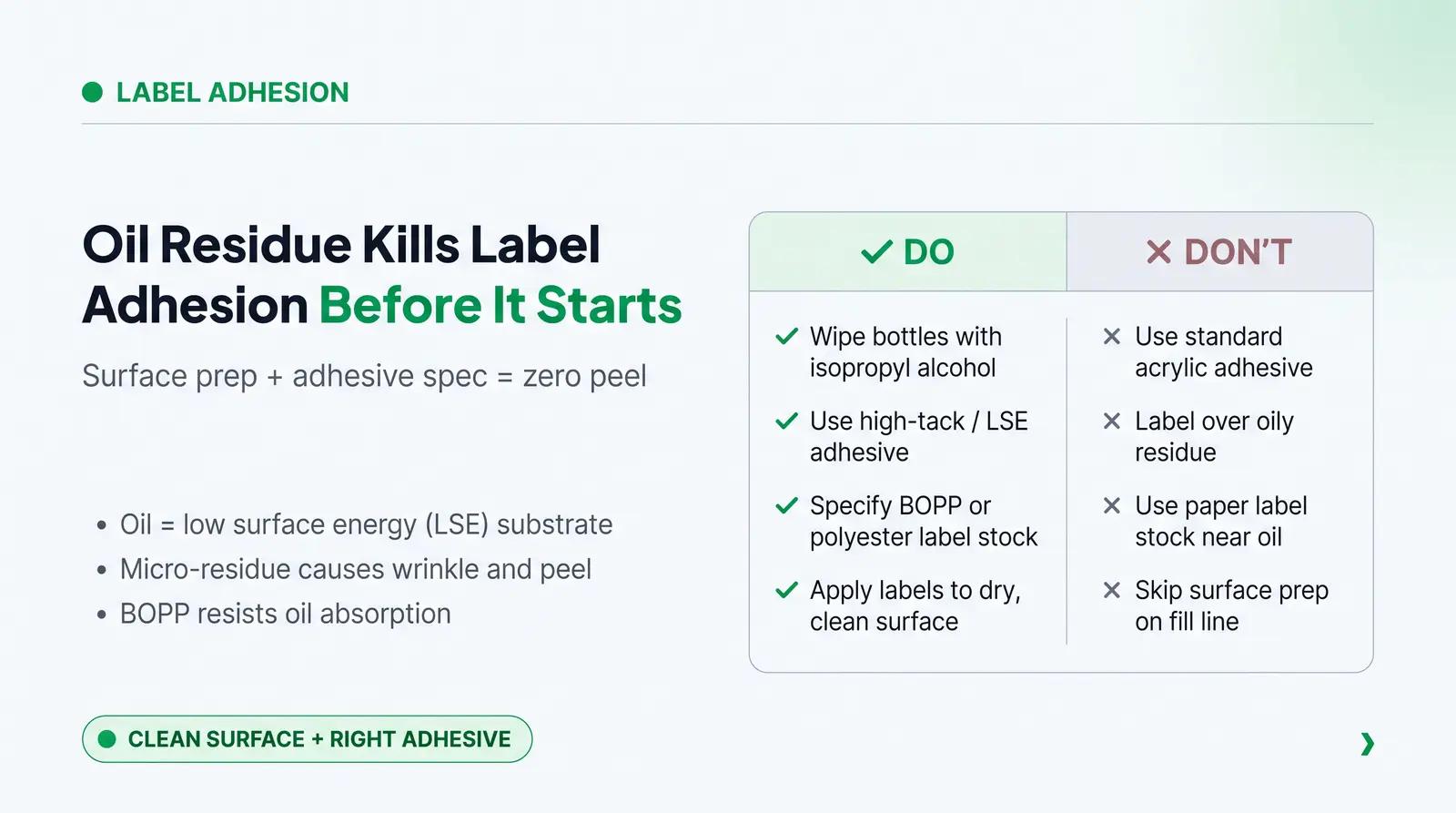
Oily residue is the enemy of pressure-sensitive adhesives. During the filling process, even microscopic amounts of oil on the outside of the bottle can prevent labels from adhering properly, leading to wrinkling, bubbling, or complete detachment [13].
To combat this, the bottle surface must be meticulously cleaned before labeling. In high-speed manufacturing, this often involves specialized wiping or air-blow systems. For smaller operations, a quick wipe with isopropyl alcohol ensures a clean surface [14].
Selecting the right adhesive is equally important. Standard acrylic adhesives often fail when exposed to oil. Brands should specify high-tack or aggressive adhesives designed for low surface energy (LSE) materials or contaminated environments [15]. Additionally, using an oil-resistant label material, such as BOPP (Biaxially Oriented Polypropylene) or polyester, prevents the label itself from absorbing oil and deteriorating [13].
A Framework for Packaging Compatibility Testing
Skipping compatibility testing is the most expensive mistake a beauty brand can make. Before committing to a bulk order, brands must rigorously test the interaction between their specific formula and the proposed packaging.
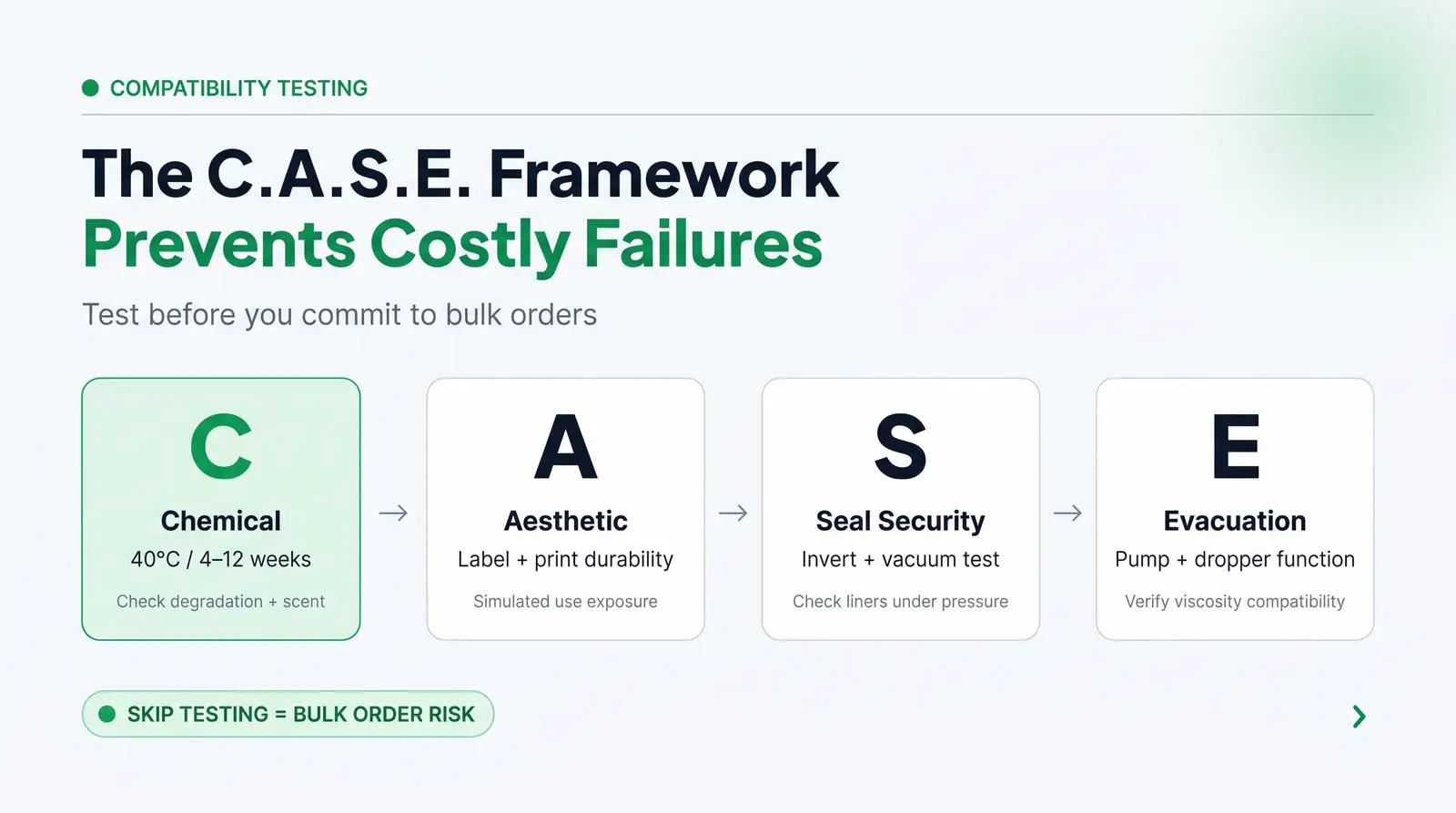
The C.A.S.E. Framework provides a structured approach to sample testing:
- Chemical Compatibility: Store the filled packaging at elevated temperatures (e.g., 40°C or 104°F) for 4 to 12 weeks to accelerate potential reactions. Inspect for plastic degradation, discoloration, or changes in the oil's scent and texture [16].
- Aesthetic Integrity: Evaluate label adhesion, print durability, and overall appearance after simulated use, including exposure to the oil itself.
- Seal Security: Conduct vacuum testing or store the bottles inverted and on their sides to ensure the liners and closures prevent leakage under pressure.
- Evacuation and Function: Test the pump or dropper repeatedly to verify consistent dosing and ensure the mechanism does not clog or leak with the specific oil viscosity.
A Worked Example: Launching a Botanical Night Oil
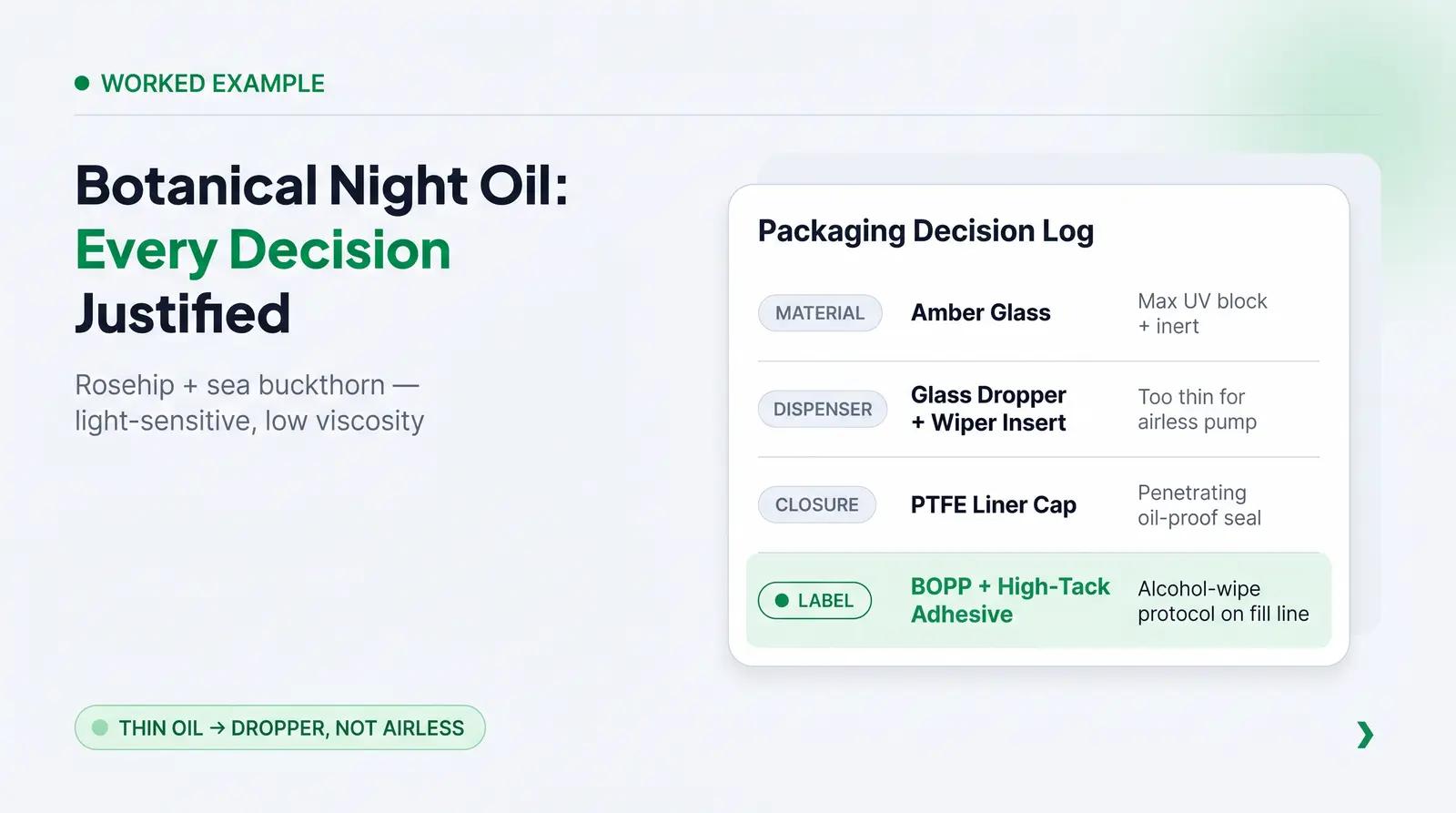
Consider a brand launching a premium, cold-pressed botanical night oil rich in rosehip and sea buckthorn. The formula is highly sensitive to light and oxidation, and has a low, watery viscosity.
- Material: The brand selects amber glass to provide maximum UV protection and ensure chemical inertness.
- Dispenser: Because the oil is too thin for a standard airless pump (which might leak past the piston), they choose a glass dropper with a specialized wiper insert in the neck to prevent dripping.
- Closure: They specify a cap with a PTFE liner to guarantee a leak-proof seal against the penetrating oils.
- Labeling: They use a BOPP label with a high-tack adhesive, applied only after a strict alcohol-wipe protocol on the filling line.
Contrarian Insight: The Myth of the Universal Airless Pump
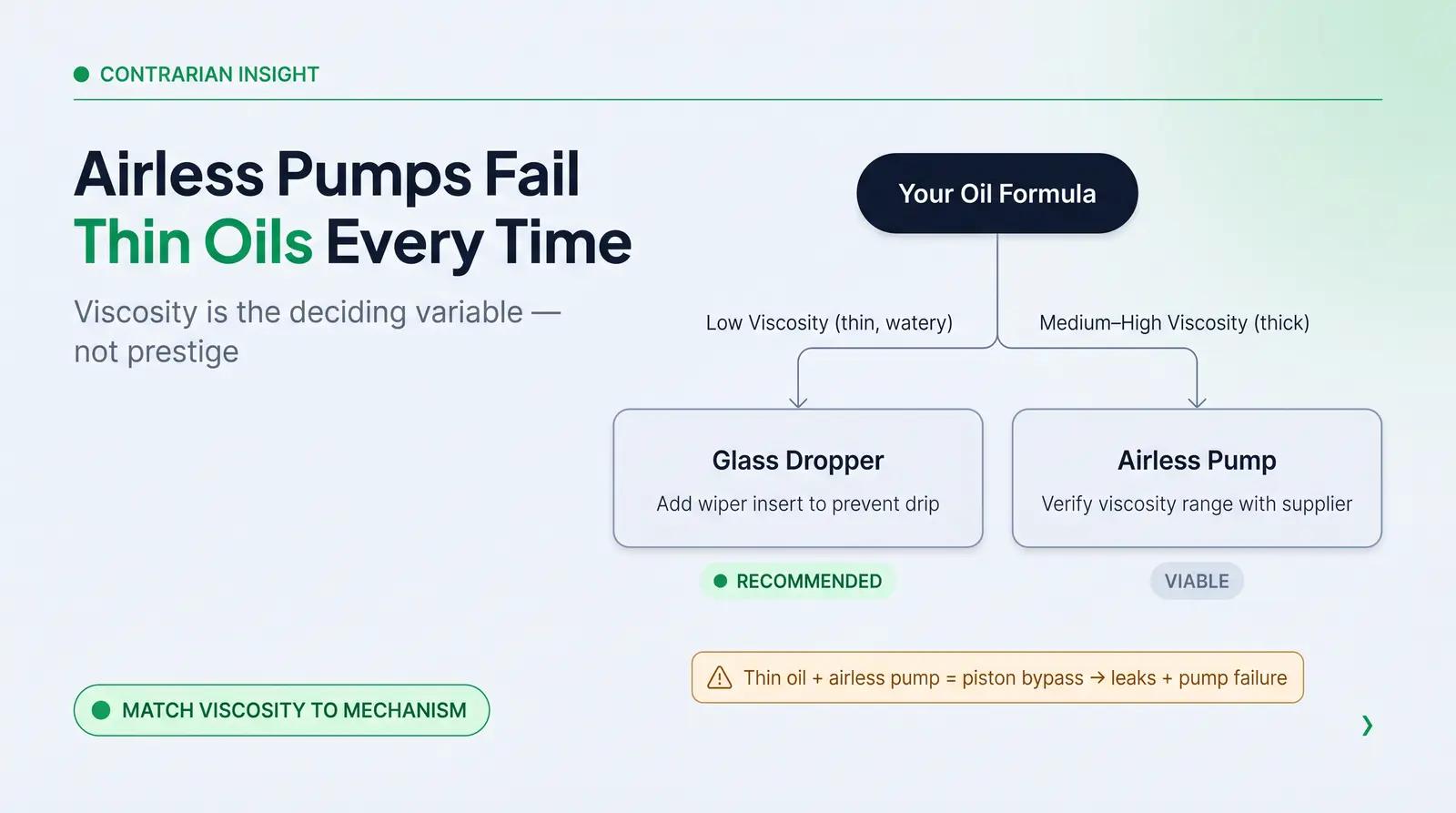
The beauty industry frequently touts airless pumps as the ultimate packaging solution for all premium skincare. The contrarian truth is that airless pumps are often the wrong choice for facial oils. The vacuum mechanism relies on the product having enough viscosity to create a seal against the internal piston. Low-viscosity oils can bypass this seal, leading to messy leaks and pump failure [8]. For thin oils, a well-designed dropper bottle or a specialized oil-treatment pump is often superior to a standard airless system.
Streamlining the Process with Packfolio
Navigating the complexities of oil packaging—from UV protection to liner compatibility—requires significant technical expertise. Packfolio simplifies this process for beauty brands. As an on-demand custom packaging platform, Packfolio curates a vetted catalog of cosmetic primary packaging SKUs, including bottles, droppers, and closures specifically suited for oil-based formulations.
Customers can browse 3D models, customize artwork within predefined print zones using a browser-based tool, and preview the final product photorealistically. Because the 3D preview is integrated into the order flow, brands see exactly what they are getting. Packfolio handles the coordination of production, quality assurance, and freight delivery, ensuring that the final packaging meets the rigorous demands of cosmetic oils without the brand ever needing to manage suppliers directly. Beauty packaging without the supply chain headache.
Frequently Asked Questions
1. Why do my facial oil labels keep peeling off? Label peeling is typically caused by microscopic oil residue on the bottle surface during application, or the use of an incompatible adhesive. Ensure bottles are thoroughly cleaned (e.g., with isopropyl alcohol) before labeling, and specify high-tack adhesives designed for low surface energy or oily environments.
2. Can I use PET plastic for essential oils? PET plastic is suitable for many carrier oils and diluted formulations, offering good barrier properties. However, highly concentrated pure essential oils can degrade PET over time. Always conduct rigorous compatibility testing before using plastic for oil-based products.
3. Why did my airless pump stop working with my new serum? Airless pumps require a certain product viscosity to maintain the internal vacuum seal. If your serum or oil is too thin and watery, it can leak past the piston, causing the pump mechanism to fail.
4. What is the best glass color for protecting sensitive oils? Amber glass provides the highest level of protection, blocking up to 99% of harmful UV rays below 450nm. This prevents photodegradation and oxidation of light-sensitive ingredients.
5. How long should I run compatibility tests before a bulk order? Accelerated stability and compatibility testing should typically run for 4 to 12 weeks at elevated temperatures (e.g., 40°C) to simulate long-term shelf life and identify any chemical interactions or seal failures.
References
[1] Glass Alchemy: Decoding the Types and Properties of Pharma Glass [2] Colored Glass Bottles for Essential Oils: The Best Color Options [3] Are PET plastic bottles safe for oil-based skincare formulations? [4] How to Choose Between HDPE and PET Bottles [5] Best Packaging for Serums: Glass Dropper vs Airless Pump [6] Airless Pump vs. Lotion Pump vs. Dropper: Which is Best for Your Brand? [7] Face oil pump bottle versus dropper application waste analysis [8] Which Products Are Best Suited for Airless Pump Bottles? [9] Cap Liners & Seal Liners: A Practical Buyer's Guide for Packaging Teams [10] Which Material is the Best for Cap Liner: Foam, Foil, PTFE, PE, or PP? [11] A Guide to Different Cap Liner Types & Functions [12] Leaking Primary Packaging - Causes, Solutions, and Prevention [13] Solving Label Issues With the Right Pressure-sensitive Adhesive [14] Printable Roll-On and Spray Bottle Labels for Essential Oils [15] Label Adhesion Failures: 5 Things to Check Before You Blame the Material [16] What is Packaging Compatibility Testing?


