
Cosmetic Closures Explained: Pumps, Droppers, Sprayers, Caps, and Neck Finishes
This guide explains cosmetic closure types, neck finish codes, formula compatibility, and pre-production testing to help beauty brands prevent leaks, oxidation, and sourcing mismatches.
A cosmetic formulation can survive months of rigorous stability testing, freeze-thaw cycles, and microbial challenge protocols, only to fail the moment it reaches the consumer. This failure rarely originates in the formula itself. Instead, it is frequently traced back to a mechanical or physical mismatch at the container interface. The closure is the primary barrier protecting the product, and it is where packaging failure most often originates [7]. A mismatch can lead to rapid oxidation, product leakage, or a frustrating user experience that permanently damages a brand's reputation.
For independent beauty brand founders and contract manufacturers, selecting the correct closure is as consequential as the formulation itself. Sourcing decisions made solely on aesthetics or initial unit cost often lead to expensive, late-stage delays. If a bottle and a pump are sourced from separate suppliers without a technical spec review, a mismatch is almost guaranteed. Understanding the engineering behind closures, from thread geometry to material compatibility, is the only way to ensure product integrity and brand success [2] [3].
Packaging-related failures represent a substantial portion of product returns and damage claims in the beauty industry [7]. Common issues such as leaking pumps, cracked caps, and clogged sprayers are not just minor inconveniences. They directly erode consumer trust and lead to costly product recalls or chargebacks from retailers. By establishing a rigorous verification and sampling process before placing a production order, brands can eliminate these risks and ensure a seamless unboxing and usage experience for their customers.
The Closure Landscape: Five Families Every Beauty Brand Should Know
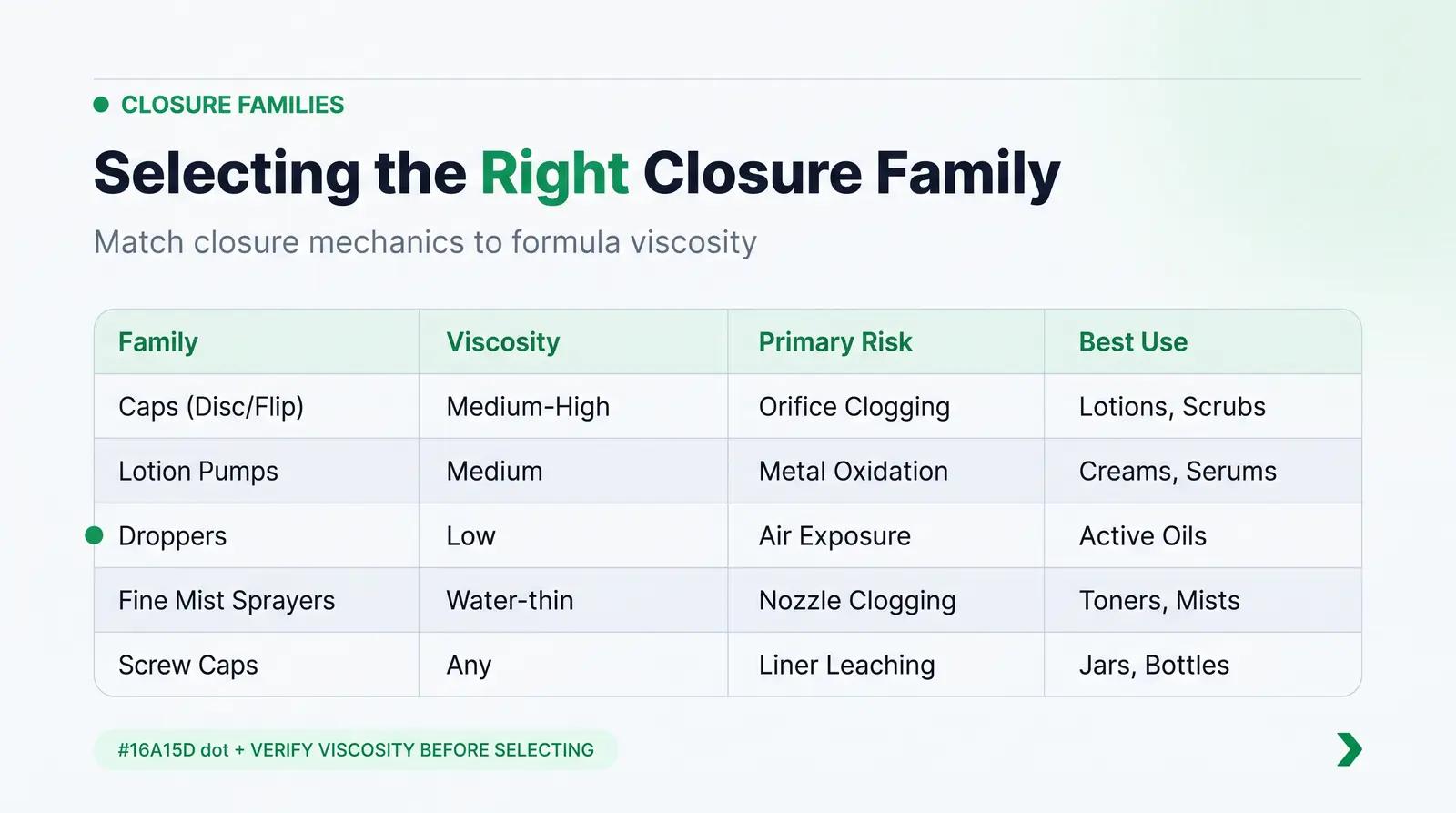
Cosmetic primary packaging relies on five primary closure families, each engineered for specific product viscosities, dispensing behaviors, and formula characteristics [5]. Selecting the wrong family can lead to dispensing failures, product contamination, or rapid formula degradation.
Disc Top and Flip Top Caps
Disc top and flip top caps are the standard for medium to high-viscosity formulations that can be squeezed from a bottle, such as body lotions, shampoos, hair conditioners, and facial scrubs. A disc top cap features a dual-action press mechanism. Pressing down on one side of the disc exposes a concealed orifice on the opposite side, allowing the product to flow when the bottle is squeezed. A flip top cap utilizes a hinged lid that snaps open to reveal a dispensing orifice.
While both closures are highly cost-effective and convenient for one-handed use, they differ significantly in their sealing mechanics. Disc top caps are prone to product accumulation in the well beneath the disc, which can dry out, clog the orifice, and prevent the cap from resealing completely. Flip top caps offer a more secure physical seal when snapped shut, but the hinge is a common point of structural failure under mechanical stress. Neither closure is suitable for low-viscosity, water-thin liquids, as they lack the capillary seals required to prevent leakage under pressure or during transit.
Lotion and Treatment Pumps
Lotion and treatment pumps are mechanical dispensing systems designed for semi-viscous and viscous formulas, including facial creams, liquid foundations, and heavy serums. A standard lotion pump typically delivers a stroke volume between 0.5 ml and 2.0 ml, making it ideal for body care or hair treatments. Treatment pumps are engineered for smaller, high-precision doses, commonly dispensing between 100 microliters (0.1 ml) and 200 microliters (0.2 ml) per stroke, which is ideal for concentrated facial active ingredients [5].
The core mechanics of a pump rely on a spring-loaded piston inside a chamber. When the actuator is depressed, the piston compresses the spring, forcing product out of the chamber. When released, the spring returns the piston, creating a vacuum that draws new product up through the dip tube. If a formulation's viscosity is too high, it can exceed the pump's limits, causing the pump to lose its prime or fail to return to its starting position. Additionally, standard pumps expose the formula to a metal spring inside the product pathway, which can trigger oxidation in sensitive active ingredients unless a pump with a "metal-free pathway" is specified. Foaming pumps represent a specialized variant that mixes air with a low-viscosity, water-based surfactant formula to create a rich lather without propellants.
Dropper Closures
Dropper closures are the traditional choice for low-viscosity serums, facial oils, and concentrated active ingredients that require precise, drop-by-drop dosing. A standard dropper assembly consists of three main components: a rubber or thermoplastic elastomer (TPE) bulb, a threaded cap, and a glass or plastic pipette. Squeezing the bulb displaces air inside the pipette, and releasing it draws liquid upward into the tube.
While droppers evoke a premium, clinical aesthetic, they present significant technical challenges. Standard bulb droppers do not provide a hermetic seal once opened, exposing the formula to ambient air and increasing the risk of oxidation [6]. Furthermore, every time the consumer removes the pipette, the glass tube is exposed to potential bacterial contamination from skin contact before being reinserted into the bottle [7]. To mitigate this, high-end brands often utilize push-button or metered droppers, which dispense a precise, pre-measured dose and minimize the headspace air exposure during use.
Fine Mist Sprayers
Fine mist sprayers are high-precision atomization engines designed to dispense low-viscosity, water-thin or alcohol-based formulas such as toners, setting sprays, and hair mists. Atomization occurs when the liquid is forced through a series of microscopic channels inside the actuator nozzle at high pressure, breaking the fluid stream into a cloud of minute droplets [8].
The performance of a fine mist sprayer is defined by its spray pattern, which can be a wide cone or a narrow fan, and its actuation force. Standard sprayers typically dispense between 130 microliters and 180 microliters per stroke. If a formulation contains even a minor amount of thickening agent or particulate suspension, it can clog the microscopic nozzle channels, collapsing the mist into an unpleasant direct stream [8]. For formulas containing alcohol or essential oils, the internal gasket and pump components must be made of chemically resistant polymers like Polypropylene (PP) or Polyethylene (PE) to prevent swelling and mechanical failure.
Screw Caps, Child-Resistant Caps, and Specialty Closures
Standard screw caps represent the most basic, reliable method for sealing jars and bottles. They rely on a continuous thread mechanism to compress a liner against the rim of the container, creating a secure physical barrier. For products containing regulated concentrations of active ingredients or hazardous chemicals, child-resistant caps (CRCs) are legally required under the Poison Prevention Packaging Act [1]. These closures require a dual-action motion, such as "push down and turn," to disengage the outer cap from the inner threaded cap.
Specialty closures include over-caps, which protect pump actuators and sprayers from accidental depression during transit, and tamper-evident bands, which provide a visible indication if a product has been opened. When sourcing screw caps for cosmetic jars, brands must evaluate the liner material, as the liner is the component in direct contact with the formula. A poor liner choice can result in product absorption, weight loss, or chemical leaching.
Neck Finishes: The Hidden Variable That Determines What Fits
The most common sourcing error in cosmetic packaging is ordering a closure based on a visual match rather than confirming the technical neck finish specification [2]. Two bottles can appear identical to the naked eye, yet possess completely different neck finishes, making them incompatible with the same closure.
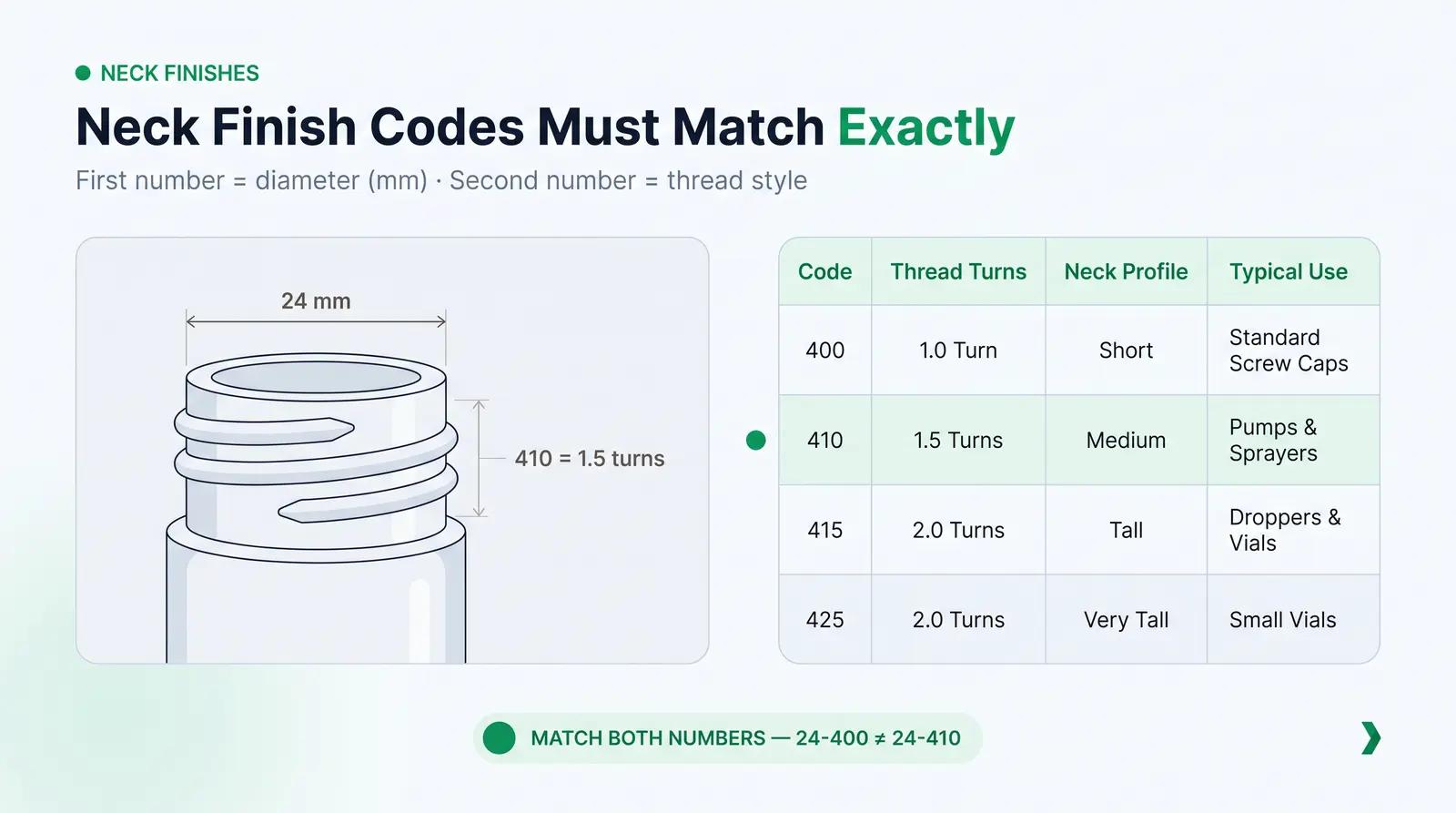
A neck finish refers to the standardized geometry at the opening of a bottle or jar, defined by its outer diameter, height, and thread style [3]. The packaging industry relies on standard systems established by the Glass Packaging Institute (GPI) and the Society of the Plastics Industry (SPI) to ensure interchangeability between containers and closures [2].
A standard neck finish is represented by a two-part code separated by a hyphen or slash, such as 24-410 or 20-415.
- The first number represents the nominal outer diameter of the bottle's outermost threads, measured in millimeters [3].
- The second number defines the specific thread style, height, and number of thread turns [2].
The standard thread styles commonly used in cosmetic packaging include:
- 400: Features one full thread turn [2] [3].
- 410: Features one and a half thread turns [2] [3].
- 415: Features two narrow thread turns, resulting in a taller neck profile [2] [3].
- 425: Features two narrow thread turns, typically found on small-capacity vials [3].
To ensure a secure, leak-proof seal, the neck finish code of the bottle and the closure must match exactly. A 24-400 cap will physically thread onto a 24-410 bottle, but it will not cover the full height of the neck finish, resulting in insufficient thread engagement, gasket compression failure, and immediate leakage.
The mechanics of thread engagement also dictate the type of closure used. Continuous thread (CT) finishes utilize a single, uninterrupted spiral thread that wraps around the neck [2]. This is the most common finish in cosmetics, providing a reliable, resealable seal. Lug or twist-off (TW) finishes, by contrast, utilize multiple short, non-continuous threads that engage and lock with a quarter-turn [2]. Lug finishes are almost exclusively used for glass jars containing hot-fill formulations. Snap-fit finishes rely on a physical ridge rather than threads, allowing a closure to snap directly onto the container, which is common for travel-sized products and specialized airless systems.
The Closure-Formula Compatibility Rubric
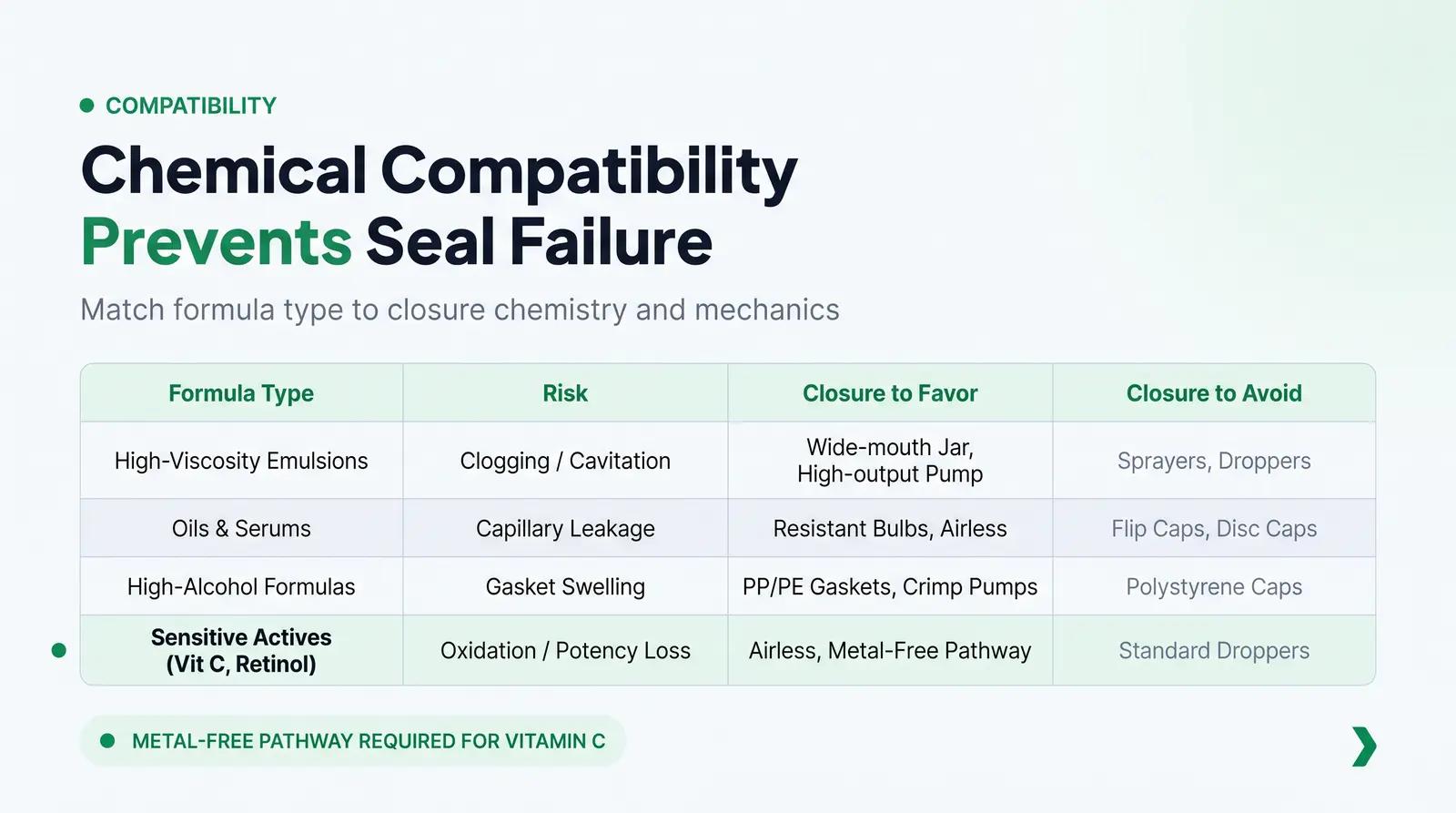
To prevent mechanical failure, chemical degradation, or leakage, brands must evaluate how a formulation's physical and chemical properties interact with different closure designs. The following framework provides a structured approach for matching formula characteristics with the correct closure system.
| Formula Characteristic | Risk to Evaluate | Closure Types to Favor | Closure Types to Avoid |
|---|---|---|---|
| High-Viscosity Emulsions (e.g., body butters, heavy creams) | Clogging, pump chamber cavitation, mechanical failure of the spring. | Wide-mouth screw-top jars, high-output lotion pumps (>2.0 ml). | Fine mist sprayers, dropper pipettes, standard treatment pumps. |
| Low-Viscosity Oils & Serums (e.g., facial oils, light active serums) | Capillary leakage, rapid oxidation, bulb degradation. | Droppers with chemical-resistant bulbs, airless pump bottles. | Standard flip top caps, disc top caps, low-torque screw caps. |
| High-Alcohol Formulas (e.g., setting sprays, perfumes, toners) | Gasket swelling, stress cracking of plastic, evaporation. | Fine mist sprayers with PP/PE gaskets, crimp-on pumps. | Standard polystyrene screw caps, natural rubber dropper bulbs. |
| Oxidation-Sensitive Actives (e.g., Vitamin C, Retinol, Peptides) | Rapid potency loss, discoloration, formula destabilization [6]. | Airless pump systems, push-button metered droppers. | Standard bulb droppers, wide-mouth jars, disc top caps. |
| High Water Activity (>0.85) (e.g., aqueous mists, light toners) | Microbial contamination, water loss, capillary seepage [7]. | Pre-compression mist sprayers, airless pumps, induction-sealed caps. | Dropper bottles, disc top caps, unlined screw caps. |
| Particulate Suspensions (e.g., physical exfoliants, mica shimmers) | Orifice clogging, valve seizure, uneven distribution. | Wide-orifice flip top caps, standard screw-top jars. | Fine mist sprayers, treatment pumps, narrow-pipette droppers. |
Evaluating these compatibility factors during the formulation stage is critical. For example, a formula containing high concentrations of essential oils or synthetic fragrances can act as a solvent on certain plastics, causing a standard low-density polyethylene (LDPE) gasket to swell, warp, and lose its sealing force [7]. This leads to product leakage during shipping or on the retail shelf.
Similarly, active ingredients like L-ascorbic acid (Vitamin C) are highly sensitive to trace metals [6]. If a standard lotion pump with an exposed metal spring is used, the formula can react with the metal, accelerating oxidation and turning the serum brown before the consumer can use it. In these cases, a metal-free pathway pump or an airless system is required to maintain formula stability and shelf life.
Dispensing Behavior: What Founders Get Wrong
A closure is not just a seal. It is the primary physical interface between the consumer and the product. The mechanical behavior of the closure during dispensing directly shapes the perceived value of the brand and the overall user experience.
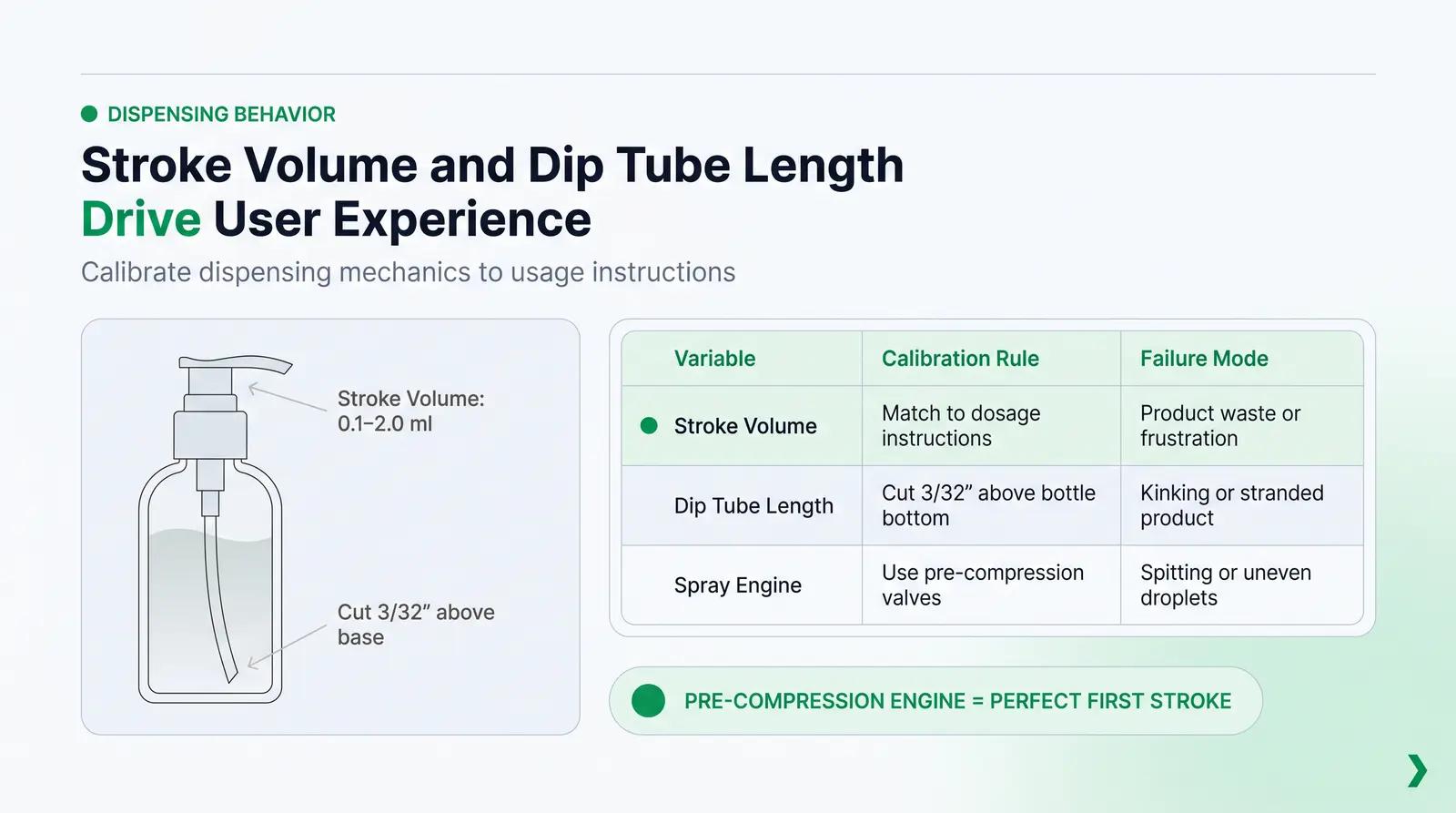
One of the most common errors is failing to calibrate the pump stroke volume to the product's usage instructions. If a concentrated facial active serum requires only two drops per application, pairing it with a high-output lotion pump that dispenses 1.5 ml per stroke will result in massive product waste and a poor user experience. Conversely, pairing a body lotion with a low-output treatment pump will frustrate the consumer, who must pump the actuator repeatedly to get a sufficient amount of product.
Dip tube length is another critical mechanical variable. Most stock pumps and sprayers are manufactured with a single, extra-long dip tube designed to be cut to length during assembly [2]. If the dip tube is cut too short, it will fail to reach the bottom of the container, leaving a significant portion of the product stranded and unusable. If the dip tube is too long, it will bend or kink inside the bottle, blocking the intake valve and causing the pump to lose its prime. For thick formulations, the dip tube should sit with a slight gap from the bottom of the bottle to allow the viscous product to flow freely into the intake [2].
In fine mist sprayers, droplet size and spray pattern are critical for performance. A high-quality cosmetic sprayer must deliver a consistent, ultra-fine mist with an average droplet size between 60 and 100 microns [8]. If the nozzle is poorly molded or the formulation's viscosity is too high, the droplets will be larger, feeling wet and heavy on the skin. A pre-compression engine is the gold standard for sprayers [8]. This mechanism builds up hydraulic pressure inside the chamber before opening the discharge valve, ensuring a perfect, fully atomized mist from the very first stroke and preventing the spitting or dribbling associated with standard sprayers.
Many founders assume a pump is always the premium choice over a disc top for skincare products. However, for high-viscosity, active-heavy serums, a disc top cap with a controlled, narrow orifice can actually outperform a standard pump. Lotion pumps have strict viscosity limits, typically failing to prime or return when a formula exceeds 2,500 centipoise (cP). A disc top cap eliminates the complex internal spring and piston mechanics entirely, relying on the physical squeezing of the bottle to dispense the formula. This simple mechanical pathway ensures consistent dosing and eliminates the risk of pump failure, while a tight-fitting disc orifice protects the formula from excessive air exposure when closed.
Leak Risk, Torque, and the Sampling Checks You Cannot Skip
Leakage is the single most common primary packaging failure mode in the beauty industry [7]. It is rarely caused by a single defect. Instead, it is usually the result of a combination of physical factors, including insufficient capping torque, thread mismatch, dip tube interference, or gasket compression failure.
To prevent leakage on the retail shelf or during transit, brands must understand the physics of torque. Capping torque is divided into two distinct measurements:
- Application Torque: The rotational force applied to a closure to tighten it onto a container [4].
- Removal Torque: The rotational force required to unscrew and open the closure [4].
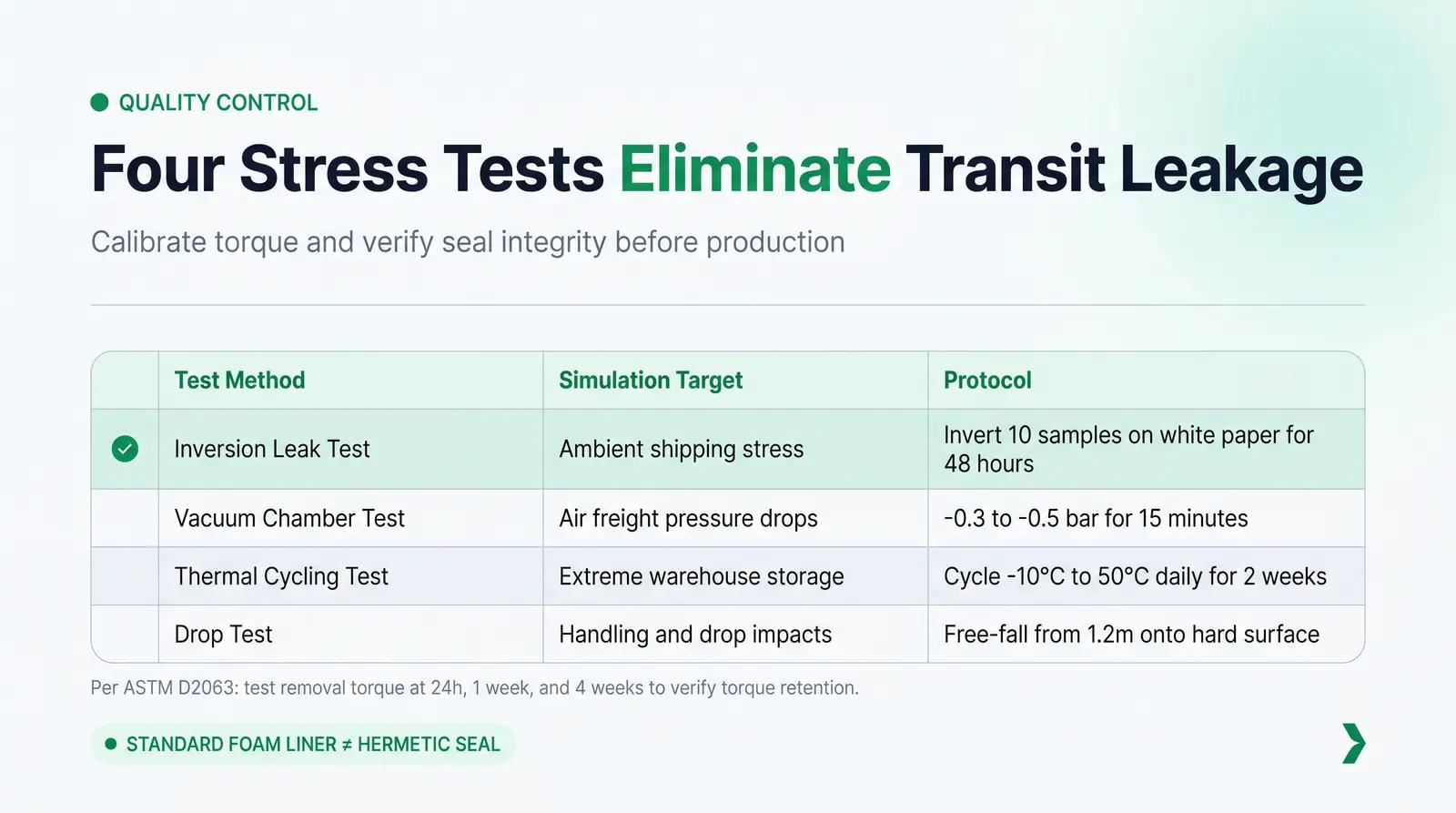
During production, capping machines must be calibrated to a specific application torque range, typically measured in inch-pounds (in-lbs) or Newton-centimeters (N-cm). If the application torque is too low, the closure will loosen during transit due to shipping vibrations. If the torque is too high, it can strip the threads of plastic bottles, crack the cap, or deform the internal gasket, destroying the seal. According to ASTM D2063, continuous thread closures lose a portion of their initial torque over time due to plastic stress relaxation, a phenomenon known as torque retention [4]. Testing removal torque after 24 hours, 1 week, and 4 weeks of storage is critical to ensure the closure maintains a secure seal over its shelf life.
Before approving a closure for production, brands must conduct a series of physical sampling checks to verify performance under real-world conditions.
Closure Sampling Checklist (Pre-Production Approval)
- Inversion Leak Test: Fill 10 sample bottles with the final formulation. Apply the closures to the specified torque. Place the bottles upside down on a sheet of absorbent white paper for 48 hours at ambient temperature. Inspect for any signs of seepage or oil staining on the paper.
- Vacuum Chamber Test: Place filled and capped samples in a vacuum chamber. Subject the packages to a vacuum of -0.3 to -0.5 bar for 15 minutes. This test simulates the rapid changes in atmospheric pressure experienced during air freight transit, which can force product past weak seals.
- Thermal Cycling Test: Place filled samples in a temperature chamber. Subject them to repeated cycles between -10°C (14°F) and 50°C (122°F) every 12 hours for two weeks. This test simulates extreme shipping conditions, such as summer freight transport, and bathroom storage environments, verifying that the gasket and plastic threads do not deform or lose their sealing force under thermal expansion.
- Drop Test: Subject filled and capped packages to a free-fall drop from a height of 1.2 meters (4 feet) onto a hard, flat surface. Perform drops on the base, the side, and directly on the closure. Inspect for structural cracking, cap disengagement, or valve failure.
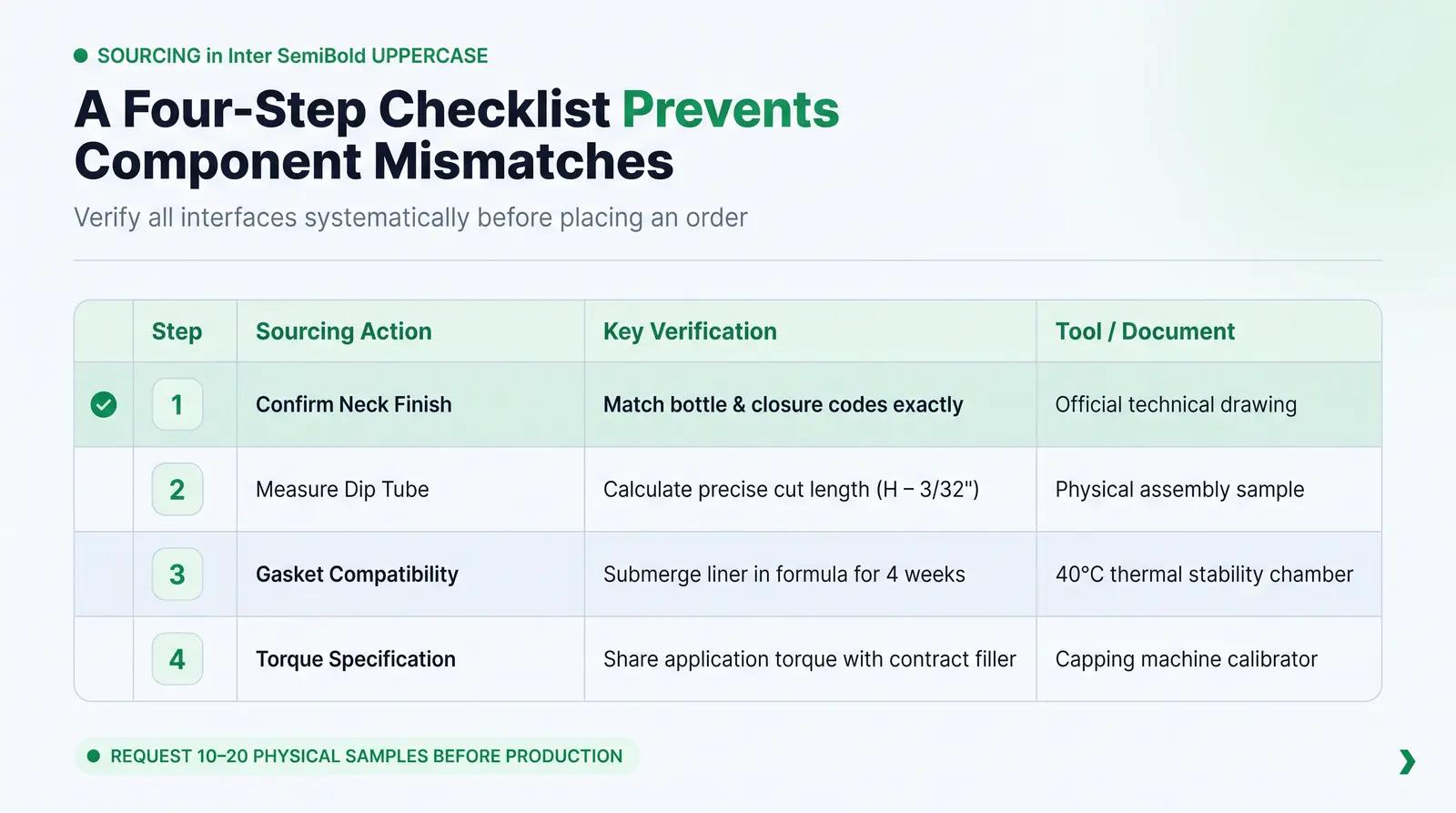
- Gasket Compatibility Test: Submerge the closure's gasket or liner material directly in the formulation for 4 weeks at 40°C (104°F). Inspect for physical swelling, cracking, color leaching, or loss of elasticity.
The gasket or liner is the unsung hero of leak prevention. Standard foam liners, such as the popular coextruded polyethylene F217, consist of a low-density foam core sandwiched between two solid layers of PE. While highly economical and chemically resistant, standard foam liners do not provide a hermetic seal. For formulas containing high concentrations of volatile organic compounds, alcohols, or aggressive essential oils, a specialized chemically resistant liner or a cone-shaped Polycone liner is required to prevent evaporation and leakage.
A Worked Example: Choosing a Closure for a Vitamin C Face Serum
To illustrate how these engineering principles apply in practice, let us walk through a realistic packaging selection scenario for a new skincare SKU.
The Parameters
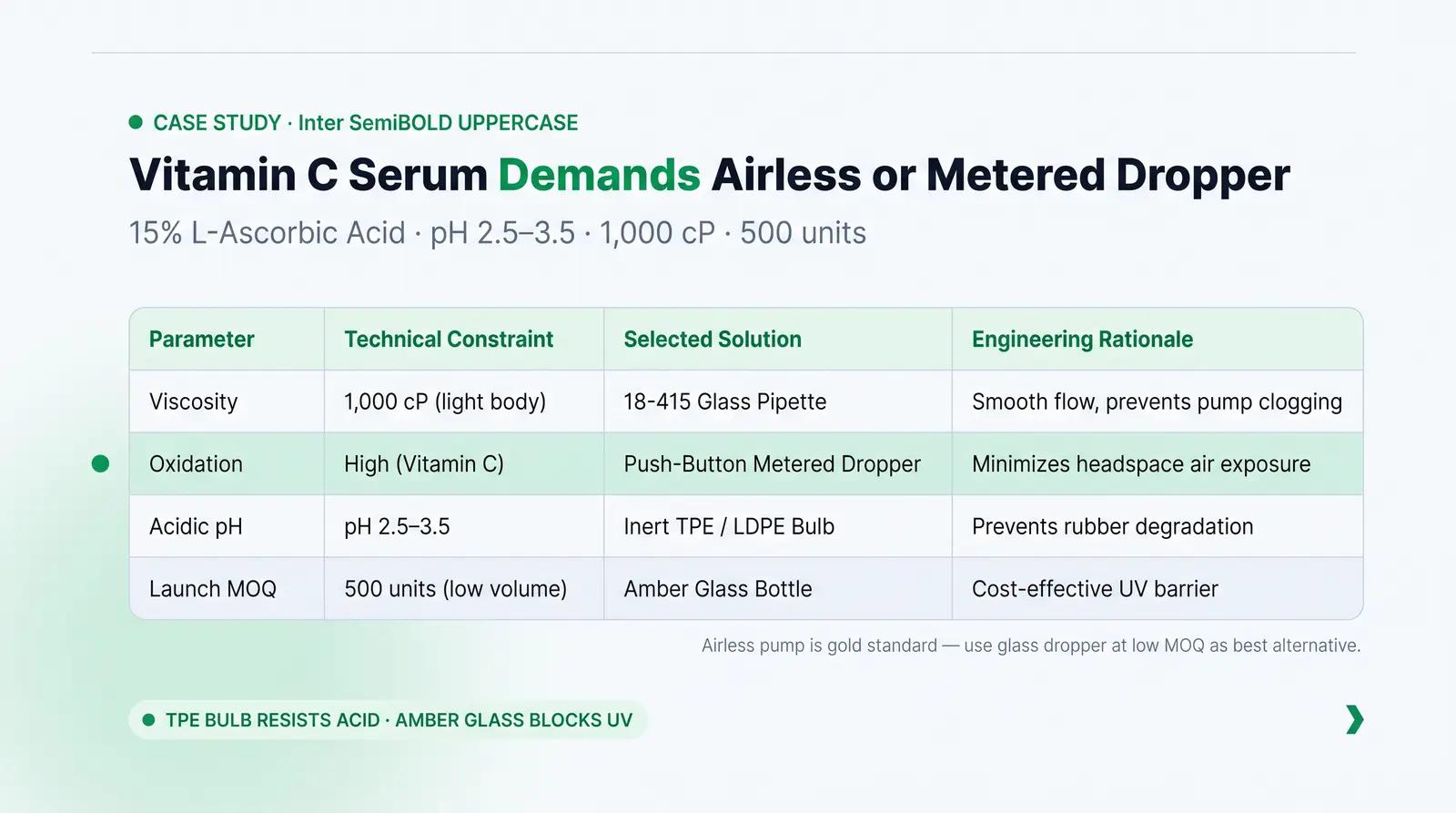
- Product: 1 fl oz (30 ml) brightening facial serum containing 15% L-ascorbic acid (Vitamin C).
- Formula Viscosity: ~1,000 cP (a light, water-thin to slightly viscous serum).
- Primary Container: 30 ml amber glass bottle.
- Bottle Neck Finish: 18-415.
- Launch Stage: Pre-launch, initial order of 500 units.
Step 1: Evaluating the Neck Finish and Viscosity
The bottle's 18-415 neck finish immediately restricts our closure options. The first number (18) indicates a narrow opening of 18 mm, while the second number (415) specifies a tall neck with two narrow thread turns [2] [3]. Because the opening is narrow, a standard lotion pump is ruled out. Lotion pumps typically require a minimum neck diameter of 20 mm or 24 mm to accommodate the physical size of the internal housing [2].
At a viscosity of 1,000 cP, the formula flows easily but has some body. While a treatment pump with an 18-415 finish exists, a pump would deliver a fixed dose of 130 microliters. Given the low-viscosity, water-thin nature of L-ascorbic acid, a pump can suffer from spitting or dribbling if any product dries and crystallizes inside the nozzle orifice.
Step 2: Selecting the Closure Mechanism
For a 15% L-ascorbic acid formula, oxidation control is paramount [6]. When exposed to oxygen, light, and trace metals, L-ascorbic acid rapidly degrades, turning from clear to yellow, and eventually dark brown, rendering the product useless [6].
While an airless pump would offer the absolute best protection against oxidation, airless bottles are typically made of plastic and require high minimum order quantities (MOQs), often starting at 5,000 or 10,000 units. For a pre-launch run of 500 units, sourcing a custom airless system is cost-prohibitive.
A glass pipette dropper is the most accessible and functional choice for this launch stage. Dropper components are widely available as stock items at low MOQs, and the amber glass bottle provides critical UV protection for the light-sensitive active ingredient. To minimize oxidation risk, we specify a push-button dropper assembly with a metered pipette, which allows the consumer to draw a precise, consistent dose without exposing the bottle's headspace to excessive air during opening.
Step 3: Specifying Gasket and Bulb Materials
Standard dropper bulbs are often made of natural rubber. However, natural rubber is highly permeable to oxygen and can degrade when exposed to acidic formulations. L-ascorbic acid serums are highly acidic, typically formulated at a pH between 2.5 and 3.5 to ensure skin penetration.
We specify an inert low-density polyethylene (LDPE) or thermoplastic elastomer (TPE) bulb. These synthetic materials offer superior chemical resistance, low gas permeability, and will not leach impurities or absorb the water-based formulation.
Step 4: Practical Sampling and Testing Protocol
Before green-lighting the 500-unit assembly, we conduct a targeted physical test with 10 sample units filled with our final formulation:
- Inversion Test: The droppers are applied to the amber bottles at an application torque of 8 in-lbs. The bottles are inverted for 72 hours at 40°C (104°F) to simulate hot shipping transit.
- Drop Test: Filled bottles are dropped from a height of 1.0 meter (3.3 feet) onto a wood-surface floor to verify that the glass pipette does not shatter inside the bottle and the plastic cap does not crack.
- Thermal Cycling: The samples are cycled between 4°C (39°F) and 45°C (113°F) daily for one week to ensure the acidic serum does not degrade the TPE bulb or cause the cap threads to slip.
How to Avoid Mismatched Components: A Sourcing Checklist
To eliminate the risk of mechanical mismatch, leakage, or chemical incompatibility, brands should implement a strict verification protocol before placing a primary packaging order.
Closure-Bottle Compatibility Checklist (Pre-Order)
- Confirm Bottle Neck Finish: Obtain the official technical drawing of the bottle from the manufacturer. Verify the exact neck finish code (e.g., 24-410) rather than relying on visual measurements.
- Confirm Closure Neck Finish: Verify that the closure's neck finish code matches the bottle's code exactly. Do not pair a 400-thread closure with a 410-thread bottle [2].
- Measure Dip Tube Cut Length: For pumps and sprayers, calculate the precise dip tube length required. Measure from the closure's internal gasket to the bottom of the bottle, subtracting 3/32 of an inch (approx. 2.4 mm) to prevent kinking or bottoming out [2].
- Verify Gasket/Liner Material: Confirm that the internal gasket or liner material is chemically compatible with the formulation, especially if the product contains oils, alcohols, or low-pH actives.
- Check Child-Resistance Compliance: If the formulation contains regulated concentrations of active ingredients (such as certain essential oils or chemical exfoliants), verify that the closure meets 16 CFR Part 1700 child-resistant standards [1].
- Request Pre-Production Samples: Source a minimum of 10 to 20 physical samples of both the bottle and closure. Assemble them with the final formulation to perform inversion, thermal, and vacuum testing.
- Confirm Torque Specifications: Obtain the recommended application torque range from the closure manufacturer and share it with your contract filler to calibrate the capping machinery.
- Verify Over-Cap Fit: If using a treatment pump or sprayer, ensure the protective over-cap fits securely and does not disengage during shipping vibrations.
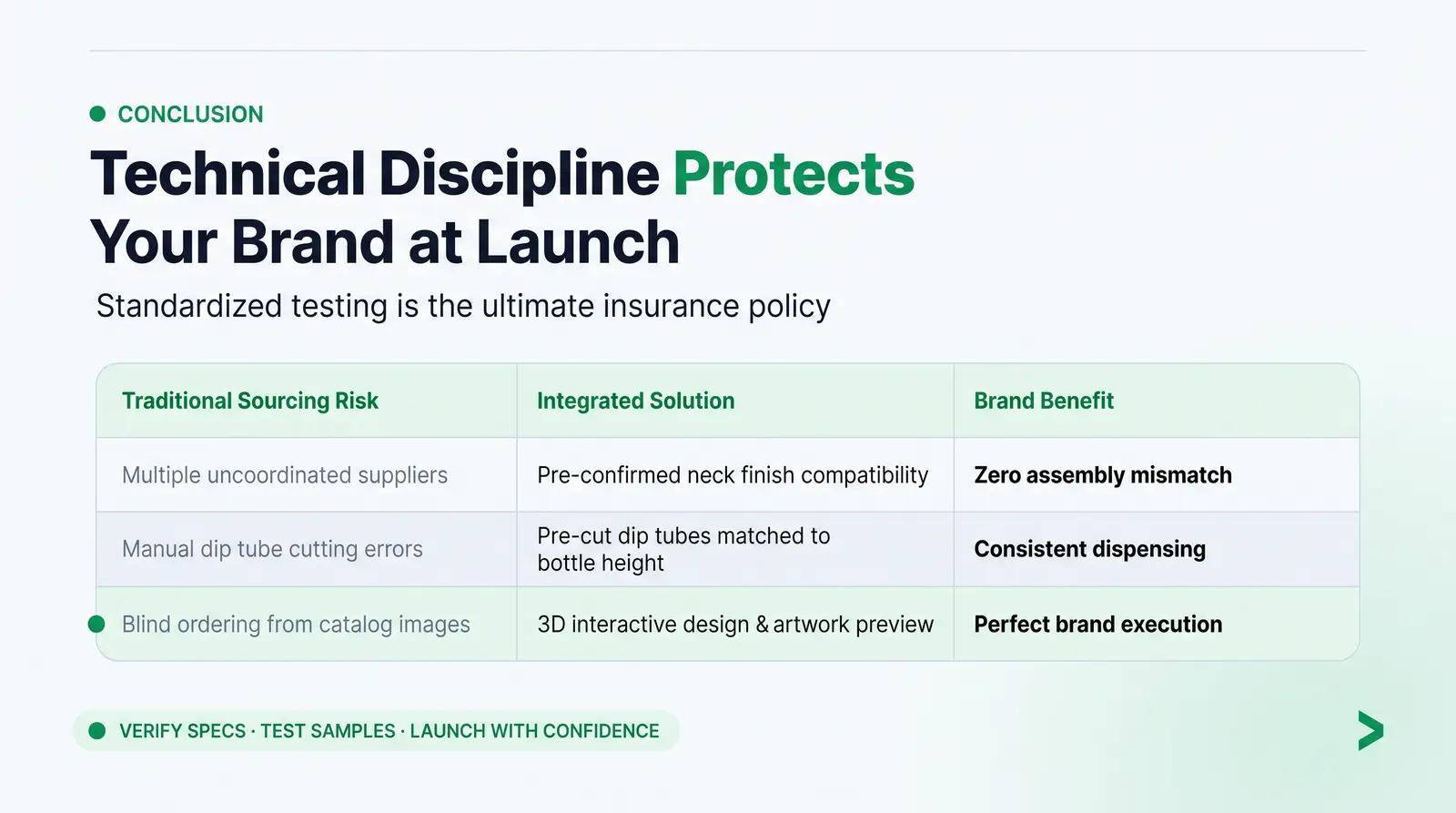
For independent brands, managing these technical variables across multiple separate suppliers is one of the most challenging aspects of launching a product. At Packfolio, we eliminate this complexity entirely. Every bottle, jar, and closure in our curated catalog is engineered and verified as a matched system. The neck finishes are pre-confirmed, the pump dip tubes are pre-cut to the exact height of each bottle, and our browser-based 3D design tool allows you to preview the fully assembled component with your artwork before ordering. To streamline your sourcing and eliminate the risk of mechanical mismatches, explore Packfolio's curated packaging catalog. For more insights on choosing the right packaging technology for your formulation, read our guide on understanding airless pump packaging.
Closing: Before You Order, Check the Finish
In the premium beauty market, the physical performance of your packaging is just as critical as the chemical efficacy of your formulation. A luxury formula delivered through a leaking pump or a sputtering sprayer immediately loses its premium status, turning a first-time buyer into a one-time customer. Sourcing failures at the closure level are almost entirely preventable with the right technical discipline, standardized measurements, and rigorous pre-production sampling.
By understanding the mechanics of neck finishes, calibrating dispensing behavior to your usage instructions, and verifying chemical compatibility, you can protect your formulation and elevate your brand experience. Sourcing packaging does not have to be a technical gamble. Taking the time to verify specifications and perform simple physical tests before placing an order is the ultimate insurance policy for your product launch.
Browse Packfolio's curated closure and bottle catalog: every SKU ships with confirmed finish compatibility, pre-cut dip tubes, and a 3D preview of your label before you order. Explore the catalog
Frequently Asked Questions
What is the most common neck finish for cosmetic bottles?
The most common neck finish for medium-sized cosmetic bottles (2 oz to 8 oz) is 24-410, which features a 24 mm thread diameter and one and a half thread turns [3]. For larger bottles (8 oz to 16 oz), 28-410 is the standard, while smaller treatment bottles (0.5 oz to 1 oz) typically utilize an 18-415 or 20-410 finish [3].
What is the difference between a lotion pump and an airless pump?
A standard lotion pump utilizes a dip tube to draw liquid upward from the bottom of the bottle, exposing the formulation to ambient air inside the container headspace as the product level drops [2] [7]. An airless pump utilizes a vacuum mechanism with a physical piston at the base of the bottle that rises as the product is dispensed, completely sealing the formula from air exposure and preventing oxidation [7].
Can I use the same pump on different bottle sizes?
You can use the same pump on different bottle sizes only if the neck finish codes of both bottles match the pump's closure code exactly (e.g., both bottles have a 24-410 finish) [2]. However, you must adjust and cut the dip tube length for each specific bottle height to ensure the pump can draw product from the bottom without kinking [2].
What causes a cosmetic pump to stop working?
The most common causes of pump failure are formulation viscosity exceeding the pump's mechanical limits (causing cavitation), product crystallization or drying inside the nozzle orifice (clogging), and a dip tube that is cut too long and has kinked against the bottom of the bottle, blocking the intake valve [2] [8].
What closure is best for a Vitamin C serum?
For highly sensitive L-ascorbic acid (Vitamin C) formulations, an airless pump bottle is the gold standard because it completely eliminates air exposure and oxidation [6] [7]. If glass packaging is preferred for brand positioning or low MOQs, a metered push-button dropper with an inert TPE bulb and amber glass bottle is the best alternative, as it minimizes air exposure compared to standard bulb droppers.
References
[1] Poison Prevention Packaging Act Business Guidance, U.S. Consumer Product Safety Commission, 2022. https://www.cpsc.gov/Business--Manufacturing/Business-Education/Business-Guidance/PPPA
[2] Cap and Neck Finishes, SKS Bottle & Packaging, 2026. https://www.sks-bottle.com/CapNeck.html
[3] Guide to Bottle Neck Finishes, Thread Sizes, & Dimensions, Paramount Global, 2026. https://www.paramountglobal.com/knowledge/bottle-neck-thread-finish/
[4] Standard Test Methods for Measurement of Torque Retention for Packages with Continuous Thread Closures, ASTM International, 2023. https://store.astm.org/d2063_d2063m-10r18.html
[5] 'Dispensing Beauty': Dispensers for Greater Functionality, Beauty Packaging, 2021. https://www.beautypackaging.com/dispensers-for-greater-functionality/
[6] Chemical Stability of Ascorbic Acid Integrated into Commercial Products: A Review on Bioactivity and Delivery Technology, Antioxidants (Basel), 2022. https://pmc.ncbi.nlm.nih.gov/articles/PMC8773188/
[7] The Role of Sealing and Leakage Prevention in Cosmetic Packaging, AH Packaging, 2025. https://ahpackaging.com/the-role-of-sealing-and-leakage-prevention-in-cosmetic-packaging/
[8] A Scientific Guide to Creating the Perfect Fine Mist, Jarsking Group, 2025. https://www.glass-cosmetic-bottles.com/info/a-scientific-guide-to-creating-the-perfect-103187179.html


