
The Indie Beauty Founder's Guide to Cosmetic Jars
This guide helps indie beauty founders choose cosmetic jars by comparing materials, matching formulas to jar formats, selecting liners, and optimizing launch-stage sourcing economics.
Choosing primary packaging is a deceptively complex milestone for any emerging beauty brand. To the consumer, a cosmetic jar is a simple, tactile vessel that holds their favorite cream, balm, or mask. To an independent beauty founder, however, that same jar represents a high-stakes convergence of formulation chemistry, supply chain economics, environmental lifecycle analysis, and strict regulatory compliance.
Selecting the wrong jar configuration can lead to catastrophic consequences. A highly active vitamin C cream can oxidize and turn brown within weeks if paired with a non-protective transparent jar [3]. A rich, essential-oil-dense balm can chemically interact with an incompatible plastic polymer, causing the container walls to soften, warp, or leach micro-contaminants [1]. In the worst-case scenario, a founder might invest their limited startup capital into thousands of beautifully decorated glass jars, only to watch half of their inventory shatter during transit or tie up crucial cash flow in high minimum order quantities (MOQs) [3]. This guide demystifies the technical variables of cosmetic jars, providing a practical, data-grounded framework to help founders make confident, risk-mitigated sourcing decisions.
Jar Material Guide: Glass vs. Plastic vs. Acrylic
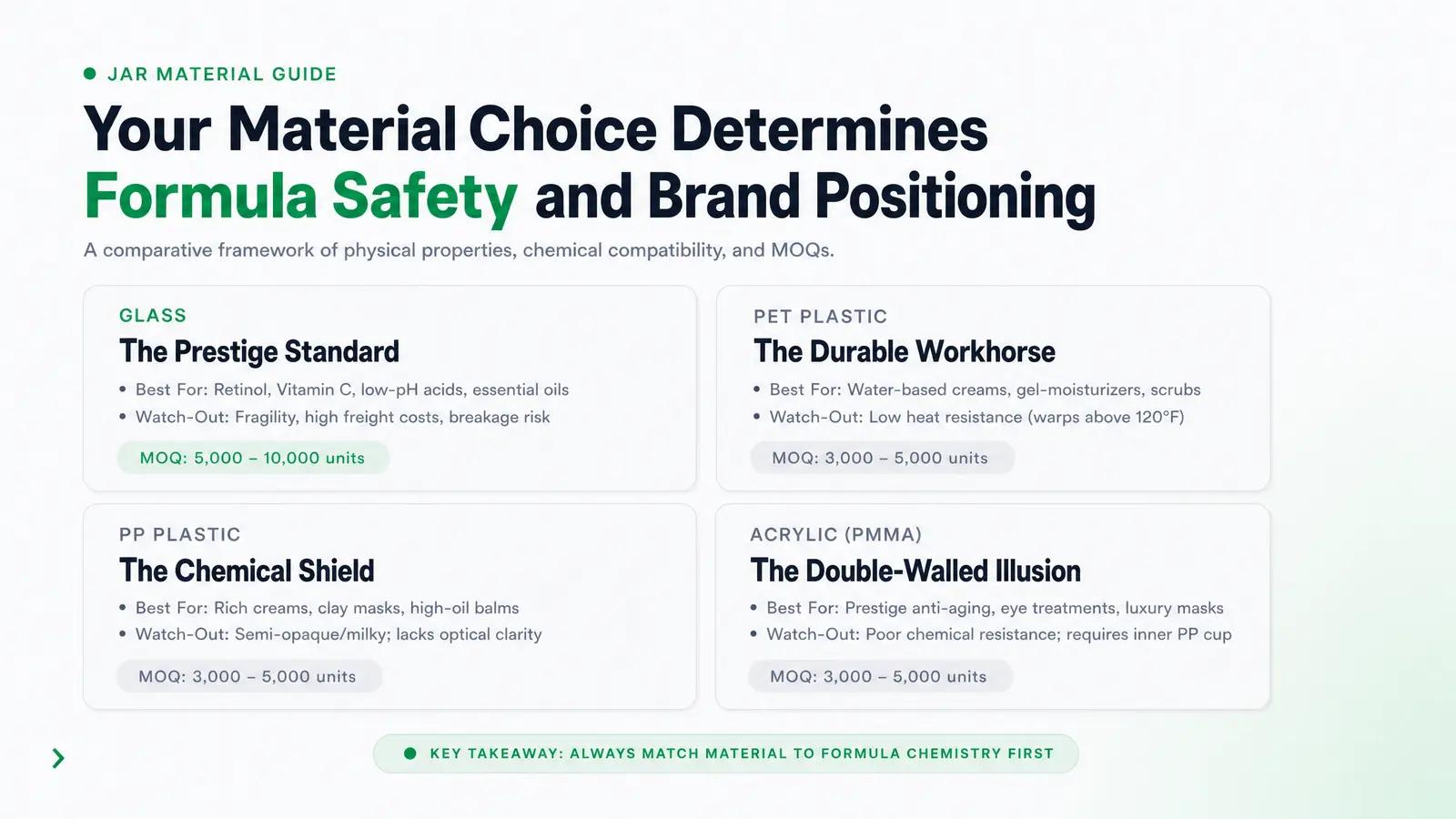
The first decision in jar selection is the primary material. Glass, plastic, and acrylic each possess distinct physical properties, chemical compatibility profiles, and environmental footprints.
Glass: The Prestige Standard
Glass has long been the gold standard for premium skincare. It is chemically inert, meaning it does not react with any cosmetic ingredients, making it the ideal choice for highly active formulas, low-pH acids, and high concentrations of essential oils [1]. Glass is also completely impermeable to oxygen and moisture, creating an airtight barrier that preserves shelf life and minimizes the need for aggressive preservative systems [3].
Furthermore, colored glass provides vital functional protection. Amber glass filters out ultraviolet (UV) light, preventing the photolytic degradation of light-sensitive actives like retinol and L-ascorbic acid [3]. From a sensory perspective, the cool-to-the-touch feel and physical weight of a glass jar communicate luxury and value instantly to the consumer.
Plastic: The Durable Workhorse
Modern plastics are highly engineered polymers that offer lightweight durability and versatile design options.
- Polyethylene Terephthalate (PET): PET is crystal clear, mimicking the visual clarity of glass at a fraction of the weight. It is highly shatter-resistant, making it the preferred choice for e-commerce brands looking to eliminate shipping breakage.
- Polypropylene (PP): PP is a semi-opaque, highly durable plastic with exceptional chemical resistance. It is virtually immune to stress-cracking from oils, lipids, and alcohol-based formulas. Because of its robust chemical stability, PP is the standard material for inner liners, lids, and product-facing surfaces across the industry [1].
- Post-Consumer Recycled (PCR) Plastics: PCR PET and PCR PP allow brands to utilize recycled consumer waste, aligning with modern circular economy goals [4]. However, PCR can introduce slight color variations (such as a faint gray or yellow tint) and may require a virgin PP inner liner to ensure food-grade safety and prevent formula contact with recycled impurities [1].
Acrylic: The Double-Walled Illusion
Acrylic (Polymethyl Methacrylate or PMMA) is a rigid, glass-like plastic that provides exceptional optical clarity and high impact resistance. It is the premier choice for double-walled jar constructions, where an outer acrylic shell surrounds an inner PP cup. This design creates a heavy, multi-dimensional, premium aesthetic that mimics glass but is shatterproof.
However, acrylic has poor chemical resistance to direct formula contact. High concentrations of essential oils, solvents, or alcohols can cause acrylic to cloud, craze, or crack [1]. Therefore, acrylic must always be paired with a chemically resistant inner liner, typically made of PP, to prevent the formula from ever touching the outer acrylic shell.
| Material | Common Subtypes | Best For (Formula Type) | Decoration Compatibility | Sustainability Profile | Typical MOQ Range | Key Watch-Outs |
|---|---|---|---|---|---|---|
| Glass | Soda-lime, Borosilicate | Retinol, Vitamin C, low-pH acids, essential oils, anhydrous balms | Screen printing, hot stamping, frosting, acid etching, labeling | 100% infinitely recyclable; high carbon footprint in transit due to weight [5] | 5,000 – 10,000 units (Stock can be lower) | Fragility, high freight costs, e-commerce breakage risk |
| PET | Virgin PET, PCR PET | Water-based creams, gel-moisturizers, body scrubs | Screen printing, labeling, UV coating | Highly recyclable (PET #1); PCR options significantly reduce virgin resin use [4] | 3,000 – 5,000 units | Low heat resistance (warps above 120°F / 49°C); scratch-prone |
| PP | Virgin PP, PCR PP | Rich creams, clay masks, high-oil balms, body butters | Screen printing, labeling, hot stamping | Widely recyclable (PP #5); excellent chemical resistance | 3,000 – 5,000 units | Semi-opaque/milky appearance; lacks high-end optical clarity |
| Acrylic | PMMA (Single or Double-Wall) | Prestige anti-aging creams, eye treatments, luxury masks | Screen printing, hot stamping, inner-spray coating, metalizing | Generally not recyclable in standard municipal streams; high aesthetic value | 3,000 – 5,000 units | Poor chemical resistance; requires a mandatory inner PP cup to prevent cracking [1] |
Mapping Formula Type to Jar Format
A beautiful jar is useless if it causes the formula to separate, discolor, or degrade. Sourcing must always start with formula chemistry.
Rich Creams and Water-in-Oil Emulsions
These formulas feature high lipid and oil phases, often containing rich botanical butters, plant oils, and oil-soluble actives.
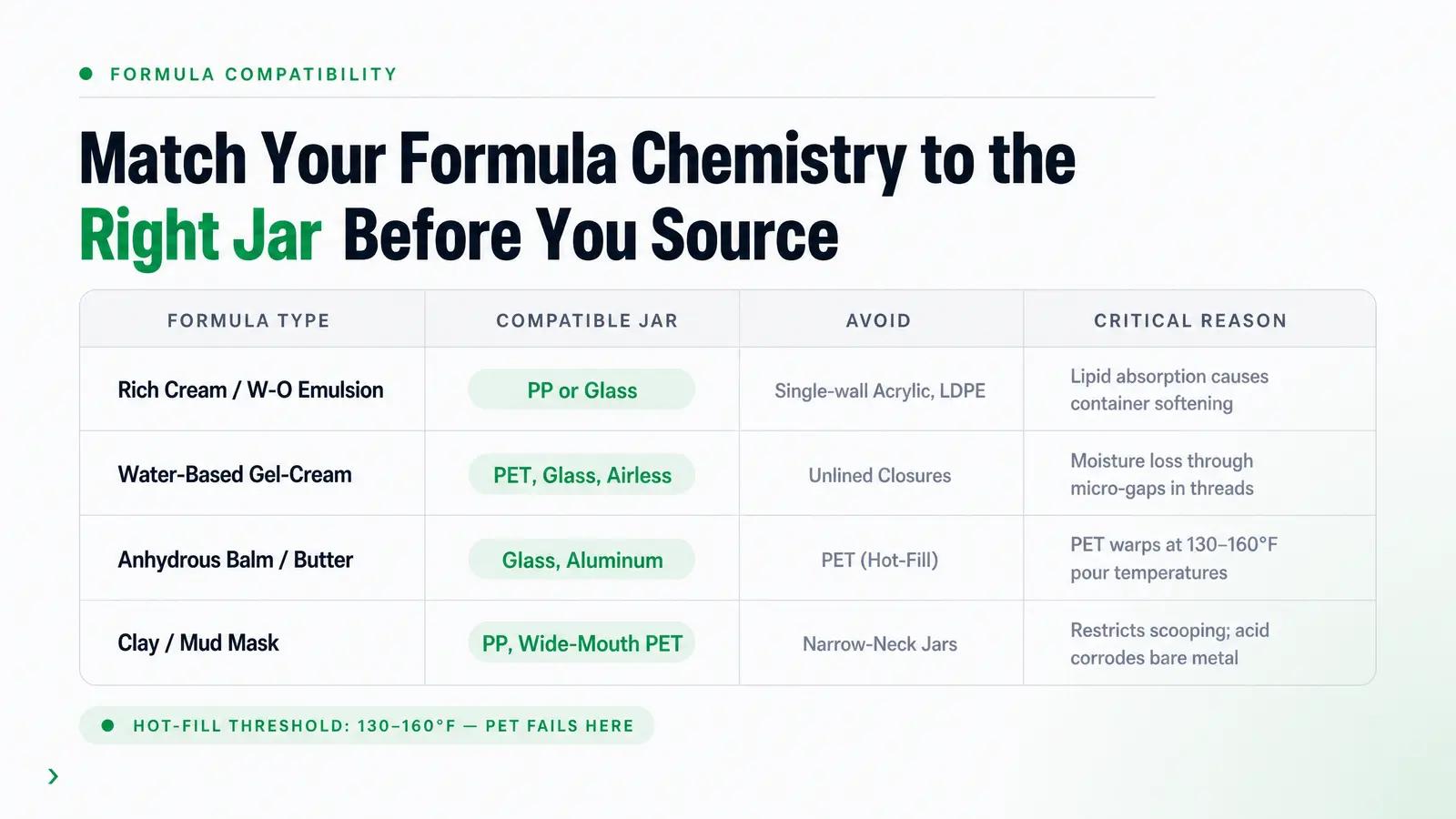
- Compatibility: PP or glass are the safest options. PP is highly resistant to lipids and will not stress-crack under constant exposure to oils [1]. Double-walled acrylic jars are acceptable only if the inner cup is made of virgin PP.
- Avoid: Single-wall acrylic or low-density polyethylene (LDPE) jars, which can absorb lipids, leading to container softening and formula migration.
Water-Based Moisturizers and Gel-Creams
These formulas are high-viscosity, water-continuous emulsions that are highly susceptible to moisture loss and evaporation.
- Compatibility: PET, glass, or airless jars work exceptionally well. PET offers excellent moisture barrier properties, keeping water-based formulas hydrated and preventing dry-out.
- Avoid: Unlined closures. Because water vapor escapes easily through micro-gaps in screw threads, these formulas must be paired with a tight-fitting PE foam or induction-seal liner to prevent the product from drying out and shrinking inside the jar.
Anhydrous Balms, Salves, and Cleansing Butters
These formulas contain zero water, consisting entirely of waxes, oils, and oil-soluble active ingredients. They are highly sensitive to oxidation and heat.
- Compatibility: Glass or aluminum jars are the premier choices. Aluminum is lightweight, light-blocking, and highly protective for waterless balms. Amber or opaque glass protects the oils from rancidity caused by UV exposure [3].
- Avoid: PET jars if the formula is poured hot during manufacturing. Anhydrous balms are often hot-filled at temperatures between 130°F and 160°F (54°C to 71°C). PET warps at these temperatures, whereas glass, PP, and aluminum can easily withstand hot-fill processes.
Clay, Charcoal, and Mud Masks
These formulas have high solid-to-liquid ratios and often contain active botanical clays or exfoliating acids.
- Compatibility: PP or wide-mouth PET jars are ideal. Because consumers scoop large amounts of product, a wide-mouth, straight-sided jar allows them to easily reach the bottom of the container, minimizing product waste.
- Avoid: Narrow-neck or deeply tapered jars, which make it difficult to scoop out thick muds. Ensure any metal components (like aluminum lids) have a protective plastic coating, as active clays and acidic pH levels can corrode bare metal over time.
Closures and Liners: The Overlooked Variables
While founders spend weeks selecting the perfect jar body, they often treat closures and liners as an afterthought. This is a critical mistake. The closure and liner system is the only thing standing between a pristine formula and a leaky, oxidized, contaminated mess.
The Anatomy of a Closure
A standard jar closure consists of the outer cap and the inner sealing mechanism.
- Screw Caps: The most common closure, relying on continuous threads to pull the cap down against the jar rim. They must be torqued to specific industry standards to ensure a tight seal.
- Overcaps: Often used in double-walled constructions, providing a flush, seamless look with the jar body.
- Child-Resistant Closures (CRC): Required for formulas containing specific active concentrations regulated under poison prevention acts (e.g., high concentrations of salicylic acid or certain essential oils).
The Crucial Role of Liners
A liner is a disc of material inserted inside the cap. When the cap is screwed onto the jar, the liner is compressed against the land (the flat rim of the jar opening), creating a hermetic seal. Without a liner, microscopic imperfections in the plastic threads will allow air to enter and product to escape.
+--------------------------------------------+
|                  OUTER CAP                 |
|  +--------------------------------------+  |
|  |             INNER LINER              |  |
|  +--------------------------------------+  |
+-----[Thread]                      [Thread]-+
         ||                            ||
    +----+----+                    +----+----+
    |  JAR    |                    |  JAR    |
    |  LAND   |                    |  LAND   |
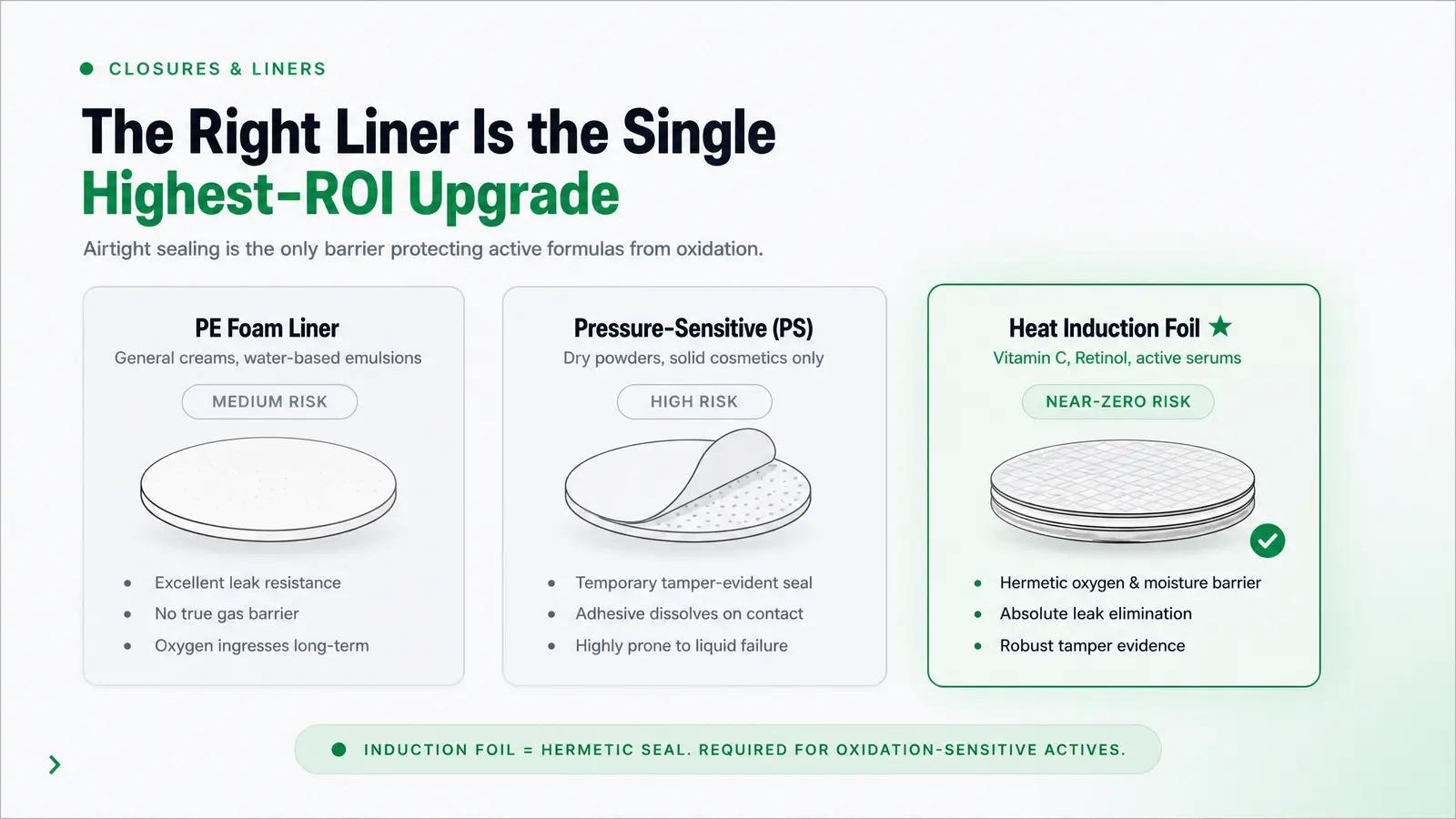
- PE Foam Liners: Made of compressible polyethylene foam, these are the industry standard for general sealing. They provide excellent leak resistance and chemical compatibility with water-based and moderately oily formulas. However, they do not provide a true gas barrier and will not prevent long-term oxygen ingress.
- Pressure-Sensitive (PS) Liners: These feature an adhesive backing that sticks to the jar land when the cap is first screwed on. They provide a temporary tamper-evident seal and are popular with dry powders. However, they are highly prone to failure when exposed to liquids, oils, or creams, as the formula dissolves the adhesive. They should never be used for emulsions or anhydrous balms [6].
- Heat Induction Foil Liners: The gold standard for formula protection. These liners consist of a multi-layer structure: a paper backing, a wax layer, aluminum foil, and a heat-sealable polymer film. After the cap is torqued onto the jar, the container passes under an electromagnetic induction sealer. This heats the foil layer, melting the polymer film and bonding it hermetically to the jar land [7].
Induction liners provide an absolute barrier against oxygen and moisture, preventing oxidation, eliminating leaks during transit, and offering robust tamper evidence [7]. For active-heavy formulas like vitamin C or retinol, induction liners are the single highest-ROI addition a founder can make to preserve efficacy.
Decoration Methods for Jars
Decoration is where your packaging becomes a brand. Each decoration method has unique technical constraints, cost structures, and material compatibilities.
Silk Screen Printing
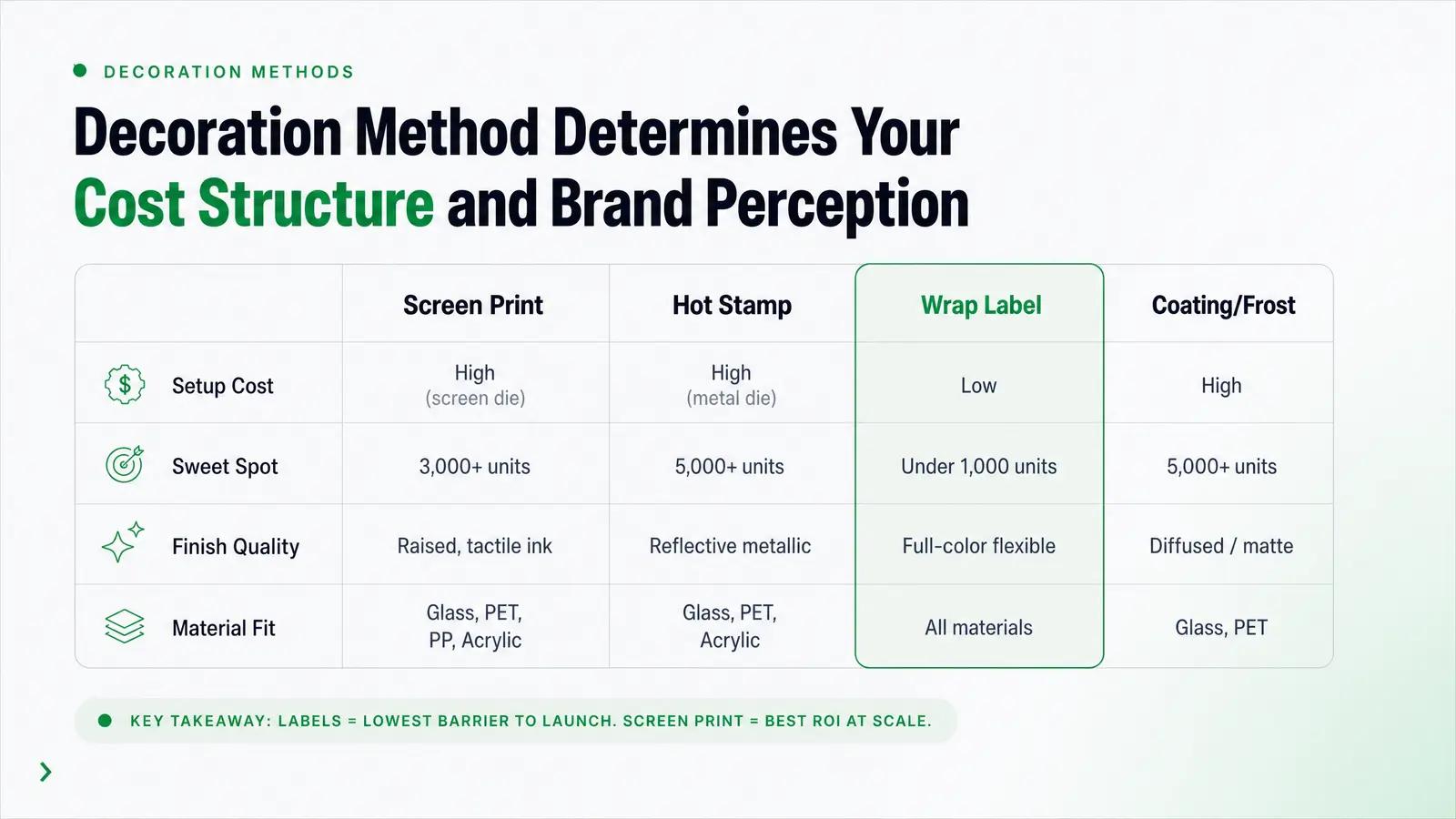
Screen printing applies ink directly onto the jar surface through a mesh screen, which is then cured using UV light. It delivers a crisp, tactile, raised-ink texture that feels incredibly premium.
- Compatibility: Works beautifully on glass, PET, PP, and acrylic.
- Economics: Screen printing has a high setup cost because a physical screen must be created for each color. However, at volumes above 3,000 units, the per-unit cost drops dramatically, making it highly cost-effective. It is ideal for clean, minimalist designs with 1 to 2 colors.
Hot Stamping
Hot stamping uses heat and pressure to transfer a metallic foil (typically gold, silver, or rose gold) from a carrier ribbon onto the plastic or glass jar. It creates a brilliant, reflective, high-end metallic finish that ink cannot replicate [8].
- Compatibility: Best on smooth, rigid surfaces like glass, PET, and acrylic. It can be applied to PP, but requires specialized foils to bond with the textured surface.
- Economics: Similar to screen printing, hot stamping requires a custom metal die, resulting in high initial setup costs. It is best reserved for luxury accents, logos, or thin metallic bands around the lid.
Pressure-Sensitive Labeling
Labeling involves printing your artwork onto a paper or plastic (BOPP) substrate, which is then applied to the jar using adhesive.
- Compatibility: Highly versatile, working on all materials. It is particularly useful for hiding surface scratches on PCR plastics.
- Economics: Labeling has the lowest upfront setup cost, making it the default choice for ultra-low launch volumes (under 1,000 units). However, the per-unit cost remains flat, and applying labels to tapered or double-curved jars requires high-precision labeling machinery to avoid bubbling and wrinkling.
Frosted, Spray, and UV Coatings
These methods alter the surface finish of the jar body itself. Frosting glass via acid-etching or spray-coating PET with a matte finish creates an elegant, diffused-light appearance. UV coating applies a glossy, protective, scratch-resistant barrier over plastic jars.
- Economics: These are bulk processes that typically require high MOQs (usually 5,000+ units) because they must be performed on specialized automated lines before the jars are printed or labeled.
Contrarian Insight: The Carbon Footprint of "Sustainable" Glass
One of the most persistent narratives in the beauty industry is that glass is always the "sustainable" choice, while plastic is inherently "dirty." Independent founders, eager to signal eco-responsibility, frequently default to glass jars. However, rigorous Life Cycle Assessment (LCA) data reveals a more complicated, often contrarian reality: at launch-stage volumes, glass jars frequently have a significantly worse carbon footprint than recycled plastic alternatives.
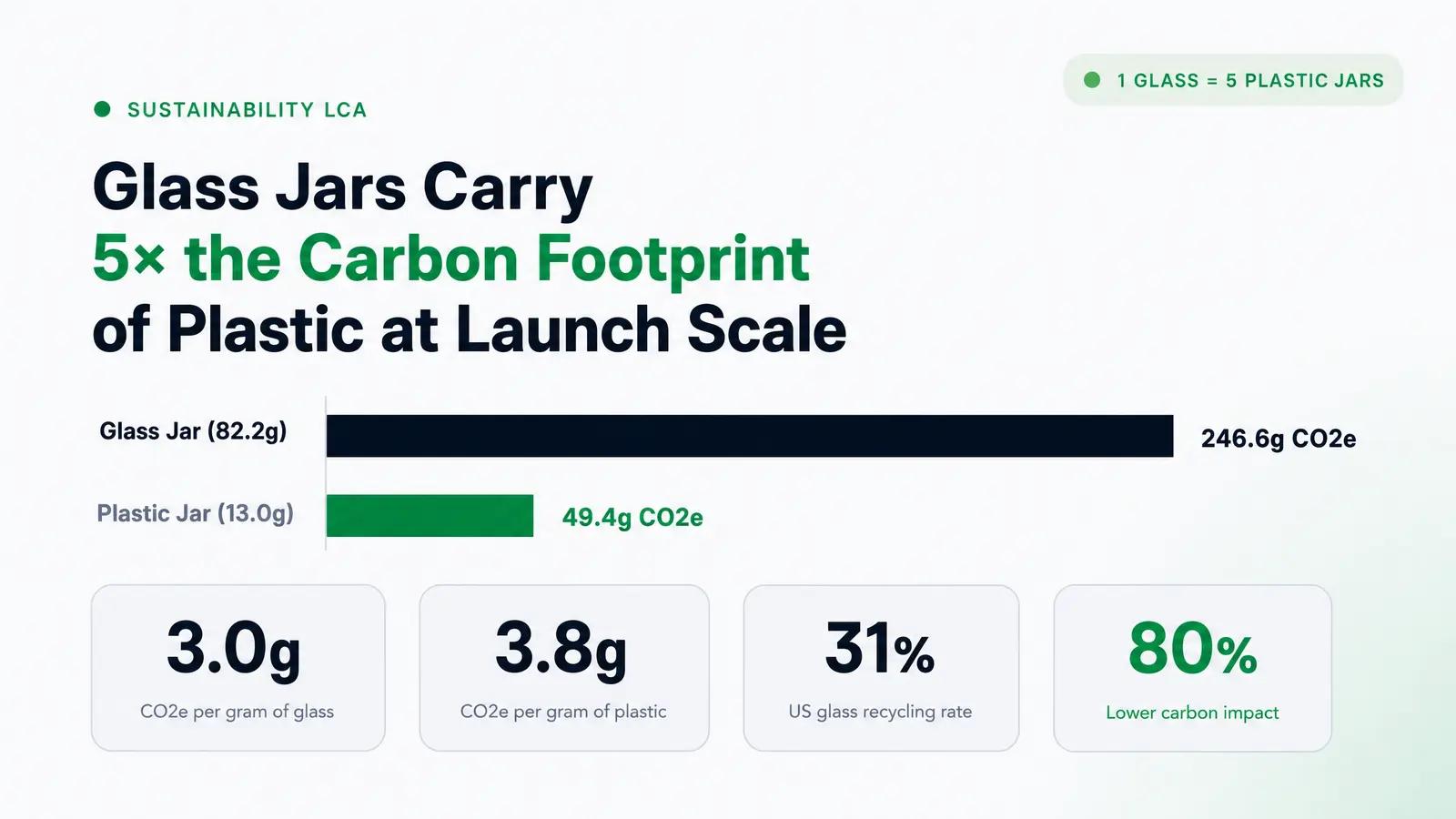
The environmental impact of packaging must be evaluated across its entire lifecycle, from cradle to grave. When we look at the raw material extraction and manufacturing stages, glass production is an incredibly energy-intensive process. Glass furnaces must run continuously at temperatures between 2,600°F and 2,800°F (1,427°C to 1,538°C) to melt silica sand [5]. This process requires massive amounts of energy, generating roughly 3.0 grams of CO2 equivalents for every 1.0 gram of glass produced [5]. In contrast, polymerizing and blow-molding a plastic jar requires temperatures of only 400°F to 500°F (204°C to 260°C), generating 3.8 grams of CO2 equivalents per gram of plastic [5].
Because glass is physically denser, a glass jar requires significantly more material mass to hold the same volume of product as a plastic jar. For example, a standard 2 oz (60 ml) glass jar weighs approximately 82.2 grams, resulting in a carbon footprint of 246.6 grams of CO2 equivalents per jar [5]. A comparable 2 oz (60 ml) high-density plastic jar weighs only 13.0 grams, resulting in a carbon footprint of just 49.4 grams of CO2 equivalents [5].
Carbon Footprint Comparison (2 oz / 60 ml Jar)
==============================================
Glass Jar (82.2g)   : [████========================================] 246.6g CO2e
Plastic Jar (13.0g) : [████] 49.4g CO2e (80% lower carbon impact)
This means the plastic jar has only 20% of the carbon impact of the glass jar during the manufacturing phase. It takes five plastic jars to equal the carbon footprint of just one glass jar [5].
The disparity widens further during the transportation phase. Glass is incredibly heavy. A truckload of empty glass jars carries a fraction of the units of a truckload of plastic jars, requiring more fuel and generating higher transport emissions per unit. For an indie brand shipping primarily via e-commerce, the dimensional weight of glass jars increases shipping costs, requires extra protective bubble wrap (adding plastic waste back into the chain), and increases fuel burn during last-mile delivery.
While glass is infinitely recyclable, municipal recycling rates for glass in the United States hover around 31%, with the rest ending up in landfills [9]. Recycled PETG or PCR PP, when sourced from local post-consumer waste streams, completely bypasses virgin oil extraction, operates on a highly efficient recycling loop, and dramatically outperforms glass on global warming potential (GWP) across modern distribution models [10]. Founders must look past surface-level green signals and analyze real LCA data before declaring glass the "sustainable" choice for their brand.
Launch-Stage Economics: MOQ, Unit Cost, and Cash Flow
For an independent founder, packaging economics are not just about unit cost, they are about cash flow survival. Over-ordering packaging is the single most common way young beauty brands go out of business.
The Jar Sourcing Lifecycle
As a brand grows, its sourcing strategy must evolve across three distinct stages:
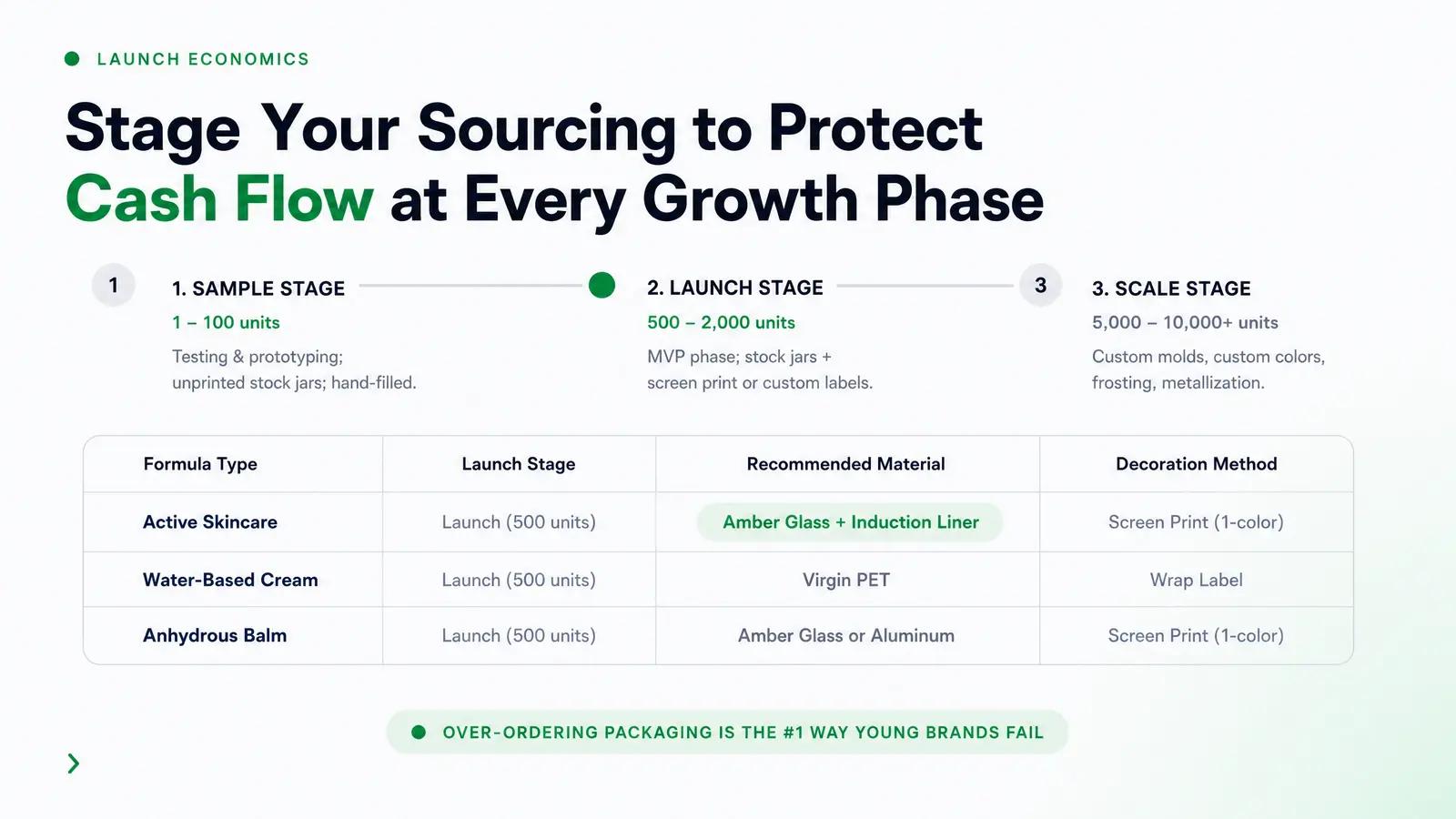
- Sample Stage (1 – 100 units): The goal here is testing and prototyping. Founders purchase unprinted stock jars from distributors or platforms like Packfolio. Jars are filled by hand in the lab, and simple paper labels are applied to verify fill weights and run compatibility tests.
- Launch Stage (500 – 2,000 units): This is the "Minimum Viable Product" (MVP) phase. Founders utilize stock jars but invest in high-quality decoration, such as screen printing or custom labeling. The goal is to get a professional product to market with minimal capital risk.
- Scale Stage (5,000 – 10,000+ units): At this volume, founders transition to custom colors, custom molds, and direct factory sourcing. Unit costs drop dramatically, and decoration options expand to include frosting, metallization, and inner-spray coatings.
Sourcing Framework: The Jar Selection Matrix
To help founders navigate these stages, we recommend The Jar Selection Matrix. This framework maps your formula type, launch stage, and decoration ambition to the ideal jar configuration.
| Formula Type | Launch Stage | Decoration Ambition | Recommended Material | Closure & Liner | Decoration Method | Sourcing Logic |
|---|---|---|---|---|---|---|
| Active Skincare (Vitamin C, Retinol) | Launch (500 units) | Minimalist, Premium | Amber Glass | PP Screw Cap + Induction Foil Liner | Screen Printing (1-color) | Protects actives from UV and oxygen; low MOQ stock glass keeps capital free. |
| Active Skincare (Vitamin C, Retinol) | Scale (5,000+ units) | Ultra-Luxury, Custom | Frosted Double-Wall Glass | Custom PMMA Cap + Induction Foil Liner | Frosted + Hot Stamped Logo | Maximizes shelf-presence and active protection; bulk pricing amortizes die costs. |
| Water-Based Cream (Gel-moisturizer) | Launch (500 units) | Vibrant, Colorful | Virgin PET | PP Cap + PE Foam Liner | High-Gloss Wrap Label | Lightweight for e-commerce; labels allow unlimited colors at low volume. |
| Water-Based Cream (Gel-moisturizer) | Scale (5,000+ units) | Sustainable, Sleek | 100% PCR PET | PCR PP Cap + PE Foam Liner | Screen Printing (2-color) | PCR resin tells a strong circular story; screen printing eliminates label application labor. |
| Anhydrous Balm (Cleansing butter) | Launch (500 units) | Apothecary, Natural | Amber Glass or Aluminum | Aluminum Cap + PE Foam Liner | Screen Printing (1-color) | Allows hot-filling without warping; glass/aluminum protect oils from rancidity. |
| Anhydrous Balm (Cleansing butter) | Scale (5,000+ units) | Modern, Architectural | Square Glass | Debossed Wood-grain Cap + PE Liner | Screen Printing + Bottom Label | Unique shape drives social sharing; custom caps elevate brand positioning. |
Sourcing in Action: A Worked Example
To see how these variables interact in the real world, let us walk through a realistic sourcing scenario for an indie beauty founder.
The Scenario
Sarah is launching a premium Ceramide Barrier Repair Cream.
- The Formula: A rich, water-in-oil emulsion containing active ceramides, niacinamide, and a low concentration of organic lavender essential oil. It has a thick, luxurious viscosity.
- The Launch Volume: 500 units.
- The Target Retail Price: $48.00 per 1.7 oz (50 ml) jar.
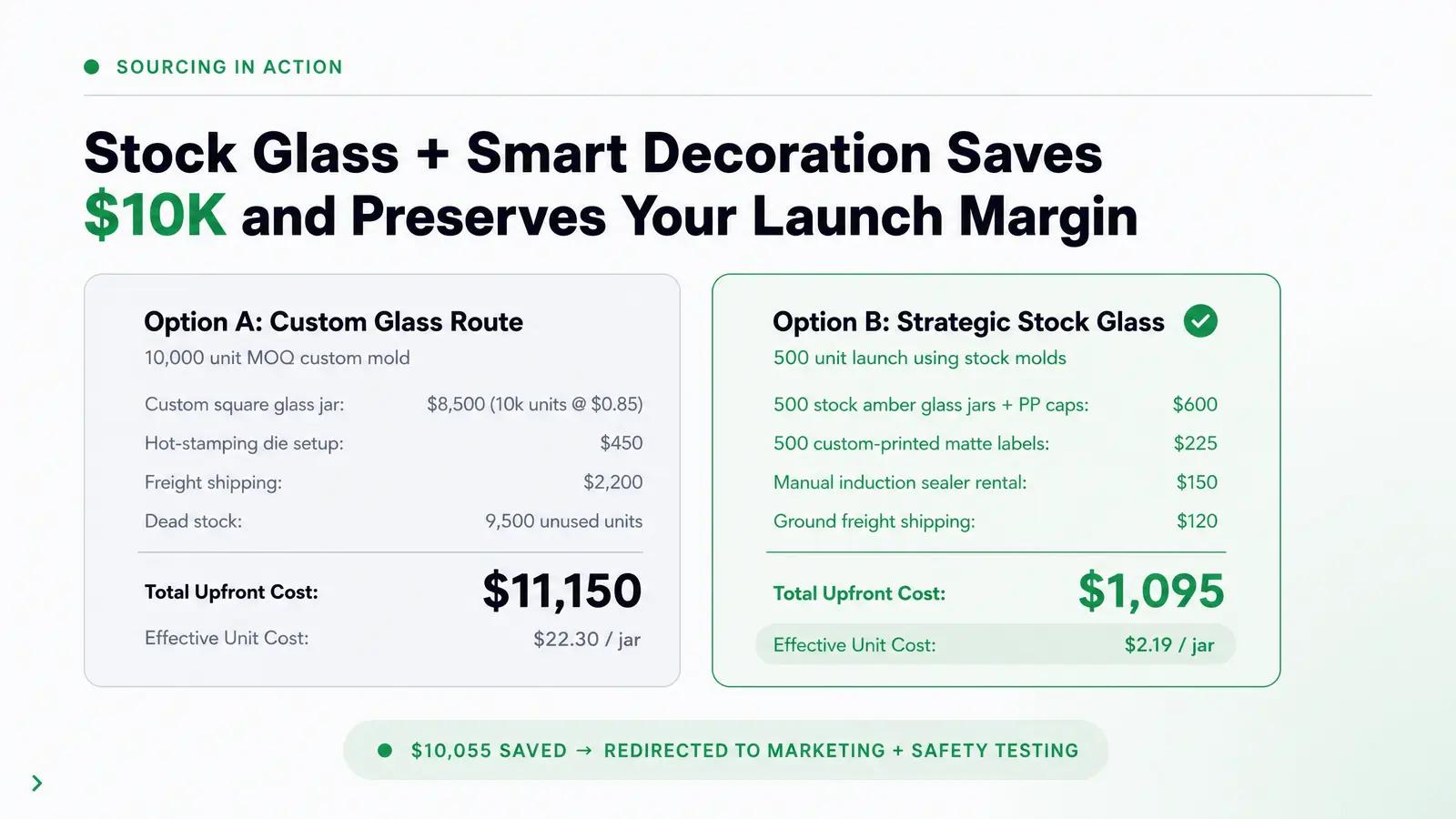
Option A: The "Prestige" Glass Route (The Common Trap)
Sarah initially wants to use a custom-colored, square glass jar with a gold hot-stamped logo.
- The Reality: The custom glass jar has an MOQ of 10,000 units at $0.85 per unit. Because she only needs 500 units, she would have to buy 9,500 units of "dead stock," tying up $8,500 in cash. Furthermore, the custom hot-stamping die costs $450, and freight shipping for 10,000 heavy glass jars from the supplier to her warehouse costs $2,200.
- Total Upfront Packaging Investment: $11,150.
- Effective Unit Cost for her 500-unit launch: $22.30 per jar (completely destroying her margin).
Option B: The Strategic Stock Glass Route
Instead, Sarah decides to use a standard round, amber glass jar from stock inventory, paired with a black PP screw cap and a heat-induction foil liner. She opts for a high-quality, matte-finish wrap-around label.
- The Sourcing Logic: Round amber glass is a "public mold" that is widely available from stockists with low MOQs. Amber glass chemically protects her active niacinamide from light degradation [3]. The PP cap and induction liner prevent oxygen from degrading her ceramides and stop the essential oils from evaporating during transit [7].
- The Costs:
- 500 stock amber glass jars + PP caps: $1.20 per unit ($600 total)
- 500 custom-printed matte labels: $0.45 per unit ($225 total)
- Manual induction sealer rental/purchase: $150
- Ground freight for 500 jars: $120
- Total Upfront Packaging Investment: $1,095.
- Effective Unit Cost for her 500-unit launch: $2.19 per jar.
By choosing Option B, Sarah preserves over $10,000 in cash flow, which she can now redirect toward marketing, formulation manufacturing, and safety testing.
The Scaling Path (Transitioning to 2,000 units)
Once her first 500 units sell out, Sarah scales her next order to 2,000 units.
- The Upgrade: She maintains the same amber glass jar but transitions from labels to direct 1-color silk screen printing.
- The Economics: At 2,000 units, the screen printing setup fee of $150 is easily amortized. Her jar unit cost drops to $0.95, and her printing cost drops to $0.25 per unit. Her effective packaging unit cost falls from $2.19 to $1.45, instantly increasing her gross margin by 34% as her brand scales.
Refill Systems and Sustainability Signals
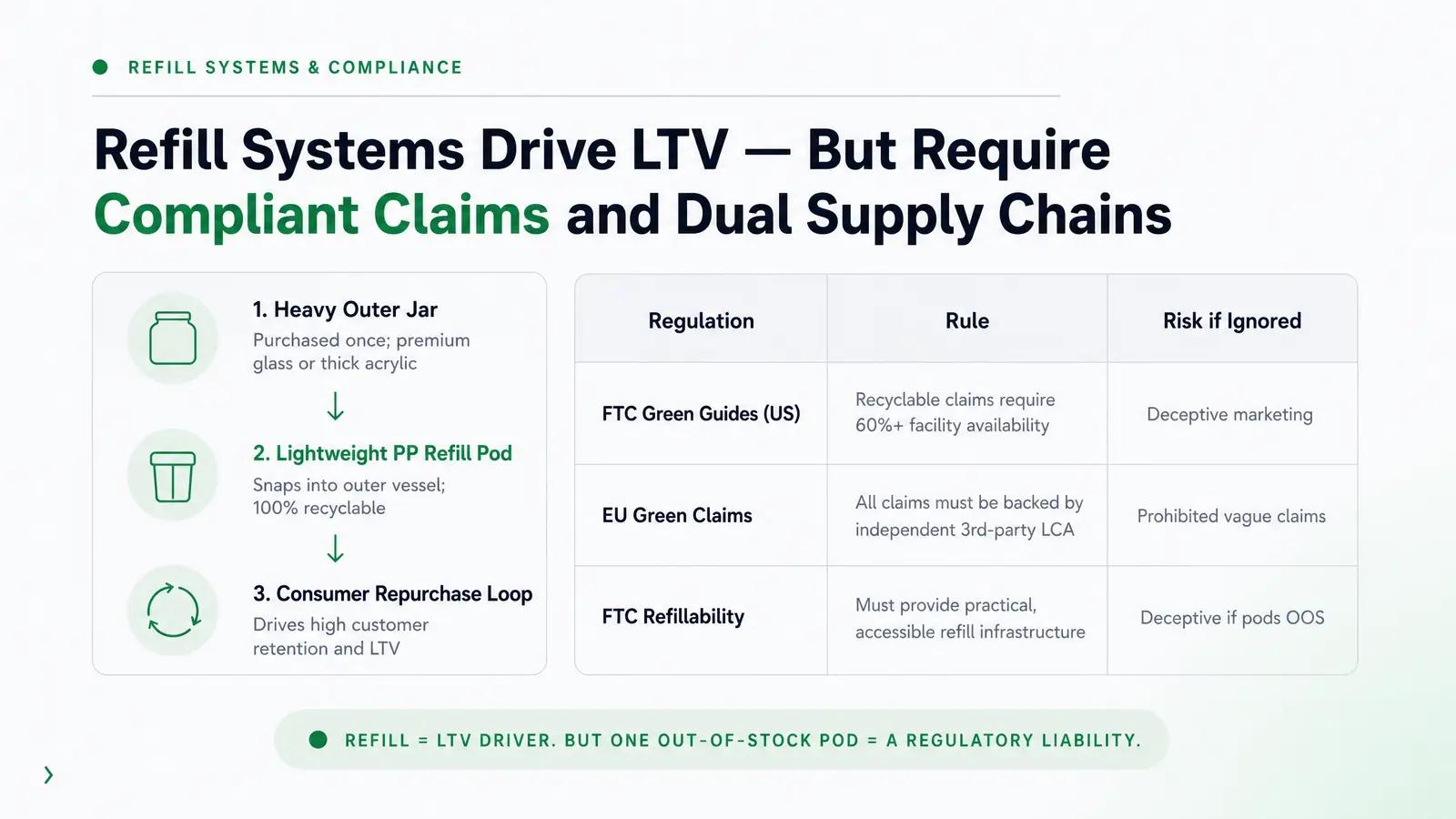
As global sustainability regulations tighten, refillable packaging has transitioned from a niche marketing trend to a core business strategy. Refillable cosmetic jars typically utilize a "keep-and-replace" system, where a heavy, high-quality outer jar (often made of glass or thick acrylic) is purchased once, and the consumer subsequently buys lightweight, thin-walled refill pods (usually made of recyclable PP) that snap into the outer vessel [11].
The Benefits and Challenges of Refill Systems
For an indie brand, refill systems offer powerful customer retention loops. A consumer who has invested in a beautiful, heavy outer jar is highly likely to return to your website to purchase refill pods, driving up Customer Lifetime Value (LTV).
However, refill systems introduce significant operational complexity. They require managing two separate supply chains (outer jars and inner pods), increase upfront mold tooling costs, and require clear consumer education to ensure the refill pods are recycled correctly.
Navigating the Regulatory Landscape
Furthermore, green marketing claims are under unprecedented regulatory scrutiny. In the European Union, the EU Green Claims Directive requires brands to substantiate any environmental claims with independent, accredited third-party verifications [12]. Broad, vague claims like "eco-friendly," "sustainable," or "green" are strictly prohibited unless backed by a comprehensive lifecycle assessment [12].
In the United States, the Federal Trade Commission (FTC) is actively updating its Green Guides to enforce stricter standards on recyclability and refillability claims [13]. Under the Green Guides, a brand cannot market a product as "recyclable" unless recycling facilities are available to at least 60% of consumers where the product is sold [13].
For refillable systems, the FTC requires that a brand must provide a practical, accessible infrastructure for refilling. If a brand sells a "refillable" jar but does not actually offer the refill pods for sale, or if the pods are continuously out of stock, the claim is legally considered deceptive. Founders must ensure their sustainability claims are precise, qualified, and fully compliant with local regulatory frameworks.
What to Verify Before You Order
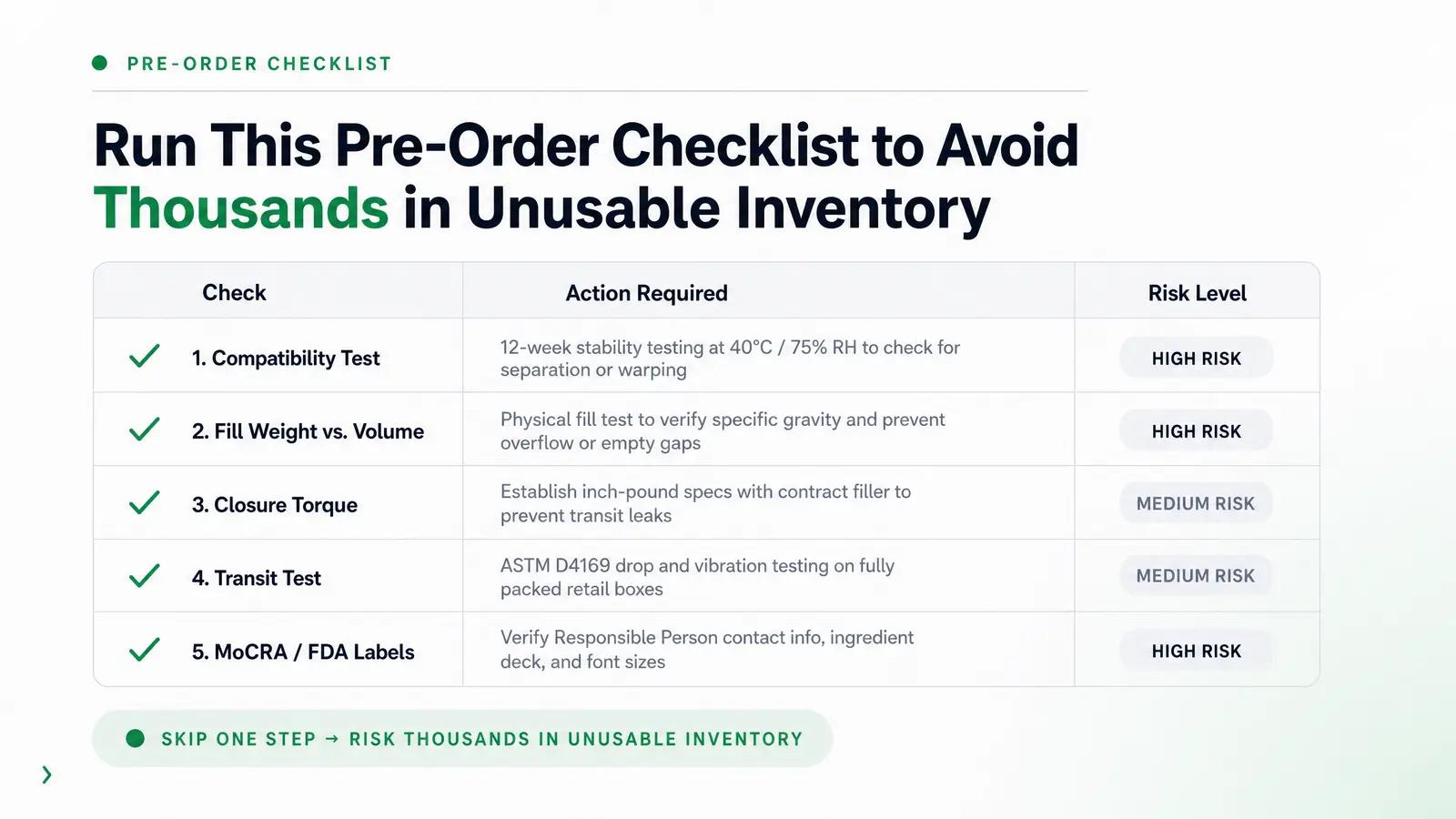
Before you wire funds to any packaging supplier, you must run through this technical pre-order checklist. Skipping even one of these steps can result in thousands of dollars of useless inventory.
- Compatibility Testing: Never skip this. Place your final formula inside the target jar and store it in a stability chamber at elevated temperatures (typically 104°F / 40°C at 75% relative humidity) for 12 weeks. Check for formula separation, discoloration, container warping, weight loss, or active ingredient degradation [14].
- Fill Weight vs. Volume Verification: A "2 oz" jar does not hold exactly 2 oz of every formula. Jars are manufactured based on fluid volume (overflow capacity in milliliters), while cosmetic labels are regulated by net weight (ounces or grams) [15]. A heavy, dense clay mask will weigh significantly more than a whipped body butter in the exact same size jar. Always perform a physical fill test to determine your formula's specific gravity and verify that your target fill weight fits beautifully within the jar without overflowing or leaving an unsightly empty gap at the top.
- Closure Torque Testing: Work with your contract filler to establish the correct application torque (measured in inch-pounds) for your closures. If the caps are applied too loosely, they will leak in transit. If they are torqued too tightly, the plastic threads will strip, or the inner liners will warp and fail [16].
- Transit Testing: Perform a standard drop and vibration test (such as ASTM D4169 standards) on your fully packed retail boxes. Ensure your jars can survive the vibrations of a freight truck and the impact of being dropped from a delivery van onto a concrete doorstep [16].
- MoCRA and FDA Labeling Compliance: Under the Modernization of Cosmetics Regulation Act (MoCRA), your outer retail packaging must display a clear "Responsible Person" contact statement (a physical address, phone number, or electronic contact link) to allow consumers to report adverse health events [17]. Ensure your ingredient deck is listed in descending order of predominance, active drug ingredients (like sunscreens or acne actives) are listed first, and all font sizes meet the minimum FDA requirement of 1/16 of an inch based on the package's surface area [15] [18].
Managing this entire checklist, coordinating with multiple factory suppliers, vetting quality control, and handling international freight can easily overwhelm an emerging beauty brand. This is where modern packaging platforms change the game.
Rather than navigating the fragmented supply chain alone, founders can utilize Packfolio, an on-demand custom packaging platform that curates a vetted catalog of cosmetic primary packaging SKUs. Packfolio pre-models every jar in 3D with predefined printable regions, allowing you to upload your artwork, preview a photorealistic 3D render, and order directly. Packfolio handles the supplier coordination, factory vetting, quality assurance, and freight delivery to your door, meaning you never have to manage factory relationships yourself. The 3D preview is a required step in the order flow, ensuring that what you see on your screen is exactly what arrives at your warehouse.
Closing CTA Block
Navigating the technical complexities of cosmetic jars does not have to stall your launch. By understanding your formula chemistry, selecting the right liner, and planning your cash flow strategically, you can build a premium, compliant, and highly successful beauty brand.
Browse Packfolio's curated jar catalog and preview your label in 3D before you order → https://packfolio.com/catalog
Frequently Asked Questions
What is the difference between a single-wall and a double-wall jar?
A single-wall jar consists of a single layer of plastic or glass, offering a lightweight, minimalist, and highly recyclable design. A double-wall jar features an outer decorative shell (usually acrylic or glass) and a separate inner cup (usually PP) that holds the formula. Double-wall jars are heavier, feel more luxurious, and protect formulas from external temperature fluctuations, but they are more complex to recycle.
Why does my cream turn yellow or brown inside a clear glass jar?
This is almost always a sign of oxidation or photolytic degradation. Active ingredients like vitamin C, retinol, and certain botanical extracts are highly sensitive to light and air. If your formula is exposed to light through clear glass, or if your cap does not have an airtight liner, the actives will degrade and change color. Switch to amber glass, opaque plastic, or an airless jar with an induction foil liner to solve this.
Can I use a pressure-sensitive liner for a water-based face cream?
No, you should avoid pressure-sensitive (PS) liners for any liquid, cream, or emulsion. PS liners rely on a pressure-activated adhesive to stick to the jar rim. Water and oils in your cream will quickly dissolve this adhesive, causing the liner to detach, leak, and fail to provide an airtight seal. Use a compressible PE foam liner or a heat-induction foil liner instead.
What are the labeling requirements for cosmetic jars under MoCRA?
Under MoCRA, your product label must include a clear, prominent declaration of the "Responsible Person" (the manufacturer, packer, or distributor) along with a physical address, phone number, or website where consumers can report adverse events [17]. Additionally, fragrance allergens must be clearly labeled once the FDA finalizes its allergen list, and all standard FDA labeling requirements (such as net contents and ingredient decks) must remain fully compliant [15] [18].
Why is my jar's fill weight different from the fluid ounces listed on the container?
Fluid ounces measure liquid volume (the physical space inside the jar), while net weight measures the actual mass of your formula. Because different formulas have different densities, they do not weigh the same. A 50 ml (1.7 fluid oz) jar will hold exactly 50 grams of water, but it might hold 60 grams of a heavy clay mask or only 40 grams of a whipped, airy shaving cream. Always verify your specific formula's weight-to-volume ratio before printing your labels.
References
[1] Nicole Vassallo and Paul Refalo, "Reducing the Environmental Impacts of Plastic Cosmetic Packaging: A Multi-Attribute Life Cycle Assessment," Cosmetics, 2024. https://www.mdpi.com/2079-9284/11/2/34
[2] Terry, "The Real Logic Behind Low MOQ Cosmetic Packaging: A Guide for Indie Beauty Brands," Bottlemile, 2026. https://bottlemile.com/the-real-logic-behind-low-moq-cosmetic-packaging-a-guide-for-indie-beauty-brands/
[3] Daniel Wang, "The Complete Guide to Cosmetic Jars: Types, Materials & How to Source," Othila Source, 2026. https://othilapak.com/blogs/technology-materials/the-complete-guide-to-cosmetic-jars-types-materials-how-to-source/
[4] Daniel Wang, "Glass vs. Plastic vs. Acrylic Cosmetic Jars: Which Should You Choose?," Othila Source, 2026. https://othilapak.com/blogs/technology-materials/glass-vs-plastic-vs-acrylic-cosmetic-jars-which-should-you-choose/
[5] "Choose Plastic Over Glass for Better Sustainability," Drug Plastics & Glass Co., 2024. https://www.drugplastics.com/resource-hub/blog/choose-plastic-over-glass-for-better-sustainability
[6] "Cap Seal for Cosmetic & Personal Care Caps & Containers," Enercon Industries, 2024. https://www.enerconind.com/sealing/applications/cosmetics-and-personal-care-products/
[7] "Liner Options for Sealing Capped Containers, Bottles, & Jars," Enercon Industries, 2024. https://www.enerconind.com/sealing/library-resource/liner-options-for-sealing-containers/
[8] Christina, "Hot Stamping vs. Silk Screen Printing: Which One is Right for Your Cosmetic Packaging?," AH Packaging, 2025. https://ahpackaging.com/hot-stamping-vs-silk-screen-printing/
[9] "What has the lowest impact: glass vs. plastic packaging," Ecochain, 2020. https://ecochain.com/blog/case-study-packaging-plastic-vs-glass/
[10] "PET Life Cycle Assessment Report 2023," NAPCOR, 2023. https://napcor.com/pet-life-cycle-assessment-report-2023/
[11] "The Rise of Refillable Cosmetic Packaging: A Smart Move for Modern Brands," AH Packaging, 2026. https://ahpackaging.com/the-rise-of-refillable-cosmetic-packaging-a-smart-move-for-modern-brands/
[12] "Green claims," European Commission, 2023. https://environment.ec.europa.eu/topics/circular-economy-topics/green-claims_en
[13] "Green Guides," Federal Trade Commission, 2024. https://www.ftc.gov/news-events/topics/truth-advertising/green-guides
[14] "Cosmetic Stability Testing," Intertek, 2024. https://www.intertek.com/beauty-personal-care/cosmetic-stability-testing/
[15] "Summary of Cosmetics Labeling Requirements," U.S. Food and Drug Administration, 2025. https://www.fda.gov/cosmetics/cosmetics-labeling-regulations/summary-cosmetics-labeling-requirements
[16] Dwight Davis, "A Beginner’s Guide to Cosmetic Container Selection," Container & Packaging, 2026. https://www.containerandpackaging.com/resources/a-beginners-guide-to-cosmetic-container-selection/
[17] "Modernization of Cosmetics Regulation Act of 2022 (MoCRA)," U.S. Food and Drug Administration, 2026. https://www.fda.gov/cosmetics/cosmetics-laws-regulations/modernization-cosmetics-regulation-act-2022-mocra
[18] "21 CFR Part 701 -- Cosmetic Labeling," Electronic Code of Federal Regulations, 2026. https://www.ecfr.gov/current/title-21/chapter-I/subchapter-G/part-701


