
The Cosmetic Packaging Defect Guide: What Can Go Wrong and How to Catch It
This guide classifies cosmetic packaging defects into five categories and provides a 25-point verification checklist to catch functional, structural, closure, decoration, and dimensional issues before production.
Why Packaging Defects Are a Launch Risk, Not Just a Production Problem
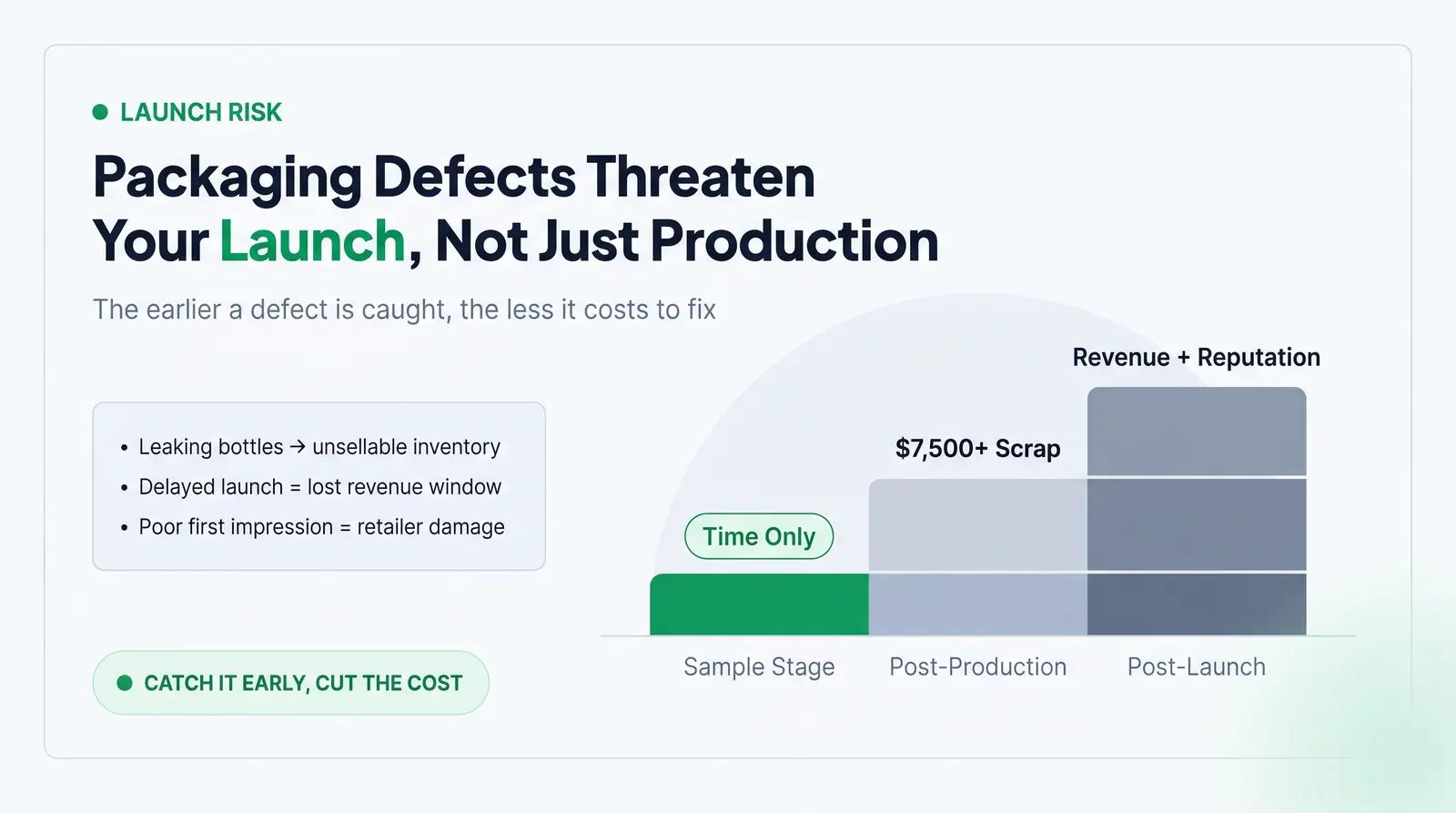
Packaging defects are not a production inconvenience. They are a launch risk. Picture a founder who receives her first 5,000 units of a vitamin C serum, only to discover that the glass dropper bottles leak under mild pressure after the inventory has already shipped to her 3PL. The formula is stable, the branding is sharp, but the product cannot be sold without triggering customer complaints, negative reviews, and damaged retailer relationships. The financial exposure at this stage is not just the cost of scrapped components. It includes the lost revenue from a delayed launch, the expense of emergency rework or replacement sourcing, and the reputational cost of a poor first impression.
For independent beauty brands, the margin for error is narrow. While contract manufacturers focus on formula stability and factories focus on unit output, the founder is ultimately responsible for the final consumer experience. Understanding how to identify and prevent packaging defects before accepting a production run is a critical operational skill. It shifts the brand from reacting to quality failures to proactively managing packaging integrity as a core part of the product development lifecycle. The earlier a defect is caught, the less it costs to fix.
The Five Categories of Cosmetic Packaging Defects
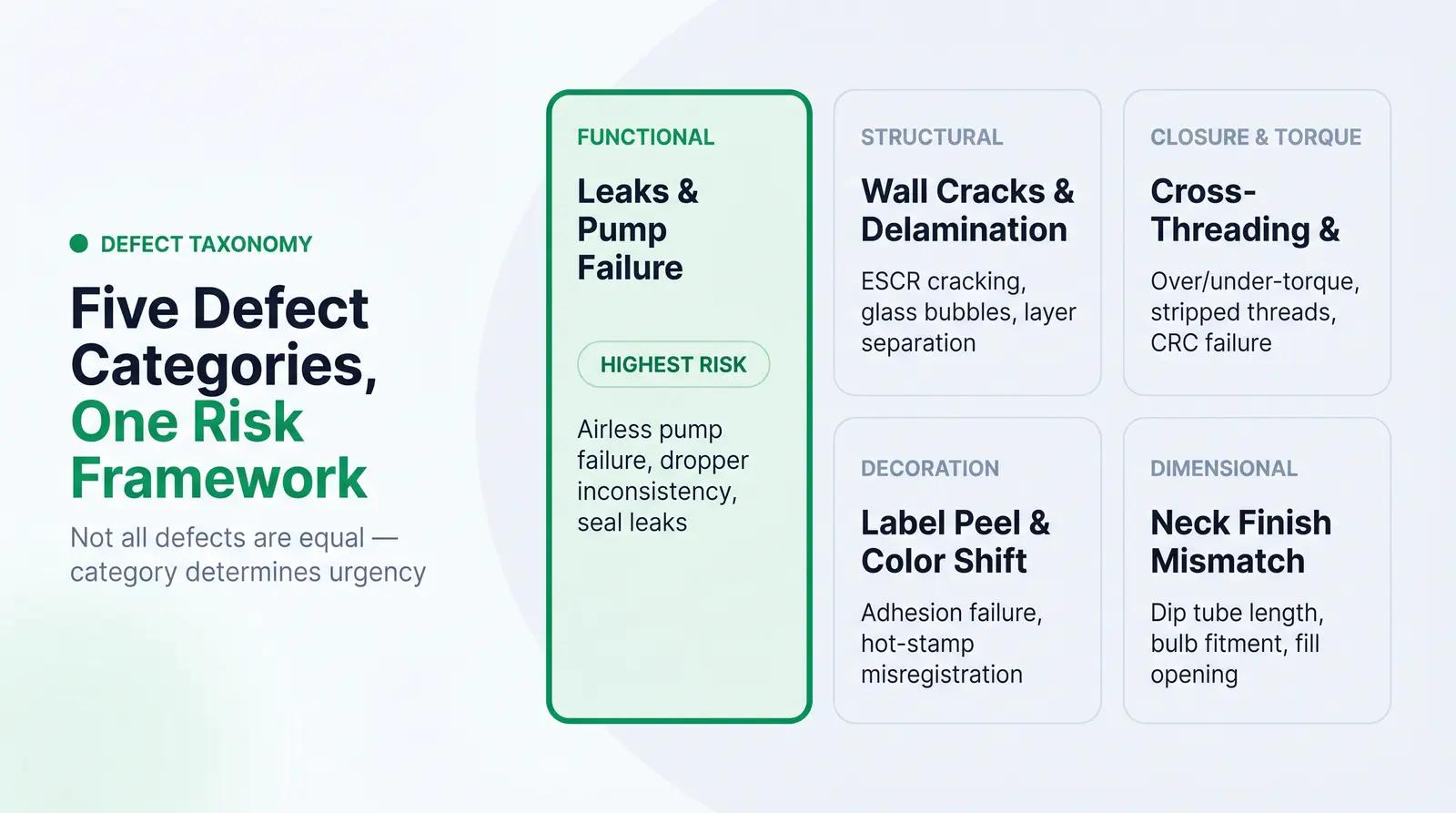
To manage packaging quality effectively, founders must move beyond simply looking for scratches and dents. Cosmetic packaging defects generally fall into five distinct categories, each carrying a different level of risk to the formula, the consumer, and the business. Treating all defects as equally important is a mistake. Knowing which category a defect belongs to determines how urgently it must be addressed and at what stage of production it can realistically be caught.
1. Functional Defects
Functional defects occur when the packaging fails to operate as intended, directly preventing the consumer from using the product. These are the most consequential defect category because they can render an entire production run unsellable. Common examples include airless pump priming failure, where the vacuum mechanism does not engage to dispense the formula. Dropper inconsistency is another frequent issue, where the pipette fails to draw up a repeatable volume due to a loose or poorly fitted rubber bulb. Pump failure, including mechanisms that clog, stick, or break after minimal use, falls here as well. Leaks at the closure interface or pump collar are also classified as functional defects, since a failure to contain the formula compromises both safety and usability.
Functional defects are often invisible at first glance. A bottle can look perfect on the outside while harboring a seal that will fail within the first week of consumer use. This is why functional testing must be conducted with the actual formula, not just water, since viscosity, pH, and the presence of oils or actives can all affect pump performance and seal integrity.
2. Structural and Material Defects
Structural and material defects compromise the physical integrity of the packaging itself. These flaws often originate during the manufacturing process, such as injection molding or blow molding, and may not become apparent until the product is filled or subjected to normal handling. Wall thickness variation creates weak points in bottles or jars, making them susceptible to cracking under pressure or during transit. Stress cracking, technically known as Environmental Stress Cracking Resistance (ESCR) failure, occurs when plastic becomes brittle and fractures due to the combined effect of mechanical stress and chemical interaction with the formula [1]. A high-alcohol toner in a polyethylene bottle, for example, can trigger ESCR failure within weeks of filling if the resin grade was not specified correctly.
Delamination in multi-layer structures is another structural defect that affects laminated tubes and co-extruded bottles. When the inner and outer layers separate, the protective barrier breaks down, allowing formula migration or contamination. Glass containers can also exhibit structural defects including air bubbles, stones (unmelted raw material inclusions), and internal checks, which are fine surface fractures that increase the risk of breakage under thermal stress.
3. Closure and Torque Defects
Closure defects involve the interface between the container and its cap, lid, pump collar, or spray head. Proper torque is essential for maintaining a secure seal without making the product difficult for consumers to open. Over-torqued caps can strip threads or crack the closure material, while under-torqued caps lead to leaks, formula oxidation, and consumer frustration. Cross-threading occurs when the cap is applied misaligned, preventing the threads from engaging correctly and compromising the seal even when the cap appears closed.
Child-resistant closure (CRC) failures carry a specific regulatory dimension. Under U.S. regulations, packaging for certain cosmetic products with drug-like claims must meet child-resistance standards. A CRC that fails to engage correctly, or one that is so difficult to open that adults cannot use it, creates both a safety risk and a compliance liability. Torque testing against standards such as ASTM D7860 provides a repeatable, documented method for verifying that closure performance falls within acceptable limits [2].
4. Decoration and Print Defects
Decoration defects affect the visual presentation and branding of the product. While often perceived as less critical than functional failures, severe decoration flaws can make a product unsellable at premium price points, particularly in the prestige skincare and beauty category where packaging is a core part of the brand promise. Label adhesion failure is a frequent issue, where labels wrinkle, bubble, or peel off due to incompatible adhesives, surface contamination from oils or release agents, or improper application temperature [3]. Hot-stamp misregistration occurs when metallic foils are applied out of alignment with the embossed design or base printing, creating a visually inconsistent result across units.
Screen-print color shift, where the ink color drifts between production batches due to inconsistent mixing or curing, can make two units of the same product look like different SKUs on a retail shelf. UV coating delamination, where the protective clear coat flakes or peels away from the decorated surface, degrades the premium feel of the packaging and can expose underlying inks to formula contact. Decoration defects are most effectively caught at the First Article Inspection (FAI) stage, before the full production run is completed.
5. Dimensional and Fit Defects
Dimensional defects occur when the physical measurements of packaging components fall outside acceptable tolerances, preventing them from fitting together correctly. A neck finish mismatch is one of the most common and costly examples: if the outer diameter (T dimension) or thread spacing of a bottle does not align with the chosen cap or pump, the closure will not seal properly, regardless of how much torque is applied. The Glass Packaging Institute (GPI) and Society of the Plastics Industry (SPI) publish standardized neck finish specifications, but tolerances can vary between suppliers, making dimensional verification essential when mixing components from different manufacturers.
Dropper bulb fitment issues result in bulbs that detach from the aluminum collar under normal use. Dip tube length errors, where the tube is too short to reach the bottom of the container or too long and bends under the piston, cause inconsistent dispensing and dead volume. Component compatibility failures, such as an inner plug or wiper that is too wide for the bottle orifice, disrupt the assembly process and compromise the final seal. These defects are best caught during pre-production sample testing, before any production tooling is committed to.
The Packfolio Defect Verification Checklist
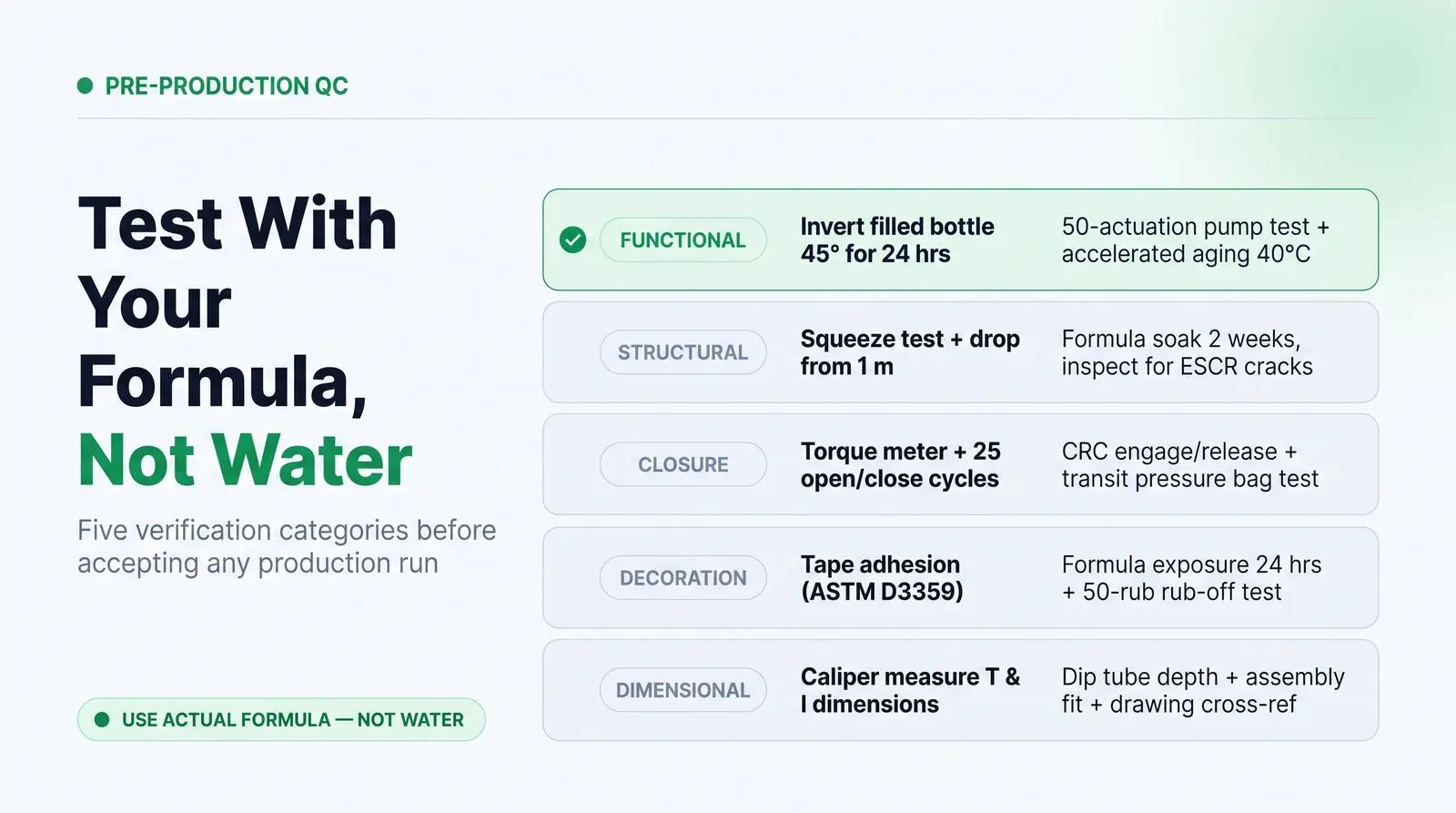
A practical checklist we recommend at Packfolio before accepting any production sample. This checklist is organized by the five defect categories above and draws from standard industry inspection practice, including ISO 22716 guidelines for packaging material acceptance [4] and ASTM testing methodologies.
Category 1: Functional Verification
- Fill the component with your actual formula (not water) and invert at a 45-degree angle for 24 hours. Confirm zero leakage at the closure, pump interface, and any seam or weld line.
- Actuate the pump or sprayer 50 consecutive times. Verify consistent dispensing volume, confirm the mechanism does not stick or skip, and check that the output volume matches the specification.
- For airless systems, confirm the pump primes within 5 to 10 actuations from empty and that the internal piston rises evenly without tilting or sticking against the container wall.
- For dropper bottles, compress and release the bulb 20 times to verify consistent draw volume and confirm the bulb does not detach from the collar under normal use force.
- Store filled samples at 40 degrees Celsius (104 degrees Fahrenheit) for 48 hours and repeat the functional tests to simulate accelerated aging and confirm performance is maintained.
Category 2: Structural and Material Verification
- Squeeze flexible tubes and plastic bottles firmly to assess wall thickness uniformity. The material should return to its original shape without creasing, whitening, or deforming.
- Inspect glass containers under a bright directional light source for air bubbles, stones, cords (streaks of different glass composition), and surface checks that indicate potential weak points.
- For plastic containers, fill with the actual formula and store for two weeks at room temperature. Inspect for any signs of stress cracking, particularly at the base, shoulder, and around the neck finish.
- For laminated tubes, examine the internal seam under magnification to confirm the layers are fully bonded with no delamination at the edges.
- Conduct a drop test from a height of 1 meter (3.3 feet) onto a hard surface to verify the container does not crack or shatter under typical handling conditions.
Category 3: Closure and Torque Verification
- Apply the closure to the specified application torque using a calibrated torque meter and verify the removal torque falls within the acceptable range for your target consumer.
- Inspect the threads on both the neck finish and the closure under magnification for any signs of stripping, cross-threading, or plastic flash that would prevent a clean seal.
- For child-resistant closures, test the push-and-turn or squeeze-and-turn mechanism to confirm it engages securely and releases cleanly without excessive force.
- Apply and remove the closure 25 times to simulate consumer use and verify the threads do not strip or the closure does not loosen over repeated cycles.
- Fill the component, apply the closure to spec, and place it in a bag. Compress the bag gently to simulate transit pressure and confirm no leakage occurs at the closure interface.
Category 4: Decoration and Print Verification
- Perform a tape adhesion test (ASTM D3359 method) on all printed, hot-stamped, and UV-coated areas to verify ink and foil adhesion meets the minimum acceptable standard.
- Expose the decorated surface to the actual product formula for 24 hours by applying a small amount directly to the label, print, or coating. Inspect for ink dissolution, color bleed, or coating degradation.
- Visually inspect labels for bubbling, wrinkling, or edge lifting, particularly on curved surfaces, tapered shoulders, and recessed panels where adhesive contact is most difficult to achieve.
- Compare the decorated sample against the approved artwork file under D65 daylight-equivalent lighting to verify color accuracy and registration alignment.
- Rub the decorated surface firmly with a white cloth 50 times to test rub-off resistance and confirm the decoration will not degrade during normal retail handling.
Category 5: Dimensional and Fit Verification
- Measure the neck finish outer diameter (T dimension) and inner diameter (I dimension) with calibrated digital calipers and confirm they match the closure supplier's specifications within the stated tolerance.
- Verify the length of the dip tube or glass pipette against the container's internal depth to ensure it reaches the bottom without bending and without leaving excessive dead volume.
- Assemble all components (bottle, wiper, pump collar, cap) to confirm a flush fit with no visible gaps, no excessive friction during assembly, and no component rocking or play.
- Measure the fill opening diameter to confirm it accommodates standard filling equipment nozzles without spillage or contamination risk.
- Cross-reference all measured dimensions against the supplier's technical drawing and flag any deviation exceeding the stated tolerance for corrective action before production is approved.
At Packfolio, the production coordination and QC process is designed so founders aren't running these inspections against unknown supplier specs — every SKU in the catalog comes with defined dimensional tolerances and goes through production QC before delivery, so the checklist above maps to specifications that already exist.
Worked Example: A Founder Catches a Dropper Leak Before Her Launch Order
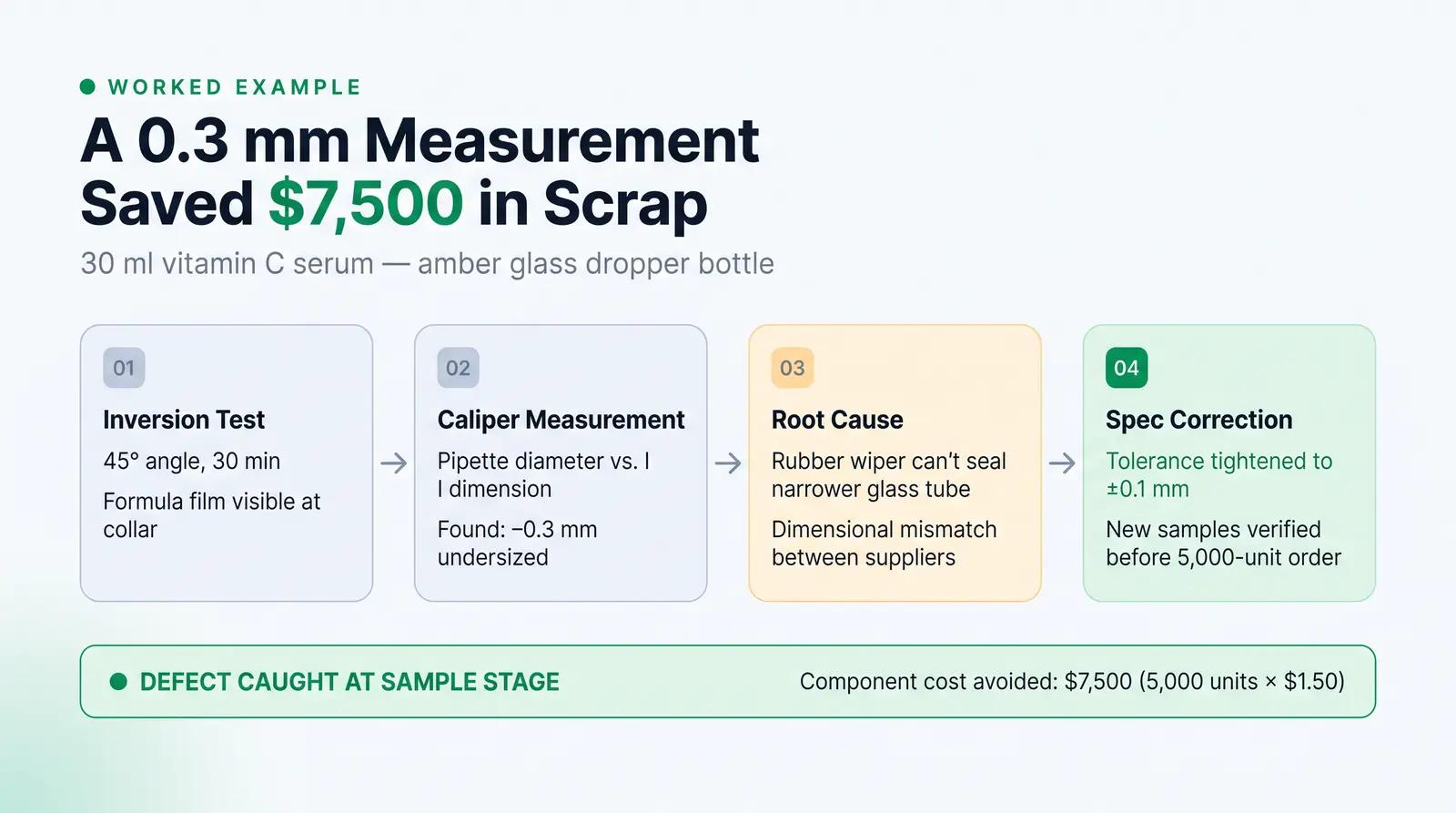
Consider a founder preparing to launch a 1 oz (30 ml) vitamin C serum formulated at pH 3.2. She selected a 30 ml amber glass dropper bottle with an aluminum collar and a nitrile rubber bulb, a common configuration for antioxidant serums where light protection and formula integrity are priorities. During the pre-production sample testing phase, she filled three sample bottles with the actual serum formula and began her functional verification protocol.
As part of the inversion test, she sealed the bottles and inverted them at a 45-degree angle for 30 minutes. Upon inspection, she discovered the formula was leaking past the glass dropper tube seal under mild inversion pressure. The leak was subtle, appearing as a faint film of serum around the collar, but it was consistent across all three samples.
To diagnose the root cause, she measured the glass dropper tube diameter with digital calipers and compared it against the inner neck finish specification of the bottle. The measurement revealed that the glass pipettes were undersized by 0.3 mm relative to the inner neck finish (I dimension) specification. The rubber wiper inside the aluminum collar could not form a tight seal against the narrower glass tube, allowing the formula to migrate past the interface under pressure. The root cause was a dimensional mismatch between the glass pipette supplier's production tolerance and the bottle's neck finish specification.
Because she caught this defect during sample testing, she submitted a formal specification correction request to the manufacturer, requiring that all glass pipettes for the production order meet the inner neck finish diameter within a tolerance of plus or minus 0.1 mm. The manufacturer confirmed the correction and provided new samples for re-verification before the production order was placed.
The business implication was significant. Catching this dimensional mismatch before placing a 5,000-unit MOQ order saved the brand from the cost of a full inventory scrap, which at a conservative component cost of $1.50 per unit would have represented $7,500 in wasted materials, plus the cost of reformatting the launch timeline. It also prevented the reputational damage of shipping leaking product to early customers, which for a new brand can be far more costly than the direct financial loss.
This scenario is representative of what a structured functional and dimensional verification process catches. The defect was invisible to the eye during a standard visual inspection. It only appeared under the specific conditions of the inversion test, which is why functional testing with the actual formula is a non-negotiable step before accepting any production run.
Defect Category Comparison Table
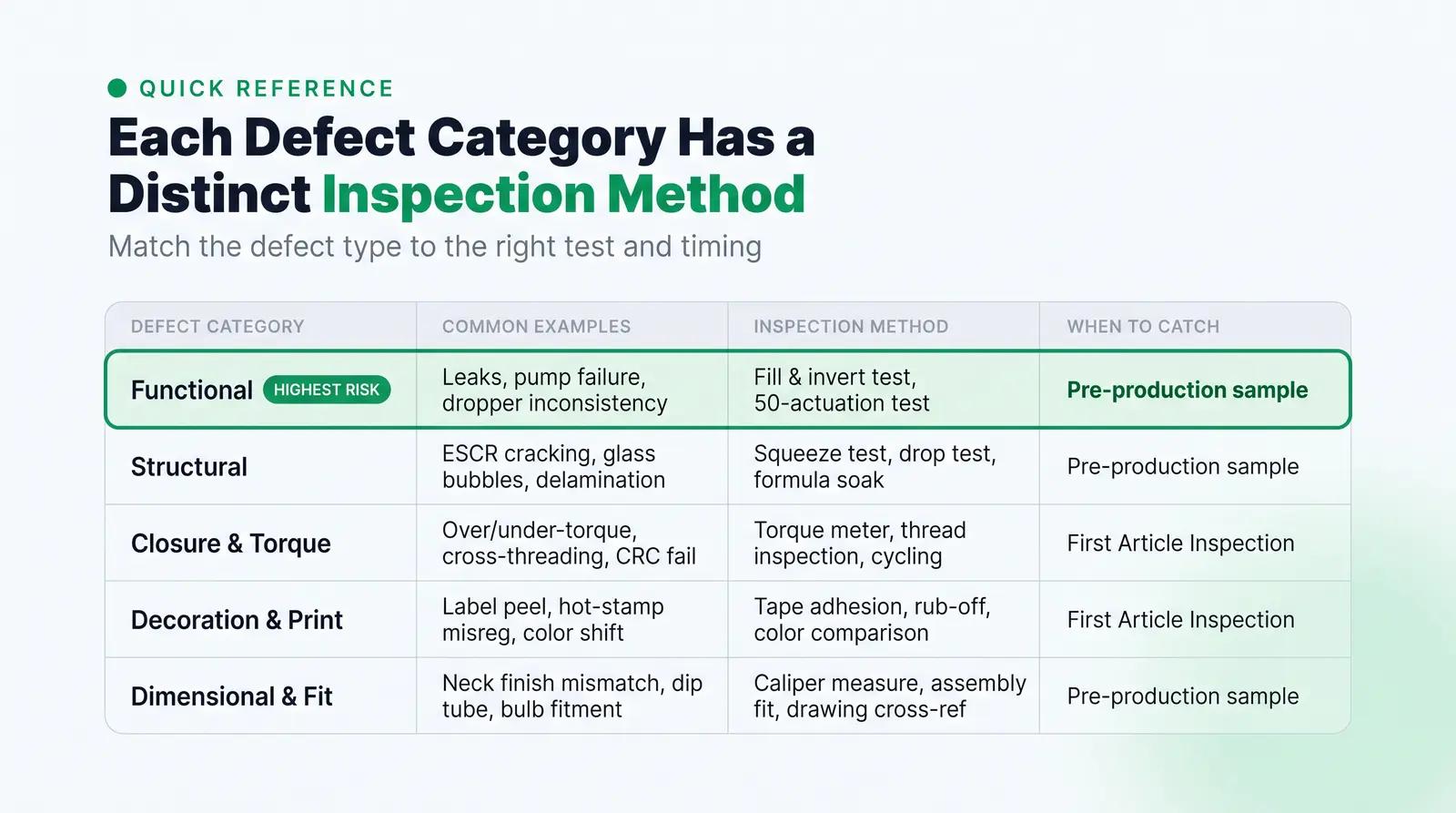
Cosmetic Packaging Defect Categories at a Glance
| Defect Category | Common Examples | Most Likely Root Cause | Inspection Method | When to Catch It |
|---|---|---|---|---|
| Functional | Leaks, airless pump priming failure, dropper inconsistency, clogged sprayers | Viscosity mismatch, poor component sealing, dimensional tolerance failure | Fill and invert test, 50-actuation pump test, accelerated aging | Pre-production sample testing |
| Structural and Material | Wall thickness variation, ESCR stress cracking, glass bubbles, laminate delamination | Injection molding flaws, resin grade mismatch, chemical incompatibility | Squeeze test, drop test, formula compatibility soak, vacuum leak test | Pre-production sample testing |
| Closure and Torque | Over/under-torqued caps, cross-threading, stripped threads, CRC failure | Misaligned capping equipment, incorrect torque specs, thread mold flash | Torque meter testing, visual thread inspection, repeated open/close cycling | First Article Inspection (FAI) |
| Decoration and Print | Label adhesion failure, hot-stamp misregistration, screen-print color shift, UV coating delamination | Surface contamination, incompatible adhesives, incorrect cure temperature | Tape adhesion test, formula exposure test, rub-off test, color comparison | First Article Inspection (FAI) |
| Dimensional and Fit | Neck finish mismatch, incorrect dip tube length, loose bulb fitment, fill opening too narrow | Poor mold tolerances, mismatched supplier specs, batch-to-batch variation | Caliper measurement, assembly fit test, technical drawing cross-reference | Pre-production sample testing |
When to Catch It: Defects by Inspection Stage
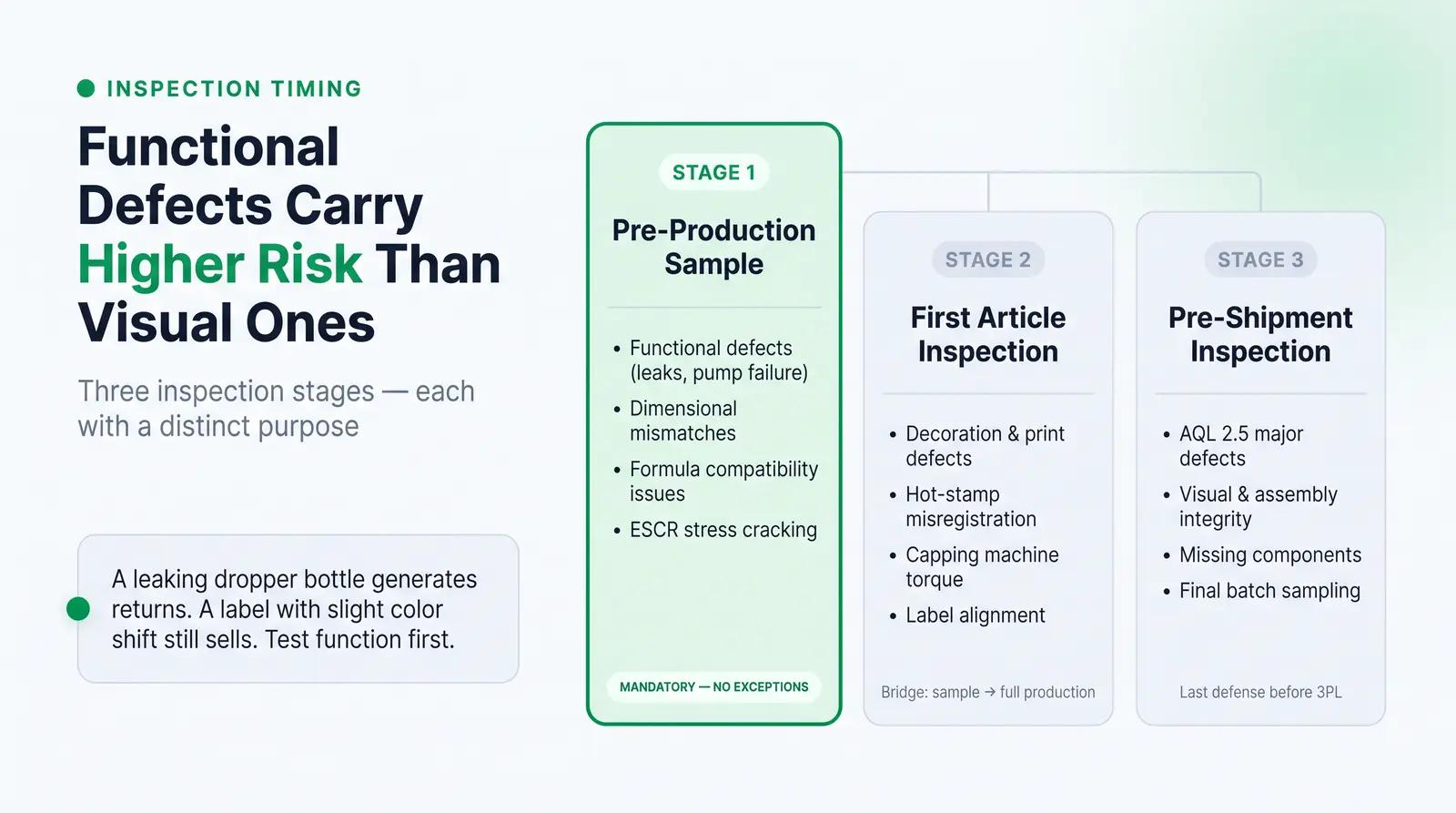
Identifying defects early in the packaging lifecycle reduces the cost of correction by orders of magnitude. A specification correction at the sample stage costs time. The same correction after 5,000 units have been produced and filled costs inventory, rework labor, and potentially the launch window.
Pre-production sample testing is the most critical stage for functional and dimensional verification. This is the time to conduct formula compatibility tests, inversion leak tests, dimensional measurements, and accelerated aging. Catching a neck finish mismatch or a formula-driven stress crack here costs nothing but time and a few sample units. Every founder sourcing new packaging should treat this stage as mandatory, not optional, regardless of how reputable the supplier is. Suppliers can change component sources between orders, and tolerances that were acceptable on a previous run may not hold on the next.
First Article Inspection (FAI) involves pulling the very first units off the manufacturing line to verify that the mass-produced components match the approved samples. This stage is essential for catching decoration defects, such as hot-stamp misregistration or incorrect label alignment, as well as verifying that capping machines are applying the correct torque. FAI is the bridge between sample approval and full production acceptance.
Pre-shipment inspection serves as the last line of defense before inventory leaves the factory. Using Acceptable Quality Limit (AQL) sampling standards based on ISO 2859, inspectors pull a statistically significant number of units from the finished batch to check for visual defects, missing components, and final assembly integrity [5]. A common AQL setting for cosmetic packaging is 2.5 for major defects and 4.0 for minor defects, though founders with premium positioning should consider tighter thresholds.
One non-obvious insight that experienced QC professionals understand, but that many founders miss: visual defects are frequently treated as the most important inspection category, when in practice functional defects (leaks, pump failure rates, airless pump dead volume) carry a higher unit economics and safety risk for most cosmetic formulas. A label with a slight color shift will still sell. A leaking dropper bottle will generate returns, complaints, and potential safety concerns if the formula is an acid or contains restricted actives. The FDA's recall classification system reflects this logic: Class I recalls, the most serious, are reserved for situations where there is a reasonable probability that use of the product will cause serious adverse health consequences, and packaging integrity failures are a documented trigger [6]. Founders who prioritize visual inspection over functional testing are optimizing for the wrong risk.
If you are exploring how different material choices affect structural defect risk, a detailed cosmetic packaging materials guide can help you match your formula chemistry to the right substrate before you commit to a component.
Browse Packfolio's curated cosmetic packaging catalog, preview your artwork in 3D before committing to an order, and receive components that have already cleared production QC. Explore the Packfolio catalog
Frequently Asked Questions
What are the most common cosmetic packaging defects?
The most common defects include functional failures such as leaking closures and malfunctioning pumps, visual flaws such as label adhesion failure and hot-stamp misregistration, and dimensional mismatches between bottles and caps that compromise the seal. Functional defects tend to have the highest business impact because they directly prevent the product from being used.
How do you leak-test a dropper bottle before production?
Fill the dropper bottle with your actual formula, secure the closure to the specified application torque, and invert the bottle at a 45-degree angle for at least 24 hours. Inspect the collar and closure interface for any sign of formula migration. For a more rigorous evaluation, a vacuum bubble emission test based on ASTM D3078 can detect micro-leaks under controlled pressure conditions [7].
What is an AQL inspection in cosmetic packaging?
Acceptable Quality Limit (AQL) inspection is a statistical sampling method based on ISO 2859 that determines the maximum number of defective units allowed in a production batch before the entire shipment is rejected. Defects are categorized as critical, major, or minor, with separate AQL thresholds for each tier. AQL 2.5 is the most common standard for major defects in general consumer goods, while critical defects typically carry an AQL of zero.
How do I know if my pump bottle will work with my formula viscosity?
The only reliable way to confirm compatibility is to test the actual formula in the specific pump mechanism during the sample phase. Evaluate the number of actuations required to prime the pump, the consistency of the dispensed volume across 50 pumps, and whether the pump stiffens or clogs after sitting filled for several days. Viscosity, pH, and the presence of oils or particulates all affect pump performance in ways that water-based testing will not reveal.
What packaging defects can lead to FDA or regulatory action?
Defects that compromise consumer safety, such as packaging that leaches harmful substances into the formula or fails to provide adequate tamper evidence, can trigger regulatory scrutiny. Under the Modernization of Cosmetics Regulation Act (MoCRA), the FDA has mandatory recall authority if a product's packaging failure presents a reasonable probability of causing serious adverse health consequences. Packaging that is adulterated, meaning its container is composed of a potentially harmful substance, or misbranded, meaning the container is misleading, are both grounds for enforcement action [6].
References
[1] Presto Group. "Environmental Stress Crack Resistance (ESCR) Testing of Plastics." 2024. https://www.prestogroup.com/articles/environmental-stress-crack-resistance-escr-testing-of-plastics/
[2] SecurePak. "Cap Torque Testing: Standards and Regulations." April 2026. https://www.secure-pak.com/cap-torque-testing-standards-regulations/
[3] Butler Technologies. "Label Adhesion Failures: 5 Factors to Examine Before You Print." June 2025. https://butlertechnologies.com/blog/label-adhesion-failures
[4] Ecomundo. "Understanding GMP for Cosmetic Products." 2024. https://ecomundo.eu/en/blog/understanding-gmp-cosmetic-products-guide
[5] QIMA. "Acceptable Quality Limit (AQL)." 2025. https://www.qima.com/aql-acceptable-quality-limit
[6] U.S. Food and Drug Administration. "FDA Recall Policy for Cosmetics." December 2025. https://www.fda.gov/cosmetics/cosmetics-compliance-enforcement/fda-recall-policy-cosmetics
[7] Keystone Compliance. "ASTM D3078 Bubble Emission Package Testing." 2024. https://keystonecompliance.com/bubble-emission-package-testing/
[8] U.S. Food and Drug Administration. "Modernization of Cosmetics Regulation Act of 2022 (MoCRA)." March 2026. https://www.fda.gov/cosmetics/cosmetics-laws-regulations/modernization-cosmetics-regulation-act-2022-mocra
[9] The Packaging Company. "Common Airless Pump Packaging Failures Cosmetic Brands Should Avoid." May 2026. https://www.thepkgco.com/common-airless-pump-packaging-failures/
[10] U.S. Food and Drug Administration. "Good Manufacturing Practice (GMP) Guidelines/Inspection Checklist for Cosmetics." November 2025. https://www.fda.gov/cosmetics/cosmetics-guidance-documents/good-manufacturing-practice-gmp-guidelinesinspection-checklist-cosmetics


