
How to Write a Cosmetic Packaging RFQ Suppliers Will Actually Answer
Structure your cosmetic packaging RFQ with standardized specs, forced-choice pricing matrices, and clear timelines to get faster, comparable supplier quotes.
You spend months perfecting a formulation, lock in your launch date, and finally email five packaging suppliers for quotes. Three weeks later, you have one response that completely ignores your decoration requirements, another asking you to define terms you thought were standard, and a third offering a quote that is impossible to compare side-by-side with the others.
For independent beauty brand founders, sourcing primary packaging often becomes the most frustrating bottleneck in the supply chain. When supplier responses are slow, vague, or structurally incompatible, launches stall. The problem is rarely the supplier’s inability to produce the component. The problem is usually the Request for Quotation (RFQ) itself.
Writing an effective cosmetic packaging RFQ requires more than just listing a bottle size and asking for a price. It requires structuring information in a way that aligns with how packaging manufacturers actually assess production feasibility, cost models, and scheduling. This guide breaks down exactly how to structure an RFQ that commands attention, generates comparable quotes, and accelerates your path to market.
The Comparable Quote Framework
The most common mistake founders make is sending narrative emails instead of structured data. When you ask questions in paragraph form, suppliers answer in paragraph form—or skip the hard questions entirely.
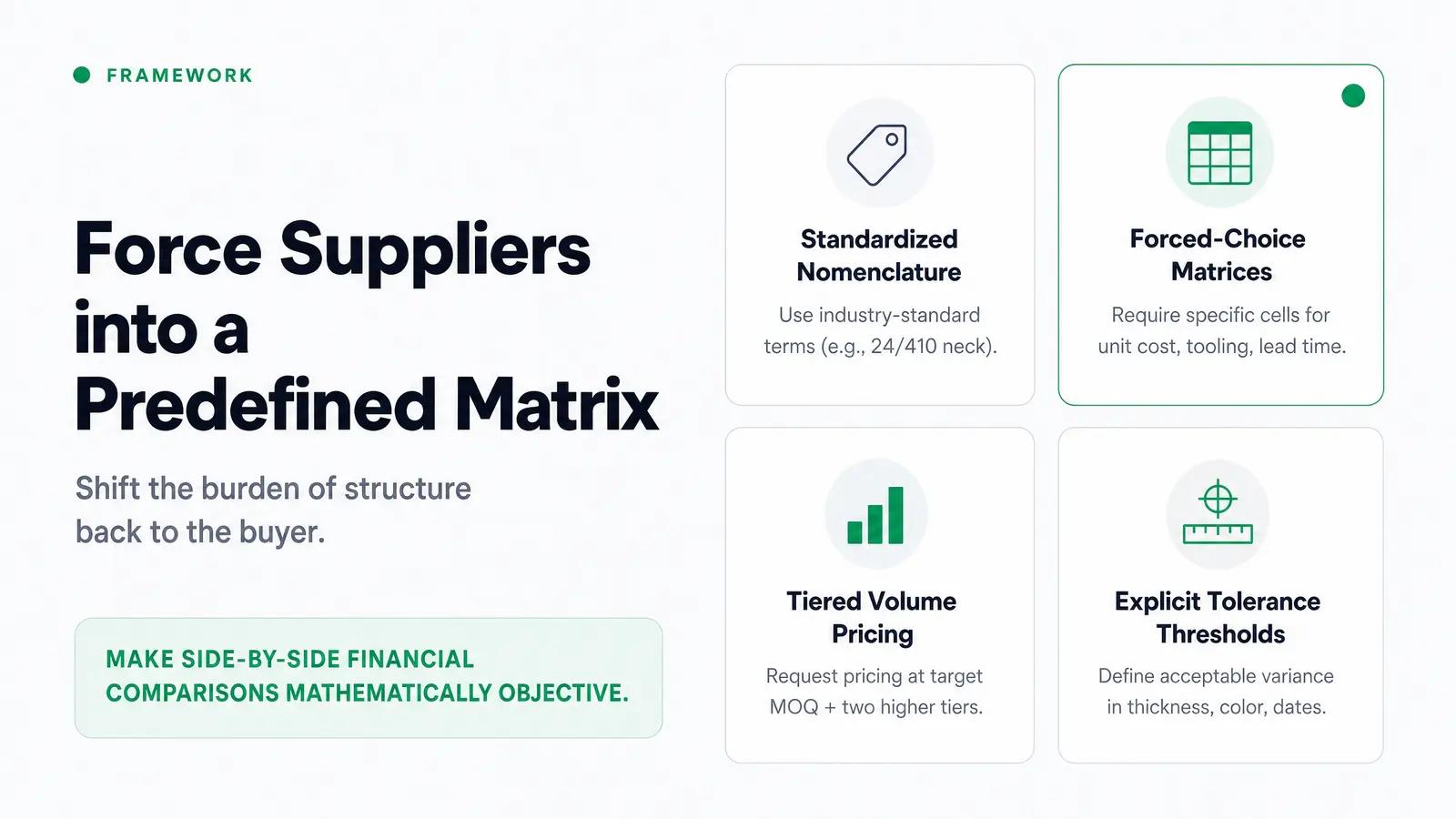
To solve this, we recommend a practical framework called The Comparable Quote Framework. This approach shifts the burden of structure from the supplier back to the buyer, ensuring every response fits into a predefined matrix.
The framework consists of four non-negotiable pillars:
- Standardized Component Nomenclature: Using industry-standard terms (e.g., "24/410 neck finish" instead of "standard pump neck"). This eliminates confusion and ensures the supplier knows exactly what machinery and molds are required.
- Forced-Choice Matrices: Providing a spreadsheet or table where suppliers must fill in specific cells for unit cost, tooling cost, and lead time, rather than allowing them to submit their own PDF quote formats. This forces standardization across all your bids.
- Tiered Volume Pricing Requests: Asking for pricing at your target Minimum Order Quantity (MOQ), plus two higher tiers, to reveal the supplier’s economies of scale. This helps you forecast future costs as your brand grows.
- Explicit Tolerance Thresholds: Defining what variance in material thickness, color matching, or delivery dates is acceptable. Setting these boundaries upfront prevents costly disputes during production.
By forcing suppliers to populate your matrix rather than reviewing their disparate quote documents, you instantly highlight missing information and make side-by-side financial comparisons mathematically objective.
The Contrarian Insight: Why "Over-Explaining" Your Brand Hurts Your RFQ
Conventional procurement advice often suggests that buyers should "sell their brand vision" to suppliers to secure better pricing or priority treatment. In the cosmetic packaging industry, this approach frequently backfires.
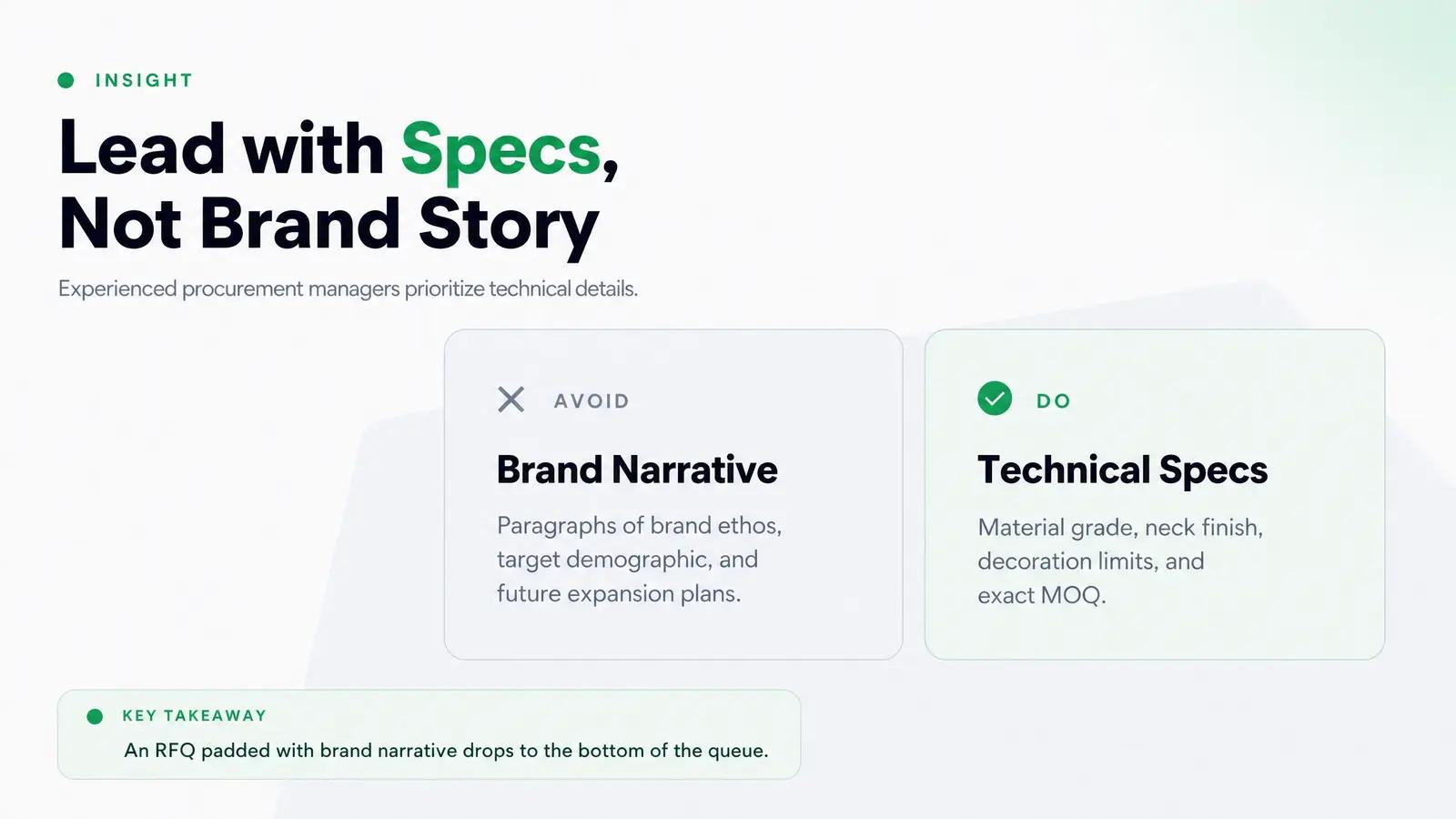
When an RFQ leads with three paragraphs about a brand's ethos, target demographic, and future expansion plans, it signals to the supplier that the buyer is inexperienced [1]. Experienced procurement managers lead with technical specifications, not marketing copy.
Suppliers evaluate RFQs based on "quote friction"—how much engineering and sales time it will take to generate an accurate price [2]. An RFQ padded with brand narrative obscures the critical technical details (material grade, neck finish, decoration limits) that estimators need. If an estimator has to hunt for the fill volume and MOQ buried beneath a brand story, your RFQ drops to the bottom of their queue. Keep it clinical.
Anatomy of a Complete RFQ
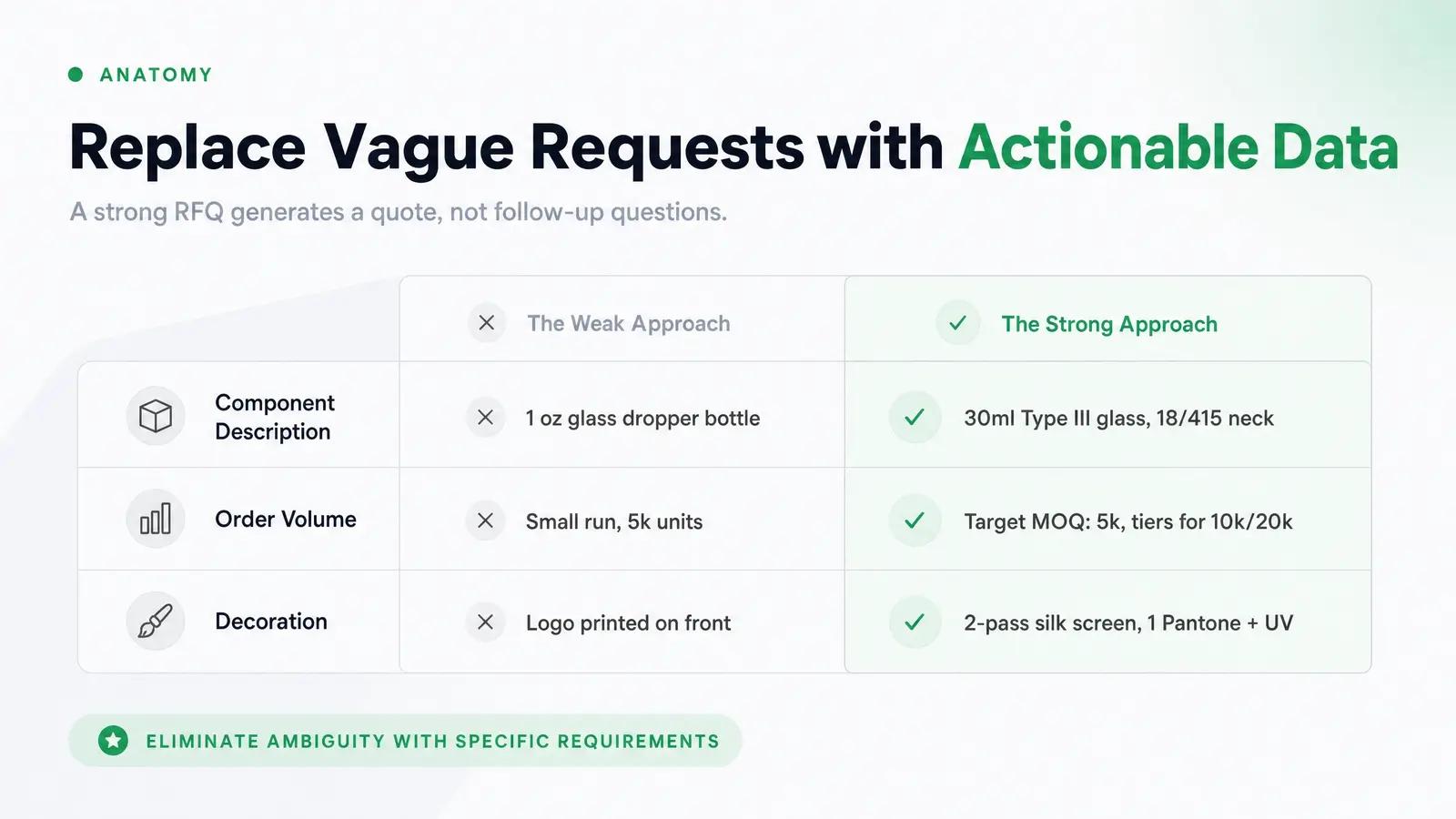
A weak RFQ generates follow-up questions; a strong RFQ generates a quote. The table below illustrates the difference between what inexperienced buyers include and what suppliers actually need to see.
| RFQ Element | The Weak/Incomplete Approach | The Strong/Complete Approach |
|---|---|---|
| Component Description | "1 oz glass dropper bottle for serum" | "30ml (1 oz) Type III molded glass bottle, 18/415 neck finish, clear flint glass. Includes matched glass pipette, nitrile bulb, and PP ribbed collar." |
| Order Volume | "We need a small run to start, maybe 5,000 units." | "Target MOQ: 5,000 units. Please also provide tiered pricing for 10,000 and 20,000 units." |
| Decoration/Artwork | "We want our logo printed on the front." | "Decoration: 2-pass silk screen printing on bottle body (1 Pantone color + 1 UV coating). No decoration on collar or bulb. Artwork dielines requested." |
| Shipping Terms | "Shipping to our warehouse in Ohio." | "FOB origin pricing required, plus estimated DDP pricing to Houston, TX 77086. Please specify pallet dimensions and units per master carton." |
| Quality Standards | "Must be high quality." | "Must comply with ISO 22715:2006 packaging standards. Supplier must provide AQL (Acceptable Quality Limit) standards for visual defects prior to production." |
Worked Example: Sourcing a Vitamin C Serum Component
Let’s look at how this translates into a real-world scenario.
Sarah is a founder launching a new 1 oz (30 ml) Vitamin C serum. She needs 5,000 units for her initial direct-to-consumer (DTC) launch. She wants a frosted glass dropper bottle with custom silk-screen printing.
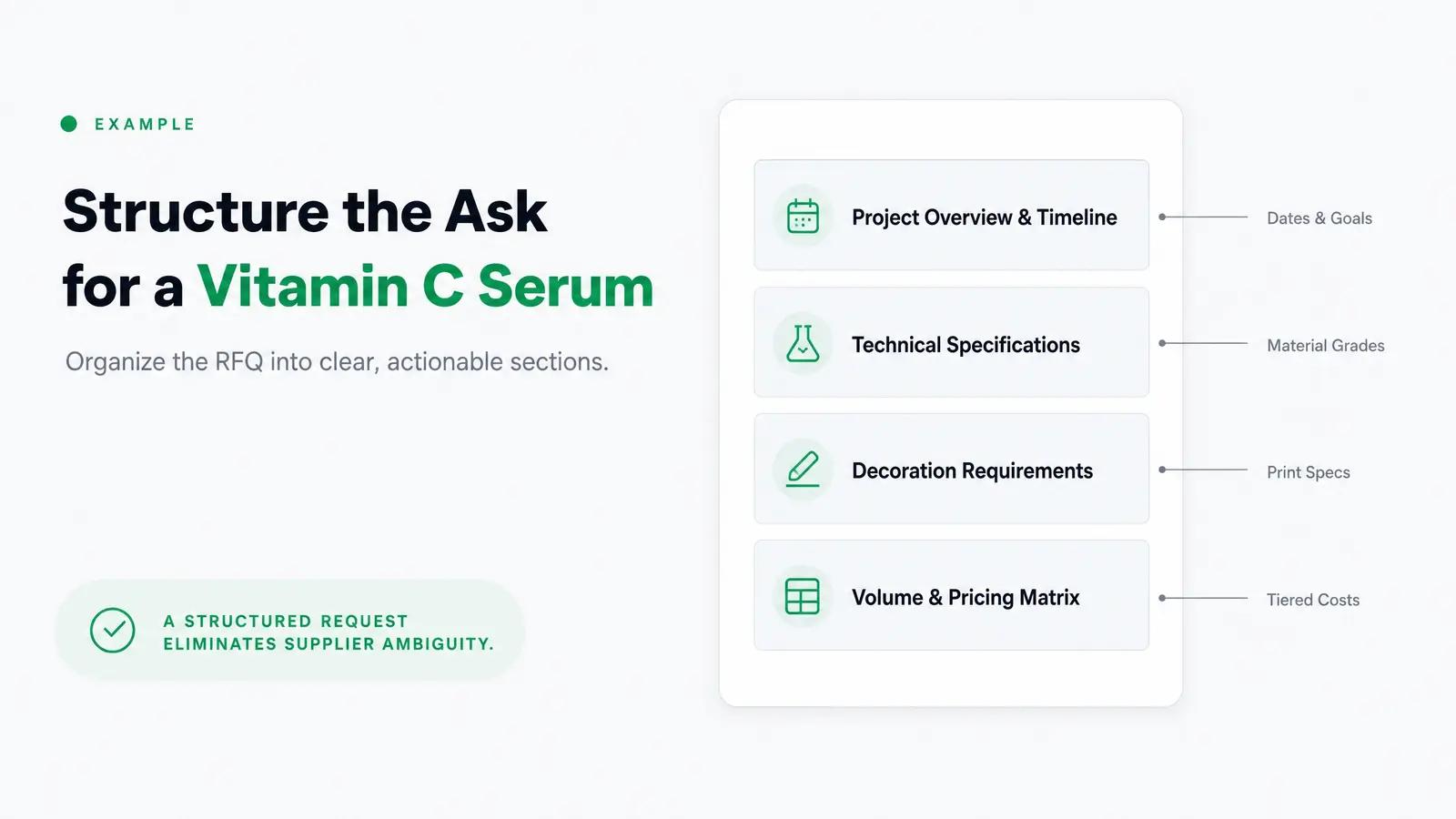
Instead of sending a generic email, Sarah structures her RFQ into clear, actionable sections:
1. Project Overview & Timeline
- Product: 30ml Vitamin C Serum
- Component Required: 30ml Glass Dropper Bottle (Bottle + Pipette + Bulb + Collar)
- Target Delivery Date: October 15, 2026
- Quote Required By: August 10, 2026
2. Technical Specifications
- Bottle Material: Type III molded glass, frosted finish.
- Neck Finish: 18/415.
- Collar Material: Polypropylene (PP), matte white.
- Bulb Material: Nitrile rubber (compatible with high-acidity formulations), white.
- Pipette: Borosilicate glass, rounded tip.
3. Decoration Requirements
- Method: Silk screen printing directly on the glass bottle.
- Colors: 2 Pantone colors (Black and PMS 177 C).
- Print Area: Full wrap permitted, excluding the bottom 5mm and neck curve.
4. Volume & Pricing Matrix (The "Ask") Sarah provides a blank table and explicitly asks the supplier to fill it out:
- Price per unit at 5,000 MOQ
- Price per unit at 10,000 MOQ
- One-time setup/tooling costs for silk screening
- Estimated lead time for pre-production samples (PPS)
- Estimated lead time for mass production (post-PPS approval)
By structuring her request this way, Sarah eliminates ambiguity. The supplier knows exactly what she wants, what materials are required to prevent formulation incompatibility, and how to format their response. When she receives three quotes back, she can easily compare the unit costs and lead times without having to decipher different supplier pricing models.
Deep Dive: Material Specifications
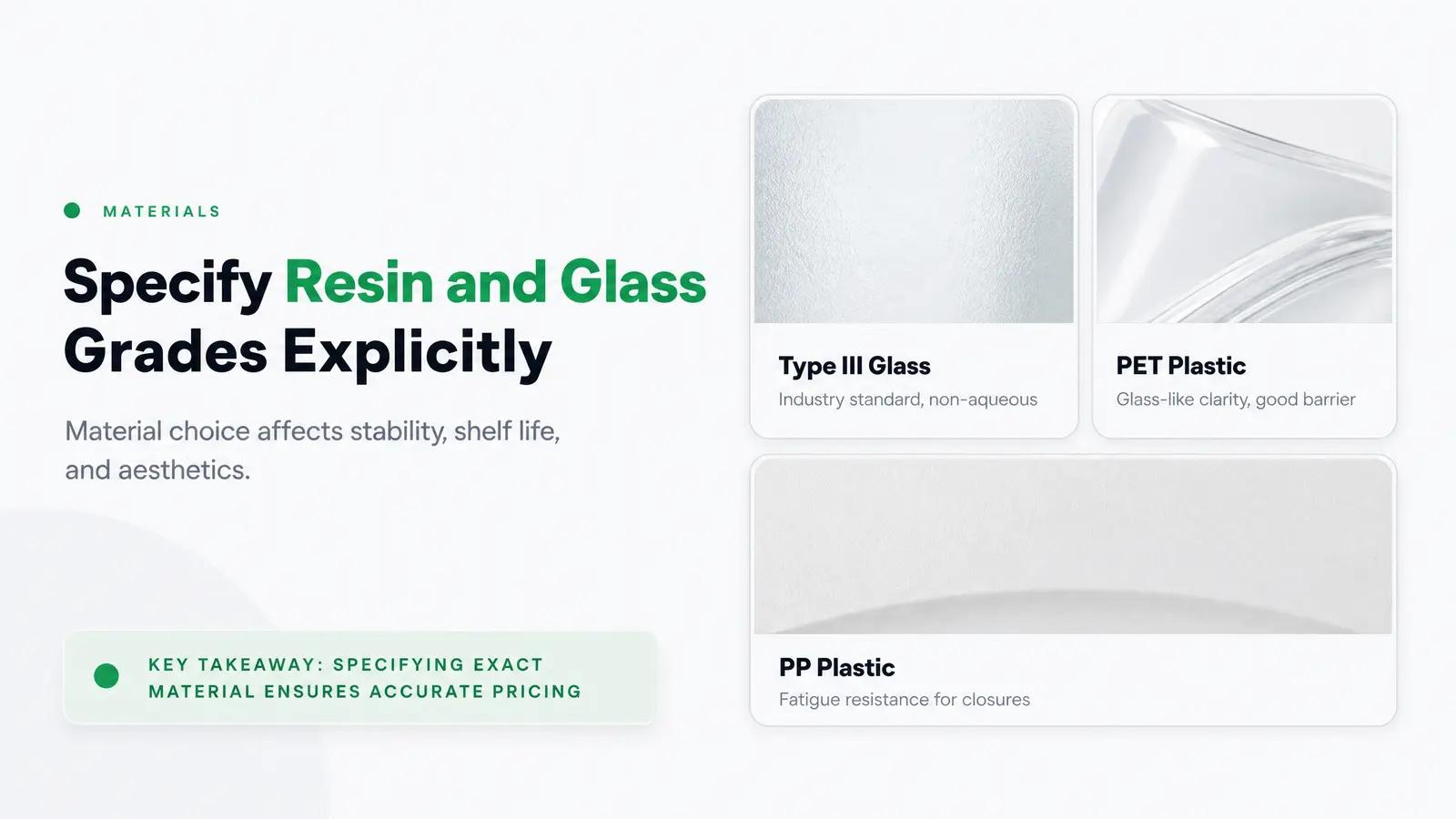
Specifying the correct material is crucial. Glass isn't just glass, and plastic isn't just plastic. The specific grade of material affects product stability, shelf life, and aesthetic appeal.
Glass: Type I borosilicate glass offers the highest chemical resistance but is more expensive. Type III soda-lime glass is the industry standard for most cosmetics and is suitable for non-aqueous or less reactive formulations. Specifying the type prevents suppliers from quoting cheaper, potentially incompatible materials.
Plastics: When requesting plastic components, you must define the resin. Polyethylene Terephthalate (PET) offers glass-like clarity and good barrier properties. High-Density Polyethylene (HDPE) is durable and widely used for bottles. Polypropylene (PP) is common for closures and caps due to its fatigue resistance. Specifying the exact resin ensures accurate pricing and avoids compatibility issues later.
Understanding Lead Times and Supply Chain Realities
A critical component of any RFQ is understanding realistic lead times. Many founders underestimate the time required to move from an initial quote to a delivered product.
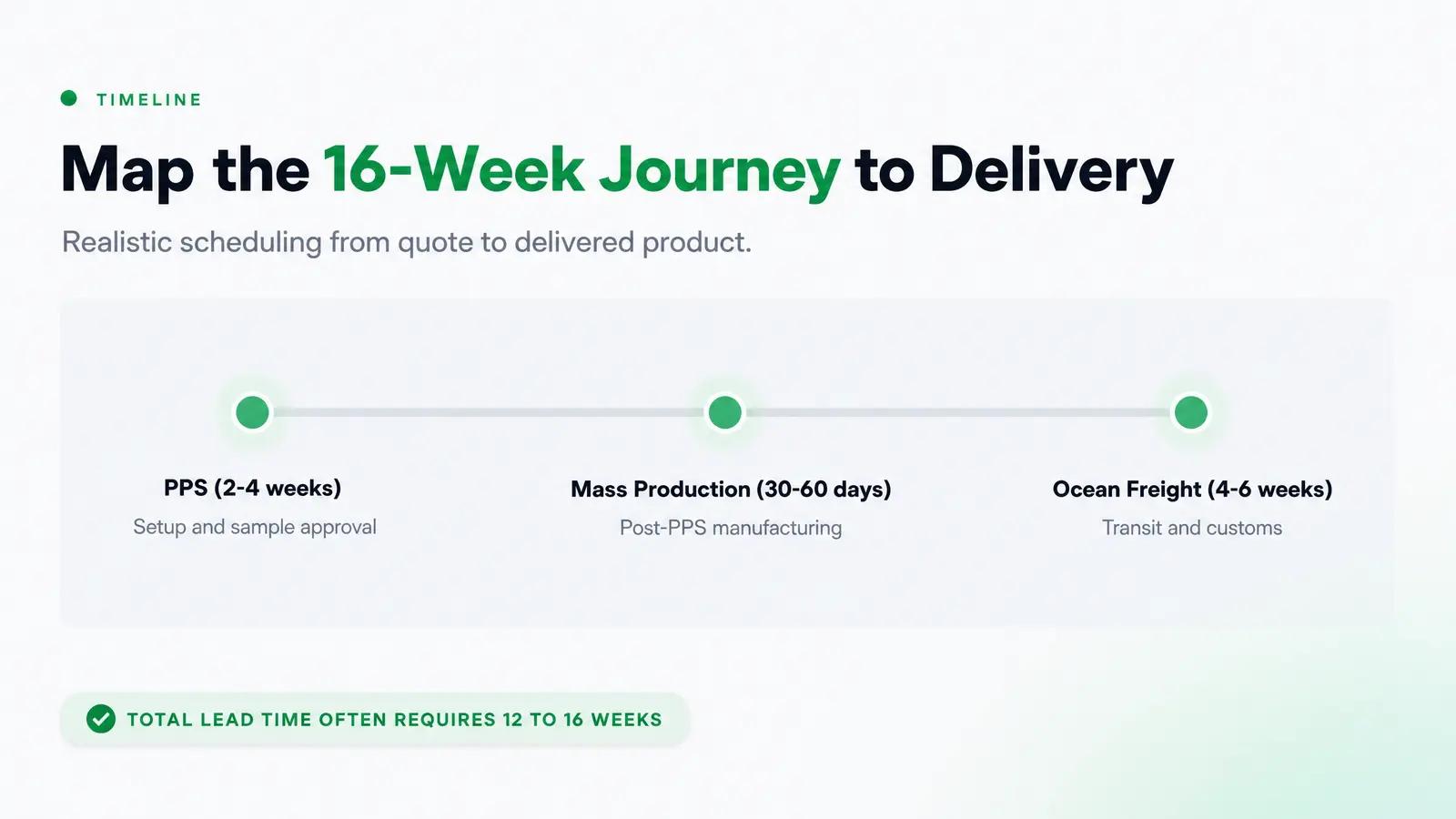
Pre-Production Samples (PPS): Before mass production begins, suppliers must create a pre-production sample. This involves setting up the machinery, applying the requested decoration, and sending the sample for your approval. This process alone can take 2 to 4 weeks.
Mass Production: Once the PPS is approved, mass production begins. Depending on the complexity of the component and the supplier's current capacity, this phase typically requires 30 to 60 days.
Freight and Logistics: If sourcing internationally, ocean freight adds significant time. Transit from major Asian ports to North America can take 4 to 6 weeks, not including customs clearance and inland transportation. Your RFQ should ask for lead times broken down by these phases to ensure your launch schedule is realistic.
Factory Vetting Checklist
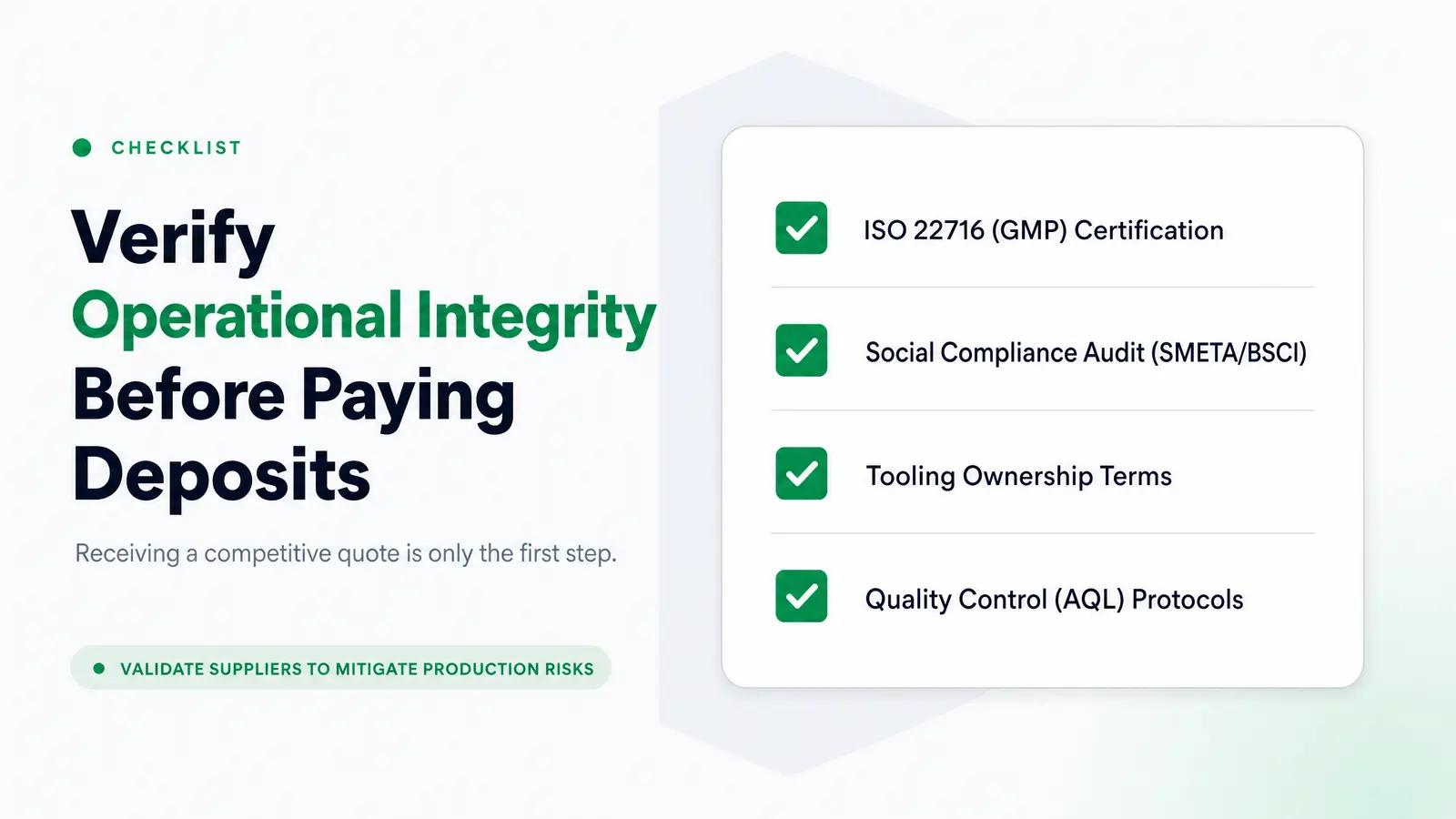
Receiving a competitive quote is only the first step. Before awarding a contract or paying a 30% deposit, you must verify the supplier's operational integrity. Use this checklist to vet potential manufacturing partners:
- ISO 22716 (GMP) Certification: Verify they hold current Good Manufacturing Practice certification for cosmetics [3].
- Social Compliance Audit: Request their most recent SMETA (Sedex Members Ethical Trade Audit) or BSCI report to ensure ethical labor practices [4].
- Tooling Ownership Terms: Confirm in writing whether you own the custom molds/tooling after paying the setup fees, or if the supplier retains ownership.
- Sample Process: Verify their timeline and cost for providing pre-production samples (PPS) using your exact formulation.
- Quality Control (QC) Protocols: Request their standard AQL (Acceptable Quality Limit) documentation for critical, major, and minor defects.
- Material Traceability: Ensure they can provide certificates of analysis (COA) for all raw materials (e.g., confirming glass type or plastic resin purity).
- MoCRA Compliance Support: Confirm they can provide the necessary material data to support your compliance with the Modernization of Cosmetics Regulation Act (MoCRA) [5].
- Payment Terms: Standard terms are typically 30% deposit to initiate production, with the 70% balance due against the Bill of Lading (B/L) or prior to shipment [6]. Be wary of suppliers demanding 100% upfront for mass production.
If writing and managing RFQs sounds like the wrong use of your time right now, Packfolio's catalog lets you skip the procurement headache entirely. You can browse vetted, pre-modeled components, customize them in 3D, and order directly—while Packfolio handles the supplier coordination, quality assurance, and freight.
The Importance of Decoration Details
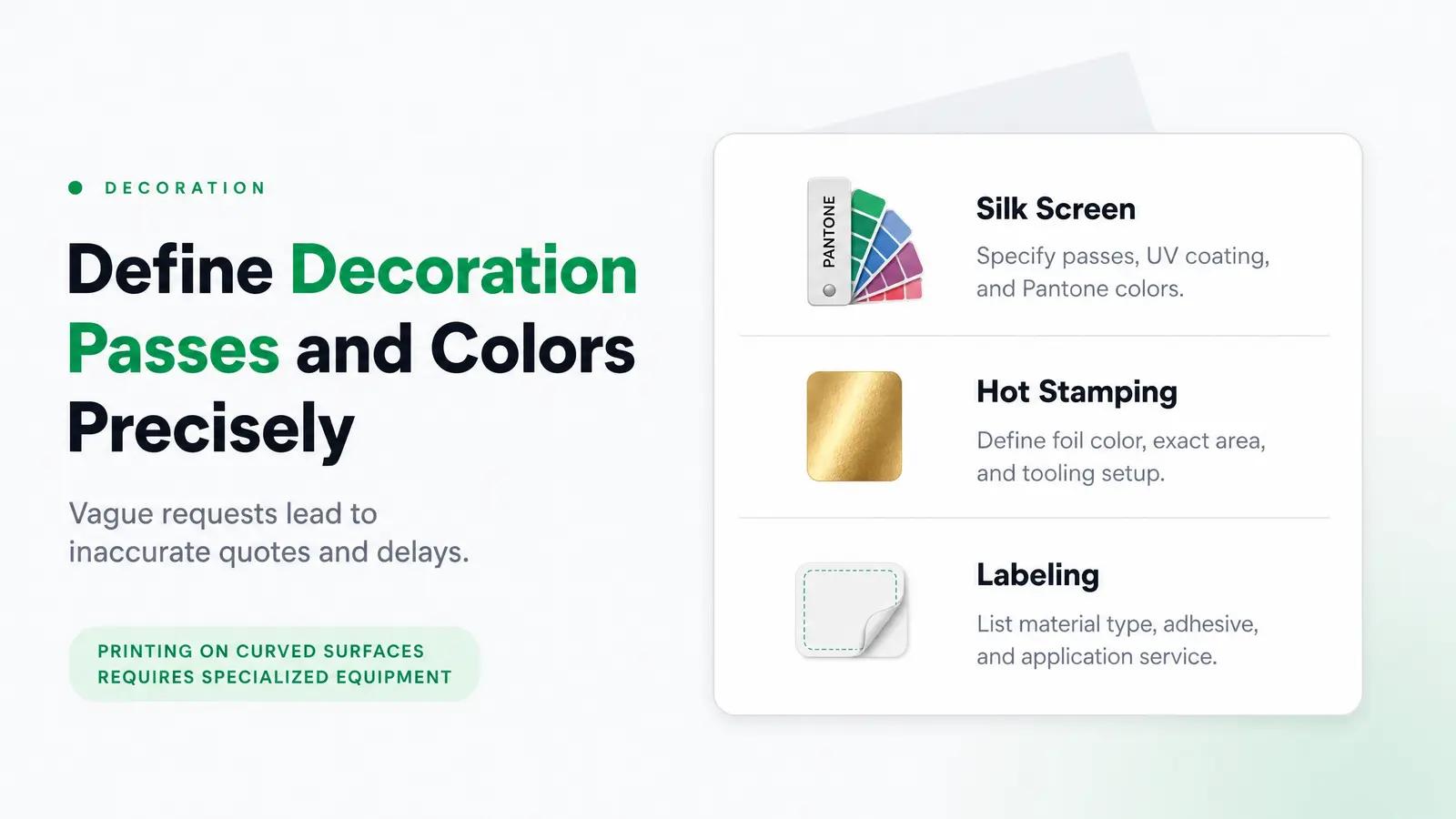
Decoration is often where RFQs fall short. Vague requests like "print our logo" lead to inaccurate quotes and production delays.
Silk Screen Printing: If you require silk screen printing, specify the number of passes (colors) and whether a UV coating is needed for durability. Provide the exact Pantone (PMS) colors. Note that printing on curved surfaces requires specialized equipment, which can affect pricing.
Hot Stamping: For metallic accents, hot stamping is common. Specify the foil color (e.g., gold, silver, rose gold) and the exact area to be stamped. Hot stamping often requires a separate tooling setup, which should be explicitly requested in the pricing matrix.
Labeling: If you plan to apply labels instead of direct printing, specify the label material (e.g., BOPP, paper) and the adhesive type. Ask the supplier if they offer automated label application services and request pricing for this additional step.
Managing the Quote Review Process
Once the quotes arrive, the real work begins. If you've used the Comparable Quote Framework, this process is significantly easier.
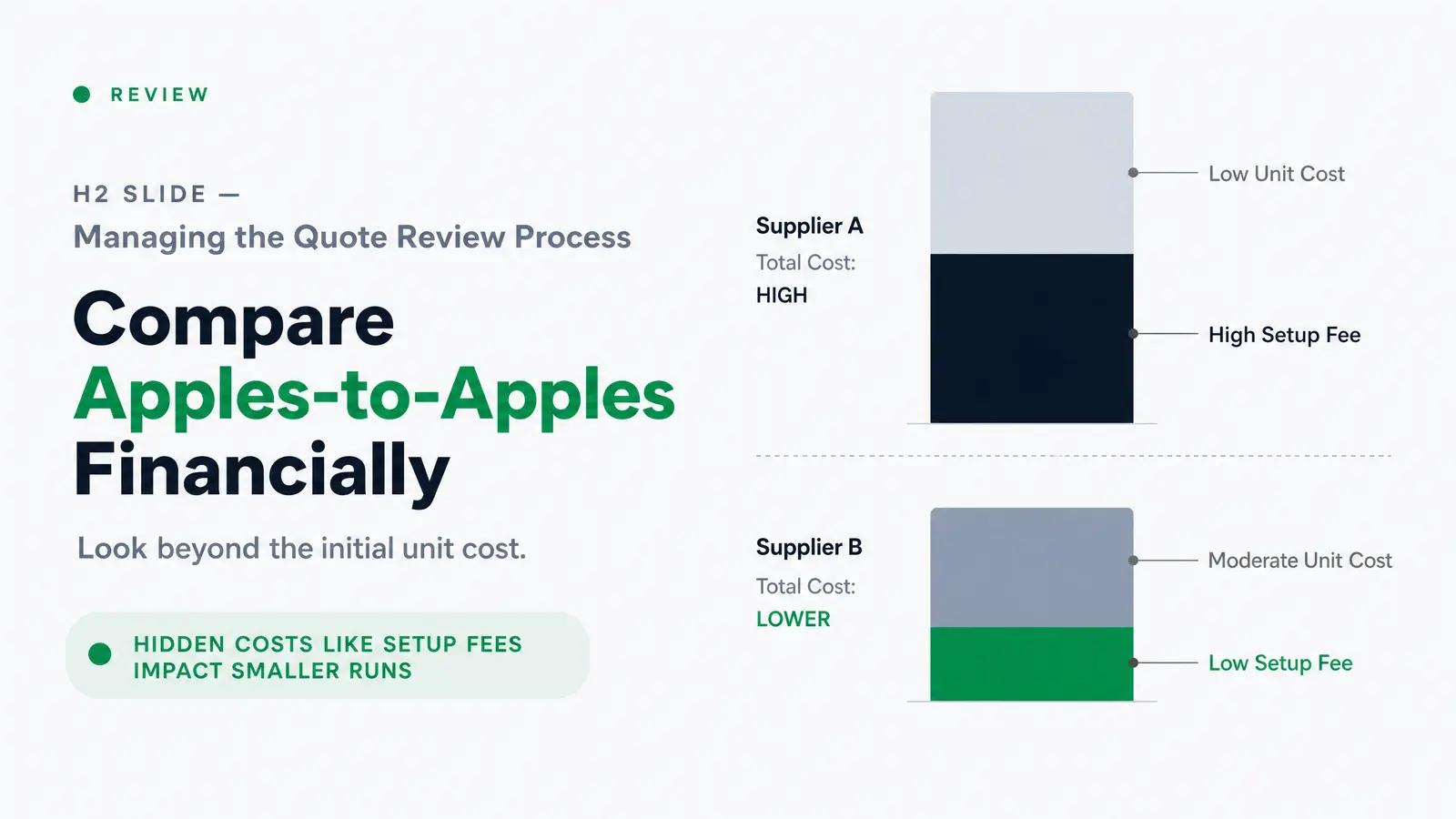
Apples-to-Apples Comparison: Review the populated matrices side-by-side. Look for discrepancies in tooling costs or lead times. If one supplier's unit cost is significantly lower, check their freight terms—they may be quoting FOB while others are quoting DDP.
The Hidden Costs: Pay close attention to setup fees, tooling costs, and minimum order surcharges. A low unit cost might be offset by exorbitant one-time fees, making a seemingly more expensive supplier the better overall choice for smaller runs.
Communication Evaluation: Assess how the supplier communicated during the RFQ process. Did they ask clarifying questions? Did they meet your deadline? A supplier who is difficult to reach during the quoting phase will likely be difficult to manage during production.
Establishing Quality Control Standards
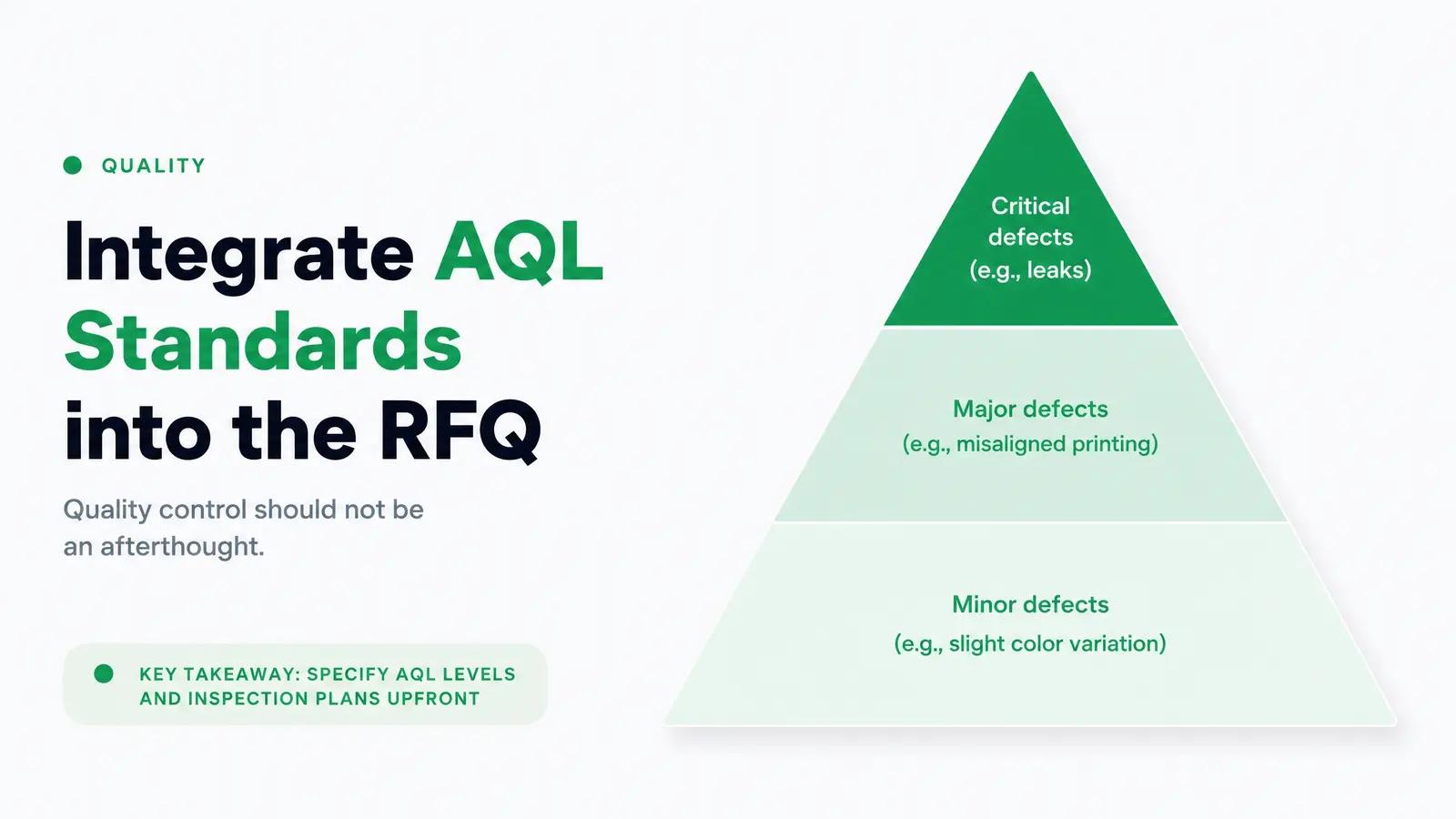
Quality control should not be an afterthought. It must be integrated into the RFQ process.
AQL Standards: Acceptable Quality Limit (AQL) defines the maximum number of defective units considered acceptable during a random inspection. Specify your required AQL levels for critical defects (e.g., leaks), major defects (e.g., misaligned printing), and minor defects (e.g., slight color variation).
Third-Party Inspections: Indicate in your RFQ whether you plan to use a third-party inspection service before shipment. Suppliers who balk at third-party inspections may have underlying quality issues.
Defect Resolution: Ask the supplier to outline their process for handling defective shipments. Will they replace the units, offer a credit, or require you to return the defective items at your expense?
Building Supplier Relationships
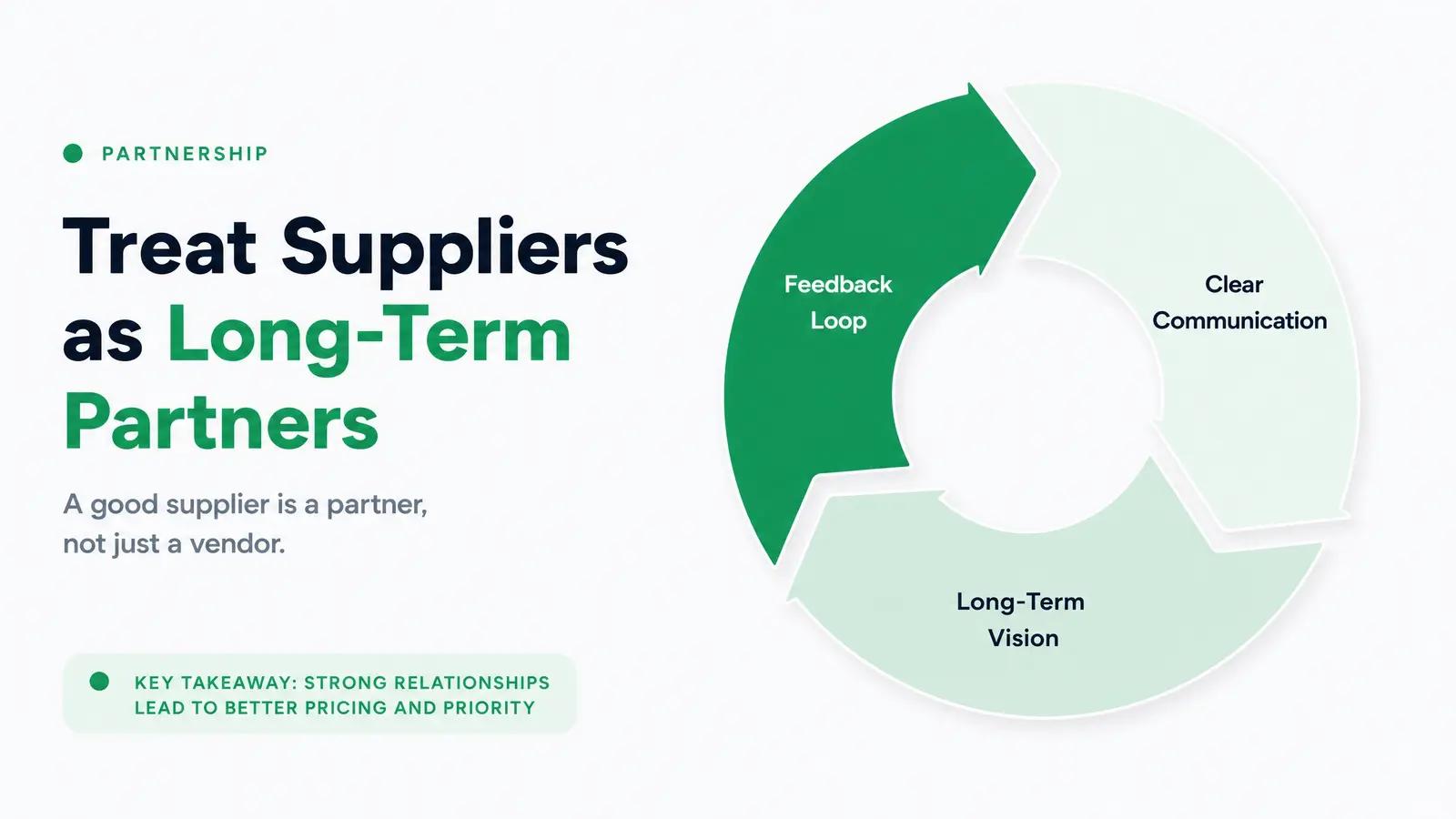
While the RFQ process should be structured and data-driven, building a strong relationship with your chosen supplier is equally important. A good supplier is a partner, not just a vendor.
Clear Communication: Maintain open and honest communication. If you anticipate a delay in providing artwork or approving a sample, inform the supplier immediately. Respect their time, and they will respect yours.
Long-Term Vision: Share your long-term goals with your supplier. If they know you plan to scale rapidly, they may be more willing to negotiate on pricing or prioritize your orders.
Feedback Loop: Provide constructive feedback after each production run. Acknowledge what went well and identify areas for improvement. This helps the supplier understand your expectations and refine their processes.
Getting to Market Faster
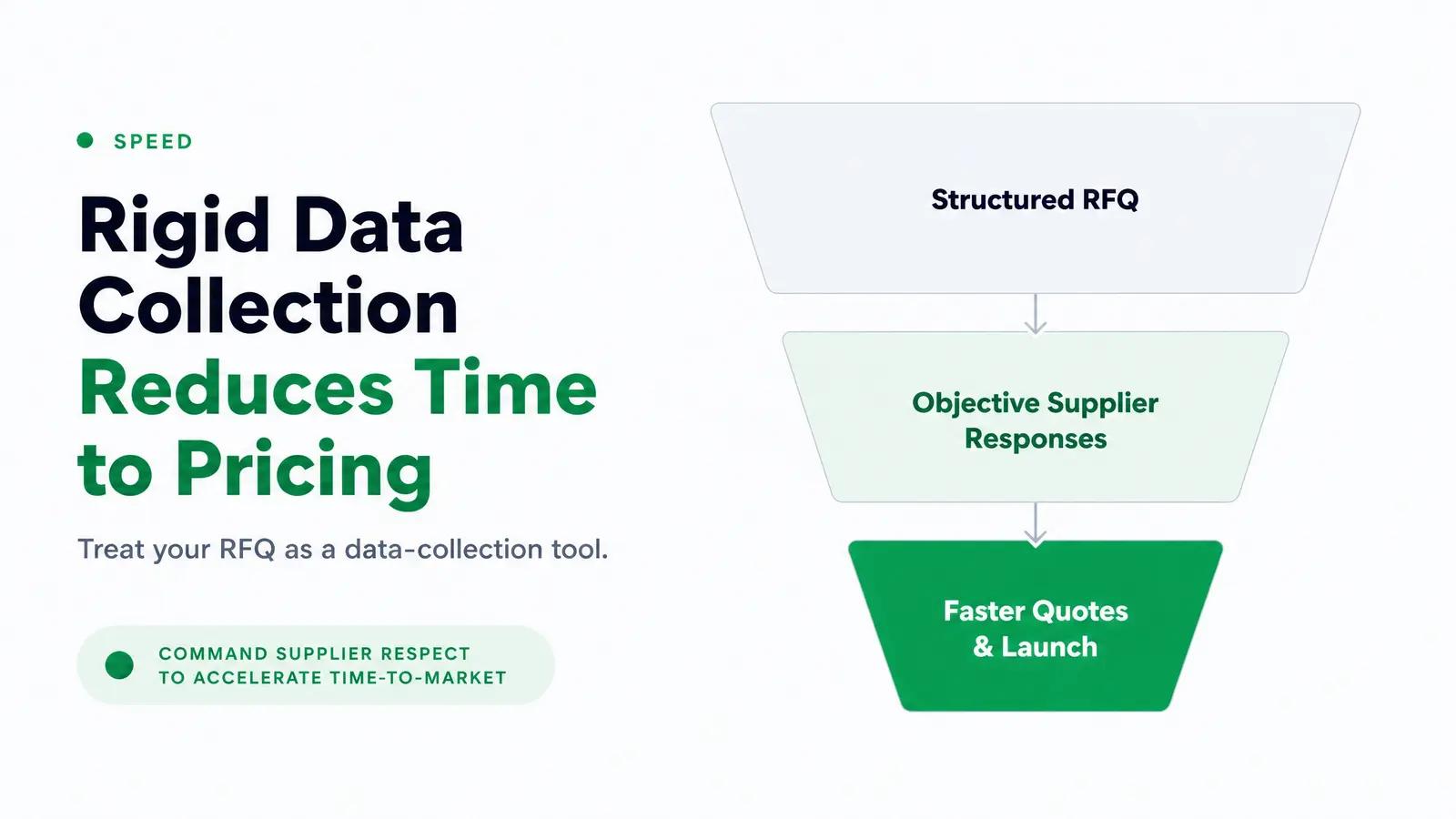
The RFQ process doesn't have to be a black hole of unanswered emails and confusing spreadsheets. By treating your RFQ as a rigid data-collection tool rather than a conversational request, you command supplier respect and drastically reduce the time it takes to get accurate pricing.
Browse Packfolio's curated cosmetic packaging catalog and preview your label in 3D before ordering — no supplier emails required. → Explore the catalog
Frequently Asked Questions
What information do I need before writing a cosmetic packaging RFQ? Before drafting an RFQ, you need your formulation's chemical compatibility requirements (e.g., acidity, light sensitivity), target fill volume (e.g., 30ml), desired materials, decoration methods, and your minimum order quantity (MOQ). You should also know your target delivery date and shipping destination.
How do I compare cosmetic packaging supplier quotes? To effectively compare quotes, you must force suppliers to use a standardized pricing matrix that breaks out unit costs, one-time tooling/setup fees, and freight costs separately. This prevents suppliers from hiding setup fees inside the unit cost, allowing for a true apples-to-apples financial comparison.
What is a standard MOQ for custom cosmetic packaging? For custom-decorated cosmetic packaging, standard MOQs typically range from 5,000 to 10,000 units. While some suppliers offer lower MOQs (1,000-2,500 units), these usually apply to stock components with minimal customization and carry a significantly higher per-unit cost.
How long is the typical lead time for cosmetic packaging? After approving a pre-production sample, mass production for cosmetic packaging generally takes 30 to 60 days. However, when factoring in raw material procurement, quality inspections, and international ocean freight, the total lead time from order placement to delivery is often 12 to 16 weeks.
Who owns the custom molds or tooling after I pay for them? Tooling ownership must be explicitly negotiated in your RFQ and contract. In many cases, paying a "tooling fee" only grants you exclusive use of the mold at that specific factory; if you want the right to physically move the mold to a different supplier later, you must establish "private mold" ownership upfront.
References
- A Complete Guide to RFQs Purchaser AI. 2025.
- 5 Ways to Increase Supplier Responses to your RFQs Fairmarkit. 2023.
- Navigating the Labyrinth of Compliance: Essential Certifications for Cosmetic Packaging Suppliers Eastcolor. 2026.
- amfori BSCI or SMETA? Which ethical audit do I need? Eurofins. 2024.
- Modernization of Cosmetics Regulation Act of 2022 (MoCRA) U.S. Food and Drug Administration. 2026.
- 30% Deposit 70% Before Shipment or Against B/L Advanta Sourcing. 2023.


