
Cosmetic Packaging Sample Inspection Checklist
A five-gate framework helps cosmetic brands systematically inspect packaging samples for functional performance, dimensional accuracy, print quality, and production readiness before approving mass production.
The moment a box of samples arrives, most founders either approve on first impression or reject on vague instinct. A sample feels right, or it doesn't. But evaluating packaging based on how it looks and feels during an unboxing is a fast track to mass production failures. Establish a structured quality-control review instead. Treating the sample as a production-readiness document, rather than an unboxing experience, changes the decision quality entirely.
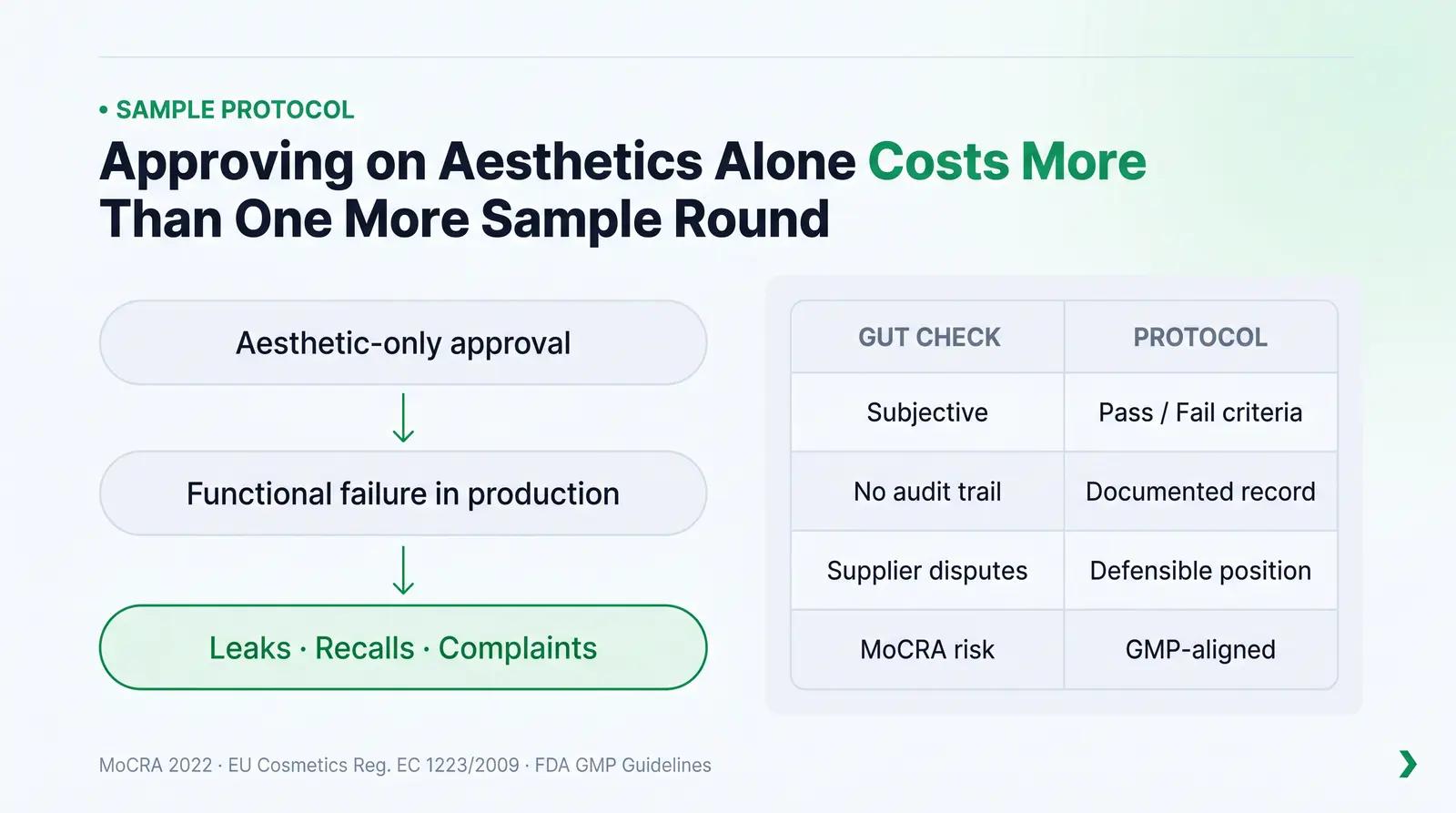
Why Sample Approval Needs a Protocol, Not a Gut Check
The cost of approving a bad sample is significantly higher than the cost of requesting one more round of prototypes. When a brand approves a sample based solely on aesthetics, they assume the functional and structural elements will naturally align in mass production. This assumption is rarely correct. A poorly fitted pump, a closure that cannot withstand transit vibration, or a label with inadequate adhesion can lead to thousands of leaked units, customer complaints, and costly recalls.
Regulatory context also demands a more rigorous approach. Under the Modernization of Cosmetics Regulation Act of 2022 (MoCRA), the FDA has expanded its authority to regulate cosmetics, emphasizing the safety of cosmetic products and their packaging [1]. MoCRA requires responsible persons to ensure and maintain records supporting adequate safety substantiation of their cosmetic products, and packaging is a core component of that substantiation. The FDA's Good Manufacturing Practice (GMP) guidelines explicitly state that raw materials and primary packaging materials must be stored and handled to prevent contamination, and that samples must be tested to verify their identity and compliance with specifications [2].
In Europe, the EU Cosmetics Regulation (EC) No 1223/2009 similarly mandates that the product safety report must include information on the relevant characteristics of the packaging material, including purity, stability, and traces of prohibited substances [3]. Packaging is not just a container; it is a critical component of product safety and stability. A formal sample review should produce a written pass/fail record with documented criteria, providing a clear audit trail for compliance and quality assurance. Without this record, a brand has no defensible position if a production batch fails and a supplier disputes responsibility.
The Packfolio Five-Gate Sample Approval Framework
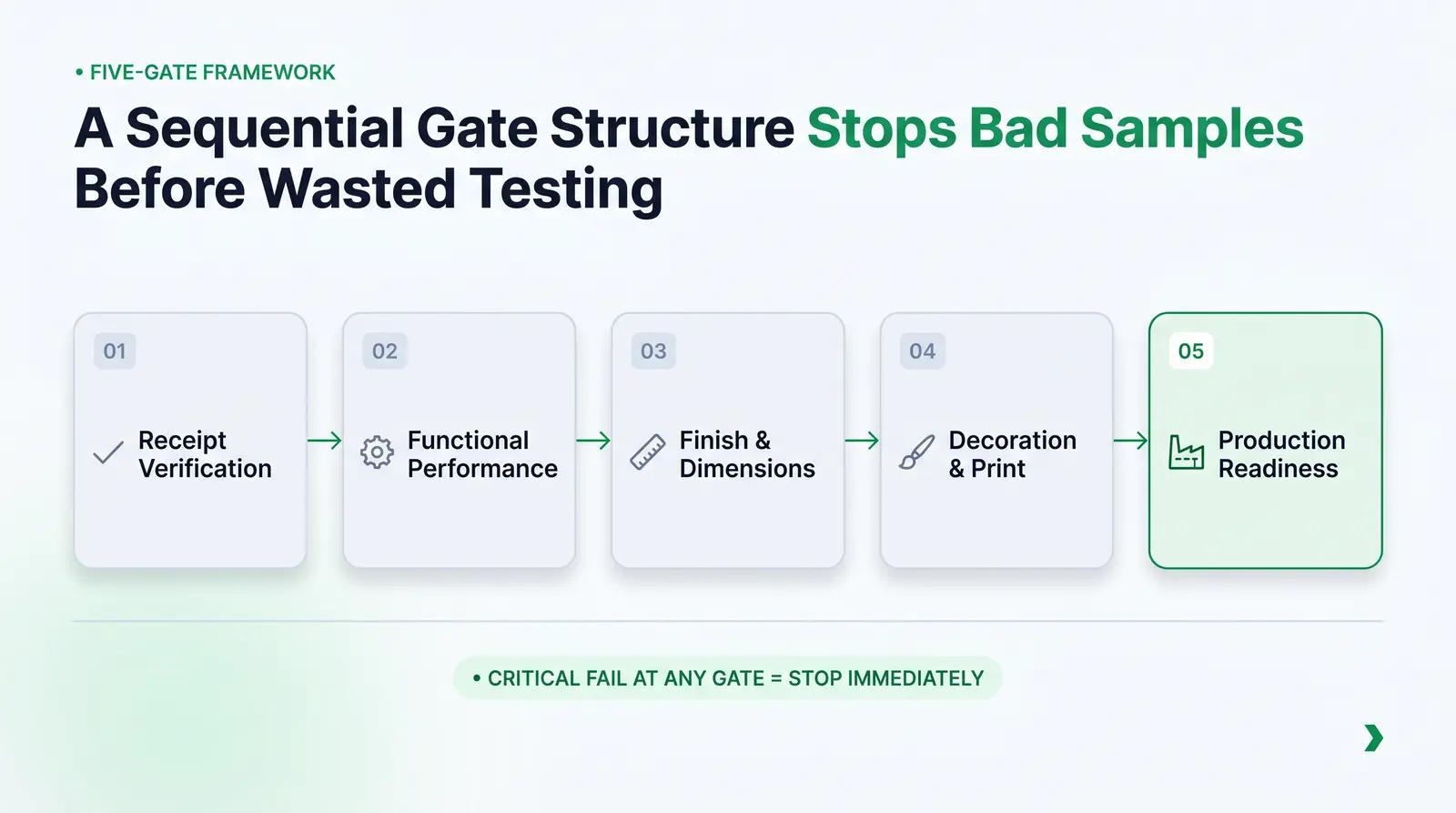
To move from subjective impressions to objective quality control, Packfolio recommends the Five-Gate Sample Approval Framework. Constructed from first principles and grounded in cited industry standards, this multi-axis inspection framework treats sample evaluation as a sequential process. A sample must pass each gate in order; a critical fail at any gate stops the approval process immediately. This sequential logic is deliberate. There is no value in testing print registration on a sample that has already failed a leak test.
The framework covers five dimensions of evaluation: receipt verification, functional performance, finish and dimensional accuracy, decoration and print quality, and production readiness signals. Together, these five gates address the full arc from the moment the sample arrives to the moment a production order is signed.
Gate 1: Receipt Verification
The inspection begins before the box is even opened. Receipt verification ensures that the sample matches the requested specifications and arrived in the expected condition. Check the correct SKU and specification sheet match to confirm the supplier sent the exact component requested. A common error is receiving a close substitute rather than the specified SKU, particularly when sourcing internationally. Verify the quantity received against the packing list; a single unit is insufficient for a comprehensive test, and most functional evaluations require testing at least three to five units to identify consistency issues.
Evaluate the packaging condition during transit. If the sample box arrived crushed or damaged, it may indicate insufficient protective packaging from the supplier, which could translate to higher damage rates during bulk shipping. Finally, ensure reference number alignment across all documentation to maintain traceability between the sample, the specification sheet, and any future production order.
Gate 2: Functional Performance
Functional performance testing evaluates the mechanical and dispensing capabilities of the packaging. This is where many aesthetic-driven approvals fail. The tests differ by format type, but the underlying principle is consistent: the packaging must perform its intended function reliably and consistently across multiple actuations.
Pumps: Test actuation force, stroke volume, and the number of priming cycles required to achieve the first dispense. A well-calibrated serum pump should prime within three to five strokes. Check for drip-back after release, which can contaminate the bottle neck and create a poor consumer experience. Verify the reliability of the lockdown mechanism. Industry guidance on pump dosage recommends matching the output to the intended application: pumps delivering less than 100 mcl (microliters) are appropriate for concentrated serums and actives, while pumps delivering more than 1 cc are better suited for body lotions and shampoos [4]. Formula compatibility is equally critical at this stage; if the pump's internal components interact negatively with the formula, swelling or warping can prevent the pump from working correctly [4].
Droppers: Measure the draw volume per squeeze. A standard 1 oz (30 ml) serum dropper should draw approximately 0.5 ml per actuation; significant deviation from this specification indicates a bulb sizing issue. Evaluate seal integrity using a negative pressure test: fill the bottle with colored water, secure the dropper, and place it upside down or in a vacuum chamber to check for leaks around the collar. A common failure point is the mismatch between the rubber bulb and the dropper ring, which can lead to leakage if not properly fitted [5]. Assess bulb rebound time to ensure the bulb returns to its original shape within one to two seconds of release.
Airless Pumps: Assess actuation smoothness and evacuation efficiency. Ensure there is no suck-back, which can introduce air and contaminate sensitive formulations. Airless systems should allow for 95 to 98% product evacuation, making them particularly well-suited for oxygen-sensitive actives like vitamin C and retinol [6]. Perform an extrusion test by pressing the pump repeatedly until the content is fully dispensed, verifying that the piston moves smoothly to the top.
Jars and Tubes: Measure closure torque for both application and removal using a digital torque tester. For tubes, evaluate squeeze recovery to ensure the material returns to its original shape after dispensing. The industry standard for application torque is defined by the closure size; for example, a 28mm cap typically requires 12 to 21 inch-pounds of application torque, while a 20mm cap requires 8 to 12 inch-pounds [7]. A cap that feels tight by hand may still be outside the specified torque range, making a torque tester essential for any production-bound evaluation.
Gate 3: Finish and Dimensional Accuracy
Once functional performance is verified, evaluate the physical finish and dimensional accuracy. Check surface finish for texture consistency, ensuring there are no sink marks, flash, or visible weld lines on any unit in the sample set. Sink marks and weld lines are indicators of tooling or processing issues that will likely worsen under the higher production speeds of a bulk run.
Compare the color match against a Pantone or RAL reference under consistent D65 daylight-equivalent lighting. Color evaluation under inconsistent lighting conditions is one of the most common sources of subjective disagreement between brands and suppliers [8]. Dimensional checks are critical for fill-equipment compatibility. Measure the neck finish and thread specifications, overall height, and diameter using digital calipers with a precision of at least 0.02 mm. A few millimeters of deviation in neck diameter can prevent a closure from seating correctly on a filling line. Finally, verify weight consistency across all units in the sample set. Significant weight variation between units suggests inconsistent wall thickness, which can affect both structural integrity and fill capacity.
Gate 4: Decoration and Print Quality
Decoration and print quality directly impact brand perception and regulatory compliance. Verify registration accuracy, ensuring tolerances are within acceptable limits. A tolerance of ±1 mm is generally acceptable for screen-printed elements; tighter tolerances may be required for fine-detail artwork or small-format packaging. Evaluate color density and consistency across the sample set using a spectrophotometer if available, or by visual comparison against an approved color standard.
Perform adhesion tests for labels and printed elements. A simple fingernail scrape test can reveal poor adhesion on labels, while a damp cloth rub test will identify ink that has not been properly cured. For hot stamp or screen print elements, ensure there is no smearing and that coverage is complete. Apply 3M 600 tape over the printed area, press firmly, and peel at a 45-degree angle; any significant ink or foil transfer indicates inadequate adhesion. If applicable, check UV coating uniformity for uneven gloss or uncured patches. ISO 22715:2006 specifies requirements for cosmetic packaging and labeling, mandating that all information be clear, legible, and durable under normal conditions of use [9].
Gate 5: Production Readiness Signals
The final gate evaluates whether the packaging and the supplier are ready for mass production. Confirm lead times against your launch timeline and ensure Minimum Order Quantity (MOQ) alignment with your planned production volume. A supplier who cannot meet your MOQ or lead time requirements is not production-ready regardless of how well the sample performs.
Review all required documentation, including Safety Data Sheets (SDS) or Technical Data Sheets (TDS) for materials, and component certifications such as food-grade or BPA-free claims if applicable. Confirm formula-container compatibility, especially for active ingredients. Certain serum ingredients, like high concentrations of alcohol or oil, can react with packaging materials, leading to leakage or degradation [5]. Compatibility testing protocols include stability tests under real-time and accelerated conditions, chemical compatibility tests for detecting chemical interactions, and barrier property tests to measure resistance to UV light, oxygen, or moisture. Finally, verify fill equipment compatibility. A closure that passes all other gates is unusable if it cannot be processed by your filling line or co-packer's equipment. Confirm thread specifications and closure dimensions with your co-packer before issuing any production approval.
Packaging Format Inspection Matrix
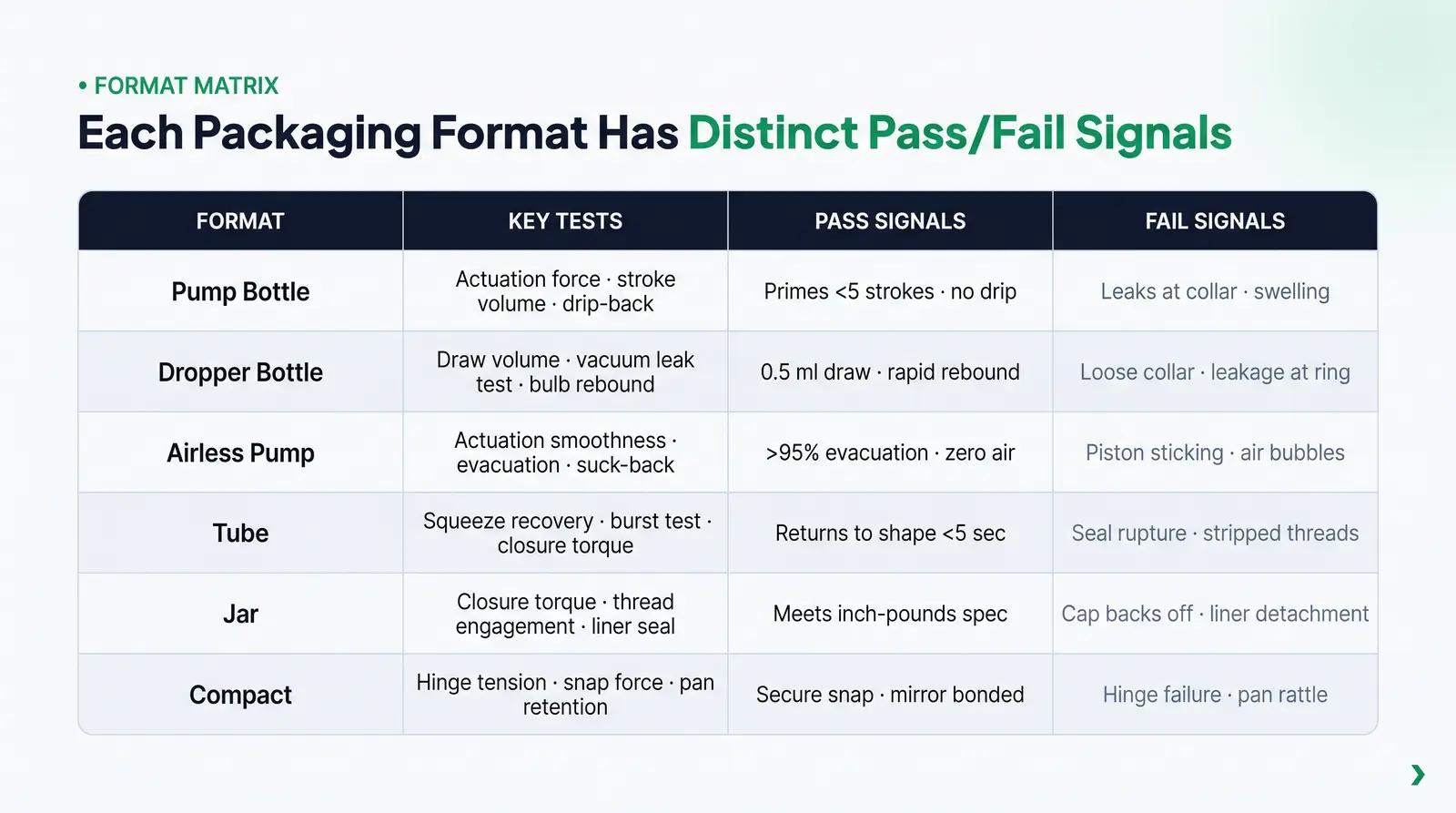
Different packaging formats require specific functional tests. The following matrix outlines the key tests and pass/fail signals for common cosmetic primary packaging types.
| Format Type | Key Functional Tests | Pass Signals | Fail Signals |
|---|---|---|---|
| Pump Bottle | Actuation force, stroke volume, priming cycles, drip-back, lockdown mechanism, formula compatibility | Consistent dosage, primes in <5 strokes, secure lockdown, no drip-back | Leaks at collar, inconsistent dosage, stiff actuation, pump swelling |
| Dropper Bottle | Draw volume per squeeze, negative pressure leak test, bulb rebound time, collar fit | Consistent 0.5 ml draw, no leaks under vacuum, rapid bulb rebound | Loose collar fit, poor suction, bulb deformation, leakage at ring |
| Airless Pump | Actuation smoothness, evacuation efficiency, suck-back test, piston movement | Smooth glide, >95% evacuation, zero air intake, piston reaches top | Piston sticking, product left in cylinder, air bubbles dispensed |
| Tube | Squeeze recovery, seal strength (burst test), closure torque, shoulder integrity | Returns to shape within 5 seconds, seals hold under pressure, cap threads smoothly | Creasing after squeeze, seal rupture, stripped threads, shoulder cracking |
| Jar | Closure torque (application/removal), thread engagement, liner seal integrity | Meets specified inch-pounds torque, smooth thread action, tight liner | Cap backs off under vibration, cross-threading, liner detachment |
| Compact | Hinge tension, snap closure force, mirror adhesion, pan fit and retention | Smooth open/close, secure snap, mirror firmly bonded, pan seats without play | Hinge failure, snap too loose or too stiff, mirror delamination, pan rattle |
Worked Example: Three Dropper Bottle Samples for a Vitamin C Serum
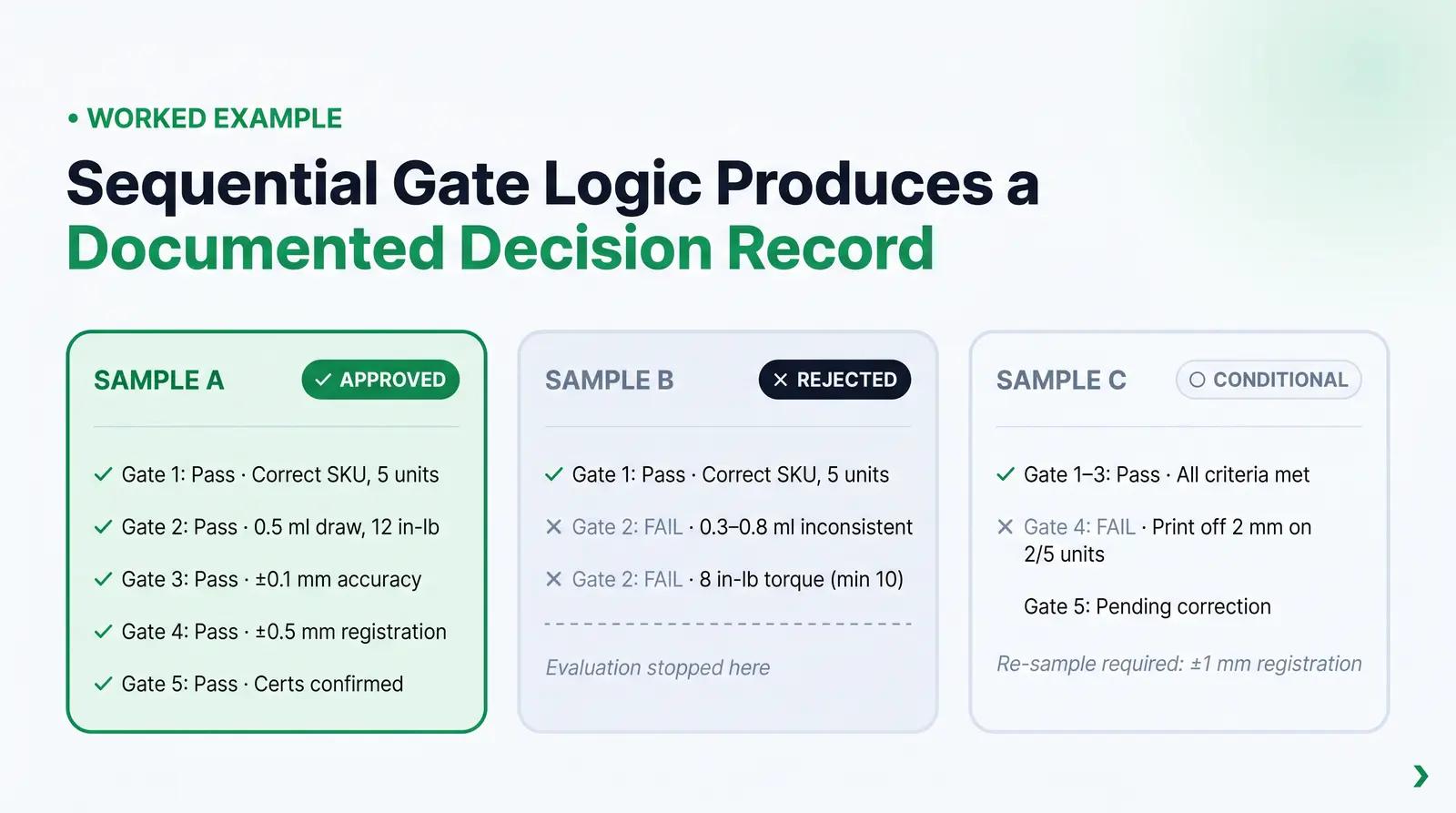
Consider a founder evaluating three dropper bottle samples for a 1 oz (30 ml) vitamin C serum. The specification calls for a 0.5 ml dropper draw volume, a closure torque of 10 to 14 inch-pounds, and print registration within ±1 mm. The founder applies the Five-Gate Sample Approval Framework to each sample.
Sample A arrives with the correct SKU, quantity of five units, and undamaged packaging (Gate 1: Pass). During functional testing (Gate 2), the dropper draws a consistent 0.5 ml per actuation across all five units. The closure torque measures 12 inch-pounds, well within the target range. The bulb rebounds within one second of release, and the negative pressure leak test shows no seepage. Gate 2: Pass. The glass finish is flawless, color matches the Pantone reference, and dimensional measurements are accurate to within 0.1 mm across all units (Gate 3: Pass). Print registration is accurate to within 0.5 mm, and the label withstands both the fingernail scrape and damp cloth rub tests without any ink transfer (Gate 4: Pass). The supplier provides all material certifications, confirming the glass and rubber components are compatible with the acidic vitamin C formula, and the lead time aligns with the launch schedule (Gate 5: Pass). Decision: Approve Sample A for production.
Sample B passes Gate 1 with the correct SKU and five units received in good condition. However, at Gate 2, the dropper draw volume is inconsistent, pulling 0.8 ml on one actuation and 0.3 ml on the next across different units. The closure torque measures 8 inch-pounds, below the minimum threshold of 10 inch-pounds, indicating the cap will not maintain a secure seal during transit. Because Sample B fails the functional performance gate, the evaluation stops here. Proceeding to test print quality on a sample that cannot seal reliably wastes time and creates a false sense of progress. Decision: Reject Sample B. Request revised sample with corrected bulb sizing and torque specification.
Sample C passes Gates 1, 2, and 3. The functional performance is excellent, with consistent 0.5 ml draw volumes and a closure torque of 11 inch-pounds. Dimensional accuracy is precise. However, at Gate 4, the print registration is off by 2 mm on two of the five units, causing the brand logo to overlap with the ingredient list. This is a decoration failure, not a functional one, and it is correctable without retooling. Decision: Conditionally approve Sample C, pending a corrected second-round sample demonstrating print registration within ±1 mm across all units.
This worked example illustrates a key advantage of the sequential gate structure: it prevents over-investment in testing a sample that has already failed a critical criterion, and it produces a documented decision record that can be shared directly with the supplier.
What to Document and Send Back to Your Supplier
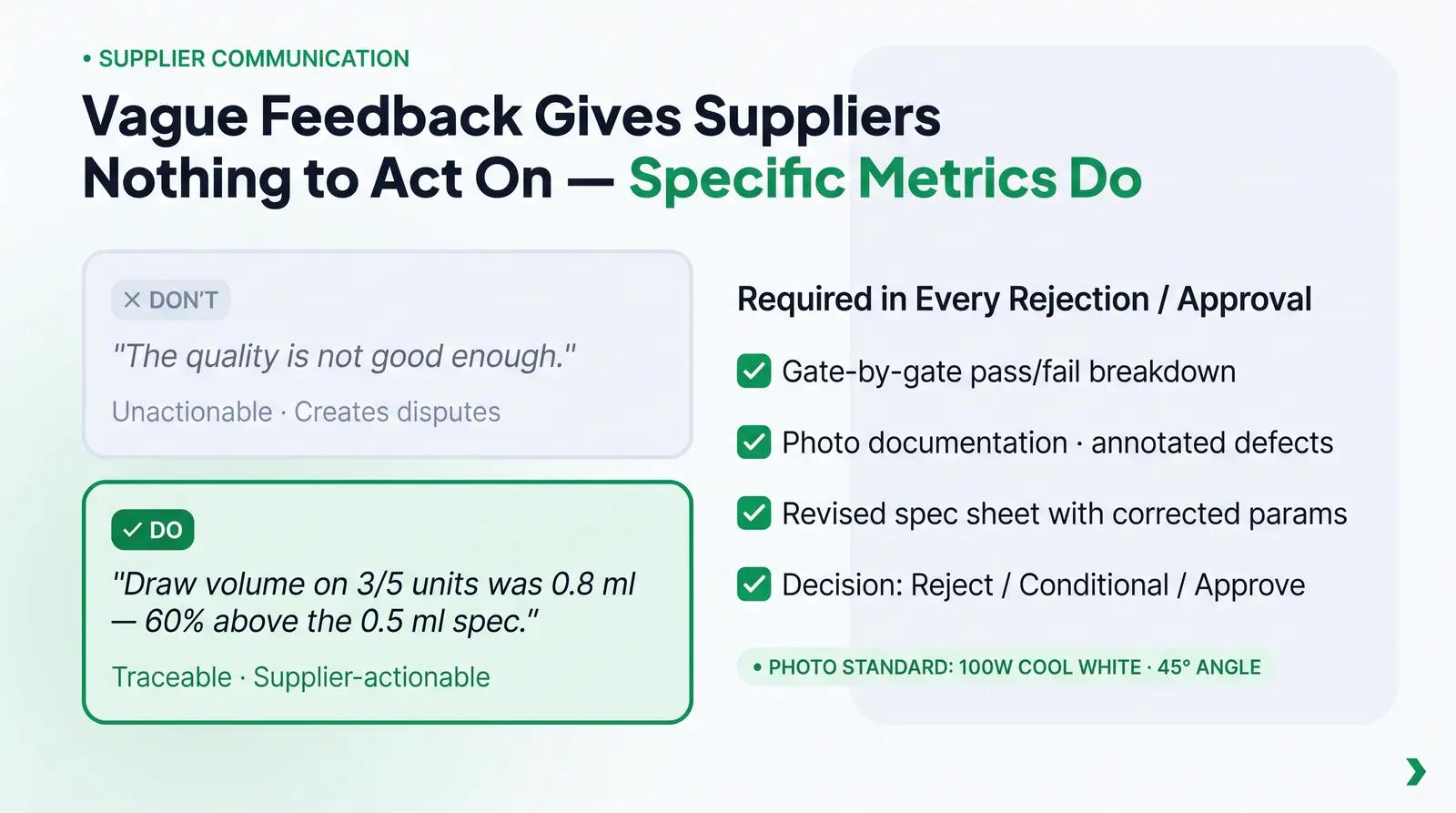
A formal sample review must conclude with clear documentation sent to the supplier. Whether issuing a rejection or a conditional approval, the communication should be precise and actionable. Vague feedback like "the quality is not good enough" gives a supplier nothing to act on and creates grounds for disputes. Specific feedback like "the dropper draw volume on three of five units exceeded the 0.5 ml specification by 60%, measuring 0.8 ml per actuation" is unambiguous and traceable.
Include a detailed breakdown of which gates the sample failed and the specific metrics that were not met. Use photo documentation with clear lighting, multiple angles, and annotations to highlight defects such as print smearing, dimensional inaccuracies, or surface finish issues. A photo taken under 100W cool white fluorescent lighting at a 45-degree viewing angle, as recommended for cosmetic packaging inspection [8], provides a consistent visual record.
Specify whether you are requesting a second-round sample or escalating to production approval with noted corrections. If requesting a second-round sample, include a revised specification sheet with the corrected parameters clearly marked. If issuing a conditional production approval, document the conditions explicitly, such as requiring print registration within ±1 mm on all units in the production run.
At Packfolio, the 3D preview step in the order flow is designed so that what the customer approves digitally, including print zone placement and decoration, is locked before production begins. This process significantly reduces the surface area of decoration-related sample failures, because the printable regions are pre-defined on every SKU in the catalog. Customers can browse the curated packaging catalog and preview label placement in 3D before a sample ever ships, ensuring alignment early in the process. Explore the full catalog at packfolio.com/catalog.
For more guidance on selecting the right packaging format before the sample stage, see the Packfolio Cosmetic Packaging Materials Guide.
Common Sample Approval Mistakes and How to Avoid Them
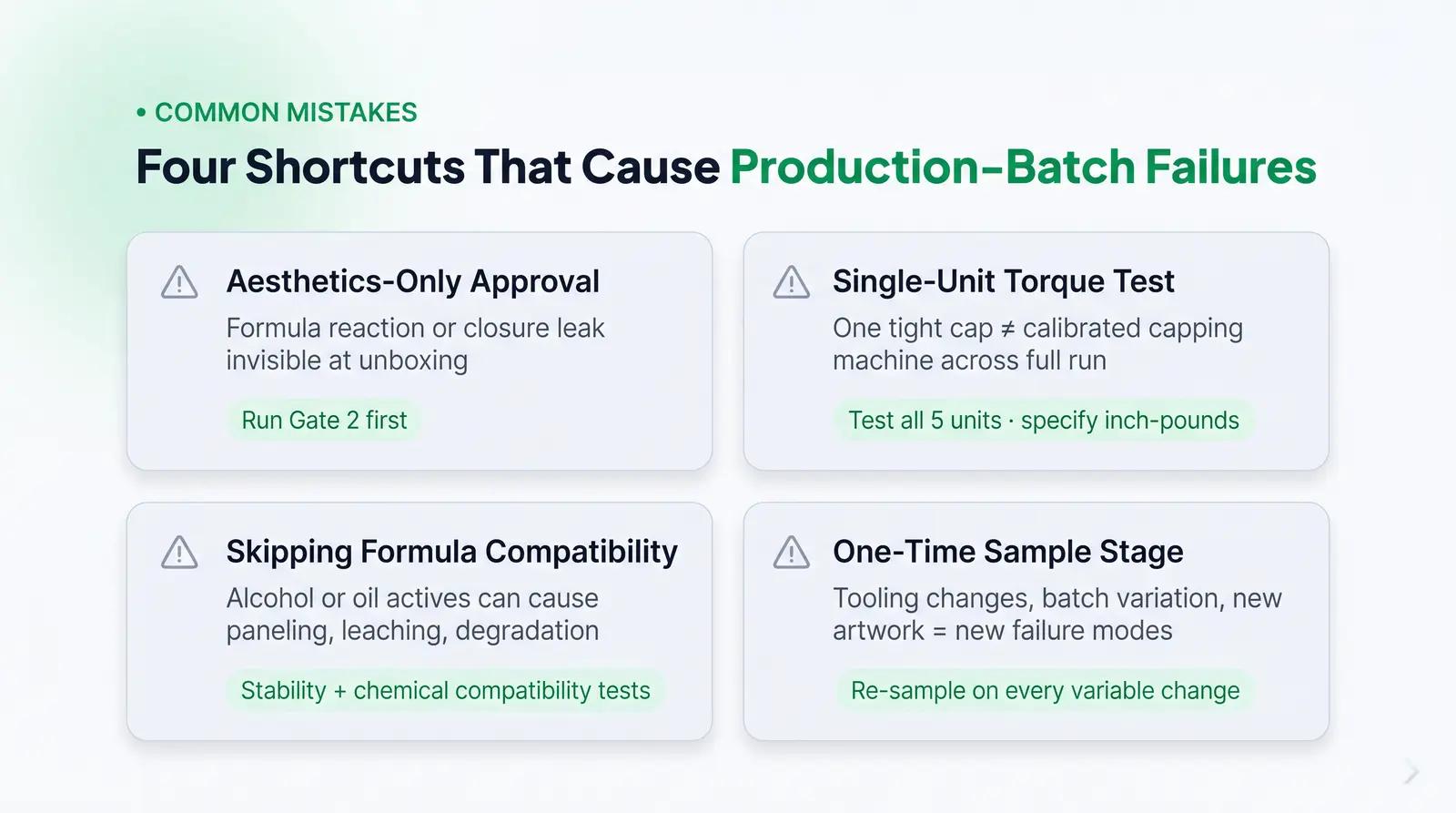
Approving a sample based on aesthetics alone without functional testing is a leading cause of production-batch failures. A package might match the brand's visual identity perfectly, but if the material reacts with the formula or the closure leaks during transit, the aesthetic value is meaningless. The most common mistake new brands make is choosing packaging for aesthetics instead of protection, and this pattern extends directly to the sample approval stage.
A non-obvious but critical insight is that "good enough" closure torque on a single sample is not predictive of torque consistency across a full production run. Without statistical sampling guidance and defined application torque specifications measured in inch-pounds, a single tight cap does not guarantee that the factory's capping machines are calibrated correctly [7]. Capping machines apply torque through a mechanical correlation between application and removal torque; if the machine is not properly calibrated to the specific cap and bottle combination, the entire production run can ship with caps that are either too loose to seal or too tight for consumers to open. Testing one unit from a multi-unit sample set and approving based on that single result is a common and costly shortcut.
Skipping formula-compatibility confirmation is another frequent error. Assuming a standard PET bottle will hold a complex active ingredient without compatibility testing can lead to paneling, leaching, or formula degradation over the product's shelf life. Compatibility testing should cover stability under real-time and accelerated conditions, chemical interaction checks, and barrier property assessments [3]. Missing fill-line compatibility until the co-packer raises the issue can delay a launch by months. Always confirm that the chosen packaging dimensions and closures are compatible with the intended filling equipment before issuing any production approval.
Finally, avoid treating the sample stage as a one-time event. Even with a trusted supplier, tooling changes, material batch variations, and slight adjustments in your formula or label artwork can introduce new failure modes. A fresh pre-production sample approval is required whenever any of these variables change.
Browse Packfolio's curated packaging catalog and preview your label placement in 3D before your sample ships: packfolio.com/catalog
Frequently Asked Questions
How many samples should I request before approving packaging for production? Request a minimum of five units per specification variant for a basic evaluation, and 50 to 100 units for comprehensive statistical testing before committing to a large production order. Testing a single unit cannot reveal consistency issues across the sample set, which are often the most reliable predictor of production-run quality.
What is a dropper leak test and how do I perform it? A dropper leak test, typically conducted as a negative pressure test, verifies the seal integrity between the bulb, collar, and bottle. Fill the bottle with product or colored water, secure the dropper assembly, and place it sideways or upside down for at least four hours. For a more rigorous test, place the filled and assembled bottle in a vacuum chamber at -0.06 MPa for five minutes, then inspect for any colored water outside the sealing area.
How do I test pump dispensing volume at home or in a small studio? Place a measuring cup or beaker on a calibrated electronic scale and zero it out. Prime the pump with three to five strokes, then dispense the product into the cup 10 to 20 times. Divide the total weight by the number of actuations to determine the average output per actuation. Convert weight to volume using the formula density equals mass divided by volume, and compare the result to your specification.
What documentation should a packaging supplier provide with samples? Suppliers should provide detailed technical drawings or dielines, material specifications, Safety Data Sheets (SDS) or Technical Data Sheets (TDS), and any relevant compliance certifications such as BPA-free or food-grade status. For components that contact the formula directly, request confirmation of formula-container compatibility testing results alongside the physical samples.
Can I skip the sample stage if I've ordered from a supplier before? No. Even with a trusted supplier, the sample stage should not be skipped. Tooling changes, material batch variations, and adjustments in your formula or artwork can introduce new failure modes that did not exist in previous orders. A pre-production sample approval is the only reliable way to confirm that the current production run will meet your specifications.
References
[1] Modernization of Cosmetics Regulation Act of 2022 (MoCRA). U.S. Food and Drug Administration. 2026.
[2] Good Manufacturing Practice (GMP) Guidelines/Inspection Checklist for Cosmetics. U.S. Food and Drug Administration. 2025.
[3] Cosmetic Packaging Testing by EU Regulations and Industry Guidelines. Measurlabs. 2024.
[4] Packaging Pitfalls: Top 3 Watchouts for Cosmetic Pumps. Impacked Packaging. 2025.
[5] The Four Main Concerns of Serum Packaging. Semepack. 2024.
[6] Best Packaging for Serums: Glass Dropper vs Airless Pump. Enkipack. 2026.
[7] Application and Removal Torque for Caps and Closures. Kinex Cappers.
[8] Custom Packaging Quality Control Checklist. Paking Duck. 2025.
[9] ISO 22715:2006 Cosmetics: Packaging and Labelling. International Organization for Standardization. 2006.


