
Cosmetic Packaging Wholesale: How Small Brands Should Think About Buying in Bulk
This guide helps small beauty brands evaluate wholesale cosmetic packaging readiness using a 5-factor rubric covering sales velocity, formula stability, capital, lead times, and storage.
The decision to buy cosmetic packaging wholesale is a tradeoff between unit cost, inventory risk, and launch flexibility. For independent beauty founders, the appeal of securing a custom glass serum bottle for $0.50 instead of $1.20 is powerful. But that lower unit price almost always requires committing to thousands of units before the first sale is made. When demand is unproven, wholesale purchasing is less of a cost-saving measure and more of a capital allocation gamble.
Founders must navigate a landscape where suppliers incentivize large minimum order quantities (MOQs), often obscuring the true cost of holding inventory. This guide walks through how to evaluate when wholesale purchasing is appropriate, what to compare beyond the per-unit price, and how to protect cash flow during the critical early stages of a brand's lifecycle.
Why the "Lower Unit Cost = Lower Total Cost" Logic Breaks Down
The central assumption of wholesale buying is that a lower unit cost produces a lower total cost. This assumption holds when demand is predictable and sell-through is fast. For early-stage beauty brands, neither condition is typically true.
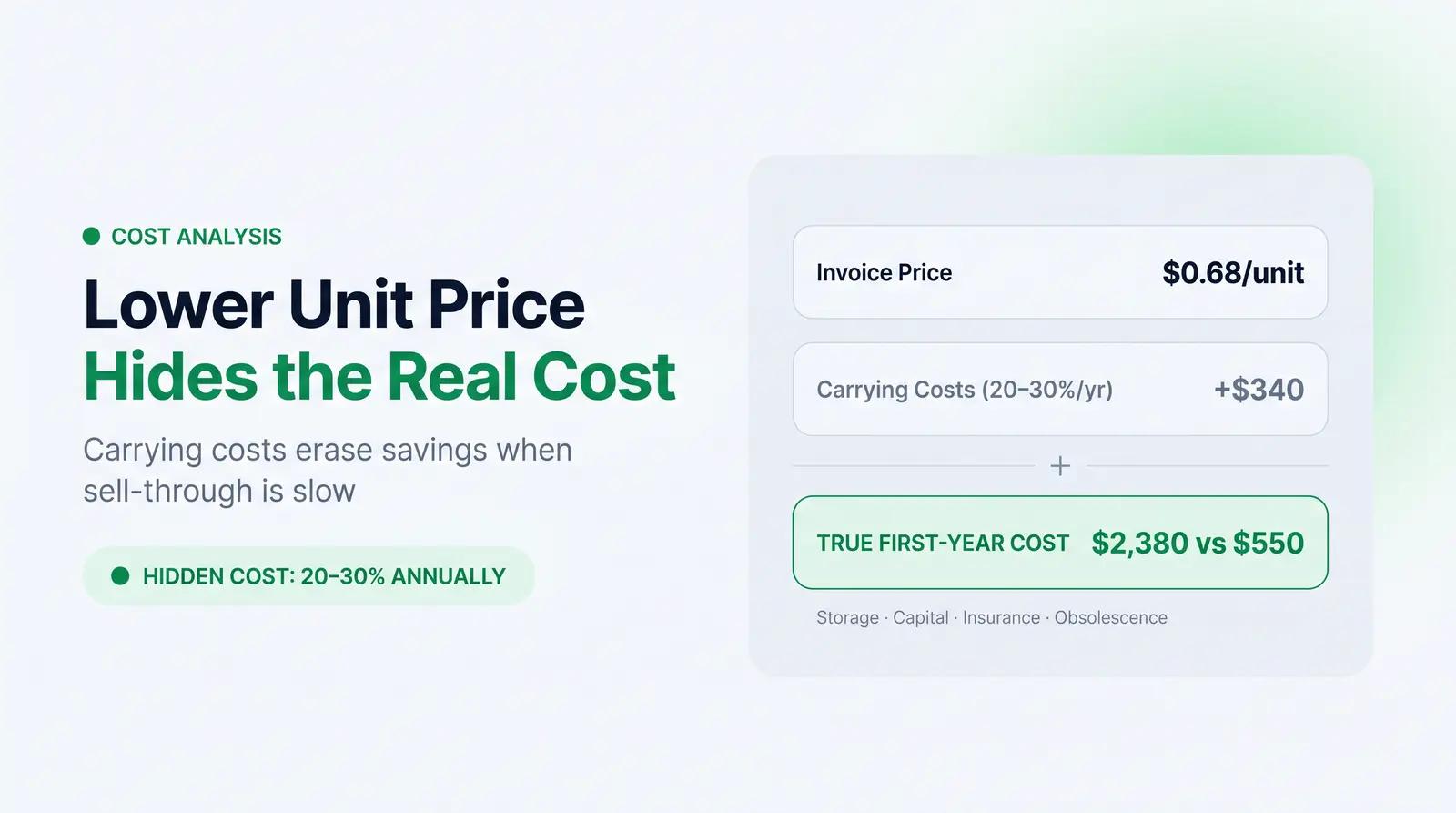
The true cost of wholesale packaging extends far beyond the supplier invoice. Inventory carrying costs, which include storage, capital cost, insurance, and obsolescence risk, typically account for 20% to 30% of a company's total inventory value annually [1]. For a founder tying up $10,000 in custom jars, that represents an additional $2,000 to $3,000 in hidden annual expenses before a single unit ships to a customer.
This is the insight that wholesale suppliers have no incentive to surface. Their business model depends on volume. They present the per-unit price comparison and leave the rest of the math to the buyer. The math only works in the brand's favor if the brand sells through the inventory within a reasonable timeframe. If sell-through is slow, the savings evaporate.
The Obsolescence Problem
Pre-launch and early-stage brands frequently iterate on formulations. A vitamin C serum that proves unstable in a glass dropper bottle may need to switch to an airless pump to prevent oxidation [2]. A thick balm that performs well in a jar may need to move to a tube format after customer feedback. If a founder has committed to 5,000 units of the original packaging, that inventory becomes obsolete. The capital tied up in dead stock often exceeds the per-unit savings that motivated the wholesale purchase in the first place.
This is not a hypothetical edge case. It is one of the most common financial mistakes made by early-stage beauty founders, and it is almost never discussed in the wholesale packaging content that currently ranks online.
The Wholesale Readiness Rubric
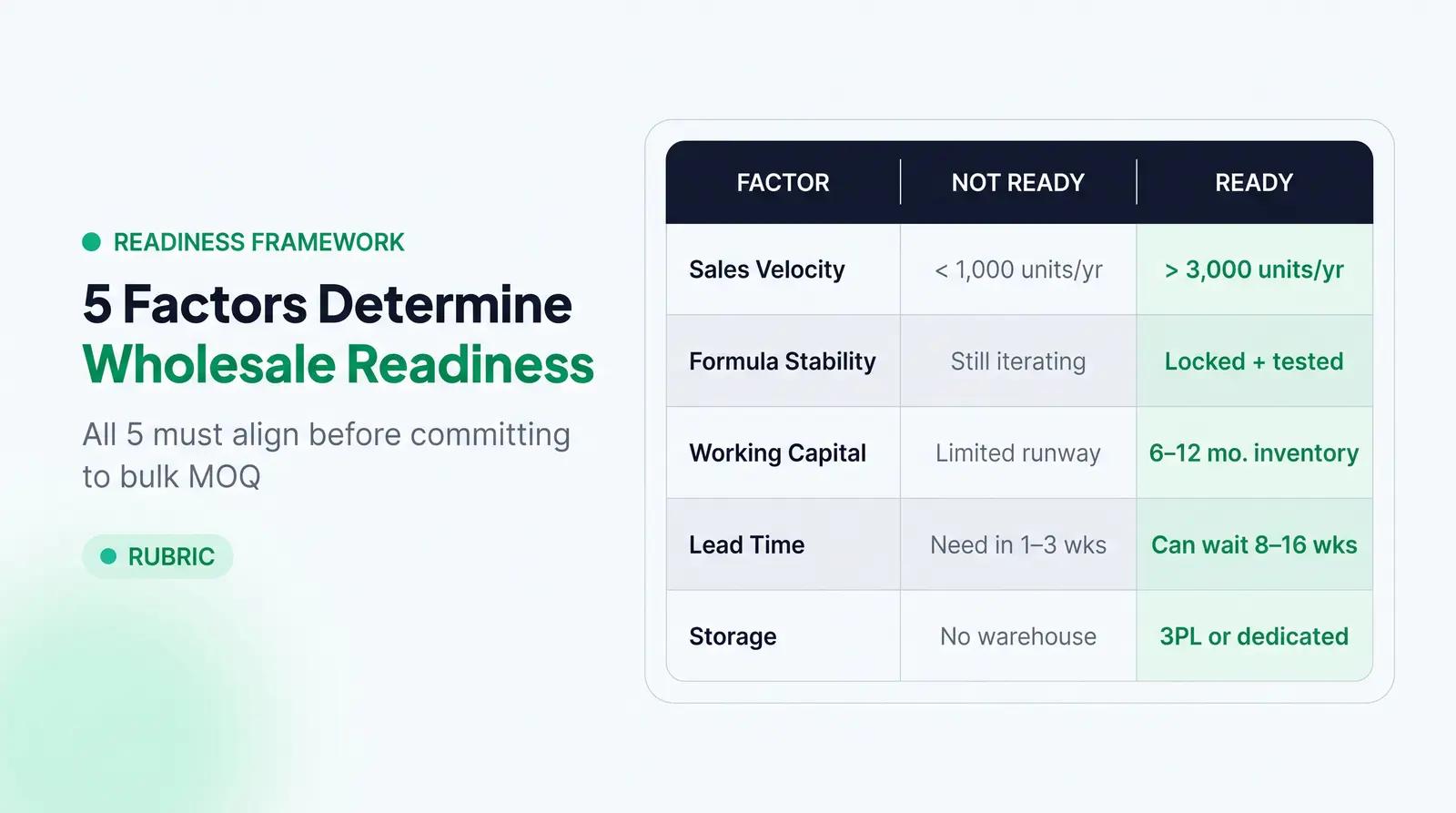
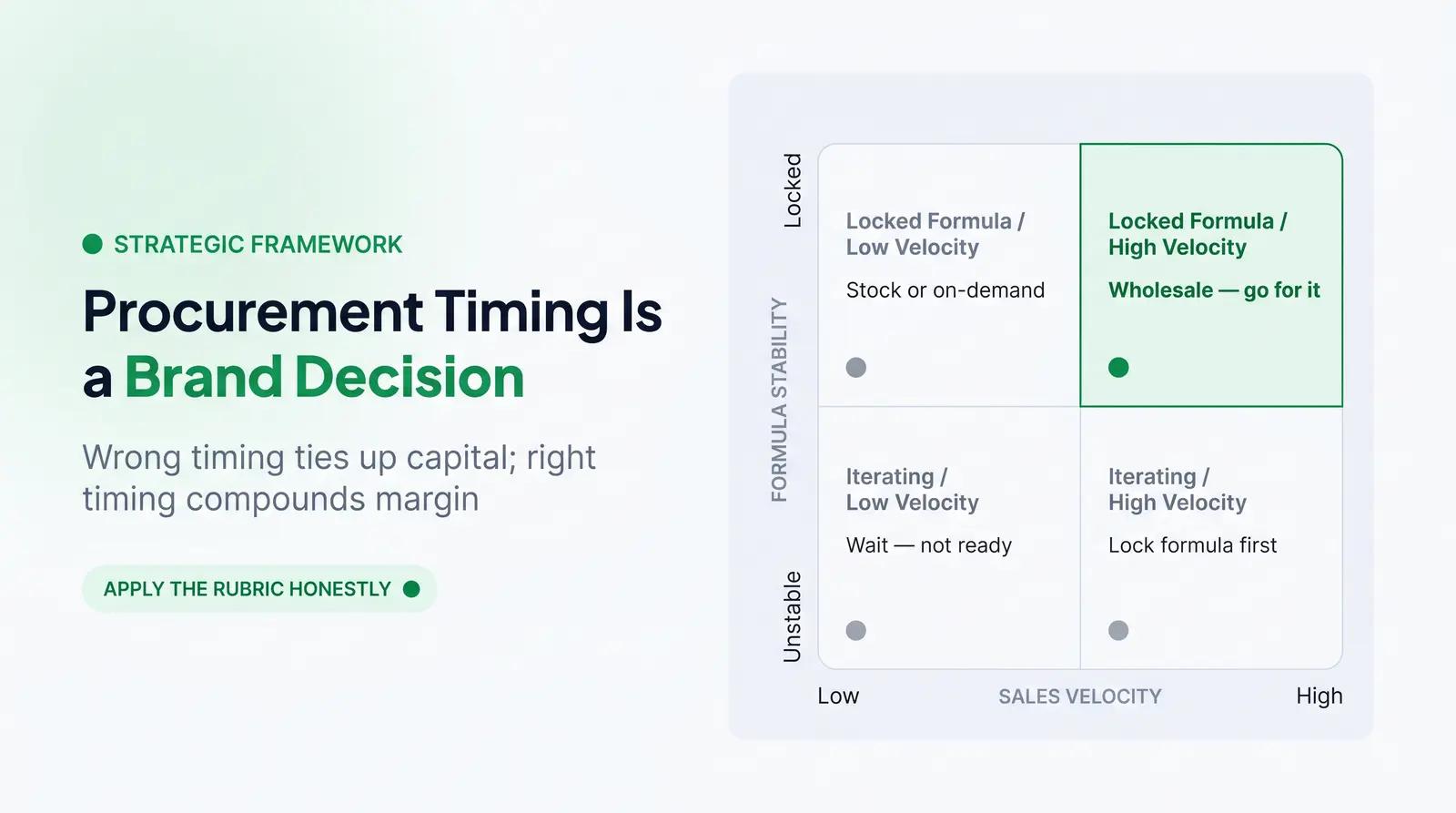
Before committing to any wholesale MOQ, founders should evaluate their brand against a structured set of criteria. The framework below, which we recommend at Packfolio as a practical starting point, assesses five factors that determine whether a brand is genuinely ready to benefit from wholesale pricing, or whether a lower-commitment procurement approach is the smarter first move.
Factor 1: Sales Velocity
Wholesale pricing only delivers a net financial benefit if the inventory turns over within a reasonable period. A useful benchmark is whether the brand can sell through the full MOQ within 12 to 18 months at its current or projected sales rate. If the answer is no, the carrying costs will erode the unit-cost savings.
Factor 2: Formula Stability
A formula should be fully locked, stability-tested, and compatibility-tested against the chosen packaging material before any wholesale order is placed. Committing to thousands of units of a container before confirming that the formulation does not react with the packaging material is a significant risk [3]. Compatibility testing evaluates whether the packaging material will chemically resist the formula, and whether any substances will migrate from the packaging into the product over time.
Factor 3: Working Capital Position
Wholesale orders require a large upfront cash outlay. That capital is then illiquid until the inventory sells. Founders should assess whether the working capital required for the wholesale order would leave sufficient runway for marketing, operations, and product development. Cash tied up in packaging inventory cannot be used to acquire the customers needed to sell that inventory.
Factor 4: Lead Time Tolerance
Wholesale packaging orders from overseas manufacturers typically carry lead times of 8 to 16 weeks, including production, quality control, and international freight [4]. Brands that need packaging quickly, or that are still finalizing their launch timeline, are poorly suited for wholesale procurement. Stock packaging or on-demand platforms can fulfill orders in days to weeks.
Factor 5: Storage Capacity
Wholesale quantities require physical storage. Founders who lack dedicated warehouse space or a third-party logistics (3PL) arrangement will incur additional costs to store inventory, further eroding the unit-cost advantage.
The table below summarizes how these factors map to procurement strategy:
| Factor | Stock or On-Demand Procurement | Wholesale Procurement |
|---|---|---|
| Sales Velocity | Unproven or fewer than 1,000 units per year | Proven and consistently above 3,000 units per year |
| Formula Stability | Still iterating or awaiting stability results | Fully locked and compatibility-tested |
| Working Capital | Limited; needed for marketing and operations | Sufficient to cover 6-12 months of inventory carry |
| Lead Time Tolerance | Need packaging within 1-3 weeks | Can absorb 8-16 weeks for overseas production |
| Storage Capacity | None or very limited | Dedicated warehouse or 3PL arrangement in place |
A brand that aligns primarily with the left column is not yet ready for wholesale. Committing to a large MOQ at that stage is a capital risk, not a cost-saving strategy.
What to Compare Beyond Price
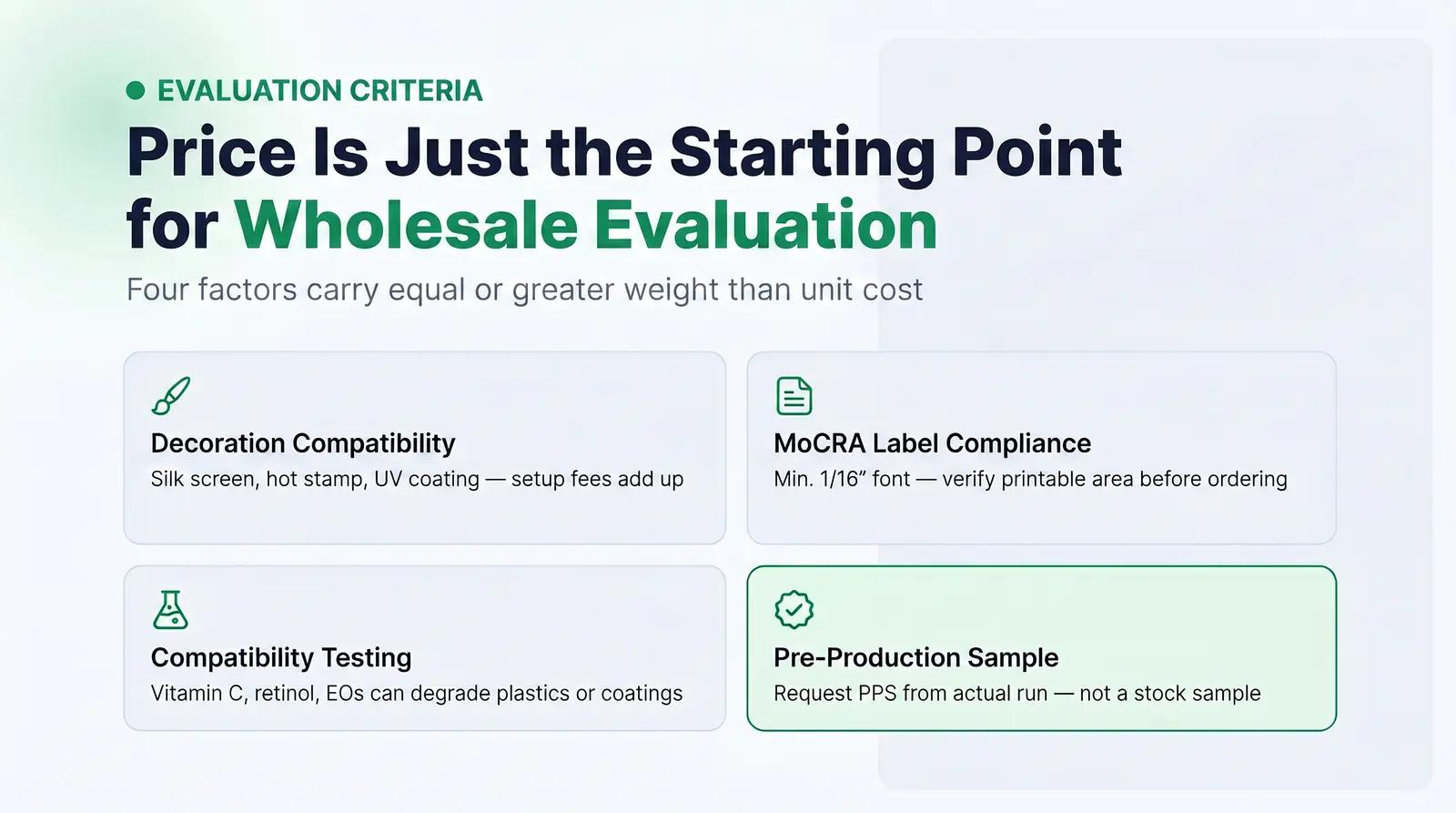
Most founders approach wholesale packaging comparisons by looking at per-unit price across suppliers. Price is a starting point, not a complete evaluation. Several factors carry equal or greater weight in determining the total cost and risk of a wholesale order.
Decoration and Customization Compatibility
Not all wholesale packaging suppliers offer the same decoration options. Silk screen printing, hot stamping, and UV coating each have different setup costs, minimum quantities, and quality outcomes. A bottle that is inexpensive at the component level may become expensive once decoration setup fees are added. Founders should request fully decorated samples, not just blank components, before committing to a large order.
Regulatory Compliance of the Printable Surface Area
Under the Modernization of Cosmetics Regulation Act of 2022 (MoCRA), cosmetic products sold in the United States must carry specific labeling information, including the responsible person's name and address, a complete ingredient declaration in descending order of predominance, and net quantity of contents [5]. The packaging must provide adequate surface area to display all required information in legible type, with ingredient declarations requiring a minimum font size of 1/16 of an inch (approximately 1.6 mm) [6].
Founders sourcing wholesale packaging should verify that the chosen container provides sufficient printable area to meet these requirements before placing a large order. A bottle that looks ideal on a product rendering may not accommodate the full ingredient list at a compliant font size.
Compatibility Testing Requirements
Packaging material compatibility is not a formality. Certain cosmetic ingredients, including high-concentration vitamin C, retinol, essential oils, and alcohol-based formulas, can interact with packaging materials in ways that compromise product safety and shelf life. Plastics can absorb or leach substances; glass can react with highly acidic or alkaline formulations over time [3]. Wholesale suppliers typically provide material specifications, but they do not conduct compatibility testing on behalf of the brand. That responsibility falls to the founder or their contract manufacturer.
Quality Consistency Across Production Runs
A sample that looks and performs perfectly does not guarantee that the production run will match. Wholesale orders from overseas manufacturers can vary in wall thickness, closure torque, and decoration quality between batches. Requesting a pre-production sample (PPS) from the actual production run, rather than a stock sample from inventory, is a standard quality assurance step that many first-time buyers skip.
A Worked Example: The Vitamin C Serum Decision
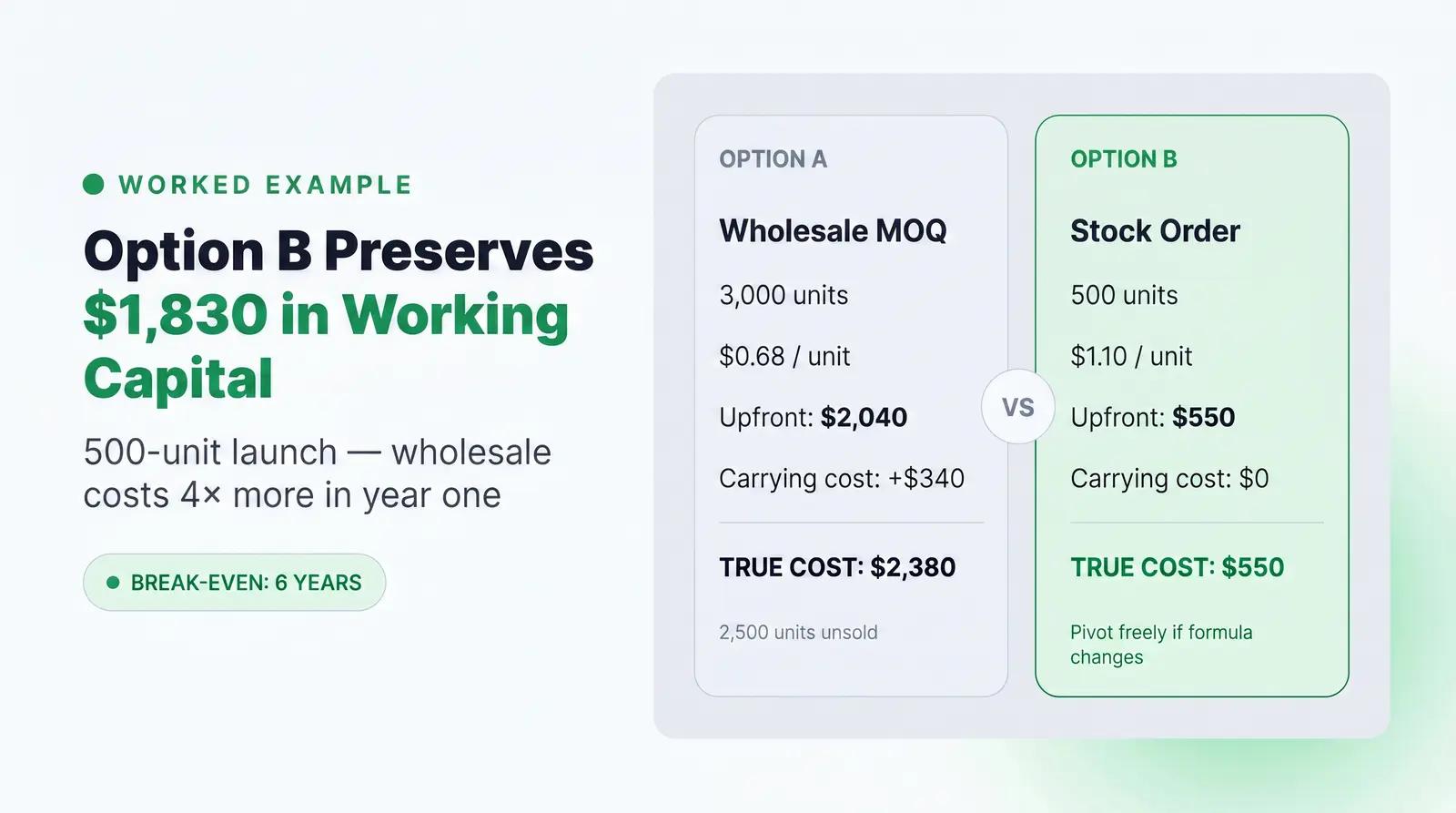
To illustrate how the Wholesale Readiness Rubric applies in practice, consider a founder preparing to launch a vitamin C face serum. They project a first-year sell-through of 500 units. They receive two packaging quotes for a 30 ml (1 oz) amber glass dropper bottle:
Option A (Wholesale MOQ): 3,000 units at $0.68 per unit. Total upfront cost: $2,040.
Option B (Lower-Volume Stock Order): 500 units at $1.10 per unit. Total upfront cost: $550.
On a per-unit basis, Option A appears to save $0.42 per unit, or $210 across the projected first-year volume of 500 units. However, the full financial picture looks different.
Under Option A, the founder spends $2,040 upfront. They sell 500 units in year one, leaving 2,500 units in storage. Applying a conservative 20% annual carrying cost [1] to the remaining inventory value of approximately $1,700, they incur an additional $340 in holding costs. Their true first-year cash outlay is $2,380, against $550 for Option B. The difference is $1,830 in working capital that Option B preserves for marketing, paid media, or product development.
Furthermore, if the vitamin C serum proves unstable in the amber glass dropper bottle after six months and requires a switch to an airless pump to prevent oxidation [2], the founder who chose Option A must write off the remaining 2,500 units. The founder who chose Option B can pivot their packaging strategy for the next production run with zero financial penalty.
The break-even point for Option A, ignoring carrying costs, is the moment the founder sells enough units to recoup the savings. At $0.42 saved per unit, the founder would need to sell all 3,000 units just to break even on the unit-cost advantage. At a 500-unit annual sell-through rate, that takes six years. By that point, carrying costs have long since consumed the savings.
The Wholesale Readiness Rubric applied to this scenario produces a clear answer: this brand is not yet ready for wholesale. The formula is not yet stability-tested, sales velocity is unproven, and the working capital required for Option A represents a disproportionate share of the brand's available runway.
Material Trade-offs at Wholesale Scale
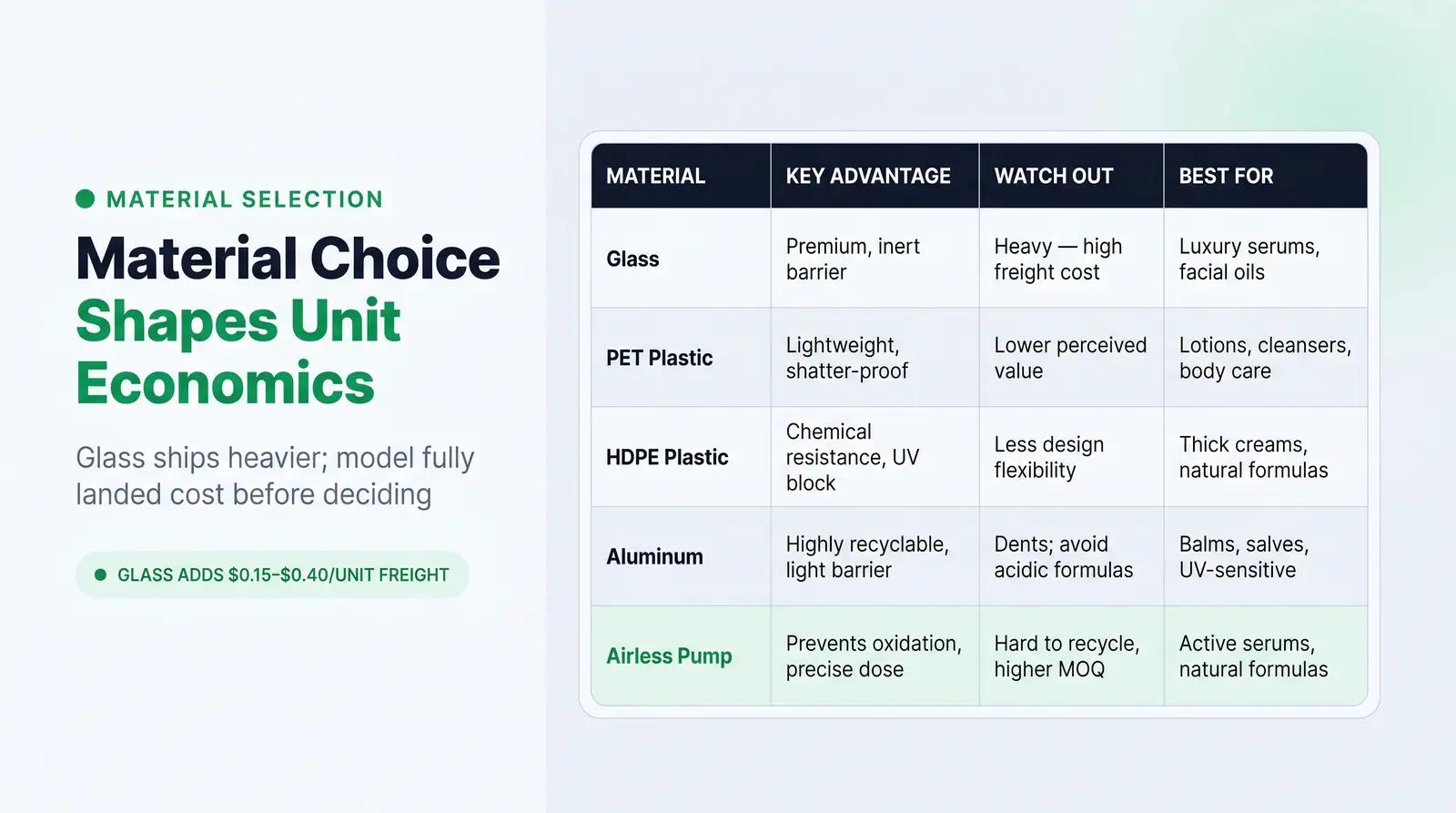
When a brand reaches the volume where wholesale purchasing makes strategic sense, material selection becomes a critical decision. The choice between glass, plastic, and aluminum affects not only aesthetics and brand positioning but also shipping costs, sustainability profile, and formula compatibility.
| Material | Primary Advantage | Primary Disadvantage | Best Suited For |
|---|---|---|---|
| Glass | Premium aesthetic, chemically inert, excellent barrier properties | Heavy (increases shipping cost), fragile in transit | Luxury serums, facial oils, perfumes, high-pH formulas |
| PET Plastic | Lightweight, shatter-resistant, cost-effective at scale | Lower perceived value, sustainability concerns | Lotions, cleansers, shampoos, body care |
| HDPE Plastic | Excellent chemical resistance, opaque (UV protection) | Limited design flexibility, less premium feel | Thick creams, balms, products with natural preservatives |
| Aluminum | Highly recyclable, excellent light and oxygen barrier | Prone to denting, higher unit cost, limited compatibility with acidic formulas | Balms, salves, UV-sensitive formulas |
| Airless Pump (Multi-material) | Prevents oxidation, precise dosing, extends shelf life | Complex manufacturing, difficult to recycle, higher MOQ | Active-heavy serums, natural formulations without synthetic preservatives |
Glass packaging is experiencing renewed interest among premium beauty brands, driven by consumer preference for perceived luxury and recyclability [7]. However, the weight of glass significantly increases dimensional shipping costs, particularly for direct-to-consumer brands shipping individual units. Founders sourcing wholesale glass packaging should model the fully landed cost per unit, including freight, before comparing it to plastic alternatives.
Validating Packaging Before Committing to Wholesale
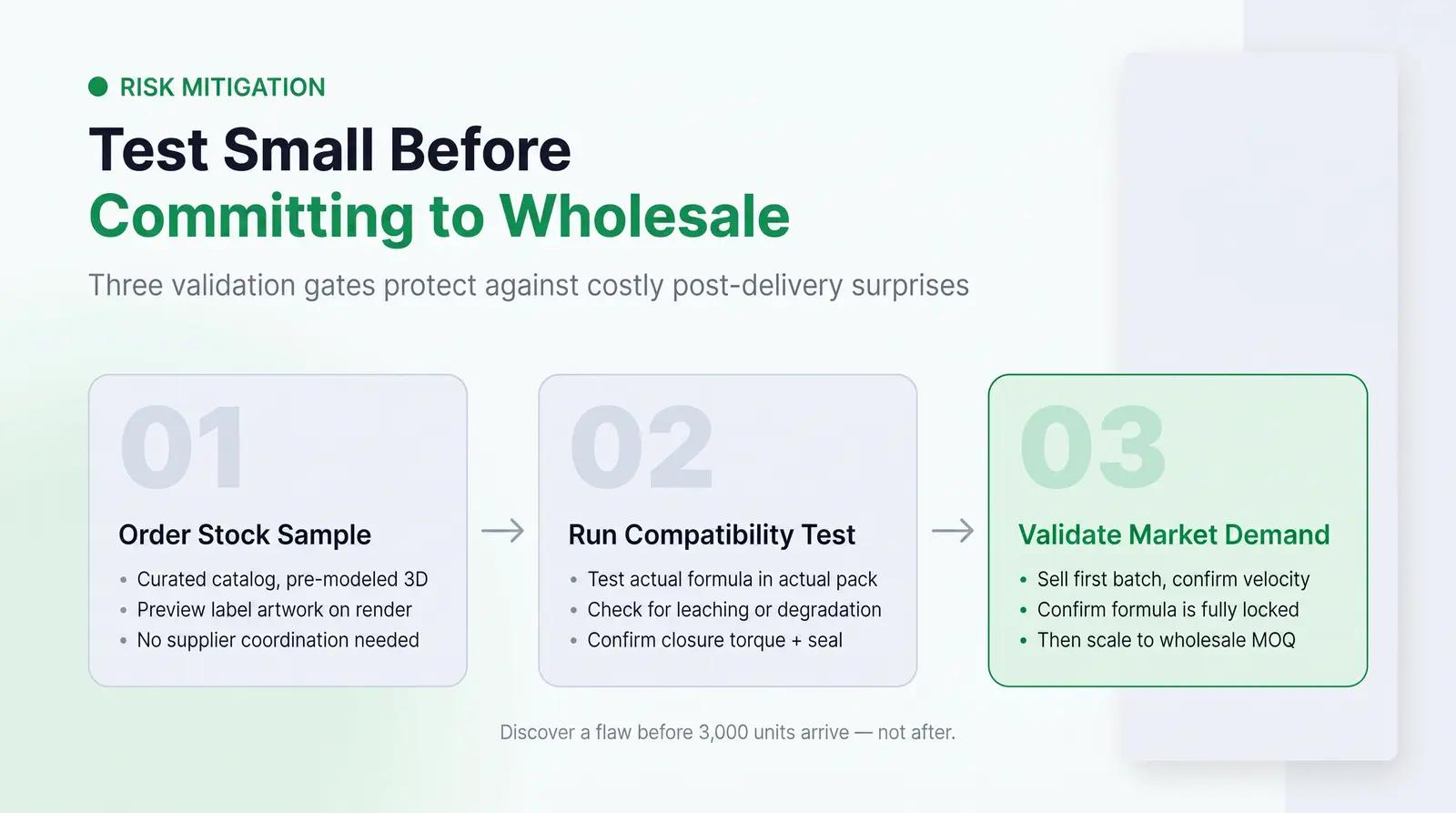
The greatest risk in wholesale procurement is discovering a critical flaw after taking delivery of thousands of units. This could be a compatibility issue where the formula degrades the packaging material, a functional failure like a leaking pump or a closure that does not torque consistently, or an aesthetic mismatch between the physical product and the brand's visual identity.
Founders who want to validate packaging decisions before committing to wholesale minimums benefit from testing with smaller, lower-commitment orders first. At Packfolio, we curate a vetted catalog of cosmetic primary packaging SKUs, each pre-modeled in 3D with predefined printable regions. Founders can preview their label artwork on a photorealistic 3D model, confirm the visual result, and order stock or custom packaging without coordinating directly with suppliers. This approach allows brands to physically test compatibility, evaluate the unboxing experience, and confirm market demand before scaling up to direct wholesale volumes. See the full catalog at packfolio.com/catalog.
When Wholesale Does Make Sense
The argument against premature wholesale purchasing is not an argument against wholesale purchasing altogether. For brands that have cleared the Wholesale Readiness Rubric, buying in bulk delivers genuine advantages.
Consistent packaging across a product line builds brand equity. When every bottle, jar, and tube in a collection shares the same material, finish, and closure family, the brand reads as intentional and cohesive. That consistency is difficult to achieve when sourcing in small batches from multiple suppliers on different timelines.
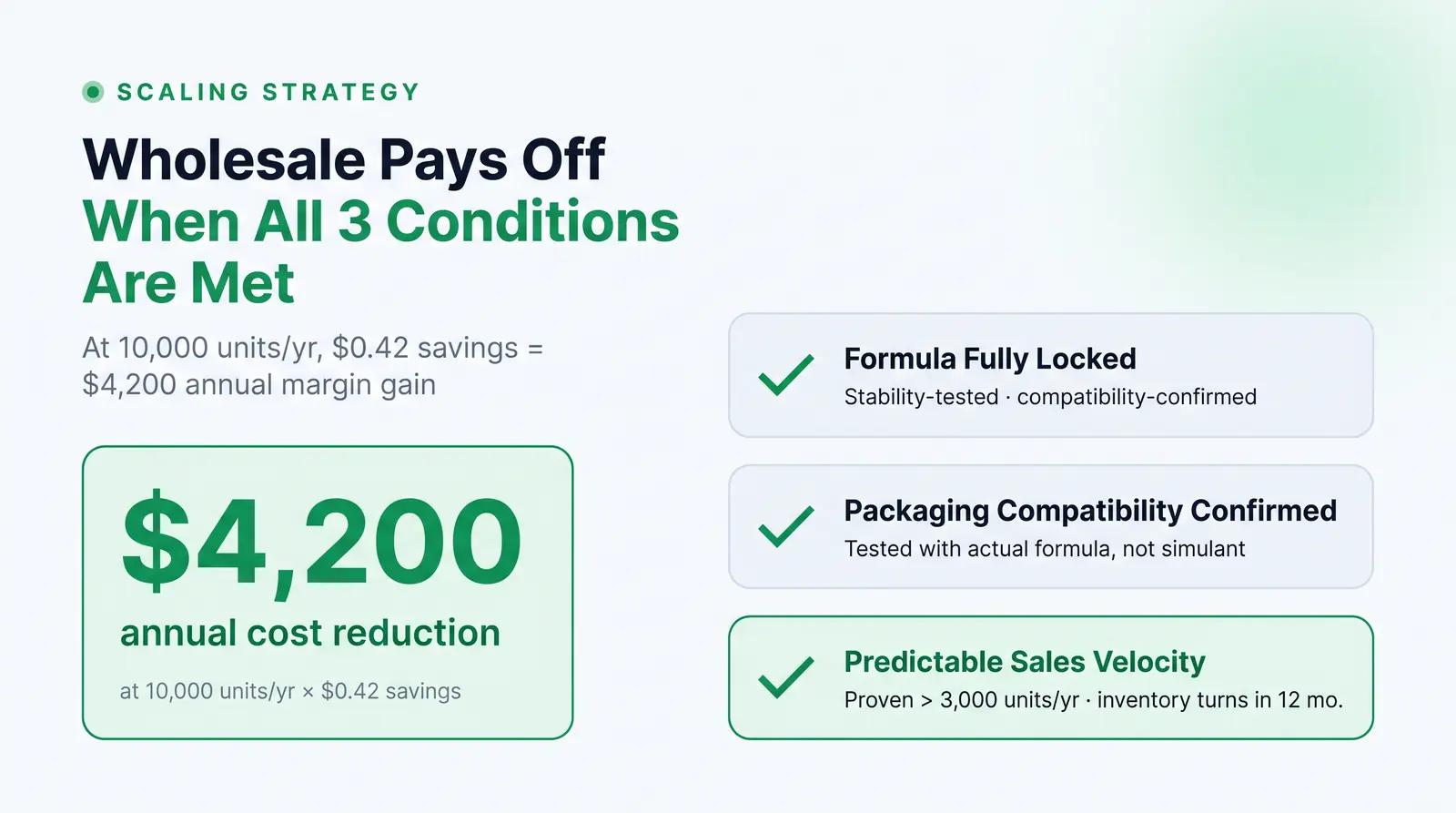
At scale, the unit-cost savings are also real. A brand selling 10,000 units per year of a serum at a $0.42 per-unit packaging savings generates $4,200 in annual cost reduction. That is meaningful margin improvement at a volume where the inventory will actually turn over within a reasonable period.
For brands that have validated their formula, confirmed their packaging compatibility, and established a predictable sales velocity, wholesale procurement is the right tool. The key is ensuring that all three conditions are genuinely met before committing.
What to Verify Before Placing a Wholesale Order
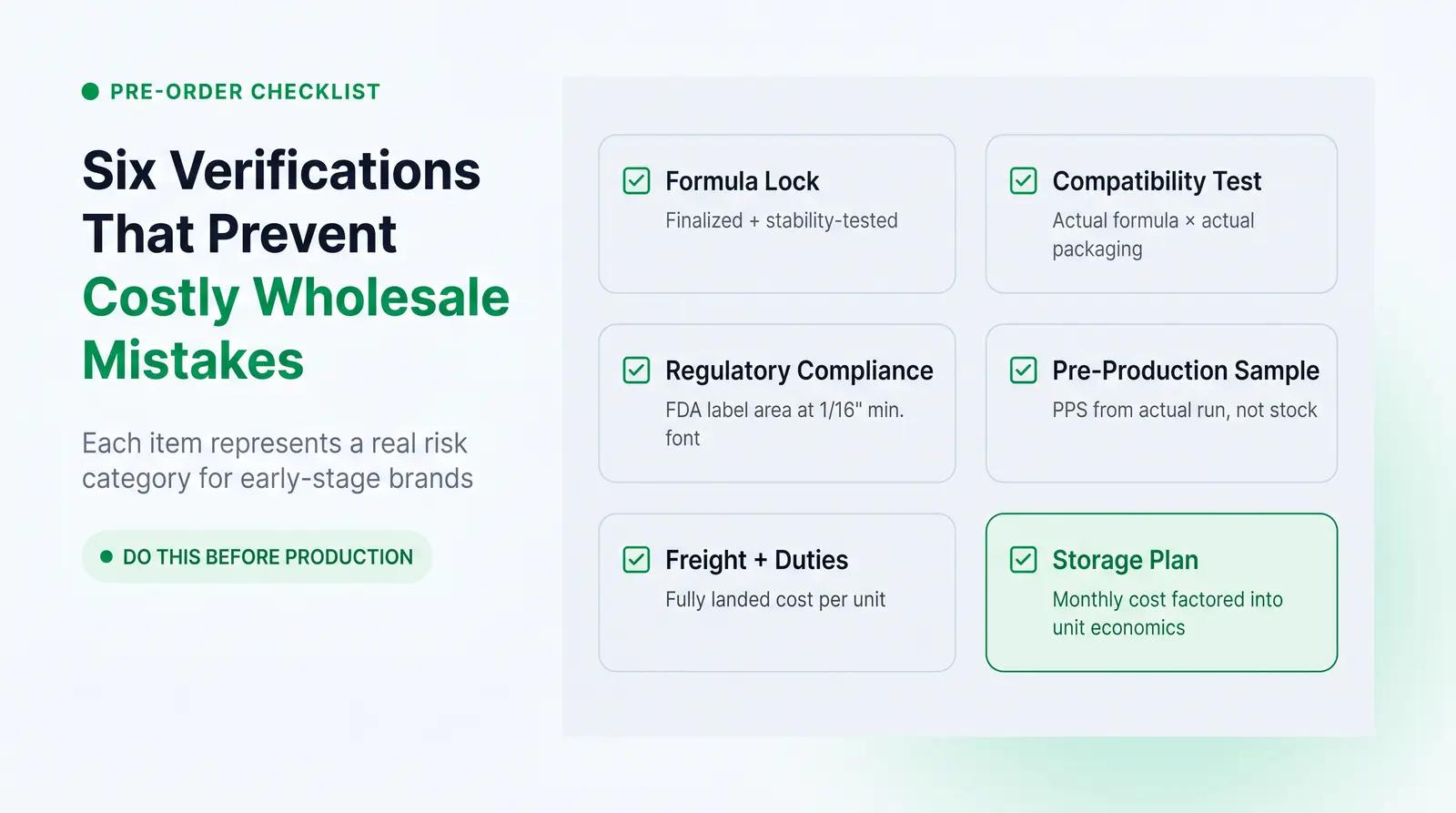
Before finalizing any wholesale packaging order, founders should work through the following verification checklist. Each item represents a category of risk that has caused costly problems for early-stage beauty brands.
Formula lock: Confirm the formula is finalized and stability-tested. Any post-order formula change that requires a different packaging format will result in obsolete inventory.
Compatibility testing: Confirm that the chosen packaging material has been tested against the actual formula, not just a generic simulant. This is especially important for formulas containing essential oils, high-concentration actives, or alcohol.
Regulatory compliance: Verify that the container provides sufficient printable surface area to display all FDA-required label information at compliant font sizes, including the full ingredient declaration [6].
Pre-production sample: Request a sample from the actual production run before authorizing full production. Do not rely on a stock sample or a sample from a previous production run.
Freight and duties: Calculate the fully landed cost per unit, including ocean freight, customs duties, and last-mile delivery. For glass packaging especially, freight costs can add $0.15 to $0.40 per unit, significantly affecting the unit economics.
Storage plan: Confirm that storage space is secured and that the monthly cost of that storage has been factored into the unit economics model.
For a deeper look at how to evaluate specific packaging formats, including the tradeoffs between airless pumps and dropper bottles for serum applications, see packfolio.com/blog/airless-pump-vs-dropper. For a detailed guide to understanding MOQ structures across different packaging categories, see packfolio.com/blog/cosmetic-packaging-moq-guide.
The Bigger Picture: Procurement Strategy as a Brand Decision
Packaging procurement is not just a supply chain function. It is a brand decision that affects cash flow, product quality, regulatory compliance, and the ability to iterate quickly in response to market feedback.
Wholesale purchasing, when timed correctly, is a legitimate tool for scaling a beauty brand. When timed incorrectly, it is one of the most common ways that early-stage brands tie up capital in inventory that does not move, in containers that may no longer fit the formula, or in a design that the brand has outgrown.
The Wholesale Readiness Rubric provides a structured way to make that timing decision based on the actual state of the business, rather than on the compelling math of a per-unit price comparison. Apply it honestly, and it will tell you whether you are ready to buy wholesale, or whether a lower-commitment option is the smarter first move.
Browse Packfolio's curated cosmetic packaging catalog, preview your label in 3D before you commit to a single unit, and order stock or custom packaging without touching the supply chain. packfolio.com/catalog
Frequently Asked Questions
What is a standard MOQ for cosmetic packaging wholesale?
Standard MOQs for custom cosmetic packaging from overseas manufacturers typically range from 3,000 to 10,000 units per SKU, depending on the container type and whether custom molds are required. Stock packaging from domestic distributors can sometimes be sourced in quantities as low as 500 to 1,000 units, though at a higher per-unit price. Founders should request decorated samples and fully landed cost quotes before comparing MOQ tiers.
How long does it take to receive wholesale cosmetic packaging from overseas?
Lead times for wholesale packaging from overseas manufacturers generally range from 8 to 16 weeks. This timeline includes mold setup or line preparation, production, quality control inspection, ocean freight, and customs clearance. Brands that need packaging within a shorter window should consider domestic stock suppliers or on-demand platforms, which can fulfill orders in days to a few weeks.
What is the difference between stock packaging and custom cosmetic packaging?
Stock packaging refers to standardized, undecorated containers available from inventory, typically with no tooling costs and lower MOQs. Custom packaging involves containers manufactured to a brand's specific shape, color, or material specification, usually requiring custom molds and significantly higher MOQs. Most early-stage brands start with stock packaging and add custom decoration, such as silk screen printing or labeling, rather than commissioning custom molds.
Does glass or plastic packaging cost more to ship wholesale?
Glass packaging costs significantly more to ship than plastic due to its weight and fragility. The increased dimensional weight, the need for protective dunnage, and the higher breakage risk during transit all add to the landed cost of glass. For brands shipping direct-to-consumer, the per-unit shipping premium for glass can range from $0.15 to $0.40 or more, which should be factored into the total unit economics before choosing glass over plastic.
Do I need to test my formula in the final packaging before placing a wholesale order?
Yes. Compatibility testing between the formula and the packaging material is a necessary step before committing to a wholesale order. Certain ingredients, including high-concentration vitamin C, retinol, essential oils, and alcohol, can interact with plastics or coatings in ways that compromise product safety or shelf life. Testing should be conducted using the actual formula in the actual packaging, not just a generic simulant, and results should be reviewed before production is authorized.
References
[1] Inventory Carrying Costs: What It Is and How to Calculate It. NetSuite. 2020.
[2] Best Packaging for Serums: Glass Dropper vs Airless Pump. EnkiPack. 2026.
[3] How Do I Know Your Packaging Will Work With My Formulation? Fomalhaut Packing. 2025.
[4] The Real Logic Behind Low MOQ Cosmetic Packaging: A Guide for Indie Beauty Brands. BottleMile. 2026.
[5] Modernization of Cosmetics Regulation Act of 2022 (MoCRA). U.S. Food and Drug Administration. 2026.
[6] Summary of Cosmetics Labeling Requirements. U.S. Food and Drug Administration. 2025.
[7] The Evolution of Cosmetics Packaging: Design Innovation Meets Production Excellence. Packaging Digest. 2025.
[8] Choosing the Right Beauty Care Manufacturer. GCI Magazine. 2017.


