
FDA Cosmetic Labeling Requirements: A Practical Guide for Beauty Brands
This guide covers every FDA cosmetic labeling requirement, including PDP placement rules, INCI ingredient formatting, net contents declarations, MoCRA updates, and a pre-print compliance checklist.
A beauty brand founder spends months perfecting a formula, refining the brand story, and finalizing custom packaging.
Then, a regulatory consultant or retail buyer flags a single issue: a misformatted ingredient list, a missing net contents parenthetical, or a marketing claim that crosses the line into drug territory.
The cost of this oversight is not just the thousands of dollars spent on printed labels or packaged inventory.
In the beauty industry, labeling errors are among the most common reasons for product recalls, import detentions, and class-action lawsuits. This guide from Packfolio serves as the definitive pre-flight checklist to ensure your cosmetic packaging is fully compliant with FDA and FTC regulations before you submit your artwork to print.
Why Cosmetic Labeling Errors Happen
Cosmetic labeling errors rarely occur because of a lack of effort.
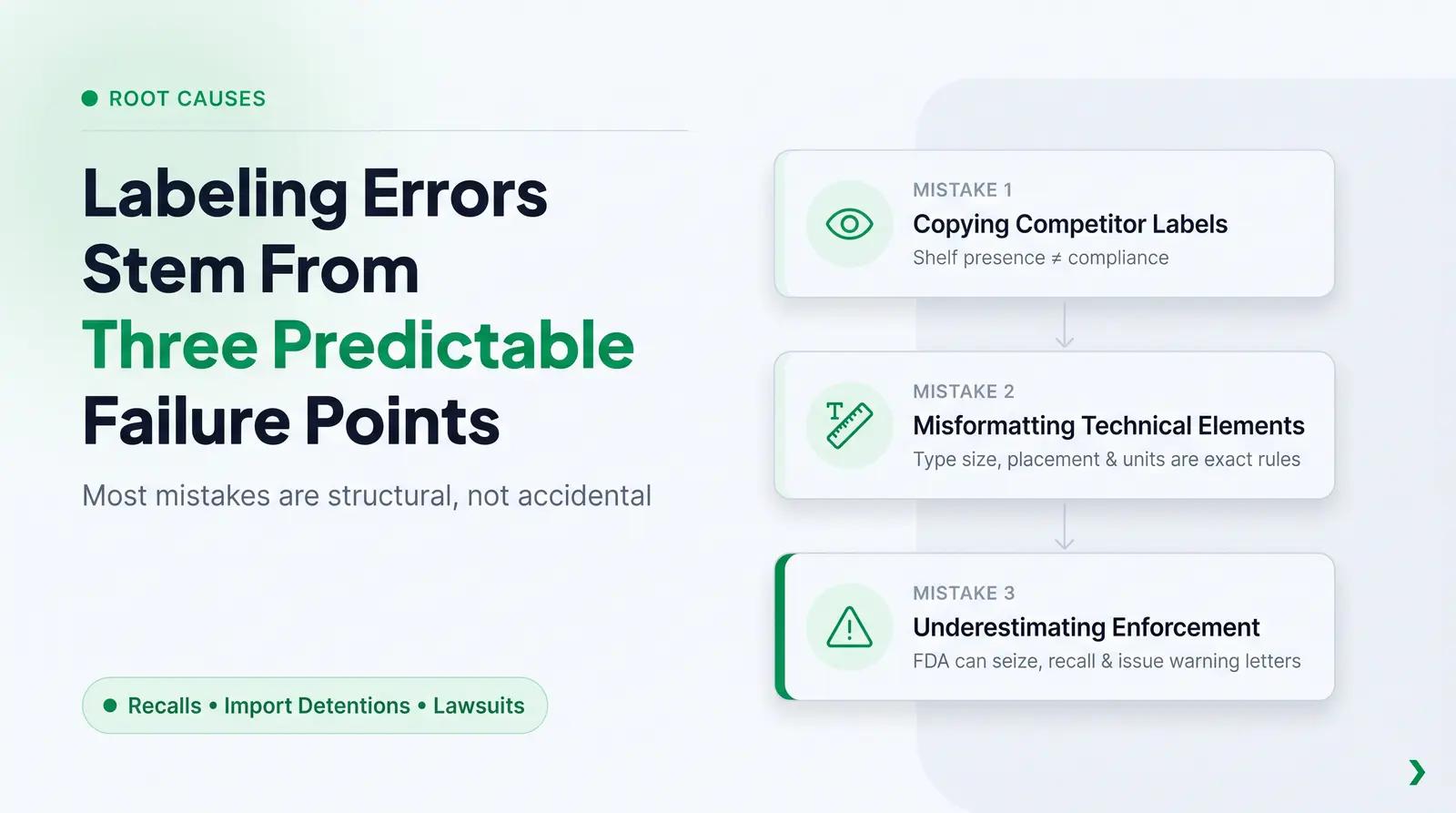
Many founders rely on competitor packaging for inspiration, assuming that if a product is on the shelf at a major retailer, its label must be compliant. To avoid these traps, brands must understand the fundamentals of cosmetic packaging requirements before finalizing their design.
The points of failure typically cluster around a few specific areas.
Second, the formatting of technical elements, such as the net quantity of contents or the ingredient declaration, is governed by highly specific rules regarding type size, placement, and units that are easy to misinterpret.
Regulatory enforcement is active and carries severe consequences.
The FDA has the authority to issue warning letters, seize misbranded products, and order mandatory recalls [2].
The Regulatory Framework: FDA and FTC Jurisdiction
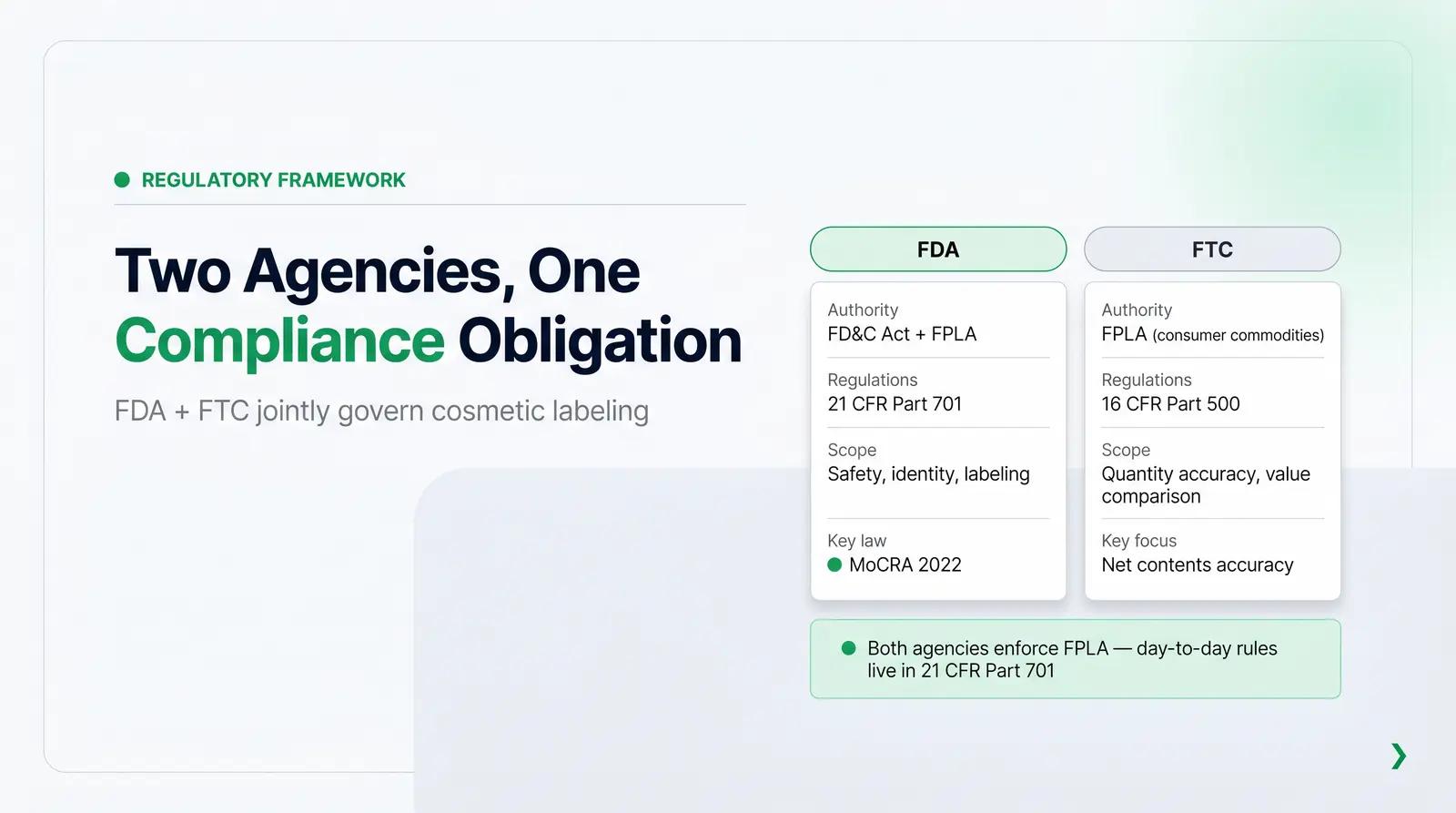
Cosmetic labeling in the United States is jointly governed by the Food and Drug Administration (FDA) and the Federal Trade Commission (FTC).
The FDA derives its authority over cosmetics from the FD&C Act and the Fair Packaging and Labeling Act (FPLA) [1] [3].
The FTC administers the FPLA with respect to "consumer commodities" to ensure that packaging and labeling provide consumers with accurate information regarding the quantity of contents and facilitate value comparisons [3] [5].
Therefore, while the statutory authority originates from both the FD&C Act and the FPLA, beauty brands must look to the FDA's codified regulations in 21 CFR Part 701 for their day-to-day compliance rules.
The regulatory landscape underwent its most significant transformation in nearly a century with the passage of the Modernization of Cosmetics Regulation Act of 2022 (MoCRA) [2].
While MoCRA represents a massive shift in how cosmetic businesses operate, it is crucial to distinguish between operational compliance and physical labeling compliance.
It also mandated the future disclosure of fragrance allergens on the physical label, a rulemaking process that is currently active [2].
Required Label Elements: The Complete List
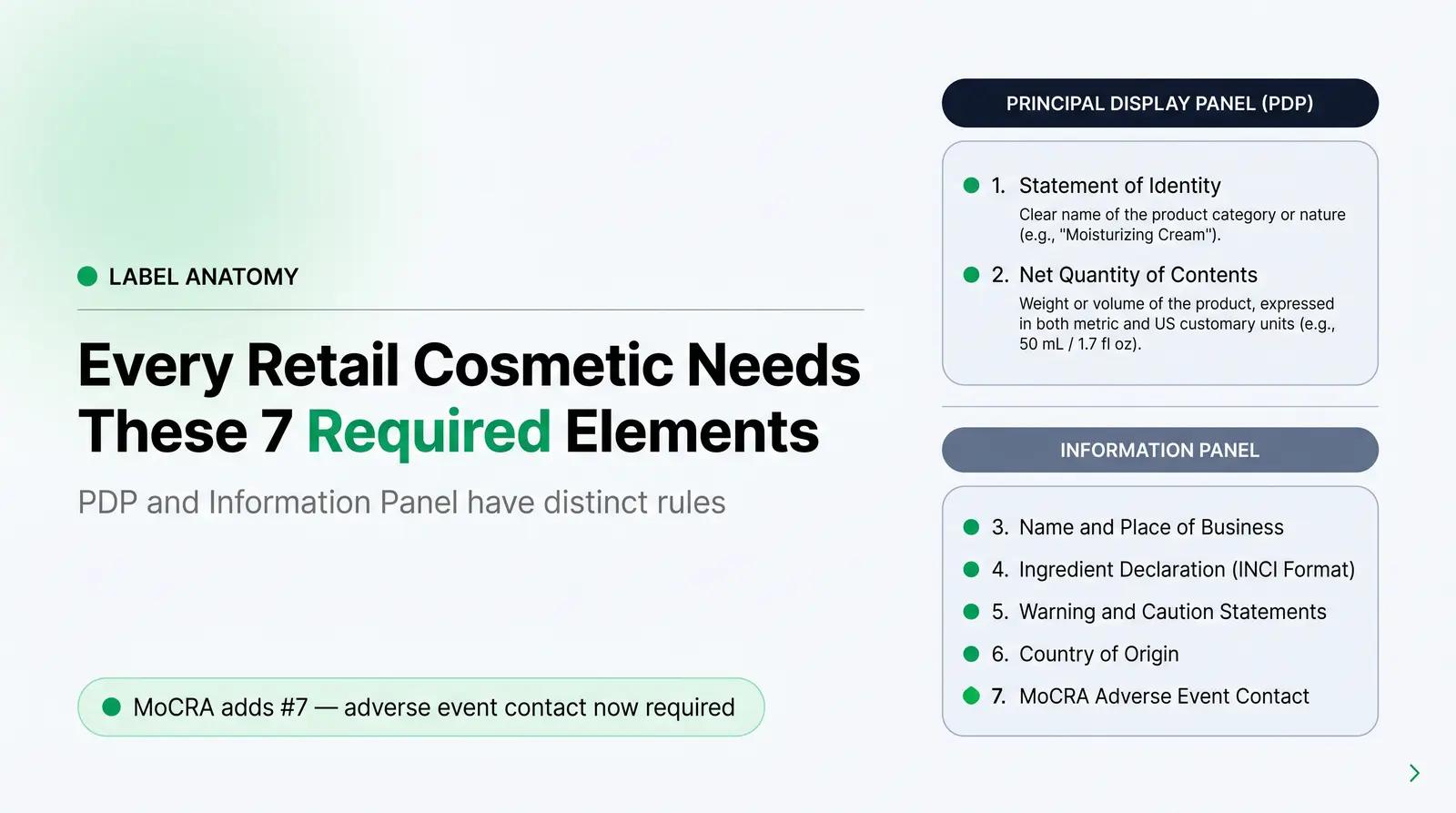
To build a compliant cosmetic label, you must treat your packaging as two distinct zones: the Principal Display Panel (PDP) and the Information Panel.
+-------------------------------------------------------------------+
|                                                                   |
|                      PRINCIPAL DISPLAY PANEL                      |
|                                                                   |
|  1. Statement of Identity (Product Name & Description)            |
|  2. Net Quantity of Contents (Volume/Weight, Bottom 30% of PDP)   |
|                                                                   |
+-------------------------------------------------------------------+
|                                                                   |
|                         INFORMATION PANEL                         |
|                                                                   |
|  3. Name and Place of Business (Responsible Person Contact)       |
|  4. Ingredient Declaration (INCI Format, Descending Order)        |
|  5. Warning and Caution Statements (Min 1/16" Type Size)          |
|  6. Country of Origin (Required for Imported Products)            |
|  7. MoCRA Adverse Event Contact Information                       |
|                                                                   |
+-------------------------------------------------------------------+
1. Statement of Identity
The Statement of Identity is the common or usual name of the cosmetic, or an appropriately descriptive name or illustration that clearly identifies the nature and use of the product to the consumer [1].
2. Net Quantity of Contents
The net quantity of contents declaration represents the total amount of product in the package, excluding the weight of the packaging, wrappers, or propellants [4].
The declaration must use US Customary units, such as fluid ounces for liquids or avoirdupois ounces for solids and semisolid products [4].
3. Name and Place of Business
The label must state the name and address of the manufacturer, packer, or distributor [4].
The address must include the street address, city, state, and ZIP code.
4. Ingredient Declaration
All cosmetics sold at retail to consumers must bear a complete ingredient declaration on an Information Panel [4].
Color additives may also be listed in any order at the end of the declaration, regardless of their concentration [4].
5. Warning and Caution Statements
If a product contains ingredients that may be hazardous when misused, or if the product type itself requires specific warnings under federal regulations, these statements must appear prominently on the Information Panel [4].
Additionally, if the safety of a cosmetic product or its ingredients has not been adequately substantiated by toxicological testing, the label must bear the following specific warning:
"Warning: The safety of this product has not been determined." [1]
6. Country of Origin
Under the Tariff Act of 1930, all imported articles must state the English name of the country of origin on the label [1].
7. MoCRA-Specific Additions
Under MoCRA, the physical label of a cosmetic product must now include contact information through which the "Responsible Person" can receive adverse event reports [2].
Principal Display Panel (PDP) vs. Information Panel: Placement Rules
The layout of a cosmetic label is not a matter of artistic preference; it is governed by strict spatial and mathematical rules.
The Principal Display Panel (PDP) is the part of the label most likely to be displayed, presented, shown, or examined under customary conditions of display for retail sale [4].
The Information Panel refers to any panel other than the PDP that is used to display mandatory information, such as the side or back of the packaging.
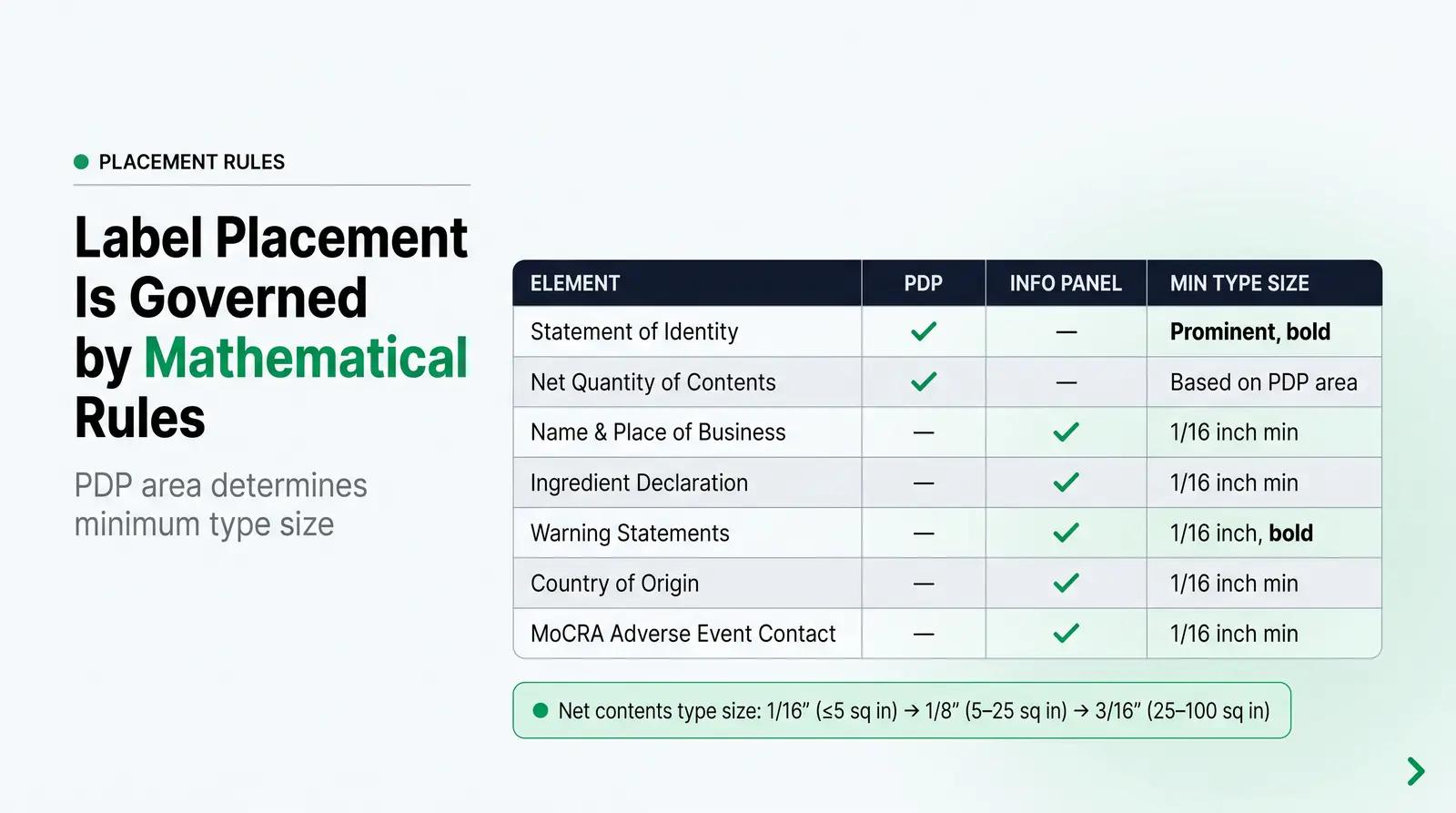
The placement of mandatory elements is highly restricted, as summarized in the table below:
| Required Element | PDP Placement | Information Panel Placement | Minimum Type Size Rules |
|---|---|---|---|
| Product Name / Brand | Yes | Optional | Prominent, proportionate to package size |
| Statement of Identity | Yes | No | Bold, prominent, parallel to the base |
| Net Quantity of Contents | Yes | No | Determined by PDP area (see formula below) |
| Name & Place of Business | No | Yes | Minimum 1/16 inch (1.6 mm) in height |
| Ingredient Declaration | No | Yes | Minimum 1/16 inch (1.6 mm) in height |
| Warning / Caution Statements | No | Yes | Minimum 1/16 inch (1.6 mm), bold and contrasting |
| Country of Origin | No | Yes | Minimum 1/16 inch (1.6 mm) in height |
| MoCRA Adverse Event Contact | No | Yes | Minimum 1/16 inch (1.6 mm) in height |
The minimum type size for the net quantity of contents declaration is determined by the total surface area of the PDP [4].
- For a rectangular box, the PDP area is the height multiplied by the width of the front panel.
- For a cylindrical container (such as a bottle or tube), the PDP area is 40 percent of the product of the height multiplied by the circumference of the container.
Once you have calculated the PDP area, apply the following minimum type size rules for the net contents statement:
- PDP <= 5 square inches (32.2 sq cm): Minimum type size of 1/16 inch (1.6 mm) in height.
- 5 < PDP <= 25 square inches (161.3 sq cm): Minimum type size of 1/8 inch (3.2 mm) in height.
- 25 < PDP <= 100 square inches (645.1 sq cm): Minimum type size of 3/16 inch (4.8 mm) in height.
- 100 < PDP <= 400 square inches (2580.6 sq cm): Minimum type size of 1/4 inch (6.4 mm) in height.
For very small packages where the total available labeling surface is less than 12 square inches (77.4 sq cm), the minimum type size for the ingredient list and other Information Panel elements may be reduced to 1/32 inch (0.8 mm) to accommodate the text [4].
Ingredient List Deep-Dive: INCI and Formatting Rules
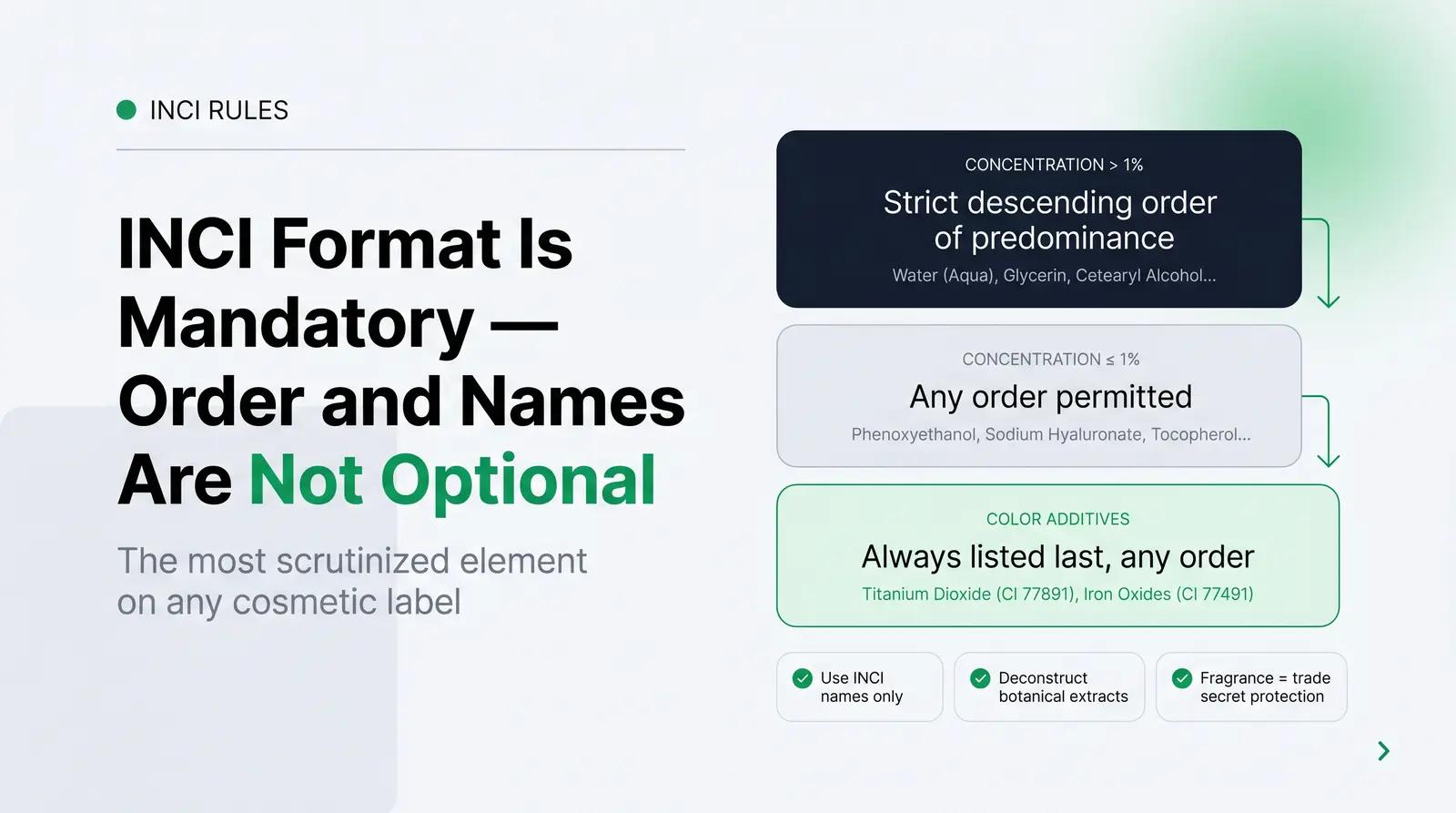
The ingredient list is the most heavily scrutinized element of a cosmetic label.
Using common names, trade names, or chemical shorthand is a direct violation of FDA rules.
[CONCENTRATION > 1%]
Ingredients listed in strict descending order of predominance.
Example: Water (Aqua) -> Glycerin -> Cetearyl Alcohol...
       |
       v
[CONCENTRATION <= 1%]
Ingredients may be listed in any order after the >1% ingredients.
Example: Phenoxyethanol, Sodium Hyaluronate, Tocopherol...
       |
       v
[COLOR ADDITIVES]
May be listed in any order at the very end of the list.
Example: Titanium Dioxide (CI 77891), Iron Oxides (CI 77491)...
When formatting your ingredient list, keep the following structural rules in mind:
The 1 Percent Threshold
Ingredients present at concentrations greater than 1 percent must be listed in strict descending order of predominance [4].
Botanical Extracts
Botanical ingredients must be declared using their scientific Latin binomial names followed by the part of the plant used and the physical form of the ingredient.
Fragrance and Flavor
Under the FPLA, fragrance and flavor formulas are protected as trade secrets [8].
Claim Boundaries: Cosmetic vs. Drug
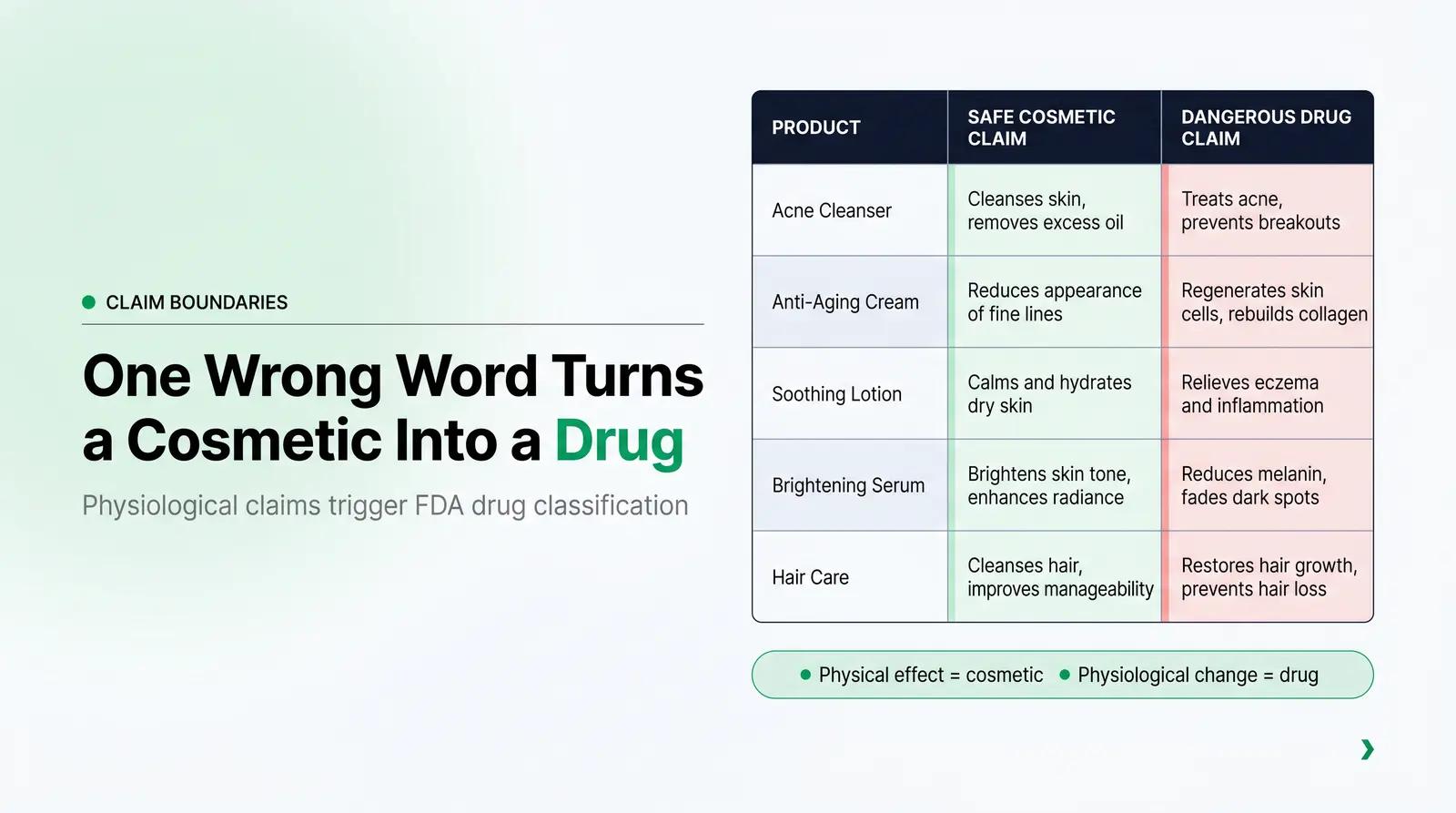
The fastest way to trigger an FDA warning letter or a class-action lawsuit is to cross the boundary between a cosmetic claim and a drug claim.
Under the FD&C Act, the definitions are clear:
- A cosmetic is intended to be applied to the human body for cleansing, beautifying, promoting attractiveness, or altering the appearance without affecting the body's structure or functions [1].
- A drug is intended for use in the diagnosis, cure, mitigation, treatment, or prevention of disease, or intended to affect the structure or any function of the body [1] [9].
If your label contains claims that imply a physiological change or a therapeutic effect, the FDA will classify your product as a drug [9].
The table below contrasts acceptable cosmetic claims with problematic drug claims for common beauty product categories:
| Product Category | Acceptable Cosmetic Claim (Physical Effect) | Problematic Drug Claim (Physiological Effect) |
|---|---|---|
| Acne / Cleansers | "Cleanses skin and removes excess oil" | "Treats acne and prevents future breakouts" |
| Anti-Aging Cream | "Reduces the appearance of fine lines" | "Regenerates skin cells and rebuilds collagen" |
| Soothing Lotion | "Calms and hydrates dry, sensitive skin" | "Relieves eczema, psoriasis, and inflammation" |
| Brightening Serum | "Brightens skin tone and enhances radiance" | "Reduces melanin production and fades dark spots" |
| Hair Care | "Cleanses hair and improves manageability" | "Restores hair growth and prevents hair loss" |
If your product is a dual-use product, such as a moisturizer with SPF (cosmetic + sunscreen drug) or a dandruff shampoo (cosmetic + antidandruff drug), it must comply with both cosmetic and drug labeling requirements [9].
Cosmetic vs. OTC Drug Label Requirements
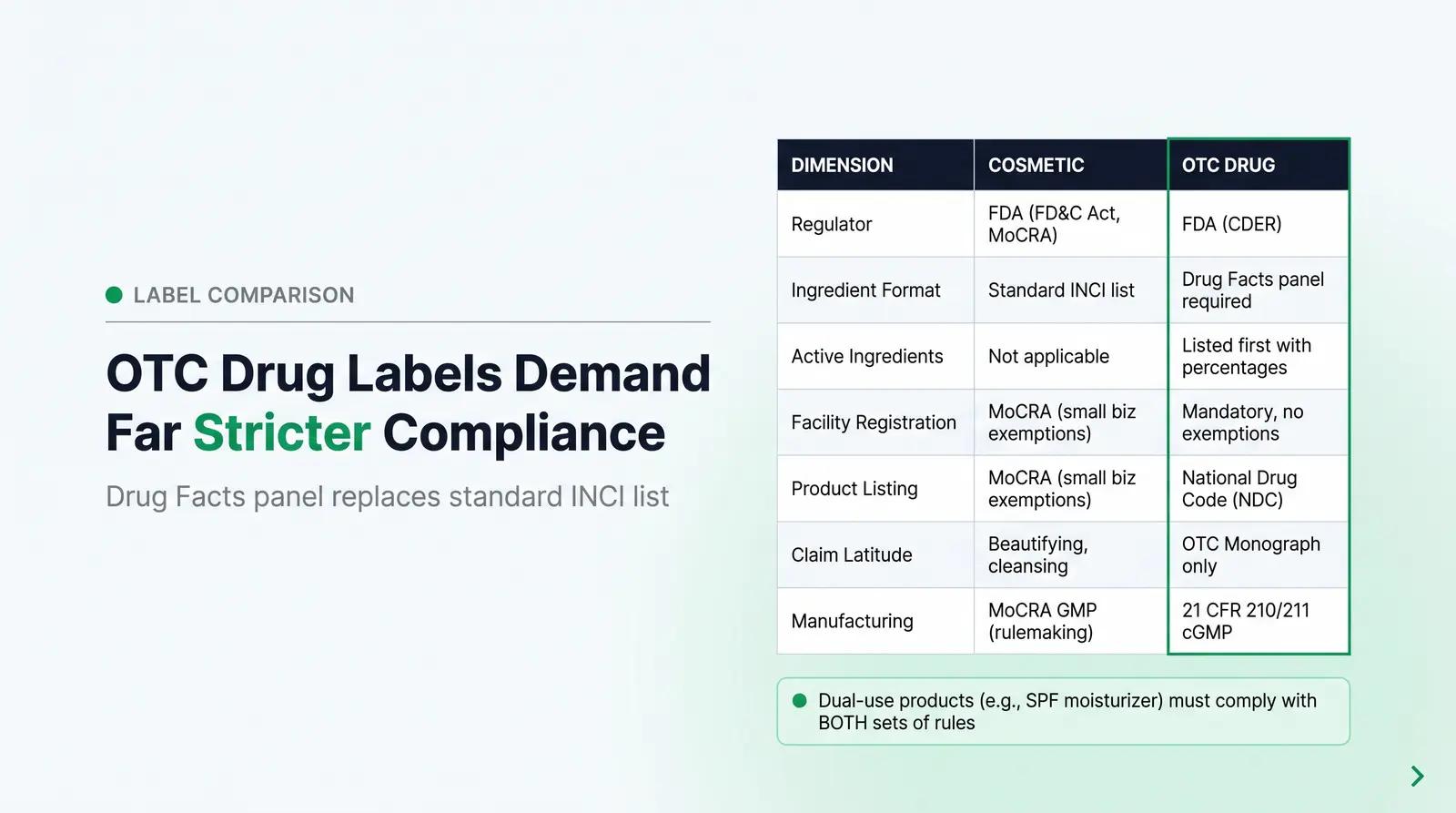
To help beauty founders understand the strict operational and visual differences between these two classifications, the table below provides a side-by-side comparison of cosmetic versus Over-the-Counter (OTC) drug labeling requirements:
| Dimension | Cosmetic Label Requirements | OTC Drug Label Requirements |
|---|---|---|
| Primary Regulatory Body | FDA (FD&C Act, FPLA, MoCRA) [1] [2] | FDA (Center for Drug Evaluation & Research) [9] |
| Ingredient List Format | Standard INCI list in descending order [4] | Structured "Drug Facts" panel (21 CFR 201.66) [9] |
| Active Ingredients | Not applicable (all listed together) | Must list active ingredients first with percentages [9] |
| Facility Registration | Mandatory under MoCRA (with small business exemptions) [2] | Mandatory annual registration (no exemptions) [1] |
| Product Listing | Mandatory under MoCRA (with small business exemptions) [2] | Mandatory listing via National Drug Code (NDC) [9] |
| Required Warnings | Product-specific warnings where necessary [4] | Standardized warnings, usage directions, and age limits [9] |
| Net Contents Format | US Customary (metric supplemental) on PDP [4] | US Customary (metric supplemental) on PDP [4] |
| Claim Latitude | Limited to beautifying, cleansing, and altering appearance [1] | Limited to approved OTC Monograph indications [9] |
| Manufacturing Standard | MoCRA GMP (currently in rulemaking) [2] | Current Good Manufacturing Practices (21 CFR 210/211) [1] |
Net Contents Labeling: The Detail Most Guides Skip
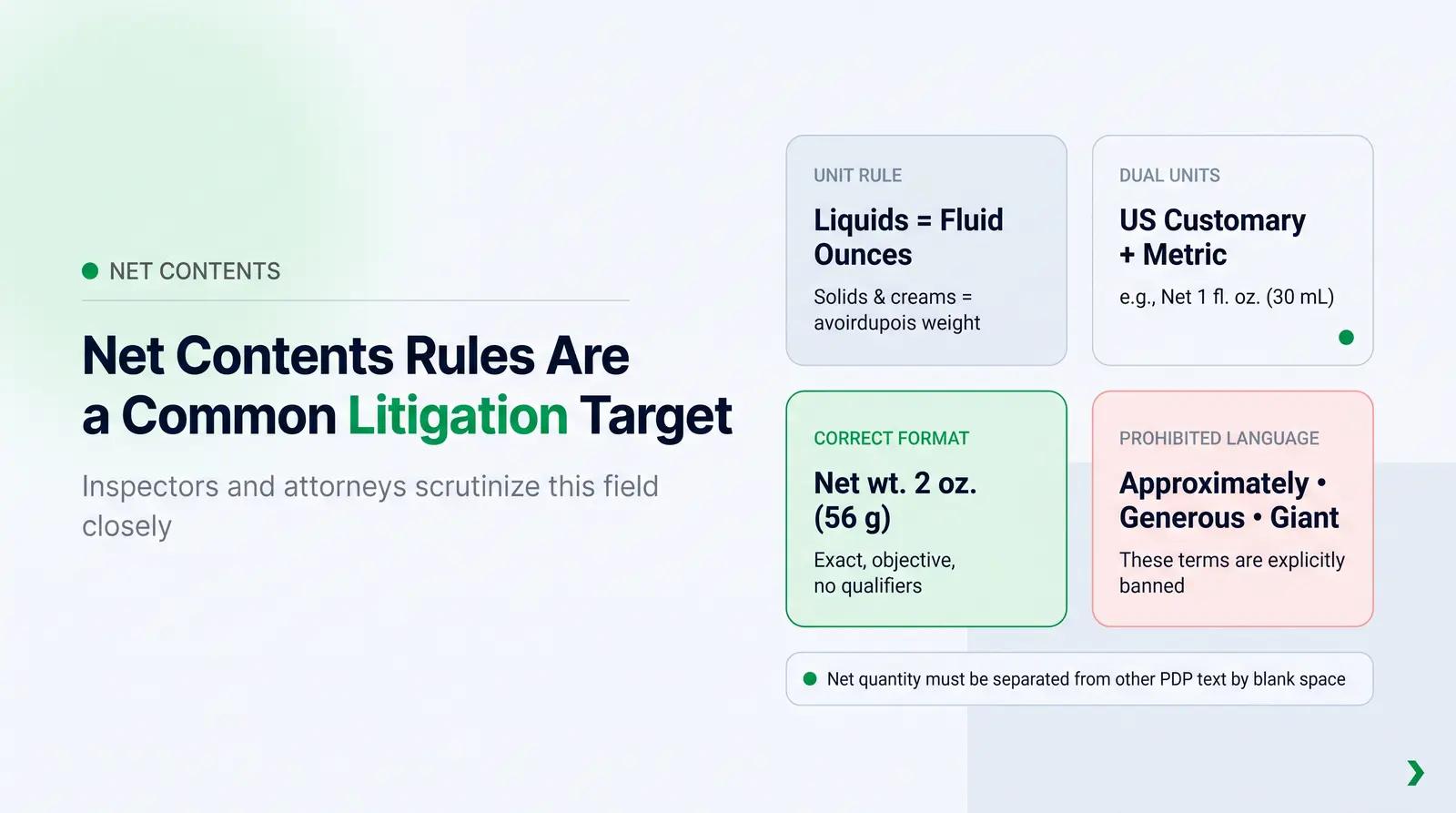
While many guides treat the net quantity of contents as a minor detail, it is one of the most common targets for weights and measures inspectors and class-action attorneys.
Weight vs. Volume
You must declare liquid products in terms of fluid measure (volume) and solid, semisolid, or viscous products (such as thick creams, balms, or scrubs) in terms of avoirdupois weight [4].
Dual-Unit Requirement
For products sold at retail, the net quantity statement must facilitate value comparisons [3].
- Correct: "Net wt.
- Incorrect: "Net wt.
For products under 1 pound or 1 pint, a single unit declaration is acceptable, such as "Net 1 fl.
No Qualifying Language
The net quantity declaration must be an accurate, objective statement of the product contained in the package [4].
- Prohibited terms: "approximately," "minimum," "giant ounce," "full quart," or "generous 50 ml" [4].
- Approved terms: "Net weight 2 oz." or "Net 2 fl.
The declaration must also be separated from other printed information on the PDP [4].
Worked Example: A 1 oz (30 ml) Facial Serum
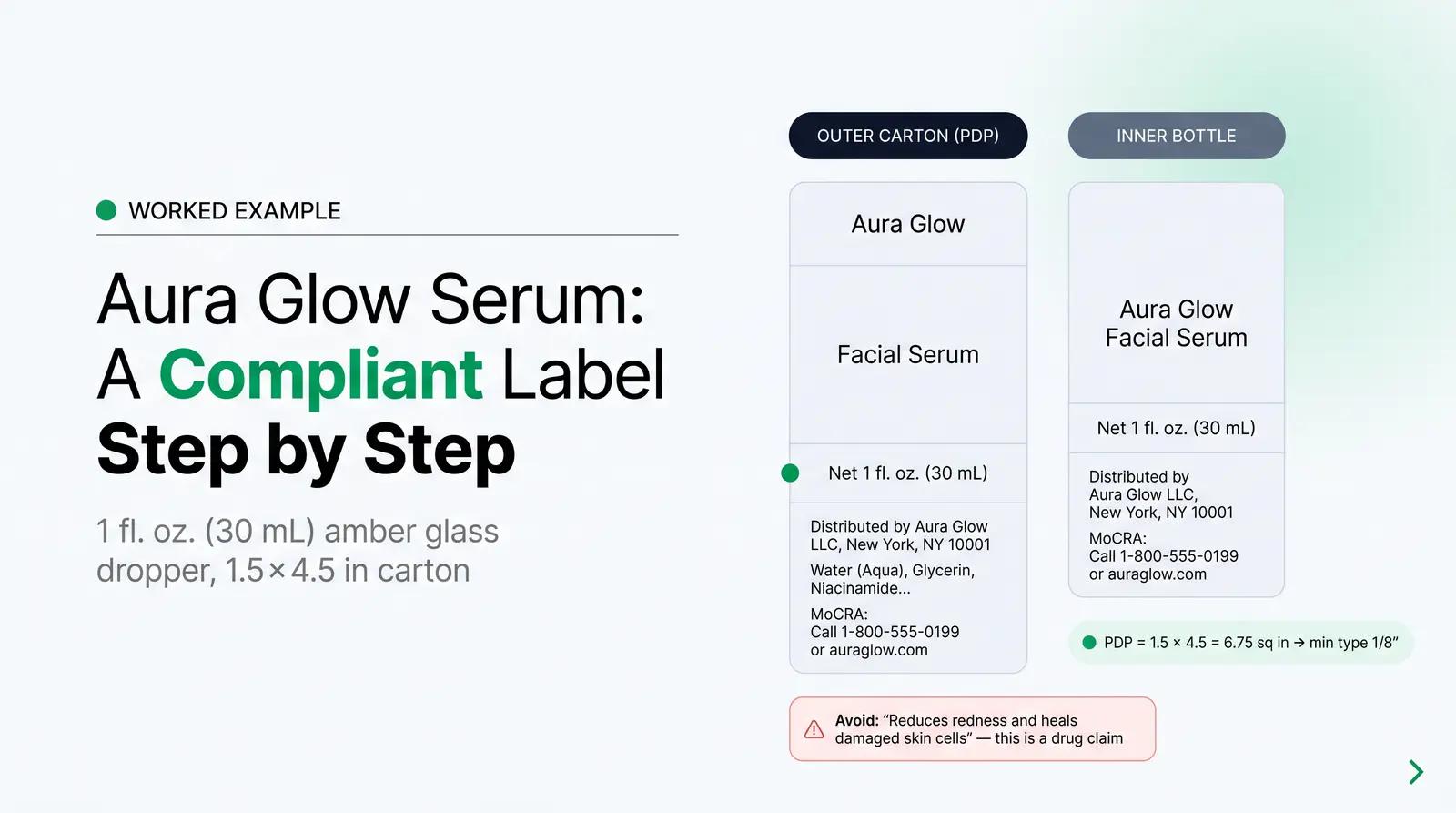
To demonstrate how these rules apply in practice, let us walk through a realistic packaging scenario for a fictional product: Aura Glow Facial Serum.
-
Product Type: Liquid facial serum (cosmetic)
-
Packaging: 1 oz (30 ml) amber glass dropper bottle sold inside a paperboard folding carton.
-
Carton Dimensions: 1.5 inches wide by 4.5 inches high.
-
PDP Area Calculation: Since the outer carton is rectangular, the PDP area is the width of the front panel multiplied by the height:
$$\text{PDP Area} = 1.5 \text{ inches} \times 4.5 \text{ inches} = 6.75 \text{ square inches}$$
Because the PDP area is between 5 and 25 square inches, the minimum type size for the net quantity of contents declaration on the outer carton is 1/8 inch (3.2 mm) in height [4].
The table below outlines the exact text, placement, and formatting required for both the outer carton and the inner glass bottle:
| Packaging Component | Required Element | Exact Compliant Text | Placement on Packaging | Compliance Note |
|---|---|---|---|---|
| Outer Carton (Primary) | Brand Name | Aura Glow | Top of PDP | High contrast, prominent |
| Outer Carton (Primary) | Statement of Identity | Facial Serum | Center of PDP | Parallel to base, clear description |
| Outer Carton (Primary) | Net Quantity | Net 1 fl. oz. (30 mL) | Bottom 30% of PDP | Min 1/8" height, parallel to base |
| Outer Carton (Primary) | Business Name & Address | Distributed by Aura Glow LLC, New York, NY 10001 | Information Panel (Back) | Omitted street address if listed in directory |
| Outer Carton (Primary) | Ingredient List | Water (Aqua), Glycerin, Niacinamide, Phenoxyethanol, Sodium Hyaluronate, Ethylhexylglycerin. | Information Panel (Back) | Descending order, INCI names, min 1/16" height |
| Outer Carton (Primary) | MoCRA Contact | Questions or comments? Call 1-800-555-0199 or visit auraglow.com | Information Panel (Back) | Adverse event reporting pathway |
| Inner Bottle (Secondary) | Brand & Identity | Aura Glow Facial Serum | Front Panel | Must match outer carton identity |
| Inner Bottle (Secondary) | Net Quantity | Net 1 fl. oz. (30 mL) | Front Panel (Bottom) | Required unless PDP <= 5 sq in [4] |
| Inner Bottle (Secondary) | Business Name & Address | Distributed by Aura Glow LLC, New York, NY 10001 | Back Panel | Ensures contact info remains if carton is discarded |
| Inner Bottle (Secondary) | MoCRA Contact | Call 1-800-555-0199 or visit auraglow.com | Back Panel | Adverse event reporting pathway |
Common Mistake to Avoid on This Product
A founder might be tempted to print the claim "Reduces redness and heals damaged skin cells" on the back of the carton.
The Packfolio Label Pre-Flight Checklist
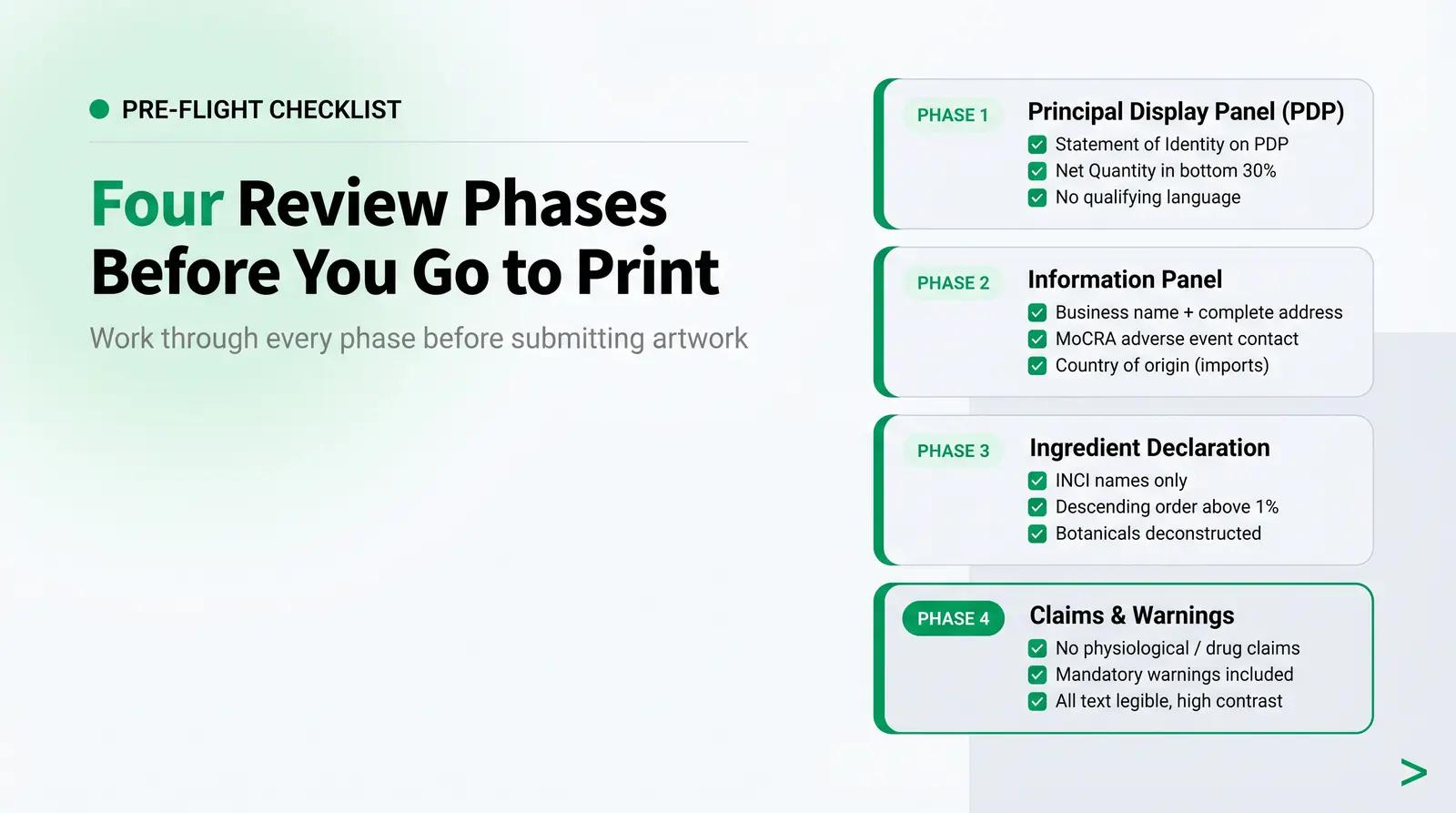
Before you send your cosmetic label artwork to print, work through this structured review sequence.
Phase 1: Principal Display Panel (PDP) Review
- Statement of Identity: Does the PDP include a clear, common, or descriptive name identifying what the product is (e.g., "Body Lotion," "Facial Cleanser") [1]?
- Alignment: Is the Statement of Identity positioned parallel to the base of the package [1]?
- Net Quantity Location: Is the net quantity of contents statement placed within the bottom 30 percent of the PDP [4]?
- Net Quantity Units: Is the quantity expressed in US Customary units (fluid ounces for liquids, avoirdupois ounces/pounds for solids) [4]?
- Net Quantity Formatting: Is the statement free of qualifying language like "approximately" or "generous" [4]?
- Net Quantity Separation: Is the quantity statement separated from other text by a space equal to the text height (above/below) and twice the letter "N" width (sides) [4]?
- Type Size Compliance: Is the net quantity text height compliant with your calculated PDP area (e.g., min 1/8" for PDPs between 5 and 25 sq in) [4]?
Phase 2: Information Panel Review
- Responsible Person Name: Is the business name of the manufacturer, packer, or distributor clearly stated [4]?
- Relationship Qualifier: If the listed company is not the actual manufacturer, is the name preceded by "Distributed by," "Manufactured for," or equivalent [4]?
- Complete Address: Does the address include the city, state, and ZIP code (and street address if not listed in a public directory) [4]?
- MoCRA Adverse Event Contact: Does the label include a domestic phone number, domestic street address, or electronic contact (website/QR code) through which the Responsible Person can receive serious adverse event reports [2]?
- Country of Origin: For imported products, is the English name of the country of origin clearly displayed (e.g., "Made in Italy") [1]?
- Type Size: Is all required Information Panel text printed in a type size of at least 1/16 inch (1.6 mm) in height (or min 1/32" if total packaging surface is < 12 sq in) [4]?
Phase 3: Ingredient Declaration Review
- INCI Nomenclature: Are all ingredients identified by their official INCI names rather than common, chemical, or trade names [4] [6]?
- Order of Predominance: Are ingredients present at concentrations greater than 1 percent listed in strict descending order of predominance [4]?
- 1% and Colorant Positioning: Are ingredients at 1 percent or less and color additives positioned at the very end of the list [4]?
- Botanical Deconstruction: Are all botanical extracts deconstructed into their individual component parts (extract, carrier solvent, preservatives) [4]?
- Crossover Check: For products that are also drugs, are the active drug ingredients listed first as "Active Ingredients" before the cosmetic ingredients [4]?
Phase 4: Claim and Warning Review
- Claim Boundaries: Has all packaging copy, including instructions and descriptions, been audited to ensure it does not contain therapeutic, disease-treatment, or physiological-change language [9]?
- Mandatory Warnings: If the product type requires specific warnings (such as aerosols or bubble baths), is the exact statutory text included [4]?
- Safety Substantiation: If the product's safety has not been toxicologically substantiated, does the label display the mandatory "Warning: The safety of this product has not been determined" statement [1]?
- Contrast and Legibility: Is all required text printed on a contrasting background, free of distracting graphic patterns that obscure readability [4]?
- Physical Dimensions: Are all elements sized to fit the printable region of your selected container with appropriate bleeds and safety margins [15]?
Contrarian and Non-Obvious Insights
When navigating cosmetic compliance, relying on common industry assumptions can lead to significant regulatory risks.
MoCRA Registration vs. Physical Labeling Compliance
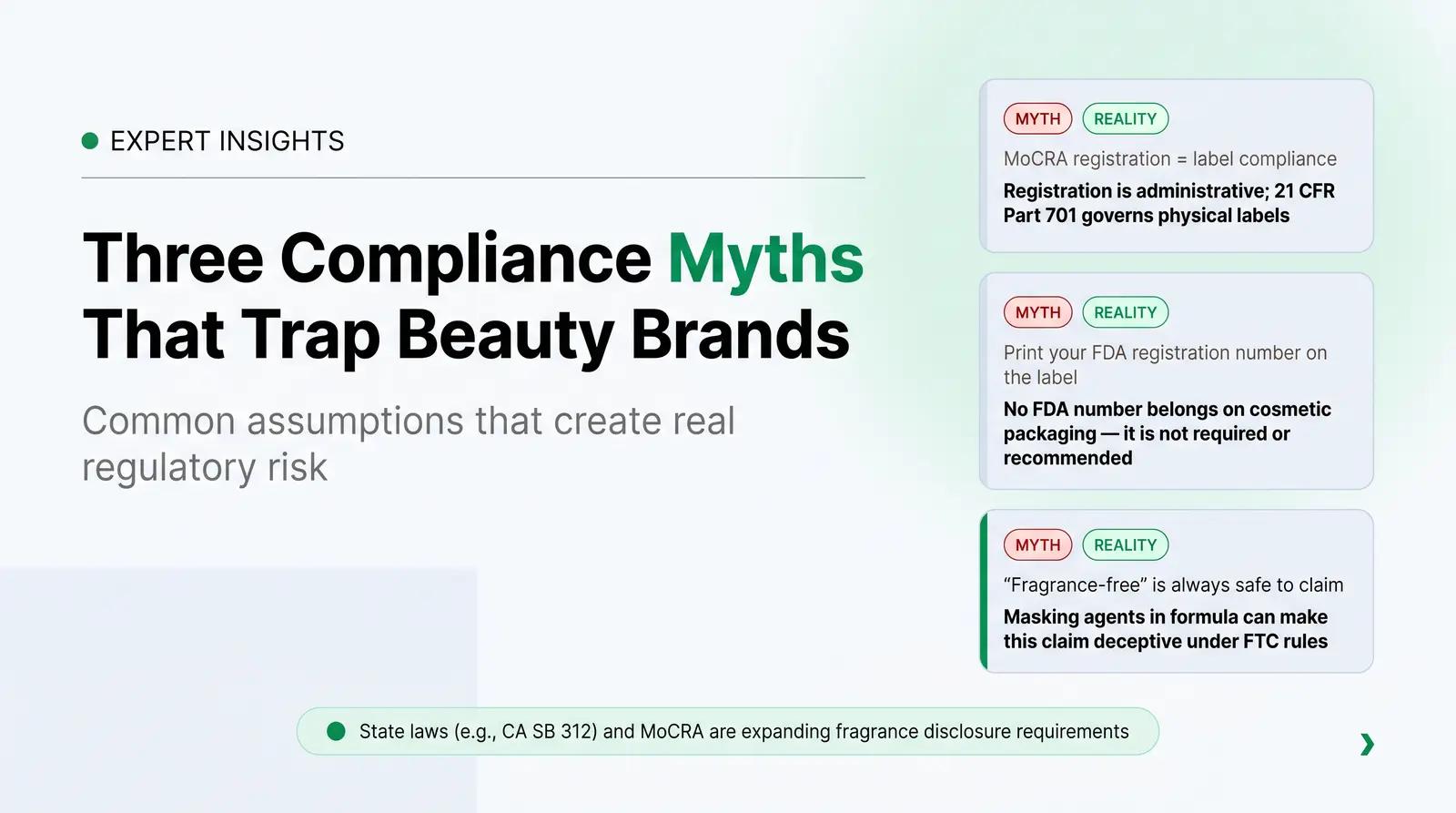
A common misconception among beauty founders is that registering their facility and listing their products with the FDA under MoCRA constitutes labeling compliance.
Product listing is an administrative submission to the FDA's electronic portal, whereas physical labeling is governed by the statutory rules of 21 CFR Part 701.
Furthermore, some founders mistakenly believe they must print their FDA facility registration number or product listing number on their physical packaging.
The Shifting Landscape of Fragrance Transparency
For decades, the standard advice given to beauty brands has been to list "Fragrance" or "Flavor" as a single ingredient to protect proprietary scent formulas under the trade secret provisions of the FPLA [8].
First, state-level legislation has disrupted this federal loophole.
Second, MoCRA has directed the FDA to establish federal regulations for fragrance allergen labeling [2].
Finally, the Federal Trade Commission (FTC) maintains strict guidelines regarding "free-of-claims." If a brand markets a product as "fragrance-free," but the formula contains an ingredient that exerts a masking or perfuming function (even if added for other purposes, such as an essential oil used for preservation), the claim can be deemed deceptive and misleading under FTC standards [13].
Where Packfolio Fits in Your Label Workflow
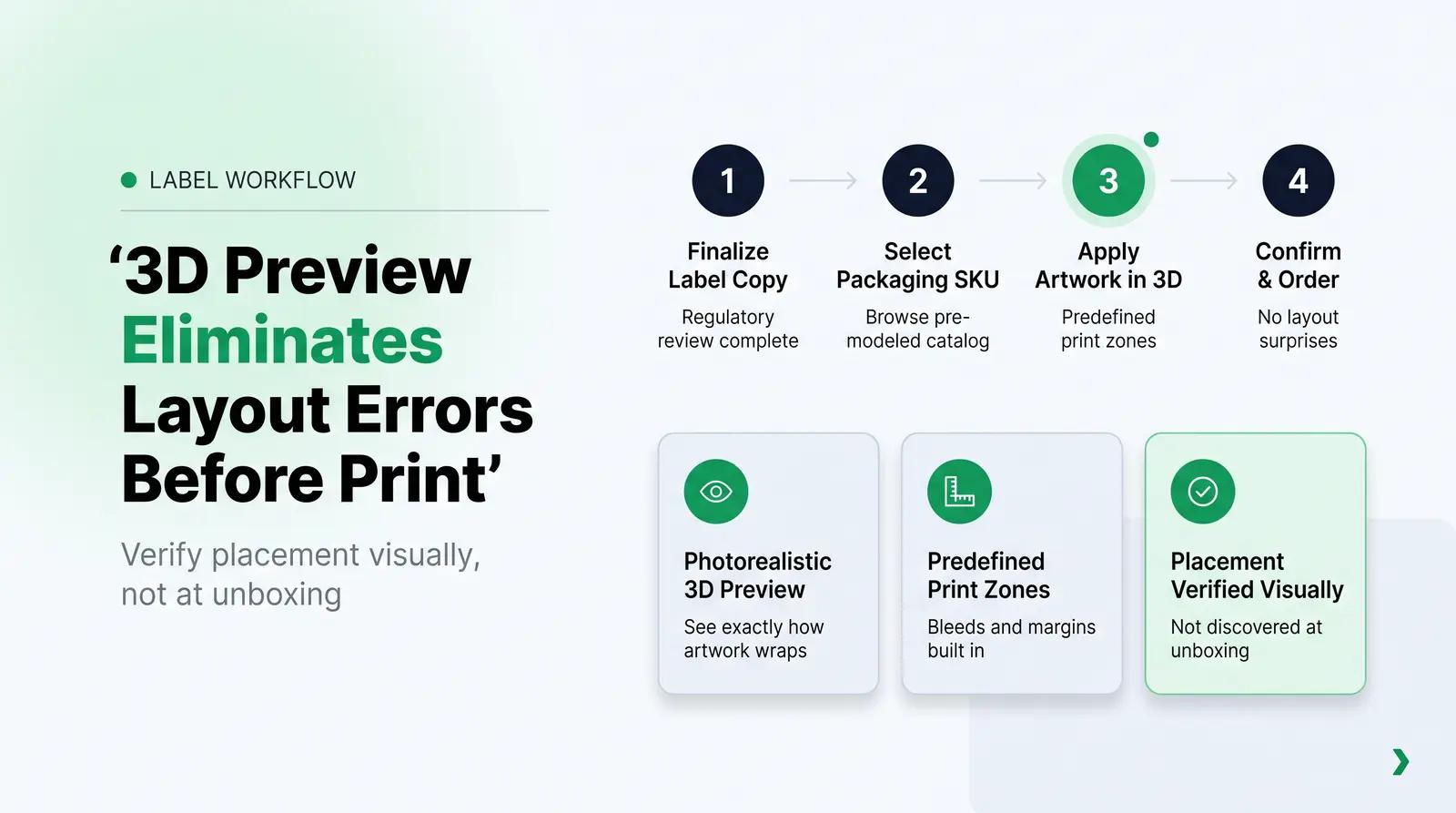
Designing a compliant cosmetic label is only half the battle; you must also ensure that the artwork fits your physical container perfectly, with proper bleeds, margins, and placement.
Packfolio's browser-based 3D design platform allows founders to apply finalized, compliance-reviewed label artwork directly onto photorealistic 3D models of cosmetic containers. By browsing the cosmetic packaging catalog, brands can select from pre-modeled SKUs with predefined printable regions [14].
While Packfolio does not provide legal or regulatory review, and brands should always consult a specialized cosmetic regulatory attorney or consultant to audit their final label copy, the 3D preview environment eliminates layout errors, bleed issues, and placement mistakes.
Browse Packfolio's curated cosmetic packaging catalog and preview your finalized label artwork in 3D before a single unit goes to production. Every SKU includes predefined print zones so placement is verified visually, not discovered at unboxing. Explore the catalog →
Frequently Asked Questions
What information is required on a cosmetic label by the FDA?
The FDA requires five primary elements on a retail cosmetic label: a Statement of Identity and a Net Quantity of Contents on the Principal Display Panel (PDP), and the Name and Place of Business, a complete Ingredient Declaration, and any necessary Warning Statements on the Information Panel [4]. Additionally, under MoCRA, the label must display contact information for the Responsible Person to receive serious adverse event reports [2].
What is the correct format for the net contents declaration on a cosmetic?
The net quantity declaration must appear on the PDP within the bottom 30 percent of the label, parallel to the base of the package [4]. It must be stated in US Customary units (avoirdupois ounces or pounds for solids, fluid ounces for liquids), though metric units may be added as supplemental information [4]. The statement must be distinct, meet minimum type size requirements based on the PDP area, and must not contain qualifying language such as "approximately" or "generous" [4].
Do I need to list every ingredient on a cosmetic label, including trace amounts?
Yes, all ingredients used in a retail cosmetic product must be declared on the label [4]. Ingredients present at concentrations greater than 1 percent must be listed in descending order of predominance, while ingredients present at 1 percent or less and color additives may be listed in any order at the very end of the list [4]. Fragrance and flavor formulas may currently be aggregated under the single terms "Fragrance" or "Flavor" to protect trade secrets, though this is subject to shifting state and federal allergen disclosure rules [2] [8].
What is the difference between a cosmetic label and an OTC drug label?
A cosmetic label focuses on beautifying, cleansing, and altering appearance, with ingredients listed in a standard INCI format in descending order of predominance [1] [4]. An Over-the-Counter (OTC) drug label is required for products intended to treat or prevent disease or affect the structure or function of the body, and it must feature a highly structured "Drug Facts" panel that lists active ingredients first with their percentages, along with specific usage directions and warnings [9].
Does MoCRA change what has to appear on my product's physical label?
Yes, MoCRA introduces new physical labeling requirements, most notably the mandate to list a domestic address, domestic phone number, or electronic contact information (such as a website or QR code) through which the Responsible Person can receive serious adverse event reports [2]. It also establishes a framework for future mandatory fragrance allergen disclosures on physical labels once the FDA's rulemaking process is complete [2].
References
[1] U.S. Food and Drug Administration. "Cosmetics Labeling Guide." Last updated February 2022. https://www.fda.gov/cosmetics/cosmetics-labeling-regulations/cosmetics-labeling-guide
[2] U.S. Food and Drug Administration. "Modernization of Cosmetics Regulation Act of 2022 (MoCRA)." Last updated March 2026. https://www.fda.gov/cosmetics/cosmetics-laws-regulations/modernization-cosmetics-regulation-act-2022-mocra
[3] Federal Trade Commission. "Fair Packaging and Labeling Act: Regulations Under Section 4 of the Fair Packaging and Labeling Act." https://www.ftc.gov/legal-library/browse/rules/fair-packaging-labeling-act-regulations-under-section-4-fair-packaging-labeling-act
[4] U.S. Food and Drug Administration. "Code of Federal Regulations Title 21, Part 701: Cosmetic Labeling." eCFR. Last updated June 2026. https://www.ecfr.gov/current/title-21/chapter-I/subchapter-G/part-701
[5] U.S. Food and Drug Administration. "Summary of Cosmetics Labeling Requirements." Last updated November 2025. https://www.fda.gov/cosmetics/cosmetics-labeling-regulations/summary-cosmetics-labeling-requirements
[6] Personal Care Products Council. "INCI - International Nomenclature Cosmetic Ingredient." https://www.personalcarecouncil.org/resources/inci/
[7] European Commission. "CosIng - Cosmetic Ingredient Database." https://ec.europa.eu/growth/tools-databases/cosing/
[8] U.S. Food and Drug Administration. "Fragrances in Cosmetics." Last updated February 2022. https://www.fda.gov/cosmetics/cosmetic-ingredients/fragrances-cosmetics
[9] U.S. Food and Drug Administration. "Is It a Cosmetic, a Drug, or Both? (Or Is It Soap?)" Last updated March 2026. https://www.fda.gov/cosmetics/cosmetics-laws-regulations/it-cosmetic-drug-or-both-or-it-soap
[10] National Institute of Standards and Technology. "NIST Handbook 130 - Current Edition." Last updated January 2026. https://www.nist.gov/pml/owm/nist-handbook-130-current-edition
[11] U.S. Food and Drug Administration. "21 CFR 701.13 - Declaration of net quantity of contents." eCFR. Last updated June 2026. https://www.ecfr.gov/current/title-21/chapter-I/subchapter-G/part-701/subpart-B/section-701.13
[12] California Department of Public Health. "The Cosmetic Fragrance and Flavor Ingredient Right to Know Act of 2020 (SB 312)." https://www.cdph.ca.gov/Programs/CCDPHP/DEODC/OHB/CSCP/Pages/SB312.aspx
[13] Federal Trade Commission. "Part 500: Regulations Under Section 4 of the Fair Packaging and Labeling Act." eCFR. Last updated June 2026. https://www.ecfr.gov/current/title-16/chapter-I/subchapter-E/part-500
[14] Packfolio. "Custom Packaging Platform." https://packfolio.com/
[15] Packfolio. "Cosmetic Packaging Catalog." https://packfolio.com/catalog
[16] Packfolio. "How to Choose Cosmetic Packaging." Packfolio Blog. https://packfolio.com/blog/how-to-choose-cosmetic-packaging


