
Mist Spray Bottles and Fine Mist Sprayers for Beauty Products
This guide helps beauty founders select fine mist spray bottles by matching actuator specs, bottle materials, and viscosity ranges to their specific cosmetic formulations.
The difference between a beauty product that converts repeat customers and one that fails at first use often comes down to the sprayer. A beautifully formulated facial mist loses all perceived value if the actuator clogs, spits, or delivers an uneven, aggressive jet instead of a weightless cloud. For independent beauty founders and formulators, selecting the right mist spray bottle is a high-stakes commercial decision that directly impacts the sensory experience, formula stability, and dose-to-dose efficacy of the final product.
Getting it right means understanding the mechanics behind the packaging. This guide covers spray behavior, formula viscosity, closure compatibility, materials, testing workflow, and sourcing considerations: everything a founder needs to spec and order spray packaging with confidence.
Why the Sprayer Is a Formula Decision, Not Just a Packaging Decision
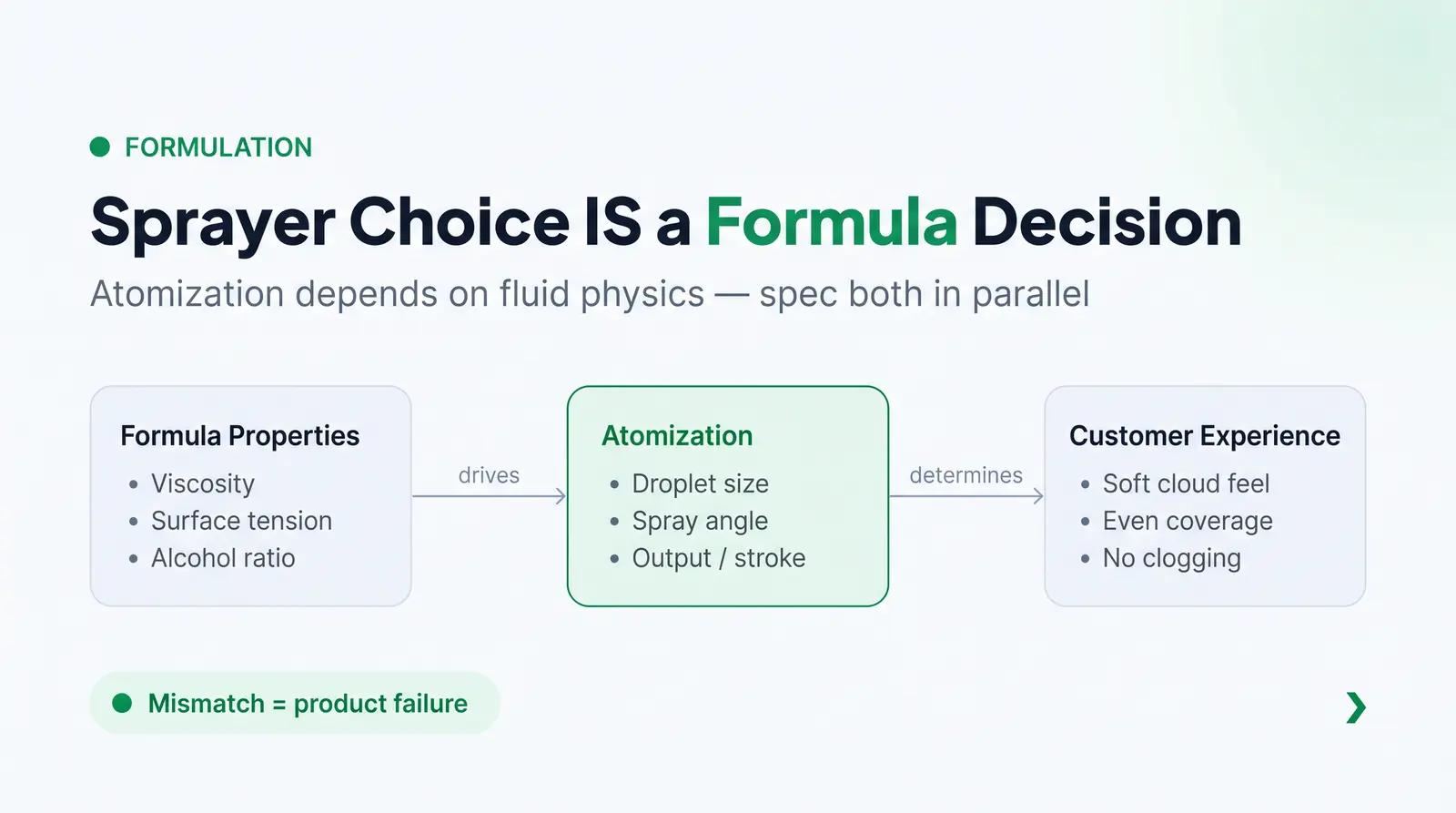
A fine mist sprayer is not a simple pump. It is a high-precision engine designed to perform a specific, complex task: atomization. When the actuator is pressed, liquid is forced through microscopic channels inside the nozzle insert at high pressure, causing it to break apart into a cloud of minute droplets [1]. This mechanical process is entirely dependent on the physical properties of the formula inside the bottle.
The viscosity, surface tension, and alcohol-to-water ratio of the product dictate how it behaves under pressure. If a formula is too thick, it overwhelms the delicate channels of the actuator, resulting in a clogged nozzle or a harsh, sputtering stream. If the surface tension is incorrect, droplets may not form properly, leading to dripping and uneven application. Choosing a sprayer means matching the mechanical output of the packaging to the fluid dynamics of the cosmetic formulation.
This interdependency is why packaging decisions cannot be made after formulation is finalized. The two must be developed in parallel. A founder who locks in a formula at 200 cP and then tries to source a fine mist sprayer will find the combination is physically incompatible. The actuator will fail, the customer experience will suffer, and the product will be returned.
Spray Behavior: What "Fine Mist" Actually Means
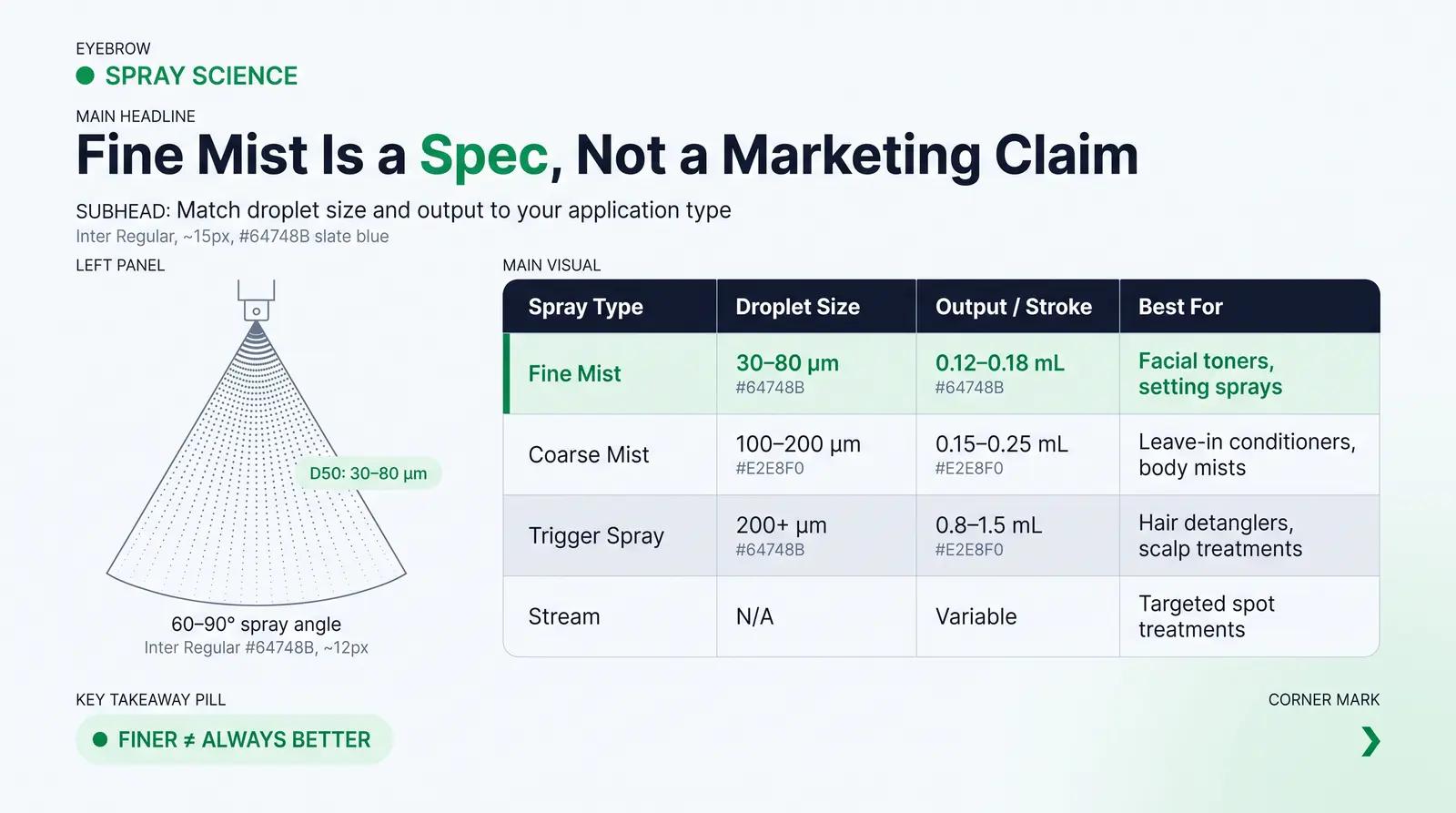
In cosmetic packaging, "fine mist" is a measurable technical specification, not just a marketing term. A true fine mist sprayer typically produces a droplet size (D50) falling between 30 and 80 microns [2]. For context, a human hair is approximately 100 microns in diameter. This micro-droplet size ensures the product feels soft, weightless, and evenly distributed upon contact with skin or hair.
The full spray profile is defined by three variables: droplet size, spray angle, and output per stroke. Standard fine mist actuators dispense between 0.12 mL and 0.18 mL per actuation [3]. The spray angle, typically between 60 and 90 degrees, determines the coverage area. A wider cone is ideal for facial applications where even distribution is critical; a narrower, more targeted pattern suits hair products where precision matters.
How Spray Types Compare by Beauty Application
| Spray Type | Droplet Size | Output per Stroke | Best Applications |
|---|---|---|---|
| Fine Mist | 30–80 microns | 0.12–0.18 mL | Facial toners, setting sprays, fragrances |
| Coarse Mist | 100–200 microns | 0.15–0.25 mL | Leave-in conditioners, body mists |
| Trigger Spray | 200+ microns | 0.8–1.5 mL | Hair detanglers, scalp treatments |
| Stream | N/A | Variable | Targeted spot treatments |
One thing most sourcing guides skip: a finer mist is not universally the right choice. Counter to what most bulk packaging listings imply, coarser droplets can deposit certain active ingredients more effectively for leave-on applications. Ultra-fine mists are more prone to drift and evaporation before reaching the target surface, which can reduce the effective delivery of heavier actives like conditioning agents or botanical extracts [4]. Selecting the finest possible mist is the right call for facial applications where a dry, non-disruptive finish is the goal. For hair and body applications where deposition and coverage matter more than dryness, a coarser droplet profile is often the better technical choice.
Formula Viscosity and Closure Compatibility
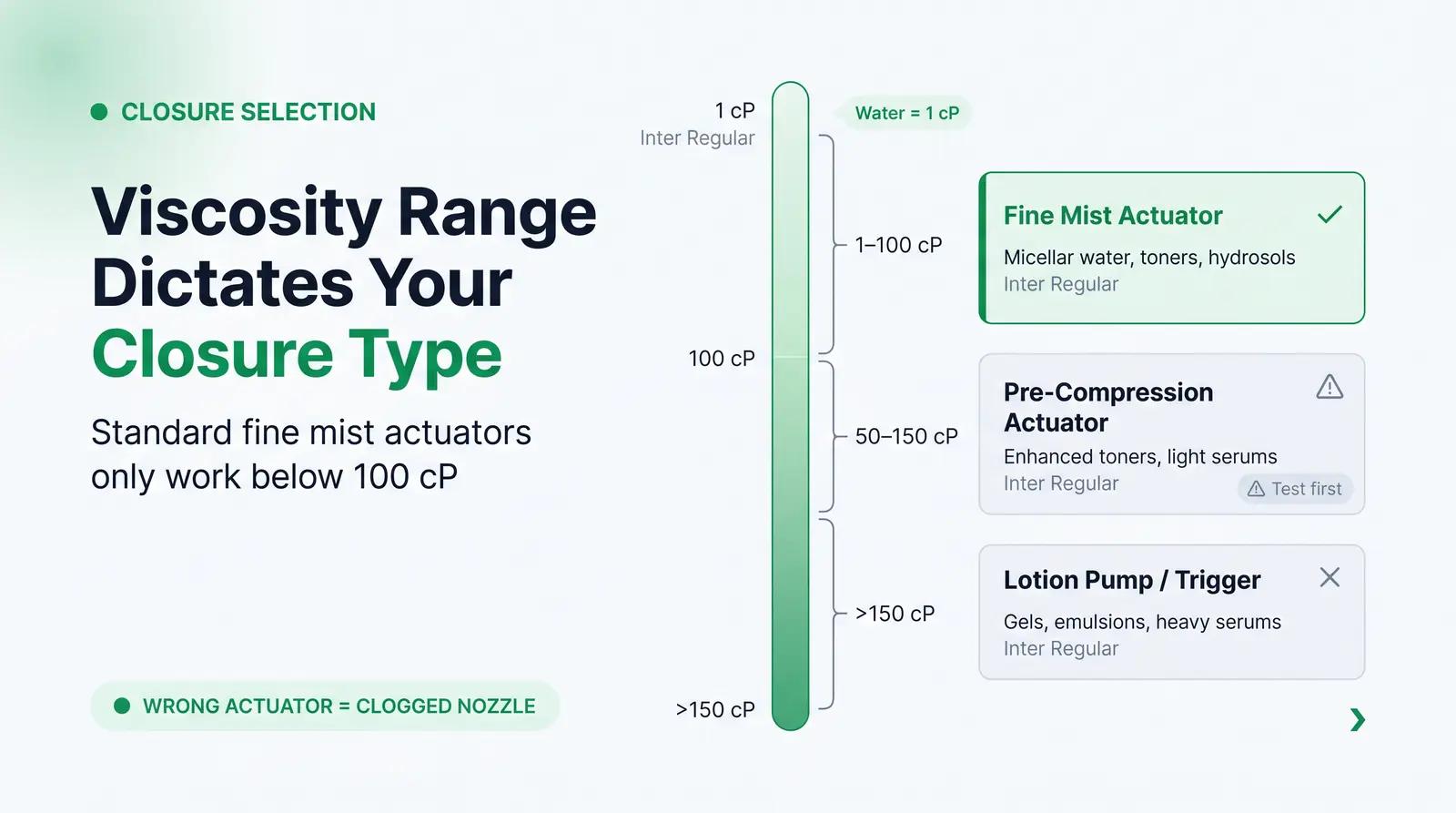
The single most common cause of sprayer failure is a mismatch between formula viscosity and actuator design. Viscosity, measured in centipoise (cP) or millipascal-seconds (mPa·s), defines a fluid's resistance to flow. Water sits at approximately 1 cP. A standard toner or facial mist typically falls between 1 and 10 cP. Light serums with added humectants like glycerin can reach 50 to 100 cP. Thick gels and emulsions commonly exceed 1,000 cP.
Standard fine mist sprayers are engineered exclusively for low-viscosity liquids. Single-fluid nozzles work best with fluids below 100 cP; higher viscosities require significantly more energy to atomize properly [5]. The practical ranges for common closure types are:
- Fine mist actuator (1–100 cP): Micellar waters, hydrosols, alcohol-based perfumes, light toners, and water/glycerin blends at low concentrations.
- High-output fine mist or pre-compression actuator (50–150 cP): Enhanced toners and light serums. These require careful testing; a pre-compression engine builds pressure before dispensing any product, guaranteeing a perfect mist from the first stroke to the last.
- Lotion pump or mini-trigger sprayer (>150 cP): Gels, heavy serums, and emulsions. Attempting to push these through a fine mist sprayer will clog the nozzle or produce a harsh jet stream.
The orifice size of the nozzle insert is the variable that links viscosity to spray performance. A smaller orifice creates higher internal pressure, producing finer droplets but requiring a thinner fluid. A larger orifice handles slightly thicker formulas but produces coarser droplets. Alcohol concentration also plays a role: high alcohol content (above 20%) lowers viscosity and surface tension, which can cause a standard fine mist actuator to over-spray and drip if the orifice is sized for a thicker, water-based formula.
Materials: Plastic, Glass, Amber, and Beyond
The material of the spray bottle dictates chemical compatibility, UV protection, brand perception, and recyclability. Each option involves trade-offs that must be evaluated against the specific formula.
Polyethylene terephthalate (PET) is the industry standard for clear cosmetic sprays. It is lightweight, shatter-resistant, and offers moderate chemical compatibility, making it ideal for water-based toners and light body mists. However, PET offers very low UV protection: clear glass and PET allow 80 to 90% of UV radiation to pass through [8]. For formulas containing light-sensitive actives, this is a critical limitation.
High-density polyethylene (HDPE) and polypropylene (PP) are more rigid and offer superior chemical resistance. PP is the preferred choice for formulas with high concentrations of alcohol, essential oils, or aggressive solvents that can degrade PET over time [6]. PP is also the material of choice for the actuator and closure components on virtually all fine mist sprayers.
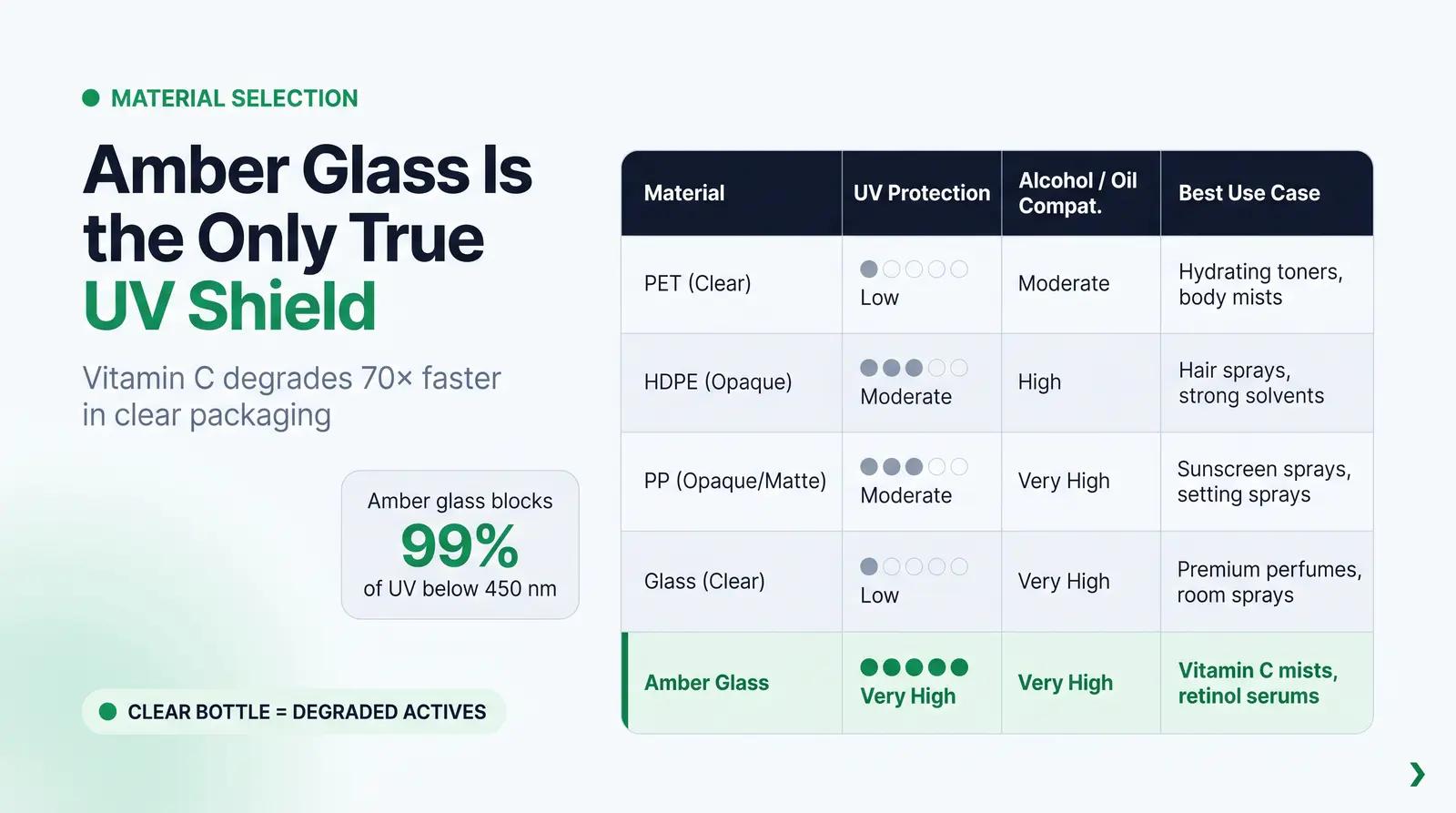
Glass offers the highest chemical inertness and a premium tactile quality that communicates value. Clear glass, however, provides almost no UV protection. Amber glass is the gold standard for UV protection in cosmetic packaging. The iron-sulfur complexes in amber glass block up to 99% of UV radiation below 450 nm, effectively halting the photooxidative chain reaction that destroys active ingredients [8]. This makes amber glass the correct choice for any formula containing vitamin C (ascorbic acid), retinoids, or essential oils.
The science behind this matters. Ascorbic acid oxidizes to dehydroascorbic acid and then to diketogulonic acid when exposed to UV light. The rate of oxidative degradation in the presence of light is approximately seventy times faster than in the dark [7]. A founder who invests in a high-concentration vitamin C formula and packages it in clear glass or clear PET is actively degrading the product's efficacy on the shelf.
For brands that want the visual clarity of transparent packaging with UV protection, amber-tinted PET or clear PET with a specialized anti-UV surface coating are secondary options. These rarely match the absolute barrier properties of solid amber glass but can be appropriate for formulas with moderate UV sensitivity [9].
On bottle size: 2 oz (60 mL) and 3.4 oz (100 mL) are the dominant sizes for facial mists and setting sprays. The 3.4 oz format hits the TSA carry-on limit exactly, making it a strategic choice for brands targeting frequent travelers. Larger 8 oz (240 mL) formats suit body sprays and hair mists where usage rates are higher and portability is less critical.
On actuator materials: For fine fragrances and high-alcohol formulas, metal crimp-on ferrules are standard. The internal gaskets, the small seals inside the closure that prevent leakage, must be specified for alcohol compatibility. Standard rubber gaskets can dry out and fail with high-alcohol formulas; Neoprene or BUNA gaskets are the correct specification [10].
Spray Bottle Material Comparison for Beauty Applications
| Material | UV Protection | Alcohol/Oil Compatibility | Weight | Recyclability | Typical Beauty Use Case | Cost Tier |
|---|---|---|---|---|---|---|
| PET (Clear) | Low | Moderate | Light | High (Code 1) | Hydrating toners, body mists | Low |
| HDPE (Opaque) | Moderate | High | Light | High (Code 2) | Hair sprays, strong solvents | Low |
| PP (Opaque/Matte) | Moderate | Very High | Light | Moderate (Code 5) | Sunscreen sprays, setting sprays | Moderate |
| Glass (Clear) | Low | Very High | Heavy | High | Premium perfumes, room sprays | High |
| Glass (Amber) | Very High | Very High | Heavy | High | Vitamin C mists, retinol serums, essential oils | High |
The Formula-Container Compatibility Rubric
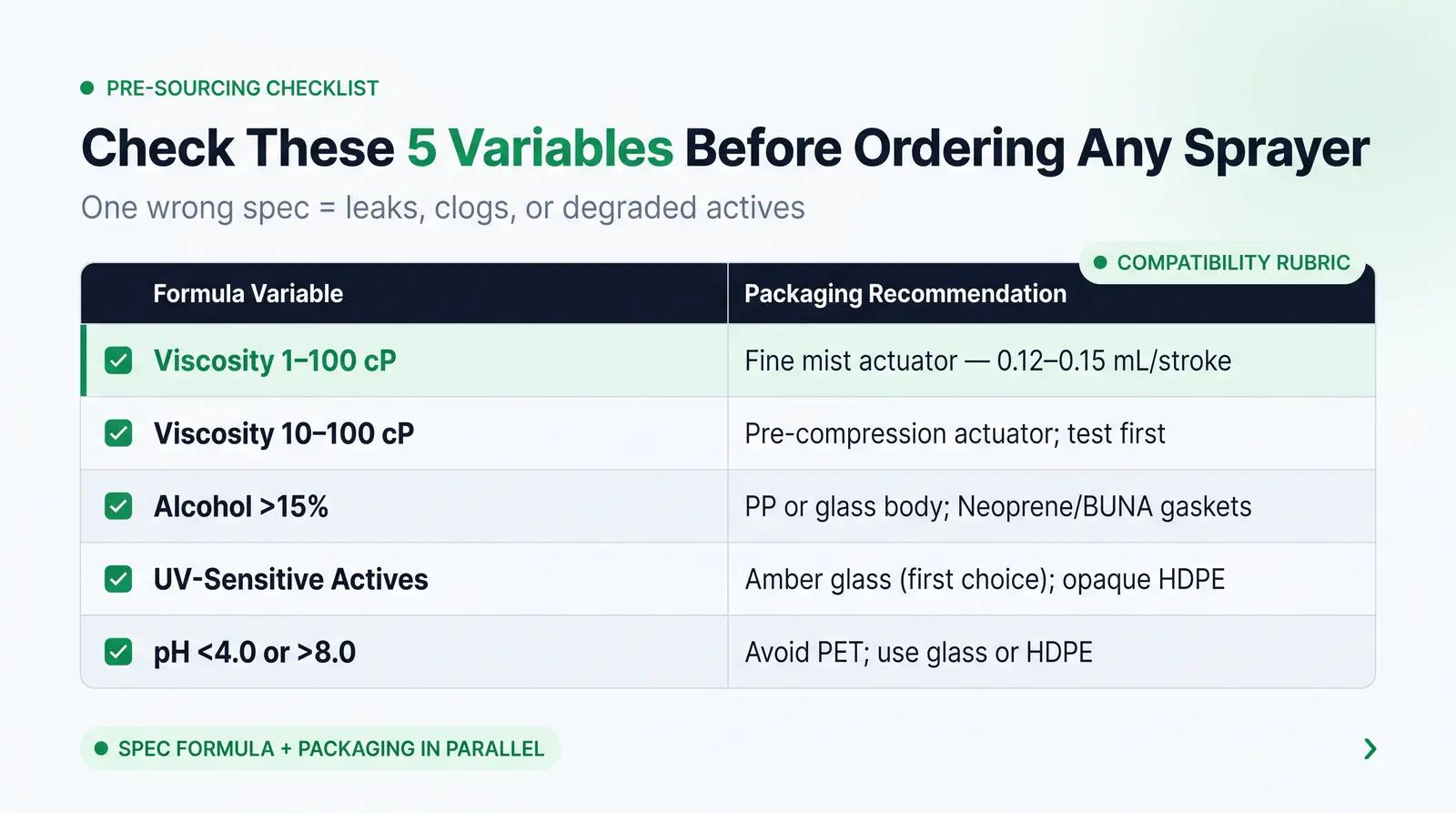
The following is a practical framework we use at Packfolio to help founders spec their spray packaging before ordering. It is built from first principles in cosmetic formulation science and packaging engineering [5] [8]. Use it as a pre-sourcing checklist before committing to any SKU.
| Formula Variable | Value Range | Packaging Recommendation |
|---|---|---|
| Viscosity | 1–10 cP | Standard fine mist actuator (0.12–0.15 mL output per stroke) |
| Viscosity | 10–100 cP | High-output fine mist or pre-compression actuator; test spray pattern before bulk order |
| Viscosity | >100 cP | Do not use fine mist; specify lotion pump or high-viscosity trigger |
| Alcohol Content | >15% | Specify PP or glass bottle body; require Neoprene or BUNA internal gaskets on actuator |
| UV-Sensitive Actives (Vitamin C, retinol, essential oils) | Present | Specify amber glass (first choice) or opaque HDPE/UV-coated PET |
| pH Range | <4.0 or >8.0 | Avoid standard PET; specify glass or HDPE; test for material compatibility |
| Fill Volume | 15–30 mL | 0.5 oz or 1 oz (15–30 mL) bottle; 18-415 or 20-410 neck finish common |
| Fill Volume | 30–100 mL | 1–3.4 oz (30–100 mL) bottle; 24-410 or 24-415 neck finish common |
| Usage Rate (Daily) | High frequency | Ergonomic actuator; 0.12–0.15 mL output to prevent over-application; verify dip tube reaches bottle bottom |
Testing Workflow Before You Go to Bulk
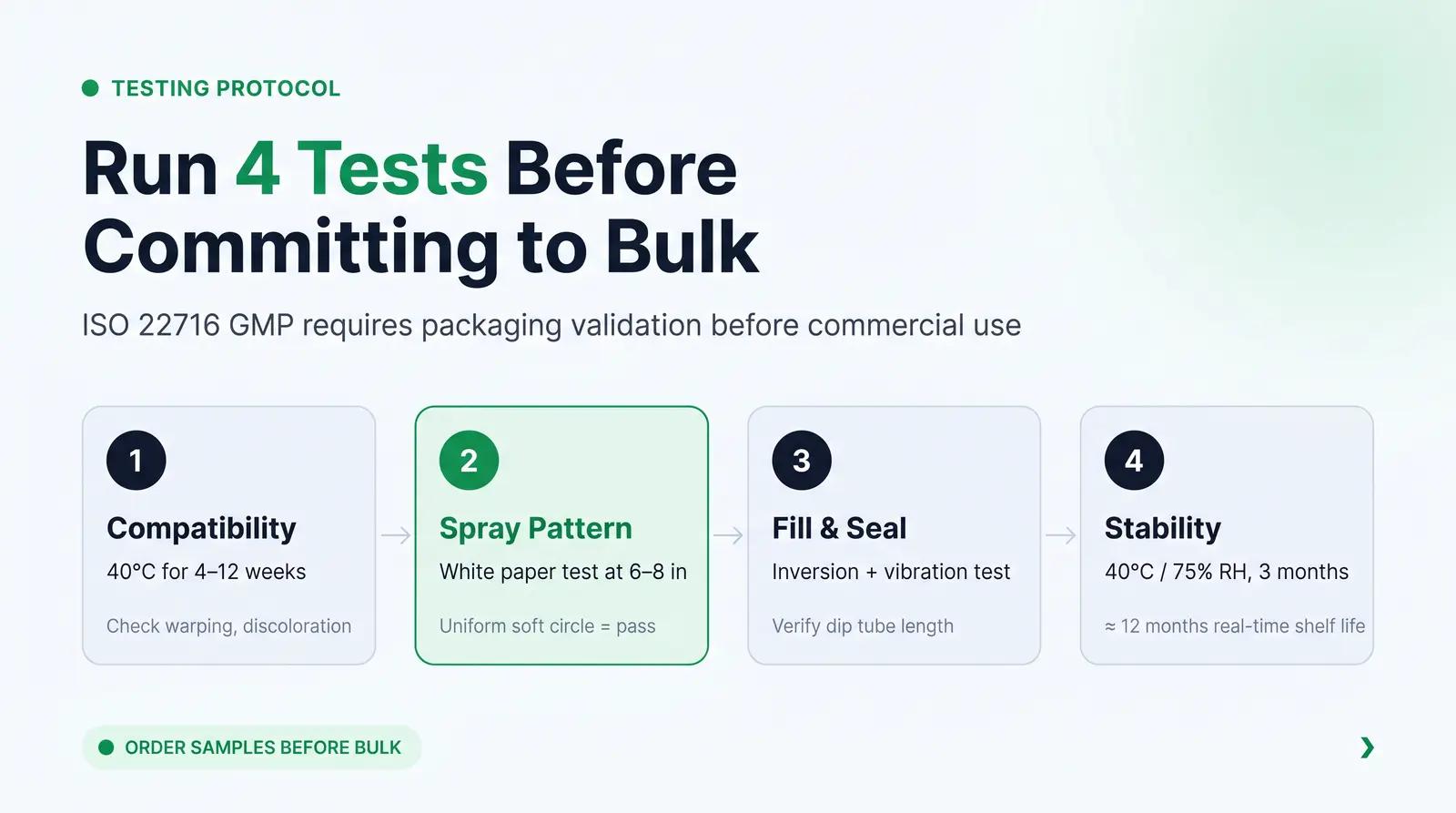
Never place a bulk packaging order based solely on a supplier's spec sheet. A rigorous pre-production testing sequence is required to validate the packaging against your specific formula. The following workflow reflects the spirit of ISO 22716 GMP guidelines for cosmetic packaging materials, which require that packaging be evaluated for compatibility and safety before commercial use [11].
Step 1: Compatibility Testing. Fill sample bottles with your finalized formula and store them at elevated temperatures (typically 40°C/104°F) for 4 to 12 weeks to accelerate potential chemical interactions. Monitor the plastic for warping, clouding, or paneling (inward collapse under pressure), and check the formula for discoloration, viscosity shifts, or changes in odor. This step is non-negotiable for any formula containing alcohol, essential oils, or extreme pH values.
Step 2: Spray Performance Verification. Actuate the sprayer against a dark piece of paper from 6 to 8 inches away. A correct fine mist will produce a wide, soft-edged, uniform circle of tiny, consistent droplets. A failed mist will produce a jet stream (a sharp line), a central wet spot with surrounding mist, or large, inconsistent droplets. If the pattern fails, the formula viscosity is incompatible with the nozzle's internal channels [1]. Test with your actual formula, not just water, since the formula's surface tension and viscosity will affect the result.
Step 3: Fill and Seal Testing. Fill bottles to the intended fill weight, cap them, and subject them to inversion and vibration testing. This confirms the gasket seals correctly and the closure does not leak during transit. Verify that the dip tube length is correct: it should reach the bottom corner of the bottle with a slight bend or V-notch at the tip. A tube cut flush against the flat bottom will suction to the plastic and restrict flow; a tube that is too short creates dead volume, leaving product trapped and unusable at the bottom of the bottle [13].
Step 4: Stability Testing. Run accelerated stability studies (typically 40°C/75% relative humidity for 3 months, equivalent to approximately 12 months of real-time shelf life) to confirm the formula remains stable in the chosen packaging throughout its intended shelf life. Long-term real-time studies at ambient conditions should run concurrently [12].
Sourcing Considerations: Buying Spray Bottles in Bulk
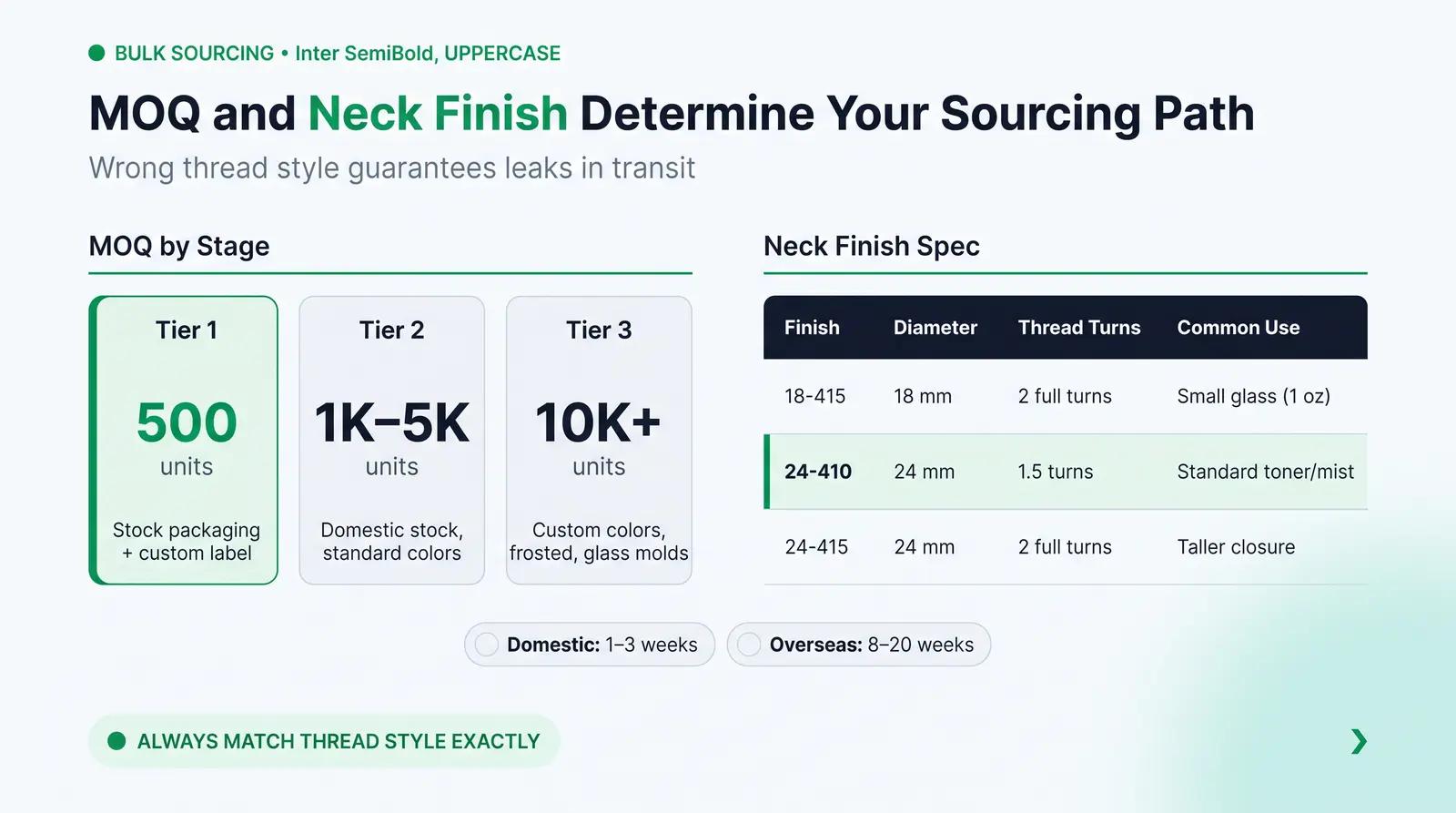
When sourcing spray bottles at scale, Minimum Order Quantities (MOQs) dictate your options at each stage of growth. Stock plastic bottles in standard colors (clear, white, black) often have MOQs between 1,000 and 5,000 units from domestic distributors. Custom colors, frosted finishes, or specialized glass molds typically push MOQs to 10,000 or even 30,000 units from overseas manufacturers [14]. For a founder at 500 units, the practical path is stock packaging with custom label artwork applied to the exterior.
Beyond MOQs, founders must verify the mechanical fit between the bottle and the closure. Neck finishes are standardized using a two-part number (e.g., 24-410). The first number is the diameter in millimeters; the second indicates the thread style. A 410 finish represents one and a half thread turns, a 415 finish is taller with two full turns, and a 425 finish has two turns in a narrower profile [15]. A 24-410 sprayer will only seal correctly on a 24-410 bottle. Mixing thread styles guarantees leaks during transit.
Additional specs to verify from any supplier:
- Actuator stroke output (in mL or mcL): Confirm the output matches your intended dosage.
- Dip tube length (in mm or inches): Confirm it is specified relative to your bottle's internal height, not a generic "standard" length.
- Gasket material: Confirm compatibility with your formula's alcohol content and pH.
Lead times from overseas manufacturers typically run 8 to 14 weeks for stock items and 16 to 20 weeks for custom molds. Domestic distributors can often ship stock items in 1 to 3 weeks, making them the practical choice for early-stage production runs.
At Packfolio, the catalog includes fine mist spray bottle SKUs that are pre-vetted for closure compatibility, pre-modeled in 3D, and available with custom label artwork applied directly in-browser. Founders can preview exactly what their labeled bottle looks like before placing an order, without coordinating separately with a supplier. Packfolio handles production, QC, and freight delivery end-to-end.
For additional context on how material selection applies across the full range of cosmetic primary packaging, see the Packfolio cosmetic packaging materials guide.
Worked Example: A Vitamin C Setting Spray at 500 Units
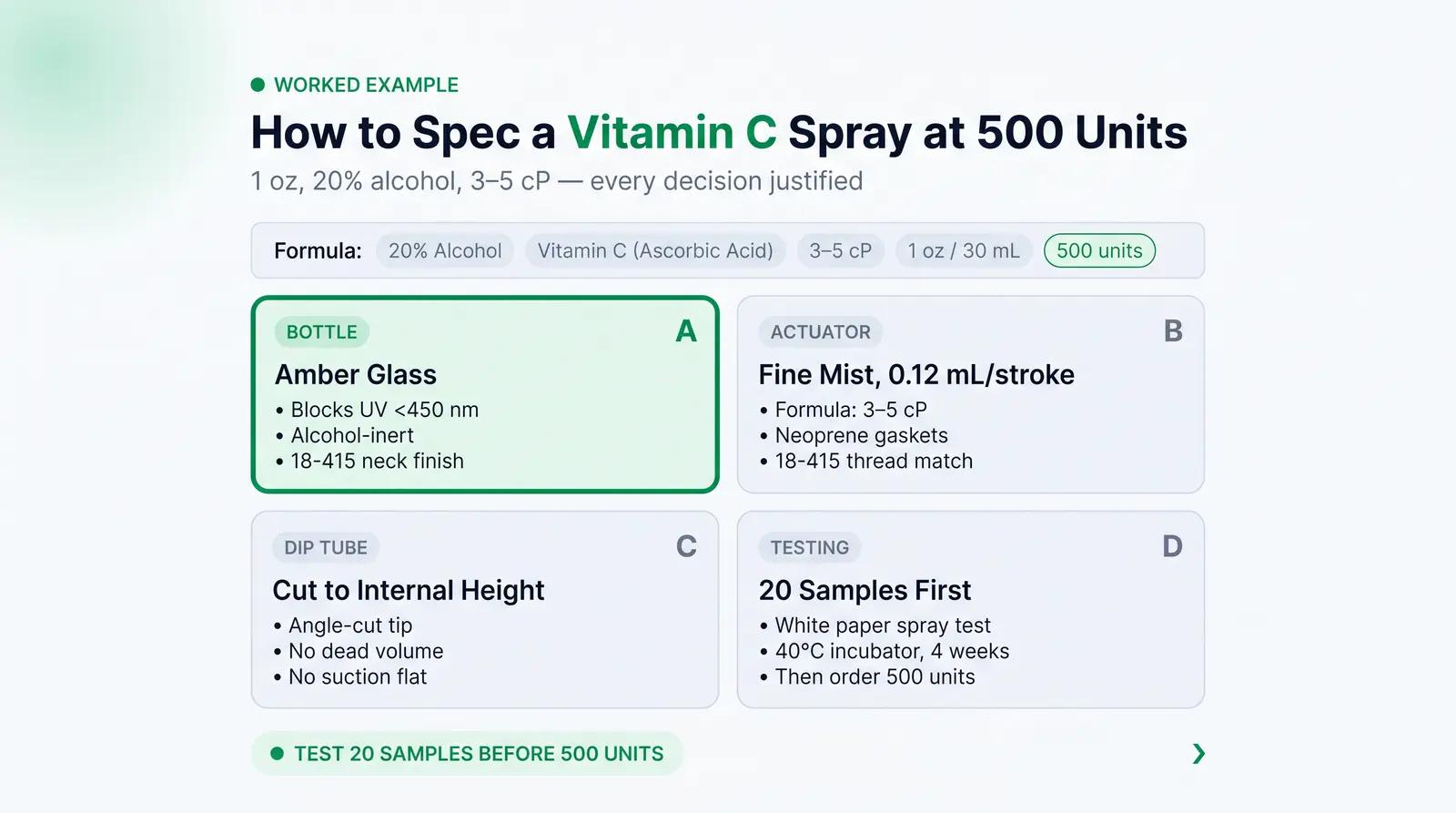
A founder is launching a 1 oz (30 mL) facial setting spray with 20% alcohol, vitamin C (ascorbic acid), and a water/glycerin base at approximately 3–5 cP viscosity. She is planning an initial run of 500 units.
1. Bottle Material Selection. Because the formula contains ascorbic acid, it is highly susceptible to UV degradation. The rate of photolysis in the presence of light is approximately seventy times faster than in the dark [7]. The 20% alcohol content also requires robust chemical resistance. She selects an amber glass bottle. The amber glass blocks the critical sub-450 nm UV wavelengths to protect the vitamin C, and glass is entirely impervious to the alcohol content.
2. Actuator and Orifice Selection. At 3–5 cP, the formula is watery and well within the safe zone for atomization. She selects a standard fine mist sprayer with a 0.12 mL output per stroke to ensure a light, makeup-friendly application. Because of the 20% alcohol content, she specifies Neoprene internal gaskets rather than standard rubber to prevent the seal from drying out and failing over the product's shelf life.
3. Neck Finish and Dip Tube. She selects a 1 oz amber glass bottle with an 18-415 neck finish, which is common for small glass bottles in this size range. She confirms the fine mist sprayer she orders also carries an 18-415 thread specification. She measures the internal height of the bottle and requests the dip tube be cut to reach the bottom corner with a slight angle cut at the tip, ensuring the tube draws up every last drop of the premium formula without suctioning flat against the glass base.
4. Testing. Before placing the bulk order for 500 units, she orders 20 unbranded samples. She fills them, runs the white paper test to confirm the spray pattern produces a uniform soft circle, and places 5 bottles in a 40°C incubator for four weeks to confirm the vitamin C remains stable and the sprayer does not leak under accelerated conditions.
Browse Packfolio's curated spray bottle catalog, apply your label artwork in the 3D preview tool, and order with confidence. No supplier coordination required. Explore spray bottles on Packfolio
Frequently Asked Questions
What is the difference between a fine mist sprayer and a regular spray bottle?
A fine mist sprayer uses a micro-engineered nozzle insert to atomize low-viscosity liquids into tiny droplets, typically 30 to 80 microns, creating a soft, cloud-like application. A regular or trigger spray bottle produces larger, heavier droplets designed to saturate surfaces quickly, making them better suited for household cleaners, hair detanglers, or heavy-coverage body sprays.
Can I use a fine mist spray bottle for oil-based formulas?
Generally, no. Pure oils and heavy oil-in-water emulsions have a viscosity that exceeds the operating range of standard fine mist actuators. Pushing thick oils through a fine mist sprayer will result in a clogged nozzle or a harsh, sputtering stream. Oil-based formulas require a lotion pump or a specialized high-viscosity sprayer with a larger orifice and a more powerful spring mechanism.
What size spray bottle is best for facial mist or setting spray?
The most popular sizes for facial mists and setting sprays are 2 oz (60 mL) and 3.4 oz (100 mL). These capacities provide enough volume for daily use over several weeks while remaining at or under the TSA carry-on liquid limit, which is a meaningful commercial consideration for brands targeting frequent travelers or retail travel formats.
Are amber spray bottles better for preserving active ingredients?
Yes, for formulas containing UV-sensitive actives. Amber glass blocks up to 99% of ultraviolet radiation below 450 nm, which is the primary driver of photooxidation in cosmetics. This makes amber packaging essential for preserving the stability and efficacy of light-sensitive ingredients like vitamin C, retinoids, and essential oils. Clear glass and clear PET offer very little UV protection by comparison.
What should I check before ordering spray bottles in bulk?
Verify that the neck finish of the sprayer (e.g., 24-410) exactly matches the thread style of the bottle. Confirm the dip tube is cut to the correct length to reach the bottom corner of the bottle without suctioning flat. Check that the gasket material is compatible with your formula's alcohol content and pH. Conduct compatibility testing with your actual formula to confirm the spray pattern functions correctly and the packaging does not degrade under accelerated conditions.
References
[1] Glass Cosmetic Bottles. "A Scientific Guide to Creating the Perfect Fine Mist." October 2025. https://www.glass-cosmetic-bottles.com/info/a-scientific-guide-to-creating-the-perfect-103187179.html
[2] UKPACK. "What is a Fine Mist Sprayer: The Ultimate Guide." September 2025. https://www.ukpackchina.com/what-is-a-fine-mist-sprayer/
[3] APC Packaging. "Let's Talk Mist Sprayers." APC Packaging Tech Center. https://techcenter.apcpackaging.com/lets-talk-mist-sprayers
[4] Sprayers 101. "The Droplet Size Debate." April 2026. https://sprayers101.com/the-droplet-size-debate/
[5] Lechler USA. "Spray Facts on Viscosity." https://www.lechlerusa.com/en/resources/spray-facts/viscosity
[6] Topfeelpack. "What is the best type of spray bottle for cosmetics solutions." December 2025. https://www.topfeelpack.com/news/plastic-spray-bottles/
[7] Ahmad, I., Sheraz, M.A., et al. "Photostability and Interaction of Ascorbic Acid in Cream Formulations." AAPS PharmSciTech, 2011. https://pmc.ncbi.nlm.nih.gov/articles/PMC3167265/
[8] Container & Packaging. "The Science Behind Amber Glass and UV Protection." March 2025. https://www.containerandpackaging.com/resources/the-science-behind-amber-glass-and-uv-protection/
[9] Othilapak. "UV Protection Technology for Cosmetics Packaging." April 2026. https://othilapak.com/blogs/technology-materials/uv-protection-technology-for-cosmetics-packaging/
[10] O.Berk Packaging. "What's Inside a Fine Mist Sprayer and How Does it Work?" 2015. https://www.oberk.com/packaging-crash-course/whats-inside-a-fine-mist-sprayer
[11] U.S. Food and Drug Administration. "Draft Guidance for Industry: Cosmetic Good Manufacturing Practices." June 2013 (updated May 2023). https://www.fda.gov/regulatory-information/search-fda-guidance-documents/draft-guidance-industry-cosmetic-good-manufacturing-practices
[12] Certified Laboratories. "Guide to OTC & Cosmetic Stability Testing." https://certified-laboratories.com/blog/guide-to-cosmetic-stability-testing/
[13] Berlin Packaging. "Measuring & Cutting Your Dip Tube for Optimal Dispensing." May 2023. https://www.berlinpackaging.com/insights/measuring-cutting-your-dip-tube-for-optimal-dispensing/
[14] AH Packaging. "MOQ for Different Packaging Types: Bottles, Jars, Boxes, and More." March 2025. https://ahpackaging.com/moq-for-different-packaging-types/
[15] Container & Packaging. "Matching Neck Finishes." May 2026. https://www.containerandpackaging.com/resources/match_neck_finish/


