
Glass vs PET Cosmetic Packaging: How to Choose
Compare glass and PET cosmetic packaging across weight, cost, breakage, formula compatibility, and sustainability to choose the right material for your beauty brand.
The moment of truth for many beauty brand founders happens not in the laboratory, but at the packing table. You hold a beautifully heavy, custom-embossed amber glass bottle filled with your newly formulated face oil. It feels luxurious, expensive, and exactly like the high-end brand you envisioned. Then you place it into a shipping box, add a layer of tissue paper, drop it onto the floor from counter height to simulate a postal carrier’s rough day, and hear the sickening crunch of shattered glass. Suddenly, the operational reality of fulfillment collides with your aesthetic vision.
This tension between premium brand perception and downstream operational practicality is one of the most critical decisions a beauty brand must make before launch. Choosing between glass and polyethylene terephthalate, commonly known as PET, is not a simple cosmetic choice. It is a decision that dictates your formula’s shelf life, your direct-to-consumer shipping margins, your warehousing requirements, and your brand’s true environmental footprint.
Why the Material Decision Matters Earlier Than You Think
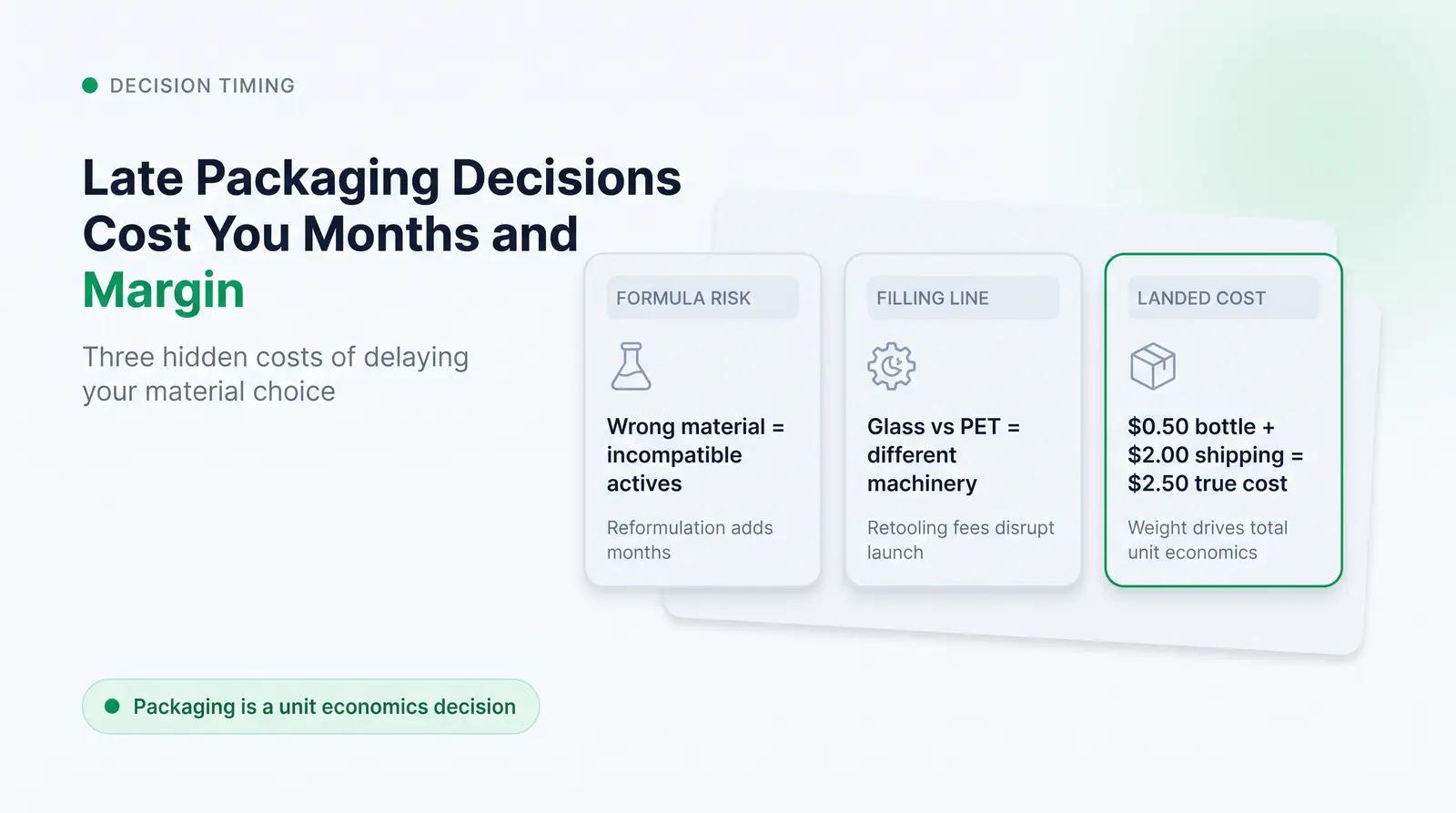
Many founders treat primary packaging as an afterthought, a final step to be resolved once the formulation is locked. In reality, your packaging material is a foundational pillar of your product’s unit economics and regulatory compliance. Under the Modernization of Cosmetics Regulation Act of 2022, known as MoCRA, beauty brands must substantiate the safety of their products, which includes ensuring that the packaging does not leach harmful substances into the formula [14].
If you delay your packaging decision, you risk selecting a material that is chemically incompatible with your active ingredients, forcing a late-stage reformulating process that can push your launch back by months. Furthermore, packaging dictates your filling line requirements. Contract manufacturers utilize different machinery for glass and plastic. A filling line calibrated for rigid, heavy glass bottles cannot easily switch to lightweight PET bottles without costly downtime and retooling fees.
Finally, your packaging material determines your landed cost. Landed cost is the total price of a product once it arrives at the customer’s door, including manufacturing, packaging, shipping, duties, and fulfillment. A bottle that costs $0.50 to buy but adds $2.00 in shipping weight and protective void-fill is far more expensive than a $1.00 bottle that ships in a standard padded mailer. By understanding these variables early, you can design a product that is both beautiful and profitable.
Glass Cosmetic Packaging: Where It Wins and Where It Doesn't
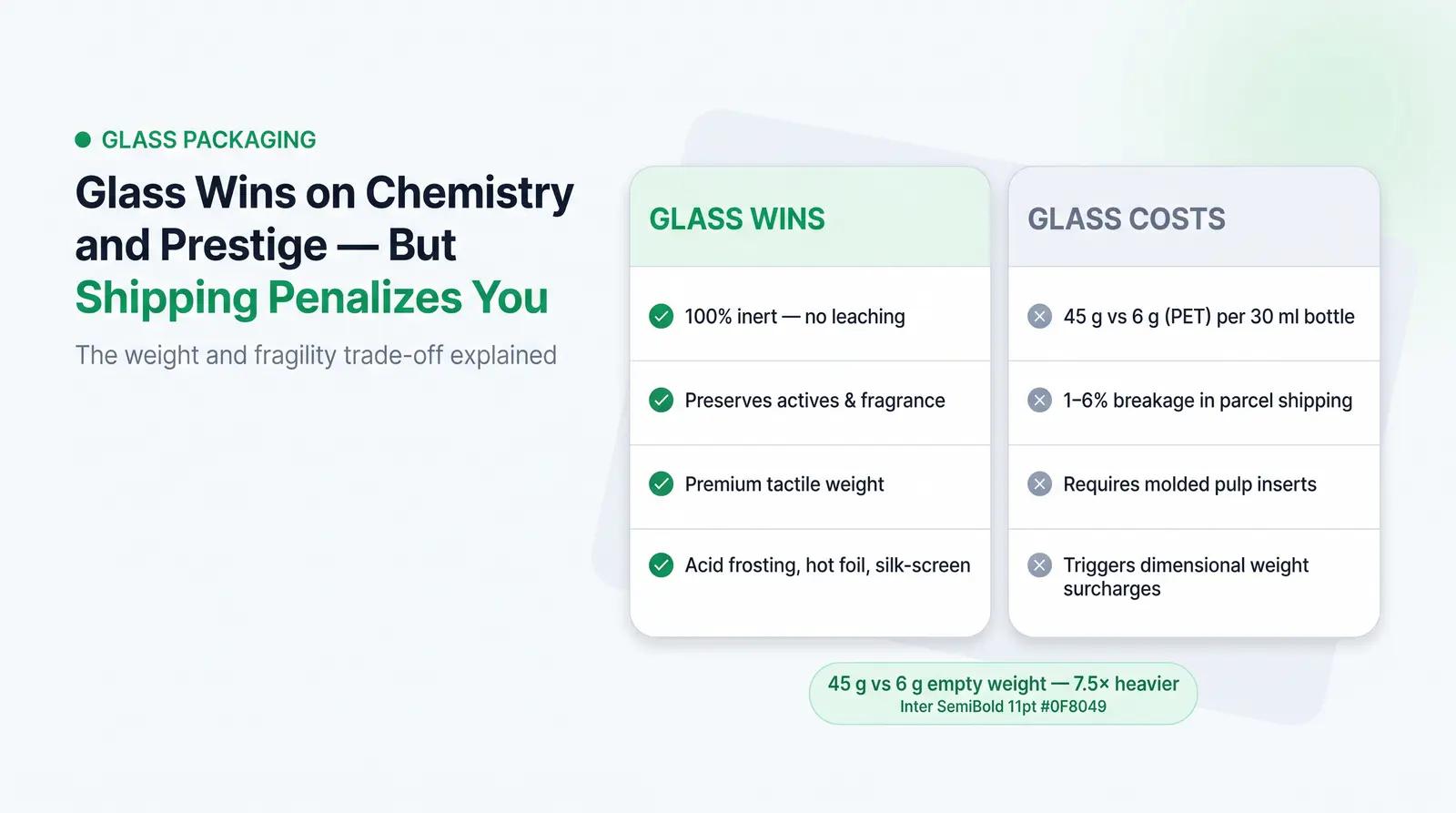
Glass has been the gold standard of cosmetic packaging for centuries, and for good reason. From a chemical perspective, glass is almost entirely inert [6]. It is nonporous and impermeable, meaning it does not react with the ingredients inside, absorb fragrance compounds, or allow atmospheric oxygen to migrate into the bottle [6]. For formulas with high concentrations of active ingredients, essential oils, or volatile compounds, glass provides an absolute barrier that preserves product potency over a multi-year shelf life.
The sensory experience of glass is also unmatched. The physical weight of a glass jar or bottle signals luxury and quality to the consumer. In prestige skincare, where a 1 oz (30 ml) serum can retail for over $100, the tactile feedback of the container is an essential part of the value proposition [13]. Glass is also highly receptive to premium decoration techniques, including acid frosting, silk-screen printing, and hot foil stamping [13].
However, the advantages of glass come with severe operational penalties. Glass is heavy. A standard 1 oz (30 ml) glass dropper bottle weighs approximately 1.6 oz (45 g) empty, compared to just 0.2 oz (6 g) for a comparable PET bottle. This weight difference compounds rapidly across your supply chain, from raw material transport to final customer delivery. Glass is also fragile. Standard parcel carriers experience average breakage rates of 1% to 3% for glass shipments, which can spike to over 6% if packaging is inadequate [5] [10]. This requires brands to invest heavily in protective secondary packaging, custom molded pulp inserts, or heavy corrugated boxes, driving up both material costs and shipping volumes.
PET Cosmetic Packaging: The Operational Case
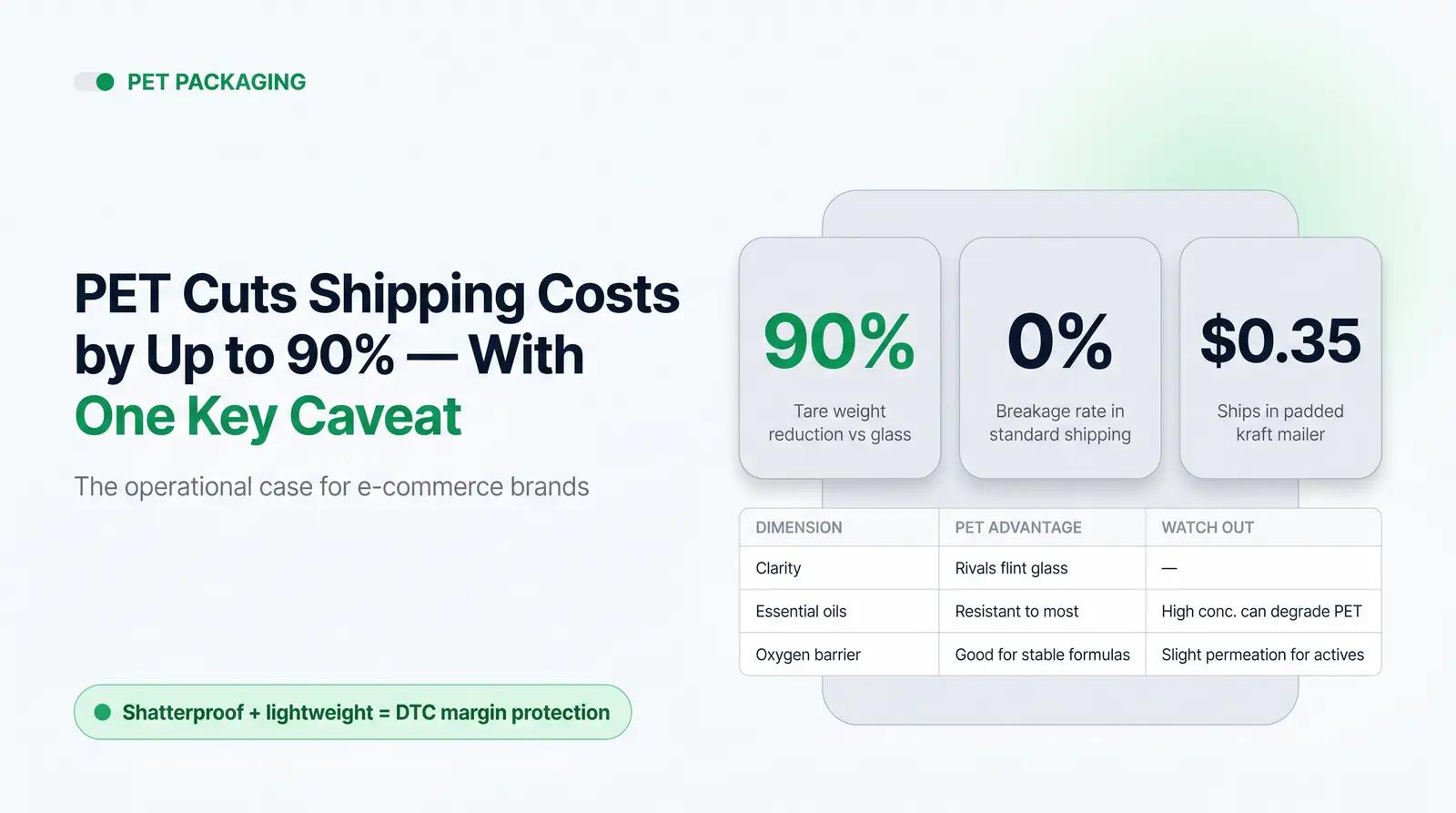
Polyethylene terephthalate, or PET, represents the peak of modern packaging utility. PET is a durable, shatter-resistant thermoplastic that offers excellent clarity, often rivaling the transparency of flint glass [4]. For brands distributing through e-commerce, PET is an operational lifesaver. It is virtually unbreakable during transit, eliminating the cost of damaged returns, customer service complaints, and spoiled inventory.
The primary operational benefit of PET is its lightweight nature. By reducing the tare weight of your packaging by up to 90%, you dramatically lower your outbound shipping costs [4]. This is particularly critical in the age of dimensional weight pricing, where carriers like FedEx and UPS charge based on the volume of a package rather than its actual weight if the box is oversized [12]. Because PET does not require bulky bubble wrap or void-fill, you can ship products in smaller, lighter boxes, saving thousands of dollars in postal surcharges [12].
Despite these benefits, PET has clear limitations. While it is highly resistant to most cosmetic formulations, it is not completely inert. PET is slightly gas-permeable, allowing microscopic amounts of oxygen to enter the container over time, which can oxidize sensitive ingredients like pure L-ascorbic acid, vitamin C, or retinol [16]. Additionally, highly concentrated essential oils, such as citrus, mint, or tea tree oils, can act as solvents, slowly degrading the plastic structure, causing cloudiness, or even cracking the bottle walls over time [9].
Head-to-Head: Glass vs. PET Across 7 Dimensions
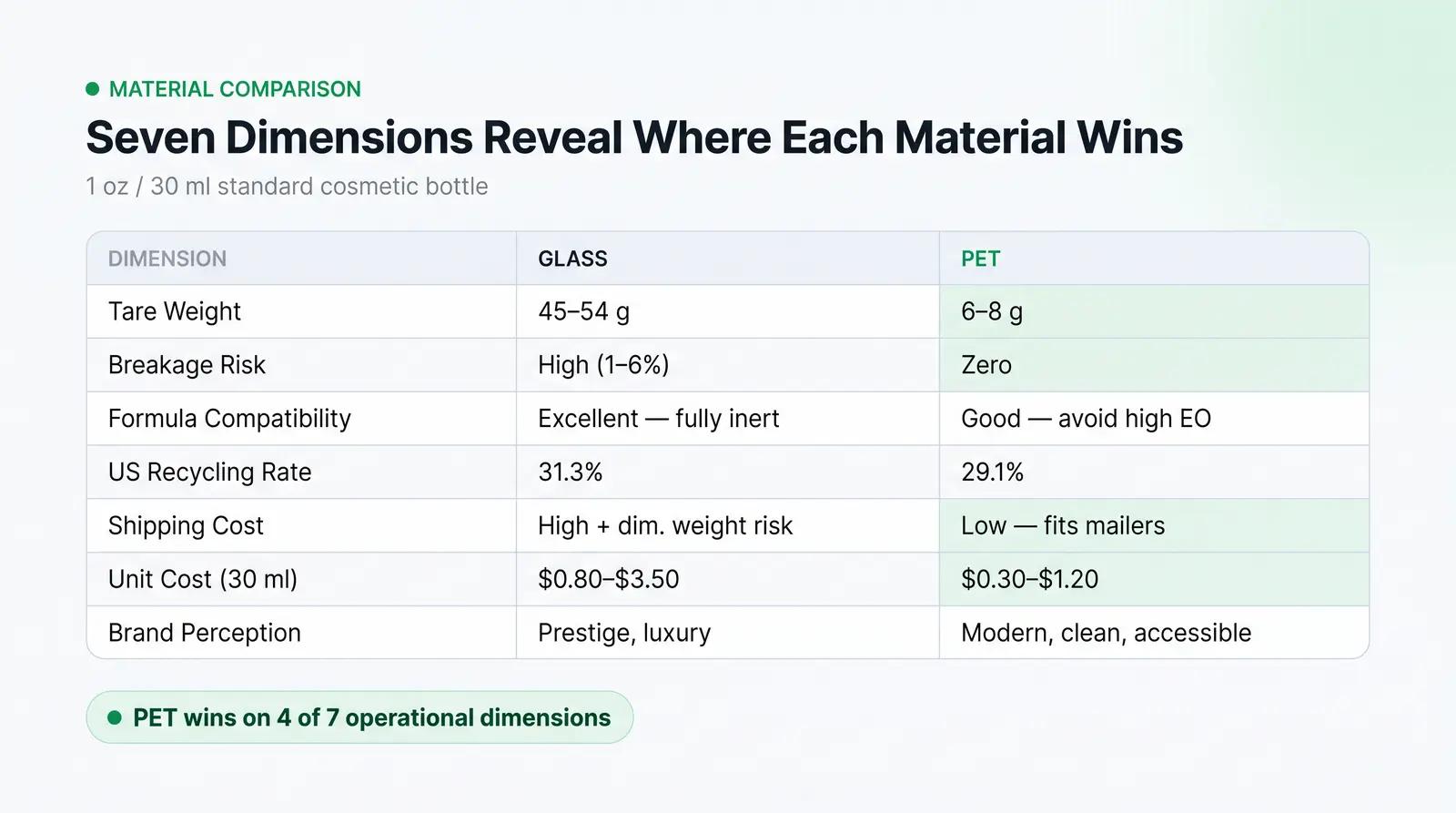
To make an informed decision, founders must compare these materials across the practical dimensions that govern daily operations. The table below outlines the trade-offs between glass and PET for a standard 1 oz (30 ml) cosmetic bottle.
| Evaluation Dimension | Glass Packaging | PET Packaging |
|---|---|---|
| Average Tare Weight | 1.6 oz (45 g) to 1.9 oz (54 g) | 0.2 oz (6 g) to 0.3 oz (8 g) |
| Breakage Risk | High, requires extensive void-fill and protective inserts | Extremely low, shatterproof under standard shipping drops |
| Formula Compatibility | Excellent, completely inert, compatible with all actives | Good, but susceptible to degradation from high essential oils |
| US Recycling Rate | 31.3% according to the EPA [1] | 29.1% according to the EPA [2] |
| Shipping Implications | High freight costs, prone to dimensional weight surcharges | Low freight costs, fits in lightweight mailers or small boxes |
| Average Unit Cost | $0.80 to $3.50 depending on decoration and origin [11] | $0.30 to $1.20 depending on weight and decoration [11] |
| Brand Perception | Premium, luxury, substantial tactile weight | Practical, clean, lightweight, modern |
The Packfolio Material Selection Matrix: How to Match Material to Your Brand's Stage and Channel
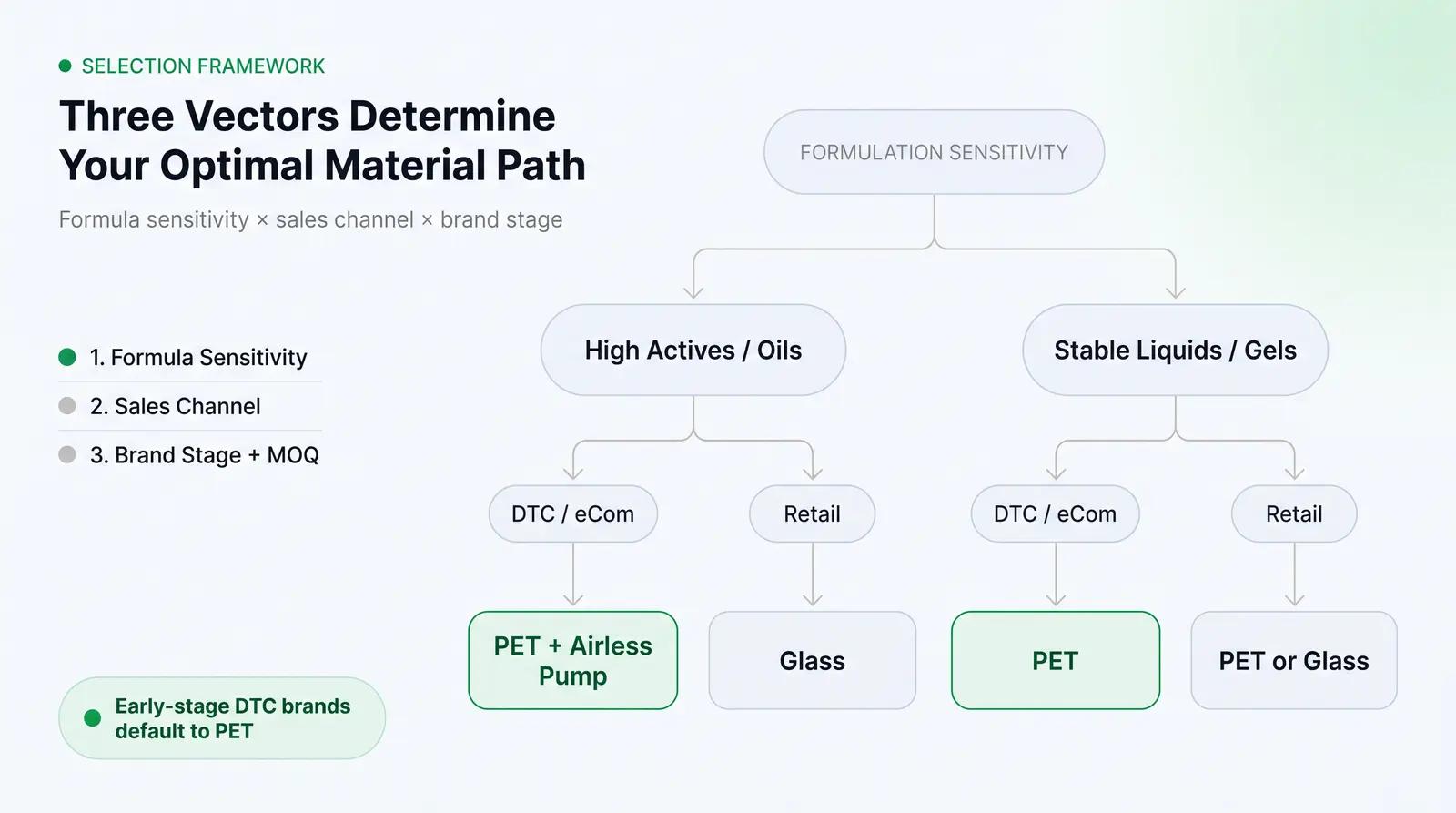
At Packfolio, we help beauty founders navigate these trade-offs by utilizing a first-principles framework designed to balance brand positioning with operational reality. We call this The Packfolio Material Selection Matrix. It evaluates three core vectors, formulation sensitivity, sales channel, and brand stage, to determine the optimal material path.
                  FORMULATION SENSITIVITY
                  /                     \
        High Actives/Oils             Stable Liquids/Gels
               /                           \
         SALES CHANNEL                 SALES CHANNEL
         /           \                 /           \
     DTC/eCom      Retail             DTC/eCom     Retail
       /               \               /               \
  PET (with barrier)  Glass           PET             PET
1. The Formulation Sensitivity Vector
If your formula contains highly unstable active ingredients, such as anhydrous vitamin C, retinol, or high concentrations of pure essential oils, your primary constraint is product integrity. Glass is the default choice here because it prevents oxidation and chemical migration [6] [16]. However, if your formula is a stable water-based gel, a gentle cleanser, or a silicone-based primer, PET offers more than enough barrier protection without the weight penalty [9].
2. The Sales Channel Vector
Your primary distribution channel dictates your logistics costs. If you are a direct-to-consumer brand shipping individual bottles through the mail, shipping weight and breakage are your primary margin killers. PET allows you to maximize your margins by shipping in lightweight, low-profile packaging [4]. If your primary channel is physical retail, shelf presence and tactile weight are critical to standing out in a crowded aisle, making glass a stronger contender despite the higher inbound freight costs.
3. The Brand Stage and MOQ Vector
For early-stage brands, cash flow is king. Custom glass bottles require high minimum order quantities, often starting at 10,000 units, and custom molds can cost up to $50,000 in tooling fees [13]. PET tooling and stock options are far more accessible, allowing brands to launch with lower initial capital outlays. Standardizing your packaging silhouettes allows you to purchase stock containers in smaller batches and focus your capital on custom decoration and formulation quality.
The Worked Example: Sourcing for a Vitamin C Launch
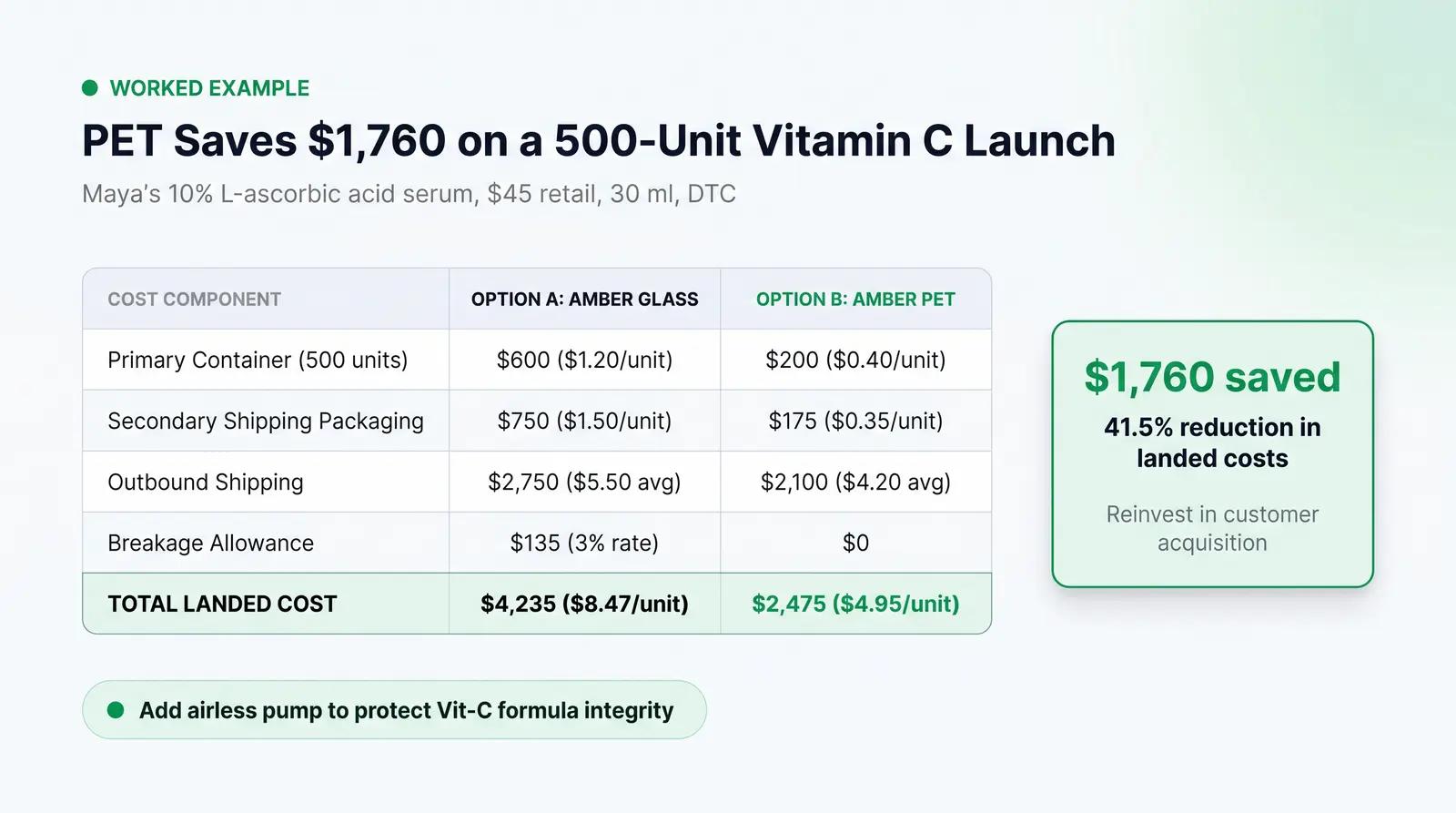
To see this framework in action, let us look at a realistic hypothetical scenario. Maya is the solo founder of a clean beauty startup preparing to launch a high-potency 10% L-ascorbic acid, vitamin C, serum. She plans to launch as a direct-to-consumer brand, selling her serum for $45 per bottle. Her initial production run is a modest 500-unit batch, which is a common starting point for independent founders testing market fit.
Maya is torn between two packaging options for her 1 oz (30 ml) serum:
- Option A: An amber glass dropper bottle. The unit cost is $1.20, but due to its fragility, her third-party logistics provider, or 3PL, requires a custom corrugated shipping box with a molded pulp insert, costing $1.50 per shipment. The total package weight is 7.5 oz (212 g), placing her in a higher shipping tier.
- Option B: An amber PET dropper bottle. The unit cost is $0.40. Because it is shatterproof, she can ship it in a standard padded kraft mailer costing $0.35. The total package weight is 2.1 oz (59 g), allowing her to utilize the lowest-cost parcel shipping rate.
Let us look at the financial breakdown of her first 500-unit run, assuming a standard domestic shipping distance.
| Cost Component | Option A: Amber Glass | Option B: Amber PET |
|---|---|---|
| Primary Container Cost | $600 ($1.20 per unit) | $200 ($0.40 per unit) |
| Secondary Shipping Packaging | $750 ($1.50 per unit) | $175 ($0.35 per unit) |
| Outbound Shipping Cost | $2,750 ($5.50 average) | $2,100 ($4.20 average) |
| Estimated Breakage Allowance | $135 (3% rate at retail value) | $0 (0% rate) |
| Total Landed Cost | $4,235 ($8.47 per unit) | $2,475 ($4.95 per unit) |
By choosing Option B, Maya saves $1,760 on her very first run, representing a 41.5% reduction in her landed costs. This savings directly increases her marketing budget, allowing her to acquire more customers. However, Maya must balance this financial saving with her formula's stability. Because L-ascorbic acid is highly sensitive to oxygen, she decides to compromise by using an airless pump mechanism with her PET bottle, which prevents air from entering the container during use, securing both her margins and her formula's shelf life [9].
For founders navigating these complex calculations, utilizing an on-demand platform like Packfolio simplifies the process. Packfolio curates a vetted catalog of both glass and PET SKUs, pre-modeled in 3D, allowing you to preview your artwork and calculate your packaging requirements in real-time without managing multiple suppliers or negotiating complex MOQs.
Formula-Packaging Compatibility: The Factor Most Guides Skip
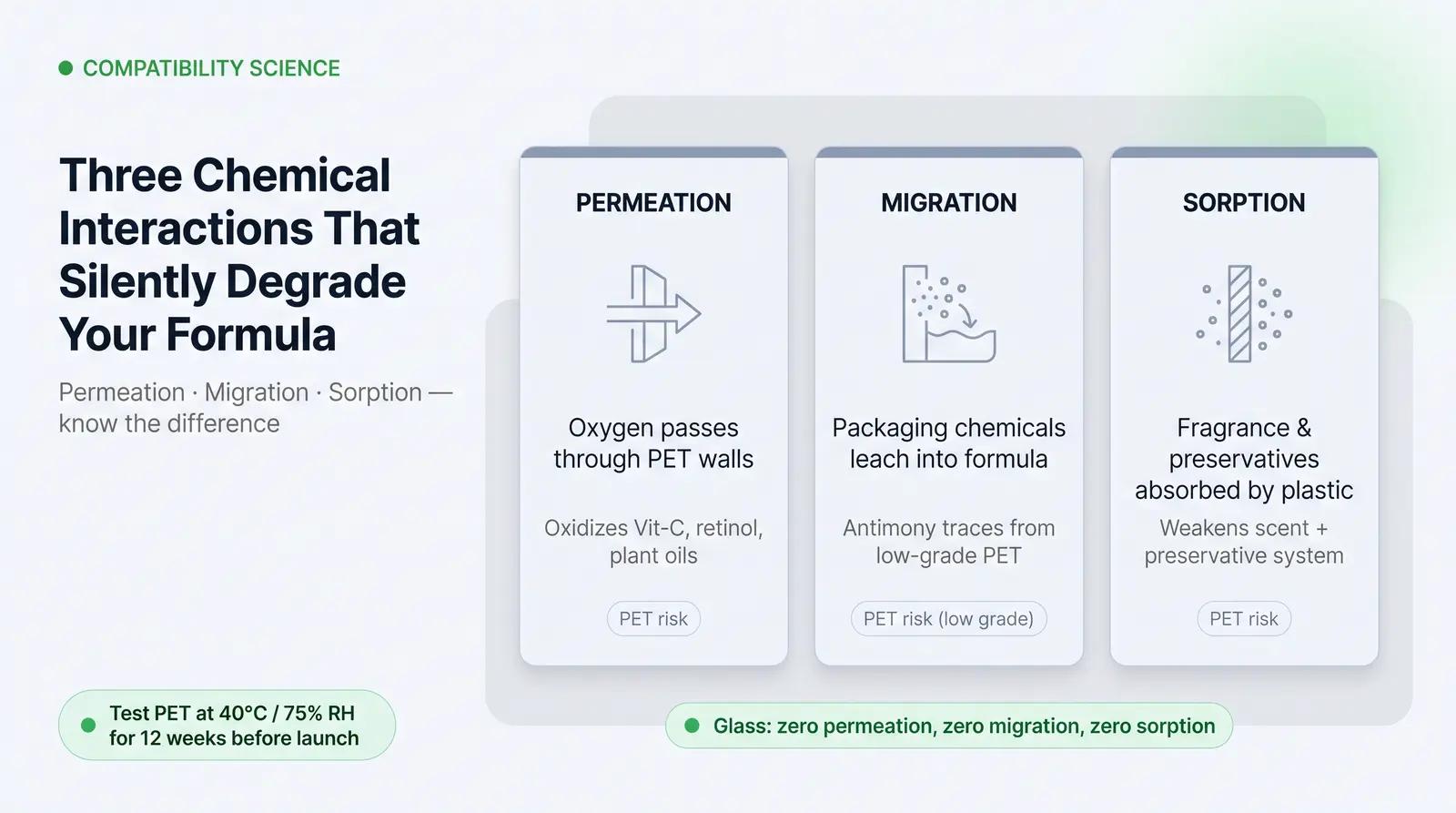
While weight and cost are easy to calculate, chemical compatibility is the silent killer of beauty brands. When a cosmetic formulation sits inside a container for months on a retail shelf or in a customer's bathroom, a complex series of chemical interactions can occur. These interactions fall into three main categories, permeation, migration, and sorption.
- Permeation: This is the transmission of gases or vapors through the packaging walls. PET is an excellent barrier to carbon dioxide, but it has a higher oxygen permeation rate than glass [4]. If your formula contains easily oxidized ingredients like unsaturated plant oils, rosehip oil, evening primrose oil, or active vitamins, oxygen permeation through PET can cause the formula to turn rancid, change color, or lose efficacy within six months.
- Migration or Leaching: This occurs when chemicals from the packaging material leach into the cosmetic product. While food-grade PET is highly stable, low-quality plastics can leach trace amounts of antimony, a catalyst used in PET production, or plasticizers under high-temperature storage conditions [16]. Glass, being inorganic, does not contain these organic synthetic chemicals, making leaching virtually impossible under cosmetic storage conditions [6].
- Sorption or Scalping: This is the process where the packaging material absorbs specific compounds from the cosmetic formula. Highly volatile fragrance compounds, essential oils, or active preservatives can migrate into the plastic matrix of a PET bottle, weakening the product's scent profile or reducing the effectiveness of the preservative system. Glass is completely nonporous and does not suffer from sorption, ensuring your scent profile remains exactly as formulated [6].
Before committing to PET for a high-active or oil-based formula, you must conduct compatibility testing. This involves storing your formula in sample containers at elevated temperatures, typically 40°C (104°F) with 75% relative humidity, for 12 weeks to simulate one year of shelf life, checking for changes in pH, viscosity, color, and odor.
Ecommerce Shipping and Breakage: What the Numbers Actually Look Like
In a traditional retail environment, your primary logistics challenge is moving pallets of products from your manufacturer to a retail distribution center. This is a highly controlled environment where freight carriers handle goods on standardized pallets. In e-commerce, however, your product enters the parcel delivery network, where it is subjected to automated sorting conveyor belts, drops from sorting chutes, and vibration in delivery trucks.
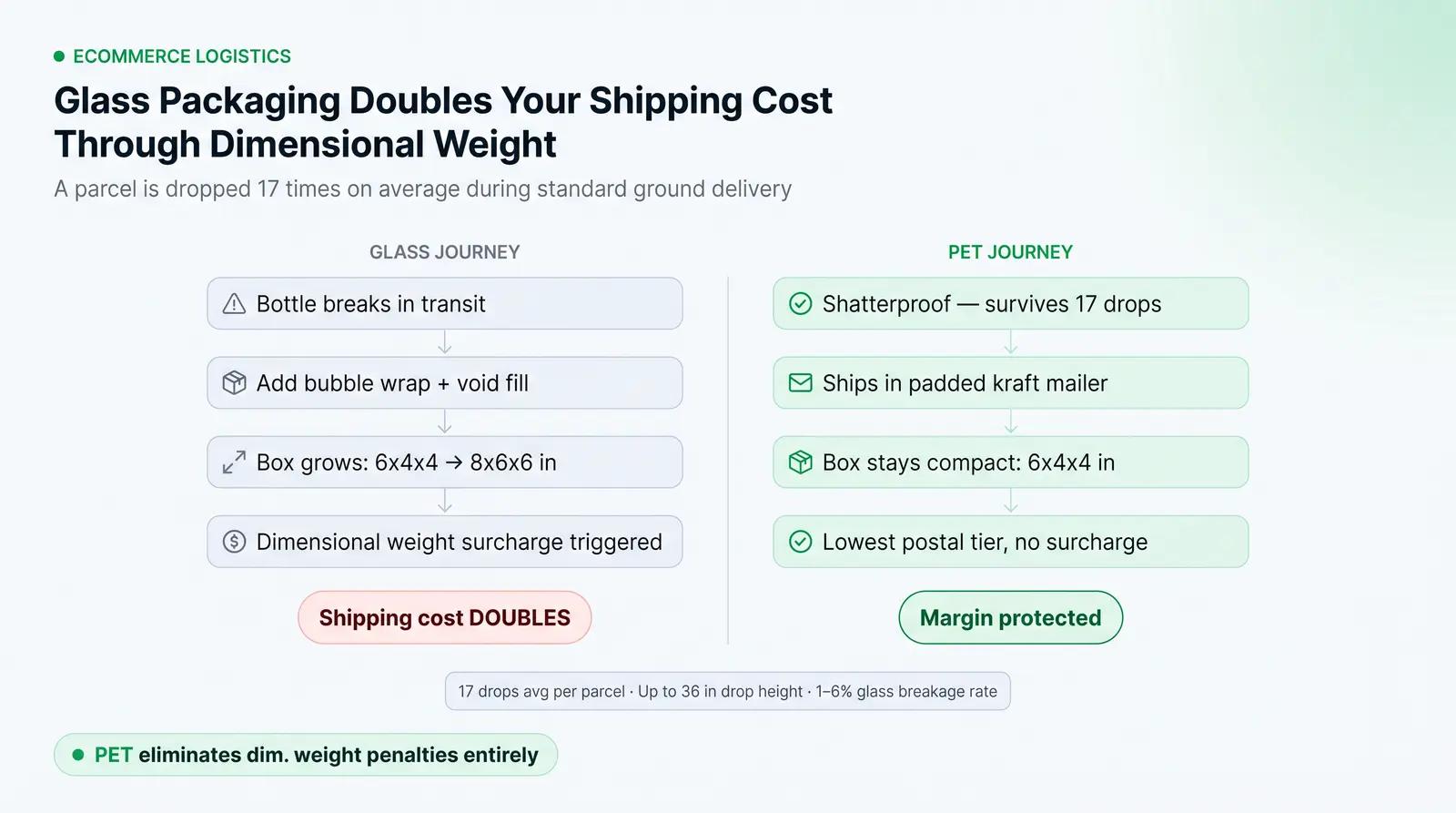
According to package testing standards from the International Safe Transit Association, known as ISTA, a package shipped via standard ground parcel delivery is dropped an average of 17 times during its journey, often from heights of up to 36 inches (76 cm). For a glass bottle, surviving this journey requires a significant investment in protective materials.
To protect a glass bottle, you must eliminate all movement inside the shipping box. This requires void-fill materials like bubble wrap, kraft paper, or custom cardboard dividers [5]. These materials do more than just add direct cost, they increase the outer dimensions of your shipping box. Because carriers utilize dimensional weight formulas, increasing your box size from a 6x4x4 inch (15x10x10 cm) box to an 8x6x6 inch (20x15x15 cm) box to accommodate bubble wrap can double your shipping cost, even if the actual weight of the package only increases by an ounce [12].
PET's shatterproof nature eliminates this entire logistical burden. A PET bottle can be shipped in a tight-fitting, low-profile box or even a padded mailer, allowing you to ship using the most economical postal tiers and completely avoiding the dimensional weight penalties that erode e-commerce margins.
Sustainability: Questioning the Default Assumption
The Sustainability Assumption Worth Questioning
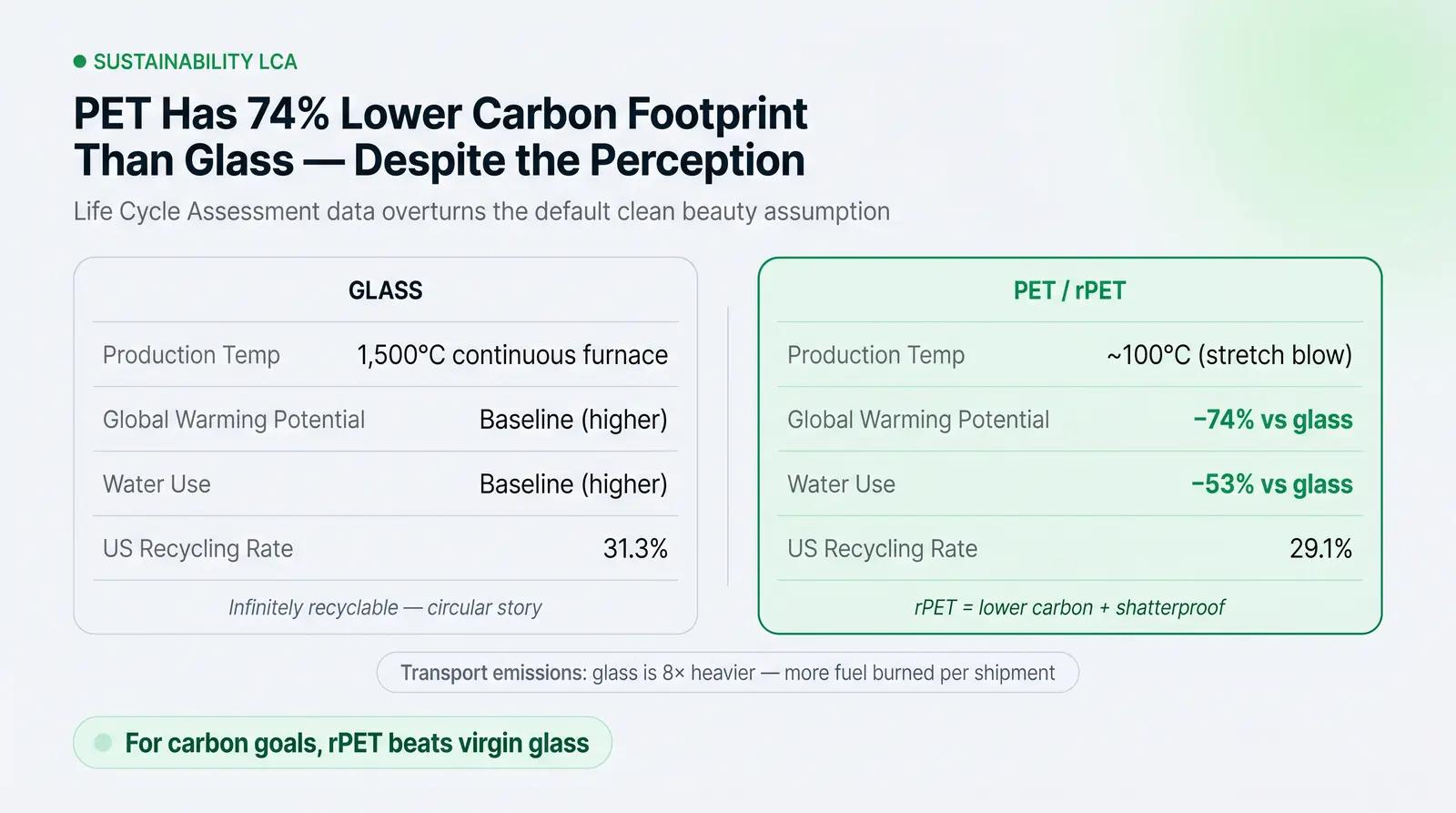
Ask any consumer which material is more sustainable, and they will almost certainly answer glass. This is the default assumption in the clean beauty industry, driven by the visible crisis of plastic pollution in our oceans. However, when evaluated through a rigorous, data-driven Life Cycle Assessment, known as an LCA, the reality is far more nuanced, and often contradicts this conventional wisdom.
Glass is made from abundant natural materials, sand, soda ash, and limestone, and is 100% infinitely recyclable without losing its quality [8]. This is a beautiful circular story. However, the manufacturing process of glass is incredibly carbon-intensive. Industrial glass furnaces must run continuously, 24 hours a day, 365 days a year, at temperatures exceeding 1,500°C (2,700°F) [4]. This requires massive fossil fuel combustion, generating significant direct greenhouse gas emissions [4].
In contrast, PET is processed at much lower temperatures. Reheating a PET preform for stretch blow molding requires temperatures of only around 100°C (212°F) [4]. According to a comprehensive Life Cycle Assessment conducted by the National Association for PET Container Resources, a standard PET bottle has a 74% lower global warming potential and uses 53% less water during production than a comparable glass container [7] [11].
Furthermore, the environmental impact of transportation must be factored in. Because glass is up to eight times heavier than PET, transporting glass containers from the glass plant to the filler, and then to the customer, requires significantly more fuel, generating higher Scope 3 transport emissions [4]. If your brand's primary environmental goal is reducing carbon emissions to combat climate change, virgin PET, or better yet, post-consumer recycled PET, known as rPET, often represents a more sustainable choice than virgin glass.
Making Your Decision
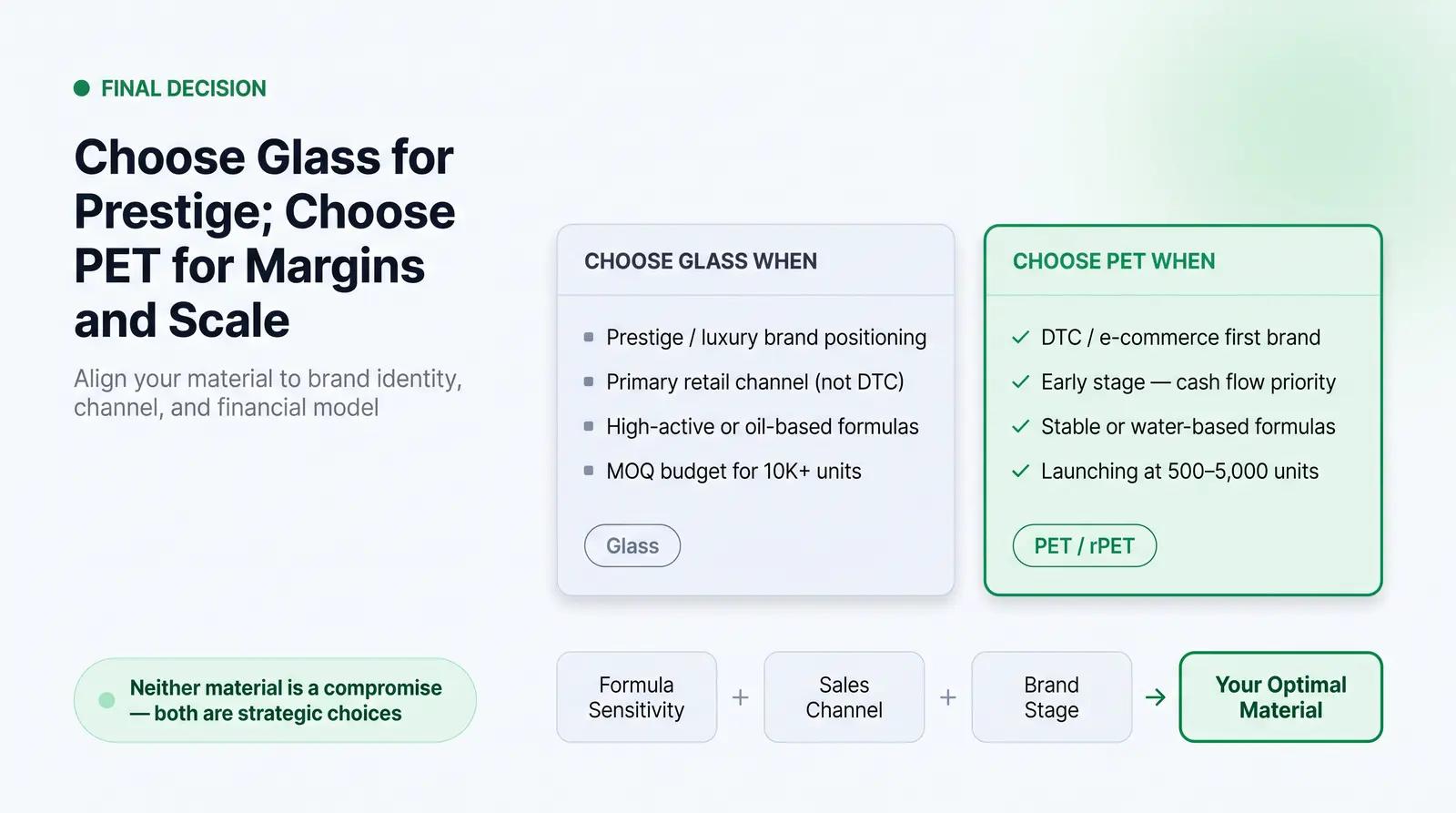
The choice between glass and PET is not a binary decision of quality versus compromise. It is a strategic alignment of your formulation requirements, your distribution channels, and your brand's financial health.
If your brand identity is built on prestige, luxury, and high-active organic formulations, glass is the correct choice, and you must build the associated freight, breakage, and protective packaging costs into your retail pricing model. If your brand is built on accessibility, e-commerce convenience, and clean, modern utility, PET offers an operationally superior path that protects your margins and simplifies your supply chain.
To explore how different packaging materials look with your branding, browse Packfolio's curated glass and PET packaging catalog and preview your label in 3D before committing to production → packfolio.com/catalog
Frequently Asked Questions
Is PET plastic safe for organic skincare products?
Yes, food-grade PET is highly safe and chemically resistant to most organic skincare formulations, including water-based serums, creams, and gentle cleansers. However, organic formulas with exceptionally high concentrations of pure essential oils or active plant acids should undergo compatibility testing, as these compounds can slowly degrade plastic over time [9].
How much more does it cost to ship glass versus PET?
On average, shipping a glass-packaged cosmetic product DTC costs 15% to 40% more than shipping the same product in PET. This premium is driven by the heavier tare weight of the glass bottle and the larger shipping box dimensions required to accommodate protective void-fill, which triggers dimensional weight surcharges from carriers [12].
Can I use recycled PET (rPET) for my beauty brand?
Yes, post-consumer recycled PET, or rPET, is an excellent option for beauty brands looking to reduce their reliance on virgin plastics. It offers the same lightweight and shatterproof benefits as virgin PET while carrying a significantly lower carbon footprint, though it may have a slight grey or amber tint depending on the source of the recycled resin [4].
Does glass packaging protect cosmetics from UV light?
Only colored glass, such as amber, dark blue, or frosted glass, provides significant protection against ultraviolet light. Clear flint glass allows UV rays to pass through completely, which can rapidly degrade light-sensitive active ingredients like vitamin C, retinol, and natural plant extracts [16].
What is the average minimum order quantity (MOQ) for glass cosmetic bottles?
Stock glass bottles from distributors can sometimes be purchased in single cases of 100 to 500 units, but decorated glass or custom shapes typically require minimum order quantities of 5,000 to 10,000 units. Custom molds for proprietary glass shapes usually require a minimum of 20,000 to 50,000 units to justify the high tooling costs [13].
References
[1] U.S. Environmental Protection Agency. (2026). Glass: Material-Specific Data. https://www.epa.gov/facts-and-figures-about-materials-waste-and-recycling/glass-material-specific-data
[2] U.S. Environmental Protection Agency. (2026). Plastics: Material-Specific Data. https://www.epa.gov/facts-and-figures-about-materials-waste-and-recycling/plastics-material-specific-data
[3] Glass Packaging Institute. (2024). A Circular Future of Glass. https://www.gpi.org/circular-future-glass
[4] Petainer Engineering Team. (2024). PET vs. Glass Packaging: Technical Life Cycle Analysis Comparison. https://www.petainer.com/insights/materials-sustainability/lca-pet-vs-glass
[5] Premier Packaging Products. (2024). How to Reduce Glass Breakage During Shipping Without Extra Bulk. https://www.premier-packaging-products.com/fiberboard-dividers/how-to-reduce-glass-breakage-during-shipping/
[6] Glass Technology Services. (2022). Glass vs Plastic Packaging: Pros and Cons. https://www.glass-ts.com/news/glass-vs-plastic-packaging/
[7] National Association for PET Container Resources. (2023). PET Plastic Bottles Have A Significantly Lower Environmental Impact. https://napcor.com/news/pet-plastic-bottles-have-a-significantly-lower-environmental-impact-compared-to-glass-bottles-and-aluminum-cans/
[8] APC Packaging. (2024). Exploring the Pros and Cons of Plastic and Glass Beauty Packaging. https://techcenter.apcpackaging.com/pros-and-cons-of-plastic-and-glass
[9] APG Packaging Group. (2024). Are PET Plastic Bottles Safe for Oil-Based Skincare Formulations? https://apackaginggroup.com/blogs/news/are-pet-plastic-bottles-safe-for-oil-based-skincare-formulations
[10] JG Containers. (2024). Glass Packaging for DTC Brands: Opportunities & Logistics. https://jg-containers.com/glass-packaging-for-dtc-brands-opportunities-logistics/
[11] Propacks. (2026). Glass vs Plastic Packaging for Beauty Brands: How to Actually Decide. https://propacks.net/us/blog/glass-vs-plastic-packaging-for-beauty-brands
[12] FedEx. (2024). What is Dimensional Weight? https://www.fedex.com/en-us/shipping/packaging/what-is-dimensional-weight.html
[13] Impacked Packaging. (2026). The Complete Guide to Glass Packaging for Cosmetics & Fragrances. https://www.impackedpackaging.com/guides/glass-packaging
[14] U.S. Food and Drug Administration. (2026). Modernization of Cosmetics Regulation Act of 2022 (MoCRA). https://www.fda.gov/cosmetics/cosmetics-laws-regulations/modernization-cosmetics-regulation-act-2022-mocra
[15] Personal Care Products Council. (2025). Commitment To Safety and Regulation. https://www.personalcarecouncil.org/issues/commitment-to-safety/
[16] Panyue Packaging. (2025). Should Vitamin C Serums Be Stored in Dark Glass Bottles? Why Not Plastic? https://www.panyuepacking.com/blog/should-vitamin-c-serums-be-stored-in-dark-glass-bottles-why-not-plastic_b121


