
State of Indie Beauty Packaging Report
This annual benchmark report provides indie beauty founders with data on packaging MOQs, lead times, format trends, and a readiness matrix to guide sourcing decisions at every growth stage.
Indie beauty founders lack a shared benchmark for packaging decisions and are often flying blind. Whether launching a first product or scaling an existing line, independent brand owners frequently guess at what constitutes a reasonable minimum order quantity (MOQ), how long production should actually take, and which packaging formats are gaining traction. This lack of visibility leads to mismatched capital allocation, unexpected reformulation costs, and delayed launches. This report serves as the annual benchmark for how indie beauty brands buy, design, and manage packaging, providing the data and frameworks necessary to make informed sourcing decisions.
Why a Packaging Benchmark Matters for Indie Brands
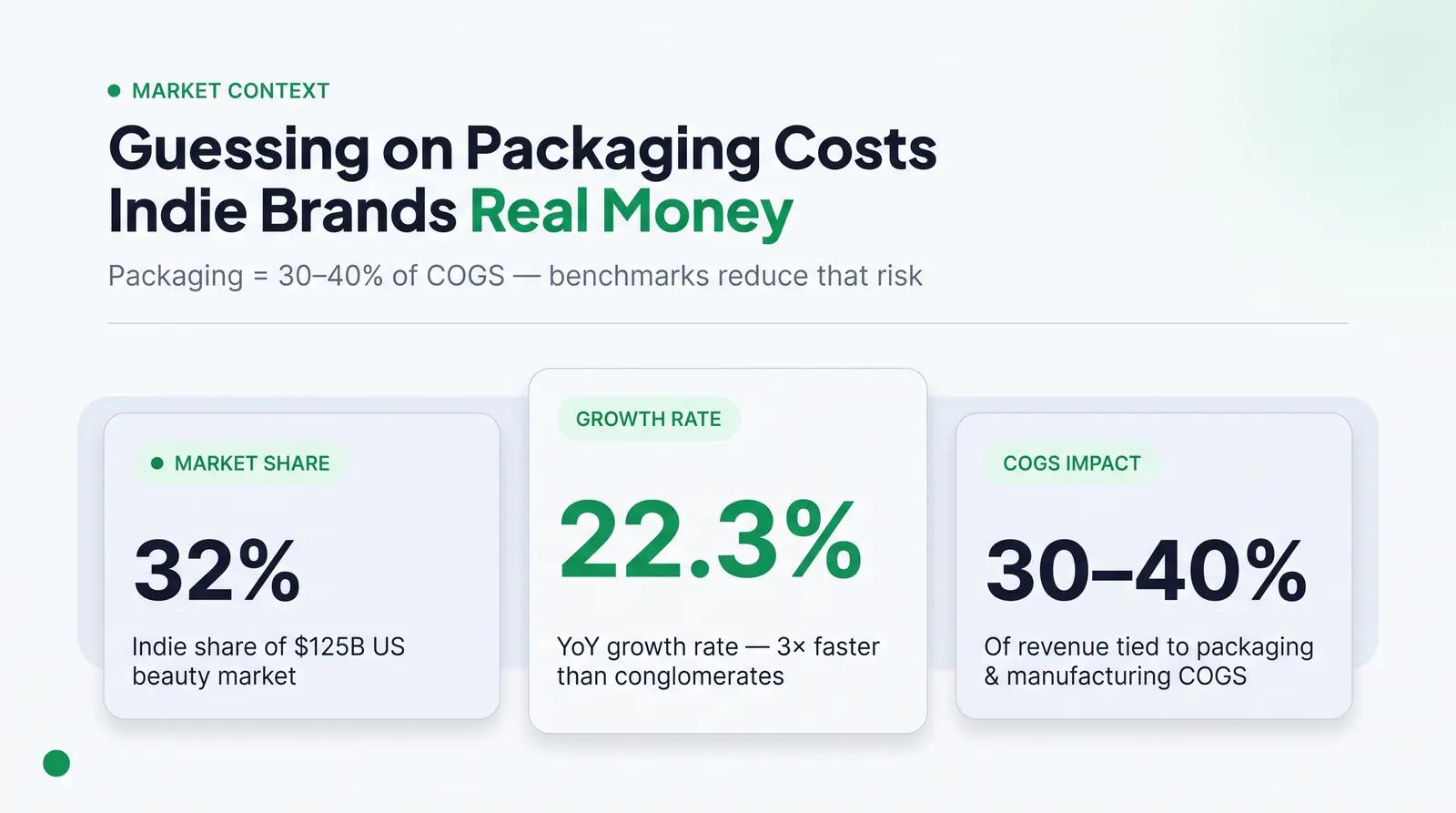
The indie beauty sector is capturing market share at an unprecedented rate. According to NielsenIQ, indie brands controlled approximately 32% of the $125 billion U.S. beauty and personal care market in late 2025, growing at 22.3% year-over-year—more than triple the growth rate of conglomerates [1]. As these brands scale, the cost of guessing on packaging becomes increasingly punitive.
Packaging represents a significant portion of a beauty brand's cost of goods sold (COGS). For an average product, manufacturing and packaging can account for 30% to 40% of total revenue [2]. When decisions are made without industry benchmarks, founders often overcommit to high MOQs to secure lower unit prices, tying up critical working capital in inventory that may take years to sell. Conversely, underestimating lead times can result in out-of-stock scenarios that stall momentum and damage retail relationships. A shared benchmark allows founders to align their packaging strategy with their current growth stage, mitigating risk while maintaining agility.
Format Trends: What Packaging Types Are Gaining and Losing Ground
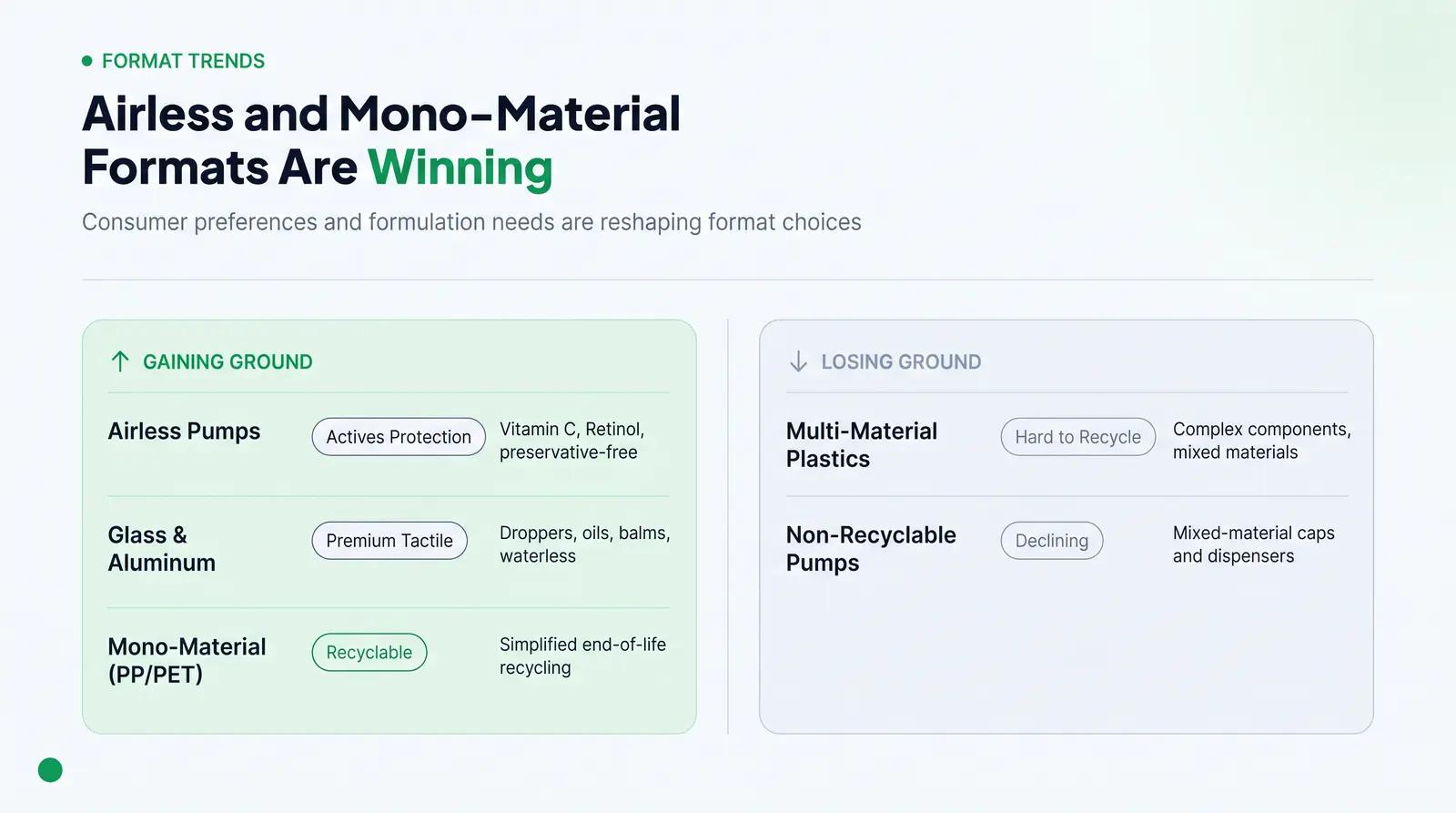
The shift in consumer preferences and formulation requirements is driving distinct trends in packaging formats. Airless packaging is experiencing rapid adoption among indie brands, moving beyond its origins as a niche premium format. The global airless packaging market is projected to expand significantly, driven by the demand for extended product shelf life and the protection of active ingredients from air and light contamination [3]. This format aligns perfectly with the rise of actives-heavy serums and preservative-free clean beauty formulations.
Simultaneously, there is a resurgence in glass and aluminum packaging, driven by a desire for premium tactile experiences and perceived sustainability. Glass droppers remain a staple for facial oils and serums, though they compete directly with airless pumps for high-end formulations. On the decline are complex, multi-material plastic components that cannot be easily recycled. Mono-material designs, particularly those utilizing polypropylene (PP) or polyethylene terephthalate (PET), are gaining ground as brands seek to simplify end-of-life recycling for their consumers.
Sourcing Benchmarks: MOQs, Lead Times, and Unit Economics
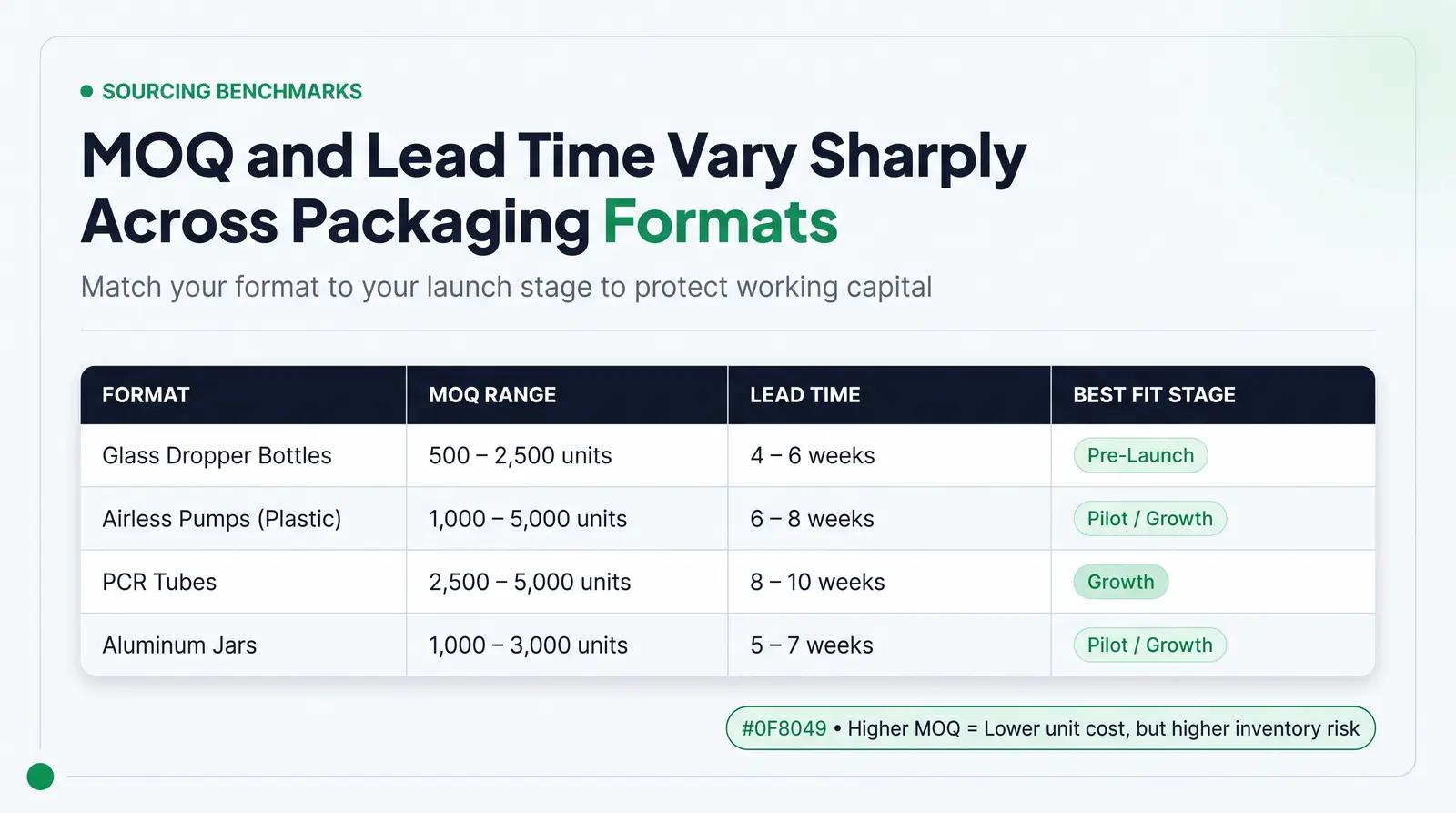
Understanding realistic MOQs and lead times is crucial for effective supply chain management. Small-batch manufacturing inherently carries higher unit costs due to fixed setup fees being distributed across fewer units [4]. The table below outlines typical sourcing benchmarks across common cosmetic packaging formats for indie brands.
| Packaging Format | Typical Indie MOQ Range | Estimated Lead Time | Best-Fit Launch Stage | Compatibility Notes |
|---|---|---|---|---|
| Glass Dropper Bottles | 500 - 2,500 units | 4 - 6 weeks | Pre-launch / Pilot | Excellent for oils and stable serums; avoid for light-sensitive actives unless using opaque/amber glass. |
| Airless Pumps (Plastic) | 1,000 - 5,000 units | 6 - 8 weeks | Pilot / Growth | Ideal for sensitive actives (Vitamin C, Retinol) and preservative-free formulas; higher unit cost. |
| PCR Tubes | 2,500 - 5,000 units | 8 - 10 weeks | Growth | Good for cleansers and thick creams; requires stability testing to ensure PCR material does not interact with the formula. |
| Aluminum Jars | 1,000 - 3,000 units | 5 - 7 weeks | Pilot / Growth | Suited for balms and waterless formulations; requires an appropriate internal coating to prevent corrosion. |
The Indie Packaging Readiness Matrix
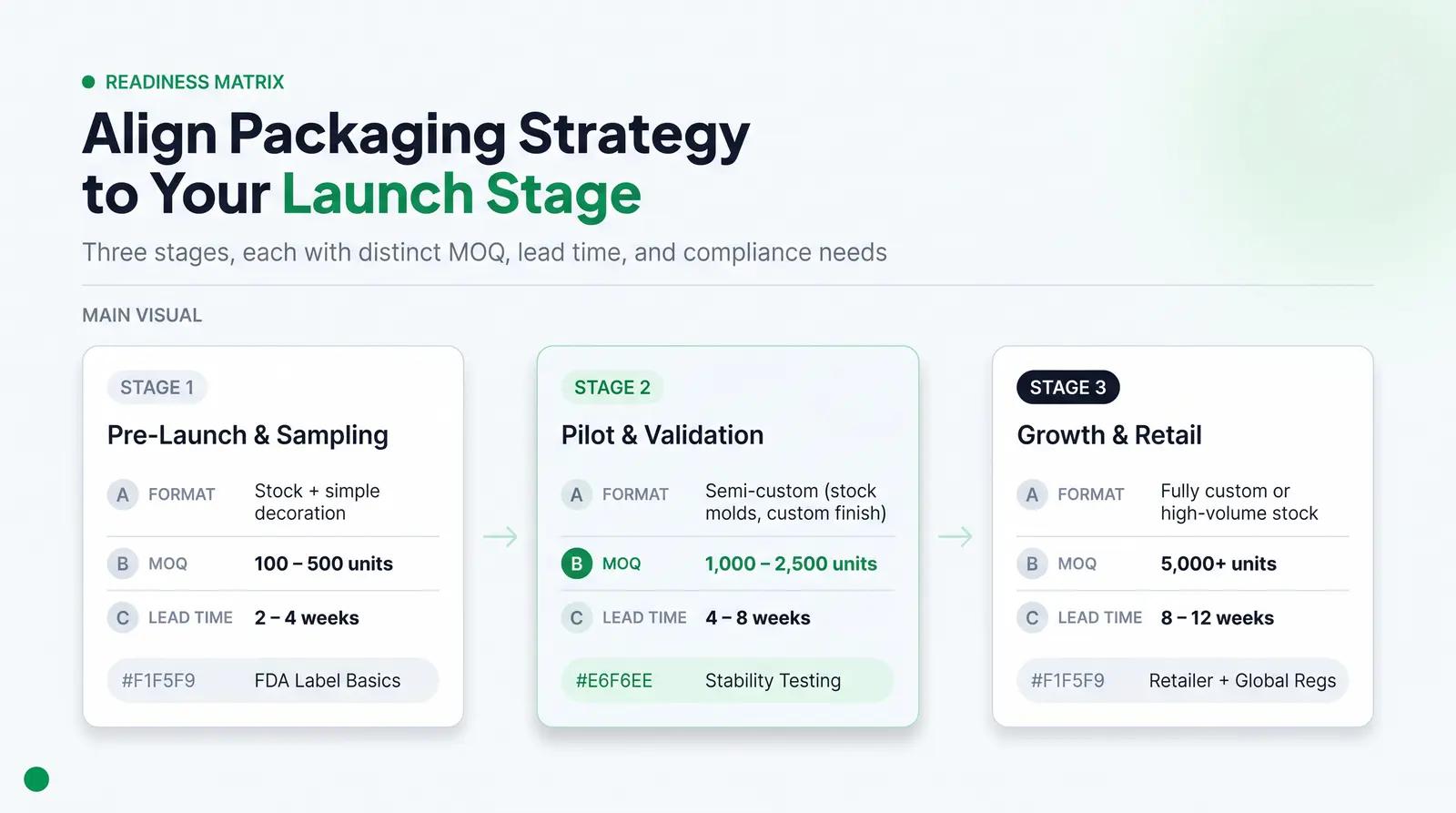
To navigate the complexities of sourcing, we recommend a structured approach to decision-making. The Indie Packaging Readiness Matrix is a practical framework that aligns a brand's launch stage with appropriate packaging expectations and compliance checkpoints.
- Stage 1: Pre-Launch & Sampling
- Format Strategy: Stock packaging with simple decoration (e.g., labels or silk screening).
- MOQ Threshold: 100 - 500 units.
- Lead Time Expectation: 2 - 4 weeks.
- Compliance Checkpoint: Ensure basic label compliance (ingredient list, net weight, distributor information) per FDA guidelines.
- Stage 2: Pilot & Market Validation
- Format Strategy: Semi-custom packaging (stock molds with custom colors or finishes).
- MOQ Threshold: 1,000 - 2,500 units.
- Lead Time Expectation: 4 - 8 weeks.
- Compliance Checkpoint: Verify packaging material compatibility with the finalized formula through stability testing.
- Stage 3: Growth & Retail Expansion
- Format Strategy: Fully custom packaging or high-volume stock with advanced decoration.
- MOQ Threshold: 5,000+ units.
- Lead Time Expectation: 8 - 12 weeks.
- Compliance Checkpoint: Prepare for retailer-specific sustainability requirements (e.g., Sephora's Clean + Planet Aware standards) and international regulatory compliance if expanding globally.
Workflow Patterns: How Indie Founders Are Managing Packaging Today
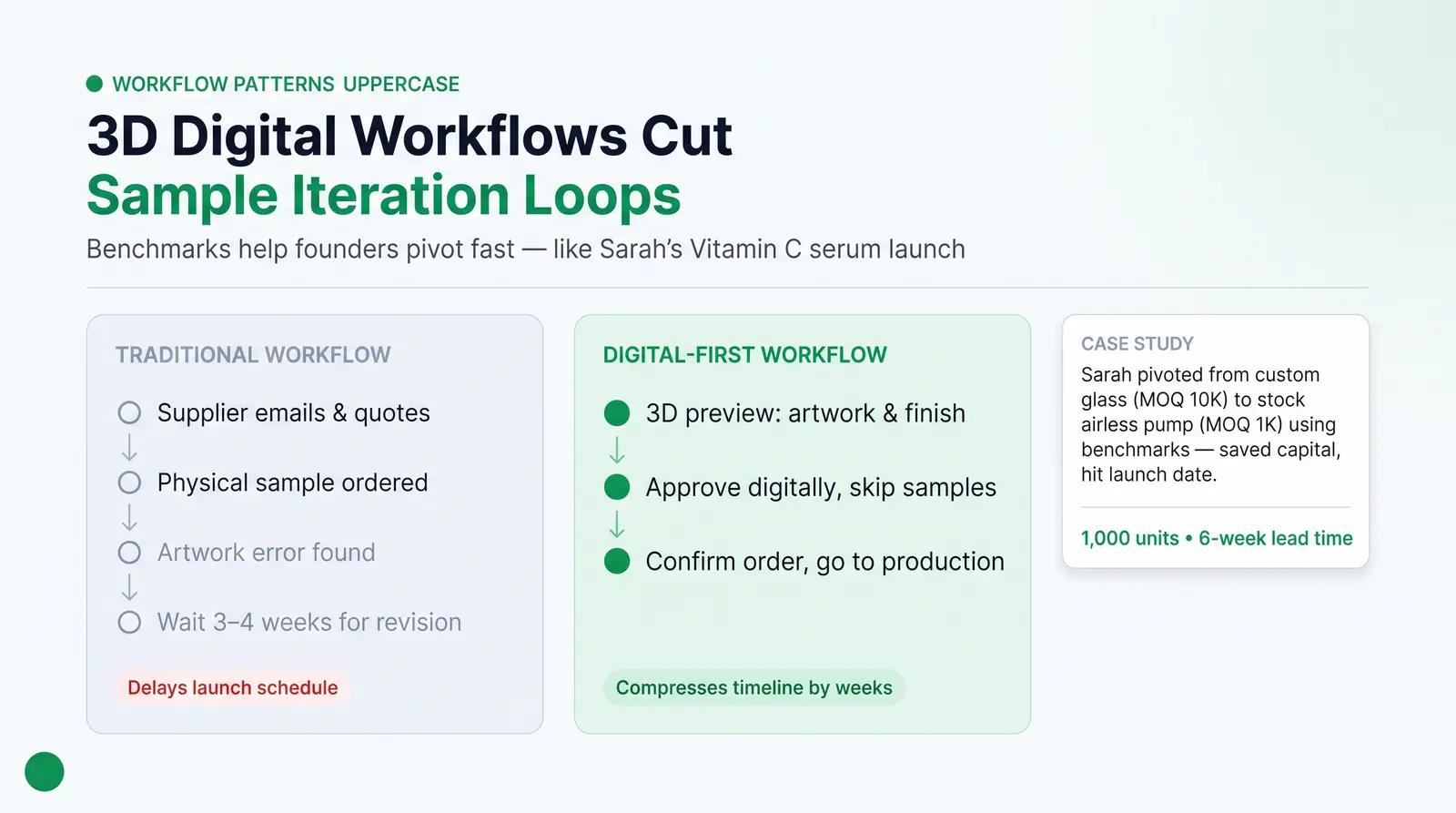
The traditional packaging workflow is fraught with inefficiencies. Founders frequently struggle with supplier communication overhead, navigating time zone differences and language barriers to secure accurate quotes and timelines. Sample iteration loops are another major pain point; receiving a physical sample, identifying an error in the artwork or finish, and waiting weeks for a revised version can derail a launch schedule.
Consider the scenario of Sarah, the founder of a growing indie skincare brand preparing to launch her first Vitamin C serum. She plans an initial run of 1,000 units to test market reception. Sarah initially considers a custom-colored glass dropper bottle but discovers the MOQ is 10,000 units with a 10-week lead time. Referencing industry benchmarks, she pivots to a stock airless pump. While the unit cost is higher, the MOQ of 1,000 units fits her budget, the 6-week lead time aligns with her launch date, and the airless technology protects the volatile Vitamin C formulation. By understanding the benchmarks, Sarah avoids tying up capital in excess inventory and ensures product efficacy.
Digital tools are increasingly mitigating these workflow challenges. The adoption of 3D visualization allows brands to preview packaging designs, artwork placement, and finishes before physical production begins. This digital-first approach significantly reduces the need for multiple physical sample iterations, thereby compressing development timelines and minimizing costly production errors.
Sustainability and Compliance: The Two Forces Reshaping Packaging Sourcing
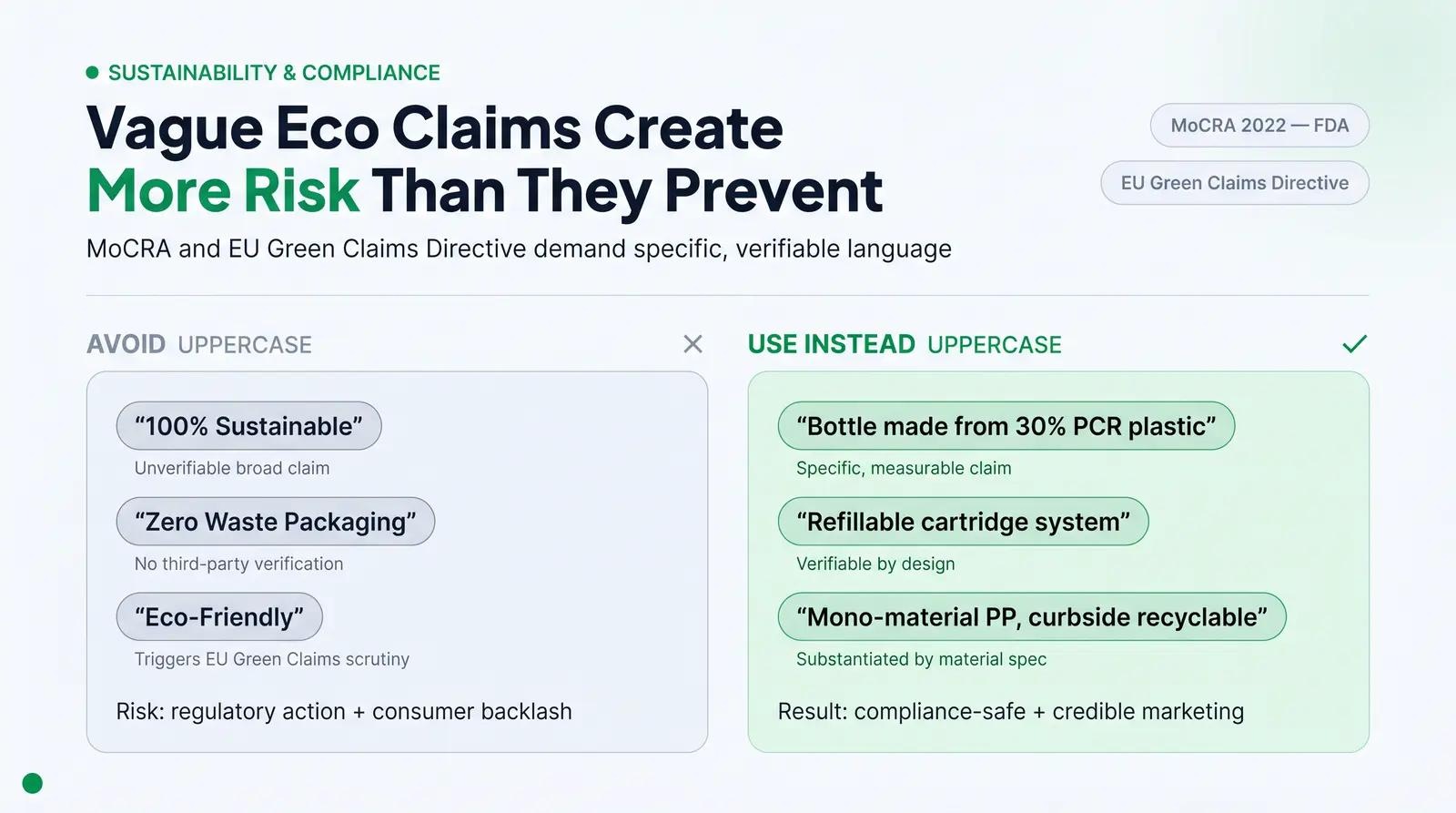
Sustainability is no longer a marketing angle; it is a regulatory imperative. The Modernization of Cosmetics Regulation Act of 2022 (MoCRA) has expanded the FDA's authority, requiring adverse event reporting, facility registration, and product listing, which inherently tightens the scrutiny on product safety, including packaging interactions [5]. Furthermore, the FDA has published reports assessing the use of PFAS in cosmetic products, indicating a growing focus on the chemical safety of packaging materials [5].
In the European Union, the proposed Green Claims Directive aims to combat greenwashing by requiring companies to substantiate their environmental claims with scientific evidence verified by an independent third party [6]. This brings us to a contrarian insight: vague "eco-friendly" claims on packaging create more compliance risk than most founders realize. While adopting post-consumer recycled (PCR) materials or refillable systems is commendable, marketing them with unsubstantiated terms like "100% sustainable" or "zero waste" exposes the brand to regulatory action and consumer backlash. Brands are better served by making specific, verifiable claims, such as "Bottle made from 30% PCR plastic," rather than broad, undefinable statements.
What to Watch: Packaging Trends Heading Into the Next 12 Months
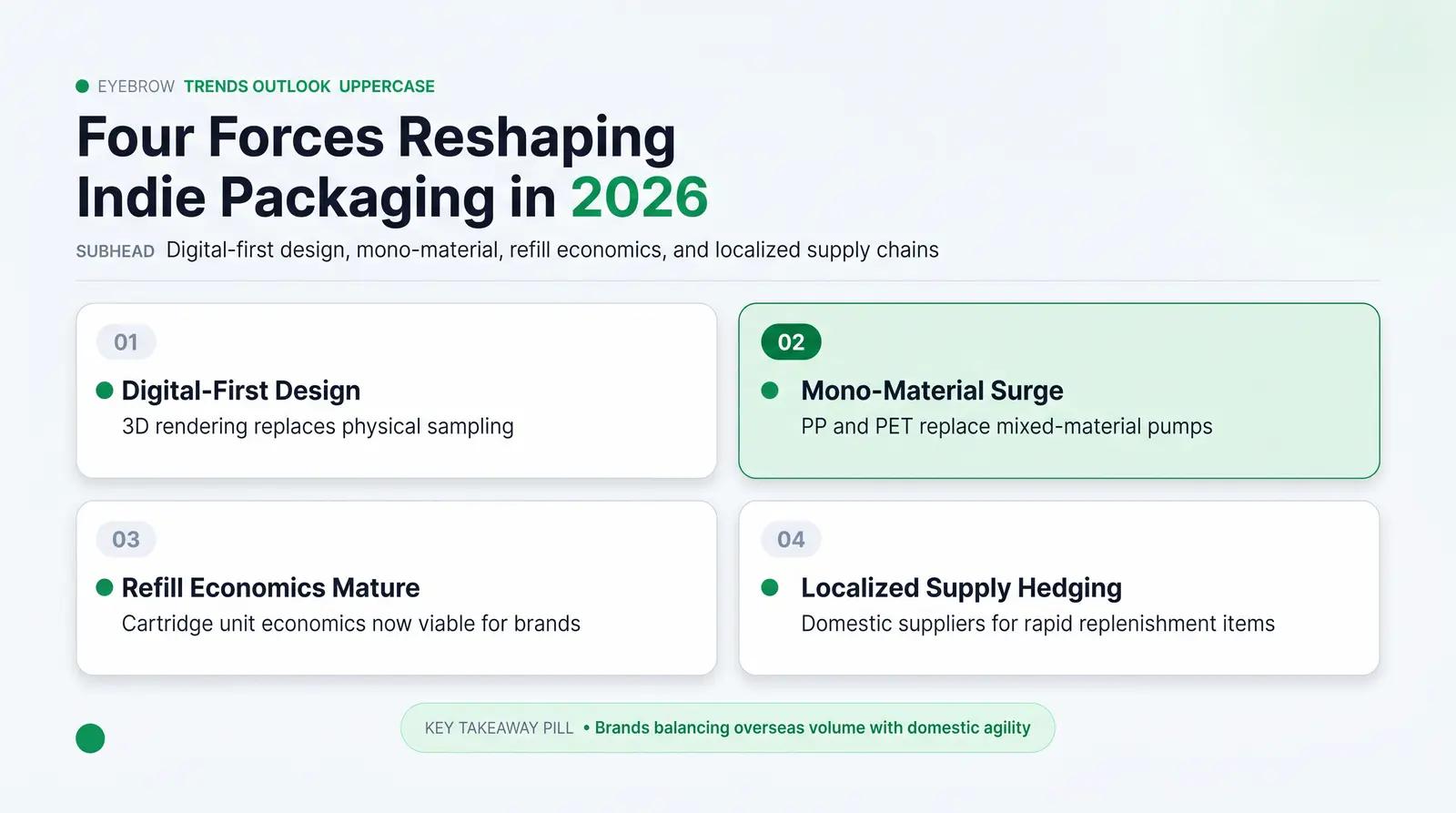
Looking ahead, several key trends will define indie beauty packaging. The normalization of digital-first design workflows will continue, with more brands relying on 3D rendering to finalize designs before committing to physical samples. We anticipate a surge in mono-material packaging solutions as brands attempt to simplify the recycling process for end consumers, moving away from mixed-material pumps and caps that require disassembly.
Refillable packaging will see refined economics. While initial adoption was driven by novelty, brands are now focusing on the unit economics of the refill cartridges, ensuring they offer genuine value to the consumer while maintaining viable margins for the business. Finally, localized supply chain hedging will become more prevalent. As global shipping costs and geopolitical uncertainties fluctuate, indie brands will increasingly balance overseas sourcing for high-volume components with domestic suppliers for rapid-replenishment items.
Browse Packfolio's curated cosmetic packaging catalog and preview your label in 3D before placing your order — packfolio.com/catalog
Frequently Asked Questions
What packaging do indie beauty brands use? Indie beauty brands typically use a mix of stock and semi-custom packaging to balance cost and differentiation. Common formats include glass dropper bottles for serums, airless pumps for sensitive formulations, and mono-material plastic tubes for cleansers, often elevated through high-quality labeling or silk screening.
How to choose cosmetic packaging for a small brand? Small brands should select packaging based on formula compatibility, minimum order quantities (MOQs), and lead times rather than aesthetics alone. Utilizing stock molds with custom decoration is the most effective way to achieve a premium look without the high upfront costs associated with custom tooling.
What is the best packaging for skincare products? The best packaging depends entirely on the formulation; however, airless pumps are widely considered optimal for active-heavy skincare. They prevent oxidation, protect sensitive ingredients like Vitamin C and Retinol from light and air exposure, and ensure near-complete product evacuation.
What is a realistic MOQ for custom cosmetic packaging? For fully custom packaging requiring new molds, MOQs typically start at 10,000 units. However, indie brands can access semi-custom options (stock shapes with custom colors or finishes) with MOQs ranging from 1,000 to 5,000 units through specialized suppliers.
How long does cosmetic packaging production take? Production timelines vary by format and supplier location, but indie brands should generally expect lead times of 4 to 8 weeks for stock packaging with custom decoration. Fully custom components or complex finishes can extend this timeline to 10 to 14 weeks, excluding freight transit time.
References
[1] "The Indie Beauty Boom," NielsenIQ, 2026. link [2] "How Much It Really Costs to Launch a Beauty Brand," Carrara Advisory, 2025. link [3] "Airless Packaging Market Size and Segments Outlook (2026–2035)," Towards Packaging, 2026. link [4] "Low MOQ Cosmetic Manufacturing: The 2025 Guide for Indie Founders," Genie Supply, 2025. link [5] "Modernization of Cosmetics Regulation Act of 2022 (MoCRA)," U.S. Food and Drug Administration, 2026. link [6] "Green Claims Directive (GCD)," Cosmetics Europe, 2025. link


