
Lip Balm Tubes and Containers: What Beauty Brands Should Know
This guide compares lip balm packaging formats, materials, decoration methods, MOQs, and FDA labeling requirements to help beauty brands spec containers correctly.
Lip balm containers are among the smallest, most tactile units a beauty brand will ever specify. Every millimeter of surface area and every gram of wall thickness has outsized consequences at this scale: on formula integrity, on label legibility, and on the unboxing moment. Unlike larger cosmetic packaging where design flaws can sometimes be absorbed by volume, lip care packaging demands precision at every level.
A miscalculated cap torque or a poorly chosen substrate can turn a carefully crafted formulation into an unusable product. A label that looks clean on screen can become unreadable when wrapped around a 0.6-inch diameter tube. These are not hypothetical problems. They are the day-to-day realities of small-format packaging, and they are the reason lip balm packaging deserves a more rigorous treatment than most founders give it.
For independent beauty brand founders, formulators, and contract manufacturers, selecting the right lip balm packaging is one of the most consequential early decisions in a product launch. This guide covers the technical, material, regulatory, and commercial realities of sourcing cosmetic primary packaging for lip balm products, offering a structured approach to making these decisions with confidence. If you want to explore how Packfolio handles the supply chain side of this, we will get to that. First, the fundamentals.
Why Lip Balm Packaging Is Harder to Get Right Than It Looks
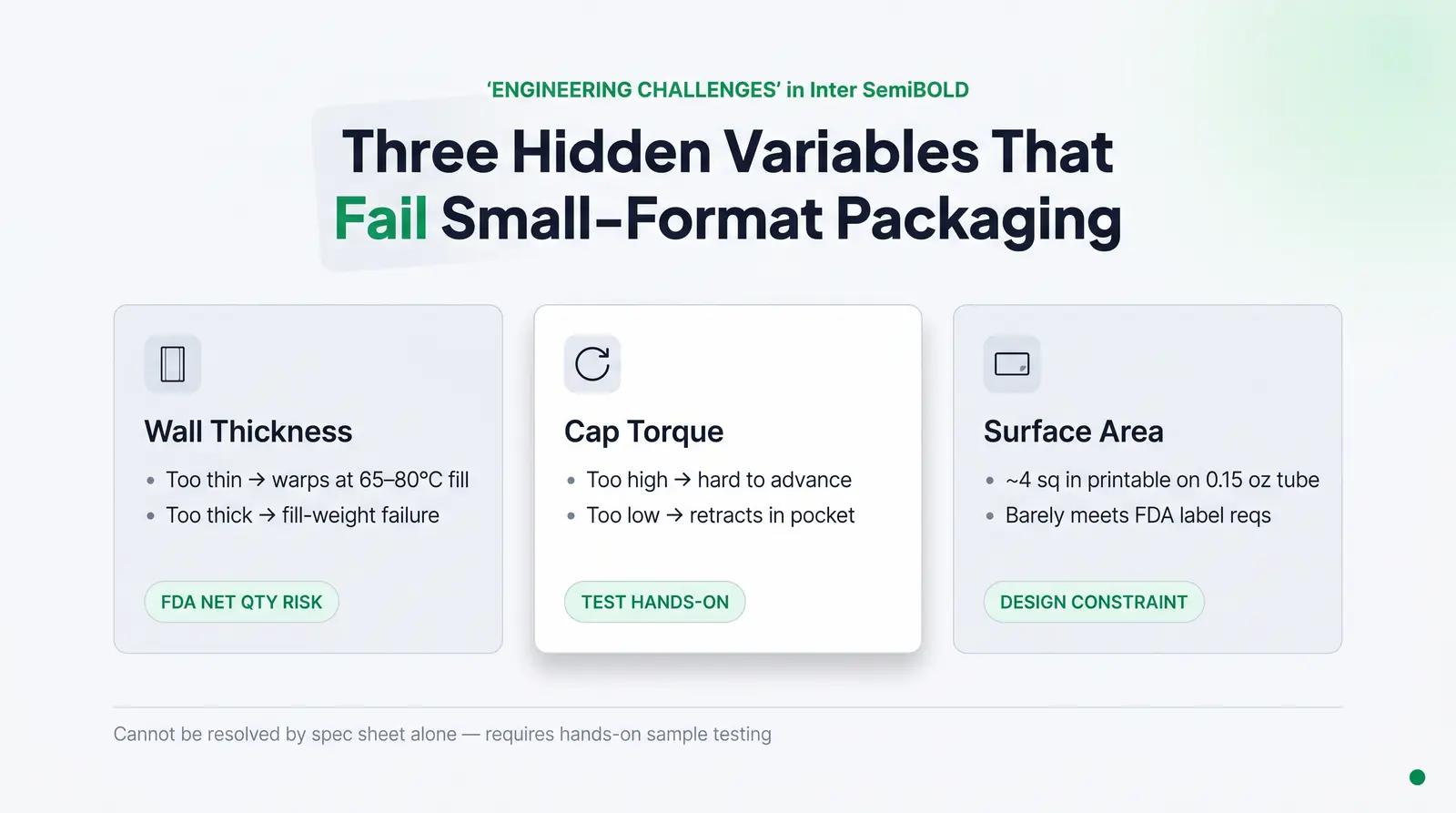
The small-format nature of lip balm packaging creates engineering challenges that simply do not exist at larger scales. Wall thickness is the first variable that catches founders off guard. Walls that are too thin will warp under the heat of a hot-pour filling process, typically conducted at temperatures between 65°C and 80°C (149°F and 176°F). Walls that are too thick reduce internal volume, which can cause fill-weight tolerance failures that put a product out of compliance with FDA net quantity regulations [7].
Cap torque is another frequent failure point. A twist-up mechanism requires a precise balance between friction and ease of use. If the torque is too high, consumers will struggle to advance the product. If it is too low, the balm may retract during application or advance unintentionally in a bag or pocket, resulting in a ruined product and a frustrated customer. These are not issues that can be resolved by looking at a spec sheet. They require hands-on sample testing under real-world conditions.
Surface area is the third constraint that shapes every other decision. A standard 0.15 oz (4.25 g) twist-up tube has approximately 4 square inches of printable surface area when the label wraps the cylindrical body. That is barely enough space to meet FDA labeling requirements for a cosmetic, let alone to express a brand identity. Every design choice, from font size to decoration method, must be made with this constraint in mind.
Container Format Comparison: Tubes, Tins, Jars, Pots, Sticks, and Cushion Applicators
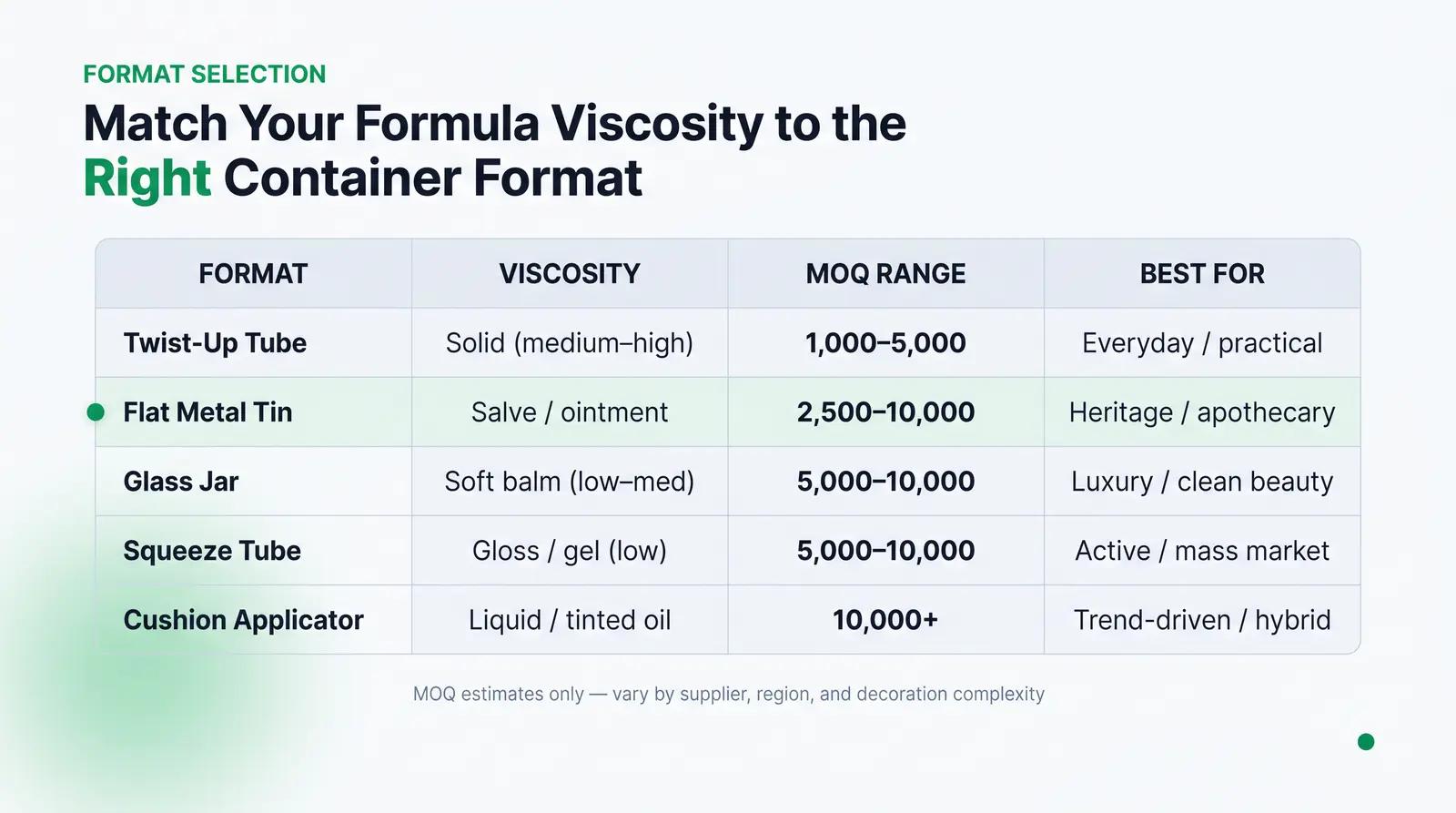
The right format depends on the viscosity of your formula, your target consumer, and your brand positioning. A soft overnight lip mask behaves very differently from a firm SPF stick, and the packaging that works for one will fail the other. The table below provides a comprehensive overview of the most common lip balm packaging formats.
| Format Name | Typical Fill Volume/Weight | Material Options | Best Formula Viscosity Range | Decoration Method(s) Available | MOQ Range (Estimates) | Ideal Brand Positioning |
|---|---|---|---|---|---|---|
| Standard Twist-Up Tube | 0.15 oz (4.25 g) | PP, PCR PP, Paperboard | Medium to High (Solid) | Shrink Sleeve, PS Label, Direct Print | 1,000-5,000+ | Everyday, practical, familiar |
| Flat Metal Tin | 0.25-0.5 oz (7-14 g) | Aluminum, Tinplate | Low to Medium (Salve/Ointment) | Direct Print, PS Label, Embossed | 2,500-10,000+ | Heritage, apothecary, sustainable |
| Heavy Base Glass Jar | 0.15-0.25 oz (4-7 g) | Glass with PP/Aluminum Cap | Low to Medium (Soft Balm) | Screen Print, PS Label, Hot Stamp | 5,000-10,000+ | Premium, luxury, clean beauty |
| Squeeze Tube | 0.3-0.5 oz (8-14 g) | LDPE, MDPE, Fiber-based | Low (Gloss/Gel) | Direct Print, PS Label | 5,000-10,000+ | Youthful, active, mass market |
| Jumbo Stick/Propel-Repel | 0.5 oz (14 g) | PP, HDPE | Medium to High (Solid) | Shrink Sleeve, PS Label, Direct Print | 5,000-10,000+ | Multi-use, body balm, value |
| Cushion Applicator Tube | 0.2-0.4 oz (5-11 g) | PETG, PP with Sponge Tip | Low (Liquid/Tinted Oil) | Screen Print, Hot Stamp | 10,000+ | Trend-driven, cosmetic-hybrid |
All MOQ figures are industry estimates and will vary by supplier, region, and decoration complexity. Treat them as planning benchmarks rather than guaranteed pricing.
One format that deserves special mention is the paperboard push tube. Emerging as a plastic-free alternative, these fiber-based tubes are biodegradable and compostable, and they are gaining traction with sustainability-focused brands. Their primary limitation is water sensitivity: formulas with any free water content can compromise the structural integrity of the tube over time. They work best with anhydrous balm formulas.
Material Choices and What They Mean for Your Formula
The material composition of your lip balm container directly impacts product stability, consumer safety, and end-of-life recyclability. Choosing a material based on aesthetics alone, without evaluating formula compatibility, is one of the most common and costly mistakes in early-stage product development.
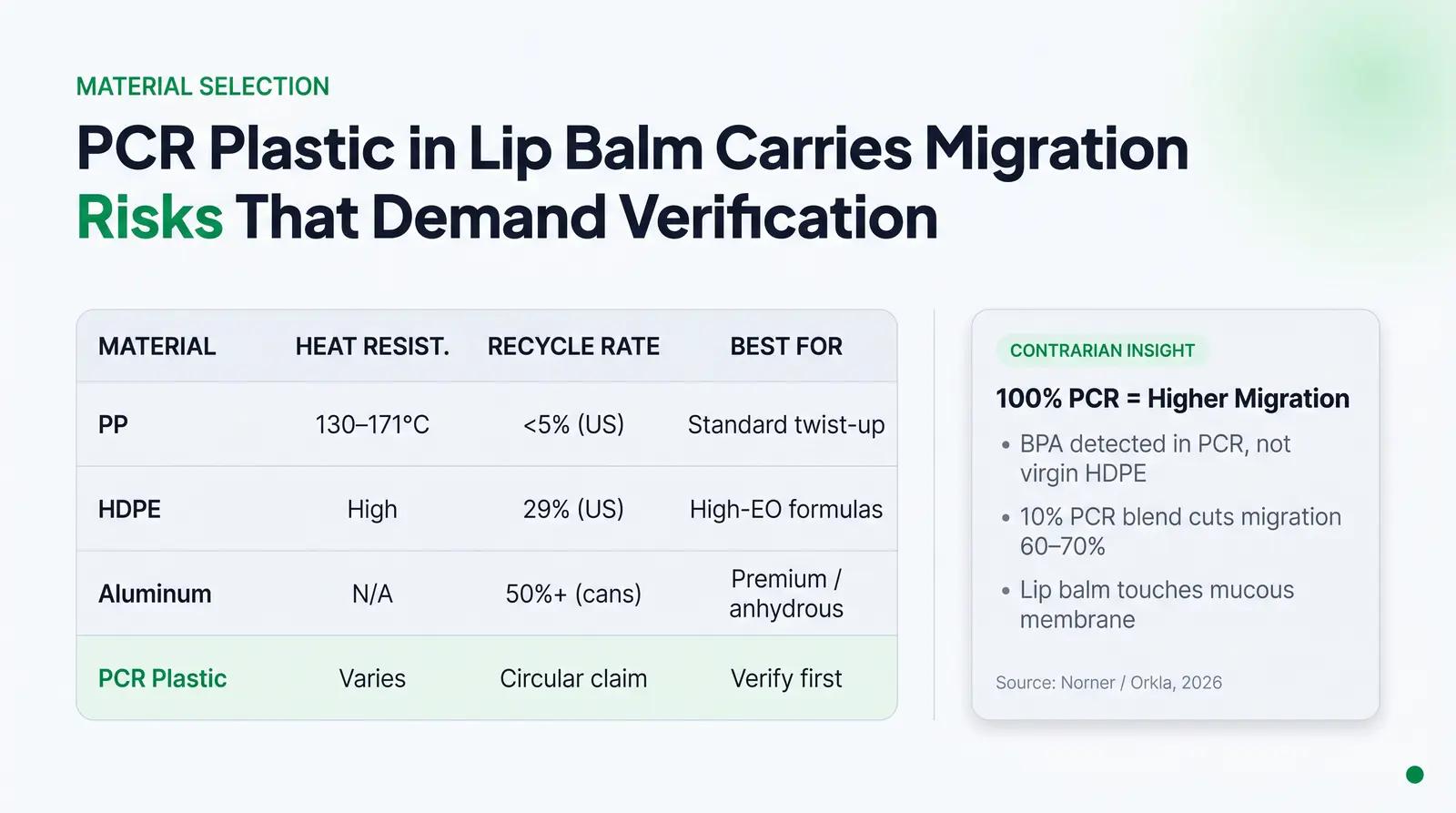
Polypropylene (PP) is the industry standard for twist-up tubes. Its melting point ranges from 266°F to 340°F (130°C to 171°C), making it well-suited for hot-pour filling processes [1]. PP is chemically inert with most cosmetic ingredients, including waxes, oils, and butters, and it offers good resistance to moisture vapor transmission. The primary limitation of PP is its recycling rate: in the United States, PP has an estimated recycling rate of less than 5%, largely because small-format tubes are too light to be sorted effectively by standard MRF equipment [4].
High-Density Polyethylene (HDPE) offers greater chemical resistance and rigidity than PP. It is the preferred material for formulas with high concentrations of essential oils or volatile fragrance components that might cause paneling (inward collapse of the container walls) in a thinner-walled PP tube. HDPE natural bottles had a recycling rate of 29.3% in the United States as of 2018, making it a more recyclable choice than PP in most markets [3].
Acrylonitrile Butadiene Styrene (ABS) is typically reserved for premium caps, closures, and decorative outer shells rather than the primary product-contact surface. Its high gloss and impact resistance make it attractive for luxury positioning, but it is not recyclable in standard curbside streams and should not be used in contact with the formulation itself.
Aluminum tins and tubes present a distinct material profile. Aluminum is infinitely recyclable without loss of quality, and the United States recycled 50.4% of aluminum beverage cans as of 2018 [3]. However, bare aluminum can react with formulas that have extreme pH values or contain water. Cosmetic-grade aluminum packaging must feature an interior epoxy or food-safe lacquer coating to prevent oxidation and product contamination. This is a non-negotiable specification to verify with any supplier.
Contrarian Insight: The PCR Plastic Problem in Small-Format Lip Packaging
Post-Consumer Recycled (PCR) plastic is widely marketed as the responsible choice for beauty packaging. For many applications, it is. For small-format lip balm tubes, the picture is more complicated.
A 2026 study by Norner and Orkla Home and Personal Care, assessing PCR plastic in personal care packaging, found that bottles made from recycled HDPE exhibited measurably higher chemical migration than those made from virgin HDPE [2]. Toxic substances, including bisphenol A and the fragrance compound hexyl salicylate, were detected in PCR samples but not in virgin plastic [2]. The research confirmed that safe use is achievable with strict quality controls, but it also established that blending 10% PCR into virgin HDPE reduced migrating substances by approximately 60-70% compared to 100% PCR [2].
The implication for lip balm founders is direct. Lip balm is applied to mucous membrane tissue and is frequently ingested in small amounts. The migration risk that might be acceptable for a shampoo bottle becomes more consequential for a product applied to the lips. Sourcing 100% PCR tubes without verifying the supplier's quality controls and migration testing data is a risk that is difficult to justify on the basis of sustainability marketing alone.
Aluminum tins, despite a higher production carbon footprint, often represent a more reliably circular end-of-life choice than PCR plastic tubes, depending on local MRF infrastructure. The recyclability of a package is only as good as the infrastructure available to process it.
The Lip Balm Decoration Decision Framework
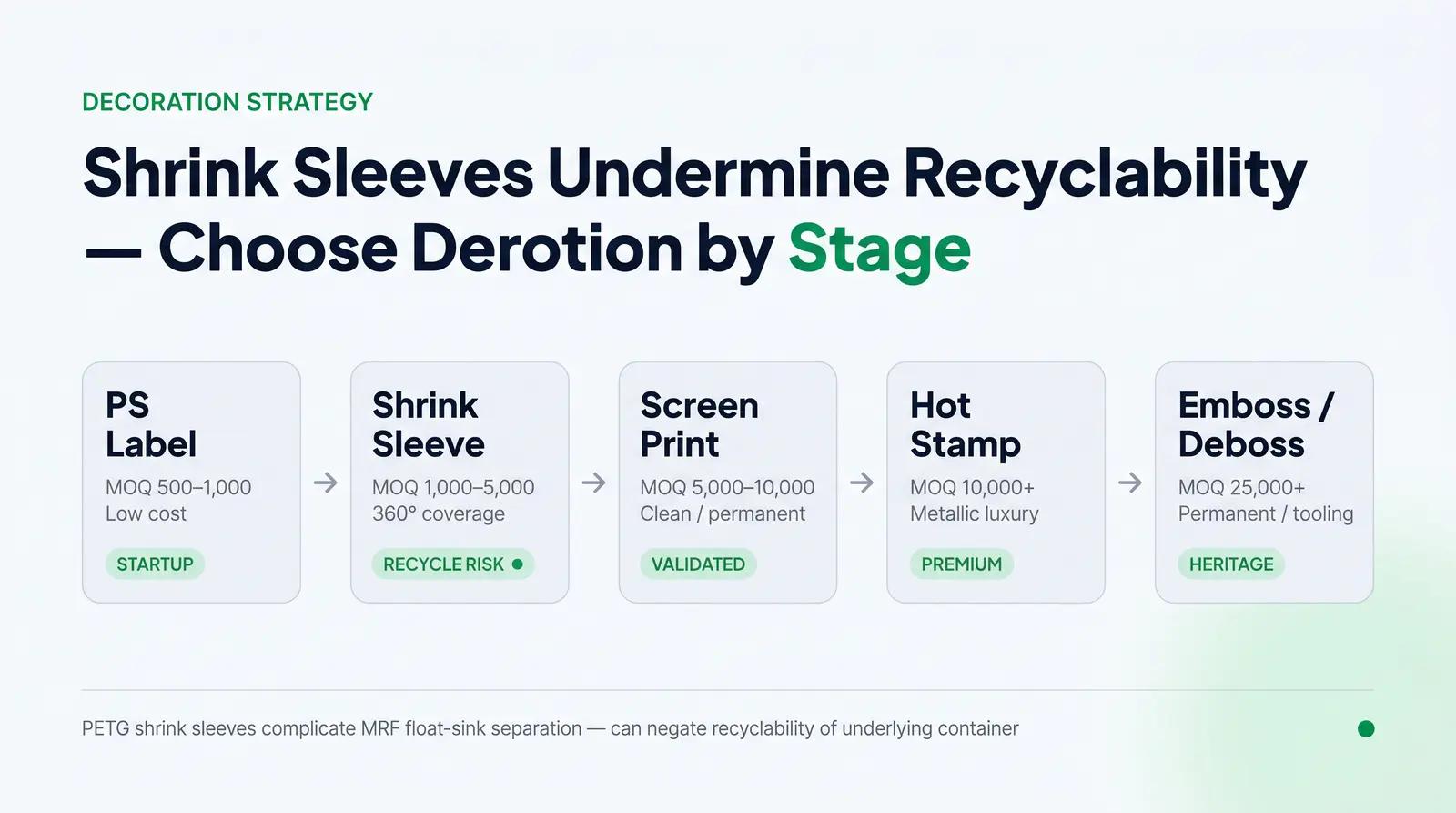
Choosing a decoration method for small-format packaging requires balancing aesthetic ambition with physical constraints and minimum order quantities. The limited surface area of a 0.15 oz tube means that not every design technique is viable. The framework we use at Packfolio to help founders decide is structured around five key parameters: minimum container diameter, typical MOQ, relative cost tier, durability, and recyclability impact.
| Decoration Method | Min. Container Diameter | Typical MOQ | Cost Tier (relative) | Durability | Recyclability Impact | Best For |
|---|---|---|---|---|---|---|
| Pressure-Sensitive (PS) Label | Any | 500-1,000 | Low | Moderate | Low (if compatible adhesive) | Startups, frequent SKU changes |
| Shrink Sleeve | ~0.6 inches | 1,000-5,000 | Low to Medium | High | High (complicates MRF sorting) | 360-degree graphics, tamper evidence |
| Screen Printing (Direct) | ~0.5 inches | 5,000-10,000 | Medium | High | Low | Clean aesthetics, permanent branding |
| Hot Stamping | ~0.5 inches | 10,000+ | High | Moderate | Low | Luxury accents, metallic foils |
| Embossing/Debossing | Varies by mold | 25,000+ | Very High (Tooling) | Permanent | None | Heritage brands, custom mold investment |
Pressure-sensitive labels are the most accessible entry point for early-stage brands. They require no factory tooling, can be produced in small quantities, and can be changed between product runs without retooling. The trade-off is durability: labels applied to a tube that lives in a pocket or a gym bag will show wear faster than direct-printed alternatives.
Screen printing (also called direct printing or silkscreen) applies ink directly to the container surface, resulting in a clean, premium finish with no label edge to peel. The minimum container diameter requirement of approximately 0.5 inches means that standard lip balm tubes can accommodate this method, but the higher MOQ (typically 5,000 to 10,000 units) makes it a better fit for brands that have validated their market.
Hot stamping uses a heated die to transfer metallic or pigmented foil onto the container surface, creating a high-impact luxury effect. It is frequently used for cap decoration or as an accent on a screen-printed tube. The MOQ and cost implications are significant, making it most appropriate for premium positioning where the per-unit packaging cost can be supported by the retail price point.
The Shrink Sleeve Recyclability Complication
Shrink sleeves are frequently cited as a versatile and even sustainable decoration method, offering 360-degree graphic coverage on irregular container shapes. The recyclability claim deserves scrutiny. PETG shrink sleeves have densities similar to PET and PP containers, making mechanical separation difficult during the float-sink process at recycling facilities [5]. When PETG and PET are mixed in the recycling stream, the lower melting point of the sleeve material causes the recovered plastic to clump, degrading the quality of the recycled output [5]. The result is that shrink-sleeved containers are frequently diverted to landfill or incineration, regardless of the recyclability of the underlying container.
For a brand that has invested in PCR or recyclable packaging, adding a standard PETG shrink sleeve can effectively negate the recyclability of the entire unit at the point of disposal. Washable ink solutions and APR-certified sleeve designs exist, but they require explicit specification and add cost. If sustainability is a core brand value, this trade-off warrants careful consideration before committing to shrink sleeves as a decoration strategy.
MOQ Realities and Launch-Stage Thinking
Understanding the financial implications of Minimum Order Quantities is essential for a successful launch. The numbers below are industry estimates and should not be treated as guaranteed pricing from any specific supplier.
Consider a realistic scenario: a founder launching a tinted lip balm stick in a standard 0.15 oz (4.25 g) PP twist-up tube with a custom brand color and direct screen printing.
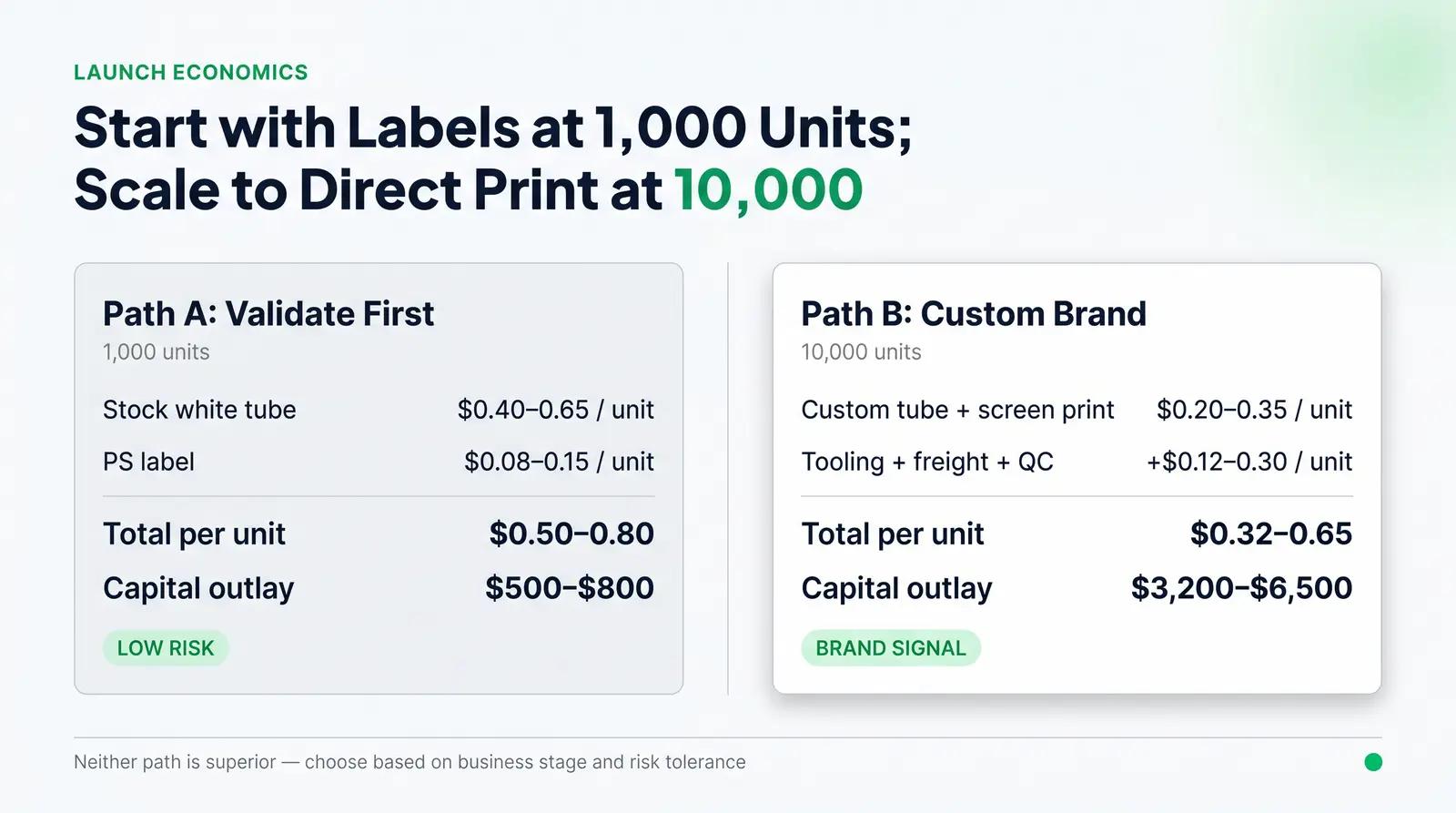
At a factory MOQ of 10,000 units with direct screen printing, the unit cost for the tube itself might fall between $0.20 and $0.35. At that volume, the packaging cost for the entire run is approximately $2,000 to $3,500, before tooling fees (which can add $500 to $2,000 for custom colors), freight, and QC allowances.
Freight for a small production run of 10,000 units shipped from Asia to a US warehouse typically ranges from $400 to $800 for sea freight, depending on the origin port and current shipping rates. A QC allowance of 3% of the production run (300 units) is a reasonable planning assumption for a first-time order with a new supplier.
Total estimated landed cost for this scenario: $3,200 to $6,500 for 10,000 units, or approximately $0.32 to $0.65 per tube all-in. This estimate does not include filling, secondary packaging, or fulfillment costs.
For a founder who is not yet ready to commit to 10,000 units, the alternative is to start with stock white tubes at a 1,000-unit minimum and apply pressure-sensitive labels. The tube cost at 1,000 units might be $0.40 to $0.65 per unit. Labels in quantities of 1,000 typically cost $0.08 to $0.15 each from a domestic label printer. Total packaging cost per unit: approximately $0.50 to $0.80. The total capital outlay for 1,000 units is $500 to $800, a significantly lower barrier to entry that allows the brand to validate market demand before scaling.
The decision between these two paths is not purely financial. It is also a question of brand positioning. A stock white tube with a pressure-sensitive label can look polished and professional if the label design is strong. A custom-colored tube with direct printing signals a level of investment that can support a higher retail price point. Neither approach is inherently superior. The right choice depends on the stage of the business and the risk tolerance of the founder.
Labeling and Compliance: What Lip Balm Packaging Must Include
FDA labeling requirements for lip balm packaging are more nuanced than most founders expect, and the stakes for non-compliance are real. A misbranded cosmetic can be subject to regulatory action, including seizure and injunction [7].
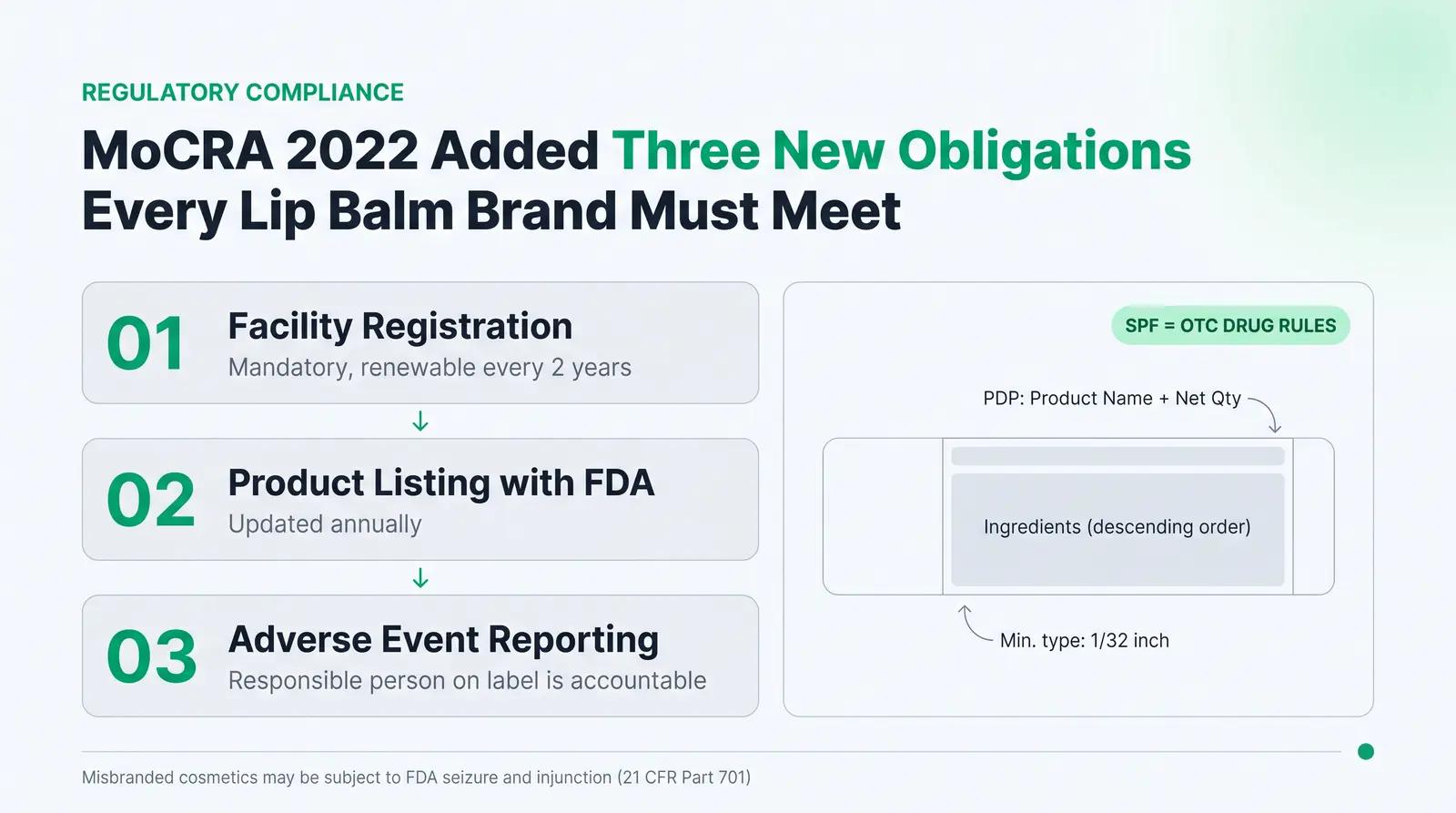
The Modernization of Cosmetics Regulation Act of 2022 (MoCRA) represents the most significant expansion of FDA authority over cosmetics since the Federal Food, Drug, and Cosmetic Act was passed in 1938 [6]. MoCRA introduced mandatory facility registration (renewable every two years), product listing with FDA (updated annually), and adverse event reporting requirements. These are operational obligations that apply to the responsible person, which under MoCRA is defined as the manufacturer, packer, or distributor whose name appears on the label [6].
For a standard cosmetic lip balm (one that makes no drug claims and contains no SPF), the core labeling requirements are governed by 21 CFR Part 701. The Principal Display Panel (PDP) must include the product name and the net quantity of contents. For a solid or semisolid product like lip balm, the net quantity must be expressed in avoirdupois weight (ounces) and may additionally include metric equivalents (grams) [7]. The PDP on a round container must cover 40% of the height multiplied by the circumference.
The ingredient declaration must appear on an information panel in descending order of predominance. For packages with less than 12 square inches of total label surface, the minimum type size is 1/32 of an inch in height [7]. This is a critical specification for lip balm tubes: at 1/32 inch, the text is barely legible to the naked eye, which means the ingredient list must be typeset with exceptional care.
If your lip balm makes SPF claims or any other therapeutic claims, it is classified as an OTC drug under 21 CFR Part 201, and a Drug Facts panel is required [8]. The FDA's long-standing "convenience size" exemption allows small inner containers to omit the full Drug Facts panel if it appears on the outer packaging, such as a blister card or folding carton. However, the inner container must still list the product name, net weight, and active ingredients [8]. Founders should work with a regulatory consultant to confirm their specific labeling requirements before finalizing artwork.
Sampling and QC Checks Before You Commit to Production
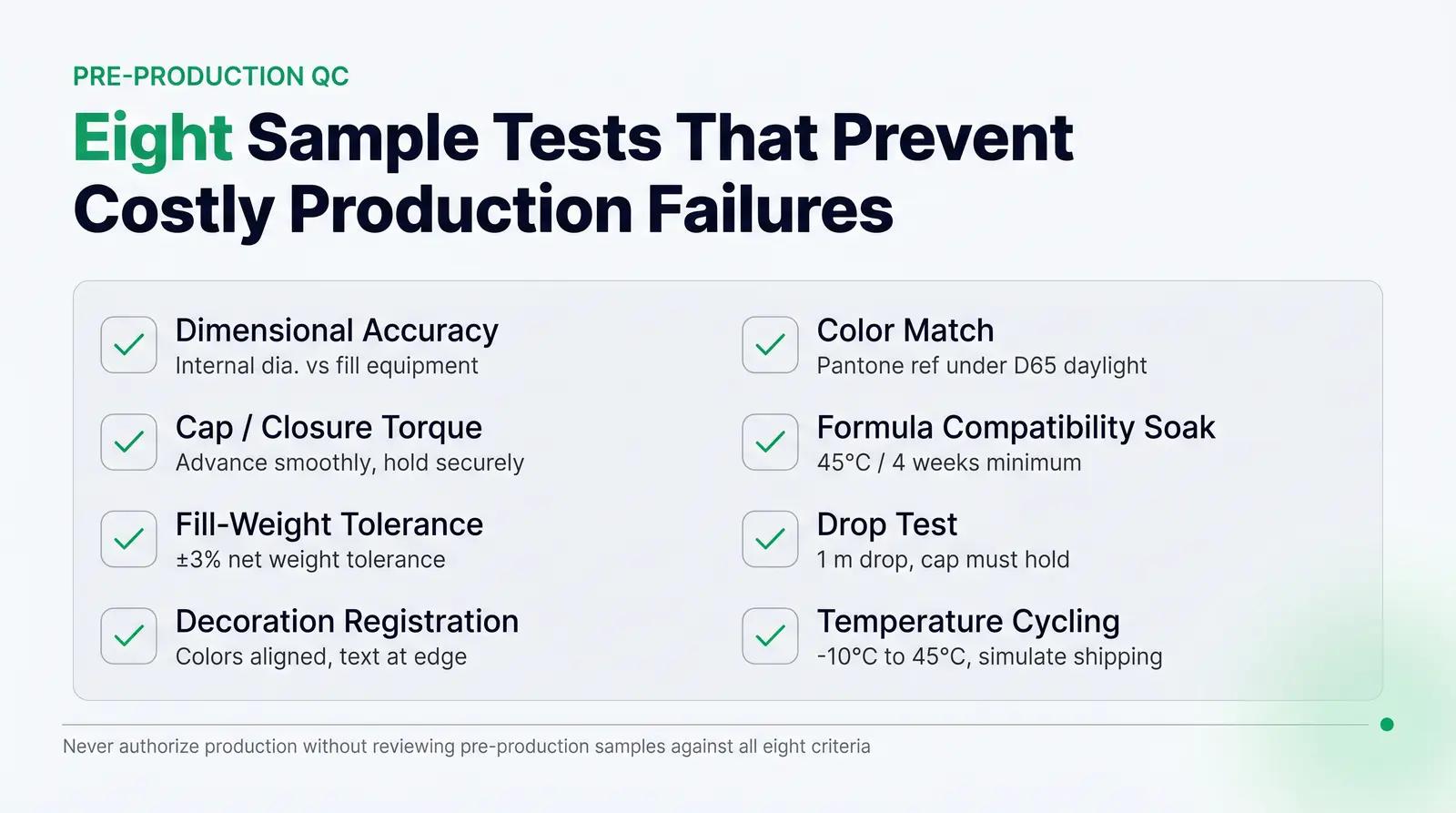
No production run should be authorized without a thorough review of pre-production samples. A minor dimensional variance can halt a filling line. An incompatible material can ruin a formulation. A misregistered label can trigger a regulatory non-compliance issue. The following checklist covers the critical verification points.
- Dimensional Accuracy: Verify that the internal diameter matches your filling equipment specifications and that the overall height fits within your secondary packaging dimensions.
- Cap/Closure Torque: Test the twist-up mechanism under real-world conditions. It must advance smoothly without excessive force and hold the product securely without retracting during application.
- Fill-Weight Tolerance: Confirm that the container's internal volume accommodates your declared net weight within the acceptable tolerance range, typically plus or minus 3%.
- Decoration Registration: Check that all printed elements align correctly, particularly where colors overlap or where text approaches the edge of the printable zone.
- Color Match: Evaluate the container color and any printed elements against your specified Pantone references under standardized D65 daylight conditions.
- Formula Compatibility Soak Test: Submerge container components in your specific formulation at elevated temperatures (typically 45°C/113°F) for a minimum of four weeks, then inspect for paneling, swelling, discoloration, or off-odor.
- Drop Test: Drop filled samples from a height of approximately 3 feet (1 meter) onto a hard surface to confirm that the cap remains secure and the mechanism does not crack or shatter.
- Temperature Cycling: Subject filled samples to alternating cycles of freezing (-10°C/14°F) and elevated heat (45°C/113°F) to simulate shipping and storage conditions.
For founders who want to preview decoration options on a 3D model before committing to a production run, Packfolio's catalog includes standard and premium lip components with predefined print zones and browser-based artwork upload. What you approve in the 3D preview is exactly what ships. Packfolio handles supplier coordination, factory vetting, QC management, and freight delivery, so founders can focus on formulation and brand building rather than supply chain navigation.
For additional context on how material choices affect the full packaging lifecycle, see our internal guide on cosmetic packaging materials (internal link placeholder).
Ready to spec your lip balm packaging without chasing factory reps? Browse Packfolio's curated lip packaging catalog, upload your artwork into the predefined print zones, and preview the result on a photorealistic 3D model before placing your order. Browse lip packaging on Packfolio
Frequently Asked Questions
What size are standard lip balm tubes? The industry standard twist-up lip balm tube holds 0.15 ounces (4.25 grams) of product. Physical dimensions are typically around 2.6 inches (66 mm) in height and 0.6 inches (15 mm) in diameter, though slight variations exist between manufacturers and mold tooling.
What is the best material for lip balm containers? Polypropylene (PP) is the most common and practical material for standard twist-up tubes, given its heat resistance during hot-pour filling and chemical stability with most cosmetic ingredients. For premium or sustainability-focused positioning, coated aluminum tins or heavy-base glass jars are strong alternatives, each with distinct trade-offs in cost, MOQ, and formula compatibility.
How many lip balm tubes can I order with a low minimum? If you purchase undecorated stock tubes and apply your own pressure-sensitive labels, many distributors will sell as few as 100 to 500 units. For custom factory decoration like direct screen printing, minimums typically start at 5,000 to 10,000 units. Platforms like Packfolio offer curated catalog SKUs with lower barriers to entry for custom artwork.
Do I need FDA approval for lip balm packaging? The FDA does not pre-approve cosmetic packaging, but your packaging and labeling must comply with FDA regulations under 21 CFR Part 701 for cosmetics, and under MoCRA's facility registration and product listing requirements. If your lip balm contains SPF or makes any therapeutic claims, it is also subject to OTC drug labeling requirements under 21 CFR Part 201.
Can I print directly on a lip balm tube? Yes, direct screen printing is a viable decoration method for standard lip balm tubes. The minimum container diameter for most screen printing equipment is approximately 0.5 inches, which standard tubes meet. The trade-off is a higher MOQ (typically 5,000 to 10,000 units) compared to pressure-sensitive labels, and a longer lead time due to factory setup.
References
- Wikipedia contributors. "Polypropylene." Wikipedia, The Free Encyclopedia, 2026. https://en.wikipedia.org/wiki/Polypropylene
- Norner AS. "PCR Plastic Safety: Norner Collaborates with Orkla Home and Personal Care to Demonstrate PCR Plastic Safety in Personal Care Packaging." Norner, January 2026. https://www.norner.no/news-and-press-releases/pcr-plastic-safety/
- U.S. Environmental Protection Agency. "Aluminum: Material-Specific Data." EPA, updated March 2026. https://www.epa.gov/facts-and-figures-about-materials-waste-and-recycling/aluminum-material-specific-data
- Plastic Pollution Coalition. "Lip Balm Without Plastic Pollution: A Sustainable Shift to Fiber-Based Packaging." Plastic Pollution Coalition, June 2025. https://www.plasticpollutioncoalition.org/blog/2025/6/3/lip-balm-without-plastic-pollution
- INX International. "Shrink Labels and Recycling: Challenges and Solutions." INX International, April 2024. https://www.inxinternational.com/blog/sustainabilitycompliance/shrink-labels-and-recycling-challenges-and-solutions
- U.S. Food and Drug Administration. "Modernization of Cosmetics Regulation Act of 2022 (MoCRA)." FDA, updated March 2026. https://www.fda.gov/cosmetics/cosmetics-laws-regulations/modernization-cosmetics-regulation-act-2022-mocra
- U.S. Food and Drug Administration. "Summary of Cosmetics Labeling Requirements." FDA, updated November 2025. https://www.fda.gov/cosmetics/cosmetics-labeling-regulations/summary-cosmetics-labeling-requirements
- CTM Labeling Systems. "Your Go-To Guide for Lip Balm Labeling Requirements." CTM Labeling Systems, June 2025. https://ctmlabelingsystems.com/everything-you-need-to-know-about-lip-balm-labeling-requirements/


