
Lip Gloss Tubes: The Complete Buying Guide for Beauty Brands
This guide walks beauty brands through lip gloss tube styles, applicator matching, material compatibility, fill calculations, MOQ tiers, and a 6-step selection framework to prevent costly sourcing errors.
A beauty founder stands at a packaging crossroads. The formulation is finally complete: a beautifully balanced, high-shine lip gloss with a subtle suspended shimmer. Now comes the critical step of sourcing the physical container. To the uninitiated, an empty lip gloss tube is a simple plastic vial. The reality of cosmetic sourcing quickly reveals a more complex picture. Selecting the wrong neck diameter can cause a heavy formula to choke the wiper, while a low-viscosity lip oil might bypass a standard doe-foot wiper entirely and leak into a customer's bag [1].
When launching or scaling a beauty brand, packaging is not merely a vessel for your formula. It is the primary physical touchpoint of your brand, a critical driver of perceived product quality, and a potential failure point that can result in expensive product recalls, ruined inventory, and damaged consumer trust [2]. This guide breaks down the engineering, material science, and regulatory landscape of lip gloss tubes, and provides a structured framework to help independent beauty brand founders, formulators, and contract manufacturers confidently navigate the sourcing process.
Tube Styles and Format Overview
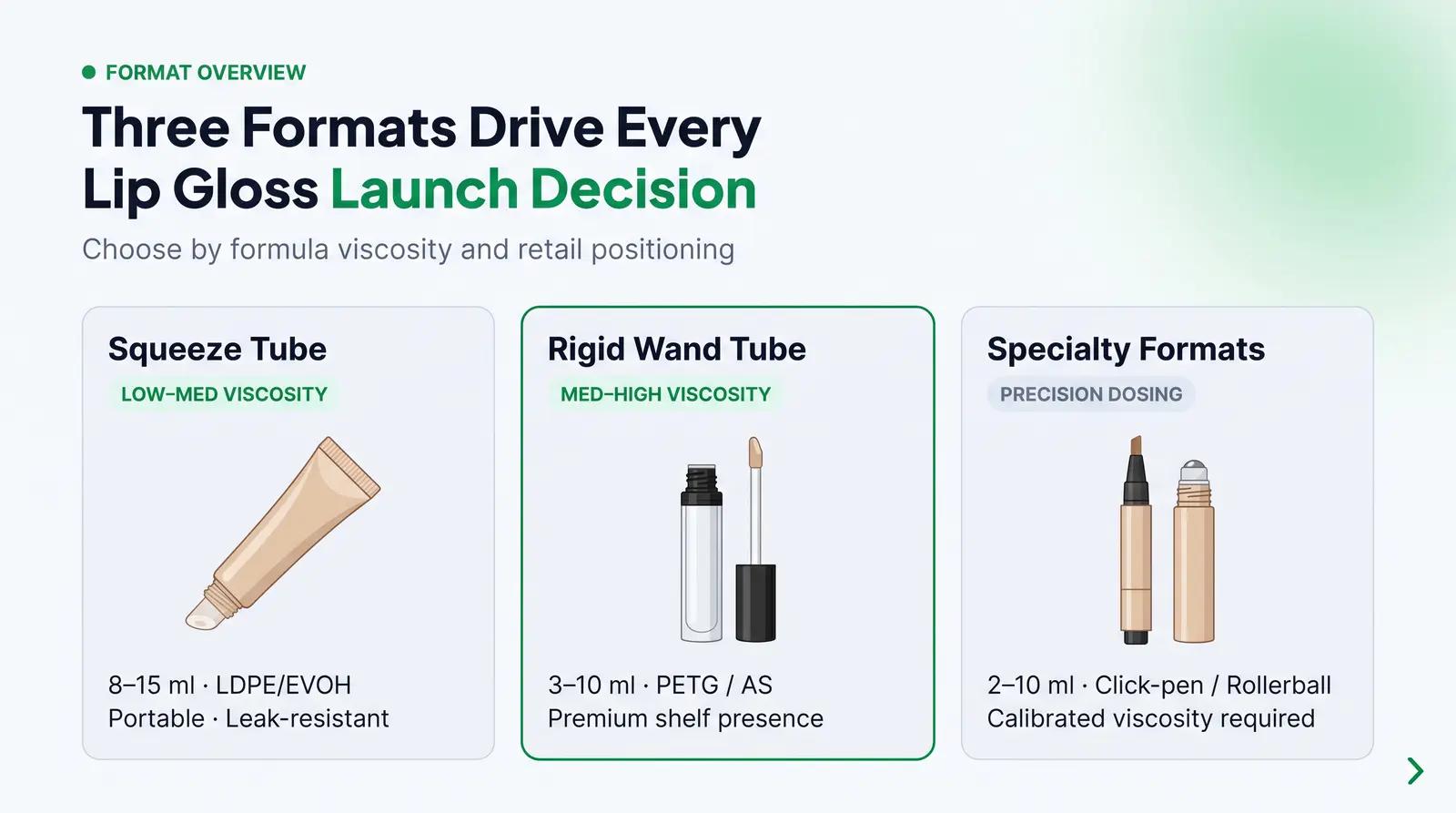
Selecting the right physical format for your lip gloss tube is the foundational decision that dictates your manufacturing workflow, filling equipment requirements, and final retail positioning. Lip gloss containers generally fall into three primary design categories, each suited to specific formula behaviors and consumer application experiences.
Classic Squeeze Tubes
The squeeze tube is a highly functional and cost-effective format, typically constructed from flexible low-density polyethylene (LDPE) or multi-layer co-extruded plastics like ethylene vinyl alcohol (EVOH) to provide a robust oxygen barrier [1]. Squeeze tubes are designed for direct application, utilizing a slanted plastic, silicone, or flocked tip integrated directly into the tube head.
This format is ideal for low-to-medium viscosity glosses, hydrating balms, and sheer, non-pigmented formulations. Because squeeze tubes do not utilize an internal wand or wiper mechanism, they are highly resistant to leakage and are favored for their portability and ease of on-the-go use. However, they lack the luxury appeal of rigid vials and do not allow for the precise, controlled application required for highly pigmented lip glazes.
Rigid Wand Tubes (Vials)
Rigid wand tubes, or vials, represent the industry standard for retail lip gloss. These containers feature a rigid body, typically molded from clear, heavyweight plastics like polyethylene terephthalate glycol (PETG) or styrene acrylonitrile (AS), paired with a screw cap that houses an integrated applicator wand [3].
The defining component of a wand tube is the internal wiper (or reducer) fitted inside the neck of the vial. As the wand is withdrawn, the wiper scrapes excess product from the shaft and applicator tip, ensuring a controlled, mess-free dosage. Rigid vials are highly versatile, supporting a wide range of applicator styles, and are the preferred choice for pigmented glosses, liquid lipsticks, and glitter-heavy formulas where visual clarity and premium shelf presence are paramount.
Specialty and Modern Formats
For brands seeking market differentiation, several specialty formats have emerged. Click-pen brush tubes utilize a mechanical twist or button-activated base to force product upward through an integrated brush or silicone tip, offering highly controlled dispensing for premium lip serums and targeted treatments [4]. Rollerball tubes feature a rotating metal or plastic ball at the neck, which distributes very low-viscosity lip oils or hydrating treatments with a distinct, cooling sensory glide [4]. While highly engaging for consumers, these specialty formats require precise formula viscosity calibration to prevent clogging or free-flowing leakage.
The Complete Lip Gloss Applicator Guide
The applicator tip is the consumer's primary point of physical contact with your product. It directly determines how the formula behaves during application, how much product is retrieved per dip, and the overall sensory experience. Pairing a formula with an incompatible applicator is one of the most common causes of consumer dissatisfaction.
Doe-Foot Applicators
The standard doe-foot applicator features a slanted, flocked tip that matches the natural contour of the lips. The flocking consists of short, soft synthetic fibers, typically nylon or Hytrel, adhered to a plastic core [5].
- Standard Doe-Foot: The angled tip holds a moderate amount of product in its reservoir, distributing it evenly. It is highly versatile and works well with medium-viscosity, everyday glosses.
- Flocked Doe-Foot: Features a denser microfiber surface that holds more product, providing a softer, more cushioned application experience. It is ideal for creamy, highly pigmented lip creams and glazes.
- Curved or Bent Doe-Foot: Designed to hug the natural curve of the lip, allowing for superior contouring and reducing the need for multiple swipes.
Brush and Paddle Applicators
For formulas that require a specific product load or highly precise placement, alternative wand tips are utilized.
- Flat Paddle (Spatula) Applicators: Feature a wide, flat, and often non-flocked silicone or plastic surface. The paddle retrieves a large volume of product, making it ideal for thick, high-shine, and pigment-rich formulas that require a heavy, single-swipe application.
- Brush Tips: Constructed from soft, synthetic bristles. Brush applicators allow for a smooth, painting motion that is highly effective for thin lip oils, plumping glosses, and layering over existing lip colors without disturbing the base layer.
- Tapered or Pointed Tips: Feature a narrow, cone-like point. This geometry provides exceptional precision, allowing consumers to easily outline the lips, define the Cupid's bow, and fill in the corners. It is the preferred choice for highly pigmented, high-stakes lip lacquers.
Applicator-Formula Viscosity Matching
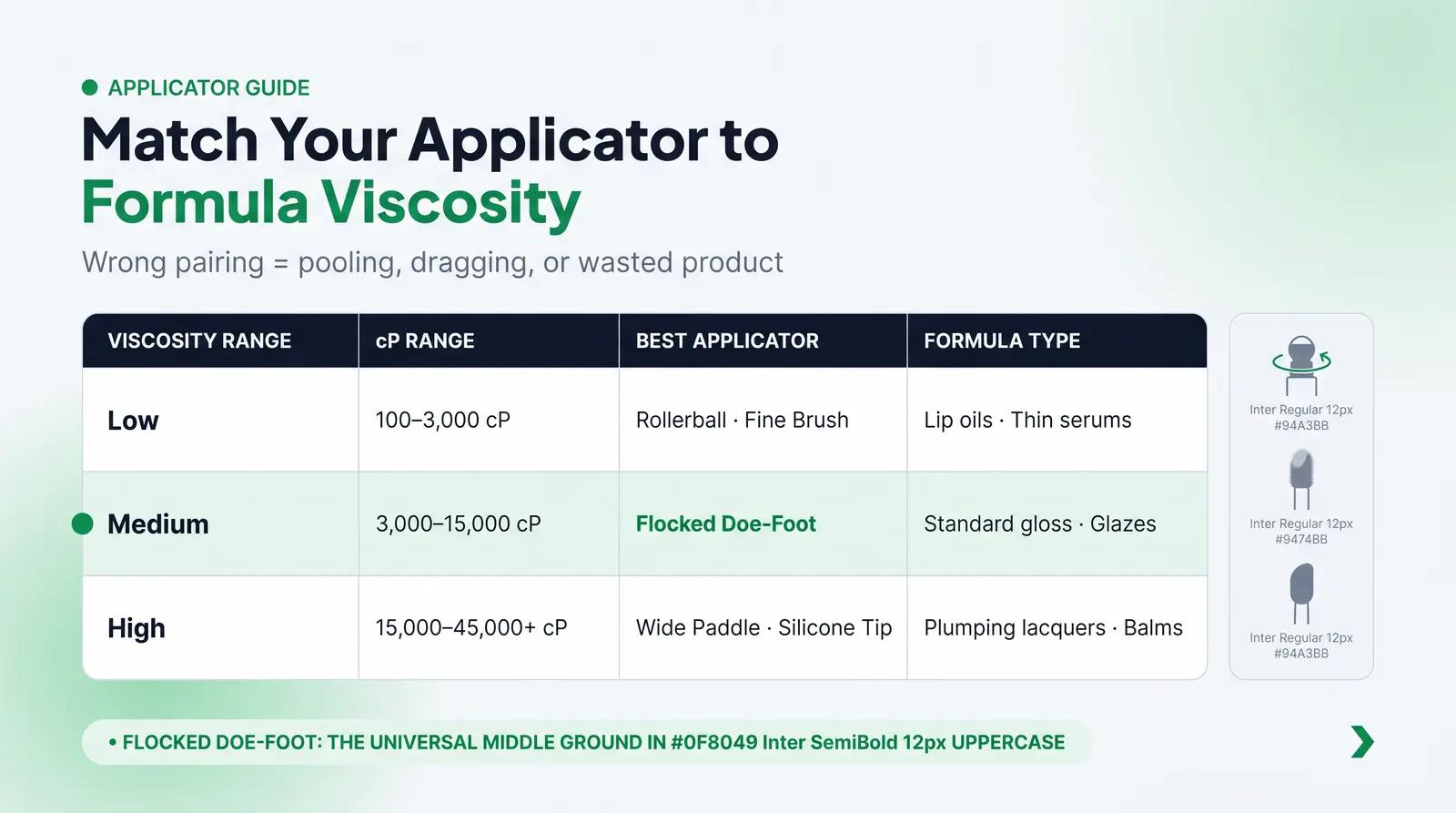
The mechanical relationship between your formula's viscosity and the applicator's surface area is critical. Viscosity is measured in centipoise (cP) and dictates how a fluid resists flow.
- Low-Viscosity Formulas (100 to 3,000 cP): Lip oils and thin serums flow easily. They require non-porous applicators like metal rollerballs or fine-bristle brushes [4]. A highly absorbent, large flocked doe-foot will oversaturate with thin formulas, leading to pooling and messy application.
- Medium-Viscosity Formulas (3,000 to 15,000 cP): Standard glosses and lip glazes require a balanced reservoir. Flocked doe-foot applicators are ideal here, as the synthetic microfibers hold the formula in place via capillary action until applied to the lips.
- High-Viscosity Formulas (15,000 to 45,000+ cP): Thick, sticky glosses, plumping lacquers, and heavy balms resist movement. They require wide paddle applicators or flexible silicone slanted tips that can physically push and spread the dense product smoothly across the lips [4].
Capacities and Fill Volume Calculations
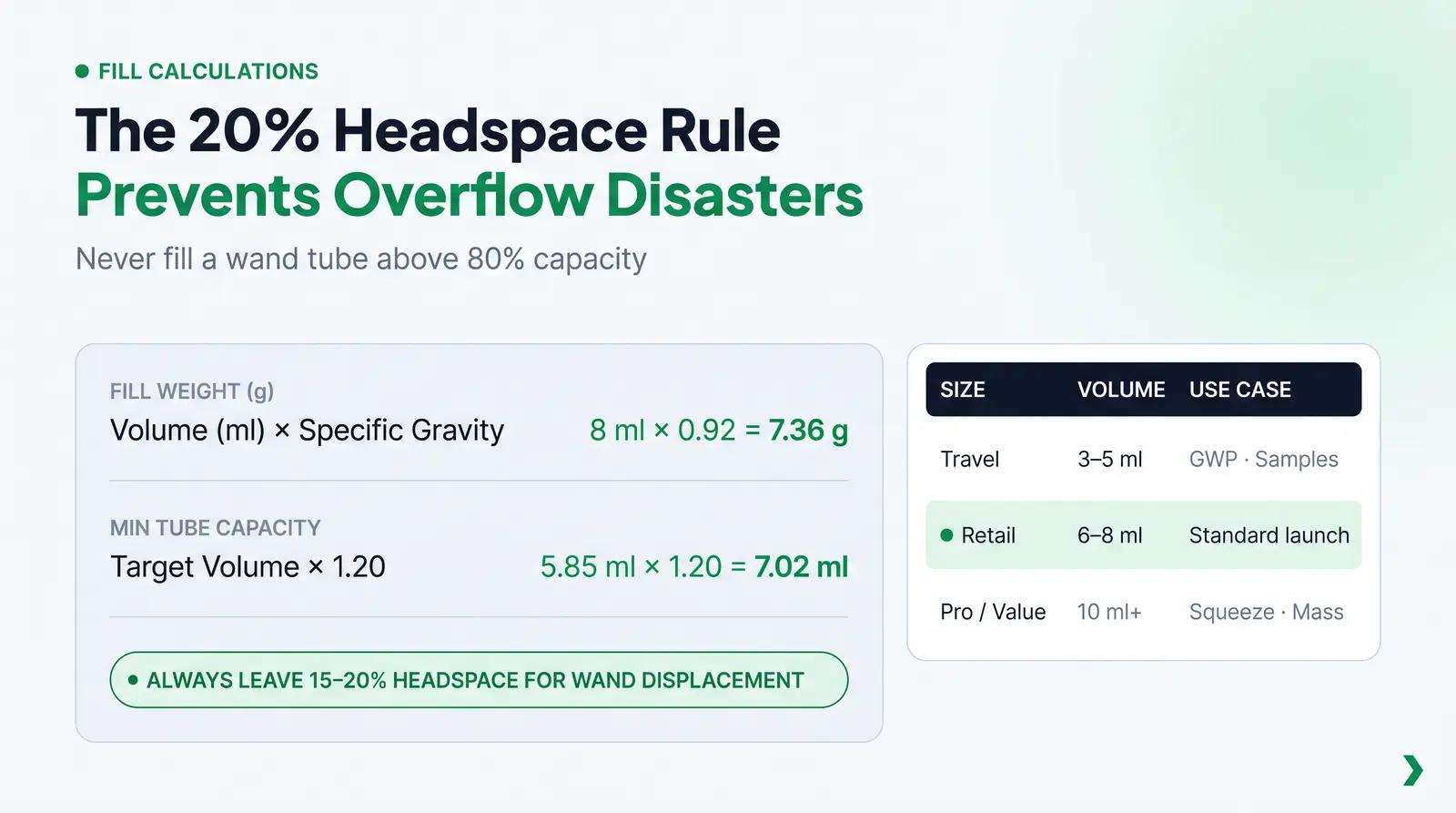
A frequent point of confusion during the packaging procurement phase is the distinction between a tube's physical capacity and its recommended fill volume. Standard retail lip gloss tubes typically range from 3 ml to 10 ml [3].
- 3 ml to 5 ml (0.10 to 0.17 fl oz): Primarily utilized for travel sizes, promotional gift-with-purchase items, and multi-shade sample sets. This range offers a low per-unit cost and is highly portable [3].
- 6 ml to 8 ml (0.20 to 0.27 fl oz): The standard retail size for mainstream lip glosses. It balances a substantial, premium feel in the hand with a practical shelf life for the consumer.
- 10 ml and above (0.34 fl oz+): Typically reserved for squeeze tubes, professional-use products, or value-positioned mass-market lines.
Calculating Fill Weight vs. Volume
When sourcing packaging, manufacturers specify a tube's capacity in milliliters (ml), which is a measure of physical volume. However, cosmetics are legally labeled and sold by weight, typically in grams (g) or ounces (oz). To ensure your packaging is filled correctly without overflowing or leaving a deceptive headspace, you must calculate the formula's specific gravity (density relative to water).
The target fill weight in grams equals the target volume in milliliters multiplied by the formula's specific gravity. For example, a standard clear lip gloss formula containing heavy hydrogenated polyisobutene and mineral oils might have a specific gravity of approximately 0.92 g/ml. If you are utilizing an 8 ml rigid wand tube, a 100% volumetric fill would require approximately 7.36 grams of product.
However, a wand tube must never be filled to 100% capacity. The practical rule for wand tube filling is to leave a minimum of 15% to 20% headspace [6]. When the applicator wand is inserted into the tube, it physically displaces a significant volume of product. If the tube is filled to the brim, inserting the wand will force the formula upward, overwhelming the internal wiper and causing the product to overflow around the neck, creating a messy seal and ruining the packaging.
Material Science and Chemical Compatibility
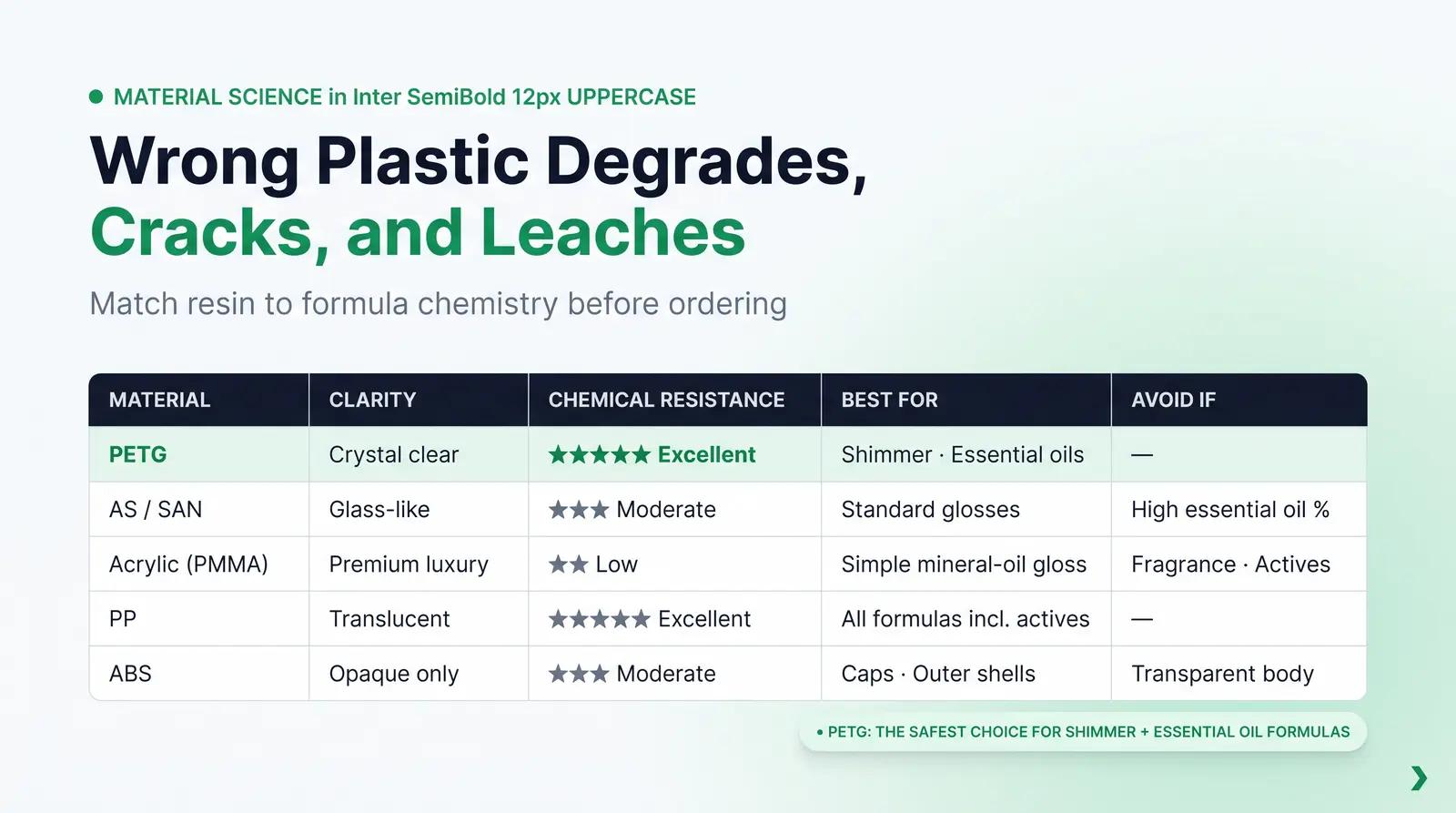
The single most critical technical decision in lip gloss sourcing is selecting the raw plastic materials for the tube body, cap, and wand. Cosmetic formulas are complex chemical mixtures containing emollient oils, active plumping agents, essential oil fragrances, and organic pigments. If the packaging material is chemically incompatible with the formula, the plastic can degrade, stress-crack, yellow, or leach harmful chemicals into the product [1].
Primary Tube Materials
| Material | Key Technical Properties | Ideal Formula Compatibility | Visual Profile |
|---|---|---|---|
| PETG | Excellent chemical resistance, high impact strength, recyclable [3] [7]. | Highly compatible with ester-based oils, synthetic emollients, and volatile silicones. Resistant to stress-cracking. | High clarity, lightweight, modern and clean aesthetic [3]. |
| AS / SAN | High rigidity, exceptional surface hardness, scratch-resistant, moderate chemical resistance [3]. | Suitable for standard oil-in-water emulsions and heavy polyisobutene glosses. Vulnerable to high concentrations of essential oils [1]. | Crystal-clear, glass-like transparency, rigid and brittle feel [3]. |
| Acrylic (PMMA) | Extreme clarity, heavyweight, rigid, low chemical resistance to polar solvents and essential oils [1]. | Best restricted to stable, simple mineral-oil-based glosses without aggressive active ingredients or high fragrance loads. | Premium, glass-mimicking luxury weight and clarity, highly reflective, easily scratched [1]. |
| PP | Exceptional chemical inertness, highly flexible, low cost, excellent moisture barrier [1] [3]. | Compatible with almost all cosmetic formulas, including highly acidic, active, or essential-oil-rich plumping glosses [1]. | Translucent to opaque, soft tactile feel, matte finish. Often utilized for internal wands, wipers, and squeeze tube bodies [3]. |
| ABS | High impact resistance, easily colored, opaque, structurally rigid, moderate chemical resistance [3]. | Typically utilized for opaque outer caps, over-shells, and colored non-transparent wands. | Completely opaque, accepts metallic electroplating, metallization, and high-gloss spray finishes exceptionally well [3]. |
Formula-Induced Degradation Risks
When formulating a high-shine or plumping lip gloss, specific ingredients pose severe compatibility risks to packaging materials.
Essential Oils and Fragrances: Natural citrus, mint, or cinnamon essential oils, frequently used in plumping glosses, act as natural solvents. When stored in acrylic or low-grade AS tubes, these oils can penetrate the polymer matrix, causing the plastic to craze (develop microscopic internal cracks), cloud, and eventually fracture [1].
Active Plumping Agents: Ingredients like benzyl nicotinate, capsicum frutescens resin, or high concentrations of synthetic vanillyl butyl ether can chemically attack acrylic and polystyrene-based plastics, leading to structural softening and leakage around the neck thread.
Shimmer and Glitter Formulations: Heavy pearlescent pigments, calcium sodium borosilicate (glass shimmer), and synthetic fluorphlogopite are highly abrasive. During transit and consumer use, these suspended particles physically abrade the soft internal walls of AS and acrylic tubes, leaving visible micro-scratches that ruin the crystal-clear aesthetic over time. For shimmer-heavy formulas, PETG is the highly recommended material due to its superior impact and abrasion resistance [3] [7].
Sourcing Tiers and Minimum Order Quantities (MOQs)
Navigating the commercial realities of packaging procurement requires a clear understanding of sourcing tiers. Suppliers structure their pricing, customization options, and lead times based on the volume of your order. For a deeper look at how cosmetic tube materials affect your sourcing options, see our guide at packfolio.com/blog/cosmetic-tube-materials-guide.
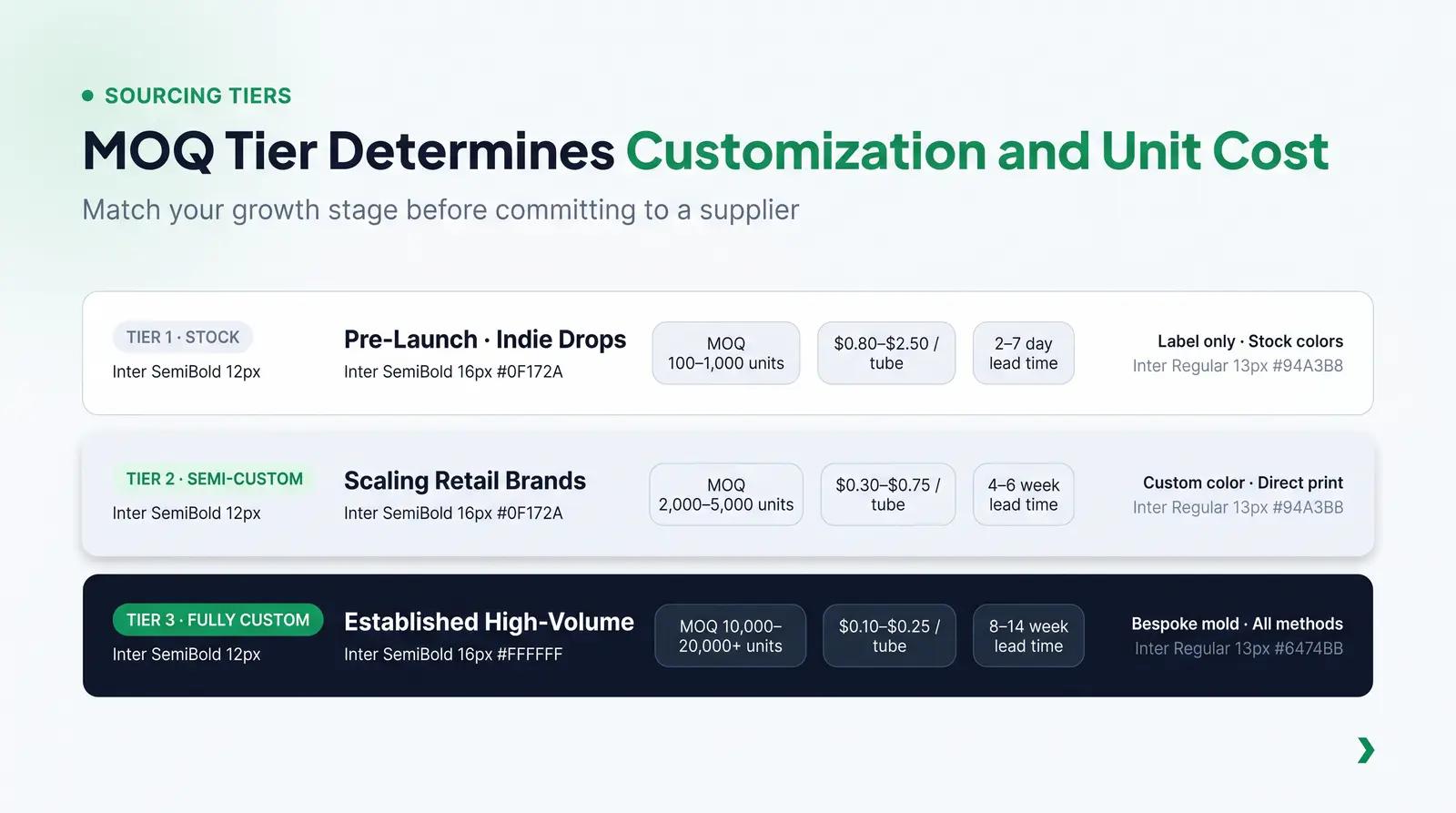
Tier 1: Stock Sourcing (MOQs: 100 to 1,000 units)
Ideal for pre-launch startups, indie brands running limited-edition drops, and small-batch formulators. In this tier, you purchase pre-manufactured, off-the-shelf components from domestic distributors.
Customization is extremely limited. You are restricted to standard, in-stock colors, typically clear vials with black, white, silver, or gold caps [8]. Customization is achieved externally via adhesive vinyl labels or simple, single-color silk-screen printing. Lead times are rapid, typically 2 to 7 business days for domestic shipping [8]. The per-unit cost is high ($0.80 to $2.50+ per tube), but upfront capital risk is minimal.
Tier 2: Semi-Custom Sourcing (MOQs: 2,000 to 5,000 units)
Suitable for scaling beauty brands with established distribution channels. Sourcing is conducted directly with primary packaging manufacturers.
Customization is moderate. Brands can select from the manufacturer's library of existing stock molds, avoiding expensive tooling fees, but can customize the plastic resin color. The manufacturer can inject-mold the caps in custom Pantone-matched shades, apply custom surface finishes like soft-touch matte or UV gloss, and execute multi-color direct printing [3]. Lead times are typically 4 to 6 weeks for production, plus transit. Unit economics are favorable ($0.30 to $0.75 per tube), offering a strong balance of brand differentiation and capital efficiency.
Tier 3: Fully Custom Sourcing (MOQs: 10,000 to 20,000+ units)
Reserved for established, high-volume brands and contract manufacturers.
Customization is unlimited. Brands can design completely custom, proprietary tube shapes, requiring the engineering of new injection molds. Tooling costs typically range from $2,500 to $8,000 per mold [3]. This tier allows for complex, multi-layer co-extrusion, custom wand lengths, bespoke applicator geometries, and advanced decoration methods like secondary oxidation on aluminum components [3]. Lead times are long, typically 8 to 14 weeks, including mold engineering, pre-production sampling, and mass production [3]. Unit economics are optimal ($0.10 to $0.25 per tube), maximizing gross margins at scale.
Sourcing Comparison Table
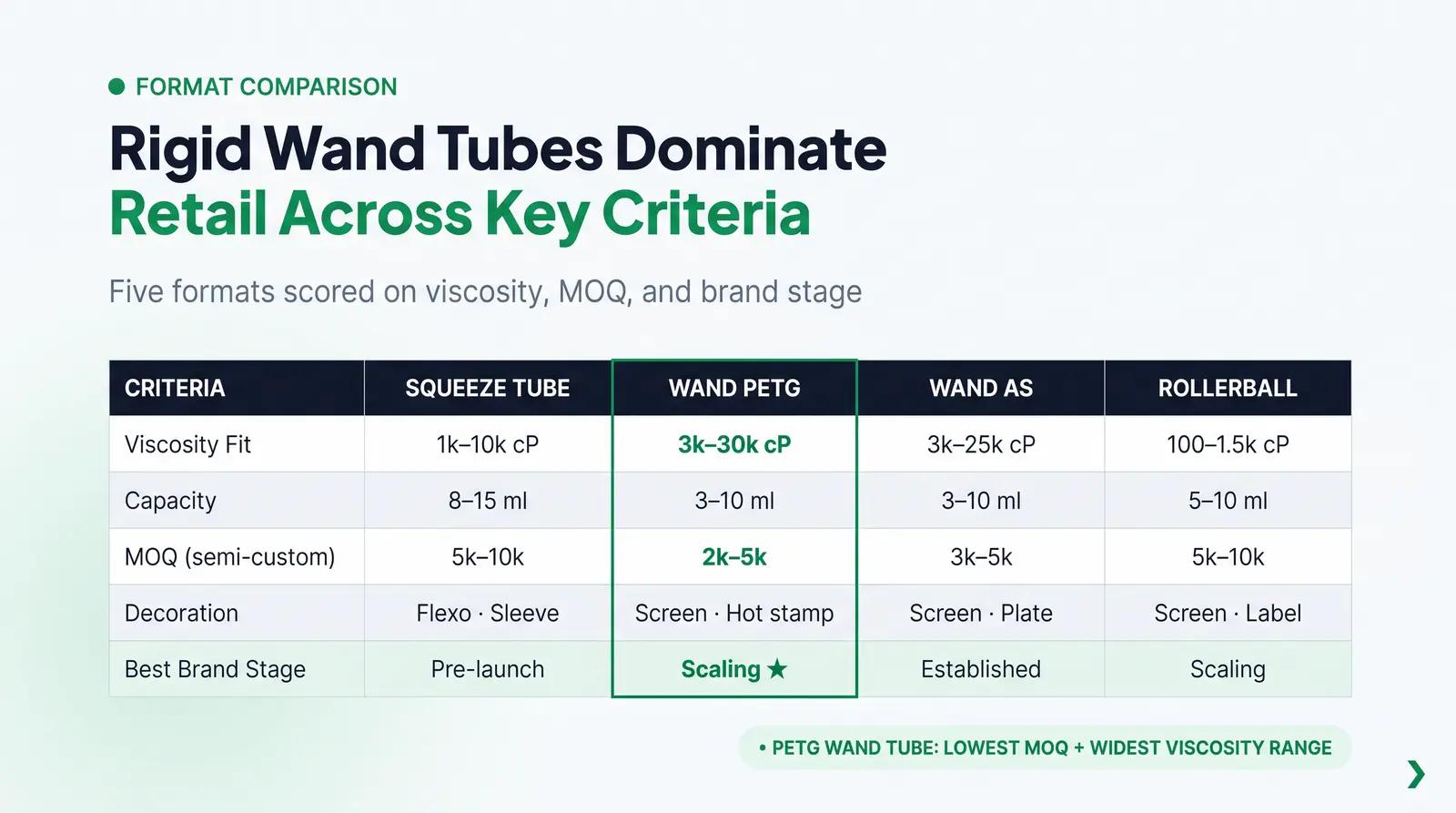
The following comparison table evaluates the primary lip gloss tube formats across critical engineering, design, and commercial criteria.
| Sourcing Criteria | Classic Squeeze Tubes | Rigid Wand Tubes (PETG) | Rigid Wand Tubes (AS/Acrylic) | Rollerball Tubes | Click-Pen Brush Tubes |
|---|---|---|---|---|---|
| Applicator Options | Slanted plastic, silicone, or flocked tips [1] [4]. | Flocked doe-foot, flat paddle, tapered, or brush tips [4] [5]. | Flocked doe-foot, flat paddle, tapered, or brush tips [4] [5]. | Rotating metal or plastic rollerballs [4]. | Integrated synthetic bristle brush or silicone tip [4]. |
| Typical Capacity Range | 8 ml to 15 ml (0.27 to 0.50 fl oz) [6]. | 3 ml to 10 ml (0.10 to 0.34 fl oz) [3]. | 3 ml to 10 ml (0.10 to 0.34 fl oz) [3]. | 5 ml to 10 ml (0.17 to 0.34 fl oz) [4]. | 2 ml to 4 ml (0.07 to 0.14 fl oz) [3]. |
| Formula Viscosity Suitability | Low-to-medium viscosity (1,000 to 10,000 cP) [1]. | Medium-to-high viscosity (3,000 to 30,000 cP) [4]. | Medium-to-high viscosity (3,000 to 25,000 cP) [4]. | Very low viscosity (100 to 1,500 cP) [4]. | Low-to-medium viscosity (500 to 5,000 cP) [4]. |
| Decoration Methods | Offset printing, flexographic printing, shrink sleeve labeling [1]. | Silk-screen printing, hot stamping, UV coating, spray painting [3]. | Silk-screen printing, hot stamping, electroplating [3]. | Silk-screen printing, hot stamping, labeling [3]. | Silk-screen printing, hot stamping, UV coating [3]. |
| Typical Sourcing MOQ Range | 5,000 to 10,000 units (Semi-custom) [3]. | 2,000 to 5,000 units (Semi-custom) [3]. | 3,000 to 5,000 units (Semi-custom) [3]. | 5,000 to 10,000 units (Semi-custom) [3]. | 5,000 to 10,000 units (Semi-custom) [3]. |
| Best Brand Stage | Pre-launch to Scaling; Mass-market, clinical, or clean beauty. | Scaling to Established; Premium, professional, or clean retail. | Established; Luxury, high-end retail display [3]. | Scaling; Skincare-infused lip treatments, lip oils [4]. | Scaling to Established; High-end clinical serums, travel-luxe. |
The Lip Gloss Tube Selection Framework
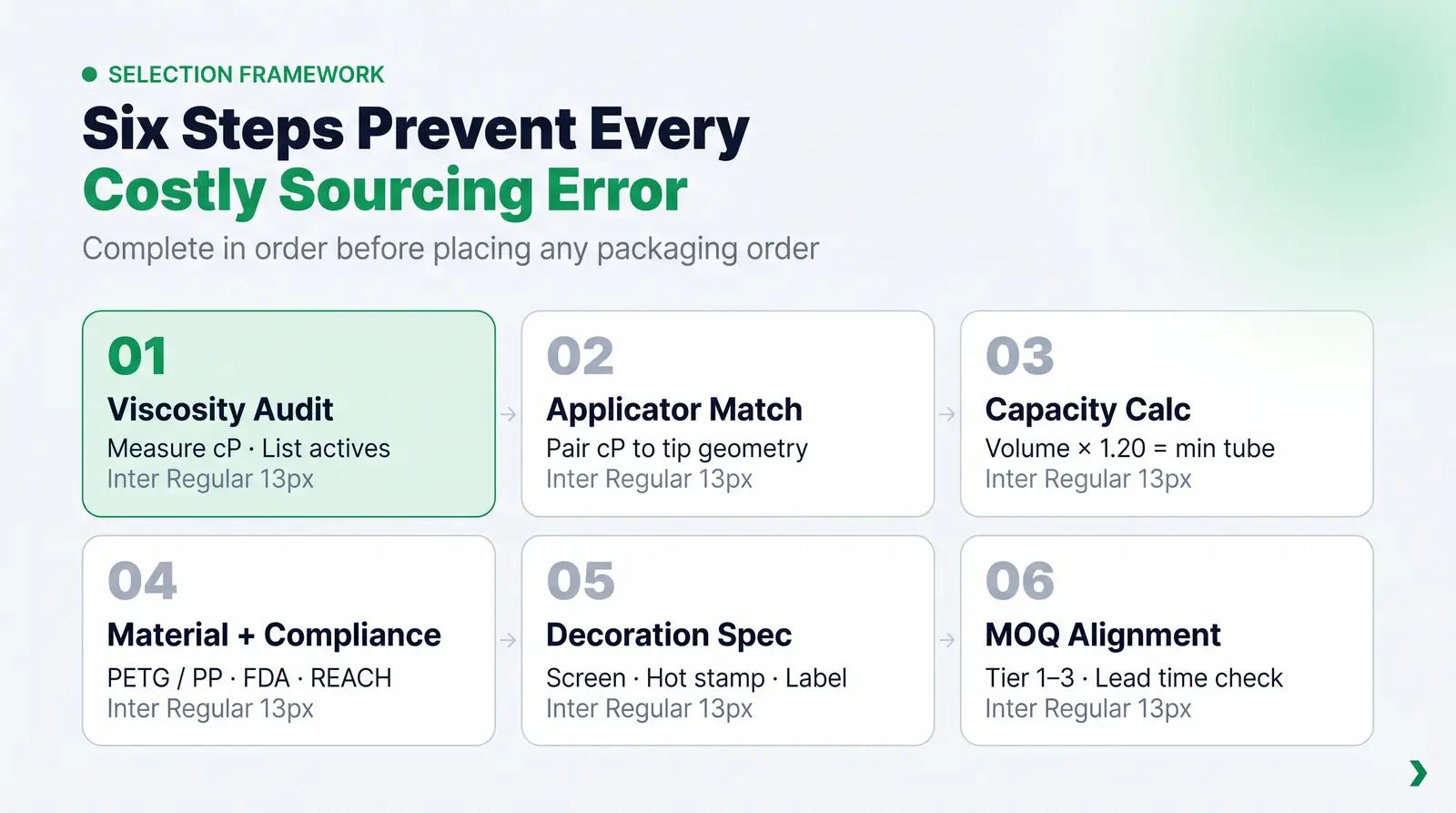
To systematically guide beauty founders through the complex packaging decision matrix, the framework we recommend at Packfolio is called The Lip Gloss Tube Selection Framework. This step-by-step checklist ensures that no technical, aesthetic, or commercial variable is overlooked, preventing costly sourcing errors before production begins.
Step 1: Viscosity and Formula Audit
Analyze the physical properties of your bulk formula before selecting any packaging component.
- Measure the bulk viscosity using a Brookfield viscometer to determine the centipoise (cP) at room temperature (25°C).
- List all volatile silicones, essential oils, fragrance concentrations, and active plumping agents that may pose compatibility risks.
- Evaluate whether the formula contains suspended shimmer, glitter, or heavy pigments that require physical agitation or scratch-resistant packaging.
Step 2: Applicator Calibration
Select the applicator geometry that matches the formula's viscosity and intended application experience.
- Match thin formulas below 3,000 cP with rollerballs or brushes; medium formulas (3,000 to 15,000 cP) with flocked doe-foots; thick formulas above 15,000 cP with paddles or squeeze tips [4] [5].
- Choose a flocked doe-foot for soft, comfortable everyday wear, a flat paddle for heavy one-swipe coverage, or a tapered tip for highly pigmented, precise lip definition [5].
Step 3: Capacity and Headspace Calculation
Determine the physical dimensions of the vial.
- Establish the target fill weight (e.g., 6 grams) to print on the outer packaging.
- Divide the target weight by the formula's specific gravity to find the required volume in milliliters.
- Multiply the target volume by 1.20 to find the minimum physical tube capacity required to prevent wand-displacement overflow [6].
Step 4: Material Selection and Regulatory Audit
Select the plastic resins that meet chemical compatibility and compliance standards.
- Choose PETG for volatile, shimmer-heavy, or essential-oil-rich formulas; reserve AS or Acrylic for stable, clear, high-end display glosses [3].
- Ensure the raw resins and colorants are FDA compliant (21 CFR), REACH compliant for European distribution, and free from heavy metals, phthalates, and Bisphenol A (BPA) [9] [10].
Step 5: Decoration and Aesthetic Specification
Specify the branding elements and surface treatments.
- Verify that the chosen decoration method is compatible with the tube material. Utilize corona discharge treatment on PP caps to ensure hot-stamping or label adhesion [1].
- Select silk-screen printing for clean, opaque text; hot stamping for metallic logos; or high-quality adhesive labels for low-MOQ runs [3].
Step 6: Commercial and MOQ Alignment
Align the sourcing strategy with the brand's current growth stage and budget.
- Match with Tier 1 (Stock) for pre-launch and testing, Tier 2 (Semi-Custom) for scaling retail, or Tier 3 (Fully Custom) for high-volume established lines.
- Verify the supplier's production and shipping timeline aligns with the product launch and marketing calendar [3].
Sourcing Case Study: A Pre-Launch Brand Working Through the Framework
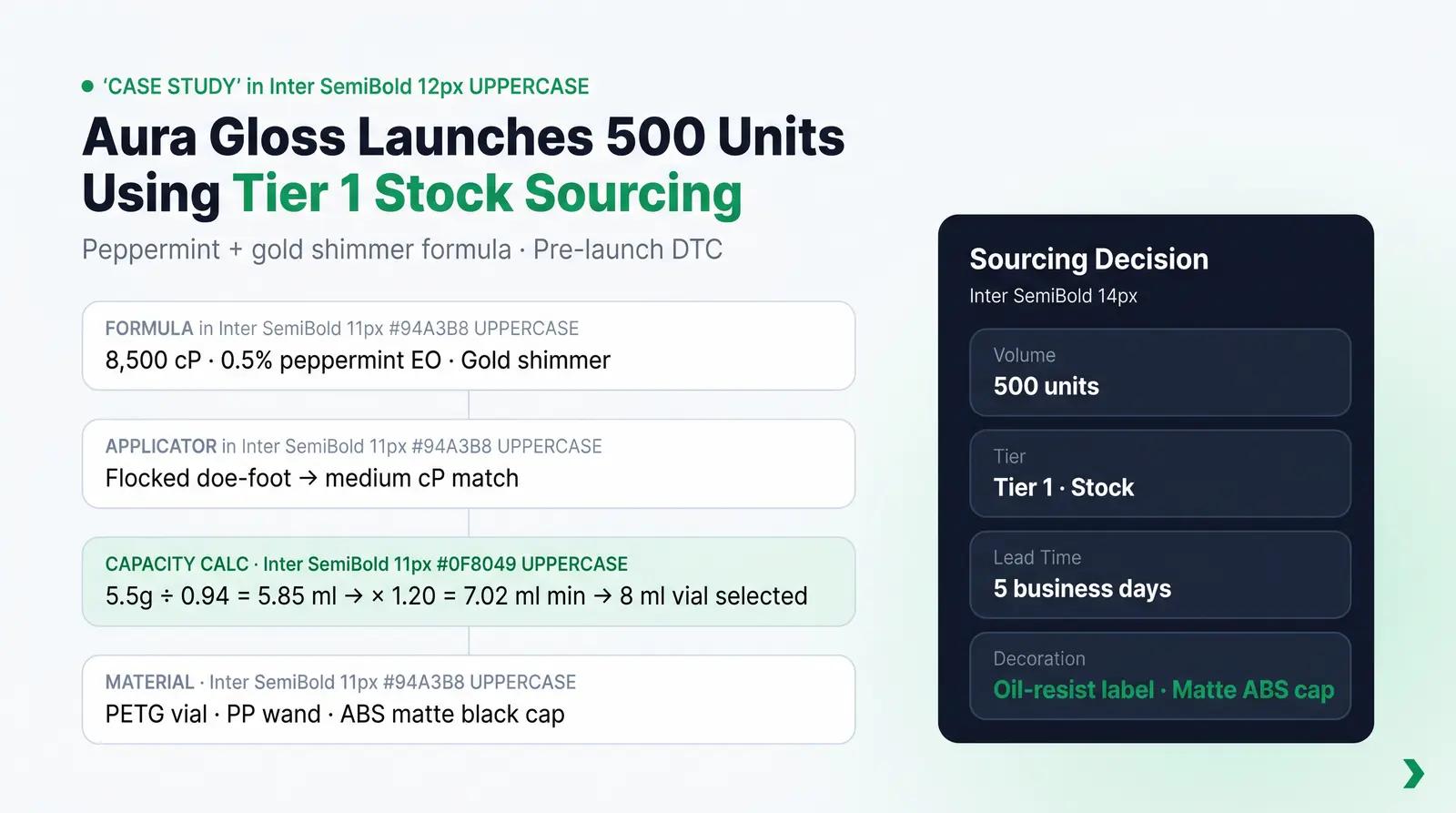
To illustrate the framework in action, consider a realistic sourcing scenario for an independent beauty brand.
The Brand: Aura Gloss, an independent, clean beauty brand preparing for a pre-launch soft market test.
The Product: A clear, high-shine lip gloss infused with a delicate suspended gold shimmer and a light, natural peppermint essential oil fragrance.
The Target Launch Volume: 500 units for a regional influencer campaign and direct-to-consumer pre-orders.
Step 1: Viscosity and Formula Audit. The formula's viscosity is measured at 8,500 cP (medium viscosity). The peppermint essential oil is present at a concentration of 0.5%, posing a moderate stress-cracking risk to rigid plastics. The suspended gold shimmer is highly abrasive.
Step 2: Applicator Calibration. Because the formula is a medium-viscosity gloss, a standard flocked doe-foot applicator is selected. The synthetic microfibers will hold the formula securely in place, and the angled tip allows for comfortable, even distribution without dragging the shimmer.
Step 3: Capacity and Headspace Calculation. The brand's target retail weight is 5.5 grams. The formula's specific gravity is measured at 0.94 g/ml. Dividing 5.5 g by 0.94 g/ml yields a target volume of approximately 5.85 ml. Applying the 20% headspace rule to accommodate wand displacement brings the required minimum physical capacity to approximately 7.02 ml. The brand selects a standard 8 ml physical capacity vial, leaving a safe, professional headspace of approximately 2.15 ml to prevent overflow on insertion [6].
Step 4: Material Selection. Because the formula contains peppermint essential oil and abrasive gold shimmer, acrylic and AS are ruled out due to stress-cracking and scratching risks. The brand selects a PETG vial body. PETG offers excellent chemical resistance to essential oils, high impact strength to prevent scratching from the shimmer, and crystal-clear transparency to showcase the gold glitter [3] [7]. The internal wand is specified as PP, and the cap is molded from durable ABS [3].
Step 5: Decoration Specification. Given the low initial volume of 500 units, direct silk-screen printing is cost-prohibitive. The brand opts for a high-gloss, clear polypropylene adhesive label with a permanent, oil-resistant adhesive, wrapped cleanly around the PETG vial. The ABS cap is specified in a stock matte black finish to provide a modern, premium contrast to the high-shine gloss.
Step 6: Sourcing Tier and Execution. With a 500-unit requirement, Aura Gloss operates within Tier 1 (Stock Sourcing). Sourcing directly from a domestic distributor avoids the 10,000-unit MOQs of overseas factories, reduces lead times to approximately 5 business days, and eliminates tooling costs, allowing the brand to launch quickly and gather consumer feedback before scaling to a larger production run.
Decoration and Customization Methods
The visual and tactile execution of your branding on the tube body is what transforms a generic container into a premium, recognizable product on the retail shelf.
Silk Screen Printing
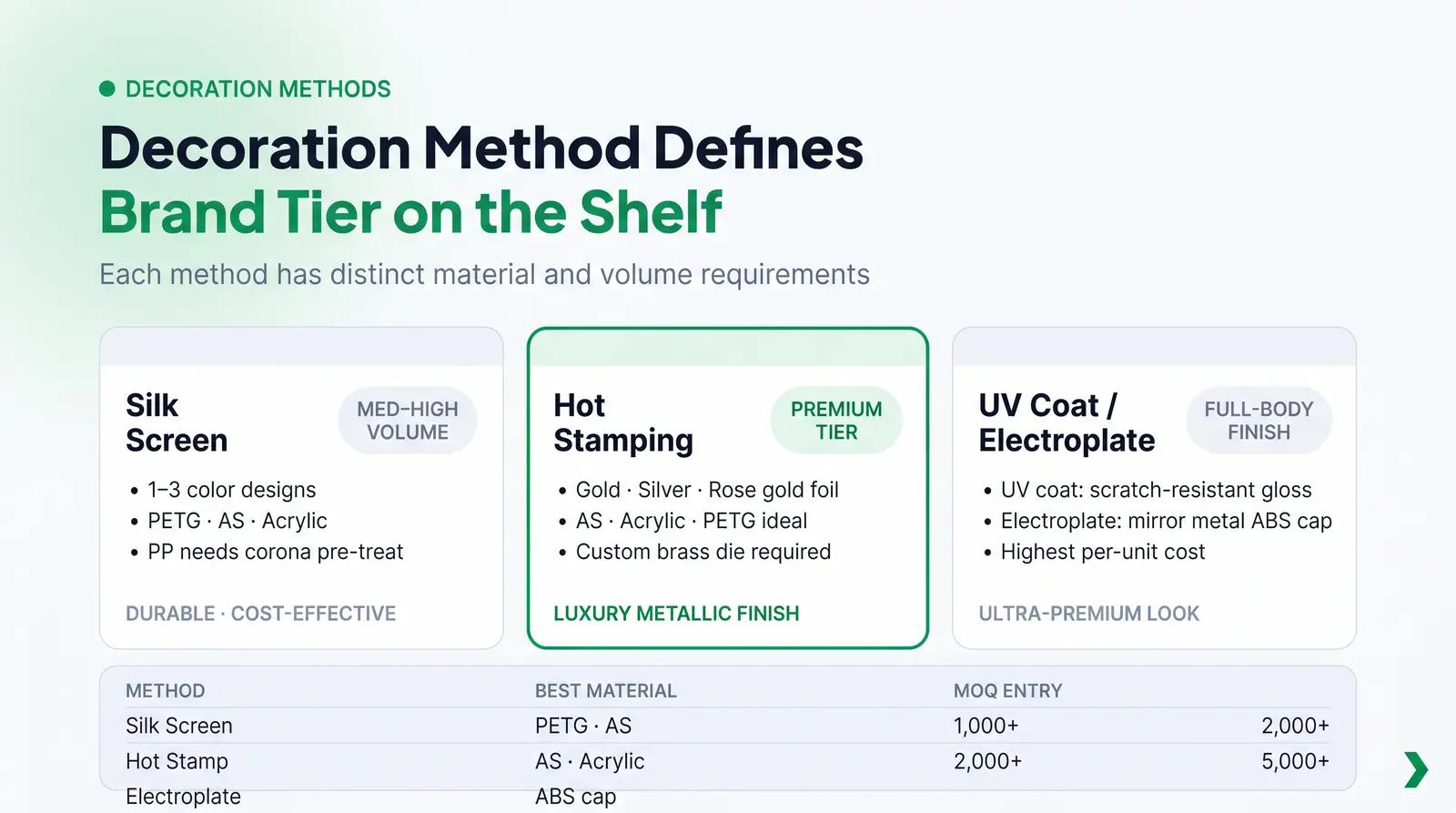
Silk screen printing involves pressing UV-cured inks directly through a prepared mesh screen onto the curved surface of the tube. It is best suited for 1 to 3 color designs with clean, sharp edges, solid color blocks, and fine text [3]. Material compatibility is excellent on rigid PETG, AS, and acrylic. Squeeze tubes and PP caps require pre-treatment, such as flame or corona discharge, to temporarily raise the plastic's surface energy, ensuring the ink adheres permanently without scratching off [1]. This method is highly durable, scratch-resistant, and cost-effective for medium-to-high volume runs.
Hot Stamping
Hot stamping utilizes heat and pressure to transfer a thin, reflective metallic foil, typically gold, silver, or rose gold, from a carrier ribbon onto the plastic surface via a custom-engraved metal die [3]. It is best suited for ultra-premium, reflective metallic logos, borders, and accent lettering. Hot stamping performs exceptionally well on hard, smooth surfaces like AS, acrylic, and PETG [3]. It can be applied to flexible PP squeeze tubes, but requires specialized flexible foils to prevent the metallic design from cracking when the tube is squeezed. The per-unit decoration cost is higher due to the cost of custom brass or silicone dies, but the aesthetic result is unmatched for luxury positioning.
UV Coating and Electroplating
For brands seeking a highly reflective, metallic, or high-gloss finish across the entire cap or tube body, two additional methods are available.
UV coating applies a liquid, clear protective lacquer over the printed tube, which is instantly cured under ultraviolet light. This creates an ultra-glossy, scratch-resistant, and chemically inert barrier that prevents cosmetic oils from smudging the printed artwork [3]. Electroplating, or vacuum metallization, applies a microscopic layer of real metal such as aluminum or chrome over plastic components, typically the ABS cap. This achieves a flawless, mirror-like metallic finish in gold, silver, or custom brand colors, giving plastic parts the weight and cold tactile feel of real metal [3].
Common Sourcing Mistakes to Avoid
The path to a successful lip gloss launch is littered with common, expensive sourcing errors. Recognizing these pitfalls early is the best way to protect your budget and timeline.
Ignoring Formula-Packaging Compatibility Testing
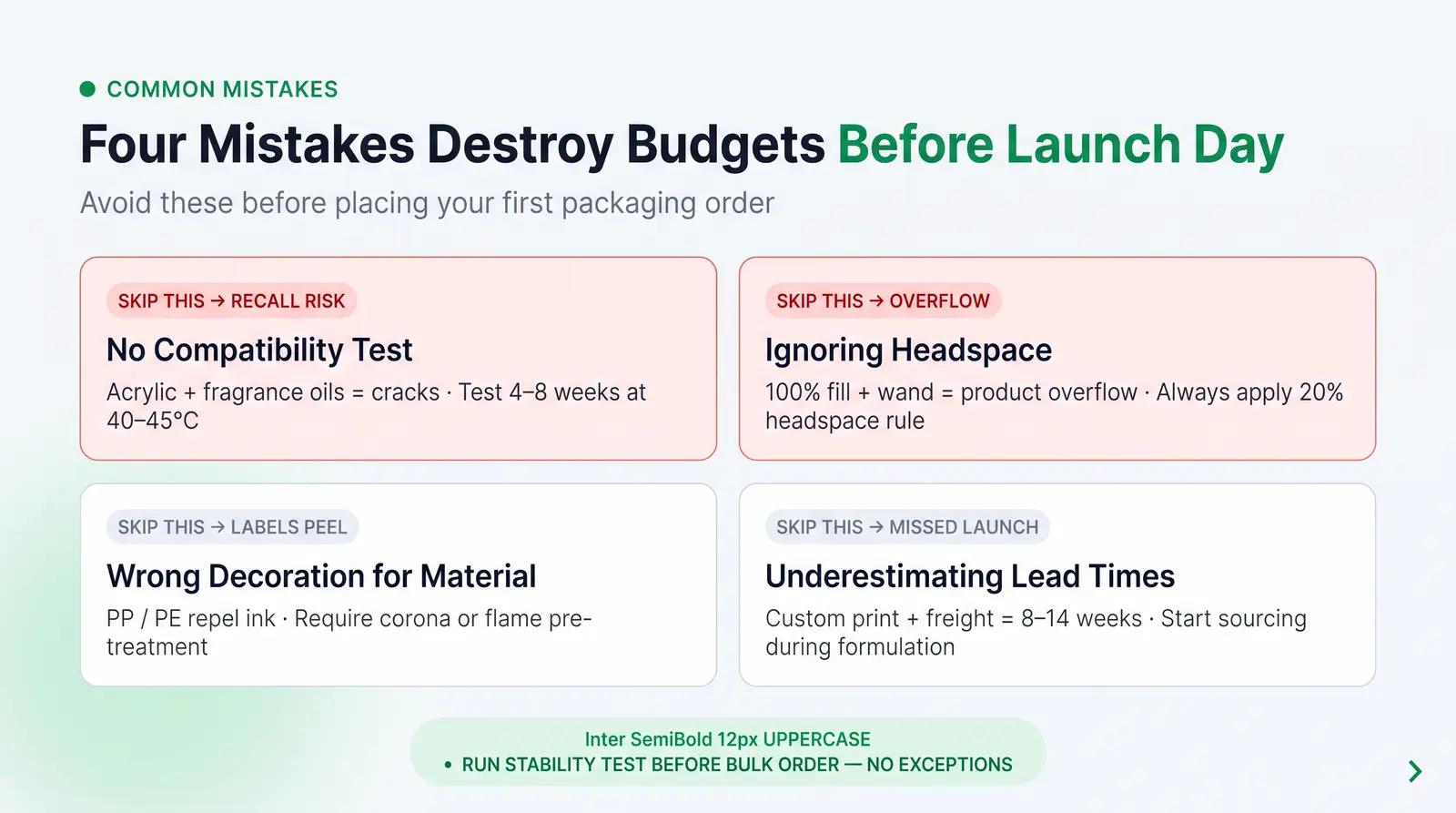
The single most expensive mistake a beauty brand can make is committing to a bulk packaging order without conducting a formal, multi-week stability and compatibility test. Independent beauty brands frequently source beautiful, crystal-clear acrylic tubes, only to discover three months after filling that the fragrance oils have caused the plastic to cloud, craze, and leak [1] [2].
Always request a minimum of 10 to 20 physical samples from your packaging supplier. Fill them with your final bulk formula and conduct an accelerated stability test: store the filled tubes at elevated temperatures (40°C to 45°C) for 4 to 8 weeks to simulate a year of shelf life, and monitor daily for signs of cracking, yellowing, separation, or loss of seal integrity [2].
Confusing Fill Weight with Fill Volume
Failing to calculate your formula's specific gravity and ignoring the physical displacement of the applicator wand will lead to disaster on the filling line. If you instruct your contract filler to load 8 ml of a heavy, dense gloss into an 8 ml wand tube, the product will overflow the neck the moment the wand is inserted, ruining the exterior decoration and creating an unsellable, messy product [6]. Always design your fill volume around the 20% headspace rule.
Sourcing Incompatible Decoration Methods for the Material
Plastics like polypropylene (PP) and polyethylene (PE) are naturally low-energy surfaces, meaning they repel liquids, adhesives, and inks. Ordering stock PP caps and attempting to apply standard adhesive labels or hot-stamping foils without verifying that the manufacturer has executed a corona or flame pre-treatment will result in labels that flag (peel at the edges) and metallic foil that scratches off during transit, leaving your product looking cheap and damaged on the shelf [1].
Underestimating Sourcing and Customization Lead Times
Packaging is frequently treated as an afterthought, with founders waiting for final formula approval before beginning the sourcing process. However, custom direct printing, Pantone color-matching, and international freight shipping can easily introduce 8 to 14 weeks of lead time [3]. Waiting until the last minute forces brands to accept expensive domestic stock components, limiting their branding options and squeezing their profit margins. Begin your packaging search in parallel with your formulation development.
The Contrarian Insight: The Wiper and Wand Matter More Than the Bottle
When beauty founders design a lip gloss, the vast majority of creative energy and budget is spent on the bottle's exterior: the custom geometric silhouette, the holographic hot-stamping, and the heavy, glass-like acrylic wall. The internal mechanics are treated as a standard, default assembly.
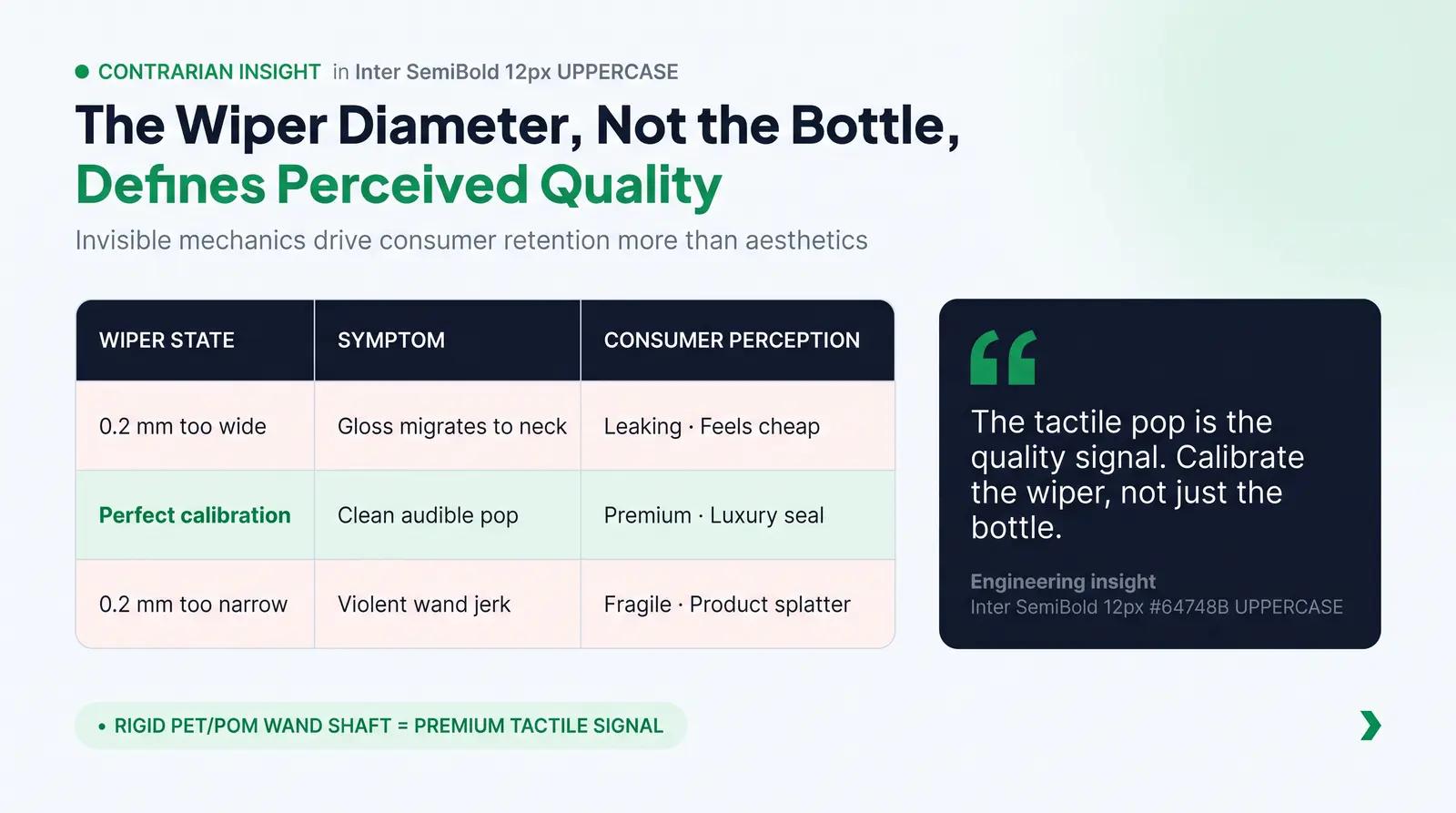
However, from an engineering and consumer-retention standpoint, the diameter of the internal neck wiper and the rigidity of the wand shaft dictate the consumer's perception of quality far more than the bottle itself.
The consumer experience of "quality" in a lip gloss is a physical, tactile sensation. When a user withdraws the wand, they expect a smooth, controlled resistance, culminating in a clean, audible pop as the applicator clears the wiper. This pop is a physical indicator of a perfect vacuum seal. If the wiper's internal diameter is even 0.2 mm too wide for the wand shaft, a thin layer of gloss will remain on the wand, migrating upward over time to collect around the neck threads, creating a sticky, leaking mess under the cap. If the wiper is 0.2 mm too narrow, the user must pull with excessive force, causing the applicator to exit the tube with a violent jerk that splatters product onto their clothing.
Furthermore, a thin, flexible wand shaft will bend under the resistance of a high-viscosity formula, giving the consumer a tactile sensation of cheapness and fragility. A thick, rigid wand shaft, typically constructed from solid PET or polyoxymethylene, communicates premium luxury, providing the structural stability required to apply dense formulas with absolute control.
When sourcing, do not accept the default wiper and wand assembly provided by the factory. Conduct physical pull tests with your formula. Measure the wiper orifice, specify a rigid shaft, and calibrate the mechanical resistance until the tactile pop feels clean, premium, and effortless. This single detail, invisible to the eye and absent from most sourcing guides, is what separates a luxury product from a commodity.
Sourcing with Packfolio
Navigating the complex technical decisions of material compatibility, regulatory compliance, and mechanical calibration can be overwhelming for independent beauty brands. At Packfolio, we have simplified cosmetic packaging procurement by eliminating the traditional supply chain friction.
Our curated, vetted catalog includes high-quality, pre-vetted lip gloss tubes, bottles, jars, and closures, each constructed from premium, chemically stable materials like PETG and PP. Every SKU in our catalog is pre-modeled in 3D with predefined, optimized printable regions. Through our browser-based 3D design tool, founders can upload their custom artwork, preview the label in photorealistic 3D, and calibrate their design directly inside the safe print zones, so what you see is exactly what you receive. Once your design is approved, Packfolio handles production coordination with our vetted manufacturing partners, manages strict quality assurance protocols, and oversees freight delivery directly to your door. Customers never need to contact suppliers or manage the logistics of international freight.
Browse Packfolio's curated lip gloss tube catalog and preview your label in 3D before ordering → packfolio.com/catalog
Frequently Asked Questions
What is the most common size for retail lip gloss tubes?
The standard, most common size for retail lip gloss is between 6 ml and 8 ml (0.20 to 0.27 fl oz) [3]. This capacity provides a substantial, premium feel in the hand, offers an excellent surface area for branding and decoration, and delivers a practical volume of product that consumers can realistically finish before the formula's Period After Opening (PAO) expiration.
How do I prevent my lip gloss tubes from leaking?
Leaking is typically caused by two factors: an overfilled tube or an incompatible wiper-wand seal. To prevent leaks, always apply the 20% Headspace Rule during filling to accommodate the physical displacement of the wand [6]. Additionally, conduct pull tests to ensure your internal wiper orifice is perfectly calibrated to the outer diameter of your wand shaft, creating a secure vacuum seal on closure.
Can I use essential oils in plastic lip gloss tubes?
Yes, but you must select your plastic material with extreme care. Volatile essential oils, like peppermint, cinnamon, or citrus, act as natural solvents that will chemically attack, cloud, and crack acrylic (PMMA) and styrene acrylonitrile (AS) plastics [1]. If your formula contains essential oils or active plumping agents, source PETG or PP tubes exclusively, which offer superior chemical resistance [3] [7].
What is the difference between fill weight and fill volume?
Fill volume, measured in milliliters or fluid ounces, represents the physical space your formula occupies inside the tube. Fill weight, measured in grams or ounces, represents the physical mass of the product. Because cosmetic formulas have different densities (specific gravities), you must calculate your formula's specific gravity to determine the exact weight in grams that corresponds to your target physical volume in milliliters.
What are the FDA labeling requirements for lip gloss?
Under FDA and MoCRA regulations, retail lip gloss labeling must feature a Principal Display Panel stating the product identity and the net quantity of contents by weight [9] [11]. The Information Panel must conspicuously list the distributor's name and place of business, the country of origin, clear usage warnings, and a complete ingredient declaration in descending order of predominance, utilizing letters no less than 1/16 of an inch in height [11].
References
[1] JC Cosmopack. "What are Lip Gloss Tubes Made Of?" Published January 16, 2026. https://jccosmopack.com/what-are-lip-gloss-tubes-made-of/
[2] The Packaging Lab. "The #1 Mistake New Brands Make With Cosmetic Packaging." Published February 24, 2026. https://www.thepkglab.com/blog/220/the-1-mistake-new-brands-make-with-cosmetic-packaging
[3] Ningbo Huiho Cosmetics Packaging Co., Ltd. "How to choose the right Lip Gloss Tube?" Published April 3, 2026. https://www.nb-huihe.com/news/how-to-choose-the-right-lip-gloss-tube.html
[4] Lisson Packaging. "A Comprehensive Guide to All Lip Gloss Applicators." Published November 27, 2025. https://www.lissonpackaging.com/a-comprehensive-guide-to-all-lip-gloss-applicators.html
[5] APG Packaging Group. "What type of applicator is best for lip gloss tubes?" https://apackaginggroup.com/blogs/news/what-type-of-applicator-is-best-for-lip-gloss-tubes
[6] TKB Trading. "Flat Top Squeezie Lip Gloss Tubes - DIY Lip Gloss - BULK." https://tkbtrading.com/products/flat-top-squeezie-lip-gloss-tubes
[7] Visonpack. "ABS vs PETG: Which One is Right for Your Cosmetic Packaging?" Published January 3, 2025. https://www.visonpack.com/blog/abs-or-petg-discover-the-pros-and-cons-for-cosmetic-packaging/
[8] Cosmetic Packaging Now, LLC. "Wholesale Empty Lip Gloss Tubes." https://www.cosmeticpackagingnow.com/collections/vibe-collection
[9] U.S. Food and Drug Administration. "Modernization of Cosmetics Regulation Act of 2022 (MoCRA)." Last updated March 13, 2026. https://www.fda.gov/cosmetics/cosmetics-laws-regulations/modernization-cosmetics-regulation-act-2022-mocra
[10] Taobe Consulting. "Cosmetics Packaging Regulations in Europe." Published August 9, 2023. https://taobe.consulting/cosmetics-packaging-regulations-in-europe/
[11] U.S. Food and Drug Administration. "Summary of Cosmetics Labeling Requirements." Last updated November 18, 2025. https://www.fda.gov/cosmetics/cosmetics-labeling-regulations/summary-cosmetics-labeling-requirements


