
Prop 65, EPR, and State Packaging Rules for Beauty Brands
Beauty brands must navigate Prop 65 restricted substances, EPR registration in seven states, and recycling label laws before finalizing any cosmetic packaging order.
For many independent beauty brand founders, the journey of launching a product follows a familiar path. You spend months perfecting a formula, coordinate with a contract manufacturer to ensure compliance with the Modernization of Cosmetics Regulation Act (MoCRA), and carefully review ingredient safety. But the moment of true vulnerability often arrives late, and from an entirely unexpected direction. It is the compliance layer that founders typically discover too late: the regulatory obligations that do not show up on a packaging supplier's spec sheet but do show up in enforcement actions, retailer audits, and customer complaints.
While a cosmetic formula is heavily regulated at the federal level, the physical container that holds it is increasingly subject to an aggressive, fragmented patchwork of state-level laws. If you are sourcing primary packaging, such as bottles, jars, tubes, droppers, airless pumps, or closures, and shipping finished goods to customers or retailers across the United States, you are no longer just selling cosmetics. You are distributing regulated packaging materials. Failing to account for state-level packaging rules before finalizing your packaging order can lead to costly product recalls, retail bans, and devastating private plaintiff lawsuits.
Why State Rules Hit Beauty Packaging Differently Than Formula Rules
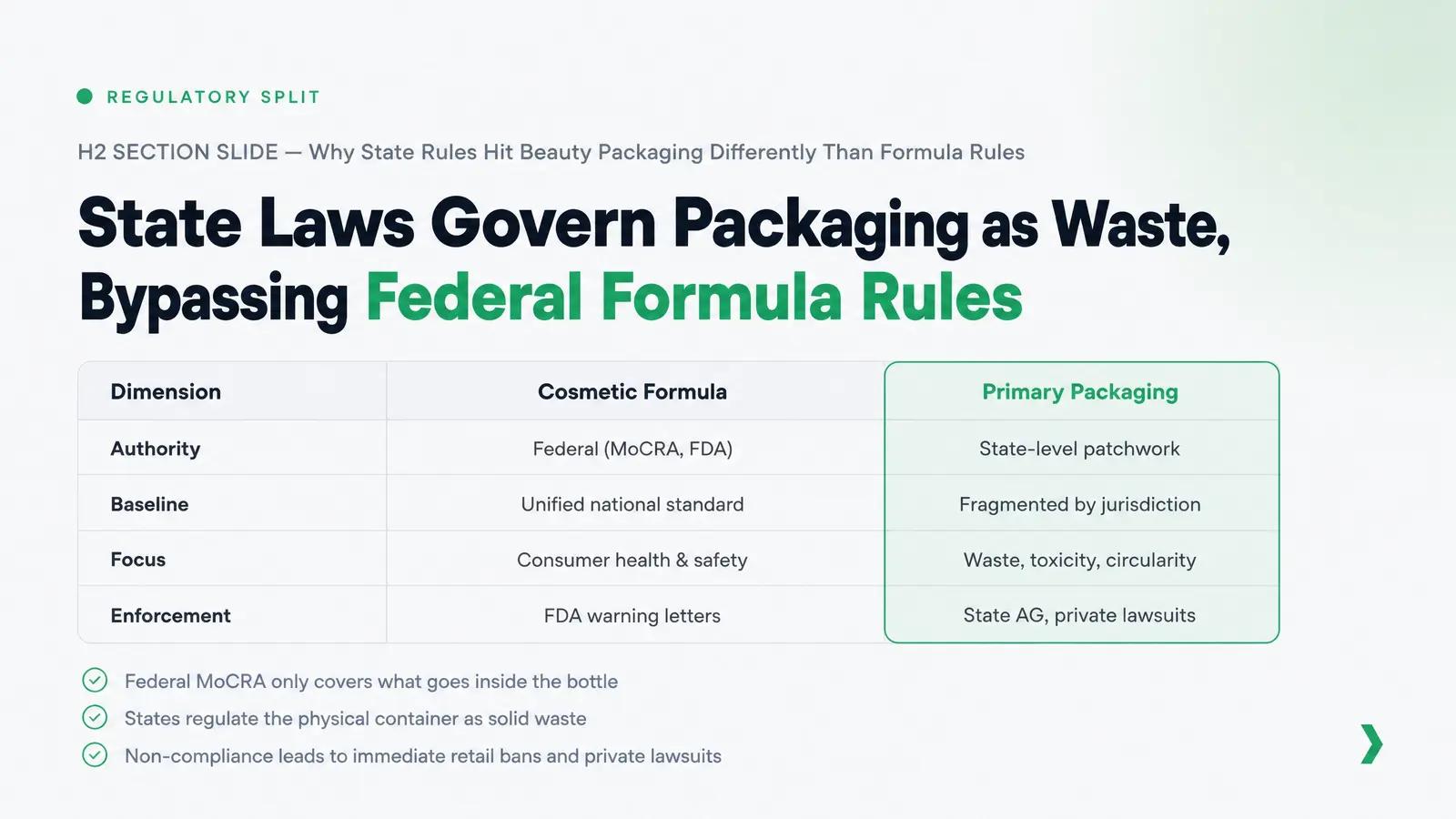
There is a fundamental structural difference between how the United States regulates cosmetic formulas and how it regulates cosmetic packaging. Under MoCRA, the Food and Drug Administration (FDA) maintains centralized oversight over product listing, facility registration, and ingredient safety [1]. This federal framework provides a relatively unified baseline for what can go inside the bottle.
Packaging materials, however, are governed almost entirely at the state level. States view packaging not as a beauty delivery system, but as solid waste, potential environmental pollution, or a source of toxic exposure. This distinction creates a major compliance blind spot for beauty brands.
| Dimension | Cosmetic Formula | Primary Packaging |
|---|---|---|
| Regulatory Authority | Federal (MoCRA, FDA) | State-level patchwork |
| Compliance Baseline | Unified national standard | Fragmented by jurisdiction |
| Primary Regulatory Focus | Consumer health and ingredient safety | Waste, toxicity, and circularity |
| Enforcement Mechanism | FDA warning letters and recalls | State AG actions, private plaintiff lawsuits, retailer audits |
Because states have independent authority to regulate waste management and consumer protection, they have enacted rules that dictate what materials you can use, what claims you can print on your labels, and how much you must pay to fund recycling infrastructure. If your packaging fails to meet these state-specific standards, federal MoCRA compliance will not save your inventory from being pulled from retail shelves.
Proposition 65: What It Requires on Cosmetic Packaging
California's Safe Drinking Water and Toxic Enforcement Act of 1986, universally known as Proposition 65, is the most active and legally disruptive consumer protection law in the United States [2]. Prop 65 requires businesses to provide a "clear and reasonable" warning to California consumers before exposing them to any of the more than 900 chemicals on the state's restricted list [2].
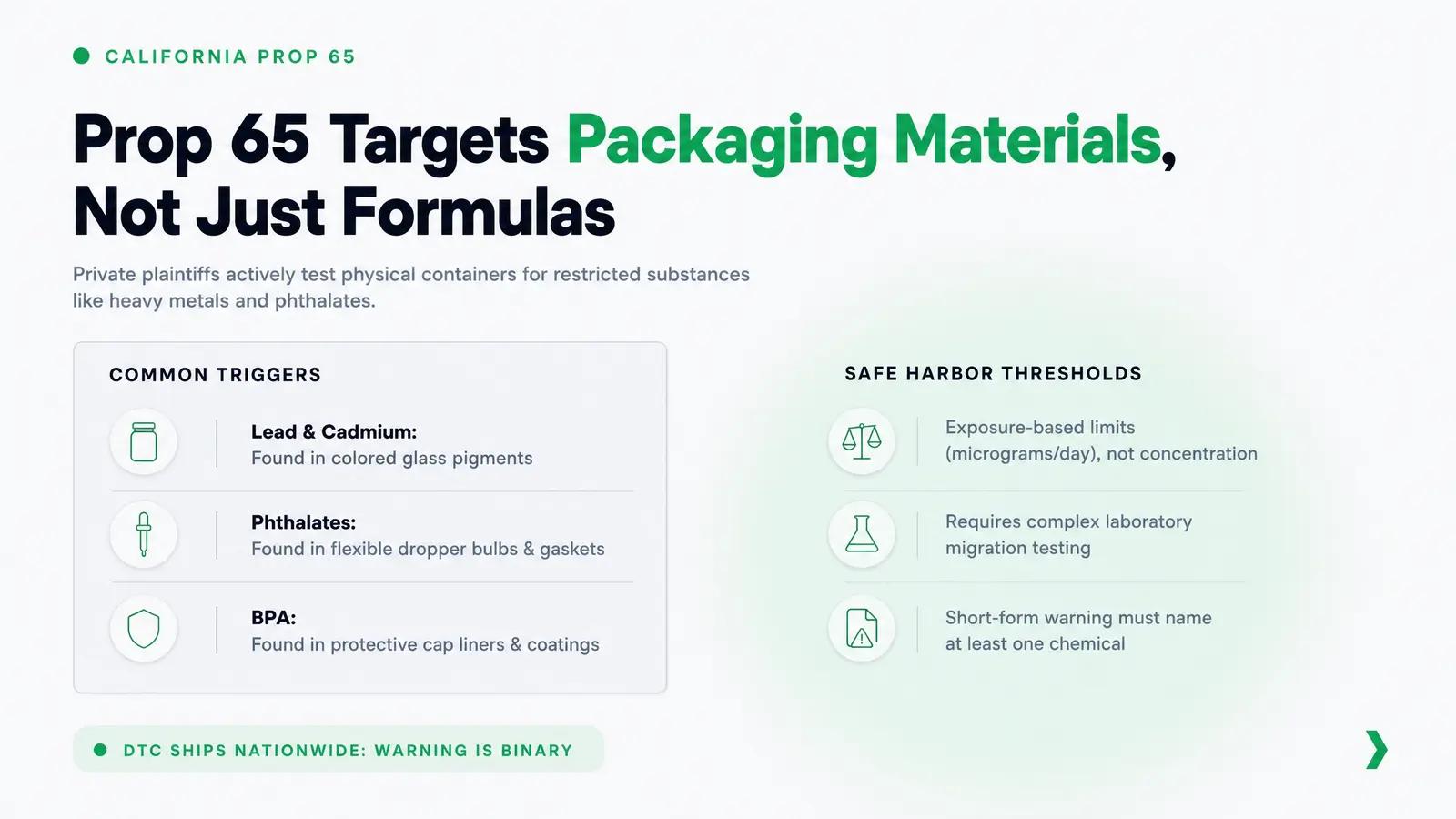
While beauty founders often associate Prop 65 with formula ingredients like heavy metal contaminants or specific preservatives, packaging materials are a primary target for aggressive enforcement. Private plaintiff law firms, often referred to as "bounty hunters," actively purchase beauty products from retail shelves and e-commerce sites to test the physical packaging for restricted substances [3].
The most common packaging-specific Prop 65 triggers include heavy metals in glass and plastics (lead, cadmium, and hexavalent chromium are frequently present in the pigments and stabilizers used in colored glass jars, plastic bottles, and dropper components), phthalates in flexible components (plasticizers like DEHP, DINP, and DBP are commonly found in the bulbs of droppers, gaskets, and plastic liners inside closures), bisphenol A (BPA) in liners and coatings (often present in the protective epoxy linings of metal caps or the polycarbonate plastics used in compacts and heavy-walled jars), and restricted substances in printing inks (inks and varnishes used for direct screen printing or label adhesives can contain toluene, formaldehyde, or lead-based pigments) [3].
The Safe Harbor Threshold Trap
Prop 65 does not ban these chemicals. Instead, it mandates a warning if consumer exposure exceeds established "Safe Harbor Levels," which are divided into No Significant Risk Levels (NSRLs) for carcinogens and Maximum Allowable Dose Levels (MADLs) for reproductive toxicants [4]. These thresholds are incredibly low, often measured in micrograms per day (e.g., 0.5 micrograms per day for lead) [3].
Because Safe Harbor Levels measure exposure (how much chemical transfers to a user during normal use) rather than simple concentration (how much chemical is in the material), verifying compliance requires complex laboratory migration testing [5]. If you cannot prove that consumer exposure falls below the safe harbor threshold, you must apply a warning label.
The Short-Form Warning Shift
For brands that must apply a warning, California has updated its short-form warning regulations. Under the revised rules, the warning must explicitly name at least one listed chemical for each endpoint (cancer and/or reproductive harm) being warned for, and must follow a highly specific format that includes the yellow warning triangle and a direct URL to the state's Prop 65 warnings website [6].
The 2025 Titanium Dioxide Ruling
A major regulatory shift occurred on August 12, 2025, when the US District Court for the Eastern District of California issued a permanent injunction in Personal Care Products Council v. Bonta [7]. The court ruled that compelling Prop 65 cancer warnings for airborne, unbound particles of titanium dioxide in cosmetics violates the First Amendment, as there is no credible scientific consensus linking titanium dioxide in cosmetics to human cancer [7].
While this ruling bars new lawsuits targeting titanium dioxide in cosmetics, it is highly specific. It only applies to titanium dioxide in its airborne, unbound, respirable form (such as loose powders) [7]. It does not protect brands from packaging-related Prop 65 claims, nor does it invalidate existing, finalized consent decrees.
The Binary DTC Reality
A common misconception among direct-to-consumer (DTC) brands is that Prop 65 is only a concern if they have physical retail stores in California. In reality, because DTC brands ship nationally from a centralized inventory using a single stock-keeping unit (SKU), you face a binary operational choice. You must either engineer the warning directly into your label artwork for all units nationwide, or rigorously verify and document that your packaging materials do not contain any listed substances above the safe harbor exposure threshold. There is no operationally viable middle path for a growing brand.
EPR Packaging Laws: Which States Have Them and What They Mean for Brands
Extended Producer Responsibility (EPR) is an environmental policy framework that shifts the financial and operational burden of packaging waste management from local municipalities and taxpayers to the "producers" of that packaging [8]. In the United States, EPR is rapidly transitioning from a conceptual policy to an active, legally binding compliance requirement.
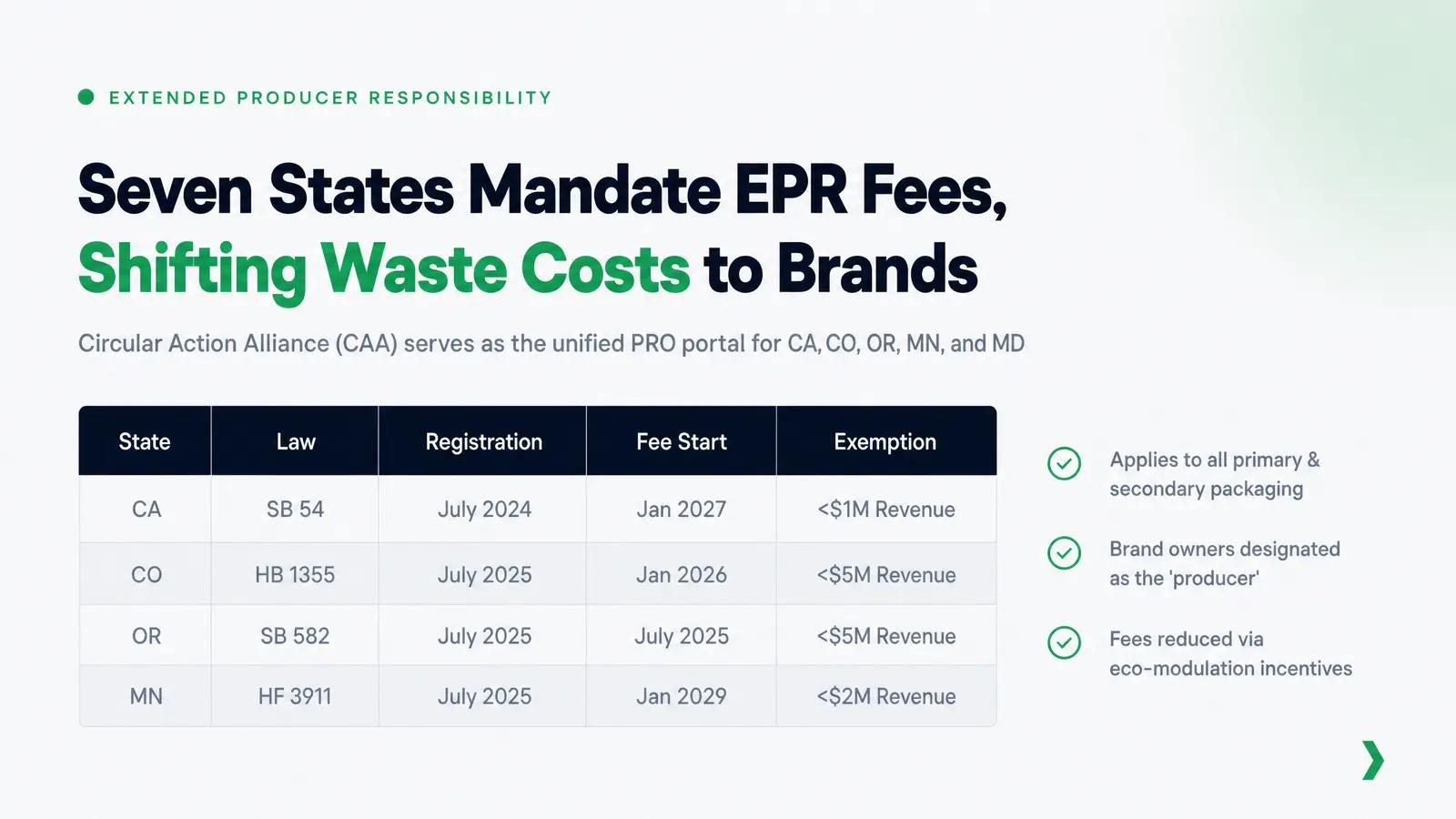
As of 2026, seven states have enacted packaging EPR laws: California, Colorado, Oregon, Maine, Minnesota, Washington, and Maryland [9] [10]. Under these laws, "producers" are legally required to register with a state-approved Producer Responsibility Organization (PRO), report detailed data on the material types and total weight of the packaging they distribute, and pay annual fees [9]. These fees are used to fund local recycling collection, sortation, processing, and public education [8].
The Role of the Circular Action Alliance
To simplify compliance across a fragmented state landscape, the Circular Action Alliance (CAA), a circular-economy nonprofit, has been designated as the approved PRO in California, Colorado, Minnesota, and Maryland, and is the sole PRO implementing the program in Oregon [10] [11] [12]. This allows brands to use a single portal to register and report data for multiple states, though the fee structures and reporting categories still vary by jurisdiction.
State-by-State EPR Implementation Matrix
The table below outlines the key parameters, effective dates, and compliance obligations for the seven states with enacted packaging EPR laws.
| State | Governing Law | Registration Deadline | Fee Start | Small Producer Exemption |
|---|---|---|---|---|
| California | SB 54, CalRecycle [13] | July 1, 2024 via CAA [10] | January 1, 2027 [9] | Global gross revenue under $1M [14] |
| Colorado | HB 22-1355, CDPHE [11] | July 1, 2025 via CAA [9] | January 1, 2026 [9] | Global gross revenue under $5M, or under 1 ton of packaging [14] |
| Oregon | SB 582, Oregon DEQ [15] | July 1, 2025 via CAA [9] | July 1, 2025 [9] | Global gross revenue under $5M, or under 1 ton of packaging [15] |
| Maine | LD 1541, Maine DEP [16] | Expected April 2026 [9] | Late 2026 / early 2027 [9] | Global gross revenue under $2M, or under 1 ton in Maine [16] |
| Minnesota | HF 3911, MPCA [12] | July 1, 2025 via CAA [12] | January 1, 2029 [9] | Global gross revenue under $2M, or under 1 ton in Minnesota [12] |
| Washington | SB 5284, Dept. of Ecology [17] | July 1, 2026 [17] | Approx. 2030 [17] | To be finalized during rulemaking [17] |
| Maryland | HB 700, MDE [9] | Onboarding begins 2026 [9] | Phases in 2028-2030 [9] | To be finalized during rulemaking [9] |
Each state law also specifies what constitutes a "covered material." For beauty brands, this typically includes all consumer-facing primary and secondary packaging, such as glass bottles, plastic jars, aluminum tubes, paper cartons, and plastic closures. The "producer" designation under all seven laws defaults to the brand owner or the entity whose name and trademark appear on the finished product [9].
Other State-Level Packaging Rules Worth Knowing
Beyond Prop 65 and EPR, several states have enacted targeted packaging regulations that directly impact cosmetic containers, labeling artwork, and material chemistry.
California's SB 343: The Truth in Recycling Law
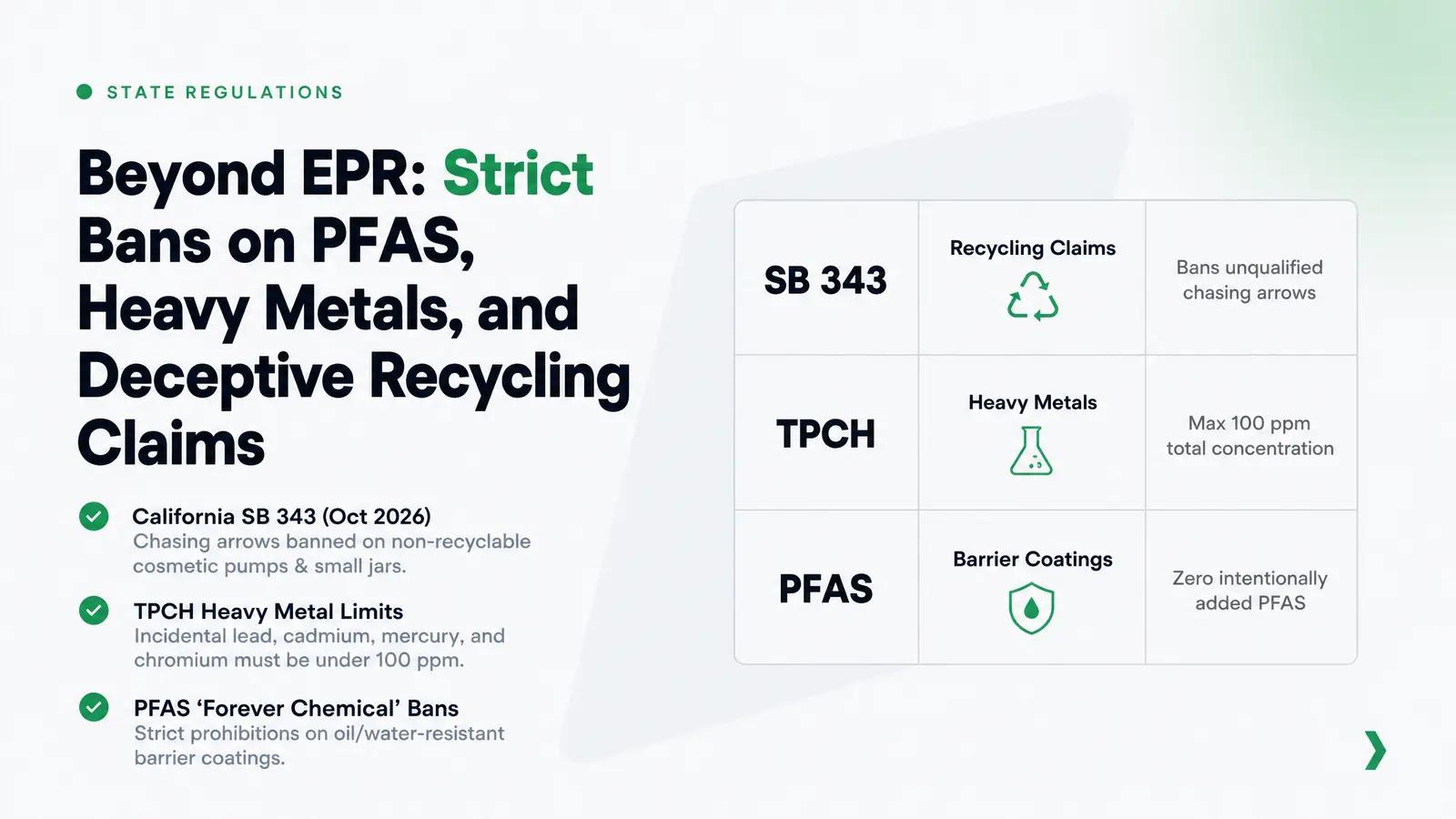
Passed in 2021, California's SB 343 restricts the use of the iconic "chasing arrows" recycling symbol (or any other implication of recyclability) on products and packaging [18]. Under SB 343, a package cannot display a recycling symbol unless the manufacturer can document that the material is regularly collected, sorted, and processed into high-value recycled materials by municipal recycling facilities (MRFs) in California [18].
CalRecycle published its Final Findings Report on April 4, 2025, which established the official list of materials that meet these strict recyclability criteria [18]. The law applies to all products and packaging manufactured after October 4, 2026 [18].
For beauty brands, this is a major compliance hurdle. Many common cosmetic packaging components, such as multi-material pumps, colored glass, small plastic caps, and small-format plastic jars (under two inches), do not meet CalRecycle's criteria. Printing a chasing arrows symbol on these non-recyclable components after October 2026 will carry severe penalties for deceptive labeling [18] [19].
Heavy Metal Restrictions Under TPCH Model Legislation
New York, along with 18 other states that have adopted the Toxics in Packaging Clearinghouse (TPCH) model legislation, bans the intentional introduction of heavy metals (lead, cadmium, mercury, and hexavalent chromium) in packaging materials, inks, and dyes [3]. The law limits the total incidental concentration of these metals to 100 parts per million (ppm) across all packaging components [3]. This is a direct, quantitative threshold that applies to the physical material itself, not just to consumer exposure, making it a simpler but equally important compliance obligation.
State-Level PFAS Bans in Packaging
Per- and polyfluoroalkyl substances (PFAS), often called "forever chemicals," are widely used in packaging coatings to provide oil, water, and grease resistance. Because PFAS bioaccumulate in the environment, states are rapidly banning them. California, Colorado, Oregon, Washington, and Minnesota have enacted strict prohibitions on intentionally added PFAS in cosmetic products and their packaging, with compliance deadlines active as of 2025 and 2026 [21] [22]. Sourcing a bottle or closure with a PFAS-based barrier coating to prevent formula paneling can now result in an immediate state-level retail ban.
How Packaging Material Choices Interact With Compliance Obligations
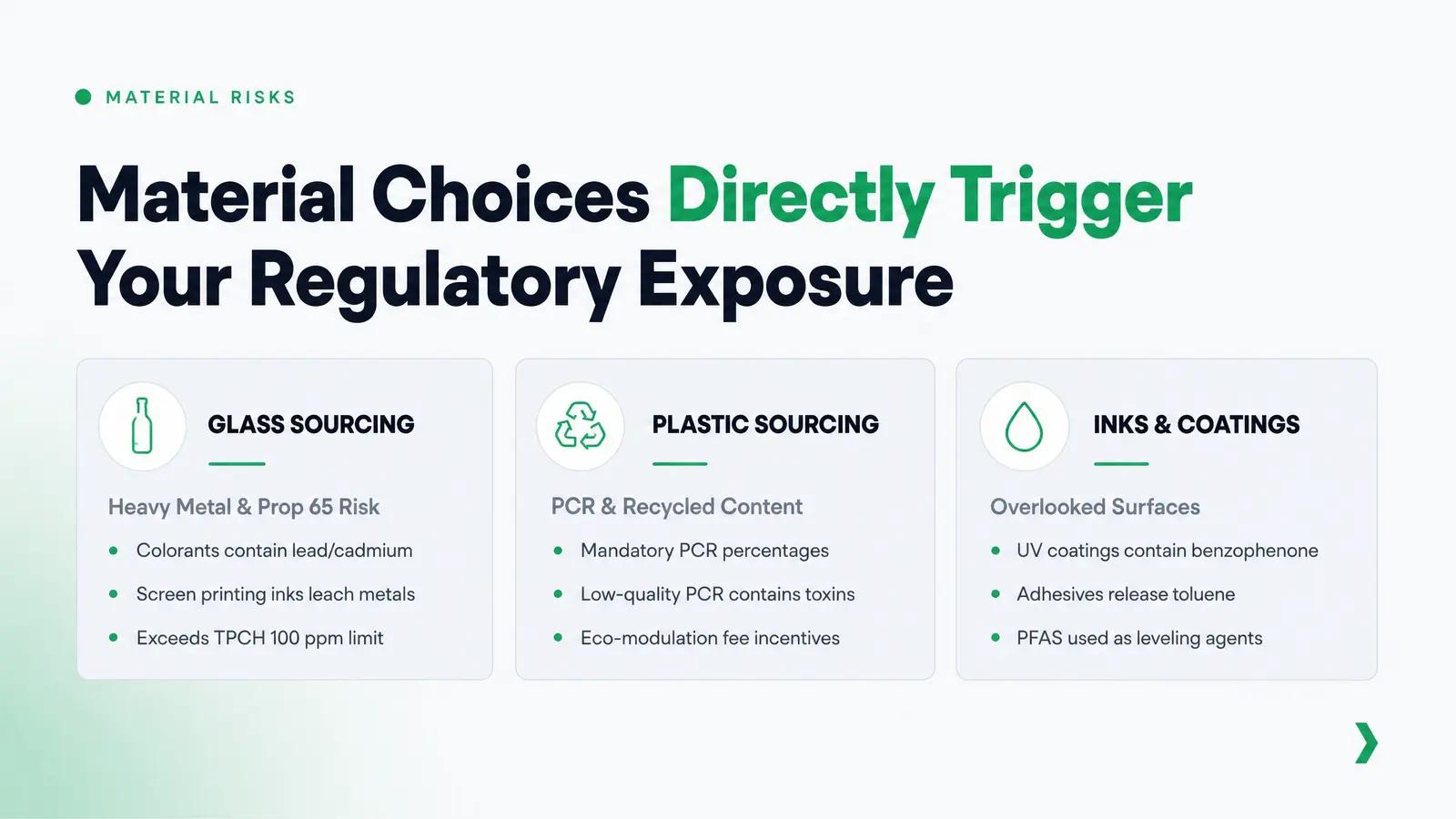
The physical materials you choose for your beauty packaging are not just aesthetic decisions. They are the direct triggers for your regulatory exposure.
Glass Sourcing: The Heavy Metal and Prop 65 Risk
Glass is frequently positioned as the premium, "clean," and infinitely recyclable alternative to plastic. However, glass packaging carries unique, non-obvious regulatory risks. To achieve specific colors (amber, green, frosted white, or custom spray-coated shades), glass manufacturers often use metal oxides that contain lead, cadmium, or chromium [3]. Direct screen printing on glass bottles also frequently utilizes heavy-metal-based pigments to ensure vibrant colors and adhesion during the high-temperature firing process [3]. If these metals leach from the glass or are present on the exterior surface, they can easily trigger a Prop 65 warning requirement or violate the TPCH 100 ppm concentration limit [3].
Plastic Sourcing: The Recycled Content and PCR Dilemma
Plastic packaging, particularly PET, PP, and HDPE, is highly scrutinized under EPR laws. States like California and Washington have established mandatory Post-Consumer Recycled (PCR) content percentages for plastic packaging [10] [17]. Under EPR fee structures, virgin plastics carry the highest fee rates per pound, while incorporating certified PCR directly reduces your annual EPR fee liabilities through eco-modulation incentives [11]. However, sourcing PCR requires caution. Low-quality PCR can contain trace chemical contaminants (heavy metals, phthalates, or residual solvents from its previous life) that migrate into your cosmetic formula and trigger Prop 65 exposure violations.
Inks, Coatings, and Adhesives: The Overlooked Compliance Surface
The primary bottle or jar is rarely the source of a compliance violation. The failure typically lies in the decorative finishing. High-gloss UV coatings used on plastic closures or metallized collars can contain residual photoinitiators such as benzophenone, which is a listed Prop 65 carcinogen [3]. The adhesives used to apply paper or plastic labels to your bottles can contain residual solvents such as toluene or formaldehyde-releasing agents [3]. Standard printing inks used for labels or outer folding cartons can contain phthalate plasticizers or fluorinated surfactants (PFAS) used as leveling agents [3] [21].
The Packfolio State Packaging Compliance Framework
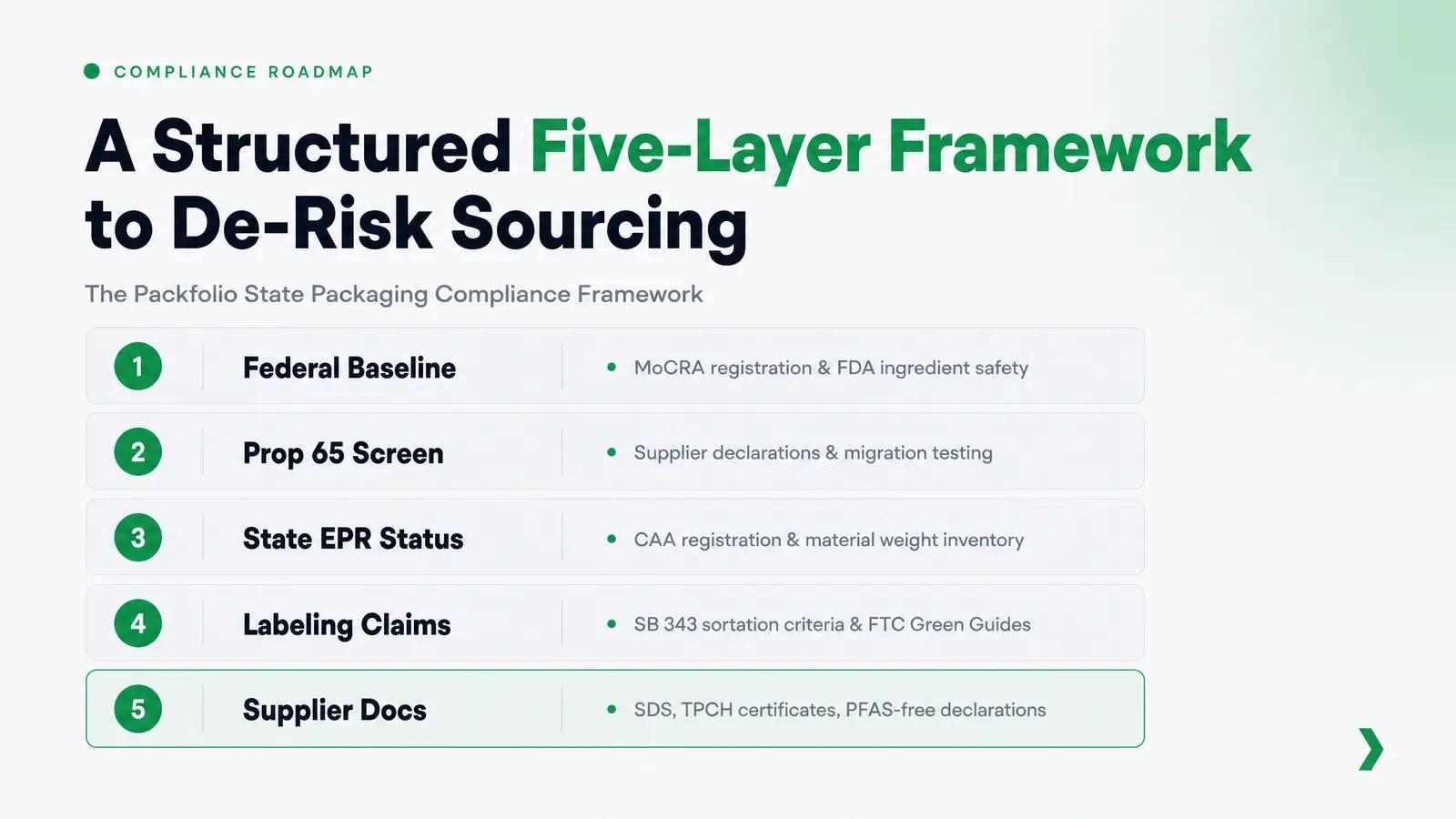
To help beauty founders navigate this complex regulatory landscape before finalizing a packaging order, Packfolio recommends a structured, five-layer compliance framework. Work through each layer in sequence before placing a production deposit.
Layer 1: Federal Baseline
- Confirm cosmetic facility registration and product listings are submitted to the FDA under MoCRA [1].
- Verify that all formula ingredients are disclosed and that no prohibited ingredients are present.
Layer 2: California Prop 65 Restricted Substance Screen
- Request supplier declarations verifying that the packaging contains no listed Prop 65 substances (lead, cadmium, phthalates, BPA) [3].
- If listed substances are present, commission lab-scale migration testing to evaluate consumer exposure against NSRL/MADL thresholds [4] [5].
- If exposure exceeds safe harbor levels, update label artwork to include a compliant short-form Prop 65 warning with the chemical name(s) and the P65Warnings.ca.gov URL [6].
Layer 3: State EPR Status Evaluation
- Calculate annual global gross revenue and total packaging weight distributed into CA, CO, OR, ME, MN, WA, and MD [9].
- If above de minimis thresholds, register the brand with the Circular Action Alliance (CAA) at circularactionalliance.org [10] [11].
- Compile a packaging material inventory (material type, weight per unit, annual volume) for PRO reporting [9].
Layer 4: Labeling Claims Review
- Verify that the chasing arrows symbol is not printed on any component unless it meets CalRecycle's MRF sortation criteria under SB 343 [18].
- Ensure all environmental claims ("recyclable," "recycled content," "sustainable") are qualified, prominent, and substantiated with documented data per the FTC Green Guides [20].
- Review all packaging copy for unqualified general environmental benefit claims, which are presumptively deceptive under FTC guidance [20].
Layer 5: Supplier Documentation Collection
- Collect Safety Data Sheets (SDS) for all raw materials: resins, color concentrates, inks, adhesives, and coatings [5].
- Obtain TPCH certificates of compliance confirming total heavy metals (lead, cadmium, mercury, hexavalent chromium) are under 100 ppm [3].
- Obtain PFAS-free declarations certifying no intentionally added PFAS in any structural material, ink, or coating [21].
- Obtain Prop 65 material declarations from the supplier's regulatory affairs department [2] [3].
- Archive all documents in a centralized compliance file, organized by packaging SKU.
Worked Example: Sourcing a Frosted Glass Dropper Bottle
To illustrate how these regulations apply in practice, consider a realistic sourcing scenario for an independent beauty brand.
The Brand Scenario
A founder is launching a 1 oz (30 ml) vitamin C face serum. The packaging design features a frosted glass dropper bottle with a custom-printed label, a gold-metallized aluminum collar, and a white rubber bulb. The brand sells DTC nationwide via Shopify and plans to pitch retail accounts, including Ulta and a California-based clean beauty retailer, within the next 12 months.
Prop 65 Sourcing Risks Identified
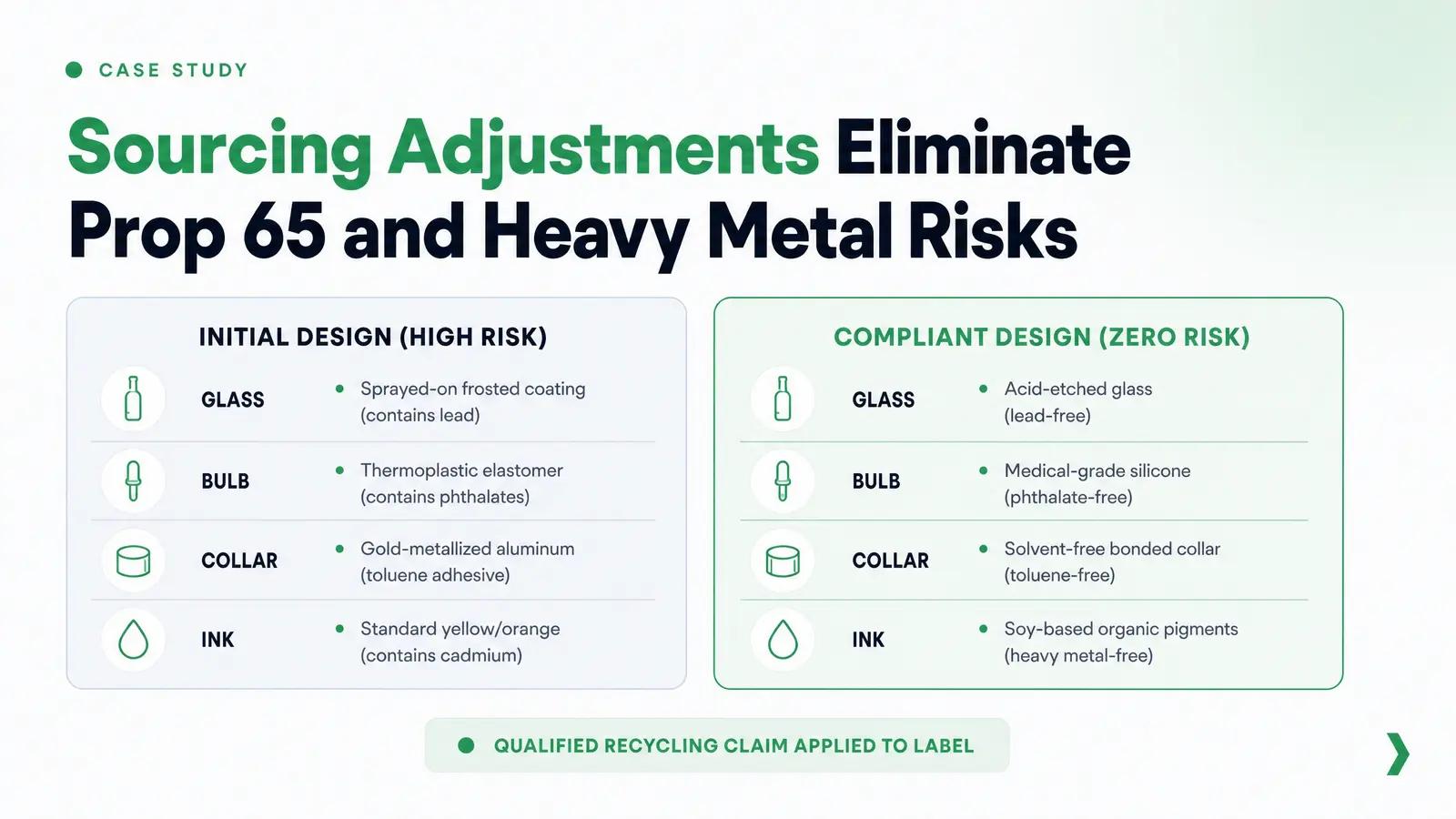
The founder evaluates every component for Prop 65 restricted substances. The frosted glass uses a sprayed-on ceramic coating that contains trace amounts of lead as a fluxing agent [3]. The adhesive bonding the aluminum collar to the inner plastic shell contains toluene [3]. The white rubber bulb is made of thermoplastic elastomer (TPE) plasticized with DINP, a listed phthalate [3]. The custom label uses vibrant yellow and orange inks containing trace cadmium [3].
Because the brand ships DTC nationwide from a single inventory pool, the decision is binary: apply a Prop 65 warning to all units, or eliminate the chemical exposure at the source.
Sourcing Decisions Made
The founder rejects the sprayed-on frosted coating and opts for a physically acid-etched glass bottle, which is chemically inert and lead-free [3]. The supplier provides a certificate confirming the collar adhesive is solvent-free and toluene-free [3]. The founder replaces the TPE bulb with a medical-grade silicone bulb, which is naturally flexible without phthalate plasticizers [3]. The printer switches to soy-based inks with organic pigments, guaranteeing heavy metal concentrations are well below 100 ppm [3].
EPR Applicability
The brand's global gross revenue is $1.5 million in its first year, distributing approximately 500 pounds of packaging material. In California, the brand is exempt from SB 54 fees because its global revenue is under the $1 million threshold [14]. In Colorado and Oregon, the brand is exempt because its revenue is under the $5 million threshold and packaging weight is under 1 ton [14] [15]. In Minnesota, the brand is exempt because its global revenue is under $2 million and packaging weight is under 1 ton [12]. Although exempt from fees as a startup, the founder registers with the CAA as a non-obligated producer to obtain compliance templates and prepare for scaling.
Labeling Claims Corrected
The founder initially wants to print "100% Recyclable Glass" on the label. However, frosted glass and glass bottles with attached plastic droppers and rubber bulbs are frequently rejected by MRF optical sorters in California [18]. Under SB 343, printing an unqualified "recyclable" claim on this multi-material component after October 2026 is illegal [18]. The founder changes the label artwork to read: "Glass bottle is recyclable. Disassemble dropper before recycling." This qualified claim complies with both SB 343 and the FTC Green Guides [18] [20].
Documentation Collected
Before placing the production deposit, the founder collects and archives the following in their compliance file: Safety Data Sheets for the glass bottle, silicone bulb, and label adhesive [5]; a TPCH certificate of compliance from the printer confirming total heavy metals in the inks are under 100 ppm [3]; and a supplier declaration confirming no intentionally added PFAS or phthalates in any component [3] [21].
Documentation: What to Collect Before You Order Packaging
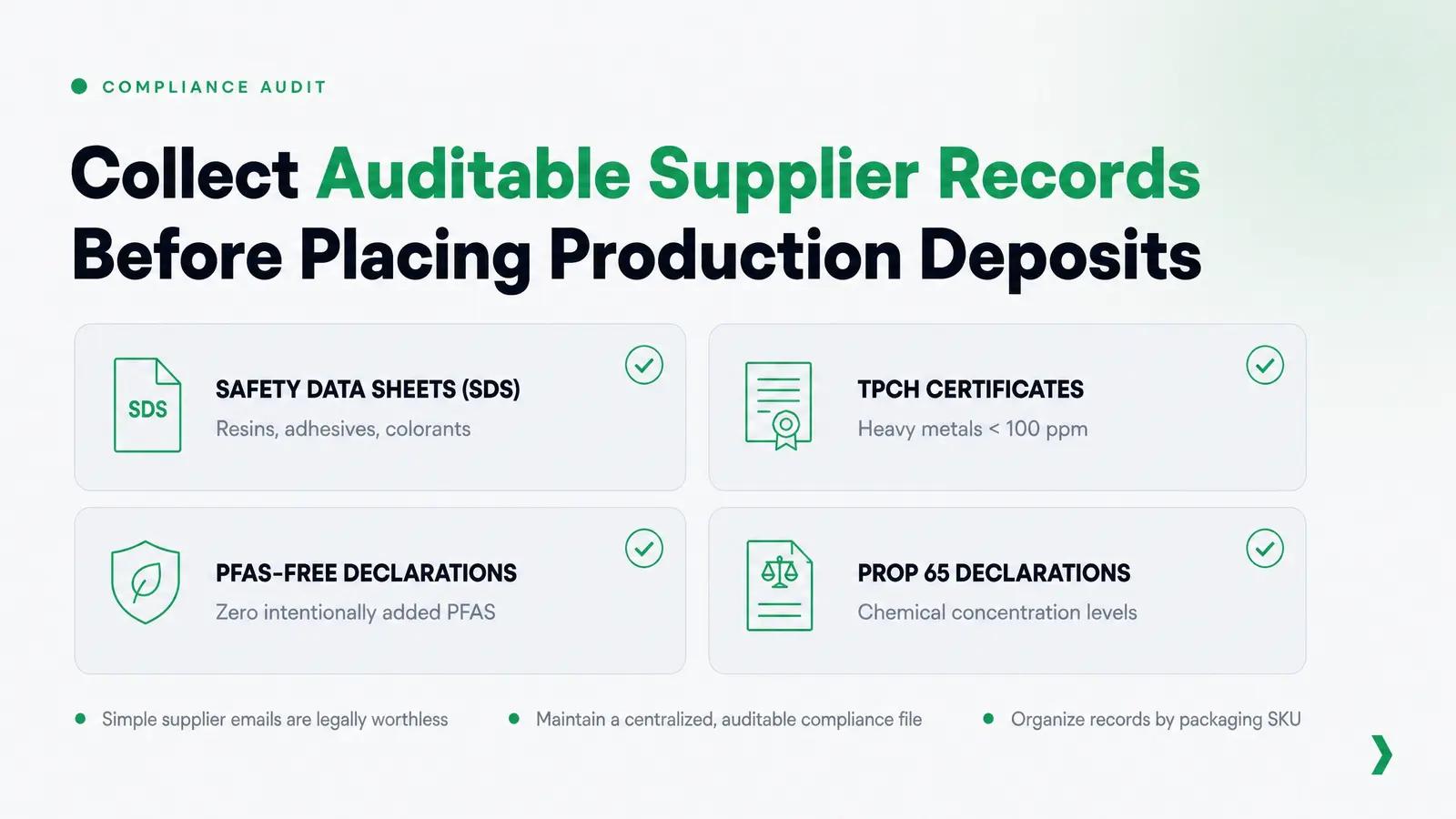
When a state regulatory body conducts an audit, or a retailer requests compliance verification, a simple email from your supplier saying "our packaging is safe" is legally worthless. You must maintain a centralized, auditable compliance file for every packaging SKU in your catalog.
Safety Data Sheets (SDS) are the starting point. While SDS are primarily OSHA documents for chemical formulas, your supplier should provide SDS for the raw plastic resins, color concentrates, and adhesives used to manufacture your containers and closures [5].
TPCH Certificates of Compliance certify that the packaging component complies with the Toxics in Packaging Clearinghouse standards, guaranteeing that the sum of incidental concentration levels of lead, cadmium, mercury, and hexavalent chromium does not exceed 100 ppm [3].
PFAS-Free Declarations are formal statements from the manufacturer certifying that no per- or polyfluoroalkyl substances were intentionally added during the manufacturing process or applied as a surface treatment [21].
Prop 65 Material Declarations are written statements from the supplier's regulatory affairs department confirming whether any of the 900-plus substances on the California OEHHA list are present in the material, and if so, their specific concentration levels [2] [3].
FDA Food-Contact Compliance Certificates (21 CFR) provide an excellent baseline of purity for primary packaging that directly contacts your cosmetic formula, even though cosmetics are not legally classified as food-contact applications.
Sourcing Without the Compliance Headache
Navigating this regulatory maze is a massive administrative burden for an independent beauty brand. Chasing down international factories for heavy metal certificates, verifying PFAS-free coatings, and interpreting complex state-level EPR thresholds can easily stall a product launch.
This is why we built Packfolio (packfolio.com).
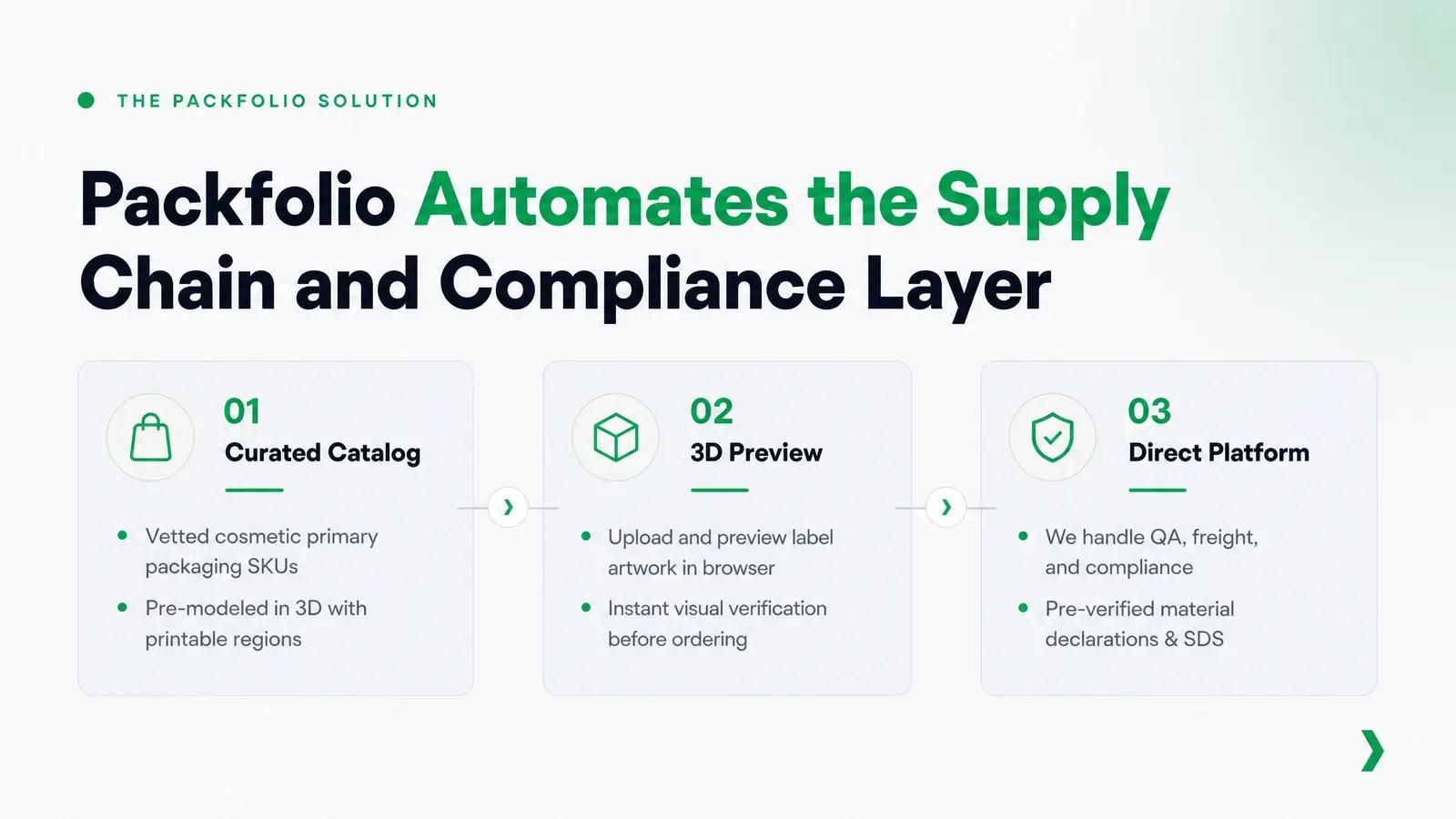
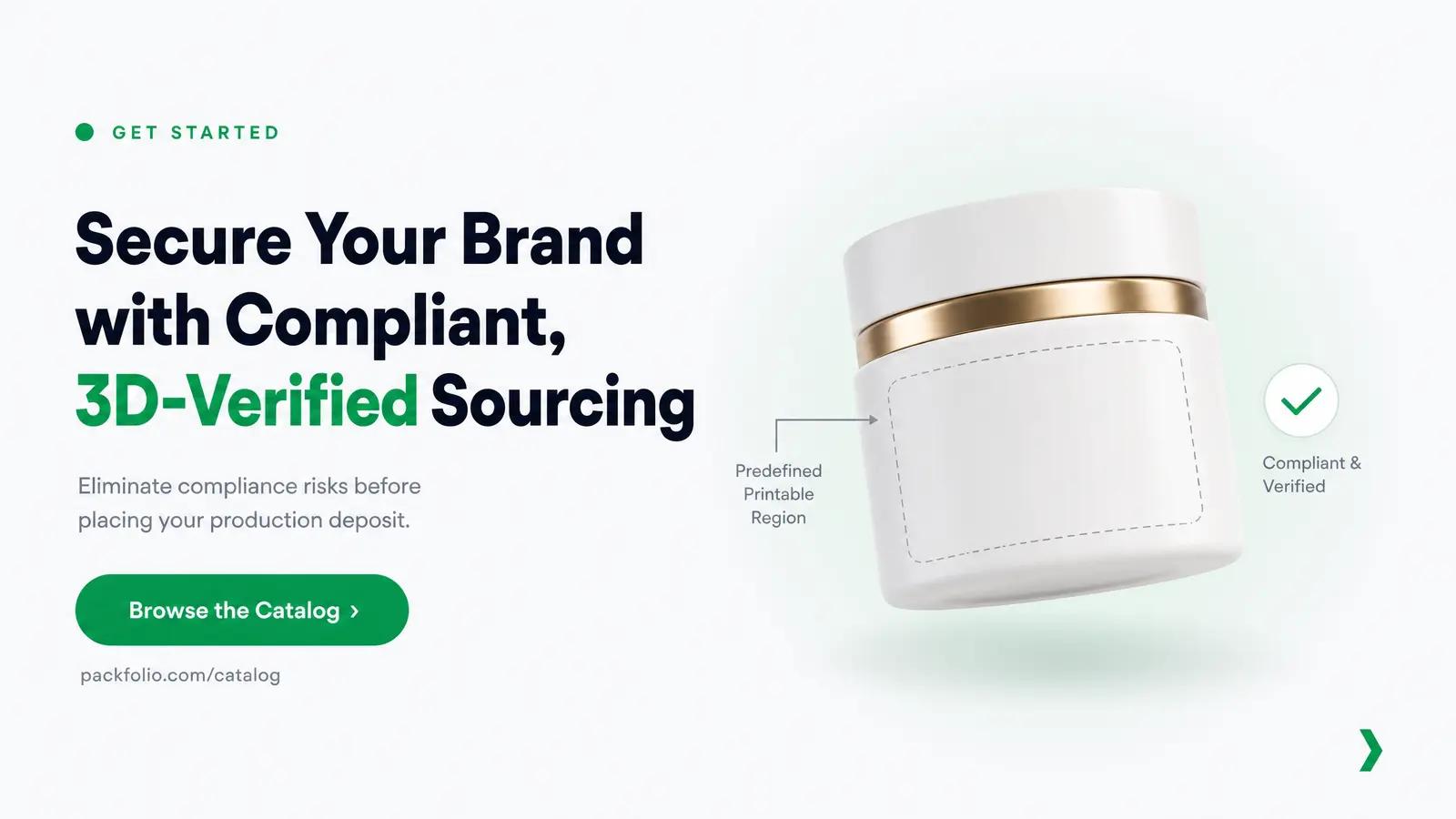
Packfolio is an on-demand custom packaging platform designed specifically for beauty brands. We curate a vetted catalog of cosmetic primary packaging SKUs, including bottles, jars, tubes, droppers, airless pumps, lip components, compacts, and closures [23]. Every SKU in our catalog is pre-modeled in 3D with predefined printable regions, so you can preview your label artwork in the browser before you order [23].
Because we operate as a direct platform, we handle the complex supply chain and compliance layer for you. We coordinate directly with manufacturing facilities, perform rigorous quality assurance, and manage freight delivery to your door [23]. You do not have to contact suppliers or chase down regulatory documentation. We maintain the necessary material declarations, heavy metal compliance records, and safety data sheets for our curated catalog, ensuring your packaging meets the highest standards before it ever reaches our 3D design tool.
Finalize Your Sourcing Today
Do not let a late-stage compliance audit or a private lawsuit derail your beauty brand's growth. Sourcing compliant, high-quality primary packaging should be the simplest step in your supply chain.
Browse Packfolio's curated cosmetic packaging catalog and preview your label in 3D before you order, so what you see is exactly what arrives at your door. packfolio.com/catalog
Frequently Asked Questions
Does Prop 65 apply to cosmetic packaging or just formula ingredients?
Prop 65 applies to any substance that exposes a consumer to a listed chemical, meaning the physical packaging (bottles, caps, droppers, and inks) is heavily scrutinized [2] [3]. Private plaintiffs frequently sue beauty brands over lead in colored glass, phthalates in rubber dropper bulbs, or BPA in plastic liners [3].
Which states currently have EPR packaging laws for beauty brands?
As of 2026, seven states have enacted packaging EPR laws: California, Colorado, Oregon, Maine, Minnesota, Washington, and Maryland [9] [10]. These laws require packaging "producers" (typically the brand owner) to register with a state-approved Producer Responsibility Organization (PRO) and pay fees to fund recycling infrastructure [8] [9].
What does "producer" mean under EPR laws, and does it apply to small indie brands?
Under EPR laws, the "producer" is generally the brand owner or licensee of the packaged product sold into the state [9]. However, most states have small producer exemptions. Brands with under $1 million in global revenue are exempt in California, while Colorado, Oregon, and Minnesota exempt brands with under $2 million to $5 million in revenue or under 1 ton of packaging weight [12] [14] [15] [16].
Do I need a Prop 65 warning on my packaging if I ship to California?
A warning is only required if consumer exposure to a listed chemical exceeds California's Safe Harbor Levels [2] [4]. Because direct-to-consumer brands ship nationwide from a single SKU, the practical decision is binary: you must either apply the warning to all packaging, or obtain documented laboratory proof that your packaging materials do not expose consumers to restricted substances above the safe harbor thresholds [3].
How do I verify that my packaging materials comply with restricted substance lists?
You must request formal documentation from your packaging supplier before placing an order [5]. This includes Safety Data Sheets (SDS), TPCH certificates confirming heavy metals are under 100 ppm, and written declarations certifying that the materials are free of intentionally added PFAS, phthalates, and Prop 65 chemicals [3] [21].
References
[1] Modernization of Cosmetics Regulation Act of 2022 (MoCRA). US Food and Drug Administration, 2022. https://www.fda.gov/cosmetics/cosmetics-laws-regulations/modernization-cosmetics-regulation-act-2022-mocra
[2] About Proposition 65. California Office of Environmental Health Hazard Assessment (OEHHA), 2026. https://oehha.ca.gov/proposition-65/about-proposition-65
[3] California Proposition 65 Product Compliance Guide for Article Manufacturers. Regilient, 2026. https://www.regilient.ai/blog/california-proposition-65-product-compliance-guide-article-manufacturers
[4] Proposition 65 No Significant Risk Levels (NSRLs) and Maximum Allowable Dose Levels (MADLs). California Office of Environmental Health Hazard Assessment (OEHHA), 2026. https://oehha.ca.gov/proposition-65/general-info/proposition-65-no-significant-risk-levels-nsrls-and-maximum-allowable-dose-levels-madls
[5] Proposition 65 Compliance for Cosmetics Products. Intertek Assuris, 2025. https://www.intertek.com/assuris/cosmetics/safety/prop-65-compliance-for-cosmetics/
[6] New Proposition 65 Amendments In Effect in 2025. Stinson LLP, 2025. https://www.stinson.com/newsroom-publications-warning-new-proposition-65-amendments-in-effect-in-2025
[7] Federal Court Blocks Prop 65 Warning for Titanium Dioxide in Cosmetics. ArentFox Schiff, 2025. https://www.afslaw.com/perspectives/consumer-products-watch/federal-court-blocks-prop-65-warning-titanium-dioxide
[8] Introduction to the Guide for EPR Proposals. Sustainable Packaging Coalition (SPC), 2026. https://epr.sustainablepackaging.org/
[9] EPR Packaging Laws Moving from Concept to Compliance. Mayer Brown, 2026. https://www.mayerbrown.com/en/insights/publications/2026/02/epr-packaging-laws-moving-from-concept-to-compliance
[10] You're Ready for MoCRA, but Are You EPR Compliant? BeautyMatter, 2024. https://beautymatter.com/articles/youre-ready-for-mocra-but-are-you-epr-compliant
[11] Producer Responsibility Program. Colorado Department of Public Health and Environment (CDPHE), 2026. https://cdphe.colorado.gov/hm/epr-program
[12] Minnesota Enacts Extended Producer Responsibility (EPR) Law: Key Compliance Deadlines Begin July 1, 2025. Fredrikson & Byron, P.A., 2025. https://www.fredlaw.com/alert-minnesota-enacts-extended-producer-responsibility-epr-law-key-compliance-deadlines-begin-july-1-2025
[13] Plastic Pollution Prevention and Packaging Producer Responsibility Act (SB 54). California Department of Resources Recycling and Recovery (CalRecycle), 2026. https://calrecycle.ca.gov/packaging/packaging-epr/
[14] Packaging EPR Laws Comparison Series, Part Three: Responsible Party and Governance. Product Stewardship Institute (PSI), 2025. https://productstewardship.us/packaging-epr-laws-comparison-series-responsible-party-governance-part-three/
[15] Recycling Modernization Act Frequently Asked Questions. Oregon Department of Environmental Quality (DEQ), 2025. https://www.oregon.gov/deq/recycling/Documents/recRMAfaq.pdf
[16] Stewardship Program for Packaging. Maine Department of Environmental Protection (DEP), 2026. https://www.maine.gov/dep/waste/recycle/epr.html
[17] Washington State Enacts EPR Program for Packaging and Paper Products. Holland & Knight, 2025. https://www.hklaw.com/en/insights/publications/2025/05/washington-state-enacts-epr-program-for-packaging-and-paper-products
[18] Accurate Recycling Labels (SB 343). California Department of Resources Recycling and Recovery (CalRecycle), 2026. https://calrecycle.ca.gov/wcs/recyclinglabels/
[19] Mislabel It, Pay for It: California's Tough New Rules on Recycling Labels. Procopio, Cory, Hargreaves & Savitch LLP, 2026. https://www.procopio.com/resource/mislabel-it-pay-for-it
[20] Guides for the Use of Environmental Marketing Claims ("Green Guides"). Federal Trade Commission (FTC), 2012. https://www.ftc.gov/sites/default/files/attachments/press-releases/ftc-issues-revised-green-guides/greenguides.pdf
[21] PFAS in Cosmetics: State-Led Regulatory Surge Demands Industry Action. Holland & Knight, 2025. https://www.hklaw.com/en/insights/publications/2025/08/pfas-in-cosmetics-state-led-regulatory-surge
[22] 2025 PFAS Prohibitions. Minnesota Pollution Control Agency (MPCA), 2025. https://www.pca.state.mn.us/air-water-land-climate/2025-pfas-prohibitions
[23] Packfolio Platform. Packfolio, Inc., 2026. https://packfolio.com


