
Pump Bottles for Lotion, Serum, and Body Care: A Buying Guide
This guide helps beauty founders select the right pump bottle by matching formula viscosity, dose size, locking mechanism, material, and airless technology to their product.
Pump performance is a high-risk detail founders often underestimate. When launching a new beauty product, the formula might be perfect, the branding might be striking, but if the pump dispensing the product fails, the entire consumer experience is compromised. A poorly designed pump can leak during transit, dispense an inconsistent amount of product, or react negatively with the formula inside. Choosing the right pump bottle requires careful consideration of formula viscosity, dose size, closure fit, materials, leakage risk, decoration, and sample testing.
Understanding Pump Mechanics and Formula Viscosity
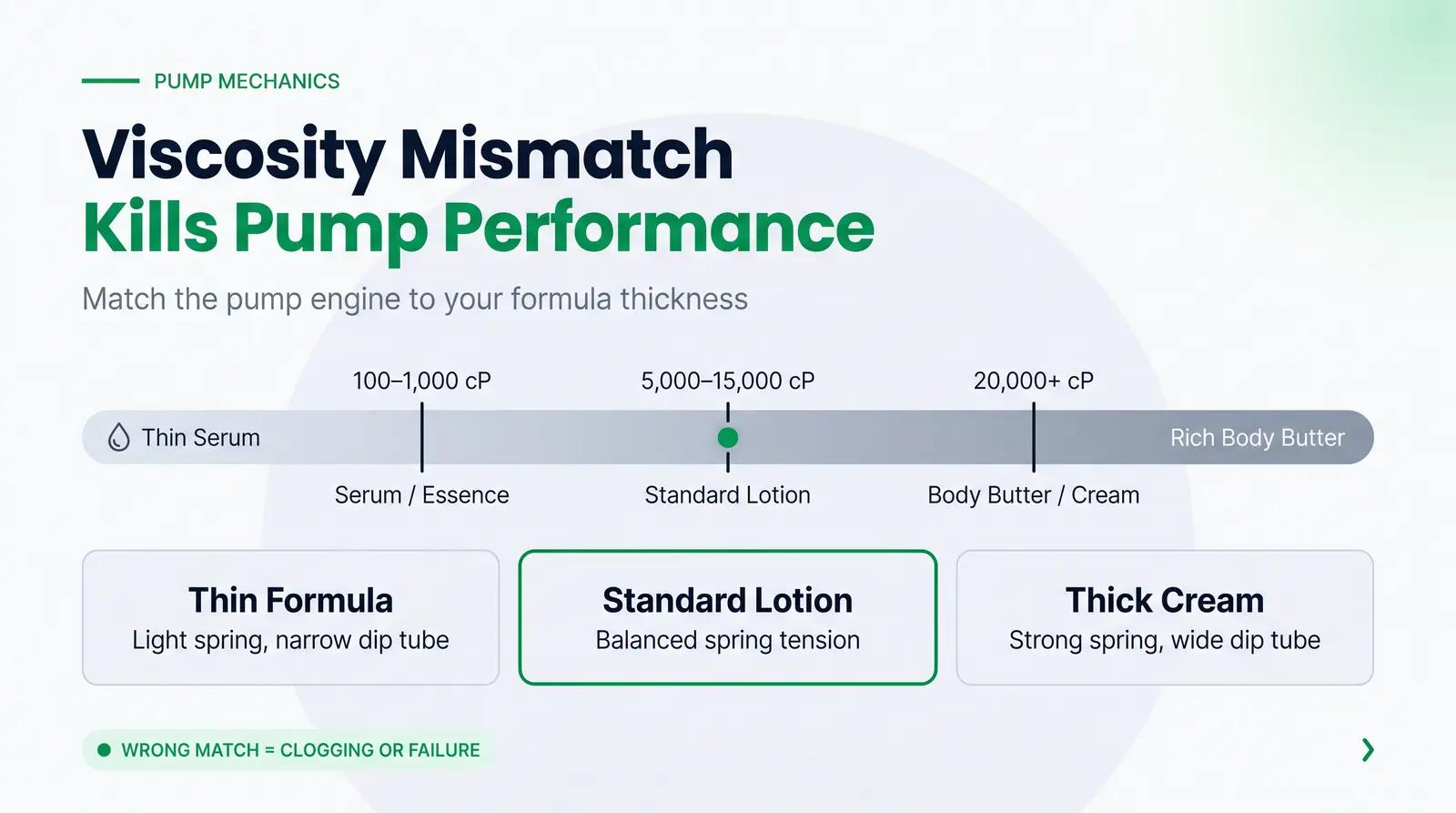
The relationship between a cosmetic formula and its dispensing mechanism is foundational. The viscosity of a lotion, serum, or cream dictates the type of pump required. Thin, watery serums need a different internal mechanism than thick, rich body butters. If a pump is not matched correctly to the formula's thickness, it can lead to clogging, sputtering, or complete failure to dispense.
Viscosity is typically measured in centipoise (cP), and pump manufacturers design their internal components—such as the spring, piston, and dip tube—to handle specific viscosity ranges. For example, a standard lotion pump might be designed for formulas between 5,000 and 15,000 cP. If a brand attempts to use a pump designed for a lightweight serum with a dense body cream, the pump will struggle to draw the product up the dip tube, leading to consumer frustration [1].
Determining the Correct Dose Size
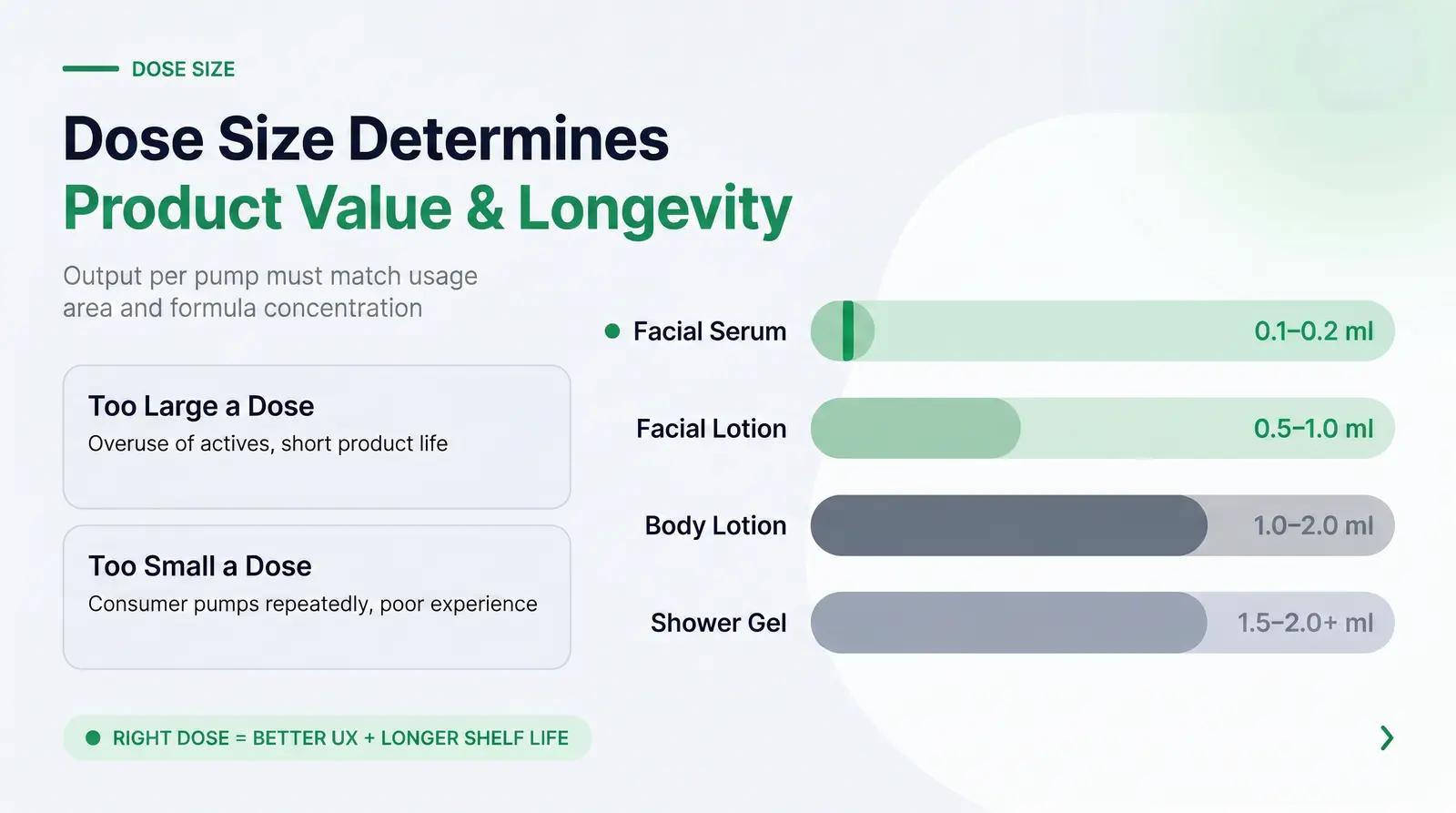
Dose size, or output, is the amount of product dispensed with a single full compression of the actuator. This is a critical factor that directly impacts how a consumer uses the product and how long the product lasts.
Selecting the appropriate dose size depends on the product's intended use and the concentration of its active ingredients. A highly concentrated facial serum might require a small dose, such as 0.1 ml to 0.2 ml per pump, to prevent overuse and ensure the product lasts for the expected duration. Conversely, a body lotion or shower gel requires a much larger dose, typically ranging from 1.0 ml to 2.0 ml or more, to provide enough product for a single application without requiring the consumer to pump repeatedly [1].
The Importance of Closure Fit and Leakage Prevention
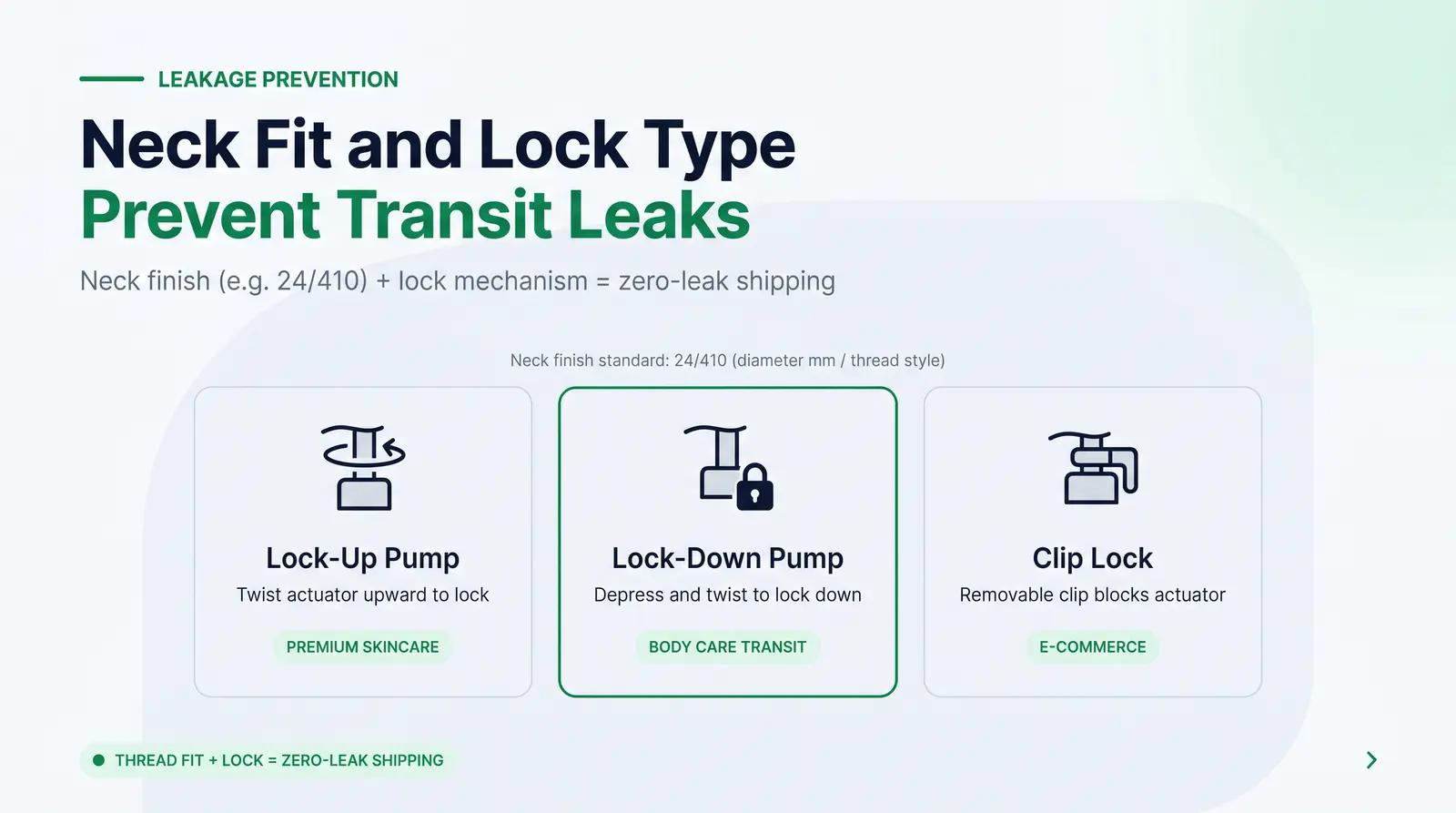
A pump is only as good as its seal. The connection between the pump collar and the bottle neck must be precise to prevent leakage, especially during e-commerce transit where packages are subjected to rough handling and pressure changes. The industry standard for measuring this fit is the neck finish, typically expressed as two numbers (e.g., 24/410), where the first number is the diameter in millimeters and the second indicates the thread style.
Leakage prevention goes beyond the thread fit. Many modern pumps incorporate locking mechanisms to secure the actuator during shipping.
Types of Pump Locks
There are three primary locking mechanisms used in cosmetic pumps to prevent accidental dispensing and leakage:
- Lock-Up Pumps: The actuator is pressed down to dispense and then twisted while in the 'up' position to lock. This is common in premium skincare lines.
- Lock-Down Pumps: The actuator must be pushed down and twisted to lock. This is often seen in larger body care products and provides a very secure seal for transit, though it can be messy if product is left in the nozzle [2].
- Clip Locks: A removable plastic clip is placed around the neck of the pump under the actuator, physically preventing it from being depressed. This is a simple, cost-effective solution often used for e-commerce [2].
Material Selection: Glass vs. Plastic
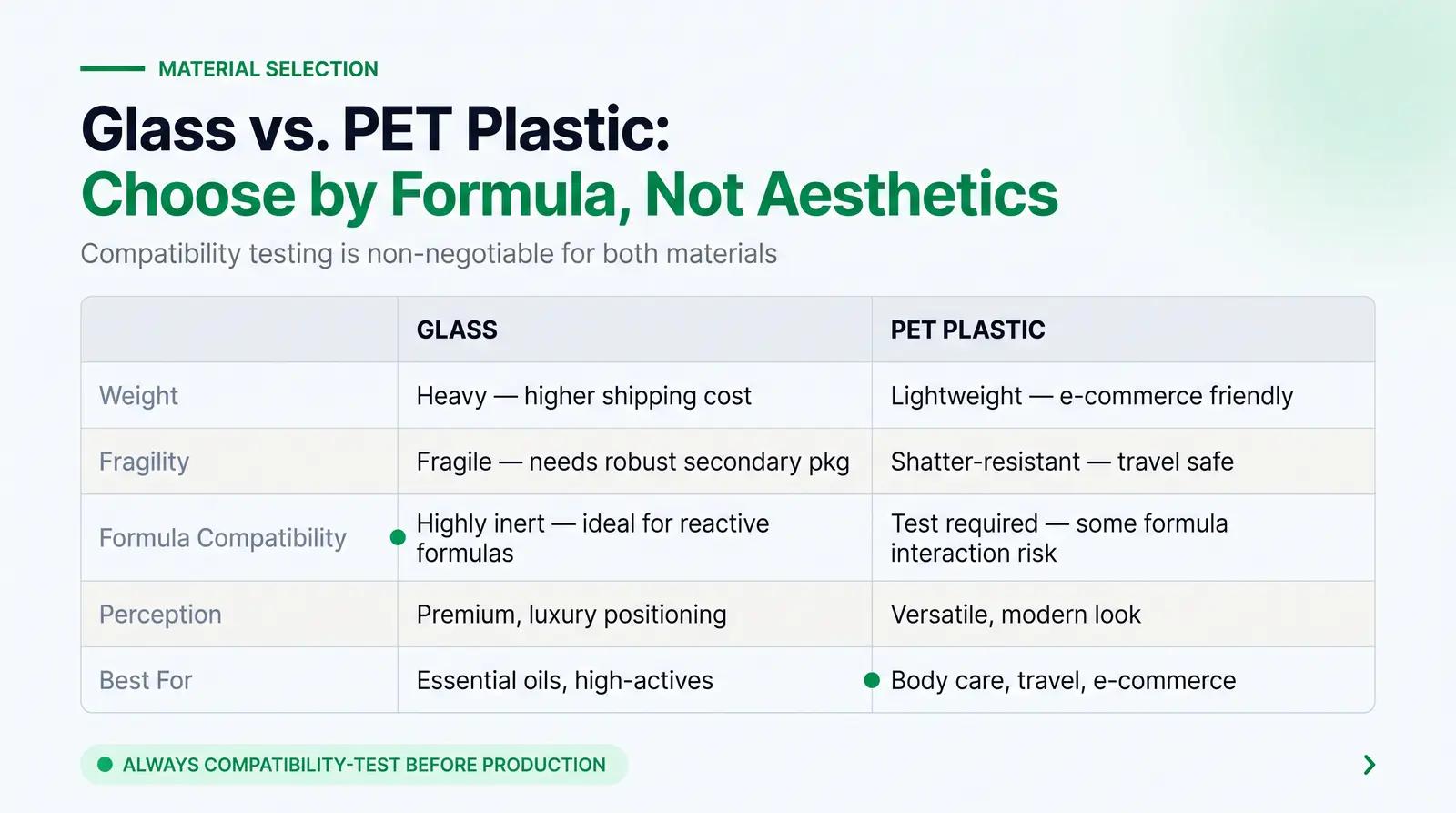
The choice of material for the bottle—primarily glass or plastic (such as PET or PP)—impacts the product's perceived value, compatibility, and sustainability profile.
Glass is often associated with luxury and premium positioning. It is highly inert, making it an excellent choice for reactive formulas or products containing high concentrations of essential oils. However, glass is heavy, increasing shipping costs, and fragile, requiring more robust secondary packaging.
Plastic, particularly Polyethylene Terephthalate (PET), offers a lightweight, shatter-resistant alternative. PET can be molded into various shapes and is highly transparent, mimicking the look of glass. While plastic is more durable for travel and e-commerce, certain formulas may interact with specific plastics over time, making compatibility testing essential [3].
Navigating Decoration and Design Constraints
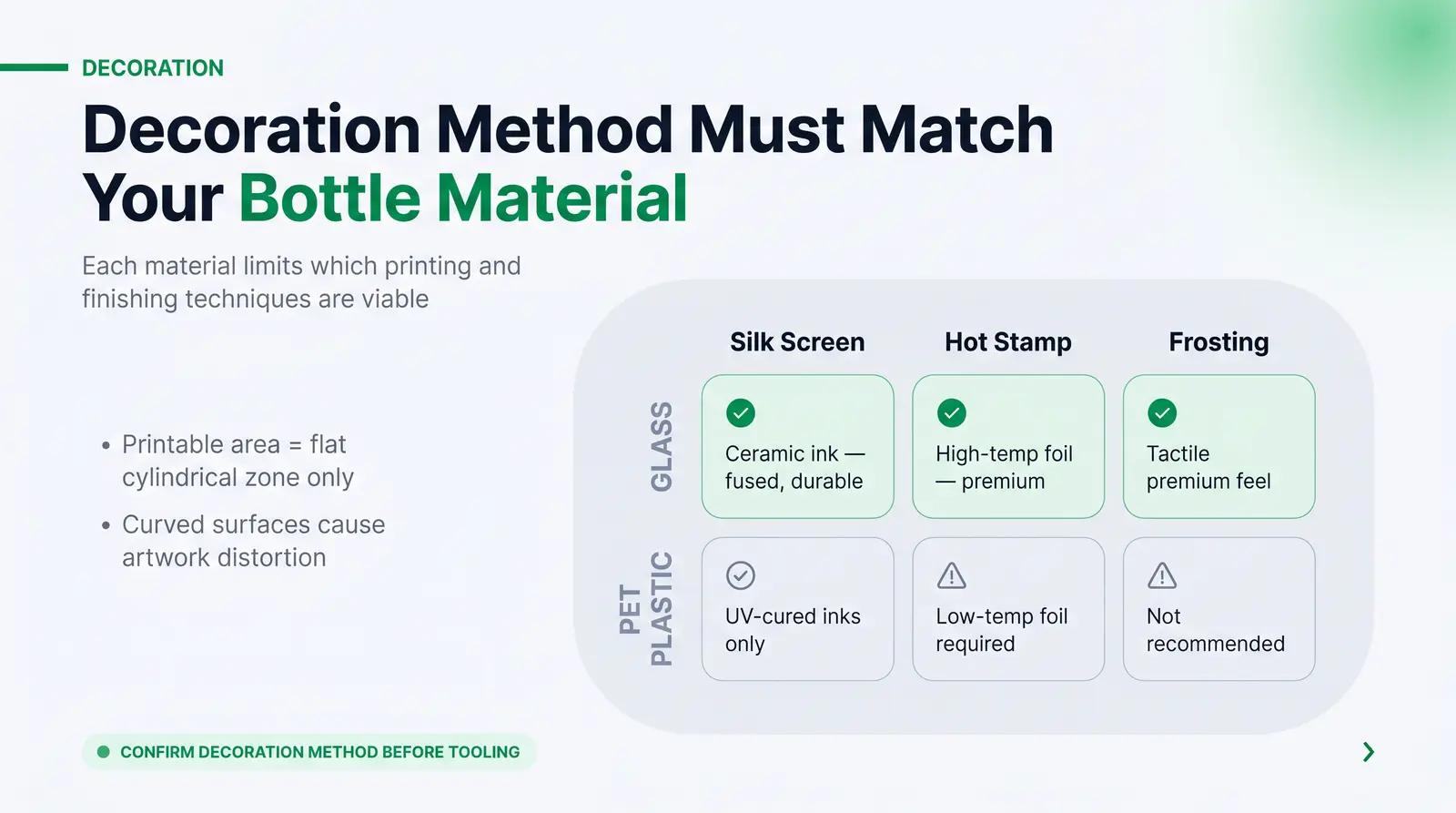
Decoration elevates a standard bottle into a brand asset. Techniques such as silk screening, hot stamping, and frosting are widely used, but each material presents specific constraints.
Glass bottles can withstand high-temperature decoration processes, allowing for ceramic silk screening that fuses the ink into the glass for a highly durable finish. Frosting glass provides a premium, tactile feel but can complicate secondary printing if the surface becomes too textured.
PET bottles, while versatile, cannot withstand the high heat used in some glass decoration methods. Instead, UV-cured inks or lower-temperature foils must be used. When designing artwork, brands must be aware of the printable area—the flat, cylindrical portion of the bottle where machinery can apply the design without distortion.
The Role of Airless Pump Technology
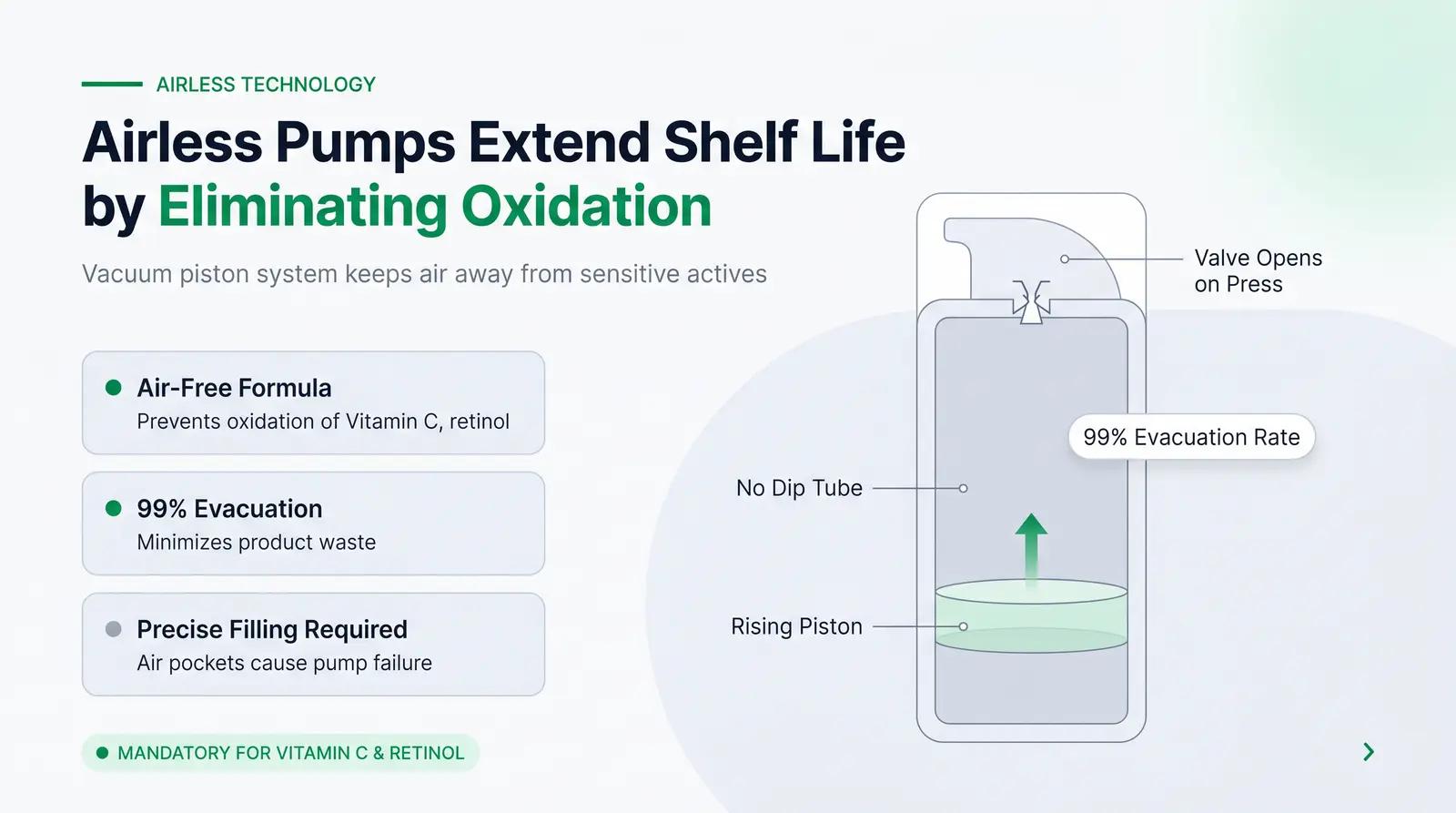
For sensitive formulations, particularly those prone to oxidation or containing active ingredients like Vitamin C or retinol, airless pump bottles offer a superior solution. Unlike traditional pumps that use a dip tube and allow air to replace the dispensed product, airless systems utilize a vacuum and a rising piston.
As the actuator is pressed, a small valve opens, dispensing the product and creating a vacuum that pulls a disc (piston) at the bottom of the bottle upward. This ensures that air never touches the remaining formula, significantly extending shelf life and preventing degradation [4]. Airless systems also boast an evacuation rate of up to 99%, minimizing product waste. However, they require precise filling processes to ensure no air pockets are trapped during manufacturing, which can cause the pump to fail [4].
The Packfolio Advantage
Sourcing packaging involves managing multiple variables: coordinating with suppliers, vetting factories, ensuring quality control, and managing freight. Packfolio handles these complex logistics for the customer. As an on-demand custom packaging platform, Packfolio curates a vetted catalog of cosmetic primary packaging SKUs, including a wide range of pump bottles.
Customers can browse 3D models, customize artwork within predefined print zones using a browser-based tool, and preview the photorealistic result before ordering. Packfolio coordinates production, quality assurance, and delivery, ensuring that the 3D preview matches the final received product exactly.
The Pump Selection Framework
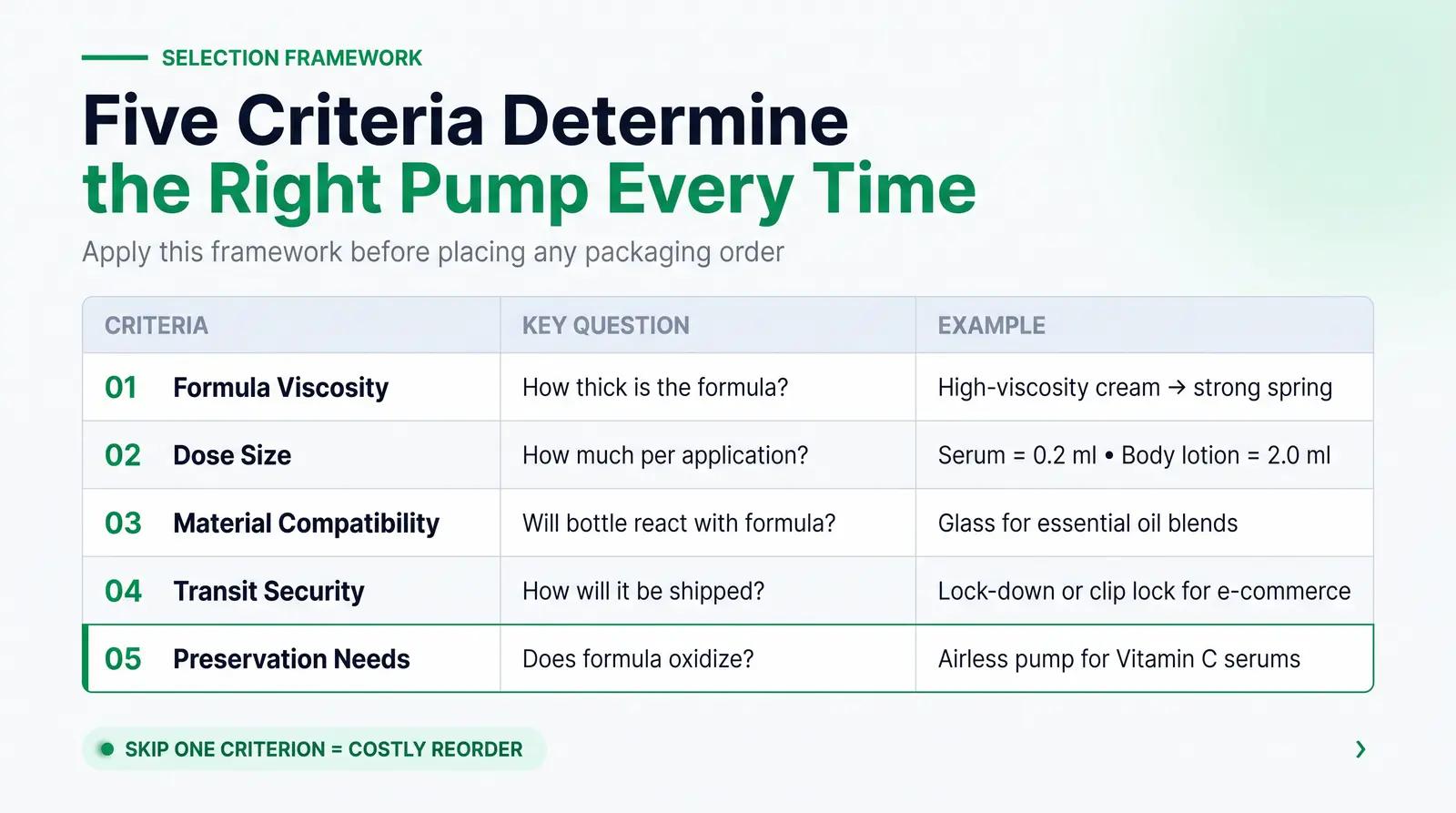
To simplify the decision-making process, brands can use the following framework when selecting a pump bottle:
| Criteria | Consideration | Example Application |
|---|---|---|
| Formula Viscosity | Match pump engine to product thickness. | High-viscosity cream requires a strong spring and wide dip tube. |
| Dose Size | Determine output per pump based on usage. | 0.2 ml for facial serum; 2.0 ml for body lotion. |
| Material Compatibility | Ensure bottle and pump materials do not react with formula. | Glass for highly reactive essential oil blends. |
| Transit Security | Select locking mechanism for e-commerce. | Lock-down pump or clip lock for shipping durability. |
| Preservation Needs | Assess if formula requires protection from air/light. | Airless pump for Vitamin C serums. |
Worked Example: Launching a Vitamin C Serum
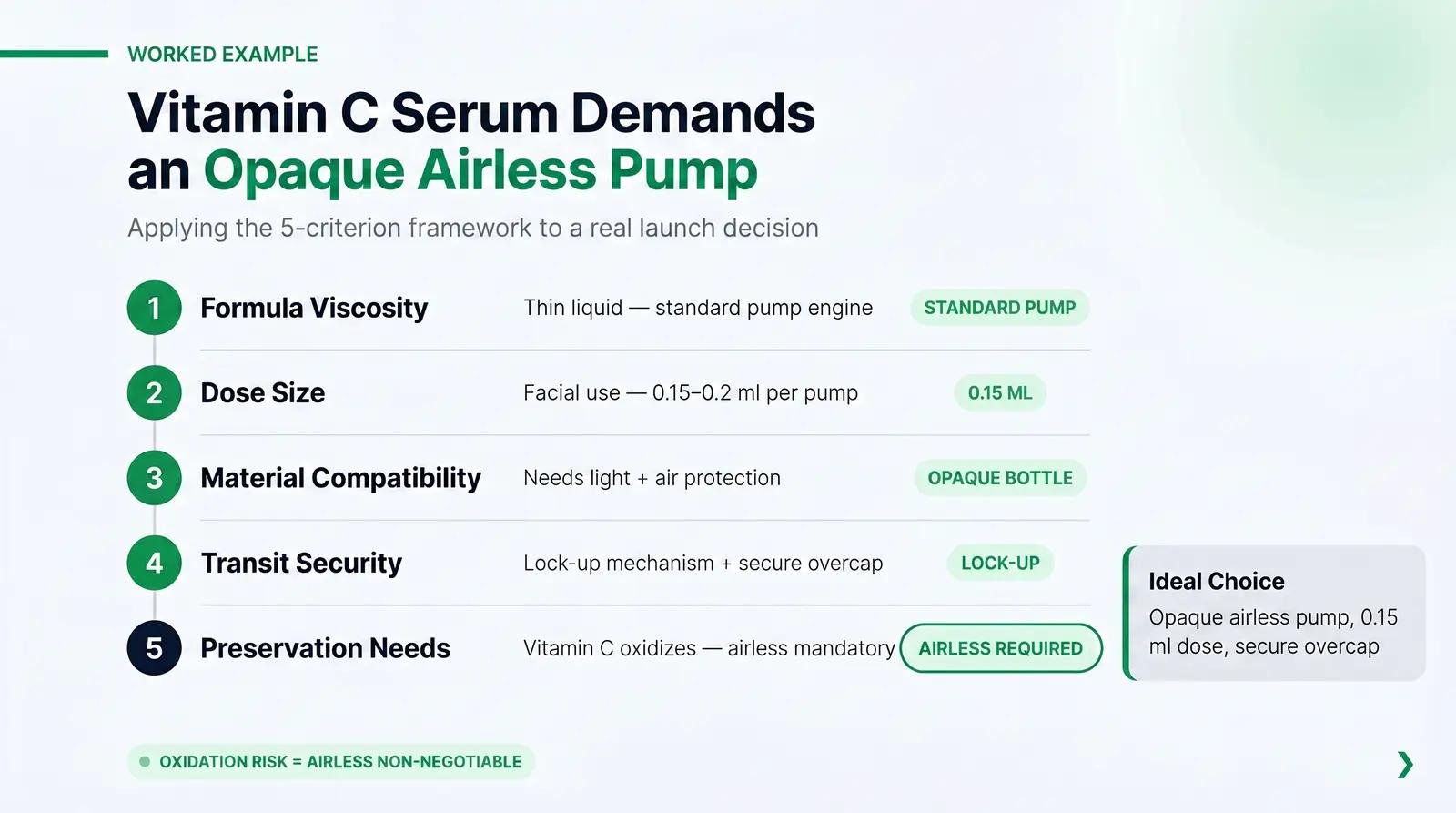
Imagine a brand launching a new, highly concentrated Vitamin C serum. The formula is a thin liquid, highly susceptible to oxidation, and intended for facial use where only a few drops are needed.
Applying the framework:
- Formula Viscosity: The thin liquid requires a standard or slightly restricted pump engine to prevent sputtering.
- Dose Size: A small output, around 0.15 ml to 0.2 ml, is ideal for facial application.
- Material Compatibility: The formula needs protection from light and air.
- Transit Security: A standard lock-up mechanism is sufficient, provided the overcap is secure.
- Preservation Needs: Due to the oxidation risk of Vitamin C, an airless pump bottle is mandatory. An opaque or UV-coated bottle will provide further light protection.
The ideal choice is an opaque, airless pump bottle with a 0.15 ml dose size and a secure overcap.
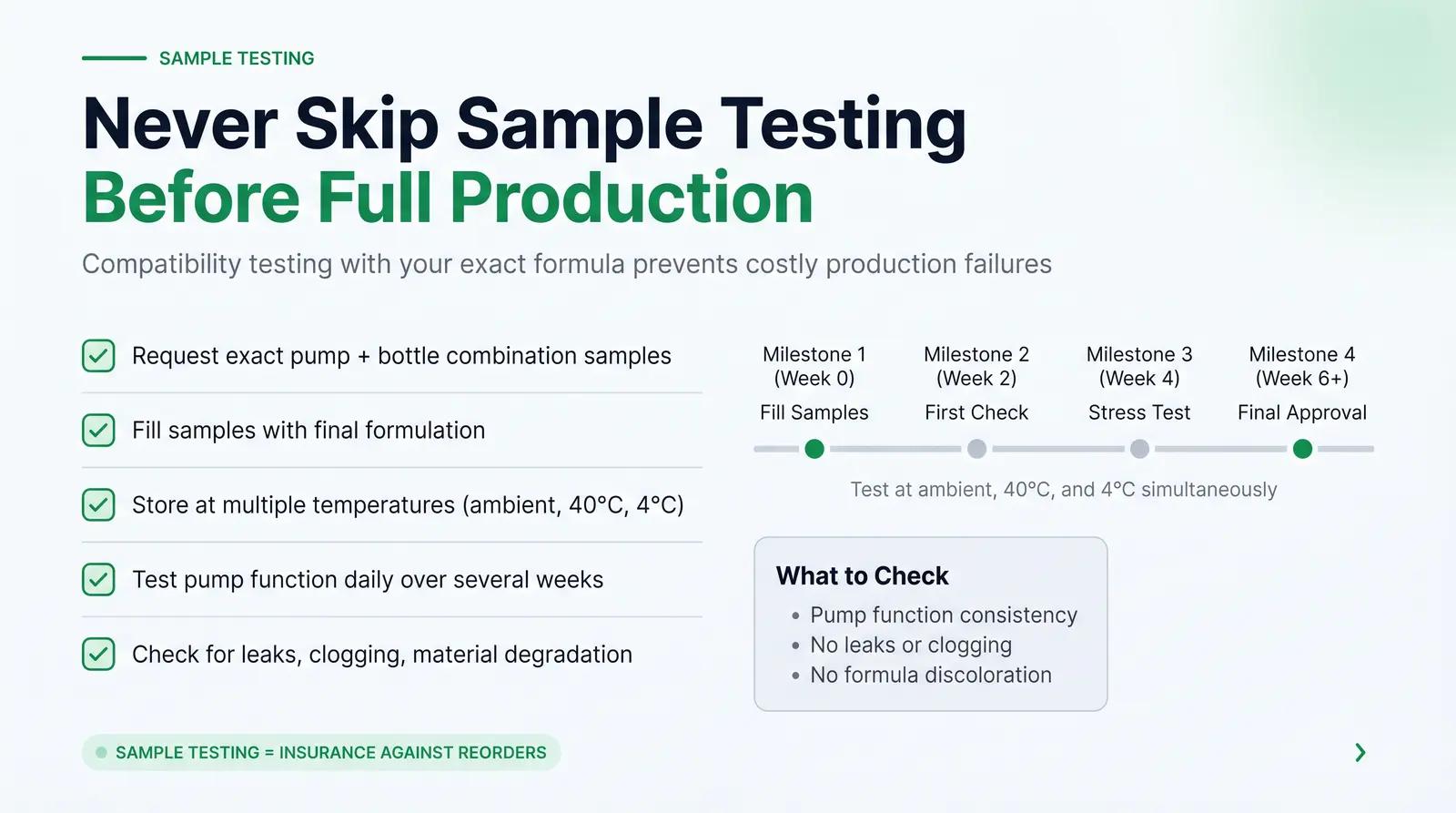
The Importance of Sample Testing
Before committing to a large production run, rigorous sample testing is non-negotiable. Brands must request samples of the exact pump and bottle combination and conduct compatibility testing with the final formulation. This involves filling the samples, storing them at various temperatures, and testing the pump function repeatedly over several weeks to check for leaks, clogging, or material degradation.
Frequently Asked Questions
What is the difference between a lock-up and a lock-down pump? A lock-up pump is locked by twisting the actuator while it is in its resting, upward position. A lock-down pump requires the user to depress the actuator fully and twist it to lock it in the downward position, which is often more secure for shipping but can cause a small amount of product to dispense during the locking process.
Why did my airless pump stop working? Airless pumps rely on a vacuum. If there is an air pocket trapped in the product during the filling process, or if the bottle was not filled completely to the top, the vacuum seal can be broken, causing the pump to fail. Priming the pump (pressing it several times) can sometimes resolve minor air locks.
Can I use a glass bottle for a shower product? While glass is premium and highly compatible with most formulas, it is generally not recommended for shower products due to the high risk of breakage in a wet, slippery environment. PET or HDPE plastics are safer alternatives for bath and body care.
How do I know what dose size my product needs? Dose size should be determined by the product's application area and concentration. Facial serums typically use 0.1 ml to 0.2 ml, facial lotions use 0.5 ml to 1.0 ml, and body lotions or shampoos require 1.5 ml to 2.0 ml or more per pump.
Does Packfolio handle the printing on the bottles? Yes, Packfolio offers SKUs with or without custom decoration. Customers can use the 3D design tool to place artwork within predefined printable regions, and Packfolio manages the production and quality control to ensure the final product matches the digital preview.
References
[1] Packaging Pitfalls: Top 3 Watchouts for Cosmetic Pumps [2] The Guide to Leak-Proof Pump Bottles [3] How to Choose Between Glass and Plastic for Cosmetics [4] Airless Pump Bottles 101: Examples, Benefits, and Design Ideas [5] How does the up-lock lotion pump mechanism guarantee leak prevention during transport? [6] Harnessing the Advantages of Airless Packaging


