
Refillable Cosmetic Packaging: When It Works and When It Does Not
Refillable cosmetic packaging reduces waste only when formula stability, customer retention, and margin structure align—making it a second-phase strategy for most indie brands.
There is a growing tension in the beauty industry between the undeniable appeal of sustainability and the harsh realities of operational complexity. Independent founders often launch with a vision of zero-waste product lines, only to find themselves navigating high minimum order quantities, unforeseen contamination risks, and the sobering reality that their customers might not actually buy the refills. Refillable packaging is frequently positioned as a universal solution to the industry's plastic waste problem, but the truth is far more nuanced. Deciding whether to build a product line around a refillable system requires evaluating real tradeoffs against conventional single-use packaging and understanding what preconditions must be in place for the system to succeed.
What Refillable Cosmetic Packaging Actually Means
Refillable packaging is not a monolith. The term is often used interchangeably with "reusable," but there is a meaningful distinction. A reusable container might simply be a glass jar that a consumer washes and repurposes. A true refillable system, however, is engineered specifically for the ongoing replenishment of the original product.
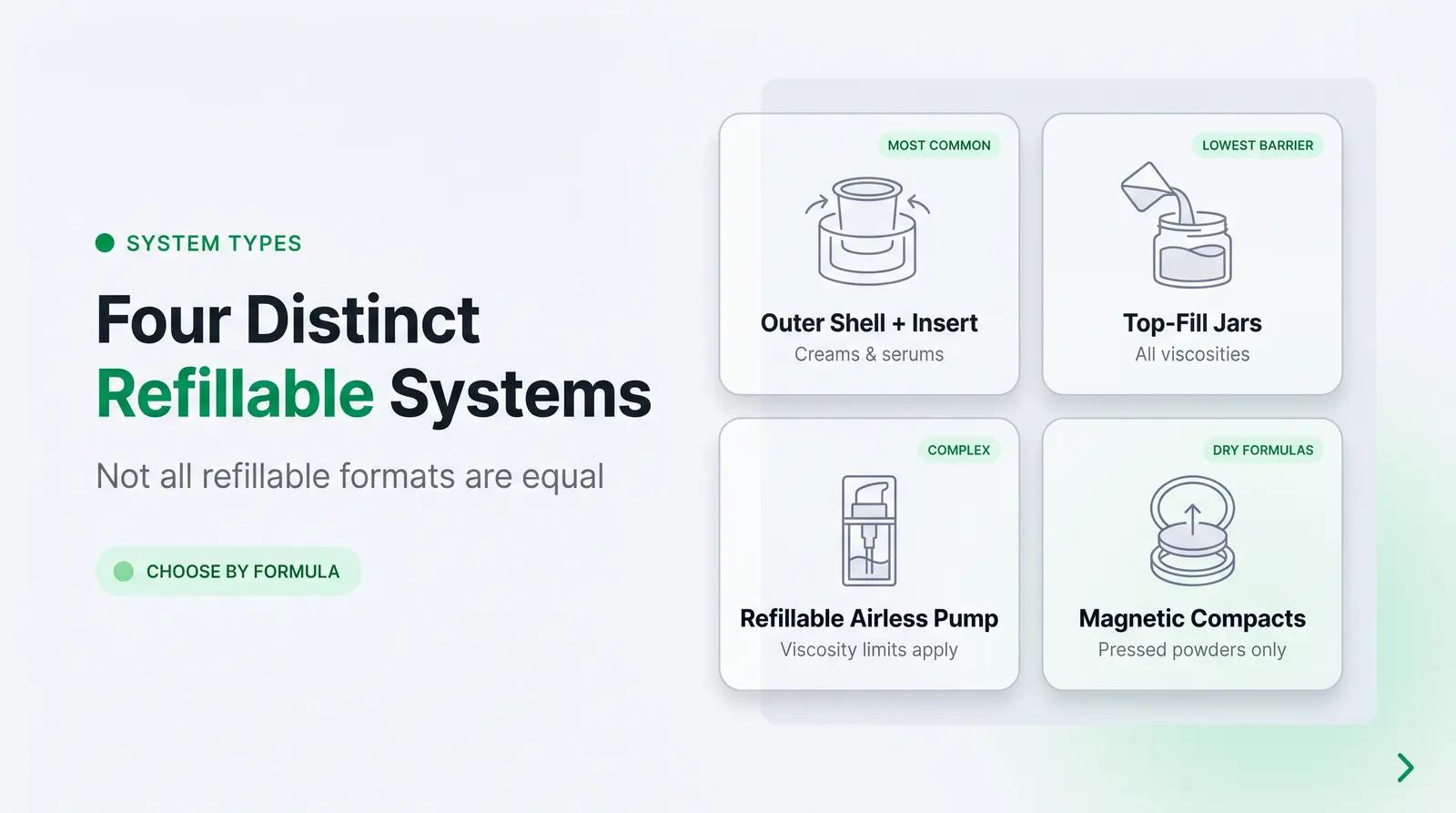
These systems fall into a few distinct categories. The most common is the outer shell and refill insert model, where a durable, premium outer casing houses a lightweight, replaceable inner pod or cartridge. This is frequently seen in moisturizers and serums. Top-fill refillable containers require the consumer to pour product from a larger bulk pouch or bottle into their original primary packaging. Refillable airless pumps combine the protective benefits of airless dispensing technology with a replaceable inner cartridge, though these are more complex to engineer. Finally, magnetic or modular compact systems allow consumers to swap out individual pans of pressed powders or solid cosmetics.
The Sustainability Case and Its Limits
The primary driver behind refillable packaging adoption is waste reduction. When executed correctly, a refillable system can significantly decrease the volume of single-use plastic entering landfills. However, the sustainability case has distinct limits, often revealed through lifecycle analysis (LCA).
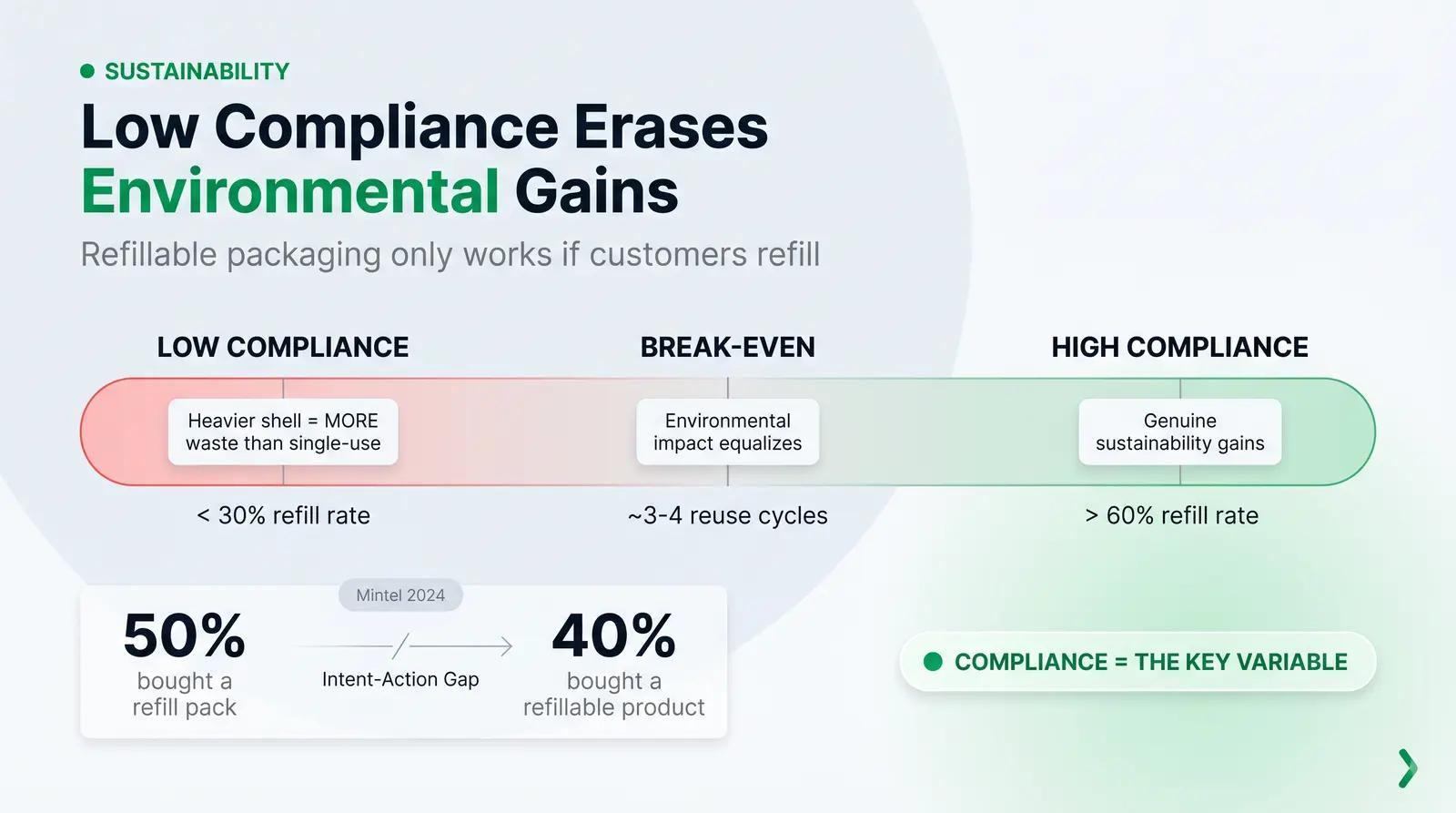
The environmental benefit of a refillable system is entirely dependent on the customer compliance rate: the frequency with which consumers actually purchase and use the refills. If a brand manufactures a heavy, durable outer shell intended for years of use, but the consumer only buys the product once, the environmental impact is actually worse than if the brand had used a lightweight, single-use container [1]. Research confirms that reusable packaging must be reused a minimum number of times to offset the higher manufacturing footprint of the durable outer shell. This threshold, known as the environmental break-even point, varies by material and system design [1]. When compliance rates are low, heavier packaging generates more lifecycle waste than conventional alternatives.
Mintel data from 2024 illustrates this gap clearly. Almost 50% of consumers surveyed had purchased a refill pack, but only 40% had actually bought a refillable product, highlighting a persistent gap between stated intention and action [2]. In the US specifically, refillable formats saw only 7% growth in launches between 2022 and 2024, reflecting the logistical challenges and higher costs associated with eco-friendly designs [2].
Formula and Container Compatibility
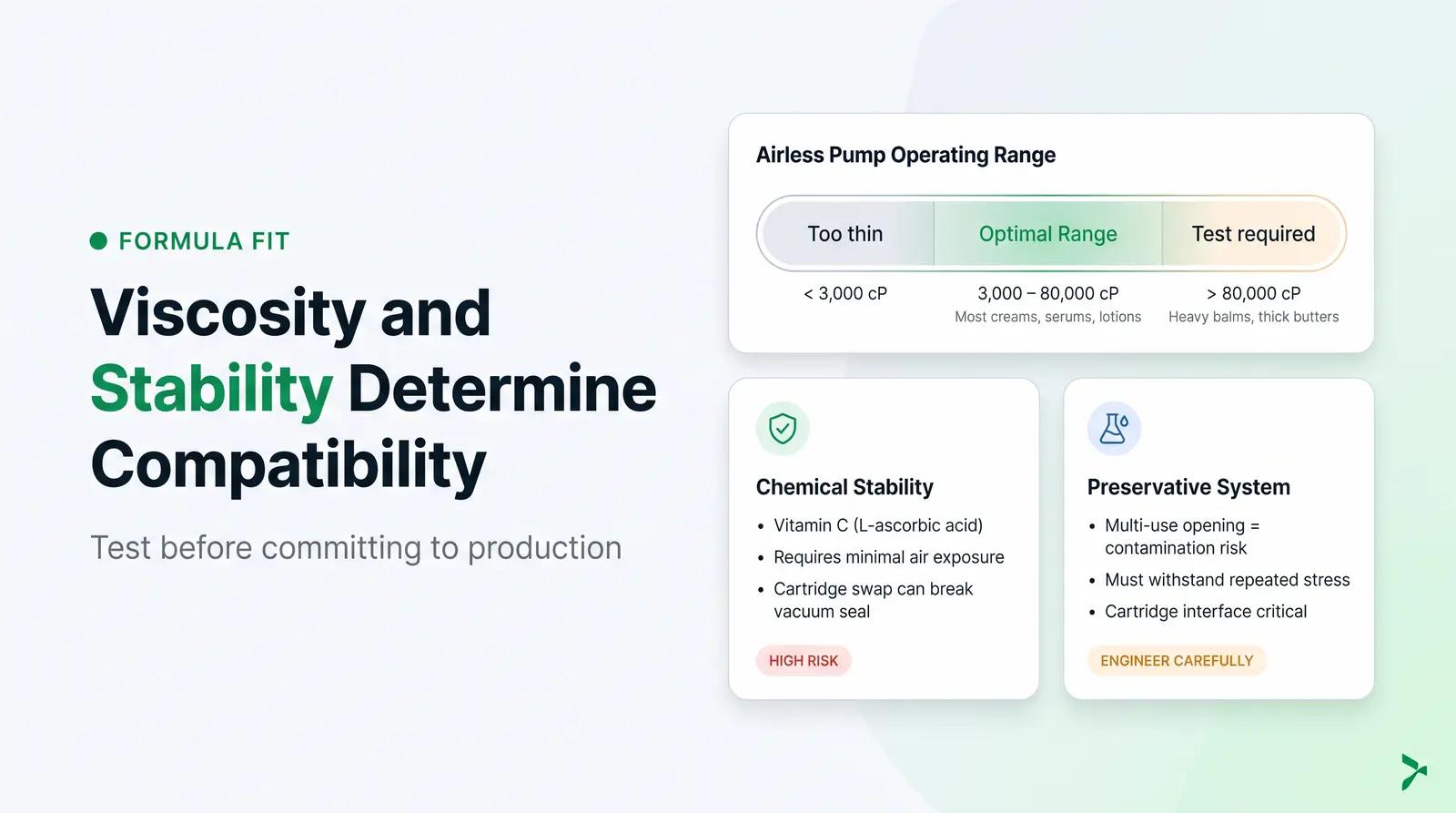
Not every formula is suited for a refillable format. The physical characteristics of the product must align with the dispensing mechanism. High-viscosity formulas like heavy balms or thick body butters can struggle to dispense cleanly through refillable airless pumps [3]. Most standard airless pump systems handle formulas in the 3,000 to 80,000 centipoise range, and anything approaching the upper end of that spectrum or exceeding it requires testing before production commitment.
Chemical stability is equally important. Products sensitive to oxidation, such as vitamin C serums formulated with L-ascorbic acid, require packaging that minimizes air exposure throughout the product's lifecycle [4]. While standard airless pumps provide this protection, the act of swapping a refill cartridge can introduce air or compromise the vacuum seal if the system is not precisely engineered. The interaction between the formula's preservative system and the multi-use opening of the container is also a critical factor, as refillable systems can increase the risk of contamination over time.
Sanitation and Contamination Risk
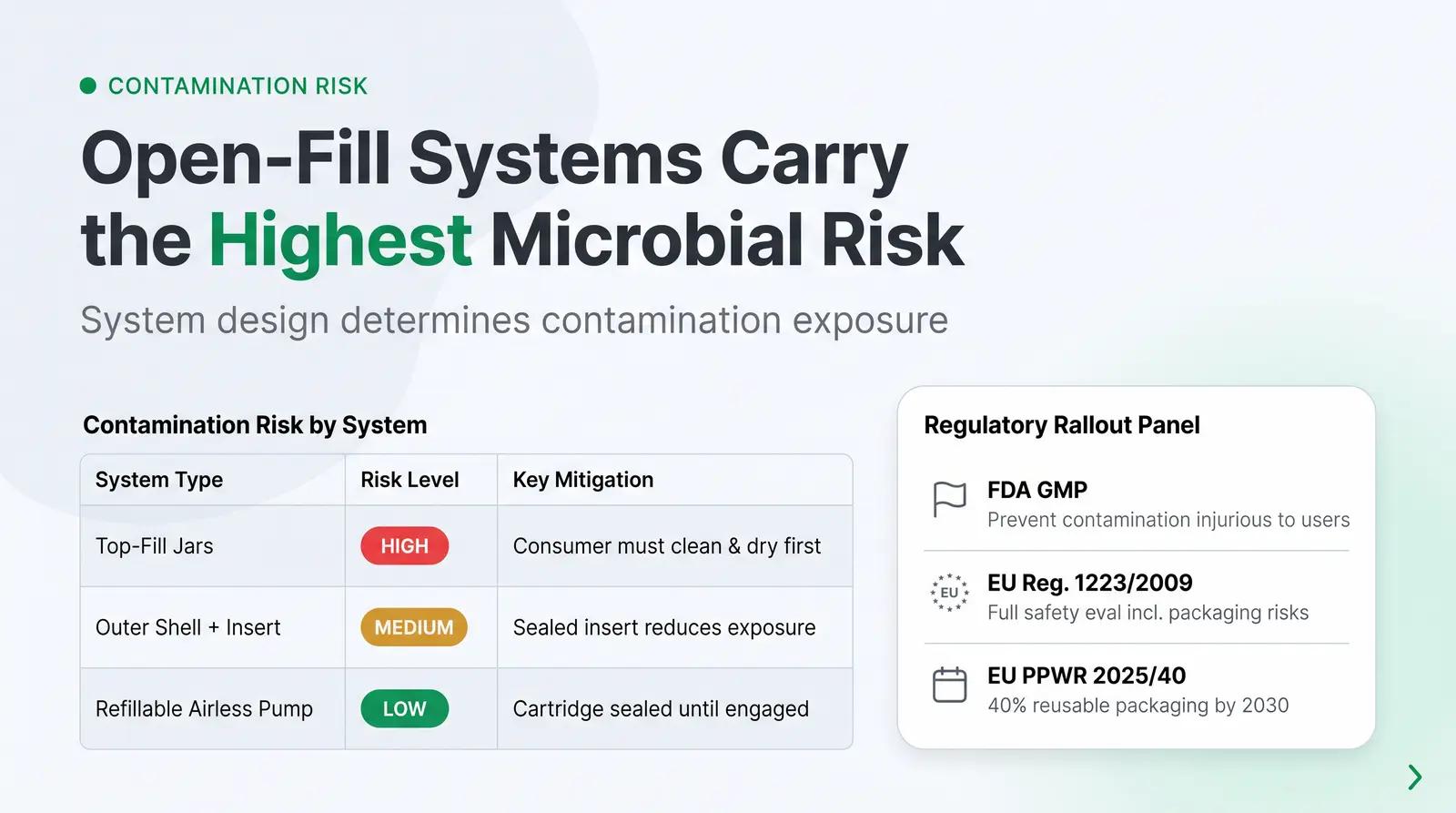
Sanitation is perhaps the most significant operational hurdle in refillable cosmetic packaging. Every time a consumer opens a container to insert a new refill or pour in new product, the formula is exposed to potential microbial contamination. The U.S. Food and Drug Administration (FDA) Cosmetic Good Manufacturing Practice (GMP) guidelines emphasize the necessity of preventing contamination that could render a product injurious to users [5]. Similarly, the EU Cosmetics Regulation No 1223/2009 mandates strict safety evaluations, including the assessment of packaging risks and potential contaminants [6].
For refillable systems, the preservative system must be robust enough to withstand repeated microbiological stress [6]. Open-jar top-fill systems present the highest risk, as consumers may not properly clean and dry the primary container before refilling, creating an environment favorable to bacterial growth. Cartridge-based systems mitigate this risk by keeping the new product sealed until it is engaged with the dispensing mechanism, but the interface between the cartridge and the pump must still be designed to prevent contamination buildup.
Brands operating in the EU should also note that the Packaging and Packaging Waste Regulation (EU) 2025/40 (PPWR) is now in force, with Article 29 setting reuse targets that will require at least 40% of certain packaging shipped within the EU to be reusable by 2030 [7]. This regulatory pressure makes refillable systems increasingly relevant for brands with European distribution, but it does not eliminate the need to address the sanitation and compliance challenges described above.
Cost Structure and Scale
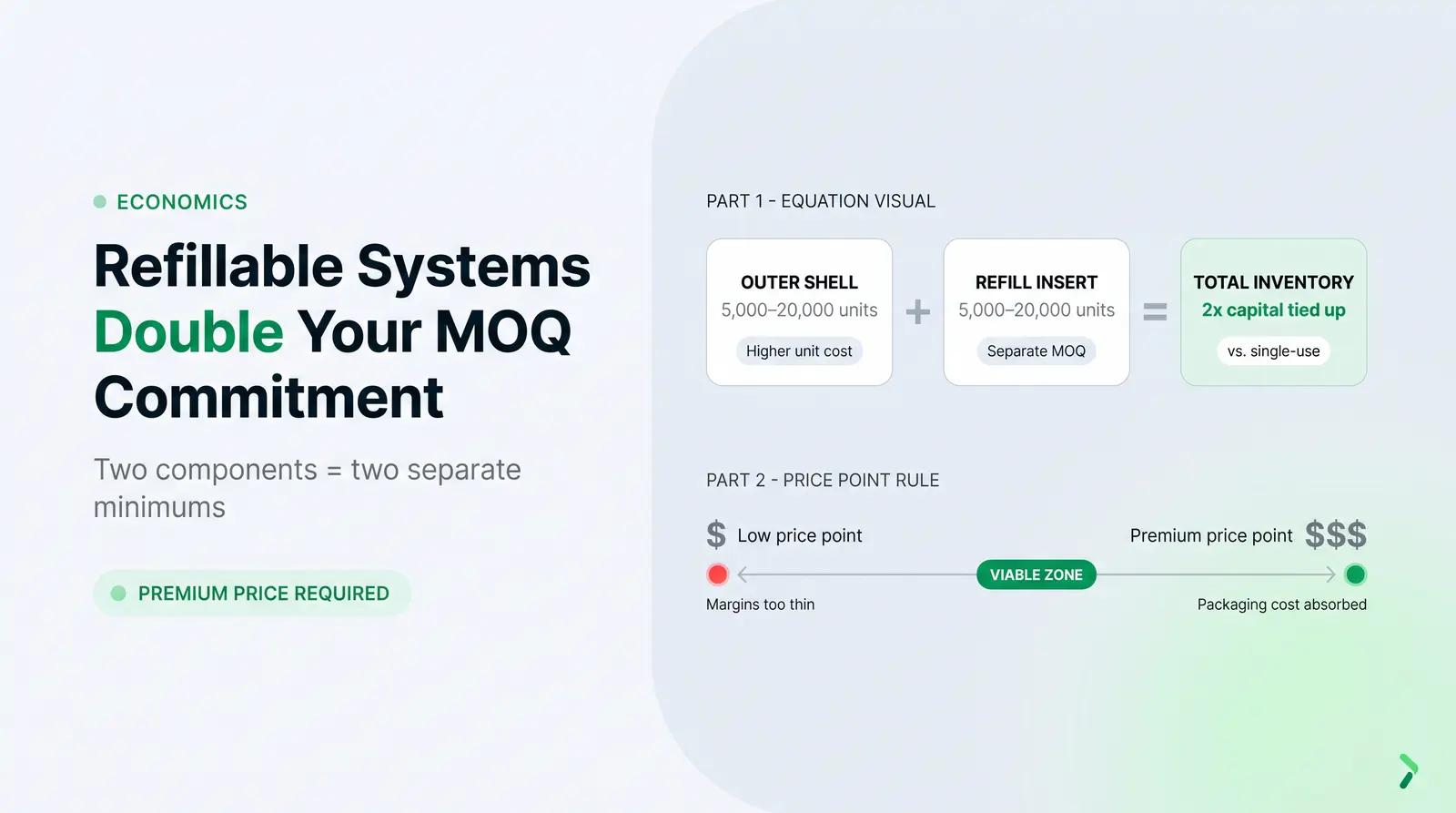
The economics of refillable packaging can be challenging, particularly for early-stage brands. The initial tooling costs for custom refill inserts and durable outer shells are significantly higher than those for standard packaging [3]. Minimum order quantities (MOQs) also present a barrier. A typical cosmetic packaging MOQ ranges from 5,000 to 20,000 units depending on the component type and customization level [8]. For refillable systems, this requirement applies to both the outer shell and the refill insert as separate components, which can double the capital tied up in inventory.
The per-unit cost structure is also different. The durable outer shell is inherently more expensive to produce than a standard container, meaning the initial purchase price for the consumer must be higher. If the retail price point of the product is too low, the margins will not support the cost of the refillable system. Refillable packaging is generally more economically viable for premium products where the cost of the packaging is a smaller percentage of the overall retail price.
Customer Behavior and the Compliance Gap
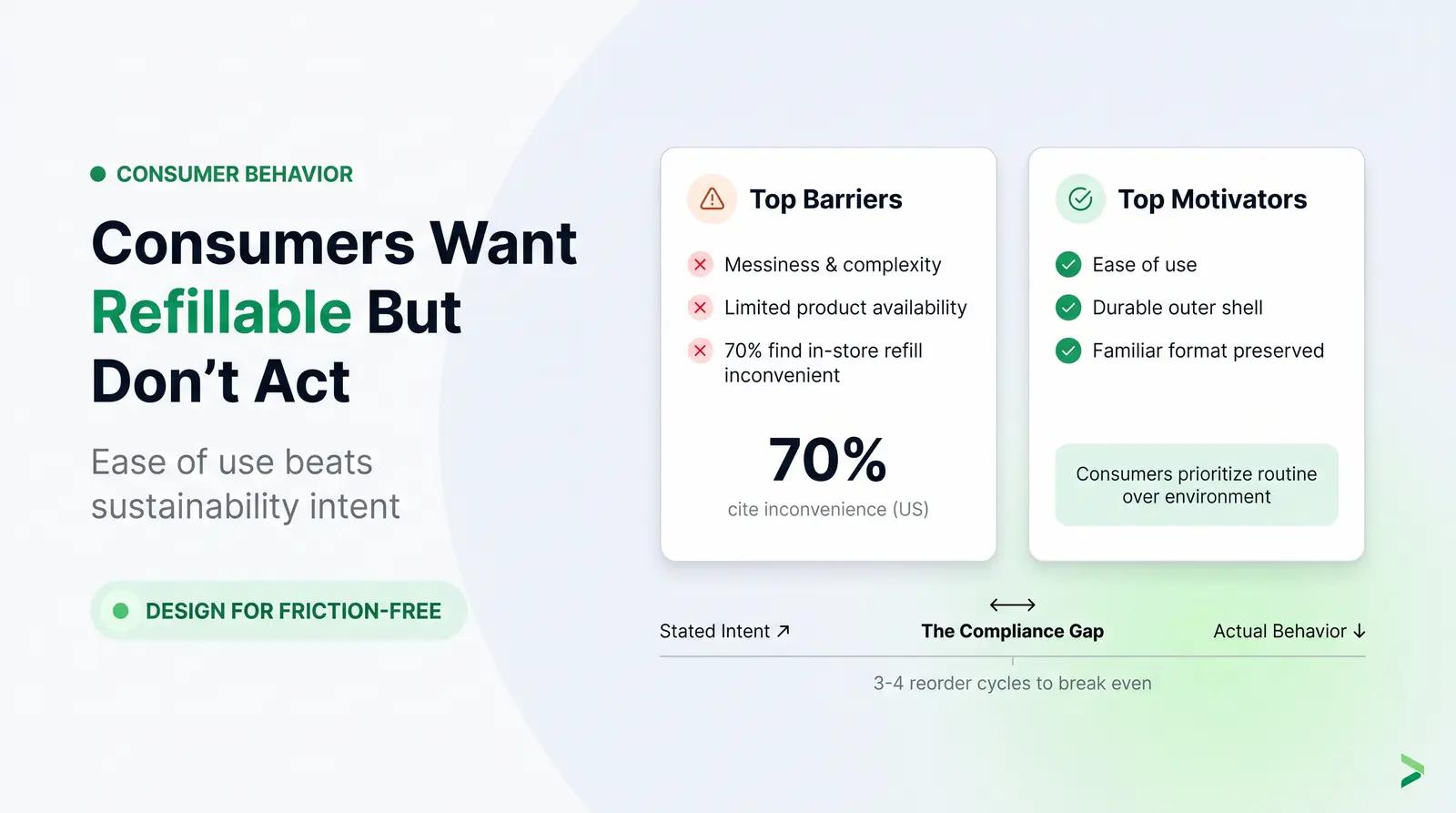
The success of a refillable program hinges on the gap between stated sustainability intent and actual consumer behavior. While surveys consistently show that consumers desire sustainable options and express willingness to participate in refill programs, actual compliance data tells a different story.
Research from the Sustainable Packaging Coalition (SPC) surveying 1,344 skincare users found that the biggest barriers to refillable packaging adoption are practical: concerns about messiness, complexity, and limited product availability [9]. The strongest motivators are ease of use and durability, revealing that consumers prioritize seamless integration into their routines over environmental benefits. Almost 70% of US consumers say in-store refilling is inconvenient, citing time, effort, and inconsistent access to refill stations [2].
This intent-action gap directly affects brand ROI projections. Brands that base their financial modeling on high refill repurchase rates may find themselves with excess inventory of refill cartridges and a lower-than-expected customer lifetime value. Packaging Dive reported that most refillable cartridge units require three to four reorder cycles before the costs balance out with original packaging, and that low reorders, sluggish growth, and customer complaints are common problems for brands that launch refillable systems without adequate preparation [10].
Launch-Stage Fit
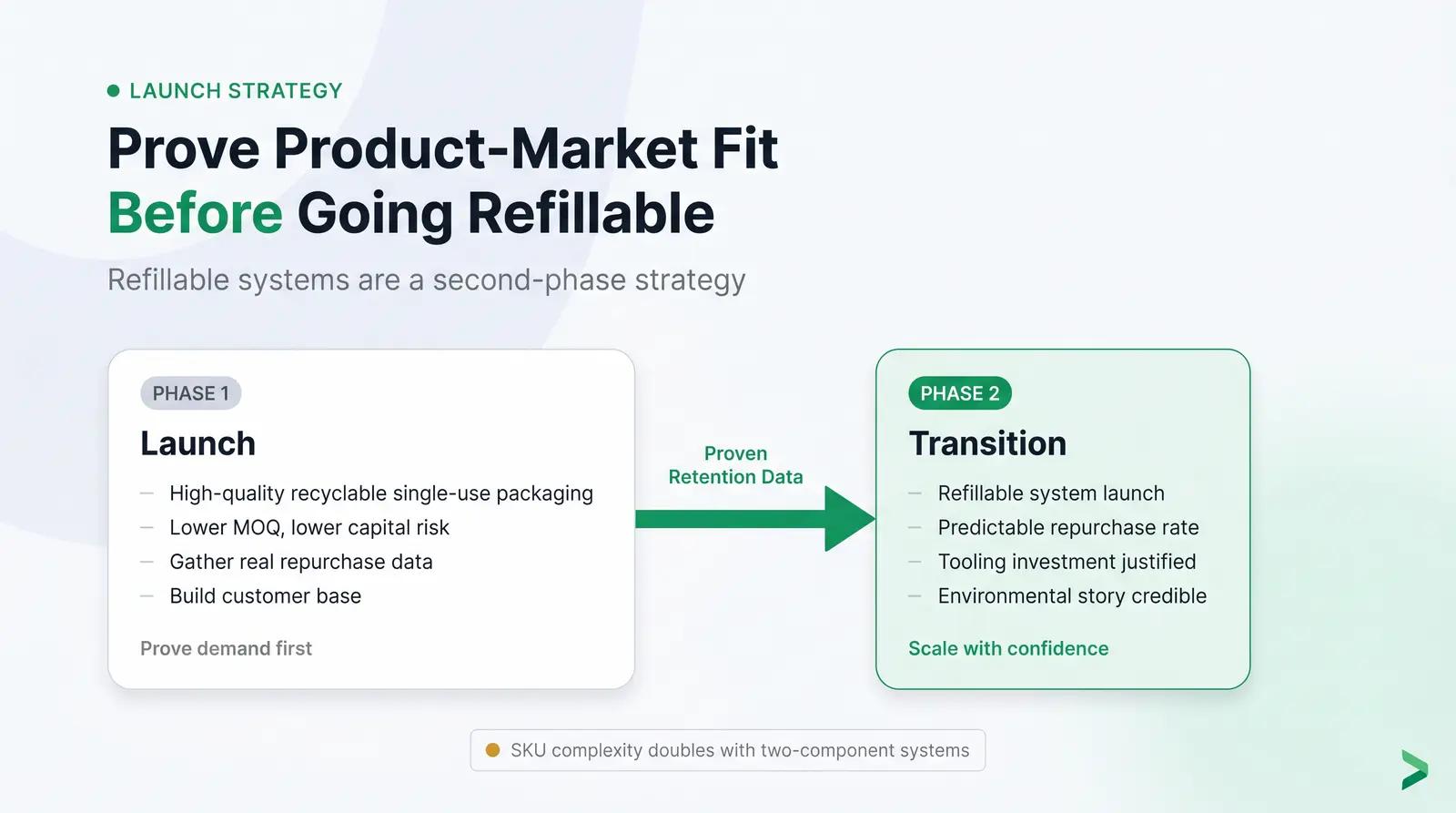
Given the operational complexities and capital requirements, refillable systems carry additional risk for pre-launch and early-stage brands. The SKU complexity doubles when managing both primary containers and refill components. Furthermore, the higher MOQs for two-component systems and the limited flexibility from suppliers can strain the resources of a new brand [8].
For many founders, it is operationally sensible to launch with high-quality, recyclable single-use packaging to prove product-market fit and establish a customer base. Once the brand has achieved a certain production scale and has predictable repurchase data, transitioning to a refillable system becomes a more viable strategy. This approach also allows founders to gather real customer compliance data before committing to the inventory and tooling investment that a refillable system requires.
Comparing Refillable Packaging System Types
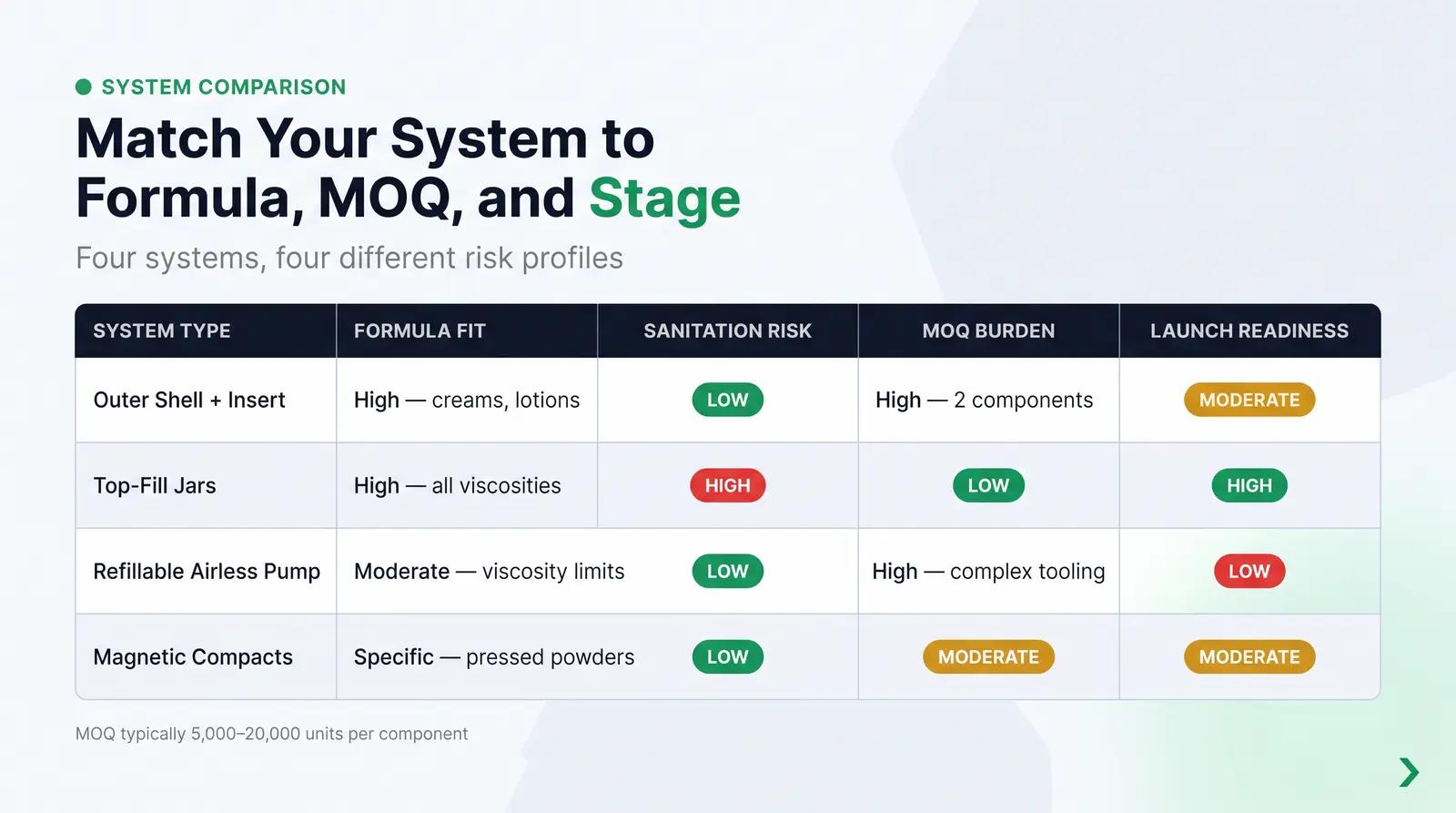
Understanding the different types of refillable systems is crucial for matching the packaging to the product and the business model.
| System Type | Formula Compatibility | Sanitation Complexity | MOQ Structure | Launch-Stage Readiness |
|---|---|---|---|---|
| Outer Shell + Refill Insert | High (creams, lotions) | Low (sealed insert) | High (two components) | Moderate (requires capital) |
| Top-Fill Jars/Bottles | High (all viscosities) | High (open exposure) | Low (bulk refill pouches) | High (lower barrier to entry) |
| Refillable Airless Pumps | Moderate (viscosity limits) | Low (sealed system) | High (complex tooling) | Low (high risk for new brands) |
| Magnetic Compacts | Specific (pressed powders) | Low (dry formulas) | Moderate (standard pans) | Moderate (depends on SKU count) |
A Worked Example: The Vitamin C Moisturizer
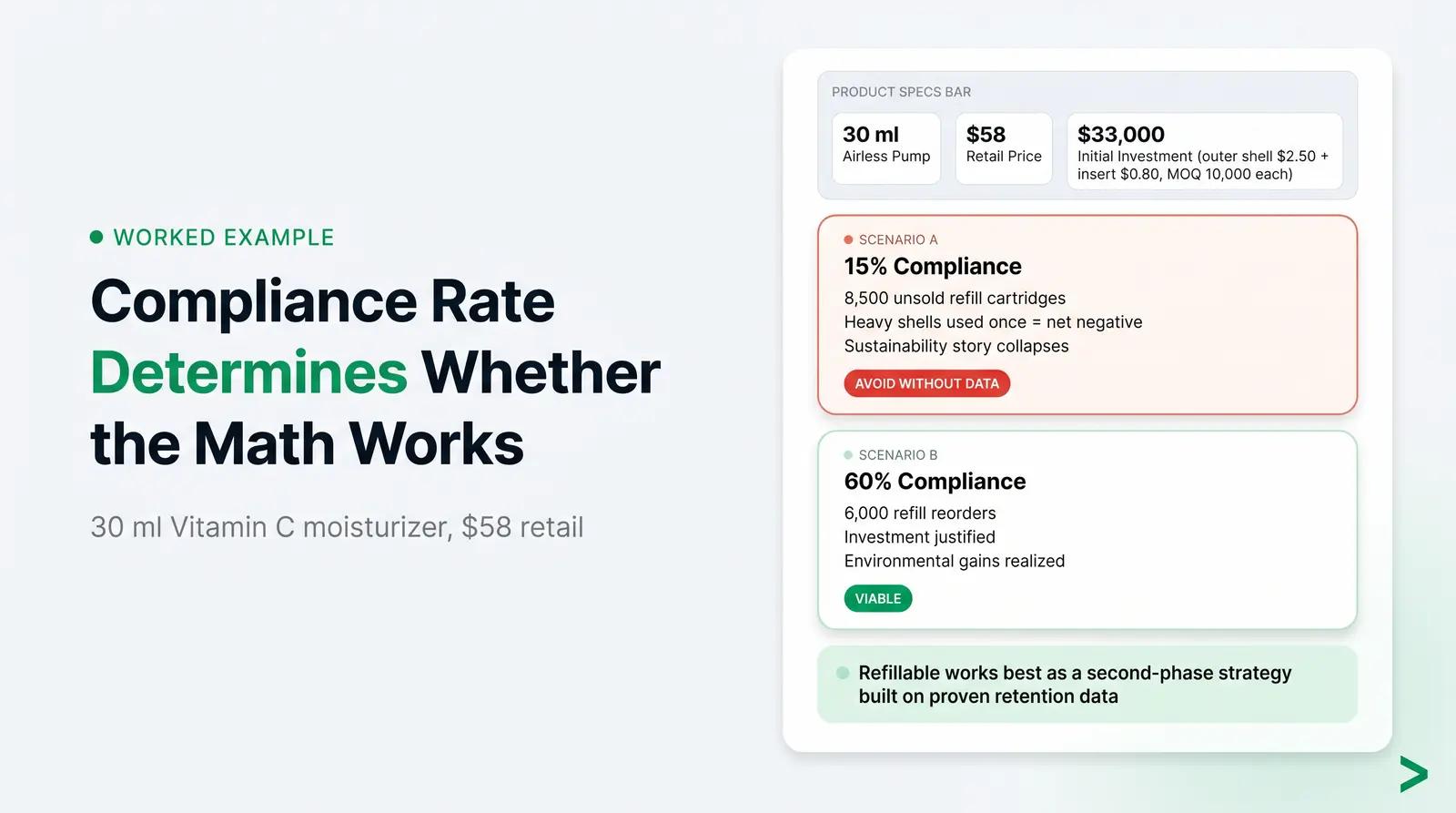
Consider a founder launching a 30 ml vitamin C moisturizer at a $58 retail price point. The formula is moderately viscous and contains L-ascorbic acid, which is sensitive to oxidation. The founder is evaluating a refillable airless pump system.
The durable outer shell costs $2.50 per unit, and the inner refill cartridge costs $0.80. The supplier requires an MOQ of 10,000 units for each component. The total initial packaging investment is $33,000.
If the founder sells 10,000 initial units but achieves only a 15% refill compliance rate, they will be left with 8,500 unsold refill cartridges. Furthermore, the environmental impact of 8,500 heavy outer shells used only once will negate any sustainability gains. However, if the brand already has a proven 60% repeat purchase rate for similar products, the investment becomes financially sound, and the environmental benefits of the system can be realized across the product's lifecycle.
This scenario illustrates why refillable systems work best as a second-phase strategy, built on a foundation of proven customer retention data rather than projected intent.
The Refillable Readiness Rubric
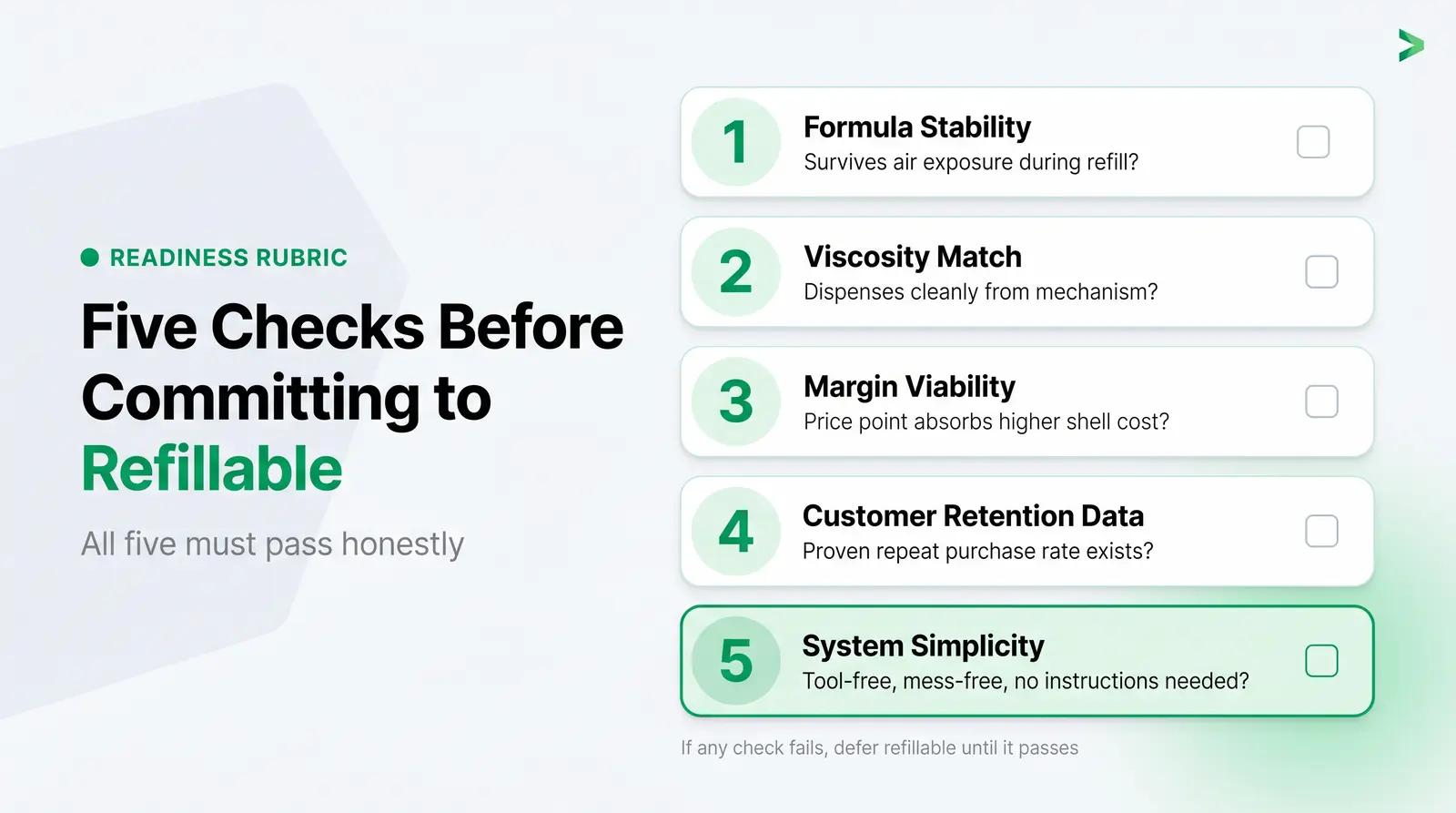
To navigate these complexities, apply this five-point framework before committing to a refillable system. Each dimension must be evaluated honestly before moving forward.
1. Formula Stability. Can the formula withstand potential air exposure during the refill process without degrading or requiring a significant preservative overhaul?
2. Viscosity Match. Does the product's viscosity allow for clean, complete dispensing from the intended refill mechanism? Test with the actual formula before committing to production.
3. Margin Viability. Does the retail price point support the higher initial cost of the durable outer shell and the separate MOQ requirements for the refill components?
4. Customer Retention Data. Does the brand have established data indicating a high repeat purchase rate for this specific product category? Projected intent is not sufficient.
5. System Simplicity. Is the refill process intuitive, tool-free, and mess-free for the end consumer? If it requires instructions, it is probably too complex.
When Refillable Packaging Works
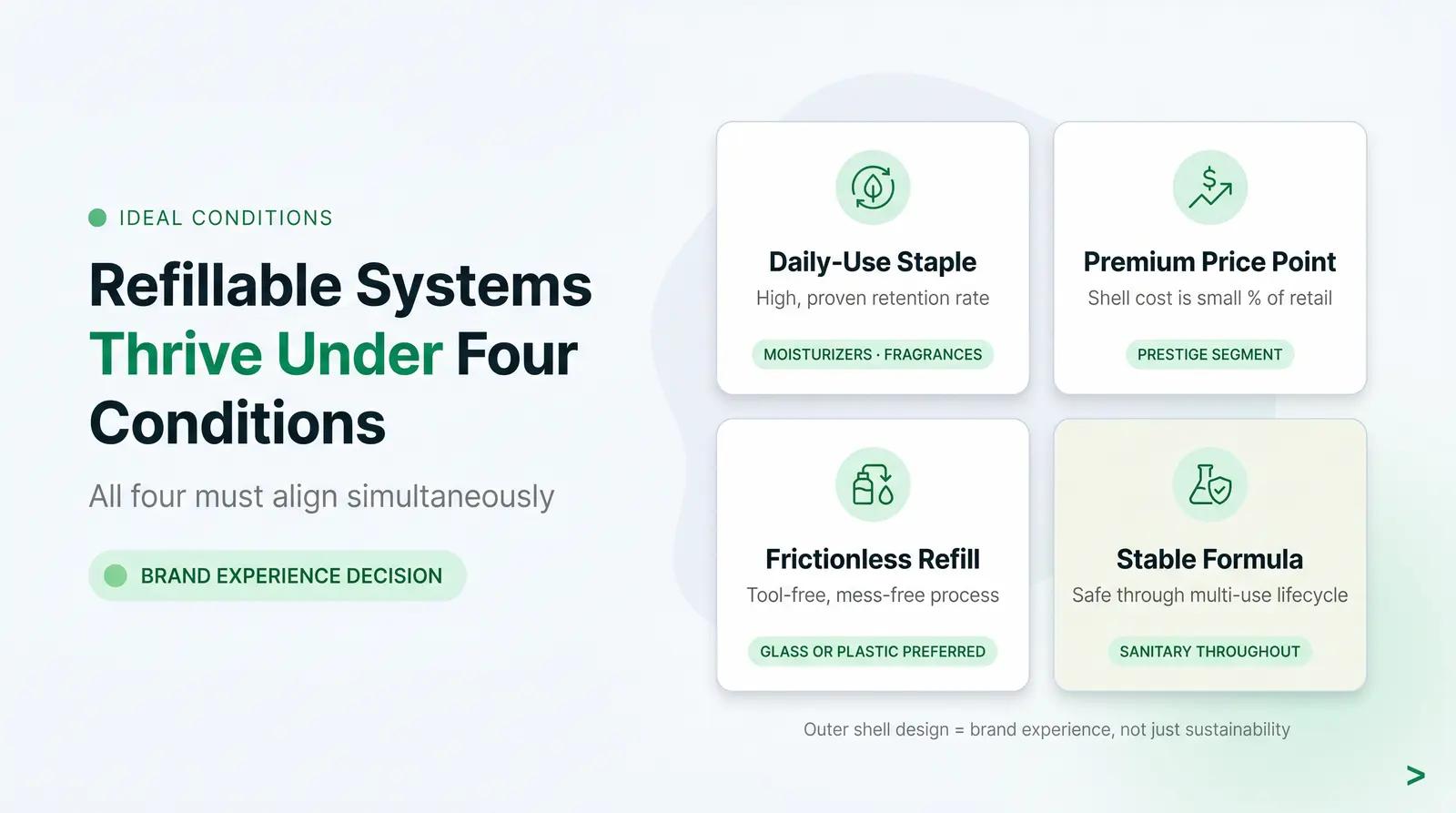
Refillable systems deliver on both sustainability and business objectives under specific conditions. They thrive when applied to daily-use staple products, like daily moisturizers or signature fragrances, that boast high, proven customer retention rates. They work best at premium price points that can absorb the initial cost of the durable outer shell. Success also requires a system that is genuinely frictionless for the consumer to refill and a formula that remains stable and sanitary throughout the process.
The SPC research found that glass and plastic bottles outperform newer mechanisms like pods and cartridges in consumer preference, and that consumers prioritize familiar formats that preserve the aesthetic and tactile cues of traditional packaging [9]. This means the outer shell design is not just a sustainability decision. It is a brand experience decision.
When It Does Not
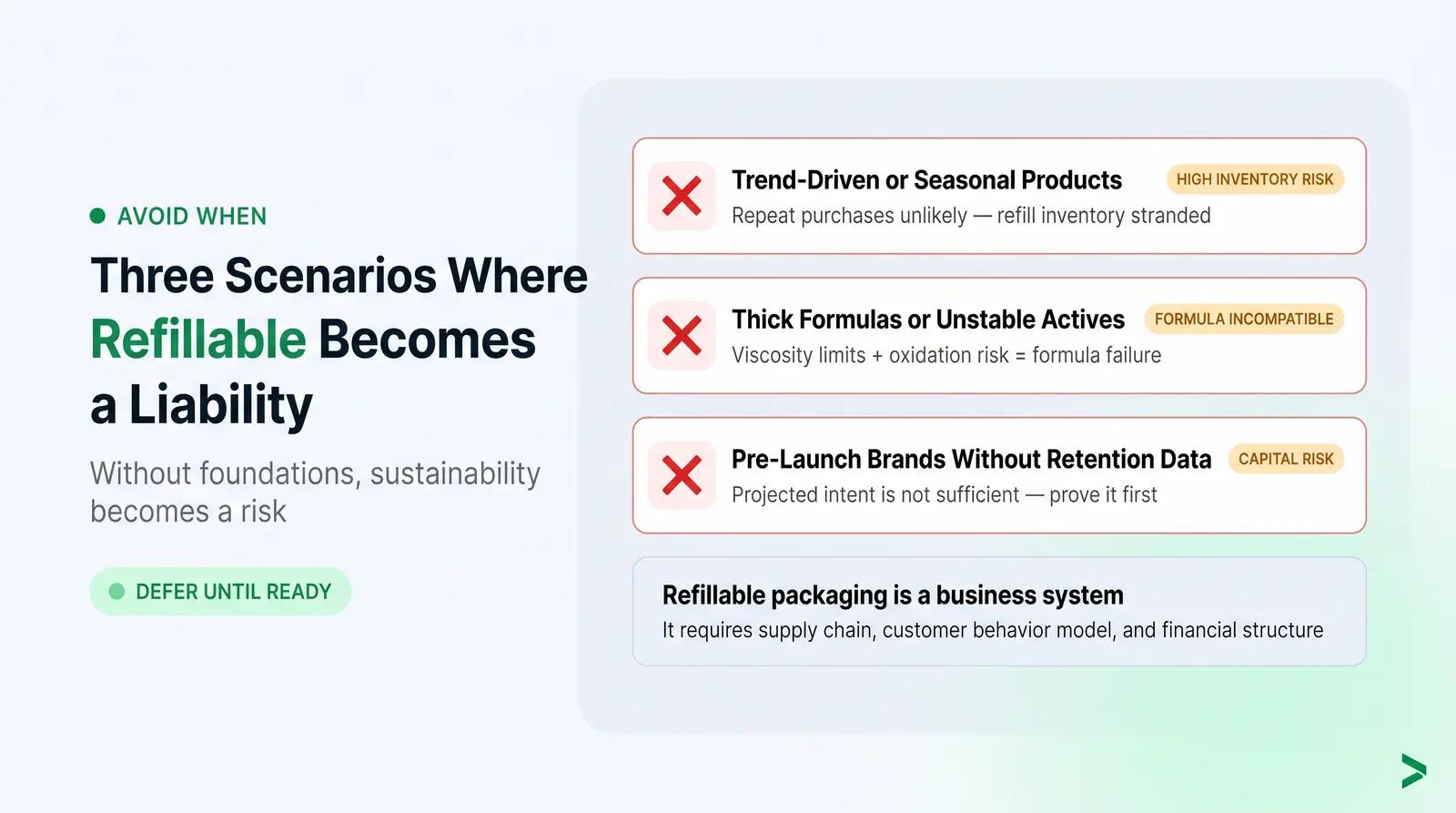
Founders should avoid refillable systems for highly trend-driven products, seasonal launches, or limited editions where repeat purchases are unlikely. Products with extremely thick viscosities or highly unstable active ingredients are often better served by standard packaging. Pre-launch brands operating with limited capital should generally defer refillable systems until they have proven product-market fit and can confidently project customer compliance rates.
The bottom line is that refillable packaging is a business system, not just a packaging choice. It requires a supply chain, a customer behavior model, and a financial structure that can support it. Without those foundations, the sustainability story becomes a liability rather than an asset.
Choosing Components That Support Your Strategy
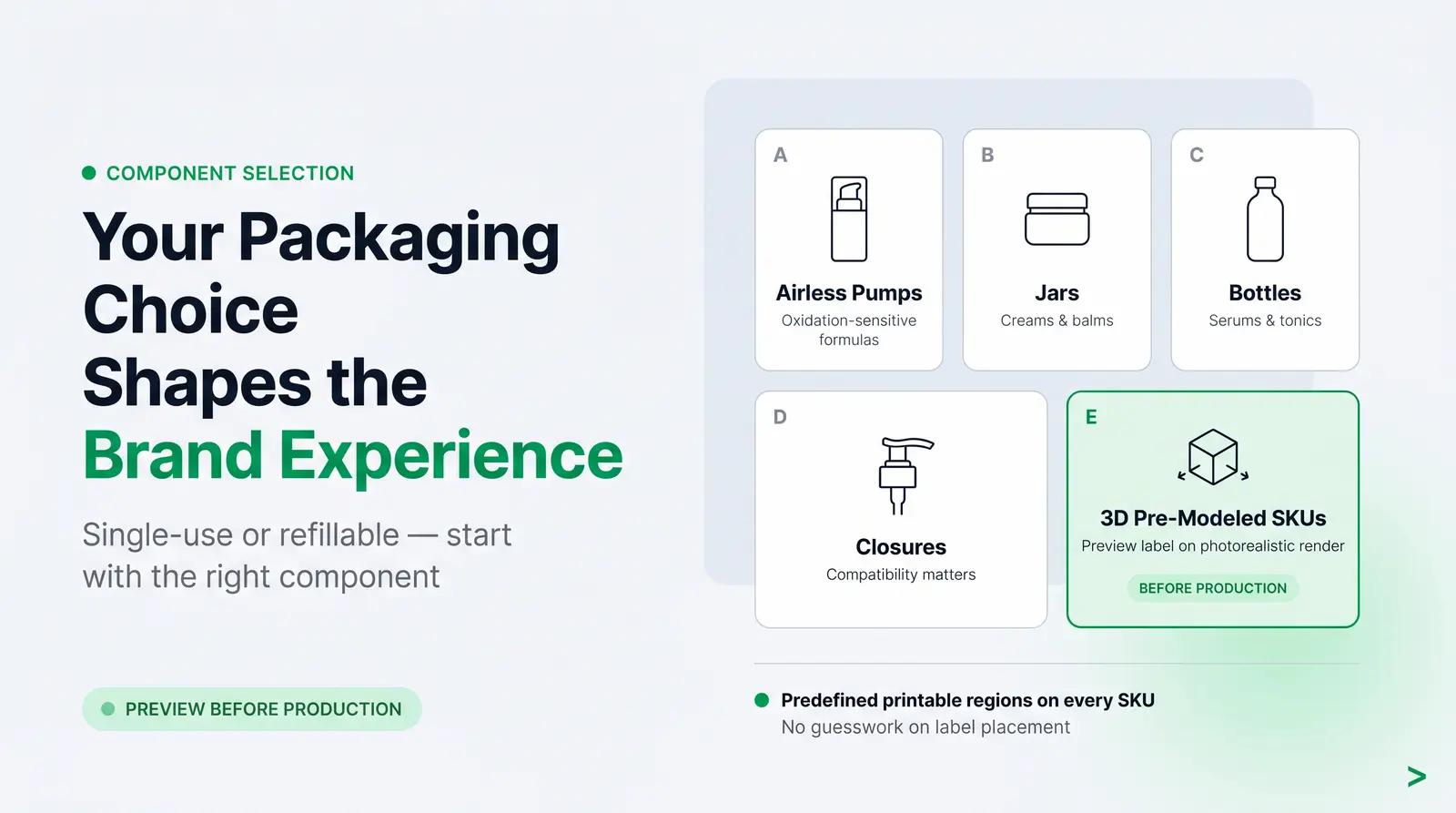
Whether you are building toward a refillable system or launching with high-quality single-use packaging first, the component choices you make today shape the brand experience your customers will have for years. Packfolio's curated catalog of cosmetic primary packaging SKUs, including airless pumps, jars, bottles, and closures, is pre-modeled in 3D with predefined printable regions, so you can preview your label on a photorealistic render before committing to production. Browse the catalog and design your packaging at packfolio.com.
Frequently Asked Questions
Which product categories adapt best to refillable cosmetic packaging?
Daily-use skincare products like moisturizers, serums, and face oils perform best in refillable formats. These products have high usage rates, predictable repurchase cycles, and modular designs that make swapping cartridges straightforward. Fragrances also perform well, particularly in the prestige segment.
Is refillable packaging always more affordable for brands?
No. Initial tooling and per-unit costs for durable outer shells are higher than standard packaging. The MOQ structure also applies to each component separately, increasing the total inventory investment. Long-term material savings and increased customer loyalty can offset this upfront cost, but only if refill compliance rates are high enough to justify the investment.
How do refillable systems affect product contamination risks?
Refillable systems, particularly open top-fill formats, increase the risk of microbial contamination by exposing the formula to air and consumer handling. Sealed cartridge systems mitigate this risk significantly, but still require robust preservative formulations and careful engineering of the cartridge-to-pump interface. Brands operating in the EU must ensure their safety assessment covers the full multi-use lifecycle of the packaging.
What is the environmental break-even point for refillable packaging?
The break-even point is the minimum number of times a durable container must be reused to have a lower environmental impact than a single-use alternative. If a heavy reusable outer shell is discarded after one use, it generates more lifecycle waste than conventional packaging. The exact threshold varies by material and system design, which is why customer compliance rates are the most important variable in the sustainability equation.
Why are minimum order quantities typically higher for refillable cosmetic packaging?
Refillable systems require the manufacturing of multiple distinct components, such as the outer shell and the inner cartridge. Suppliers require minimum order quantities for each individual component, which can range from 5,000 to 20,000 units per component depending on customization level. This doubles the inventory commitment compared to a single-component standard packaging SKU.
References
[1] Miao, X., Magnier, L., & Mugge, R. "How Many Times Should I Use My Reusable Packaging? Exploring the Role of an Environmental Break-Even Point in Shaping Consumers' Intention to Reuse." Circular Economy and Sustainability, 2024. https://link.springer.com/article/10.1007/s43615-024-00437-8
[2] Mintel. "The Future of Beauty Packaging: Here's What This Means for Your Brand." Updated February 2026. https://www.mintel.com/insights/packaging/the-future-of-beauty-packaging/
[3] LumLun. "Refillable Airless Bottle for Skincare Brands: What Works, What Doesn't, and How to Get It Right." 2026. https://lumlun.com/refillable-airless-bottle-skincare-brands/
[4] Yin, X., et al. "Chemical Stability of Ascorbic Acid Integrated into Commercial Products." PubMed Central, 2022. https://pmc.ncbi.nlm.nih.gov/articles/PMC8773188/
[5] U.S. Food and Drug Administration. "Good Manufacturing Practice (GMP) Guidelines/Inspection Checklist for Cosmetics." https://www.fda.gov/cosmetics/cosmetics-guidance-documents/good-manufacturing-practice-gmp-guidelinesinspection-checklist-cosmetics
[6] Taobe Consulting. "Refillable Cosmetics Regulations in the EU: A Guide to Safety and Sustainability." October 2024. https://taobe.consulting/refillable-cosmetics-regulations/
[7] European Commission. "Packaging and Packaging Waste Regulation (EU) 2025/40." https://environment.ec.europa.eu/topics/waste-and-recycling/packaging-waste_en
[8] Gidea Packaging. "Everything You Need to Know About Minimum Order Quantity in the Cosmetic Packaging Industry." https://gideapac.com/everything-you-need-to-know-about-minimum-order-quantity-in-the-cosmetic-packaging-industry/
[9] Sustainable Packaging Coalition. "The Latest Findings on Consumer Expectations for Refill-At-Home Packaging Formats." February 2026. https://sustainablepackaging.org/wp-content/uploads/2026/02/Skincare-Research_Refill-at-Home_v1.pdf
[10] Beurteaux, D. "Beauty Packaging Gets a Makeover with Growing Number of Refillable Options." Packaging Dive, July 2023. https://www.packagingdive.com/news/beauty-cosmetics-packaging-refill-body-shop-lush-plastic/653420/


