
Sustainable Cosmetic Packaging Claims: What Brands Can Safely Say
Beauty brands must back every sustainability claim on cosmetic packaging with specific, qualified language and third-party verified evidence to avoid FTC enforcement and greenwashing litigation.
The moment of reckoning for many independent beauty founders does not happen during a formulation triumph or a successful retail pitch. It happens in a quiet room, looking at a supplier's data sheet that boldly stamps a component as "100% eco-friendly" or "fully recyclable," and realizing there is a massive chasm between supplier marketing and regulatory reality. Translating those vendor-provided sustainability claims onto a retail carton or a product detail page without rigorous verification is one of the fastest ways to expose an early-stage beauty brand to catastrophic legal, financial, and reputational risk.
In the beauty industry, the vocabulary of environmental benefit has long outpaced the infrastructure of waste management and the boundaries of advertising law. Terms like "green," "sustainable," and "eco-friendly" are routinely used as casual shorthand for complex material choices. However, regulatory bodies such as the U.S. Federal Trade Commission (FTC) and the European Commission do not view these terms as harmless marketing poetry. To regulators, an unsubstantiated sustainability claim is a deceptive business practice, and the responsibility for proving every implied benefit falls squarely on the brand, not the packaging supplier.
Navigating this regulatory landscape requires beauty founders, formulators, and contract manufacturers to move beyond well-intentioned assumptions. To build a resilient brand, companies must understand the legal frameworks governing environmental claims, the precise documentation required to back up material choices, and the physical realities of municipal recycling systems. This guide provides a practical, legally grounded roadmap for evaluating what your beauty brand can safely claim, what evidence you must secure, and how to avoid the most common compliance pitfalls in cosmetic primary packaging.
Why "Sustainable" Is a Legal Minefield for Beauty Brands
For any beauty brand operating in or exporting to major global markets, environmental marketing is no longer a self-regulated space of vague goodwill. It is a highly scrutinized legal territory governed by active enforcement. In the United States, the primary regulatory benchmark is the Federal Trade Commission’s Guides for the Use of Environmental Marketing Claims, commonly known as the Green Guides [1]. Originally issued in 1992 and last fully revised in 2012, the Green Guides outline how reasonable consumers interpret environmental claims and what constitutes sufficient substantiation to avoid violating Section 5 of the FTC Act, which prohibits unfair or deceptive practices [1] [2].
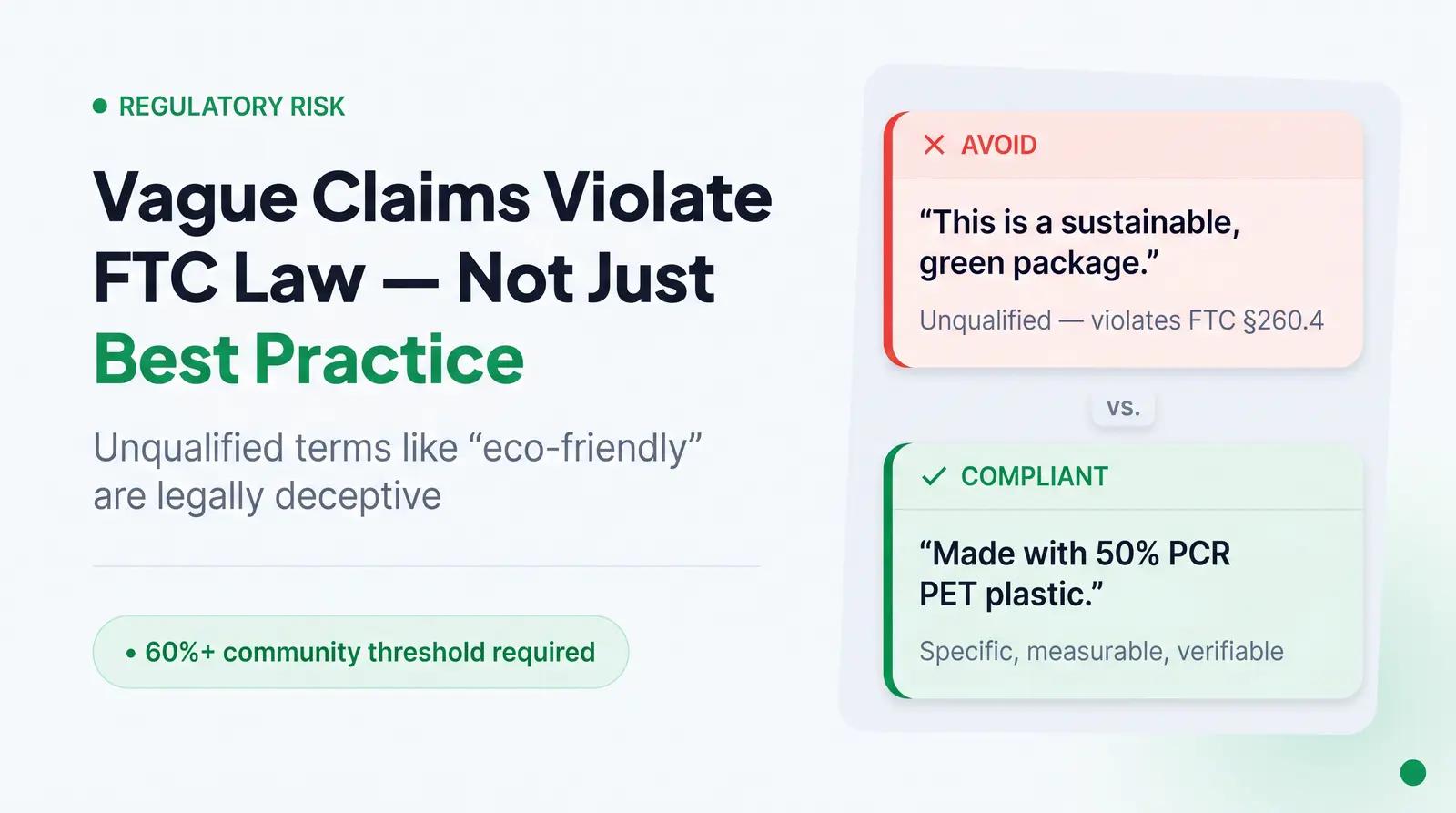
Under Section 260.4 of the Green Guides, unqualified general environmental benefit claims, such as "sustainable," "eco-friendly," "green," or "good for the planet" are explicitly deemed deceptive [1] [3]. The FTC’s reasoning is straightforward: these broad terms are highly ambiguous and convey a wide, unpredictable range of meanings to consumers. A consumer might interpret "sustainable" to mean the package has zero carbon footprint, is infinitely recyclable, is made entirely of plants, or leaves no environmental trace. Because it is virtually impossible for any physical cosmetic package to substantiate every single one of these implied claims across its entire lifecycle, brands must completely avoid unqualified general environmental claims [1] [3]. Instead, all environmental claims must be highly specific, qualified, and limited to clear, measurable attributes.
The distinction between these two approaches is fundamental. An unqualified claim such as "This jar is 100% sustainable" is deceptive under the Green Guides because no single package can substantiate every possible environmental interpretation that phrase implies [1] [3]. A qualified, specific claim such as "This jar is made with 50% post-consumer recycled (PCR) PET plastic" is compliant because it is narrow, measurable, and directly verifiable through supply-chain documentation [1] [9].
The regulatory pressure is intensifying globally. In Europe, the emerging EU Green Claims Directive represents a parallel, even more stringent framework [4]. Proposed by the European Commission in March 2023, the directive is designed to eradicate greenwashing by mandating that all voluntary environmental claims be substantiated through robust, science-based methodologies, such as Life Cycle Assessments (LCAs) [4] [5]. Under this directive, companies cannot make an explicit claim like "packaging made of 30% recycled plastic" without having the claim pre-verified by an independent, accredited third-party verifier before the product ever hits the market [4] [5].
The cost of non-compliance is severe. Since 2010, the FTC has brought more than 45 enforcement actions against companies for deceptive environmental claims [6]. Class-action litigation targeting "greenwashing" in the beauty and personal care sectors has surged, with plaintiffs' attorneys actively scanning product labels for unqualified claims like "recyclable," "clean," or "natural" [2] [7]. For an early-stage beauty brand, a single class-action lawsuit or an FTC Civil Investigative Demand (CID) can easily exhaust cash reserves, destroy retail partnerships, and permanently damage consumer trust.
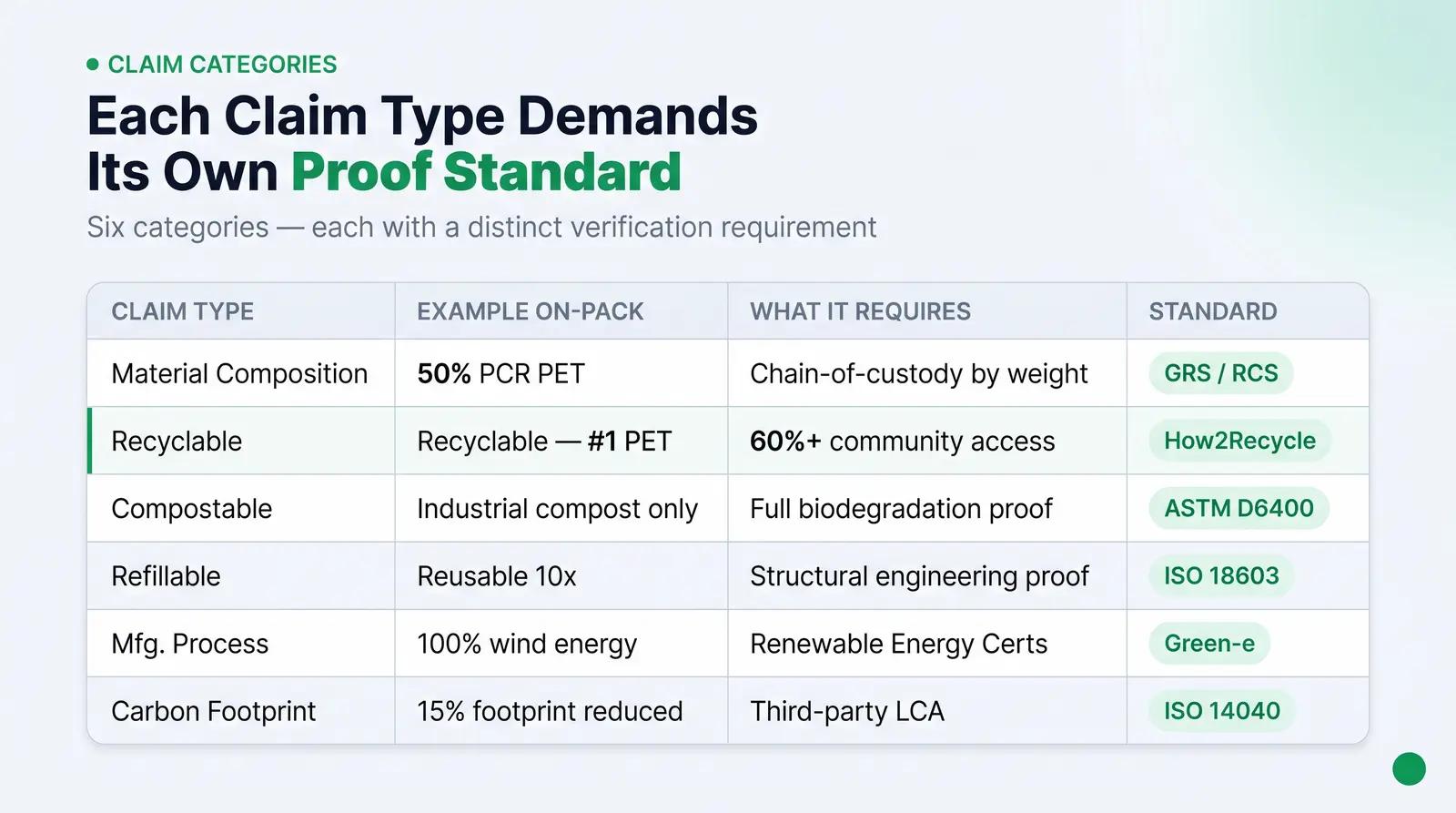
A Map of Sustainability Claim Categories
To safely communicate environmental benefits, brands must categorize their claims and understand the specific verification required for each. The table below maps the cosmetic packaging sustainability landscape, defining what each claim category actually requires for legal substantiation.
| Claim Category | Example On-Pack Claim | What It Requires to Be Substantiated | Primary Verification Source / Standard |
|---|---|---|---|
| Material Composition | "Made with 50% Post-Consumer Recycled (PCR) PET" | Verifiable chain-of-custody documentation proving the exact percentage, by weight, of post-consumer waste diverted from the waste stream [8]. | Global Recycled Standard (GRS) [9], Recycled Claim Standard (RCS) [9], or ISO 14021:2016 [10]. |
| End-of-Life: Recyclable | "Recyclable in communities with facilities for #1 PET" | Proof that the entire package (excluding minor incidental parts) can be collected, sorted, and reprocessed in a substantial majority (60%+) of communities where sold [11] [12]. | Association of Plastic Recyclers (APR) Design Guide [13], How2Recycle Certification [14]. |
| End-of-Life: Compostable | "Compostable in industrial composting facilities" | Scientific evidence that all materials in the package will biodegrade and disintegrate safely in an industrial composting environment without leaving toxic residues [15]. | ASTM D6400 [15], ASTM D6868 [15], or Biodegradable Products Institute (BPI) Certification [16]. |
| End-of-Life: Refillable | "Refillable Jar: Designed to be reused at least 10 times" | Provision of a viable, accessible system for refilling, along with evidence that the component is structurally engineered to withstand repeated use [17]. | ISO 18603:2013 [18], SPICE Reusability Guidelines [5]. |
| Manufacturing Process | "Produced using 100% wind energy" | Possession of Renewable Energy Certificates (RECs) matching the exact electricity consumption of the manufacturing run, or verified power purchase agreements [19]. | Center for Resource Solutions (Green-e) [20], certified utility emission audits. |
| Carbon Footprint | "Reduced packaging carbon footprint by 15%" | A comparative Life Cycle Assessment (LCA) demonstrating a statistically significant reduction across all lifecycle stages compared to a baseline package [5]. | ISO 14040/44 [5], SPICE Methodological Guidelines [5], third-party verified LCA. |
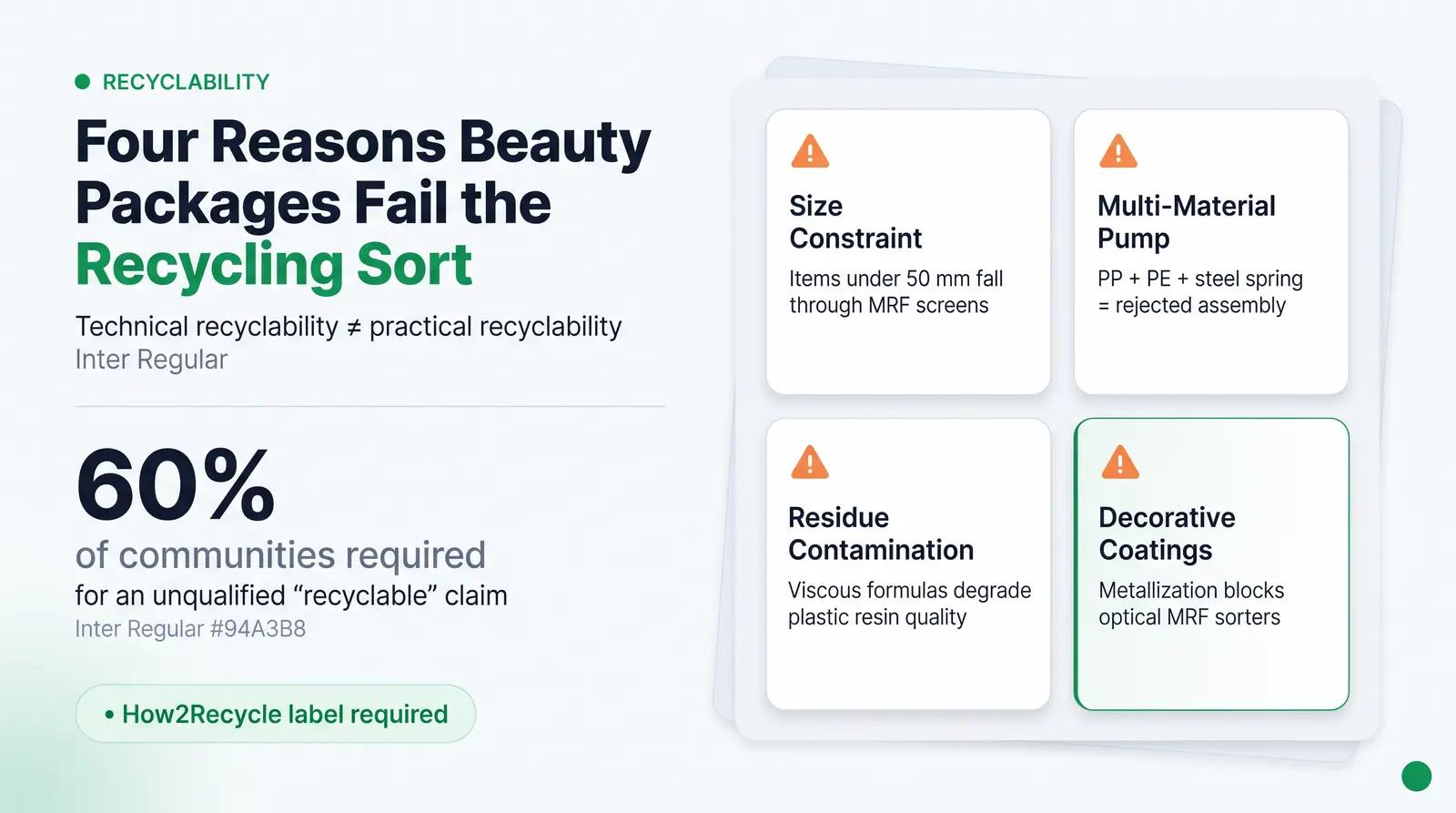
The "Recyclable" Trap: What Brands Get Wrong
Perhaps the most common and dangerous compliance trap in beauty packaging is the unqualified use of the word "recyclable." Many founders assume that if a bottle is made of polyethylene terephthalate (PET) or high-density polyethylene (HDPE), both highly recyclable resins, they can legally label the finished package as "100% recyclable." This assumption ignores the critical distinction between technical recyclability and practical recyclability.
Under Section 260.12 of the FTC Green Guides, a product or package cannot be marketed as "recyclable" unless it can be collected, separated, and recovered from the waste stream through an established, accessible recycling program [11] [12]. The FTC applies a strict "substantial majority" threshold: a brand can only make an unqualified "recyclable" claim if recycling facilities are available to at least 60 percent of the consumers or communities in the market where the product is sold [11] [12]. If access is below 60 percent, the claim must be qualified to reflect the limited availability of facilities (e.g., "Recyclable only in the few communities that have appropriate recycling programs") [11] [12].
In the beauty sector, the physical design of cosmetic packaging frequently invalidates unqualified recyclability claims, even when the primary container is made of a recyclable material [21]. There are several reasons why cosmetic packages fail at Materials Recovery Facilities (MRFs) [22]:
- The Size Constraint: MRF sorting machinery, including optical sorters and rotating screens, is designed to process large household containers like milk jugs and detergent bottles. Small items measuring less than two inches (50 mm) in any dimension, such as lip balm tubes, travel-size jars, sample vials, and bottle caps, frequently fall through the sorting screens and are directed to landfills as residual waste [21].
- Multi-Material Assemblies: A standard lotion pump or treatment dropper is a complex mechanical assembly. A typical pump contains a polypropylene (PP) actuator, a polyethylene (PE) closure, a steel internal spring, and a glass or plastic ball valve [21] [23]. Because these materials are bonded together and cannot be easily separated by the consumer or the MRF, the entire pump assembly is rejected as a contaminant and sent to the landfill [21].
- Residue Contamination: High-viscosity formulations, such as clay masks, waterproof mascaras, heavy creams, and pigmented foundations, leave significant chemical residue inside primary containers. If a container cannot be easily rinsed clean by the consumer, the residue contaminates the recycling stream, degrading the quality of the recovered plastic resin [22].
- Aesthetic and Decorative Coatings: Premium beauty brands often apply decorative finishes to glass and plastic components to elevate their shelf presence. Metallization, heavy UV lacquers, hot-stamping foils, and opaque colorants interfere with the optical sorters used in MRFs [21] [22]. For example, a clear glass bottle coated in an opaque ceramic paint cannot be detected or sorted correctly by color-sorting recycling machinery, rendering it practically unrecyclable [21].
To navigate this trap, brands must look to standardized frameworks like the How2Recycle program [14]. Developed by the Sustainable Packaging Coalition (SPC), How2Recycle provides a data-driven, nationally harmonized labeling system that translates MRF acceptance data into clear, qualified on-pack instructions [14]. Rather than making a blanket claim, a brand using a multi-component package must use qualified labeling that instructs the consumer exactly how to handle each part (e.g., "Rinse Bottle & Recycle Curbside; Discard Pump") [14] [21].
PCR Content Claims: The Verification Chain
Incorporating Post-Consumer Recycled (PCR) content is an excellent way to reduce reliance on virgin plastics and lower a brand's carbon footprint [8]. However, claiming a specific percentage of PCR on-pack (e.g., "Bottle made with 30% PCR plastic") requires a rigorous, unbroken verification chain [8] [9].
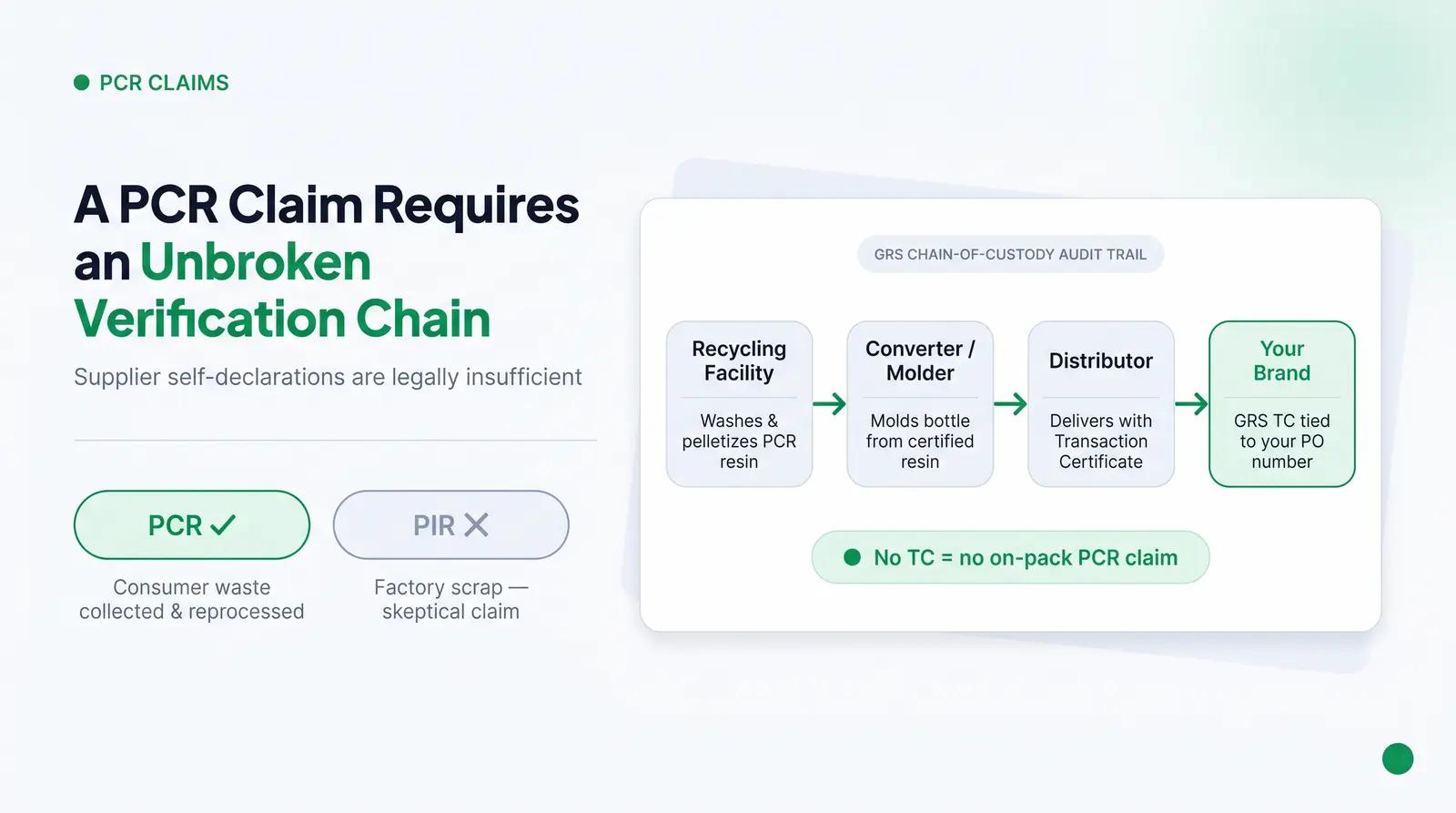
First, brands must clearly distinguish between Post-Consumer Recycled (PCR) content and Post-Industrial Recycled (PIR) content [8]. PCR refers to materials that have completed their lifecycle as a consumer product, been discarded, collected through recycling programs, and reprocessed into new raw materials [8]. PIR (sometimes called pre-consumer recycled content) refers to manufacturing scrap or excess material generated during a production process that is recaptured and put back into the manufacturing run [8].
Because manufacturers routinely reuse their own production scrap as a standard, cost-saving business practice, the FTC Green Guides state that pre-consumer material can only be claimed as recycled content if the brand can substantiate that the material would have otherwise entered the waste stream [8] [24]. Furthermore, sustainability advocates and savvy consumers view PIR claims with skepticism, sometimes labeling them as greenwashing because they do not drive the collection of consumer waste [8].
When a packaging vendor states that a component contains "50% PCR," a brand cannot take this statement at face value. To legally substantiate an on-pack PCR claim, the brand must request and maintain a complete Chain-of-Custody (CoC) certification [9]. The gold standard for this verification is the Global Recycled Standard (GRS) or the Recycled Claim Standard (RCS), both managed by the global non-profit Textile Exchange [9].
These standards require independent, third-party accredited certification bodies to audit every single step of the supply chain: from the recycling facility that washes and pelletizes the post-consumer waste, to the converter that molds the bottle, to the distributor [9]. If your supplier cannot provide a valid GRS Transaction Certificate (TC) specifically linking the raw recycled resin to the exact production batch of your packaging run, you do not possess the "competent and reliable evidence" required by the FTC to make that claim on your retail packaging [2] [9].
The Sustainability Claims Readiness Framework
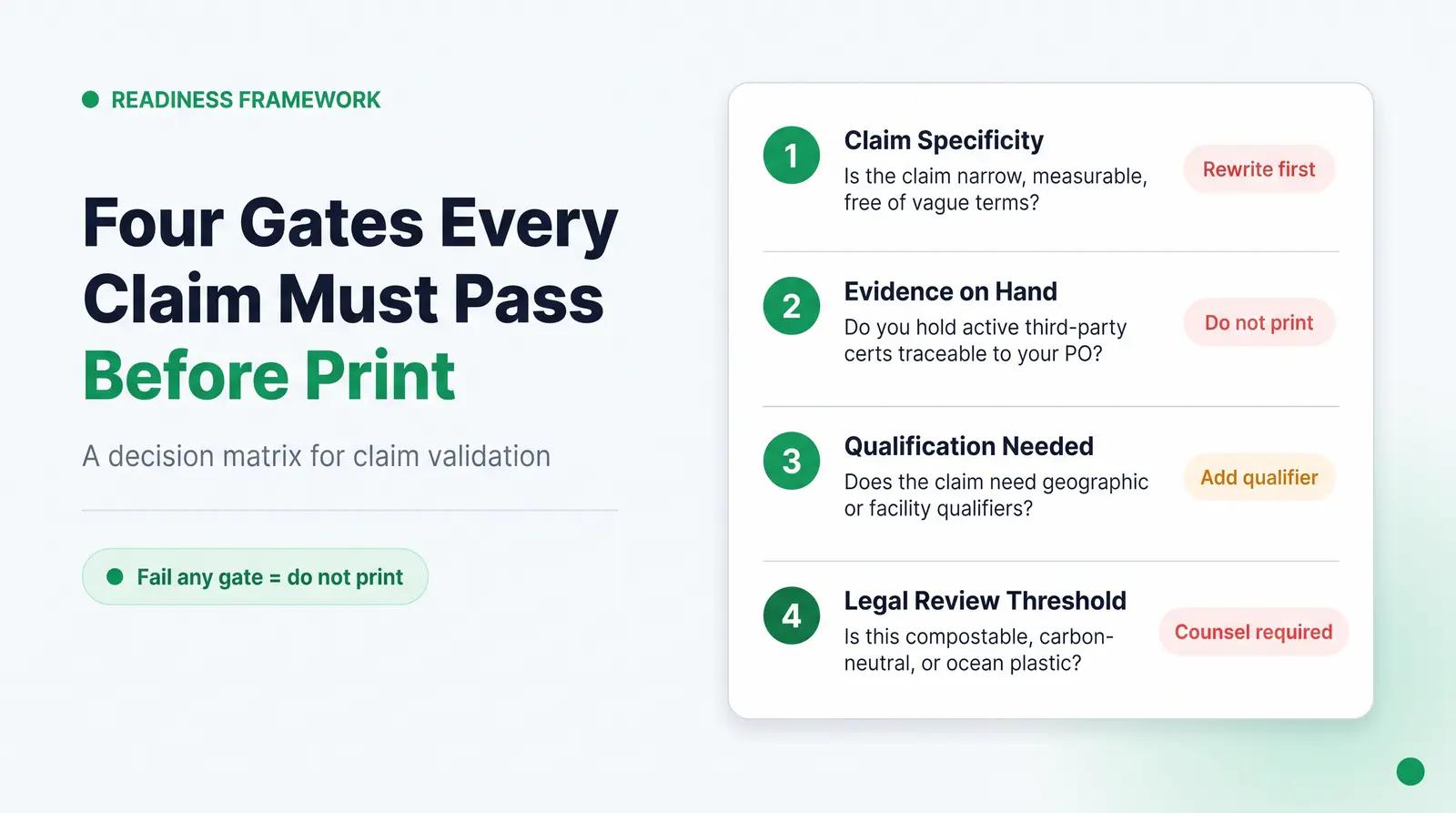
To help beauty founders systematically evaluate whether an environmental claim is legally and operationally ready to be printed on-pack, we recommend utilizing The Sustainability Claims Readiness Framework. This decision-making matrix guides brands through four critical dimensions of claim validation.
| Step | Dimension | Key Question | Outcome if No |
|---|---|---|---|
| 1 | Claim Specificity | Is the claim narrow, measurable, and free of vague terms like "eco-friendly" or "green"? | Rewrite the claim to specify the exact attribute, material, and percentage before proceeding. |
| 2 | Evidence on Hand | Do you possess active, third-party certifications (GRS, ASTM, FSC) that are directly traceable to your specific production run? | Do not print the claim. Request and obtain the required documentation from your supplier first. |
| 3 | Qualification Needed | Does the claim require geographic, facility-access, or component-specific qualifiers to prevent consumer deception? | Add clear, prominent qualifying language in close proximity to the claim on-pack. |
| 4 | Legal Review Threshold | Does the claim involve high-risk categories such as compostable, carbon-neutral, or ocean plastic? | Do not self-certify. Submit the claim to qualified environmental counsel for review before printing. |
1. Claim Specificity
The claim must be narrow, precise, and completely free of vague, unqualified language [1] [3]. It must define exactly which part of the packaging it refers to [1].
- Unready: "This is a sustainable, green package."
- Ready: "This bottle is made from 100% post-consumer recycled (PCR) PET plastic, excluding the colorant and the pump mechanism."
2. Evidence on Hand
The brand must possess active, verifiable documentation from independent third parties that is directly traceable to the specific manufacturing run [2] [9]. Supplier self-declarations or general marketing brochures are entirely insufficient.
- Unready: A PDF flyer from the supplier stating, "We use certified ocean-bound plastic."
- Ready: A GRS Transaction Certificate (TC) from the converter verifying the exact weight of certified recycled resin used in your specific PO number [9].
3. Qualification Needed
The brand must assess whether the claim requires geographic or infrastructure-based qualifiers to prevent consumer deception [11] [12]. If a claim is only true under specific conditions, those conditions must be clearly and prominently disclosed in close proximity to the claim [1] [11].
- Unready: Stamping a Möbius loop (recycling symbol) on a multi-material airless pump bottle [24].
- Ready: "Bottle is recyclable in the 60% of US communities with PP recycling programs. Pump is not recyclable curbside; please remove pump before recycling bottle." [11] [12]
4. Legal Review Threshold
Certain categories of claims carry such high regulatory and litigation risk that they must never be self-certified by marketing or procurement teams. These require formal review by qualified environmental counsel [2].
- Unready: Launching a "compostable" tube based on a supplier's raw material data sheet.
- Ready: Proceeding only after legal counsel reviews the ASTM D6400 lab test results of the finished, printed tube (including inks and adhesives) and approves the specific qualification copy [15].
Packaging Tradeoffs: Sustainability vs. Performance, MOQ, and Cost
Transitioning to sustainable packaging is not a simple swap; it is a complex exercise in balancing environmental ideals against physical performance, supply chain minimums, and brand economics. Every sustainable material choice comes with a set of operational tradeoffs that founders must anticipate.
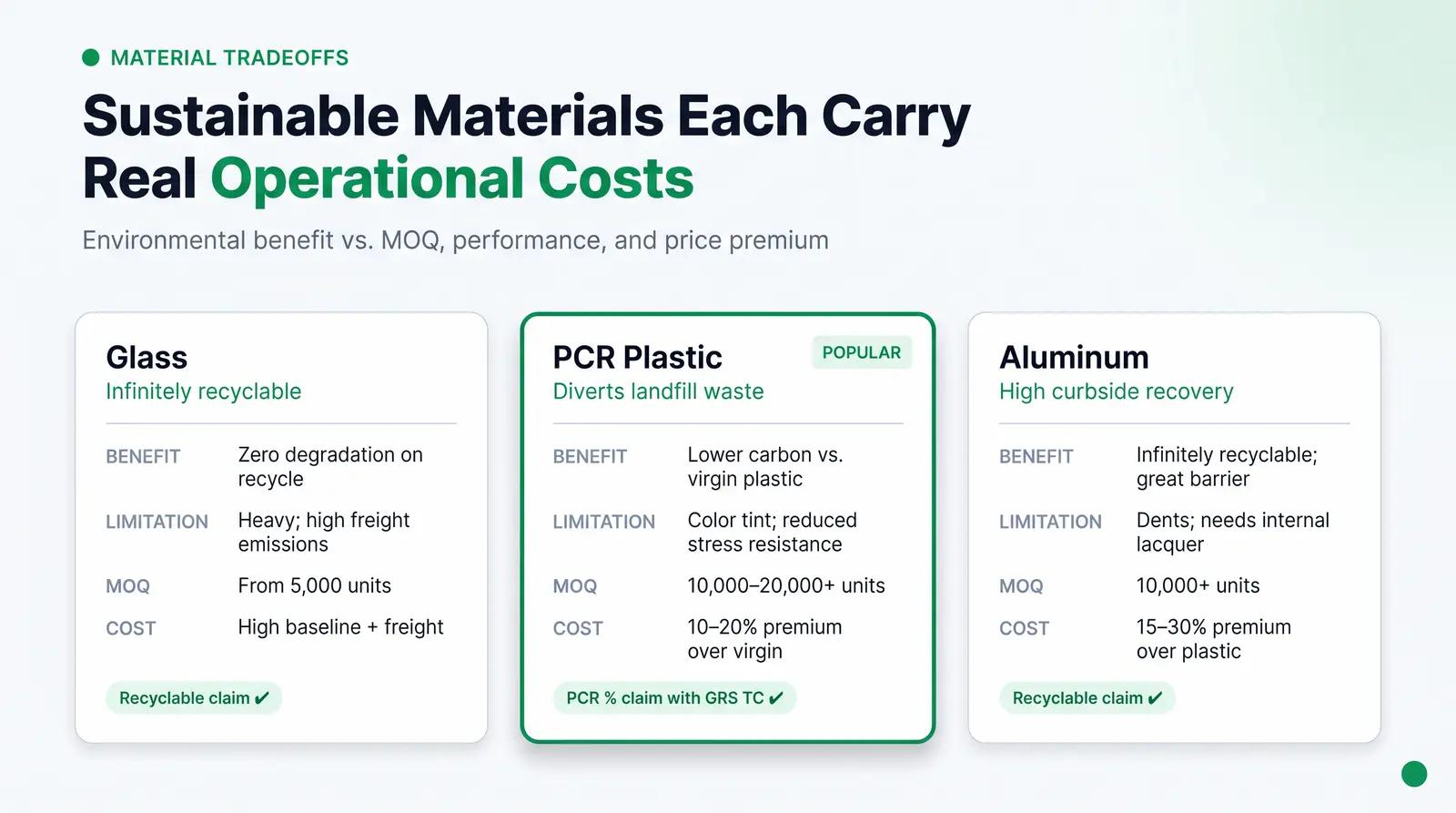
Material Comparison: Glass vs. PCR Plastic vs. Aluminum
When selecting a primary packaging material, founders must weigh the environmental benefits against practical manufacturing realities.
| Material | Key Environmental Benefit | Primary Performance Limitation | Typical MOQ Impact | Typical Cost Premium |
|---|---|---|---|---|
| Glass | Infinitely recyclable without degradation; chemically inert, zero risk of product interaction [21]. | Heavy shipping weight increases scope 3 carbon emissions; high breakage risk during transit [22]. | Low to moderate (often available as stock from 5,000 units). | Baseline cost is high; shipping and freight costs are significantly higher. |
| PCR Plastic | Diverts waste from landfills; significantly lower carbon footprint than virgin plastic [8]. | Slight yellow/gray color tint; potential for cosmetic "black spots" or slight odor; reduced stress-crack resistance [8]. | High (custom PCR runs often require 10,000 to 20,000+ units). | 10% to 20% premium over virgin plastic due to feedstock scarcity [8]. |
| Aluminum | High curbside recovery rate; infinitely recyclable; excellent light and oxygen barrier [21]. | Prone to denting; requires internal protective lacquers to prevent formula corrosion [21]. | Moderate to high (10,000+ units for custom print/shaping). | 15% to 30% premium over standard plastic, depending on decoration. |
Worked Example: Sourcing Packaging for a Vitamin C Serum
To illustrate these tradeoffs, let us analyze a realistic sourcing scenario for a beauty founder launching a high-performance Vitamin C (L-Ascorbic Acid) Serum (0.5 oz / 15 ml). Because Vitamin C is highly sensitive to light and oxygen, the packaging must provide an exceptional barrier to prevent premature oxidation and discoloration of the formula.
| Consideration | Option A: Standard Airless Pump (Virgin PP/PMMA) | Option B: PCR Amber Glass Bottle with PP Dropper |
|---|---|---|
| Oxygen/Light Barrier | Excellent (mechanical piston excludes all oxygen) | Excellent (amber glass blocks UV; dropper limits oxygen exposure) |
| Recyclability | Non-recyclable curbside; less than 1% recovery due to 7+ mixed components [21] | Bottle is highly recyclable curbside (amber glass); dropper bulb and cap must be discarded [21] |
| MOQ | 5,000 units | 5,000 units |
| Approximate Unit Cost | Lower baseline | 15% to 20% higher, plus significantly higher freight costs due to glass weight |
| On-Pack Claims Allowed | No sustainability claims. Use performance language only: "Airless protection to keep formula fresh." | Qualified recyclability claim: "Amber glass bottle is recyclable curbside. Remove dropper before recycling." [11] |
| PCR Claim Possible | Only if supplier provides GRS Transaction Certificate for PCR resin batch [9] | Yes, if supplier provides GRS Transaction Certificate for the PCR glass content [9] |
In this scenario, if the founder prioritizes absolute recyclability, Option B is the clear winner. It allows the brand to make a compliant, qualified on-pack recyclability claim [11]. However, the founder must accept a higher unit cost, increased freight emissions, and instruct consumers to separate the dropper mechanism [21] [22]. If the founder chooses Option A for its superior oxygen barrier and lower cost, they must accept that the package is non-recyclable and refrain from making any environmental claims on-pack [21].
What to Verify With Your Supplier Before Making Any Claim
Before committing to a packaging order or drafting marketing copy, brands must conduct a rigorous compliance audit with their packaging partner. Sourcing through a structured platform can simplify this complex process. At Packfolio, we curate a vetted catalog of cosmetic primary packaging SKUs and coordinate production and quality assurance on behalf of our customers [25]. This means brands sourcing through the Packfolio catalog do not need to navigate complex supplier relationships directly; instead, they can request packaging-level material documentation and third-party certifications directly through the Packfolio platform [25].
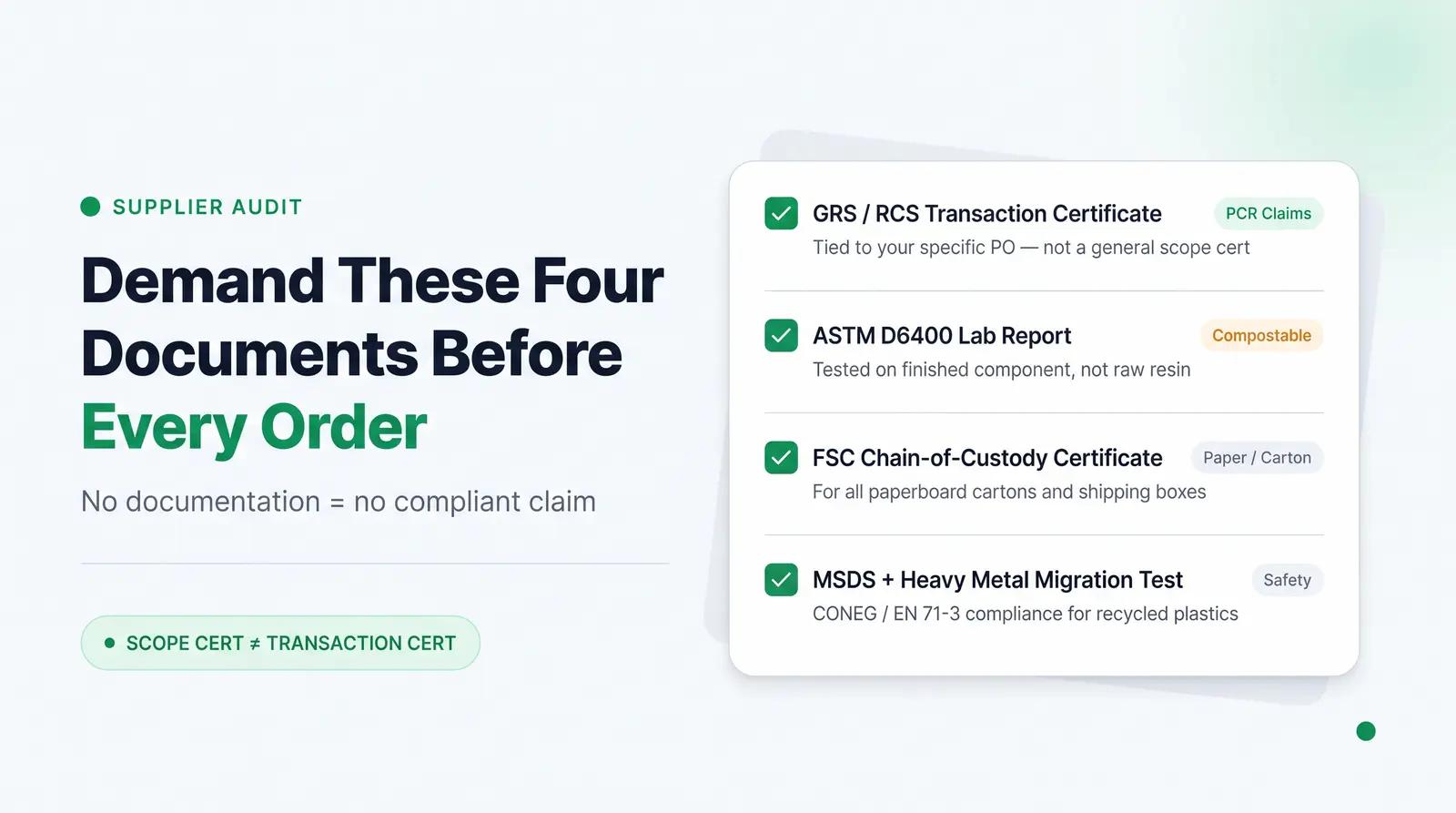
If you are auditing a supplier or reviewing documentation, ensure you secure the following four pillars of verification:
- GRS or RCS Transaction Certificates (TC): If the supplier claims the component contains PCR plastic, demand the TC for the specific resin batch used in your production run [9]. A general scope certificate showing the factory can process PCR is not sufficient; you need the transaction certificate proving they did use it for your order [9].
- ASTM D6400 Lab Reports: If a supplier claims a tube or carton is "compostable," require the full, independent lab report proving compliance with ASTM D6400 or EN 13432 standards [15]. Ensure the test was performed on the finished component (including any barriers, coatings, or adhesives), not just the raw bioplastic resin [15].
- FSC Chain-of-Custody Certification: For outer paperboard cartons or shipping boxes, request the Forest Stewardship Council (FSC) CoC certificate number [26]. This ensures the paperboard is sourced from responsibly managed forests and verified throughout the manufacturing process [26].
- Material Safety Data Sheets (MSDS) and Heavy Metal Testing: Ensure the supplier provides up-to-date heavy metal migration testing (such as CONEG or EN 71-3 compliance) to guarantee that recycled plastics or colorants do not leach harmful chemicals into your cosmetic formulation [8] [27].
Areas That Require Legal Counsel: Do Not Self-Certify
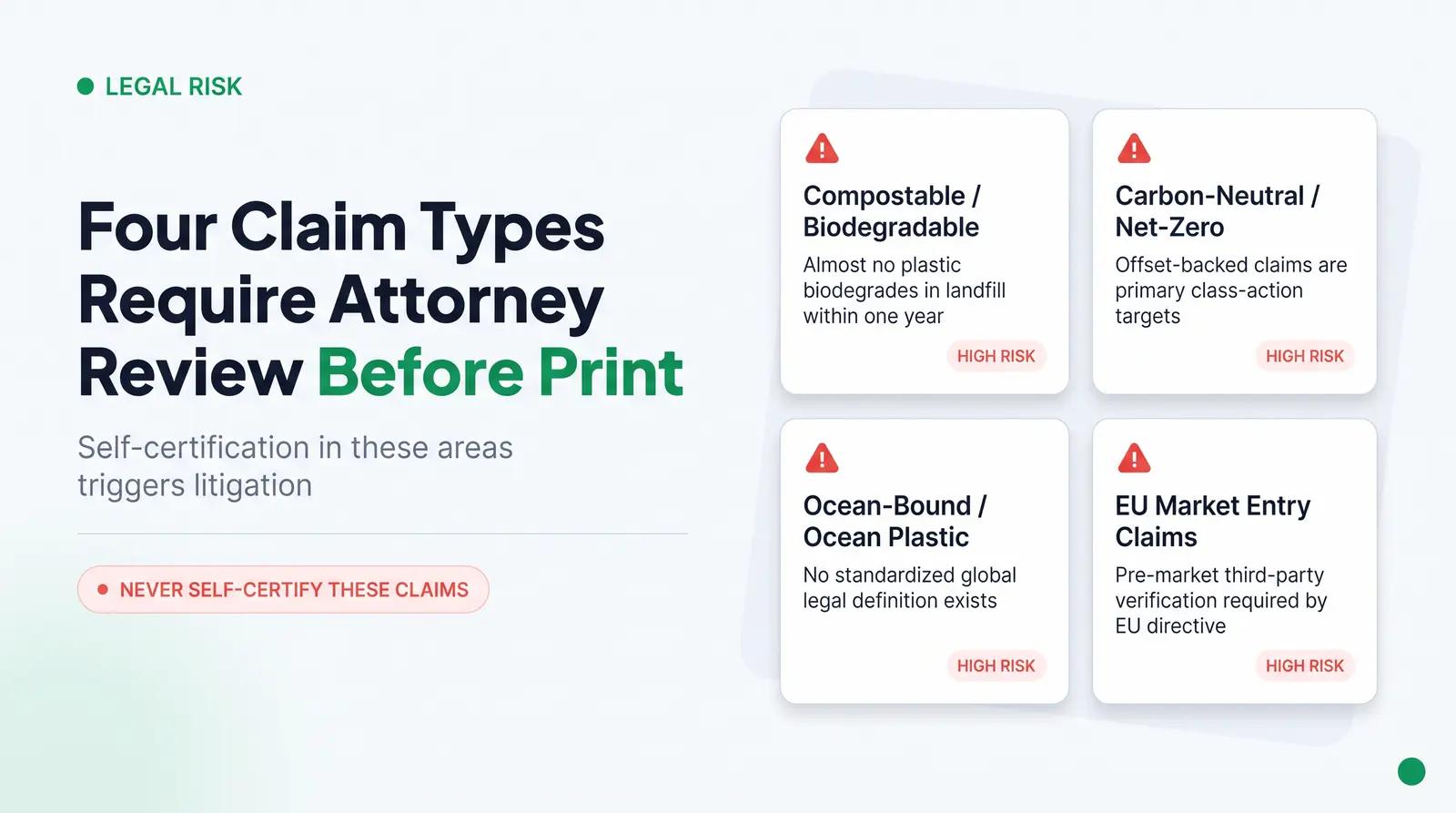
While marketing and procurement teams can safely manage straightforward, qualified claims (such as certified GRS PCR percentages), certain high-risk claims must never be printed on-pack without formal review by a qualified environmental marketing attorney [2]. The following four areas carry the highest risk of regulatory enforcement and class-action litigation:
- "Compostable" or "Biodegradable" Claims: These claims are highly scrutinized because very few municipal composting facilities accept cosmetic packaging, and home composting of plastics rarely succeeds [15]. Making an unqualified biodegradable claim on a plastic component is almost always deemed deceptive under the FTC Green Guides unless the brand can prove the material will completely break down in a standard landfill within one year, a scientific impossibility for almost all packaging materials [15] [28].
- "Carbon-Neutral" or "Net-Zero" Claims: Claims that rely on purchasing carbon offsets to balance out packaging emissions are a primary target for class-action lawsuits [2]. If your brand claims a package is "carbon-neutral," you must possess highly sophisticated, third-party audited LCAs and verifiable, high-quality offset registry data [5] [19]. Any ambiguity in how the carbon boundary was calculated can trigger greenwashing litigation [2].
- "Ocean-Bound" or "Ocean Plastic" Claims: The term "ocean-bound plastic" has no standardized, globally harmonized legal definition [2]. Regulators and courts look closely at how the material was collected. If a brand claims a bottle is made from ocean plastic, but the material was actually collected 30 miles inland from a waterway, the claim may be challenged as deceptive [2].
- EU Market Entry Claims: If your brand plans to sell products in the European Union, you must comply with the EU Green Claims Directive [4]. Because the EU requires pre-market third-party verification of all environmental claims, self-certifying a claim that is legal in the US (such as an unqualified "recyclable" claim based on a 60% threshold) could result in immediate product recalls and severe fines in European member states [4] [11].
By treating sustainability as a rigorous compliance metric rather than a marketing trend, beauty brands can build lasting authority, protect themselves from legal exposure, and foster genuine, long-term trust with an increasingly skeptical consumer base.
Browse the Packfolio Catalog
Navigating the complexities of material sourcing, chain-of-custody documentation, and regulatory compliance does not have to stall your brand's launch. Browse Packfolio's curated cosmetic packaging catalog and request material documentation for any SKU before you order. Preview your label in 3D, then move to production with confidence. Explore the catalog →
Frequently Asked Questions
What does "recyclable" actually mean on cosmetic packaging?
Under the FTC Green Guides, "recyclable" means a package can be collected, sorted, and reprocessed into a new material through an established recycling program [11] [12]. To make this claim without qualification, recycling facilities must be accessible to at least 60% of consumers where the product is sold [11] [12]. Because many small, multi-material, or highly decorated cosmetic components fail to meet this threshold or are rejected by sorting machinery, brands must use qualified on-pack instructions to avoid deceptive marketing [11] [21].
Can I use PCR packaging without third-party certification?
While you can physically purchase and use packaging containing post-consumer recycled (PCR) resin without certification, you cannot legally make an on-pack or marketing claim about the PCR percentage without a third-party verified Chain-of-Custody [2] [9]. To satisfy FTC substantiation requirements, you must secure and maintain transaction certificates from standards like the Global Recycled Standard (GRS) to prove the recycled material was actually used in your specific packaging run [2] [9].
What is the FTC Green Guides and does it apply to beauty brands?
The FTC Green Guides are administrative guidelines issued by the U.S. Federal Trade Commission to help marketers ensure their environmental claims are truthful and non-deceptive [1] [2]. They apply to all consumer-facing and business-to-business marketing in the United States, including beauty and personal care brands [1]. While the guides themselves are not binding federal law, the FTC actively enforces them under Section 5 of the FTC Act, and several states (such as California) have codified the Green Guides directly into state law [1] [7].
What is the difference between post-consumer recycled and post-industrial recycled content?
Post-Consumer Recycled (PCR) content consists of materials that have been used by an end consumer, discarded, collected, and reprocessed into new packaging [8]. Post-Industrial Recycled (PIR) content, or pre-consumer recycled content, consists of manufacturing scrap or waste diverted from the waste stream during the fabrication process before it ever reaches a consumer [8]. PIR claims are viewed with greater regulatory skepticism because manufacturing scrap is routinely reused as a standard industry practice [8] [24].
How do I make a sustainability claim on packaging without greenwashing?
To make a compliant, non-greenwashing sustainability claim, you must avoid vague, general terms like "eco-friendly" or "green" [1] [3]. Instead, focus on narrow, highly specific attributes (such as the exact percentage of GRS-certified PCR content by weight) and clearly qualify the claim to explain which parts of the package the benefit applies to [1] [9]. Finally, ensure you have competent, reliable, third-party verified scientific or supply-chain evidence on hand before the packaging is printed [2].
References
- Federal Trade Commission. Green Guides. Last updated October 2012. FTC Green Guides Topic Page
- Pierce Atwood LLP. Earth Day Reminder: Are Your Environmental Advertising Claims Compliant with the FTC's Green Guides? Published April 2026. Pierce Atwood Compliance Alert
- Federal Trade Commission. Guides for the Use of Environmental Marketing Claims; Section 260.4: General Environmental Benefit Claims. October 2012. 16 CFR § 260.4 eCFR
- European Commission. Green claims: New criteria to stop companies from making misleading claims about environmental merits of their products and services. Proposed March 2023. EU Green Claims Policy Page
- Sustainable Packaging Initiative for Cosmetics (SPICE). Cosmetics Packaging Claims Guidelines (Version 1.0). Published September 2020. SPICE L'Oreal Quantis Guidelines PDF
- Covington & Burling LLP. Sustainability Marketing Claim Regulation and Enforcement. Published 2023. Covington Sustainability Marketing Toolkit PDF
- Basila, Sadie. The FTC Green Guides and Recyclability. The Regulatory Review. Published December 2024. The Regulatory Review Green Guides Article
- Atlantic Packaging. Deep Dive: PCR in Sustainable Packaging – A Closer Look at Post-Consumer Recycled Content in Plastic Packaging. Updated September 2025. Atlantic Packaging PCR Deep Dive
- Textile Exchange. Recycled Claim Standard (RCS) and Global Recycled Standard (GRS). Standards updated December 2025. Textile Exchange GRS and RCS Standard Page
- International Organization for Standardization. ISO 14021:2016: Environmental labels and declarations — Self-declared environmental claims (Type II environmental labelling). Reviewed 2021. ISO 14021:2016 Standard Summary
- Federal Trade Commission. Guides for the Use of Environmental Marketing Claims; Section 260.12: Recyclable Claims. October 2012. 16 CFR § 260.12 LII eCFR
- Crowell & Moring LLP. Green Guides Update – Comments Closed, but the FTC Wanted to Hear More About Waste. Published May 2023. Crowell Compliance Alert
- Association of Plastic Recyclers. The APR Design® Guide for Plastics Recyclability. Accessed 2026. APR Design Guide Home
- How2Recycle. An Evolved Labeling System. Accessed 2026. How2Recycle Program Home
- Federal Trade Commission. Guides for the Use of Environmental Marketing Claims; Section 260.7: Compostable Claims. October 2012. 16 CFR § 260.7 eCFR
- Biodegradable Products Institute. BPI Certification Scheme. Accessed 2026. BPI Certification Home
- Federal Trade Commission. Guides for the Use of Environmental Marketing Claims; Section 260.14: Refillable Claims. October 2012. 16 CFR § 260.14 eCFR
- International Organization for Standardization. ISO 18603:2013: Packaging and the environment — Reuse. Reviewed 2019. ISO 18603:2013 Standard Summary
- Federal Trade Commission. Guides for the Use of Environmental Marketing Claims; Section 260.15: Renewable Energy Claims. October 2012. 16 CFR § 260.15 eCFR
- Center for Resource Solutions. Green-e Certification Standards. Accessed 2026. Green-e Program Home
- Packaged Sustainable. Recyclable Cosmetic Packaging: Materials and Suppliers. Updated April 2026. Packaged Sustainable Recyclable Cosmetics Guide
- GreenBlue. How MRFs Decide What’s Accepted: Takeaways for Packaging Decision-Makers. Published December 2025. GreenBlue MRF Acceptance Article
- BeautyMatter. Mono-Material Airless Pump Unlocks Beauty Recycling Challenges. Published September 2023. BeautyMatter Airless Pump Article
- Federal Trade Commission. Guides for the Use of Environmental Marketing Claims; Section 260.13: Recycled Content Claims. October 2012. 16 CFR § 260.13 LII eCFR
- Packfolio. Beauty packaging without the supply chain. Sourcing and Customization Platform. Accessed 2026. Packfolio Home
- Forest Stewardship Council. FSC Chain of Custody Certification. Accessed 2026. FSC CoC Certification Home
- Coalition of Northeastern Governors (CONEG). Model Toxics in Packaging Legislation. Accessed 2026. Toxics in Packaging Clearinghouse
- Federal Trade Commission. Guides for the Use of Environmental Marketing Claims; Section 260.8: Degradable Claims. October 2012. 16 CFR § 260.8 eCFR


