
How to Vet a Cosmetic Packaging Supplier Before You Order Samples
A five-layer credibility rubric helps beauty founders vet cosmetic packaging suppliers at the legal, capability, quality, communication, and sample levels before committing capital.
You open the shipping box, pull out the custom frosted glass bottle, and fill it with your newly finalized vitamin C serum. Within forty-eight hours, the serum turns a dark, oxidized orange, and the custom silk-screened logo begins to peel off when rubbed. This is the sample-stage nightmare that costs beauty founders thousands of dollars in lost capital and months of delayed launch timelines. Many brands treat sample ordering as the first step in supplier vetting, but using samples as your primary vetting mechanism is backwards.
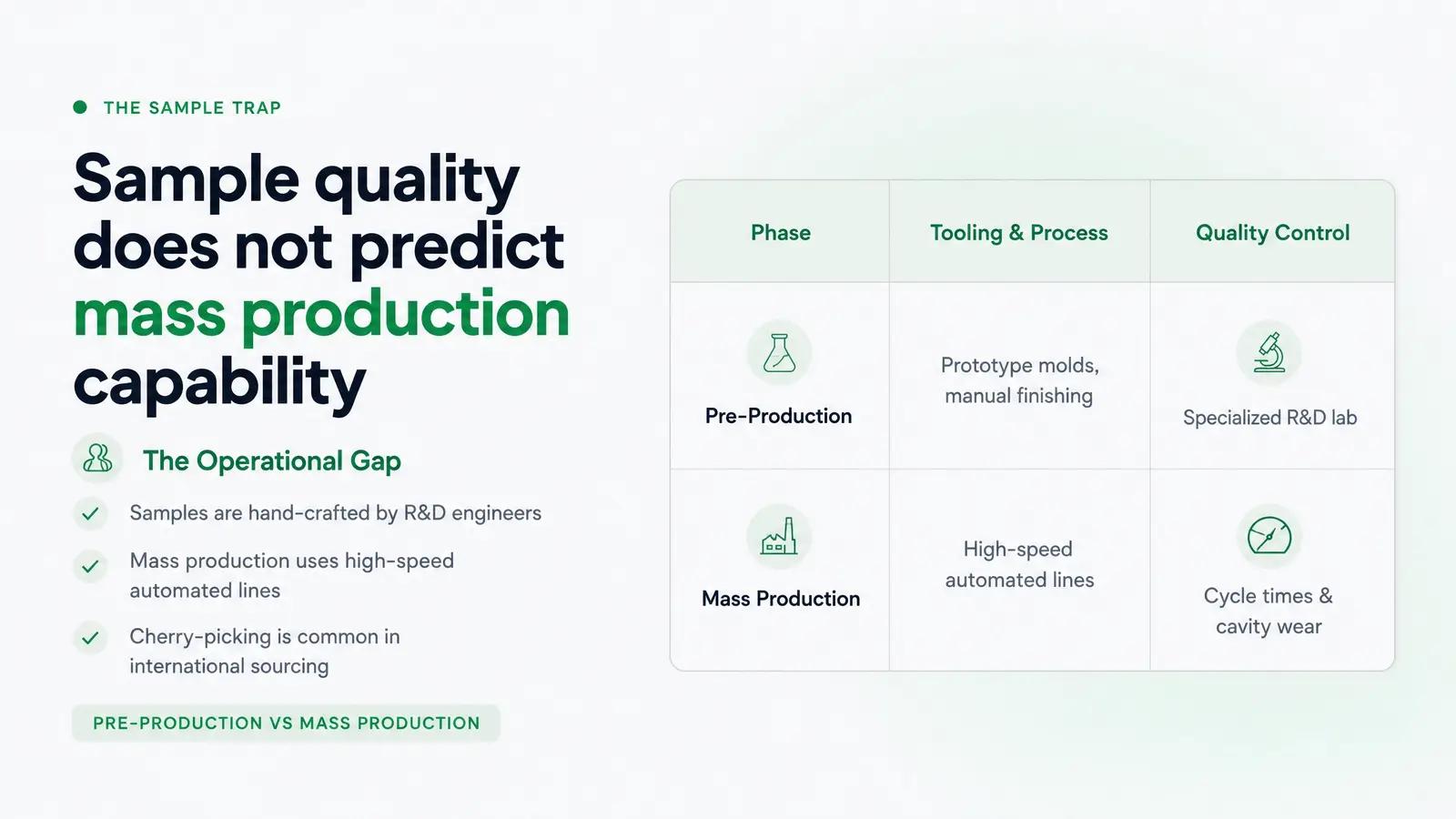
Samples are easily manipulated. A supplier can send you hand-crafted, cherry-picked components produced in a specialized laboratory rather than on a mass-production line [1]. By the time you realize the factory cannot replicate that quality at scale, you have already wasted precious time. To build a resilient beauty brand, you must execute a rigorous pre-sample vetting process.
Why Supplier Vetting Fails at the Sample Stage
The traditional sourcing workflow is broken. Most independent founders find a supplier on a B2B marketplace, look at a few digital product photos, and immediately pay $150 to $300 for a sample kit. When the samples arrive and look acceptable, the founder assumes the supplier is qualified. This assumption ignores the structural reality of global packaging manufacturing.
Pre-production samples and mass-production runs are two entirely different operational events. Pre-production samples are often made by senior R&D engineers using prototype tooling, high-grade resins, and manual finishing techniques [1]. Mass production, however, is run on high-speed automated lines where cycle times, cavity wear, and regrind plastic ratios dictate the final quality.
Furthermore, sample cherry-picking is a documented practice in international procurement. Suppliers routinely source high-quality stock samples from competing factories to win your business, planning to figure out how to manufacture them once you place a deposit. If a supplier lacks the internal quality control systems to maintain process capability during a 50,000-unit run, a flawless 3-unit sample set is meaningless [2]. True vetting must happen at the organizational and compliance levels before a single sample is requested.
Trading Company vs. Factory: The Distinction That Changes Everything
Many suppliers on B2B platforms present themselves as direct manufacturers when they are actually trading companies. While trading companies can provide value for brands sourcing small quantities across multiple diverse categories, they introduce significant risks for custom cosmetic primary packaging.
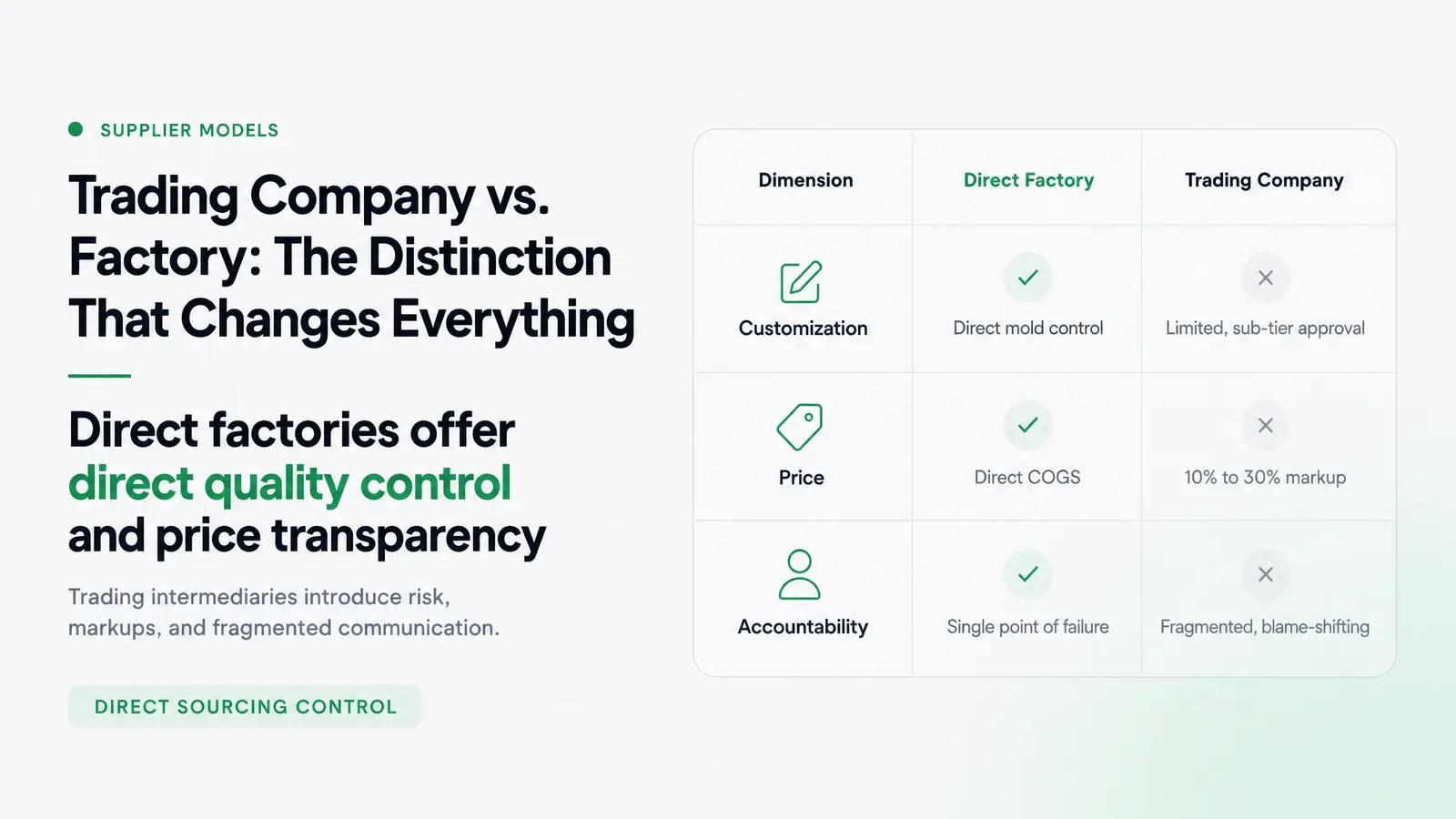
A trading company does not own the manufacturing assets, meaning they have no direct control over production schedules, machine calibration, or raw material purity [3]. If a quality defect occurs during mass production, the trading company is structurally incentivized to deflect accountability to the sub-tier factory. This creates a fragmented communication chain that can delay resolution by weeks.
For custom primary packaging, such as airless pump bottles, droppers, or acrylic jars, working directly with a verified factory is critical. Direct factories own the physical molds, employ the quality control staff, and maintain the cleanroom environments required to prevent microbial contamination [4].
The following comparison matrix outlines how these two supplier models impact your brand's supply chain:
| Dimension | Direct Factory | Trading Company |
|---|---|---|
| MOQ Flexibility | High minimums, typically 10,000+ units, due to setup costs. | Low minimums, often aggregating small orders from stock. |
| Customization Control | Direct control over mold modification, color matching, and tooling. | Limited, as any change requires complex sub-tier approval. |
| Sample Reliability | High, as samples are pulled from actual production tooling. | Variable, as samples may be sourced from different sub-factories. |
| Price Transparency | Direct cost-of-goods pricing with no intermediary markups. | Higher unit costs, typically carrying a 10% to 30% markup [3]. |
| Certification Validity | Certificates match the legal entity on the shipping documents. | Certificates often belong to sub-tier factories, risking invalidation. |
| Production Accountability | Single point of failure, direct access to the quality control team. | Fragmented accountability, prone to blame-shifting. |
| Communication Chain | Technical but sometimes slower due to language barriers. | Fast, polished English, but lacks direct technical authority [3]. |
For a detailed breakdown of how order volumes impact your sourcing strategy, see our MOQ guide for indie beauty brands.
The Supplier Credibility Rubric: Five Verification Layers
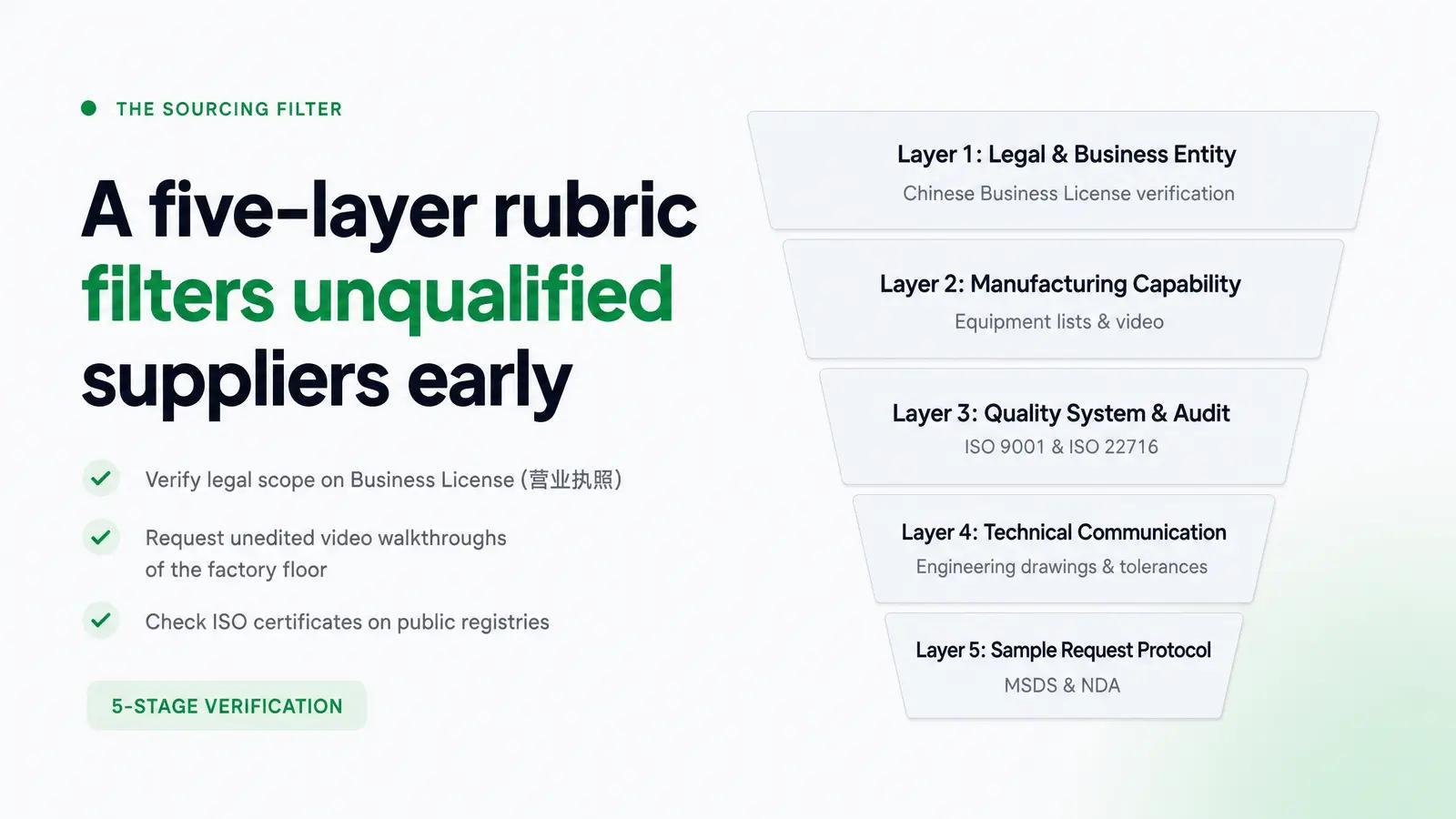
To systematically evaluate a supplier before committing capital to samples, we recommend utilizing The Supplier Credibility Rubric. This structured framework is built from industry-standard sourcing practices and regulatory compliance guidelines. It forces you to verify the supplier's legal, operational, and technical capabilities before initiating a commercial relationship.
Layer 1: Legal and Business Entity Verification
Before discussing product specifications, you must confirm that the supplier is a legally registered entity in good standing with local government authorities.
- What to Check: The supplier's official business registration documents and unified social credit code.
- Evidence to Request: A high-resolution copy of the Chinese Business License (营业执照) or equivalent local registration [3].
- Pass Criteria: The business scope explicitly lists manufacturing (制造 or 生产) rather than just trading or sales (贸易 or 销售). The registered capital is proportional to a manufacturing operation, typically exceeding 1,000,000 RMB.
- Flag Criteria: The supplier refuses to provide the business license, or the registered address maps to a residential apartment or a commercial office suite rather than an industrial park [3].
Layer 2: Manufacturing Capability Evidence
You must verify that the supplier physically owns the machinery and facilities required to produce your specific packaging format.
- What to Check: Equipment lists, cleanroom classifications, and daily production capacity.
- Evidence to Request: An active machinery inventory list, cleanroom air-filtration certificates, and a real-time, unedited video walkthrough of the production floor [3].
- Pass Criteria: The factory demonstrates ownership of injection molding machines, automated assembly lines, and decoration equipment (such as silk-screen printing or hot-stamping machines) compatible with your packaging type.
- Flag Criteria: The supplier provides generic stock photos of machinery, or the video walkthrough shows idle equipment, empty assembly lines, or workers not wearing standard personal protective equipment (PPE).
Layer 3: Quality System and Certification Audit
A manufacturer's quality management system determines whether they can replicate sample quality across a high-volume production run.
- What to Check: Standard operating procedures (SOPs), trace-back systems, and international certifications.
- Evidence to Request: ISO 9001:2015 certificates, ISO 22716:2007 (Cosmetics GMP) certificates, and sample internal quality control (IQC, IPQC, FQC) logs [4] [5].
- Pass Criteria: Valid certificates issued by an accredited third-party registrar. The certificate numbers must be independently verifiable on the certifying body's public database [4].
- Flag Criteria: Expired certificates, certificates registered to a different legal entity, or a lack of documented batch-traceability procedures.
Layer 4: Communication and Responsiveness Signals
Technical competence is highly correlated with how a supplier handles complex, pre-sale technical inquiries.
- What to Check: The accuracy, depth, and speed of technical responses.
- Evidence to Request: Responses to detailed engineering questions regarding mold tolerances, material shrinkage rates, and decoration boundaries.
- Pass Criteria: The supplier provides precise engineering drawings (dielines or 3D CAD files) and answers technical questions with specific manufacturing data within twenty-four business hours.
- Flag Criteria: The sales representative avoids technical questions, uses vague phrases like "we can do anything," or takes several days to provide basic structural information.
Layer 5: Sample Request Protocol
The protocol you use to request samples must protect your brand from receiving non-representative components.
- What to Check: The origin and production conditions of the samples.
- Evidence to Request: Confirmation of whether the samples are pulled from an active production run or hand-assembled in an R&D lab, along with material safety data sheets (MSDS) for the specific resin lot used [1].
- Pass Criteria: The supplier agrees to provide samples from the exact mold and resin grade intended for your mass production, accompanied by dimensional inspection reports.
- Flag Criteria: The supplier charges an exorbitant fee for standard stock samples, resists providing material composition declarations, or refuses to sign a basic non-disclosure agreement (NDA) before sharing technical drawings.
Red Flags at Each Stage
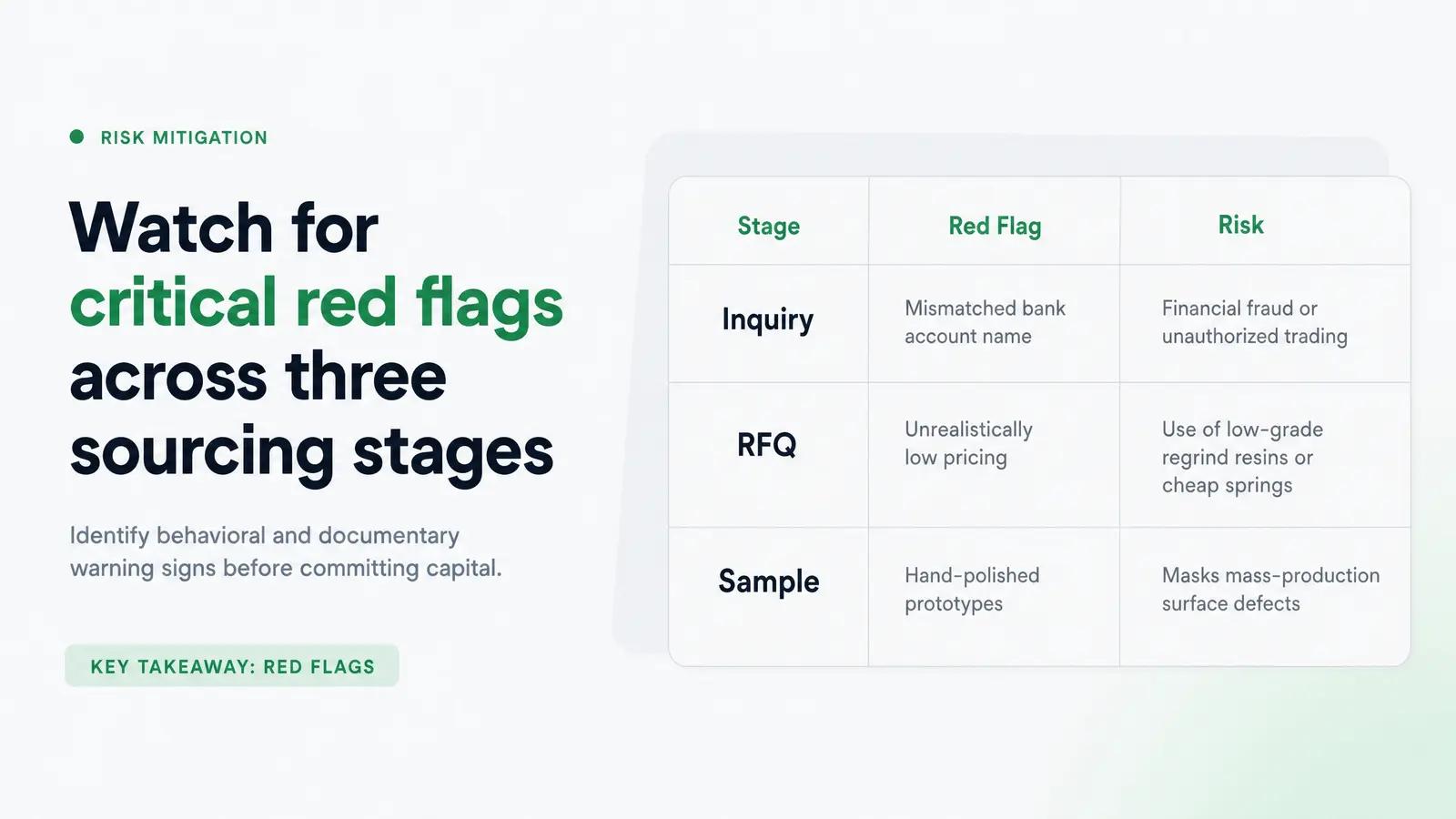
Sourcing cosmetic packaging requires constant vigilance. By dividing your evaluation into distinct stages, you can identify behavioral and documentary red flags before they compound into production failures.
The Inquiry Stage
- The supplier's registered name does not match their bank account name. This is one of the most reliable indicators of financial fraud or unauthorized trading intermediaries [3]. If you are asked to wire funds to a personal account or an offshore shell company that does not match the name on the business license, halt all communications.
- The business scope on the registration documents is restricted. If a supplier claims to manufacture high-end acrylic jars but their business license scope is limited to paper printing or wooden boxes, they are outsourcing your order to an unvetted third party.
- Refusal to sign a bilingual Non-Disclosure Agreement (NDA). Confident, legitimate manufacturers understand the importance of intellectual property protection and will sign a balanced, bilingual NDA before reviewing your custom artwork or proprietary component designs.
The RFQ Stage
- Unrealistic pricing that sits significantly below the market average. If five qualified suppliers quote $0.85 per unit for an airless pump bottle, and a sixth supplier quotes $0.35, do not celebrate. This pricing discrepancy almost always indicates the use of low-grade regrind resins, cheap internal spring mechanisms prone to rusting, or the omission of critical quality control steps [1].
- Inability to provide precise material specifications. A credible manufacturer must be able to specify the exact polymer used for every component of your packaging. For example, they should state that the outer bottle is PMMA, the inner bottle is PP, the collar is ABS, and the gasket is silicone. Vague answers like "it is high-quality plastic" are unacceptable.
- Resistance to third-party quality control audits. If a supplier hesitates or charges extra fees when you mention that you will hire an independent inspection agency to audit the factory before production, they are hiding operational deficiencies [4].
The Sample Stage
- The supplier sends hand-polished prototypes instead of injection-molded samples. Hand-polished acrylic or glass samples look exceptionally clear because they have been manually finished by a technician. However, they do not represent the surface finish, gate vestiges, or parting lines that will appear on your mass-produced units.
- The sample fails basic compatibility or leakage testing. Primary packaging must protect the formulation. If a sample bottle leaks during a simple vacuum-chamber test or shows stress cracking when exposed to your formulation's essential oils, the supplier's engineering team has failed to verify material compatibility [1].
- Inconsistent sample dimensions. If you measure five sample bottles with a digital caliper and find significant variations in neck thread height or wall thickness, the supplier is using worn-out, poorly maintained molds that will cause capping and sealing failures on your filling line.
What a Good RFQ Response Looks Like
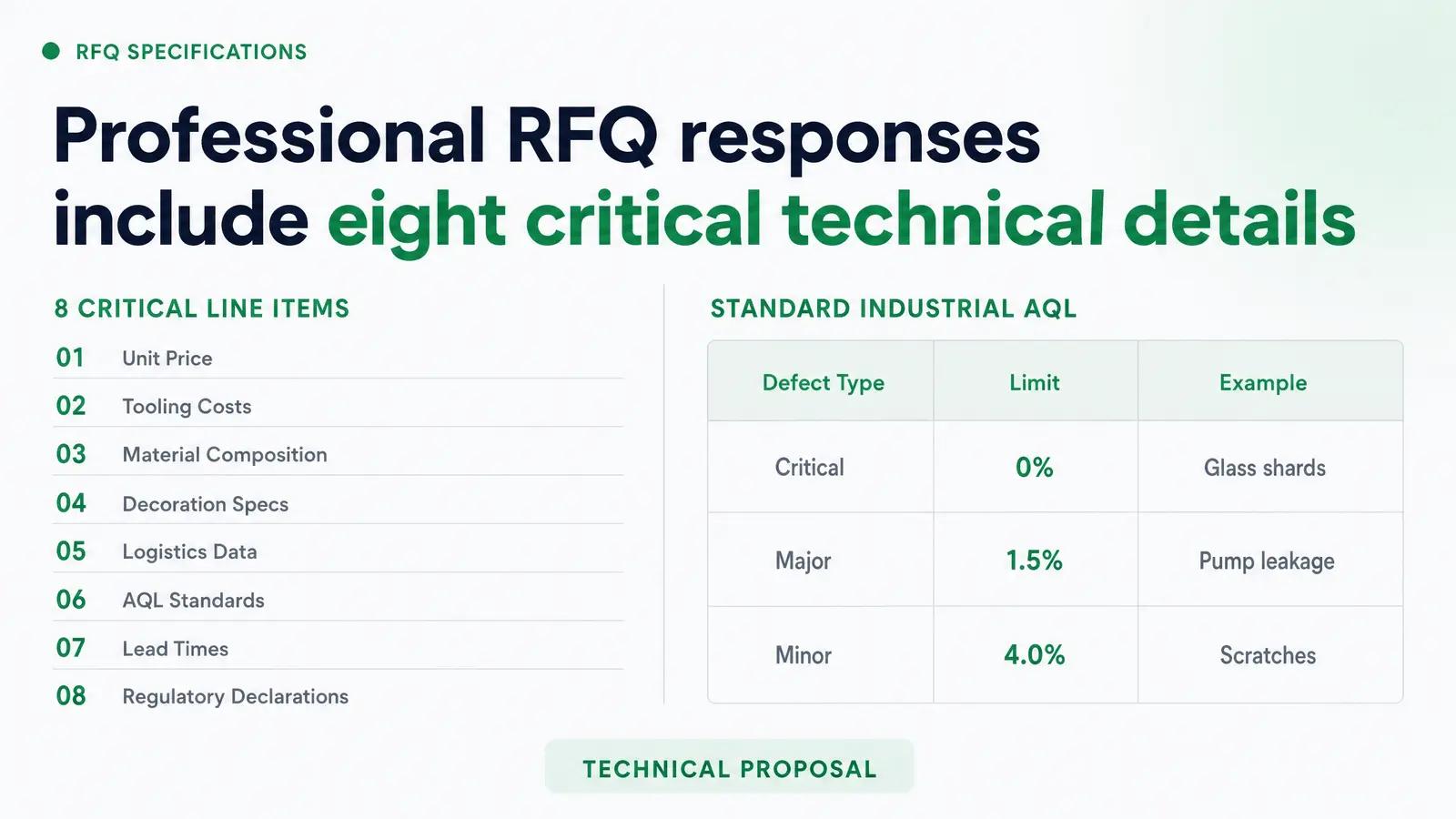
A professional Request for Quote (RFQ) response is more than a simple price sheet. It is a comprehensive technical proposal that demonstrates the manufacturer's operational discipline and understanding of your product's requirements. When you submit a detailed RFQ, a credible supplier should return a structured document containing the following eight critical line items:
- Detailed Unit Price Breakdown: The unit cost must be broken down by order volume tiers, decoration methods, and packaging components. This prevents unexpected cost increases when you modify your artwork or order size [6].
- Tooling and Mold Costs: If your packaging requires custom decoration or a proprietary shape, the response must clearly state the cost of the molds, the mold ownership terms, and the guaranteed mold lifespan measured in shots.
- Exact Material Composition: A component-by-component declaration of the specific polymers, glass types, or metal alloys used, including the percentage of post-consumer recycled (PCR) content if applicable [1].
- Decoration Specifications: Clear technical boundaries for printing, such as the maximum number of silk-screen colors, the required distance from the bottle shoulder, and the exact Pantone or registration tolerances.
- Detailed Packaging and Logistics Data: Information on how the finished units will be protected during transit. This includes case pack quantities, the use of individual polybags to prevent scratching, palletization specifications, and the gross shipping weight [6].
- Defined Quality Standards and AQL: The supplier must explicitly state their Acceptable Quality Limit (AQL) for critical, major, and minor defects. A standard industrial AQL for cosmetic primary packaging is 0% for critical defects (such as glass shards or chemical contamination), 1.5% for major defects (such as pump failures or leakage), and 4.0% for minor defects (such as minor cosmetic scratches) [2].
- Production and Sample Lead Times: A realistic timeline outlining how long it will take to produce pre-production samples, complete mass production, and execute pre-shipment quality inspections.
- Comprehensive Regulatory Declarations: Pre-signed compliance statements confirming that the materials used do not contain restricted heavy metals, phthalates, or substances prohibited under major international regulations.
Certifications That Actually Matter for US and EU Markets
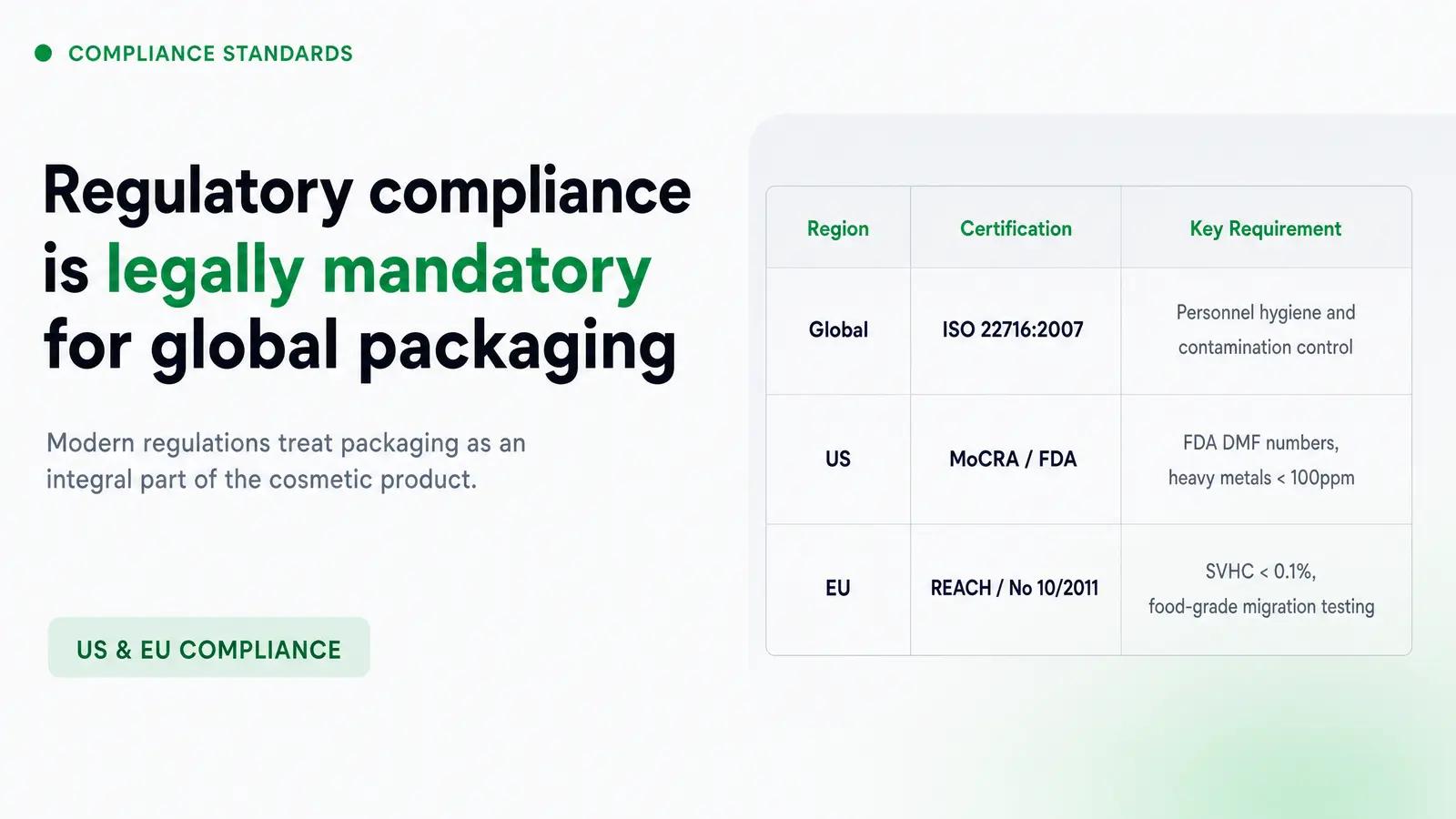
Sourcing packaging without verifying regulatory compliance can lead to catastrophic legal and financial consequences. Under modern cosmetics regulations, the packaging is legally considered an integral part of the cosmetic product, as chemicals can migrate from the container into the formulation, posing risks to consumer safety [1].
ISO 22716:2007 (Cosmetics GMP)
While ISO 9001:2015 certifies general quality management, it is a horizontal standard that does not address the hygienic requirements of cosmetics manufacturing [4]. ISO 22716:2007 is the international standard for Cosmetics Good Manufacturing Practices (GMP) [5]. It establishes strict guidelines for personnel hygiene, raw material handling, sanitation, and contamination control on the production floor [5]. Your packaging manufacturer should be certified to ISO 22716 to ensure that your bottles and jars are produced in a clean, sanitary environment that prevents microbial contamination before filling.
US FDA Registration and MoCRA Compliance
The Modernization of Cosmetics Regulation Act of 2022 (MoCRA) is the most significant expansion of the FDA's authority over cosmetics since 1938 [7]. Under MoCRA, the "Responsible Person" (the brand owner whose name appears on the label) must ensure and maintain records supporting adequate safety substantiation for their cosmetic products [8].
To support your safety substantiation, your packaging supplier must provide:
- FDA Drug Master File (DMF) numbers or Food Contact Substance (FCS) notifications for the plastic resins and colorants used, verifying that the materials are safe for skin contact.
- Heavy metal compliance certificates proving that the packaging conforms to the Model Toxics in Packaging Legislation, which restricts the total concentration of lead, cadmium, mercury, and hexavalent chromium to less than 100 parts per million (ppm).
EU Cosmetics Regulation (EC) No 1223/2009
If you plan to sell your products in the European Union, you must comply with Regulation (EC) No 1223/2009 [9]. Annex I of this regulation mandates that the Cosmetic Product Safety Report (CPSR) must include a detailed evaluation of the packaging material's purity, stability, and migration characteristics [9].
Your supplier must provide a comprehensive Declaration of Compliance (DoC) stating that the packaging materials comply with:
- REACH Regulation (EC) No 1907/2006: Confirming that the packaging does not contain Substances of Very High Concern (SVHC) above the 0.1% weight-by-weight threshold [10].
- Food Contact Materials Regulation (EU) No 10/2011: While cosmetics are not food, the EU scientific committee routinely uses food-grade migration testing as the safety proxy for cosmetic primary packaging [1].
Worked Example
Scenario
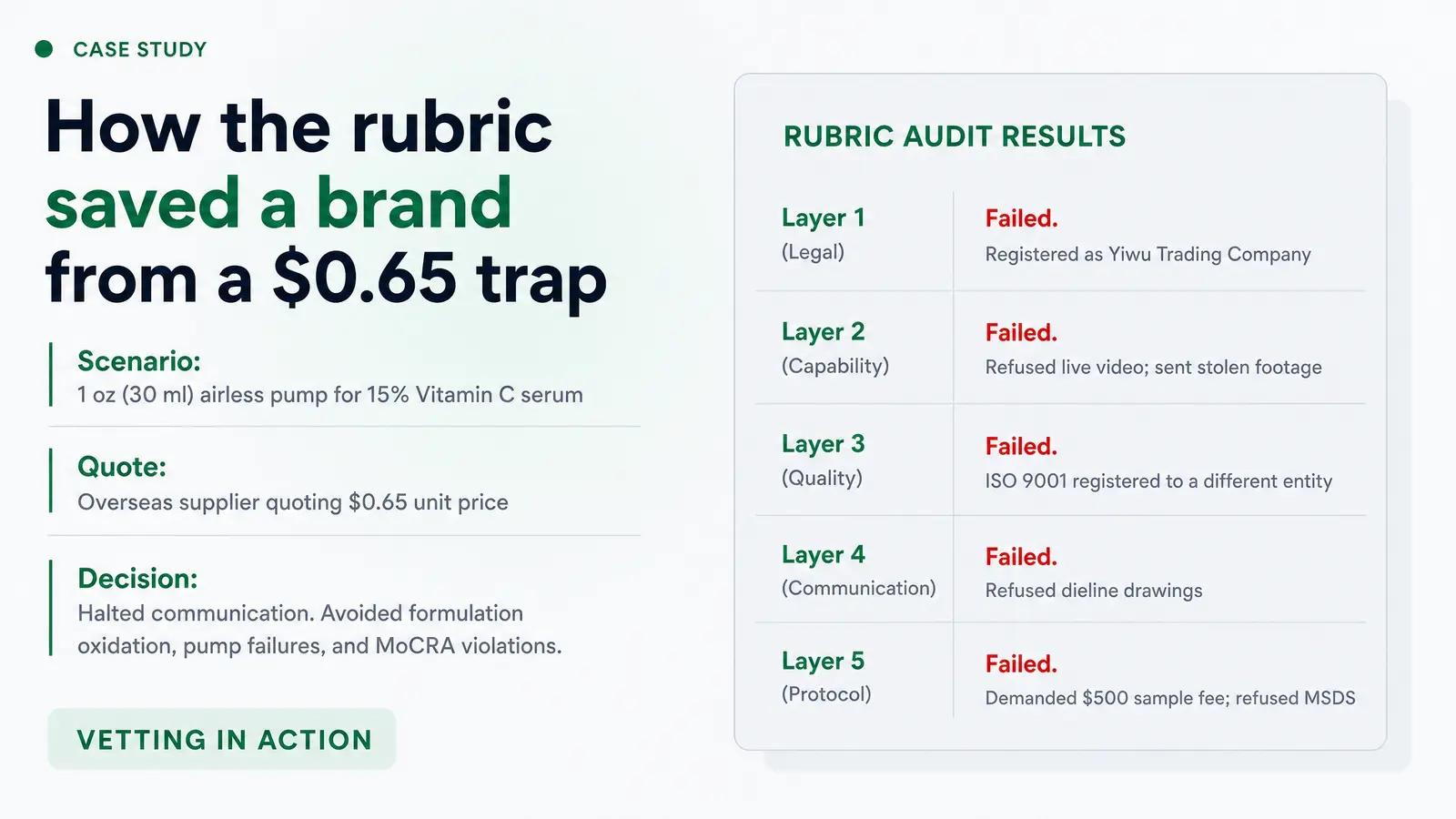
An independent beauty brand is preparing to launch a high-potency vitamin C facial serum. The formulation contains 15% L-ascorbic acid, a highly unstable active ingredient that oxidizes rapidly when exposed to light and oxygen. The brand needs a 1 oz (30 ml) airless pump bottle to protect the formulation. The target first production run is 1,000 units, and the brand has identified an overseas supplier on a B2B platform quoting a low unit price of $0.65.
Applying the Rubric
The founder applies The Supplier Credibility Rubric to evaluate the supplier before ordering samples:
- Layer 1 (Legal): The founder requests the Chinese Business License. The supplier delays for three days, then sends a PDF. Upon translating the business scope, the founder discovers the legal entity is registered as a "Yiwu Trading Company" with an approved scope limited to "wholesale and retail of daily necessities." The supplier is not a factory; they are a trading intermediary.
- Layer 2 (Capability): The founder requests a live video walkthrough of the injection molding facility. The supplier refuses, claiming "factory security policies" prohibit live video. Instead, they send a pre-recorded promotional video. The founder runs a reverse-image search on key video frames and discovers the footage was stolen from a major German medical packaging manufacturer.
- Layer 3 (Quality Systems): The founder asks for an ISO 22716 certificate [5]. The supplier sends an ISO 9001 certificate [4]. However, the company name on the certificate belongs to a plastic manufacturing facility in a different province, with no legal connection to the Yiwu trading company.
- Layer 4 (Communication): The founder asks for a 2D dieline drawing of the bottle to begin artwork layout. The sales representative sends a low-resolution JPEG with no dimensions, stating, "Just send your logo, our designer will paste it."
- Layer 5 (Sample Protocol): The founder asks if the samples can be supplied in a UV-blocking amber color to protect the photosensitive vitamin C. The supplier agrees but demands a $500 custom sample fee, refusing to provide a material safety data sheet (MSDS) for the colorant.
The Decision
The supplier failed every layer of the credibility rubric. The low price of $0.65 was a trap. Had the founder ordered samples, they would have received stock components of unknown material origin, sourced from an unvetted factory.
If they had proceeded to a 1,000-unit production run, they would have risked massive formulation oxidation, pump failures, and regulatory non-compliance under MoCRA due to a lack of safety documentation [7]. The founder immediately halts communication and seeks a pre-vetted sourcing partner.
How Packfolio Approaches This Problem
At Packfolio, we believe beauty founders should focus on formulating exceptional products, not managing complex global supply chains. We have completely redesigned the packaging procurement process to eliminate the risks of supplier vetting, quality defects, and regulatory non-compliance.
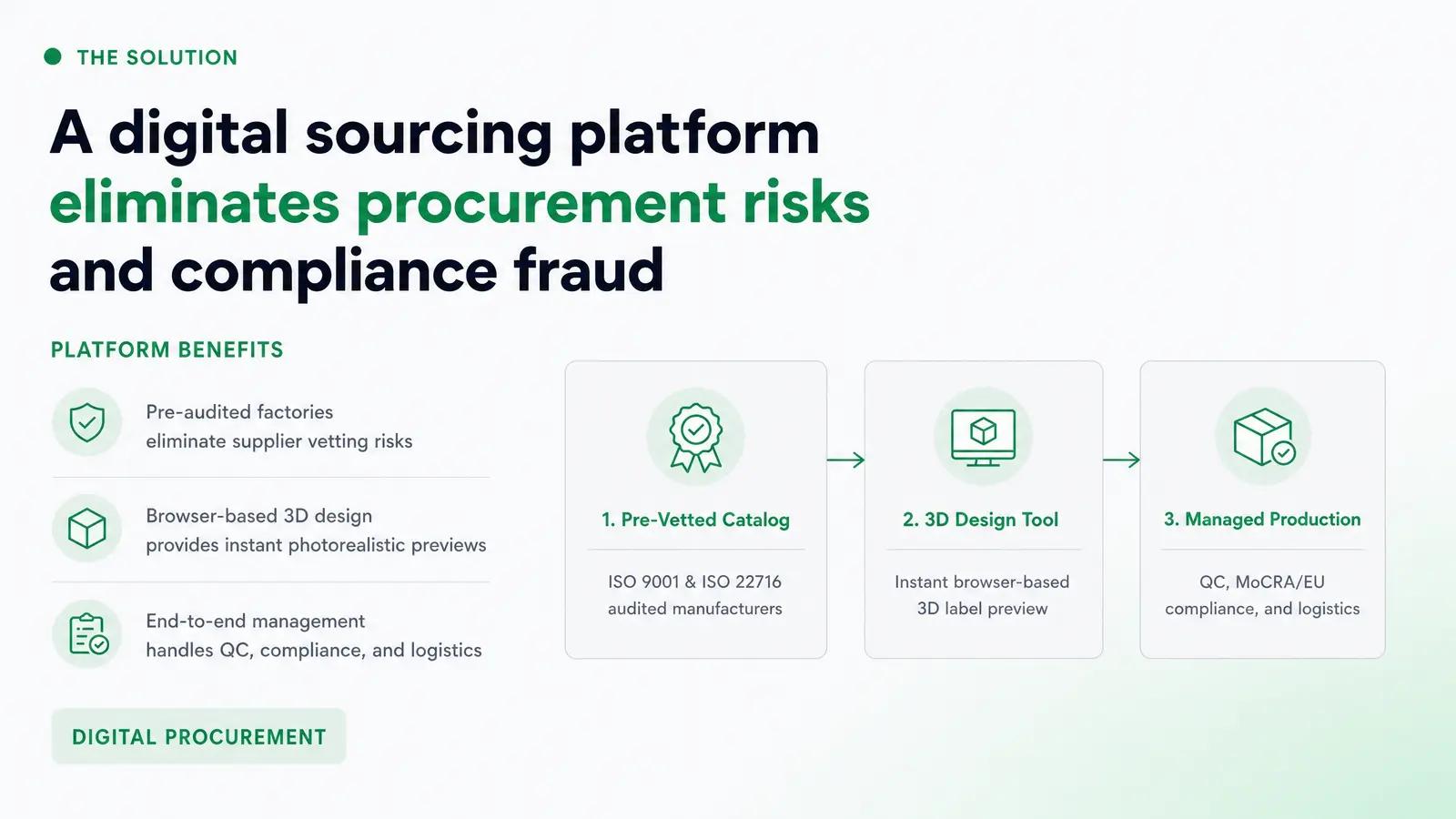
We do not operate as a marketplace of unverified vendors. Instead, Packfolio acts as an on-demand, custom cosmetic packaging platform. We maintain a curated, pre-vetted catalog of primary packaging SKUs, including bottles, jars, tubes, droppers, and airless pumps. Every single manufacturer in our supply chain has already been audited against the highest global standards, including ISO 9001 and ISO 22716 [4] [5].
When you use Packfolio, you never have to contact an overseas supplier, decipher a business license, or worry about certificate fraud. Every packaging SKU in our catalog is pre-modeled in 3D with predefined printable regions. You can upload your artwork directly into our browser-based 3D design tool, preview your finished product on a photorealistic model, and place your order.
Packfolio coordinates the entire production process, manages rigorous on-site quality control, verifies MoCRA and EU compliance, and handles international freight directly to your warehouse. We handle the supply chain so you can build your brand.
To explore our pre-vetted packaging options and preview your custom artwork in real-time, browse the Packfolio catalog.
Browse Packfolio's curated cosmetic packaging catalog and preview your label in 3D before committing to production → packfolio.com/catalog
Frequently Asked Questions
How do I verify that a cosmetic packaging supplier is actually a manufacturer and not a trading company?
To verify a supplier's status, request a copy of their local business license and check the "Business Scope" section. A genuine manufacturer's scope will explicitly include terms like "manufacturing," "production," or "processing" (制造 or 生产), whereas a trading company's scope will be limited to "wholesale," "retail," or "import/export" (贸易 or 销售) [3]. Additionally, cross-reference their registered address with satellite mapping to ensure it is located in an industrial zone rather than a commercial office building [3].
What certifications should a cosmetic packaging manufacturer have for US market products?
For the US market, a cosmetic packaging manufacturer should hold an ISO 9001:2015 quality management certification and an ISO 22716:2007 Cosmetics GMP certification to ensure hygienic production conditions [4] [5]. Under MoCRA, the manufacturer must also be able to provide material safety declarations, FDA Drug Master File (DMF) numbers for the plastic resins used, and heavy metal compliance certificates conforming to Toxics in Packaging guidelines [7] [8].
How many samples should I request before placing a production order?
You should request a minimum of 10 to 15 physical samples before placing a full production order. This quantity allows you to run comprehensive physical testing, including vacuum-leakage testing, capping torque compatibility, and multi-week formulation compatibility testing under elevated temperatures to identify potential chemical interactions or stress cracking [1].
What should a cosmetic packaging RFQ include?
A comprehensive cosmetic packaging RFQ must include exact dimensional specifications, material requirements (including polymer types and PCR percentages), desired decoration methods (such as silk-screen printing or hot-stamping), order volume tiers, required shipping terms (FOB or DDP), target delivery dates, payment terms, and a request for the supplier's quality control standards and regulatory compliance certifications [6].
What are the biggest red flags when sourcing cosmetic packaging from overseas suppliers?
The most critical red flags include a supplier's registered company name not matching their bank account name, an inability to provide precise material safety data sheets (MSDS), resistance to third-party factory audits, a business scope restricted to trading, and the delivery of hand-polished prototype samples that do not reflect the quality of mass-production tooling [1] [3] [4].
References
- Morel, S., Mura, G., Gallarate, M., & Sapino, S. (2024). Cosmetic Packaging: European Regulatory Aspects and Sustainability. Cosmetics, 11(4), 110. https://doi.org/10.3390/cosmetics11040110
- InTouch Quality. (2021). Top 3 Considerations When Sourcing Cosmetic Packaging. Manufacturing and Quality Control Blog. https://www.intouch-quality.com/blog/3-considerations-when-sourcing-cosmetics-packaging-quality
- Advanta Sourcing. (2026). Factory vs Trading Company China: Know the Difference. Sourcing and Supply Chain Insights. https://www.advantasourcing.com/blog/factory-vs-trading-company-china
- Registrar Corp. (2024). A Guide to GMP for Cosmetics ISO 22716. Cosmetics Quality Compliance Blog. https://www.registrarcorp.com/blog/cosmetics/iso-22716/gmp-for-cosmetics/
- International Organization for Standardization. (2007). ISO 22716:2007 - Cosmetics — Good Manufacturing Practices (GMP) — Guidelines on Good Manufacturing Practices. https://www.iso.org/standard/36437.html
- Creative Retail Packaging. (2025). How to Write an RFQ for Packaging Procurement. Packaging Insights. https://creativeretailpackaging.com/packaging-insights/how-to-write-an-effective-packaging-rfq/
- U.S. Food and Drug Administration. (2026). Modernization of Cosmetics Regulation Act of 2022 (MoCRA). Cosmetics Laws & Regulations. https://www.fda.gov/cosmetics/cosmetics-laws-regulations/modernization-cosmetics-regulation-act-2022-mocra
- U.S. Food and Drug Administration. (2026). Registration & Listing of Cosmetic Product Facilities and Products. Cosmetics Guidance & Regulation. https://www.fda.gov/cosmetics/registration-listing-cosmetic-product-facilities-and-products
- European Parliament and Council. (2009). Regulation (EC) No 1223/2009 of the European Parliament and of the Council of 30 November 2009 on cosmetic products. EUR-Lex. https://eur-lex.europa.eu/legal-content/EN/TXT/?uri=CELEX:02009R1223-20190813
- European Chemicals Agency. (2024). Understanding REACH: Registration, Evaluation, Authorisation and Restriction of Chemicals. Cosmetics Europe Policy. https://cosmeticseurope.eu/policy-corner/registration-evaluation-authorisation-and-restriction-of-chemicals-reach/


